稀土出口管制

Search documents
还没等美国开口,欧盟提出新方案,中国想要的,欧洲已经妥协?
Sou Hu Cai Jing· 2025-06-14 17:58
Group 1 - The core focus of the US-China trade talks in London is the rare earth issue, which has become a critical point of contention amid the complex evolution of US-China relations and global economic adjustments [1][5] - The US delegation includes key figures such as Treasury Secretary Yellen, Commerce Secretary Raimondo, and Trade Representative Tai, indicating the importance and complexity of the negotiations [3] - The US is facing economic challenges, including slowing growth and rising inflation, which necessitate a search for certainty through these negotiations [3] Group 2 - The unexpected early exit of Treasury Secretary Yellen from the talks raised speculation about the progress of the negotiations, with some suggesting that most agendas may have been settled [5] - The US has expressed a desire for China to restore rare earth supply levels to those before April, indicating a reliance on China for rare earth materials [5][7] - China's firm stance on rare earth export controls is based on the dual-use nature of these materials, and it is unlikely to agree to restore supplies fully, especially for military applications [7][8] Group 3 - The negotiations are seen as a test of both parties' sincerity and determination, emphasizing the need for equal, mutually beneficial, and respectful communication to foster stable bilateral trade relations [8]

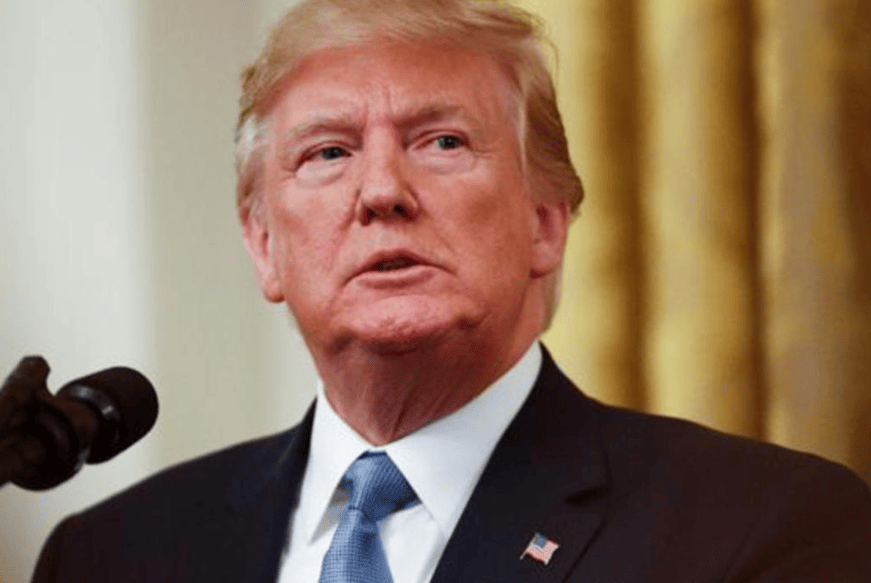
中国的稀土不是不卖,而是不卖给美国?
Sou Hu Cai Jing· 2025-06-14 08:08
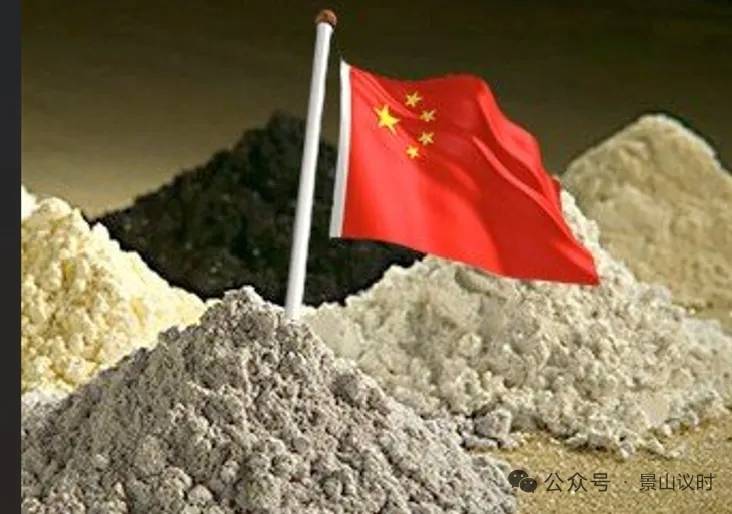
其次,稀土本质是商品,买卖自愿,贸易就是做生意,稀土行业要发展,企业要盈利,工人要拿工资, 形成良性发展循环,这一切的前提是把开采出来的稀土卖出去,否则堆在那里只能是土。稀土号称"工 业味精",炒菜煲汤都要用,但没人拿味精当饭吃,稀土应用很广泛,但市场不大,中国掌握着全球中 重稀土冶炼90%以上份额,仅靠国内市场无法消化,海外市场的重要性不言而喻。 最后,也是一招暗棋,中国稀土的优势在于技术领先和产业链完整,前期集中力量加大投入抢到先发优 势,占据了全球大部分市场,有了我们的稀土供应,变相提高了其他国家的资本进入稀土产业的门槛, 投入和回报不成正比,市场小不说,还要面临和中国企业的竞争,没有动力和信心在稀土产业站住脚。 归根结底,稀土出口管制是手段,全流程监管战略矿产流向更重要,美国民企合规使用,中国有关部门 会依法依规审批,军工企业想都别想,这就是主动权。 中美顶峰通话后,两国关系似乎有所缓和,双边第二轮经贸会谈将在伦敦举行,原本对美紧绷的稀土管 制也放出了一个口子,恢复向美国三大汽车制造商供应稀土,以避免其陷入停产窘境。 才封了一个月的口子,为何又突然放开?首先,我们决不允许美国军工企业获得中国的战略矿产 ...
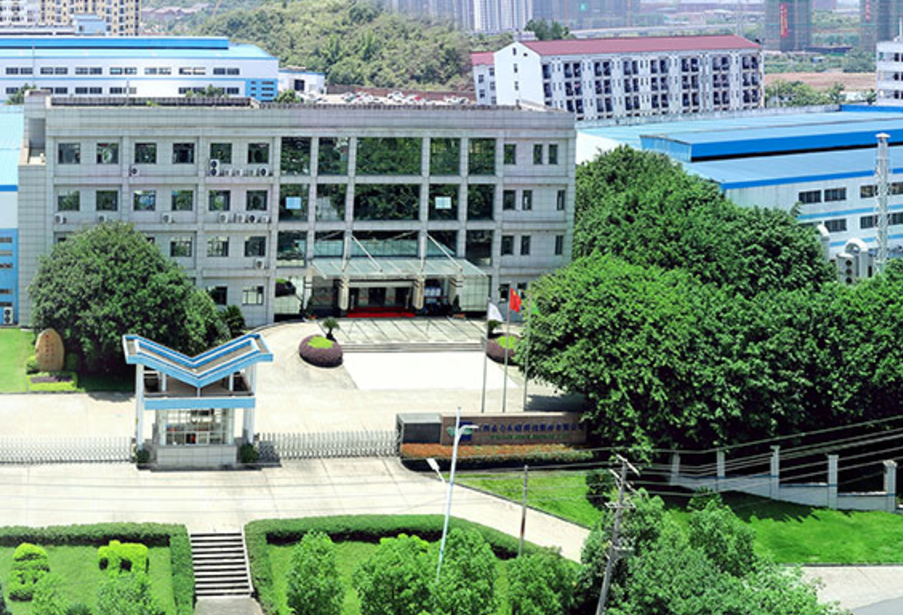
金力永磁:中重稀土相关物项已获颁出口许可证
Ju Chao Zi Xun· 2025-06-14 02:15
Core Viewpoint - The company, Jinli Permanent Magnet, has successfully navigated the export control measures on medium and heavy rare earth materials by complying with national regulations and obtaining necessary export licenses for regions including the US, Europe, and Southeast Asia [2] Group 1: Export Performance - In Q1 2025, Jinli Permanent Magnet reported export sales revenue of 312 million yuan, accounting for 17.76% of total revenue, with sales to the US reaching 122 million yuan, representing 6.94% of total revenue [2] - The company does not engage in military-related businesses [2] Group 2: Compliance and Regulatory Environment - The Ministry of Commerce spokesperson emphasized China's responsible approach to reviewing export license applications for rare earth materials, ensuring compliance while considering the reasonable needs of other countries in civilian sectors [2] Group 3: Supply Chain and Partnerships - Jinli Permanent Magnet has established long-term strategic partnerships with major rare earth suppliers, including Northern Rare Earth Group and China Rare Earth Group, with purchases from these suppliers accounting for 63% of the company's total annual procurement in 2024 [2] Group 4: Sustainable Practices - The company prioritizes green recycling of rare earth materials, investing in the recycling company Yinhai New Materials, which has passed rigorous audits by SCS Global Services [3] - In 2024, Jinli Permanent Magnet utilized 2,575 tons of recycled rare earth materials, including waste magnet recovery, which constituted 30.4% of the total rare earth materials used [3]
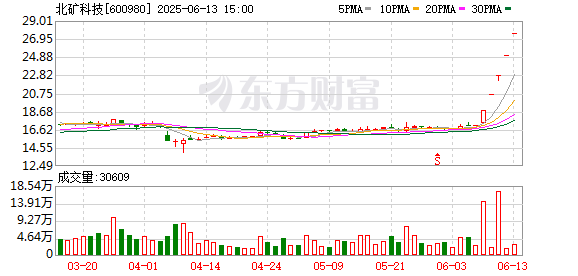
稀土永磁板块持续活跃 北矿科技股价走出“五连板”
Xin Hua Cai Jing· 2025-06-13 13:57
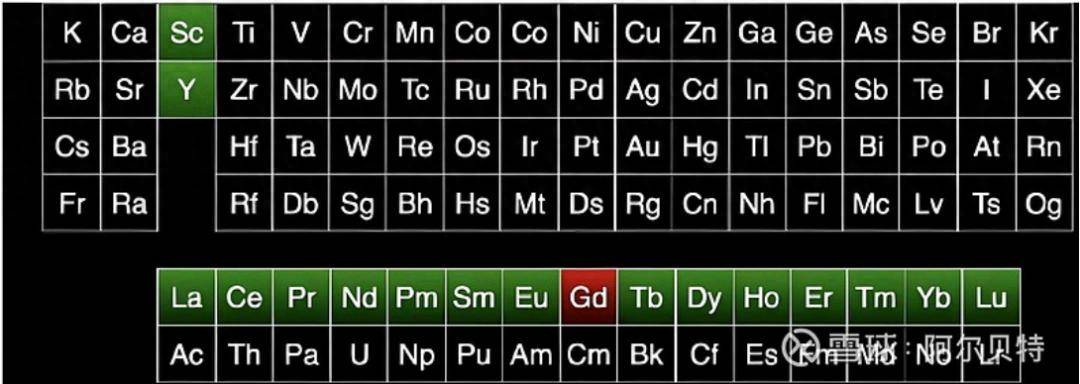
Group 1: Company Overview - Beikong Technology is a high-tech enterprise engaged in efficient mining and metallurgy equipment and advanced magnetic materials, with a controlling shareholder being a large central enterprise under the State-owned Assets Supervision and Administration Commission [2] - The company has three wholly-owned subsidiaries involved in mining equipment and magnetic materials businesses [2] Group 2: Market Activity - The A-share rare earth permanent magnet sector has been active, with Beikong Technology's stock price reaching 27.53 yuan per share, achieving a涨停 (trading limit up) for five consecutive trading days, resulting in a price increase of over 60% [2] - Following the announcement of export controls on rare earth materials by the Ministry of Commerce, Beikong Technology's stock price surged, with a涨停 occurring on June 9 [3] Group 3: Industry Context - Rare earth elements, comprising 17 metals including lanthanides, scandium, and yttrium, are essential strategic resources for modern technology and industry, often referred to as "industrial vitamins" [3] - China dominates global rare earth supply, accounting for 80% of the total supply, and the demand for heavy rare earths is increasing due to the growth of industries such as robotics and electric vehicles [3] Group 4: Risk Disclosure - Beikong Technology announced on June 12 that its stock price had deviated significantly, with a cumulative increase of over 20% in two days, indicating abnormal volatility [4] - The company confirmed that there are no undisclosed significant matters affecting its operations, and the internal and external business environment remains stable [4]

金力永磁(300748) - 2025年6月13日投资者关系活动记录表
2025-06-13 10:48
Group 1: Company Performance - In Q1 2025, the company achieved revenue of 1.61 billion RMB, a year-on-year increase of 14.19% [2] - The net profit attributable to shareholders was 1.61 billion RMB, up 57.85% year-on-year [2] - The net profit excluding non-recurring gains and losses reached 1.06 billion RMB, reflecting a significant growth of 331.10% [2] Group 2: Export and Compliance - In Q1 2025, export sales revenue was 3.12 billion RMB, accounting for 17.76% of total revenue [3] - Sales revenue from exports to the United States was 1.22 billion RMB, representing 6.94% of total revenue [3] - The company has obtained export licenses for magnetic materials, components, and motor rotors, complying with national regulations [3] Group 3: Raw Material Procurement - In 2024, 63% of the company's raw material procurement came from strategic partnerships with Northern Rare Earth Group and China Rare Earth Group [4] - The company utilized 2,575 tons of recycled rare earth materials, which constituted 30.4% of total rare earth material usage in 2024 [4] - The procurement strategy emphasizes green recycling and risk management through a diversified supply chain [4] Group 4: Business Development - The company is actively involved in the development of embodied robot motor rotors, with initial small-scale deliveries [5] - Investments have been made in specialized facilities and equipment to support the scaling of production in the robotics sector [5] - The low-altitude aircraft sector has also seen small-scale deliveries, indicating progress in this area [5] Group 5: Share Buyback Plan - The board has approved a share buyback plan with a total fund of no less than 100 million RMB and not exceeding 200 million RMB [6][7] - The buyback will be conducted through centralized bidding and aims to reduce registered capital by canceling repurchased shares [7] - The plan reflects the company's confidence in its future development and value recognition [6]
没了中国稀土,全世界连车都造不了了?
3 6 Ke· 2025-06-13 10:37
Core Viewpoint - The global automotive industry is facing significant challenges due to China's recent export controls on rare earth elements, which are essential for manufacturing permanent magnets used in electric motors [1][2][4]. Group 1: Impact on Automotive Industry - China's export controls on seven rare earth elements have led to a 50% reduction in rare earth exports in April, causing severe supply shortages for automotive manufacturers worldwide [2][4]. - Major automotive companies in Europe and the U.S. are experiencing production halts, with reports of a German magnet manufacturer potentially shutting down operations due to rare earth shortages [4][6]. - Indian and Japanese automotive manufacturers are also facing production issues, with Maruti Suzuki indicating potential shutdowns if the rare earth situation is not resolved [6][7]. Group 2: Importance of Rare Earth Elements - Rare earth elements, particularly neodymium, are crucial for creating strong permanent magnets used in electric motors, which are integral to electric vehicles [8][10]. - The absence of rare earths would significantly degrade the performance of electric motors, as alternatives like asynchronous motors are less efficient and have limitations [12][16]. - Rare earths are not only vital for electric vehicles but also play a role in traditional combustion engine vehicles, affecting various components such as starters, generators, and sensors [17][19]. Group 3: Global Supply Chain Dynamics - China dominates the global rare earth supply chain, controlling 70% of rare earth mines and 85% of refining capacity, making it difficult for other countries to find alternative sources [2][23]. - Despite some efforts from companies in the U.S. and Australia to develop their rare earth capabilities, they face challenges in cost and technology, often relying on China for processing [23][25]. - The Chinese government has proposed a "green channel" for rare earth exports to the EU, indicating a willingness to facilitate trade and potentially alleviate some supply pressures [25].

运营商财经网康钊:中国同意出口部分稀土给美国 但只限于民用!
Xin Lang Cai Jing· 2025-06-13 09:44
Group 1 - China has approved a certain number of rare earth export compliance applications, specifically for civilian product needs [2] - The approval of rare earth exports is seen as a response to requests from the United States, following China's earlier export controls on seven categories of heavy rare earths [2] - U.S. companies are facing significant supply shortages, with rare earth inventories only lasting two to three months, impacting production in key industries such as automotive [2] Group 2 - The automotive industry in the U.S. heavily relies on rare earth elements for various components, including automatic transmissions and electric motors, with electric vehicles requiring at least 10 kilograms of rare earths each [4] - China is cautious about preventing U.S. military enterprises from accessing rare earths, focusing only on civilian demands in its export approvals [4] - The military's demand for rare earths is substantial, with specific examples including 408 kilograms needed for each F-35 fighter jet and 27.3 tons for a Ford-class nuclear aircraft carrier [4]
中国突然批准稀土出口,究竟释放什么信号?
Sou Hu Cai Jing· 2025-06-13 07:39
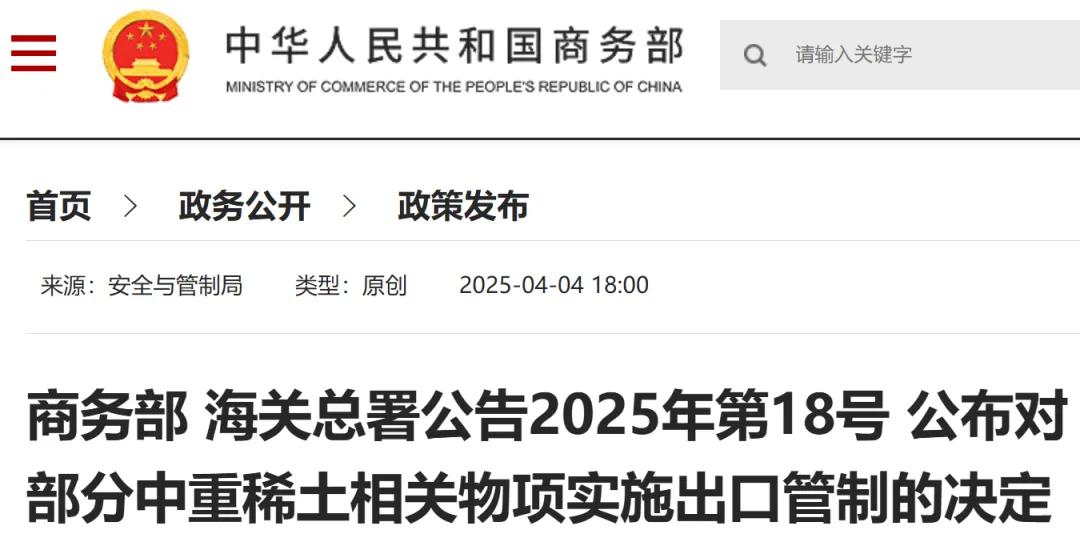
剧情再度发生了戏剧性的反转,中国突然宣布批准稀土出口了!这一变化背后究竟发生了什么呢?在中美领导人通话之后,国家商务部在回应记者提问时透 露了相关消息。随着机器人、新能源汽车等产业的迅速发展,各国对中重稀土在民用领域的需求持续上升。因此,中国决定依法依规批准了一定数量的稀土 出口许可证。这一消息一经发布,立即吸引了国际媒体的高度关注,原因也很简单: 自从特朗普宣布实施所谓的"对等关税"以来,中国便对七类中重稀土实行了出口管制。如今,提到"稀土",不管是美国、日本,还是印度,都表现得格外关 注。这是自中国实施稀土出口管制以来,首次公开承认批准了一部分出口许可证,并且还表示将继续审批。 对于这一消息,商务部的表态并不复杂,但每一个细节都极富深意。首先,值得注意的是,时间的选择极具巧妙性。此番声明正巧紧跟中美领导人通话之 后。6月5日晚上,中方应约接听了美国的电话,双方进行了长达90分钟的对话。从事后公开的信息来看,这个电话是特朗普主动打来的。显然,他此刻非常 着急,而其中一个原因正是稀土问题。 我们怎么知道特朗普的急切?根据美国媒体的报道,五角大楼国防部的稀土库存已所剩无几,仅够支撑半个月的需求。而其他民营企业的 ...
中稀土出口政策放宽,境外最大未开发重稀土矿床成西方“依仗”?
Sou Hu Cai Jing· 2025-06-13 06:59
Group 1 - The core viewpoint of the articles highlights China's strategic control over rare earth elements, emphasizing their importance in modern industries and military applications, particularly in the context of ongoing trade tensions with the United States [1][2]. - China currently produces approximately 240,000 tons of rare earth elements annually, accounting for about 60% of global production and 85% of processing capacity, while the U.S. only produces around 40,000 tons [1]. - In response to trade tensions, China has implemented export controls on seven categories of medium and heavy rare earths, which are crucial for electric vehicles, wind turbines, and defense technologies [1][2]. Group 2 - China has issued temporary export licenses to suppliers of major U.S. automakers, including General Motors, Ford, and Stellantis, with some licenses valid for at least six months [2]. - The Chinese government is willing to expedite the approval process for rare earth exports to European companies, indicating a more open stance in international trade [2][5]. - The Tanbreez project in Greenland is highlighted as a potential significant source of rare earths, with an estimated resource of 45 million tons and a projected net present value of approximately $3 billion, which could reduce Western reliance on Chinese rare earths [3][4].
商务部再次回应稀土相关物项出口管制问题;“川超”要来了丨盘前情报
2 1 Shi Ji Jing Ji Bao Dao· 2025-06-13 00:43
Market Performance - On June 12, A-shares showed mixed results with the Shanghai Composite Index up by 0.01% to 3402.66 points, the Shenzhen Component down by 0.11% to 10234.33 points, and the ChiNext Index up by 0.26% to 2067.15 points [2][3] - The total market turnover was 130.35 billion yuan, an increase of 16.9 billion yuan from the previous day, with over 2300 stocks rising [2] International Market Overview - On June 12, U.S. stock indices rose, with the Dow Jones Industrial Average up by 0.24% to 42967.62 points, the S&P 500 up by 0.38% to 6045.26 points, and the Nasdaq Composite up by 0.24% to 19662.49 points [3] - European markets showed mixed results, with the UK FTSE 100 up by 0.23% to 8884.92 points, while the French CAC40 and German DAX indices fell by 0.14% and 0.74%, respectively [3] Commodity Prices - As of June 12, international oil prices fell, with WTI crude oil down by 0.16% to $68.04 per barrel and Brent crude down by 0.59% to $69.36 per barrel [4] Economic Developments - The People's Bank of China and the European Central Bank held their first annual meeting, discussing economic and financial conditions, international monetary system reforms, and cooperation areas [5] - The Chinese Ministry of Commerce reported on the first meeting of the China-U.S. economic and trade consultation mechanism, indicating progress in addressing mutual economic concerns [6] Industry Insights - The tightening of rare earth export controls is expected to boost exports of magnetic materials in the second half of the year, benefiting downstream demand due to overseas replenishment needs [6] - The Chinese aviation industry is positioned to become a key player in the global market, with the successful operation of ARJ21 and C919 aircraft [9] Corporate Actions - Ant Group announced plans to apply for stablecoin licenses in Hong Kong and Singapore, marking its entry into the stablecoin market [8] - China Power Construction Corporation won a contract worth approximately 10.77 billion yuan for an offshore wind power EPC project [12]