中小银行改革化险

Search documents
刚获批控股就挂牌转让?武汉农商行年内密集调整村镇银行股权
Xin Lang Cai Jing· 2025-08-15 00:20
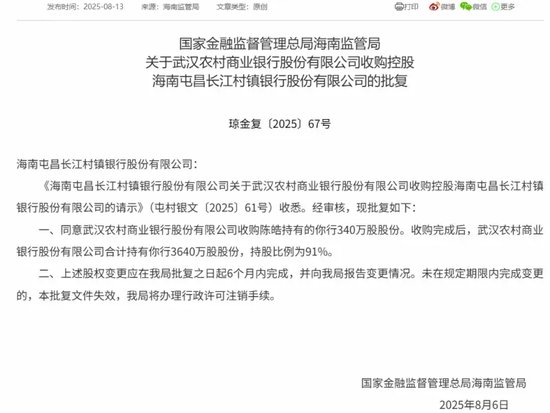
Core Viewpoint - Wuhan Rural Commercial Bank has received approval to acquire and control Hainan Tunchang Changjiang Village Bank, but shortly after, it announced the transfer of its 91% stake in the same bank, reflecting a trend of rapid consolidation in the village banking sector [1][8]. Group 1: Acquisition and Control - On August 6, Wuhan Rural Commercial Bank was approved to acquire 3.64 million shares of Hainan Tunchang Changjiang Village Bank, resulting in a 91% ownership stake [3]. - The acquisition is part of a broader strategy, as Wuhan Rural Commercial Bank has been actively increasing its stakes in various village banks, having received regulatory approval for 11 such acquisitions in the past year [4][12]. Group 2: Rapid Divestment - On August 14, just eight days after gaining control, Wuhan Rural Commercial Bank listed its stakes in three village banks for sale, including the 91% stake in Hainan Tunchang Changjiang Village Bank, with a transfer price of approximately 796.44 million yuan [8][9]. - The three banks listed for sale have been experiencing significant losses, with combined losses nearing 36 million yuan and revenues failing to exceed 10 million yuan [10][12]. Group 3: Industry Trends - The actions of Wuhan Rural Commercial Bank are indicative of a larger trend in the village banking sector, where consolidation and restructuring are accelerating as part of ongoing reforms aimed at mitigating financial risks [12][16]. - The number of village banks in China has decreased from 1,538 at the end of 2024 to 1,460 by mid-2025, highlighting a trend of exits from the market [16].

解码银行业八大关键词
Xin Hua Wang· 2025-08-12 05:47
Group 1: Core Views - The banking industry has actively supported the real economy, reducing financing costs while enhancing service quality [2][4] - A series of policies have been implemented to promote the development of the private economy, with significant increases in loans to private enterprises [3] - The real estate sector is gradually recovering, supported by financial policies aimed at stabilizing financing for real estate companies [5][6] Group 2: Banking Support for the Real Economy - As of September 2023, the balance of loans to small and micro enterprises reached 69.2 trillion yuan, with a significant increase in inclusive loans [2] - The banking sector has seen a year-on-year increase of 17% in corporate medium- and long-term loans and 21.8% in corporate credit loans [2] - The People's Bank of China reported an increase of 21.58 trillion yuan in RMB loans in the first 11 months of 2023, with a year-on-year growth of 10.7% in loans to the real economy [3] Group 3: Real Estate Financing - Financial policies have been optimized since November 2022 to support the healthy development of the real estate market, including the extension of certain policies until December 2024 [5][6] - Major banks have provided over 30 billion yuan in real estate development loans to non-state-owned enterprises since November [6][7] - The banking sector is expected to increase credit support for real estate companies, particularly private ones, in the near future [7] Group 4: Mortgage Rate Adjustments - The policy to lower existing mortgage rates was implemented in September 2023, benefiting over 50 million households and reducing annual interest expenses by 160 to 170 billion yuan [9] - The reduction in mortgage rates is expected to alleviate repayment pressure on residents and stimulate consumption [9] Group 5: Net Interest Margin Trends - The net interest margin of commercial banks has been under pressure, with a slight decline to 1.73% in the first three quarters of 2023 [11] - Banks are adjusting deposit rates to mitigate the impact of narrowing net interest margins [11][12] - Experts predict that while net interest margins may continue to compress in the short term, they could return to positive growth as the real economy recovers [12] Group 6: Central Huijin's Investment - Central Huijin Company increased its holdings in major state-owned banks, signaling confidence in their long-term investment value [13] - The investment by Central Huijin is expected to boost market confidence and support the valuation recovery of the banking sector [13] Group 7: Reforms in Small and Medium Banks - Reforms in small and medium-sized banks have accelerated, with measures to improve risk management and capital adequacy [14][15] - The issuance of special bonds has helped bolster the capital base of small banks, with over 200 billion yuan issued this year [15] Group 8: Rising Dividend Yields - The average dividend yield of A-share listed banks has increased to 5.51% in 2023, up from 4.88% in 2022 [16][17] - High dividend yields are attracting institutional investors, although they may indicate declining stock prices [17] Group 9: Capital Regulation Changes - The new capital management regulations effective from January 2024 aim to establish a differentiated regulatory framework for banks [18][19] - The regulations will help reduce compliance costs for smaller banks while enhancing their ability to serve the real economy [20]

鑫闻界|年内4家中小银行评级下调,补充资本金、兼并重组、市场退出提速
Qi Lu Wan Bao· 2025-07-31 09:45
Core Viewpoint - The recent downgrades of credit ratings for several small and medium-sized banks reflect their increasing credit risk and declining profitability, indicating a trend towards "reducing quantity and improving quality" in the development of these banks [2][8]. Group 1: Rating Downgrades - Four small banks, including Yuci Rural Commercial Bank, Changde Rural Commercial Bank, Pingyao Rural Commercial Bank, and Huaxi Rural Commercial Bank, have experienced credit rating downgrades in 2023 due to high asset credit risks and poor profitability [2][6]. - Yuci Rural Commercial Bank has been downgraded three times since 2021, with its credit rating falling from A+ to BB- due to persistent credit risk exposure and deteriorating financial indicators [4][3]. - As of the end of 2024, Yuci Rural Commercial Bank's non-performing loan balance increased significantly by 1.097 billion to 3.756 billion, with a non-performing loan ratio rising by 11.51 percentage points to 34.43% [4][5]. Group 2: Financial Performance - For Yuci Rural Commercial Bank, total assets were 22.643 billion in 2024, with a net profit of -206 million, and a non-performing loan rate of 34.43% [5]. - Changde Rural Commercial Bank's non-performing loan rate rose to 4.81% by the end of 2024, with a significant drop in its provision coverage ratio to 95.19%, below regulatory requirements [6]. - Pingyao Rural Commercial Bank's non-performing loan rate reached 4.55% by the end of 2024, with a capital adequacy ratio of 4.51%, both below regulatory standards [7]. Group 3: Industry Trends - The trend of "reducing quantity and improving quality" among small and medium-sized banks is driven by their weak capital strength, inadequate risk control systems, and lack of differentiated competitive strategies [8]. - In 2023, 184 small and medium-sized banks exited the market through mergers or dissolutions, a sevenfold increase compared to the same period last year [9]. - Recent regulatory reforms emphasize the need for small financial institutions to address risks through capital replenishment, mergers, and market exits, aiming for a more sustainable banking environment [8][9].

常熟银行村改支再扩容,吸收三家省内村镇银行
2 1 Shi Ji Jing Ji Bao Dao· 2025-07-25 05:15
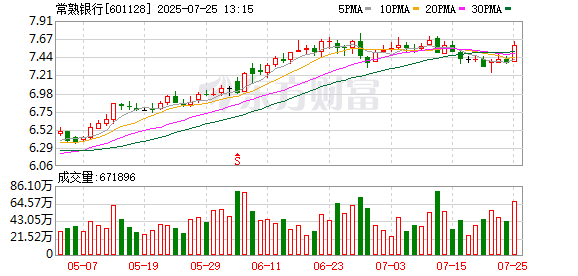
Core Viewpoint - Changshu Bank is actively pursuing the absorption and merger of three rural banks in Jiangsu Province, aiming to enhance its branch network and optimize resource allocation [2][4]. Group 1: Merger Details - The three rural banks being absorbed are Yancheng Binhai Xingfu Rural Bank, Zhenjiang Runzhou Yangtze Rural Bank, and Changzhou Zhonglou Yangtze Rural Bank, all located in Jiangsu [2]. - The merger will involve acquiring 100% of the shares of these banks, dissolving their independent legal status, and converting them into branches of Changshu Bank [2]. Group 2: Performance Metrics - As of the end of 2024, the financial metrics for the three rural banks are as follows: - Yancheng Binhai Xingfu: Total assets of 1.595 billion, total deposits of 1.376 billion, total loans of 1.405 billion, non-performing loan rate of 0.98%, and provision coverage ratio of 361.10% [3]. - Zhenjiang Runzhou Yangtze: Total assets of 787 million, total deposits of 559 million, total loans of 126 million, non-performing loan rate of 1.44%, and provision coverage ratio of 424.28% [3]. - Changzhou Zhonglou Yangtze: Total assets of 430 million, total deposits of 317 million, total loans of 284 million, non-performing loan rate of 1.77%, and provision coverage ratio of 246.63% [3]. Group 3: Changshu Bank's Overall Performance - In the first half of the year, Changshu Bank reported operating income of 6.062 billion, a year-on-year increase of 10.10%, and net profit attributable to ordinary shareholders of 1.969 billion, up 13.55% [4]. - As of June 2025, Changshu Bank's total assets reached 401.251 billion, a growth of 9.46% from the beginning of the year, with total loans of 251.471 billion (up 4.40%) and total deposits of 310.777 billion (up 8.46%) [4]. Group 4: Strategic Implications - The absorption of rural banks is seen as a new opportunity for Changshu Bank, with the chairman highlighting the high-quality development of rural banks as a growth driver [5]. - The bank aims to penetrate county markets quickly through these mergers, optimizing resource allocation and reducing management costs [5]. - The total assets of Changshu Bank's rural banks reached 62.428 billion, with a growth rate of 17.88%, and total deposits of 53.612 billion, increasing by 21.92% [5].
年内9家村镇银行获批退出 广东中小银行改革化险提速
2 1 Shi Ji Jing Ji Bao Dao· 2025-07-16 12:17
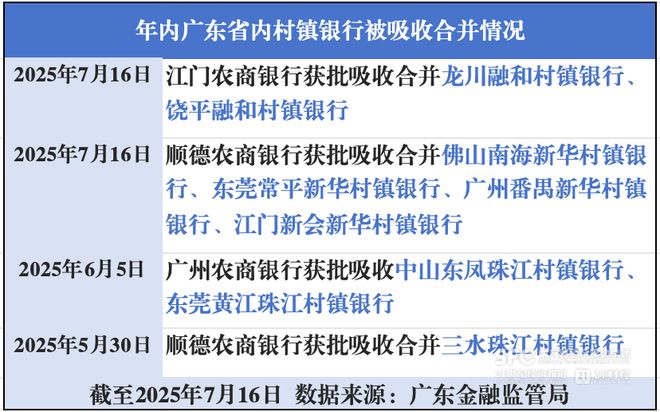
Core Viewpoint - Guangdong's financial regulatory authority has accelerated the absorption and merger of rural banks, with nine banks approved for mergers in 2025, surpassing the total for the previous year [1][2][5] Group 1: Mergers and Acquisitions - Jiangmen Rural Commercial Bank has been approved to absorb Longchuan Ronghe Village Bank and Raoping Ronghe Village Bank as of July 16, 2025 [1] - Shunde Rural Commercial Bank has been approved to absorb multiple banks including Foshan Nanhai Xinhua Village Bank and Dongguan Changping Xinhua Village Bank on the same date [1][2] - Guangzhou Rural Commercial Bank was approved to absorb Zhongshan Dongfeng Zhujiang Village Bank and Dongguan Huangjiang Zhujiang Village Bank on June 5, 2025 [2][3] Group 2: Regulatory Context - The acceleration of mergers aligns with the regulatory framework set in January 2025, emphasizing the need for risk management and restructuring of high-risk financial institutions [1][5] - The Guangdong financial regulatory authority aims to enhance collaboration between central and local governments to address risks in small financial institutions [1][5] Group 3: Industry Trends - The trend of mergers is indicative of a broader structural reorganization within the rural banking sector, with a significant increase in the number of banks being absorbed compared to previous years [2][6] - The concept of "village to branch" reform has gained traction, with Guangdong leading the way in implementing this model, allowing for broader service offerings and market expansion [5][6] Group 4: Future Outlook - Experts predict that the restructuring of rural banks will continue to accelerate, leading to a gradual reduction in the number of such banks [6] - There is a call for guiding policies to help rural banks refocus on their core missions and effectively support rural revitalization and small enterprises [6]
中小银行改革化险再提速 年内已有90家村镇银行退出
2 1 Shi Ji Jing Ji Bao Dao· 2025-07-15 11:31
Core Viewpoint - The reform and risk mitigation of village and town banks in China are accelerating, with multiple cases of absorption and merger occurring simultaneously across various regions, indicating a shift from pilot exploration to large-scale replication in the sector [3][4][11]. Summary by Sections Recent Developments - Recent announcements from banks in Guizhou, Xinjiang, Sichuan, and Jiangsu indicate a trend of absorption and merger of village and town banks, with Guizhou Bank merging with Tongren Fengyuan Village Bank and Xinjiang Bank planning to absorb Xinjiang Huihe Bank [1][2]. - Chengdu Rural Commercial Bank announced plans to absorb and merge six village banks in Sichuan, with regulatory approval granted shortly after [1]. Regulatory Context - The National Financial Regulatory Administration has prioritized the reform and risk mitigation of small financial institutions, with nearly 200 small financial institutions expected to merge or be dissolved by 2024 [4][11]. - As of mid-July, 90 village banks have exited the market this year, surpassing the total of 83 from the previous year, highlighting the urgency of addressing risks in weaker economic regions [4]. Merging Strategies - The absorption and merger of village banks have developed into four distinct strategies: 1. **Branch Conversion**: The most common method, where the village bank's license is canceled, and the original branches are rebranded as branches of the parent bank [6][7]. 2. **Equity Acquisition**: Involves acquiring all shares of the village bank before merging it into a wholly-owned subsidiary [7]. 3. **Survival Mergers**: Multiple village banks controlled by the same parent bank merge into one, retaining the license of the surviving entity [8]. 4. **Cash Buyouts**: The parent bank buys out the village bank's net assets and dissolves it, integrating its assets and liabilities [9]. Market Trends - The trend of bank branch closures is evident, with 2,027 branches exiting the market this year compared to 1,673 last year, driven by high costs and the rise of mobile banking [9]. - For banks still in an expansion phase, merging village banks and establishing branch networks is seen as beneficial for market penetration [10]. Future Outlook - The restructuring of village banks is expected to accelerate, with a focus on risk mitigation and enhancing service to rural revitalization and small enterprises [11]. - Regulatory support is deemed necessary for small banks to thrive, including differentiated regulatory rules and incentives for effective risk management [11].
国有大行首次入局“村改支” 中小银行加快整合步伐
Zheng Quan Ri Bao Zhi Sheng· 2025-06-25 16:09
Core Viewpoint - The approval of Industrial and Commercial Bank of China (ICBC) to acquire Chongqing Bishan Rural Bank marks the first instance of a state-owned bank participating in the "village-to-branch" reform, indicating a significant shift in the banking sector towards addressing risks in rural financial institutions [1] Group 1: Industry Implications - The involvement of large state-owned banks in the reform of rural banks reflects a proactive response to the central government's call for accelerating the resolution of high-risk small financial institutions [1] - The "village-to-branch" model is seen as a dual-value approach, benefiting both the acquired rural banks through improved governance and risk management, and the acquiring banks by enabling rapid market penetration in county-level markets [2][3] Group 2: Future Outlook - Despite the current momentum, the majority of rural banks are initiated by city commercial banks and rural commercial banks, suggesting that future cases of state-owned banks participating may be limited due to structural constraints [2] - Regulatory bodies are urged to provide clearer operational guidelines for the "village-to-branch" model and implement differentiated supervision to effectively support the agricultural sector [3] Group 3: Challenges and Recommendations - The acquisition process presents multiple challenges for the acquiring banks, including the need for effective integration of management systems and risk assessment [3] - A collaborative long-term mechanism is recommended, involving regulatory clarity on risk responsibilities and market-driven pricing strategies to facilitate smoother restructuring processes [3]

被蛀空的银行!榆次农商行评级三连降,超三成贷款沦为不良
Xin Lang Cai Jing· 2025-06-23 11:26
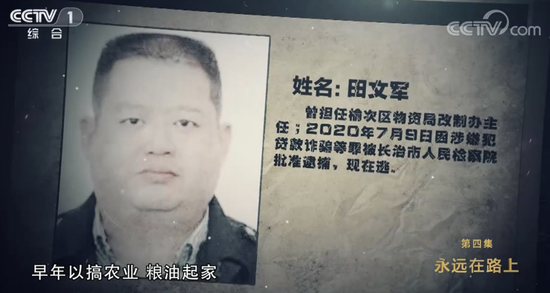
Core Viewpoint - The financial distress of Yuci Rural Commercial Bank is highlighted by alarming metrics such as negative net interest margin, negative revenue, and negative capital adequacy ratio, leading to a downgrade in its credit rating by China Chengxin International Credit Rating Co., Ltd. [1][13] Group 1: Financial Performance - In 2024, Yuci Rural Commercial Bank reported a net interest margin of -0.53% and a net operating income of -0.22 million yuan, marking two consecutive years of losses [1] - The bank's non-performing loan balance surged to 3.756 billion yuan, a 41.26% increase from the beginning of the year, with a non-performing loan ratio skyrocketing to 34.43% [1][11] - The capital adequacy ratio and core tier one capital adequacy ratio plummeted to -21.26% and -23.87%, respectively, significantly below regulatory requirements [1][11] Group 2: Historical Context and Governance Issues - The risk exposure of Yuci Rural Commercial Bank is traced back to the infiltration of the "De Yu System" into the Shanxi financial system over the past decade [2] - The "De Yu System," controlled by businessman Tian Wenjun, gradually became the largest shareholder of Yuci Rural Commercial Bank, establishing a network covering nearly 20 banks in Shanxi [4] - The former chairman of Yuci Rural Commercial Bank, Cao Shuangma, accepted bribes totaling 17.25 million yuan, facilitating numerous illegal financing loans for the "De Yu System" [8][10] Group 3: Asset Quality and Risk Management - The bank's asset quality deteriorated rapidly post the collapse of the "De Yu System," with non-performing loan ratios jumping from 16.94% in 2022 to 34.43% in 2024 [11] - As of the end of 2024, the bank's loan impairment provision balance was only 0.14 million yuan, resulting in a provision coverage ratio of 0.38%, far below regulatory requirements [11] - The bank's management structure is fragmented, with a high proportion of shareholders being listed as untrustworthy, leading to ineffective risk control and management chaos [12] Group 4: Recovery Efforts and Industry Challenges - In response to the crisis, Yuci Rural Commercial Bank initiated multiple self-rescue efforts, including a special meeting to address risk asset disposal [15] - The bank has engaged third-party companies for the collection of small non-performing loans and has announced the leasing and sale of debt assets [16] - The broader context reveals that many rural commercial banks are facing significant operational challenges, with a notable decline in net interest margins across various banking sectors [18]
改革化险提速 年内191家中小银行获准合并或解散
Zheng Quan Ri Bao· 2025-06-06 16:42
Core Viewpoint - The reform process of small and medium-sized banks, such as village banks and rural commercial banks, is accelerating, driven by policy and market changes, with a significant number of mergers and dissolutions occurring in 2023 [1][2]. Group 1: Reform and Mergers - As of June 6, 2023, 191 small and medium-sized banks have been approved for mergers or dissolutions, with a total of 197 expected for the entire year [1]. - The Guangdong Regulatory Bureau approved the merger of Guangzhou Rural Commercial Bank with two village banks, leading to their dissolution and re-establishment as branches of Guangzhou Rural Commercial Bank [1]. - The government emphasizes a market-oriented and legal approach to risk management and transformation of local small financial institutions [2]. Group 2: Regulatory Focus and Industry Impact - The National Financial Regulatory Administration has prioritized accelerating the reform and risk management of small financial institutions as a key goal for the year [2]. - The reform strategy includes mergers, restructuring, and reducing the number of high-risk institutions, which is expected to reshape the industry landscape [2]. - The consolidation of small banks is anticipated to enhance industry concentration and alleviate systemic risks in the short term, while fostering differentiated competition in the long term [2]. Group 3: Challenges and Recommendations - Small and medium-sized banks face challenges such as narrowing net interest margins, increased competition, declining asset quality, and limited capital replenishment capabilities [3]. - Recommendations for future development include focusing on regional services, catering to local small and micro enterprises, and leveraging financial technology to improve operational efficiency [3].
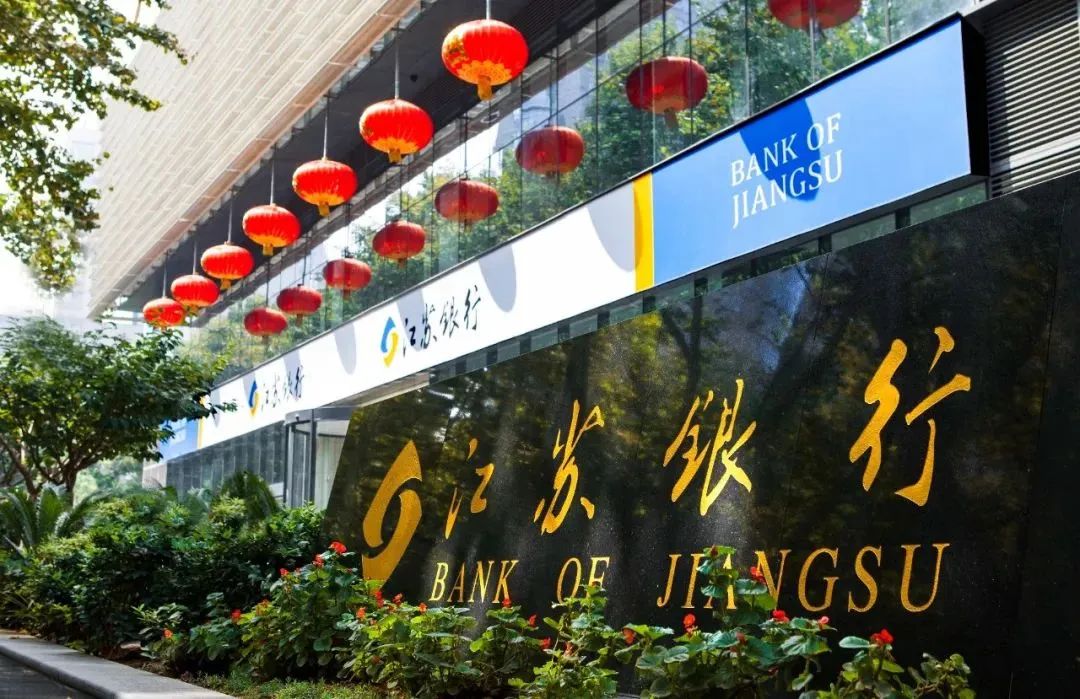
没想到,浓眉大眼的江苏银行也干了
3 6 Ke· 2025-06-04 08:24
Group 1 - Jiangsu Bank has received approval from the Ningbo Financial Regulatory Bureau to open a branch in Ningbo, marking a significant step as it expands its presence in Zhejiang Province with two primary branches [2][3] - The Ningbo branch is not a traditional new establishment but is formed through the acquisition and restructuring of the Ningbo Jiangbei Fumin Village Bank, a relatively rare approach in the industry [3][5] - The acquisition process began with Jiangsu Bank's board approving the purchase of Ningbo Jiangbei Fumin Village Bank shares, which is still subject to regulatory approval and has inherent uncertainties [5][9] Group 2 - Ningbo Jiangbei Fumin Village Bank was established in August 2011, primarily initiated by Shengjing Bank, which held 100% ownership before the transfer [7][12] - As of November 2024, Ningbo Jiangbei Fumin Village Bank reported total assets of 204 million yuan, with a revenue of 4.24 million yuan and a net loss of 688,000 yuan for the first eleven months [9][12] - The restructuring of village banks often involves either converting them into branches of the initiating bank if it has a presence in the area or selling them to local banks if it does not [9][13] Group 3 - The approval for Jiangsu Bank's cross-regional branch establishment is notable as it comes amid strict regulations on city commercial banks expanding outside their provinces [17][21] - The recent cases of Jiangsu Bank and Harbin Bank acquiring local village banks for branch establishment may signal a potential easing of the long-standing restrictions on cross-regional operations for city commercial banks [17][23] - Jiangsu Bank's asset scale has grown significantly, reaching 4.46 trillion yuan by the first quarter of 2025, positioning it as the second-largest among listed city commercial banks [26][24] Group 4 - Jiangsu Bank has maintained a steady growth trajectory since its establishment in 2007, with a consistent increase in revenue and net profit since its listing in 2016 [24][26] - In 2024, Jiangsu Bank achieved an operating income of 80.81 billion yuan, a year-on-year increase of 8.78%, and a net profit of 31.84 billion yuan, up 10.76% [26][24] - The bank's non-performing loan ratio stood at 0.89% in 2024, indicating a stable asset quality, although the amount of loans under special attention has increased, raising potential risk concerns [27][29]