
乡村振兴战略

Search documents
内蒙古五原县又有27家企业核准使用地理标志专用标志
Zhong Guo Zhi Liang Xin Wen Wang· 2025-12-08 06:24
地理标志是重要的知识产权,是地方特色产品的"身份证"和"通行证"。近年来,五原县委、县政府高度 重视地理标志保护与运用工作,将其作为推动农业供给侧结构性改革、助力乡村振兴战略的关键抓手。 五原县市场监督管理局、五原县农牧和科技局积极引导符合条件的企业申请使用地理标志专用标志,加 强生产过程监管,完善质量追溯体系,严厉打击侵权假冒行为,为地理标志产品的健康发展保驾护航。 地理标志专用标志的使用:一是能有效地遏制市场假冒伪劣行为,保护消费者权益和原产地生产者的合 法权益。二是通过官方认证,增强产品公信力,提升"灯笼红香瓜"和"五原小麦"的品牌附加值和市场知 名度。三是倒逼企业实行标准化生产和管理,带动整个产业链向绿色、高效、高端方向发展。四是品牌 价值的提升将直接惠及产业链前端的种植户,实现农业增效、农民增收,有力推动地方经济发展和乡村 振兴战略的实施。(徐凤仙 刘文栓) 五原"灯笼红香瓜"作为五原县的特色优势农产品,以其独特的口感、清新的香气、玲珑的外形和鲜亮的 色泽而享誉区内外。它不仅是五原农业的一张"金名片",更是当地农民增收致富的"甜蜜产业"。此次获 准使用地理标志专用标志的13家企业,均是在种植规模、产 ...
约6000名骑行爱好者“骑”聚广州增城
Zhong Guo Xin Wen Wang· 2025-12-08 03:57
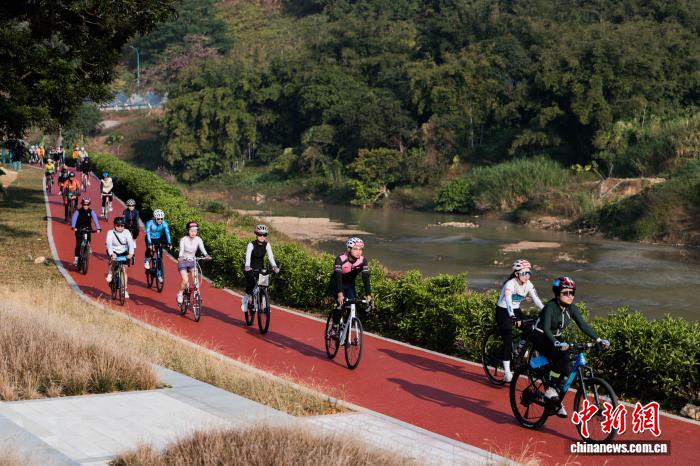
约6000名骑行爱好者"骑"聚广州增城 中新网广州12月8日电 (记者 张璐)"骑遇两山 悦见未来"2025中国自行车运动骑游大会(山系列·广州增城 站)(简称"活动")7日在广州增城白水寨景区启幕,吸引了约6000名骑行爱好者参加。 活动精心设计了全程挑战组(108公里)、半程挑战组(43公里)、体验组(13公里)三条骑行路线,从白水寨 到派潭广场,从正果驿站到增江画廊,骑手们用车轮串联起的,不仅是地理坐标,更是环南昆山—罗浮 山县镇村高质量发展引领区(以下简称:"环两山")空间规划的转化、绿色发展的实践路径。 随着鸣笛声响,数千骑手有序出发,车轮滚滚向前。来自深圳的骑手赵先生在冲过终点线后激动地 说:"这一路,我看到的不仅是美景,更是充满活力的乡村、幸福生活的百姓。这比任何奖牌都更有意 义。" 图为2025中国自行车运动骑游大会(山系列·广州增城站)现场。 (赛事组委会 供图) 本文为转载内容,授权事宜请联系原著作权人 中新经纬版权所有,未经书面授权,任何单位及个人不得转载、摘编或以其它方式使用。 关注中新经纬微信公众号(微信搜索"中新经纬"或"jwview"),看更多精彩财经资讯。 活动当日,十五运会公 ...

证券市场周刊-第44期2025
2025-12-04 15:37
Summary of Key Points from the Conference Call Industry or Company Involved - The conference call discusses the integration of three securities firms under the Huijin system, marking a significant event in the domestic securities industry and indicating a shift towards creating globally competitive investment banks [12][2][11]. Core Points and Arguments - **Integration of Securities Firms**: The merger of the three firms sets a record for the largest single integration in China's securities industry, signaling the start of a fourth wave of mergers and acquisitions aimed at enhancing competitiveness on a global scale [12][2]. - **Market Adjustments**: The market experienced a correction after six consecutive months of gains, with the Shanghai Composite Index dropping approximately 2% as of November 28. This adjustment is seen as a normal market behavior following a prolonged uptrend [8][9]. - **Sector Performance**: The technology sector, particularly the STAR 50 Index, has seen a significant pullback of about 17% from its October peak, indicating a broader trend of profit-taking among investors [8][9]. - **Long-term Market Outlook**: Analysts from Guotai Junan Securities express optimism about the long-term growth potential of the Chinese capital market, suggesting that the market is in a developmental cycle with significant upward potential for stock indices [9][10]. - **Policy Focus for 2026**: Attention is shifting towards the upcoming Central Economic Work Conference, which will set the economic agenda for 2026. Investors are advised to remain cautious and await clearer policy signals [10][11]. - **Investment Opportunities**: There is a recommendation to focus on traditional manufacturing and resource sectors, with particular emphasis on industries where China holds a competitive advantage, such as chemicals, non-ferrous metals, and new energy [11][12]. Other Important but Possibly Overlooked Content - **Consumer Spending and Economic Growth**: The government is implementing measures to enhance consumer spending, which is crucial for driving economic growth. The focus is on improving the supply-demand balance in the consumer goods market [47][51]. - **Currency Strength**: The Chinese yuan has appreciated against the US dollar, reaching a one-year high, which is attributed to a weaker dollar environment and strong performance in the domestic equity market [50]. - **Sector-Specific Growth**: The innovative pharmaceutical sector is experiencing a significant recovery, with upstream research services seeing substantial performance improvements due to better financing conditions and recovering industrial demand [17]. - **Agricultural Modernization**: The Dayaogu Group is positioning itself as a leader in agricultural modernization, leveraging technology to enhance productivity and quality in the food supply chain [6]. This summary encapsulates the key insights from the conference call, highlighting the strategic movements within the securities industry, market trends, and broader economic indicators that could influence investment decisions.
筑牢“舌尖安全”防线 茂名市举办特色农产品绿色安全生产关键技术培训班
Nan Fang Nong Cun Bao· 2025-12-01 04:33
Core Viewpoint - The training session aims to enhance the quality and safety of specialty agricultural products in Maoming City, supporting the rural revitalization strategy and improving market competitiveness [6][24]. Group 1: Training Overview - The training on key technologies for green safety production of specialty agricultural products was successfully held at the China Lychee Museum [2]. - Organized by Maoming Agricultural and Rural Bureau and Maoming Human Resources and Social Security Bureau, in collaboration with South China Agricultural University and other local organizations [4][5]. - The training attracted 110 participants, including leaders from agricultural departments, agricultural enterprises, cooperatives, and family farms [7][9]. Group 2: Training Content - The training focused on the entire safety management chain from production to consumption, emphasizing quality control techniques [7][11]. - Professor Xu Hanhong from South China Agricultural University provided insights on pest control, scientific pesticide use, and soil optimization [12][13]. - A special session on risk prevention was conducted, discussing agricultural insurance policies and risk management [14][15]. Group 3: Participant Engagement - Participants actively engaged in discussions, particularly on issues related to pesticide use, green food certification, and insurance processes [18][19]. - Feedback indicated that the training helped resolve practical production issues and broadened perspectives on green development [20]. Group 4: Future Directions - Maoming City is committed to advancing agricultural standardization and quality safety supervision, aiming to build a comprehensive green safety production system [21][22]. - The training is part of a broader initiative to strengthen the green development mindset among grassroots agricultural technicians and new agricultural operators [24][25]. - Future plans include ongoing agricultural technology training and demonstration promotion to drive higher quality and sustainable agricultural development [26].


国网邯郸市永年区供电公司:精准施策护航农村电采暖客户安全用电
Zhong Guo Neng Yuan Wang· 2025-11-28 04:54
Core Viewpoint - The company is enhancing its "full-cycle service mechanism" for electric heating customers, integrating them into a grid-based service system to ensure reliable heating during winter in the region known as the "Hometown of Tai Chi" [1] Group 1: Service Mechanism - The company has established a "three-level linkage" service mechanism to address the unique heating needs of dispersed areas in the western mountainous regions [1] - The operations department is overseeing the improvement of rural power grid projects, while local power supply stations are implementing a "one village, one strategy" load monitoring system [1] - The area managers are enforcing a "twice-daily inspection" system to ensure service reliability [1] Group 2: Infrastructure Improvements - The company has implemented governance in 47 low-voltage areas and upgraded 14.6 kilometers of low-voltage lines to address power supply weaknesses in towns such as Liu Ying and Da Bei Wang [1] Group 3: Customer Service Initiatives - For newly installed electric heating customers, the company is providing "three-in-place" services, including full tracking of equipment installation, communication of peak and valley electricity pricing policies, and distribution of "Safety Electricity Understanding Cards" [1] - A pilot program for a "Smart Electric Steward" platform is operational in Lin Guan Town, offering a 20-minute early warning response for electricity anomalies [1] - The company is conducting a "Safety Electricity in Martial Arts Schools" initiative to enhance safety awareness among middle and primary school students through community engagement [1] Group 4: Future Plans - The company plans to continue optimizing the "grid + electricity" service system in alignment with rural revitalization strategies, ensuring that the local population enjoys the benefits of clean heating while experiencing improved service quality [1]
北京平谷法院发布涉农土地纠纷“避坑”指南
Xin Jing Bao· 2025-11-27 07:07
Core Insights - The Beijing Pinggu District People's Court released a white paper on rural land contract disputes, highlighting the court's efforts to standardize land transfer and protect farmers' interests in support of rural revitalization strategies [1][2] Summary by Sections Case Overview - From 2020 to 2024, the Pinggu Court adjudicated 644 cases related to rural land contract disputes, primarily focusing on contract performance issues, often linked to rural illegal construction [1] - Over 60% of the cases involved village committees or cooperatives, and nearly 70% were resolved through simplified procedures, achieving "quick trials" for straightforward cases [1] Dispute Classification - Disputes can be categorized into four stages of the contract lifecycle: establishment, performance, transfer, and termination [1] - Common issues during the establishment phase include violations of mandatory legal provisions, ambiguous terms, and discrepancies between the contract's stated and actual conditions [1] - Performance disputes often arise from issues like overdue payments, unauthorized changes in land use, and "rent instead of requisition" practices [1] - Transfer disputes are typically due to procedural irregularities, disagreements on the nature of the contract, and broken rights chains [1] - Termination disputes prominently feature unilateral contract terminations and contract terminations due to land requisition and demolition [1] Recommendations - The court proposed five targeted recommendations to address historical issues, including orderly rectification of problematic contracts and strengthening procedural compliance to prevent collective dispute risks [2] - Emphasis was placed on coordinating land rights confirmation with large-scale operations to mitigate risks associated with new business models and enhancing the protection of vulnerable groups' rights [2] - The establishment of a dispute prevention and diversified resolution mechanism was suggested to achieve root cause resolution [2] Case Examples - Eight typical cases were presented, addressing key legal issues such as contract validity, breach of responsibility, and the nature of land transfer, providing clear judicial guidelines for related practices [2]
省委农村工作领导小组召开会议
Xin Hua Ri Bao· 2025-11-25 22:52
Group 1 - The meeting emphasized that ensuring grain production is the primary task of rural work, focusing on managing crops like wheat and rapeseed and ensuring the smooth acquisition of autumn grain [1] - There is a strong push for agricultural water conservancy construction during the autumn and winter off-season, alongside the implementation of mechanisms to prevent poverty and promote rural revitalization [1] - The meeting highlighted the importance of learning from the "Ten Thousand Projects" experience to achieve high-quality rural development and to propose strategies for the "15th Five-Year Plan" for building livable and workable rural areas [1] Group 2 - The current year is in a critical phase, with a focus on completing key project construction, rural reform, improving livelihoods, and social governance to ensure all annual tasks are successfully concluded [2] - There is a call for thorough preparation for the national assessment of the rural revitalization strategy, emphasizing the need for strategic, systematic, and actionable plans [2] - The meeting underscored the urgency of drafting the "15th Five-Year" agricultural and rural development plan to provide strong guidance for advancing rural revitalization and building a strong agricultural province [2]
玉米、小麦!猪价、牛羊价危险了?12月1日起:跌了!跌了!暴跌开始了...农民警惕一个现实问题!
Xin Lang Cai Jing· 2025-11-24 21:45
Group 1 - The overall trend for grain prices, pig prices, and cattle and sheep prices is expected to experience downward fluctuations, particularly in December due to selling pressure [1][2] - Corn prices are currently facing a downward trend, especially in Northeast China, where several deep processing enterprises have initiated price reductions [1][2] - Wheat prices have reached a peak of approximately 2800 yuan per ton, and further increases may lead to farmers selling their grain and traders offloading stock [2] Group 2 - The pig and cattle prices are not expected to face significant downward risks in December, but there may be increased selling from pig farming enterprises if the market conditions allow [2] - The emergence of La Niña climate conditions in 2025 poses significant weather risks, which could lead to grain spoilage, necessitating proper storage practices among farmers [3] - Farmers are advised to be vigilant about temperature fluctuations that could trigger livestock diseases, emphasizing the importance of vaccination for livestock [3]
地上铁“一路简而有道”:新能源物流叩开乡村高质量发展新模式大门
Sou Hu Wang· 2025-11-24 06:27
Core Viewpoint - The collaboration between Di Shang Tie and the China Rural Development Foundation represents a significant response to the "Rural Revitalization Strategy," utilizing a green logistics approach to support rural development and enhance the connection between urban and rural areas [3][5]. Group 1: Event Overview - The "Green Journey to Beautiful Villages" public welfare event involves a new energy vehicle team traveling over 5,000 kilometers to seven key villages, delivering goods and promoting green development concepts [3]. - The initiative serves as a practical example of how the new energy logistics industry can integrate into urban-rural collaborative development [3][8]. Group 2: Focus Areas - The event emphasizes the integration of the three industries in rural development, exploring sustainable paths through logistics support for agricultural products, revitalizing intangible cultural heritage, and fostering connections between urban and rural communities [5]. - The initiative aims to create demonstration villages that are strong in industry, beautiful in ecology, rich in culture, dynamic in mechanisms, and prosperous for the people [5]. Group 3: Unique Village Development - The program adopts a tailored approach to avoid homogenization in rural development, focusing on the unique resources of each village, such as the cultural heritage in Baiyan Village [6]. - The goal is to transform local cultural practices into appealing urban experiences, thereby enhancing the value of intangible cultural heritage [6]. Group 4: Future Outlook - The initiative positions rural markets as potential spaces for creating new value rather than merely supplementing urban markets, fostering a vibrant and sustainable rural economy [8]. - The expectation is that increased participation from social forces will lead to more villages achieving the vision of thriving industries, beautiful ecologies, and prosperous residents [8].

《中国保险业社会责任报告(2024)》出炉!外资险企在华业务增18%
Bei Jing Shang Bao· 2025-11-19 11:12
Core Insights - The China Insurance Industry Association released the "2024 China Insurance Industry Social Responsibility Report," highlighting the industry's efforts and achievements in fulfilling social responsibilities in 2024 [1][2][3] Group 1: Risk Protection - In 2024, property insurance provided coverage amounting to 159.65 trillion yuan, with claims paid out totaling 33.19 billion yuan [1] - Cargo transportation insurance offered coverage of 85.69 trillion yuan, with claims amounting to 16.73 billion yuan [1] - The insurance industry provided approximately 9 trillion yuan in technology insurance coverage [1] - Long-term health insurance saw 44.89 million new policies issued, with a total insurance amount of 150.30 trillion yuan and claims paid of 11.88 billion yuan, reflecting a year-on-year growth of 3.07% [2] - Life insurance issued 67.03 million new policies, with a total insurance amount of 18.68 trillion yuan and claims paid of 84.49 billion yuan, showing a significant year-on-year increase of 53.83% [2] Group 2: Investment Utilization - By the end of 2024, the stock balance of life and property insurance companies reached 2.43 trillion yuan, with securities investment funds at 1.68 trillion yuan and long-term equity investments at 2.46 trillion yuan [1] - The insurance industry invested over 430 billion yuan in rural revitalization strategies, marking a 50% year-on-year increase [1] - Investments in strategic emerging industries reached 680 billion yuan, up 17% year-on-year [1] - Support for self-reliance in technology saw a funding increase to 880 billion yuan, a 107% year-on-year growth [1] Group 3: Social Responsibility and Financial Inclusion - The insurance sector provided risk protection for over 7.6 billion elderly individuals aged 60 and above, a 55% increase year-on-year [2] - Risk coverage for small and micro enterprises exceeded 43 million households, reflecting a 114% year-on-year growth [2] - The introduction of new disaster insurance regulations expanded coverage for natural disasters, doubling the basic insurance amount for catastrophic events [2] - The community-based disaster insurance program provided coverage for 64.39 million households, amounting to 22.36 trillion yuan in risk protection [2] Group 4: International Cooperation and Market Outlook - The insurance industry provided risk protection for cross-border trade amounting to 2.37 trillion USD, a year-on-year increase of 8% [3] - Insurance coverage for Belt and Road Initiative projects reached 1.14 trillion USD, growing by 14% year-on-year [3] - Foreign insurance institutions in China experienced an 18% growth in business, surpassing the national average growth rate of 14.5% [3]