
产业融合发展

Search documents
关注“后苏超”时代传播路径 2025年度第三期“守正创新”镇宣学堂举办
Zhen Jiang Ri Bao· 2025-09-10 23:46
Core Insights - The event focused on enhancing the political training, ideological refinement, and professional training of the city's propaganda and cultural personnel in the context of the "post-Super League" era [1] - Discussions revolved around how to leverage the momentum from the Super League to transform event "traffic" into urban development "increment" [1] Group 1: Event Highlights - Nine representatives from various city departments engaged in in-depth discussions on the multi-dimensional effects brought by the Super League [1] - Successful practices in cultural exchange driven by tourism innovation and projects supporting unique cultural and tourism routes were highlighted [1] - The concept of "全民参与式" (全民参与式) urban narrative was emphasized as a means to empower urban image dissemination [1] Group 2: Strategic Directions - The event emphasized using the excitement from sports events as a lever to enhance urban image communication, upgrade cultural tourism consumption, and promote industrial integration [1] - It was suggested that the "post-Super League" effect should be continuously released to inject dynamic energy into the modernization of Zhenjiang [1] - The establishment of the "守正创新" (Guarding Integrity and Innovation) training platform was highlighted as a means to transform learning outcomes into practical guidance for advancing the city's propaganda and cultural work [1]
猎神村“竹山变金山”
Jin Rong Shi Bao· 2025-08-26 02:45
Core Viewpoint - The article highlights the successful ecological restoration and economic transformation of the village of Lieshen in Liangping District, Chongqing, showcasing how the abandonment of mining activities has led to sustainable development and increased tourism revenue. Group 1: Ecological Restoration Efforts - The village has implemented various ecological restoration projects, including the establishment of ecological protection zones, rehabilitation of mining areas, and the creation of small micro-wetlands to enhance biodiversity and water quality [1][2][3] - A total of 6,900 acres of public welfare forests have been cultivated, and 6,500 acres of bamboo forests have been improved, with over 30,000 trees planted to restore the natural landscape [2][3] Group 2: Economic Development through Tourism - The restoration of the ecological environment has led to a surge in tourism, with over 300,000 visitors expected in 2024, generating more than 60 million yuan in tourism revenue [4][5] - The village has developed various new business models, including homestays, wellness retreats, and camping, resulting in the establishment of over 50 rural hotels and homestays, providing nearly 1,000 beds and 4,500 dining seats [3][4] Group 3: Community Engagement and Benefits - The local government has actively engaged with residents to promote the benefits of ecological restoration, leading to increased community support for the closure of mining operations [1][5] - The village's collective economy has seen an increase of 2.48 million yuan through land transfers and ecological compensation, with an average per capita income reaching 36,000 yuan [4][5]
《滨州市冬枣产业发展促进条例》9月1日起施行
Qi Lu Wan Bao Wang· 2025-08-25 15:24
Core Viewpoint - The introduction of the "Binzhou Winter Jujube Industry Development Promotion Regulations" aims to standardize and enhance the winter jujube industry in Binzhou, promoting high-quality development and addressing existing challenges in the industry [2][3]. Group 1: Industry Overview - Binzhou is one of the origins of winter jujube in China, with a cultivation area of 300,000 acres and an annual production exceeding 600 million pounds, generating an industry output value of over 5.5 billion yuan [3]. - The "Zhanhua Winter Jujube" brand has a value of 5.611 billion yuan, and the average net income for jujube farmers is 16,000 yuan [3]. Group 2: Legislative Framework - The regulations consist of six chapters and forty-eight articles, focusing on high-level planning and positioning for the winter jujube industry [4]. - The regulations mandate the establishment of a comprehensive industry chain plan covering breeding, standard planting, product development, deep processing, logistics, and tourism [4][5]. Group 3: Brand and Quality Management - The regulations emphasize the importance of brand building, management, protection, and promotion to enhance the value of winter jujube brands [5]. - There are specific provisions for quality control throughout the production process, including the management of agricultural inputs and packaging standards [5][6]. Group 4: Integration and Support - The regulations encourage collaboration between jujube producers and research institutions to foster technological advancements and product development [6]. - Support for deep processing and resource utilization of winter jujube products is highlighted, aiming to increase the industry's added value [6]. - Comprehensive service guarantees are outlined to support infrastructure, information technology, policy funding, and social services for industry development [6].

江西安远打造“赣南脐橙”超级IP 推动脐橙产业融合发展
Zhong Guo Xin Wen Wang· 2025-08-19 19:14
Core Viewpoint - The launch of the animated series "Orange Prince" aims to combine the ecological value and cultural significance of Gannan navel oranges, promoting local economic development [1][3]. Group 1: Project Overview - "Orange Prince" is a large-scale 3D family-friendly animated series consisting of 52 episodes, primarily targeting children and teenagers, integrating the Gannan navel orange industry and local history and culture [3]. - The series is a collaboration between the Anyuan County government and Kungfu Animation Co., Ltd. [3]. Group 2: Economic Impact - Anyuan County is a traditional agricultural area and the core production region for Gannan navel oranges, with approximately 70% of the region's oranges distributed through the China Supply and Marketing Gannan Navel Orange Trading Center [3]. - The county has established itself as the largest distribution center for Gannan navel oranges in China [3]. Group 3: Industry Development - The creation of the "Orange Prince" IP allows for the integration of traditional orange production with cultural industries, while also extending the orange industry into digital and tourism sectors [3]. - Initiatives include the implementation of an IoT project for fruit production and the establishment of a digital service management system for the entire orange industry chain, with 12 smart orchard bases already built [3]. - By the end of 2024, the county plans to create 21 demonstration parks that integrate fruit and tourism, expecting to receive over 50,000 visitors [3]. Group 4: Market Expansion - With the transformation and upgrading of the orange industry in Anyuan County, Gannan navel oranges have penetrated major domestic markets and are also exported to countries such as Russia, Kazakhstan, Singapore, Malaysia, and Indonesia [4].

人民财评:深耕海洋牧场,夯实“蓝色粮仓”
Ren Min Wang· 2025-08-15 06:21
Core Insights - China's marine aquaculture industry is experiencing significant growth, with a projected sea product output exceeding 37 million tons in 2024, contributing to the food supply for over 1.4 billion people [1] - The industry is undergoing a transformation from traditional fishing to smart aquaculture, driven by technological advancements and the establishment of a comprehensive supply chain [1][2] Group 1: Industry Development - Fujian's Ningde City and Guangdong's Maoming City are actively promoting deep-sea aquaculture, enhancing the marine industry chain from cultivation to sales [1] - The national focus on self-sufficient core breeding resources has led to the successful development of new marine species, such as the "Yellow Sea No. 6" shrimp and "Golden Tiger Hybrid" grouper, which exhibit faster growth and better resilience [2] Group 2: Technological Advancements - The implementation of intelligent deep-sea aquaculture systems, including large net cages capable of holding 1 million fish, has improved efficiency and reduced labor costs through automated monitoring and feeding [2] - China has established 169 national marine ranches, with a total water volume of 56.6 million cubic meters and an annual output of 470,000 tons, promoting ecological restoration alongside economic growth [2] Group 3: Economic Integration - The integration of various marine industries, such as offshore wind power and marine ranching, is creating new economic opportunities and enhancing value-added services [3] - Innovative combinations of aquaculture with tourism and education are leading to the development of new marine resort experiences, enriching both the economy and consumer experiences [3]
海南经济新观察:“中国沉香之乡”沉香产业融合发展
Zhong Guo Xin Wen Wang· 2025-08-07 08:36
Core Viewpoint - The Hainan Chengmai agarwood industry is experiencing unprecedented development opportunities, driven by the upcoming 2025 "Chengmai Aroma World" International Conference, which injects strong momentum into the industry [1] Group 1: Industry Advantages - Chengmai's agarwood industry benefits from a long-standing tradition of cultivation and processing techniques, creating a unique agarwood culture that serves as the foundation for industry development [2] - The Chinese agarwood market reached a scale of 55 billion yuan in 2023, with accelerated growth expected in 2024. Hainan, as a core production area, is solidifying its leading position in the domestic market through policy support and technological innovations, such as artificial agarwood production techniques that significantly shorten production cycles [2] - Currently, Hainan accounts for only 5% to 10% of global agarwood production, highlighting both the existing gap and the substantial development potential for the Chengmai agarwood industry [2] Group 2: Brand Development - Brand building and industry integration are key focuses for the Chengmai agarwood industry. Various activities are being organized to enhance the "China Agarwood Town" cultural brand, including national cultural innovation competitions and exhibitions, which promote cultural heritage and innovation [3] - The upcoming 2025 China Chengmai International Economic and Trade Conference will feature a special agarwood event, providing a broader cooperation platform for brand development and industry integration through various activities such as opening ceremonies, keynote speeches, and signing ceremonies [3] Group 3: Technological Empowerment - The deep integration of research and industry provides solid technological support for the development of the Chengmai agarwood industry. The establishment of the "Hainan International Agarwood Industry Research Institute" aims to cover multiple fields, including industry, technology, and culture [4] - Chengmai is actively collaborating with several research institutions to set up doctoral stations and training bases, attracting high-end research talent to address development challenges [4] - A partnership between Hainan Health Management Vocational Technical College and the Chengmai County government will establish the world's first agarwood industry college, aiming to train at least 1,500 skilled workers annually to meet the industry's needs [4] Group 4: Results Transformation - Chengmai is exploring clear paths for integrating industry with cultural innovation and e-commerce. The first National Agarwood Cultural Innovation Competition will soon announce its results, leading to the creation of a standardized product library for Chengmai agarwood [5] - The Chengmai agarwood industry is accelerating its growth, with the 2025 China Chengmai International Economic and Trade Conference's agarwood special event expected to significantly enhance its international presence and contribute to high-quality development [5]
好玩又好吃! 8月8日,来江门新会看这场钓虾竞技!
Nan Fang Nong Cun Bao· 2025-08-06 02:30
Core Viewpoint - The upcoming "Shrimp Fishing Championship" in Jiangmen Xinhui on August 8 aims to promote the local shrimp industry and enhance its brand influence through a unique cultural event that combines competition and family engagement [2][10][35]. Industry Development - Xinhui has a rich agricultural background, known as a "land of fish and rice," and the shrimp industry has flourished in recent years, becoming a pillar of local agriculture and driving the growth of related upstream and downstream industries [9][10]. - The event is designed to attract attention from the Guangdong-Hong Kong-Macao Greater Bay Area, focusing on family-oriented activities to create immersive consumer experiences and expand the brand's reach to the Pearl River Delta urban agglomeration [12][14]. Event Structure - The competition features two categories: a professional group for skilled anglers and a family group aimed at creating a fun experience for parents and children [12][17]. - Participants in the professional group will compete for prizes based on the quantity of shrimp caught within a 40-minute timeframe, while family participants only need to catch 15 shrimp to enter a raffle for additional prizes [17][20]. Participant Incentives - All participants in the professional group will receive a gift box of Xinhui Ganpu tea, with the top three winners also receiving trophies and a maximum of 500 yuan in farm consumption vouchers [19][20]. - Family group participants can win various prizes, including farm tickets and food vouchers, and the first 100 spectators will receive ice cream vouchers [20][21]. Cultural Integration - The event will take place at the Changsheng Chenpi Garden, which integrates shrimp fishing with the cultivation and processing of Xinhui Chenpi, offering a comprehensive experience that includes cultural exploration and culinary delights [26][28]. - The event will also announce the 2024 recommended list of Xinhui Chenpi gardens, serving as a guide for consumers interested in experiencing and purchasing authentic Xinhui Chenpi [32][33].

从一棵茶树到一条产业链 油茶如何更好助力乡村振兴?
Zhong Guo Xin Wen Wang· 2025-08-04 17:23
Core Insights - The oil tea industry in Guocheng County, Hubei Province, plays a significant role in local economic development, with an annual output value of nearly 500 million yuan and supporting around 20,000 farmers [2][5]. Group 1: Economic Impact - Guocheng County has 200,000 acres of oil tea forest, producing 11,900 tons of oil tea seeds annually, contributing to an economic output of nearly 500 million yuan [2]. - The oil tea industry has created approximately 5,000 jobs in planting and deep processing, significantly benefiting local farmers [2][5]. Group 2: Industry Development - The county's oil tea production is supported by a designated seedling breeding base, ensuring a stable supply of quality seedlings [4]. - Innovative purchasing mechanisms have been introduced to enhance the oil tea acquisition and initial processing capabilities, addressing the issue of low prices during bumper harvests [4]. Group 3: Challenges and Recommendations - The oil tea industry faces challenges such as small scale, scattered layout, and low output, with a need for improved organization and market competitiveness [5][6]. - Experts suggest focusing on technological advancements, improving planting and harvesting techniques, and enhancing the standardization of oil tea production [6][7]. - Future policy directions should emphasize quality improvement, leading enterprises, and innovative mechanisms to retain more economic benefits locally [7].
青年入乡站点引实践 浙理学子探石斛兴乡策
Zhong Guo Shi Pin Wang· 2025-07-25 09:09
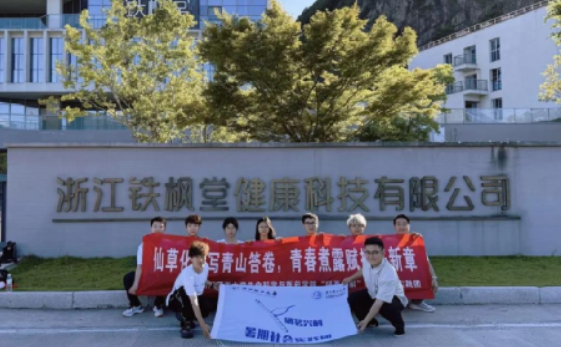
Group 1 - The core idea of the news is the establishment of "Youth Rural Practice Stations" in Zhejiang Province to attract young people back to rural areas for entrepreneurship and to empower rural revitalization [1][2] - The "Youth Rural Practice Station" provides a one-stop service model ("1+N") that includes talent recruitment, employment guidance, entrepreneurial incubation, skills training, technical services, policy consultation, learning exchanges, and living support [2] - The practice team from Zhejiang University of Science and Technology identified key pain points in the health technology industry, particularly in standardized management, high-value product development, and online marketing expansion [3] Group 2 - The practice team explored the vitality of small and micro enterprises in rural areas, recognizing that rural revitalization requires attention to every link in the industrial chain and every resilient market entity [4] - The "Slow Fang" company focuses on upgrading the cultivation of Dendrobium and exploring its cultural tourism value, creating a comprehensive "Dendrobium Fragrance Garden" that integrates planting demonstration, scientific research, leisure tourism, and cultural experiences [6] - A meeting was held with local government officials to discuss the development of the Dendrobium industry in Dajing Town, showcasing the responsibility and innovative wisdom of the youth [4][8] Group 3 - The practice experience allowed team members to understand that youth involvement in rural areas is not merely an "experience" but a platform for deep participation, contribution of wisdom, and creation of value [8] - The "Youth Rural Practice Station" serves as a crucial bridge, providing a solid research environment and living support for the team [8] - The practice team aims to continue contributing to the construction of the Zhejiang Common Prosperity Demonstration Zone, attracting more youth to join the journey towards rural revitalization [8]
科技赋能饲草产业打造“高原草都”
Xin Hua Cai Jing· 2025-07-25 07:10
Core Viewpoint - The article highlights the significant advancements in the forage industry in Delingha City, Qinghai Province, focusing on the successful cultivation of high-quality alfalfa in saline-alkali land, which is crucial for the development of the local grass and livestock industry [1][2]. Group 1: Company Achievements - Qinghai Bensheng Grass Industry Co., Ltd. has made notable progress in cultivating alfalfa in saline-alkali soil, achieving a dry grass yield of 200 kg per mu for the first cut and over 700 kg per mu annually [1][3]. - The company has developed alfalfa varieties with a crude protein content exceeding 20% and a feeding value above 180, significantly enhancing forage quality [1][2]. - Bensheng Grass Industry has established a collaborative innovation mechanism with universities and research institutions, leading to breakthroughs in alfalfa seed selection and planting techniques [2]. Group 2: Industry Development - Delingha City has implemented a comprehensive development plan for the forage industry, aiming to transform saline-alkali land into productive agricultural areas by utilizing abandoned and low-yield lands for planting high-quality forage crops [2][3]. - The city anticipates that by 2025, the total area for various forage crops will reach 125,600 mu, with alfalfa covering 45,000 mu, contributing to a total forage production of 53,800 tons valued at 8.2 million yuan in 2024 [3]. - The local government has introduced policies to support the integration of the forage industry with research, branding, and tourism, promoting a vertical integration model [2][3]. Group 3: Environmental Impact - The cultivation of forage crops has improved soil structure, enhanced wind and water conservation, and mitigated the trends of desertification and salinization in the region [3][4]. - The availability of quality forage supports the sustainable development of livestock farming, meeting the needs of approximately 27,000 yaks or 100,000 Tibetan sheep, thereby reducing pressure on natural grasslands [4][5]. - The company has successfully reduced soil salinity by 40%-50% through innovative agricultural practices, significantly increasing dry grass yields from 120 kg to 450 kg per mu [3].