
京津冀协同发展

Search documents
资金流入,新两翼“比翼齐飞”
Xin Jing Bao· 2026-02-26 02:25
在京津冀的版图上,新两翼正迎着时代之风舒展振翅——南望雄安,这座承载着"千年大计"的未来之 城,正将规划蓝图上的每一个标点,化作燕赵大地上坚实的步履;东看北京城市副中心,城市框架已然 拉开,标志性重大项目构筑起城市的"四梁八柱",通北示范区用两载光阴将"一盘棋"的智慧化为生动实 景。 北京城市副中心固定资产投资每年保持千亿级规模、雄安新区每年保持2000亿元投资规模……高质量发 展背后,资金流成为两座"千年之城"的发展基石。 千亿投资 城市副中心重大工程拉开城市框架 "一年一个节点,每年都有新变化"。在北京东部,北京城市副中心正从宏伟蓝图,幻化成生机蓬勃的未 来之城。蝶变背后,每年的"千亿投资"强度成了这座千年之城的发展基石。 2016年城市副中心启动建设,截至2025年11月,已累计固定资产投资超过9600亿元,连续5年保持千亿 元以上,建安投资总量连续6年全市第一,实现了投资结构优化、功能系统重构、承载能力跃升。 值得一提的是,千亿投资中,政府投资的比重持续下降,社会资本的比重持续攀升。以2024年千亿投资 为例,政府投资占比26%,社会投资占比74%。 千亿投资落在北京城市副中心,并非钢筋水泥的简单堆砌 ...
创业潮流,产业链你中有我
Xin Jing Bao· 2026-02-26 02:04
Core Insights - The article highlights the effective flow and integration of talent, technology, capital, and markets among the Beijing-Tianjin-Hebei region, leading to various employment stories and economic growth [1][19]. Group 1: Economic Growth and Collaboration - By 2025, the GDP growth rates for Beijing, Tianjin, and Hebei are projected to be 5.4%, 4.8%, and 5.6% respectively, indicating a stable and improving economic environment [1][19]. - The collaboration among the three regions is fostering industrial restructuring and innovation chain extension, enhancing overall development quality [1][19]. Group 2: Agricultural Innovations - The Hebei Shouheng Gaobeidian International Agricultural Trading Center has become the largest agricultural wholesale market in the region, facilitating the growth of local agricultural businesses [2][4]. - The success stories of local entrepreneurs, such as Fan Enhui and Yang Shili, illustrate the potential of agricultural products like sweet potatoes and local flowers to thrive in larger markets [2][7][8]. Group 3: Transportation and Manufacturing - Hebei Jingche Rail Transit Vehicle Equipment Co., Ltd. exemplifies the "Beijing design + Hebei manufacturing" model, producing over 1,200 trains for national use since its establishment [12][13]. - The company has created a collaborative platform for product development and manufacturing, enhancing efficiency and reducing costs [14]. Group 4: Technological Advancements - The establishment of the Beijing embodied intelligence super factory marks a significant step in smart manufacturing and innovation within the region [16]. - The region has seen a surge in technology-based enterprises, with over 4,500 registered in Tianjin, indicating a robust environment for innovation [17]. Group 5: Future Development Plans - The "Modern Capital Urban Circle Spatial Coordination Plan (2023-2035)" aims to enhance the collaborative development of Beijing, Tianjin, and Hebei, focusing on industrial synergy and innovation [20][21]. - The plan emphasizes the importance of leveraging each region's strengths to foster economic growth and improve the quality of life for residents [21].

“科技红娘”为顶尖成果搭“鹊桥”
Xin Lang Cai Jing· 2026-02-25 21:01
牵线搭桥,一拍即合。 本报讯(记者 刘苏雅)在"科技红娘"的助力下,国际领先的氢气检测技术正从北京的实验室走向天津 的生产线。新春伊始,中科智汇工场技术经理人丁文墨化身为"科技红娘",频繁往返于京津两地,将北 京的创新资源带到天津的产业应用"试验田",全力促成当地企业的技术升级。 "北京是当之无愧的科技创新策源地,这里有大量的顶尖人才,也拥有大量国内甚至国际领先的科研成 果。"丁文墨在科技成果转化领域深耕了十余年,为在京科研院所、高等院校的科研优秀成果寻找落地 机会。 春节前,丁文墨持续为天津企业艾莫斯公司进行"科技问诊"。"在沟通中我们发现,企业的需求更侧重 于创新布局,而不是聚焦于具体的技术难点。因此,找到优秀的科研团队很重要。"挖掘梳理技术需求 后,他立刻为企业精准选定了理想搭档——中国科学院声学研究所超声学实验室课题组团队。 一对一的高效对接,让来自北京的声表面波氢气传感技术,以最快速度投入生产线上的实际验证。依照 企业的实际需求,传感器产品正在科研团队和工程师的合作下不断迭代,有望帮助企业开拓新的业务 线。"试验验证成功后,这款技术领先的传感器,有望接到大批量订单。"对此,丁文墨信心十足。 "京津之 ...


共建中国式现代化建设先行区示范区 京津冀地区生产总值近12万亿元
Xin Lang Cai Jing· 2026-02-25 17:54
Core Insights - The Beijing-Tianjin-Hebei region's GDP is projected to grow from 8.96 trillion yuan in 2020 to nearly 12 trillion yuan by 2025, with average annual growth rates of 5.2%, 4.4%, and 5.4% during the 14th Five-Year Plan period [1][2] - The year 2026 marks the beginning of the 15th Five-Year Plan, focusing on building a modernized demonstration area for Chinese-style modernization in collaboration with Tianjin and Hebei [7] Group 1: Economic Development - The Beijing-Tianjin-Hebei region's GDP is expected to increase significantly, crossing three trillion yuan milestones [1] - The region aims to achieve a coordinated development strategy, enhancing economic integration and collaboration among the three areas [6] Group 2: Infrastructure and Urban Development - The construction of major infrastructure projects, including the new campus for Beijing Industrial University and the expansion of medical facilities, is underway to support urban development [1][2] - The integration of services between Beijing and Xiong'an New Area has led to the establishment of 212 high-frequency government service items for joint processing [2] Group 3: Innovation and Technology - The region has incubated 140 hard-tech enterprises, with a total technology contract transaction value of 996.1 billion yuan flowing from Beijing to Tianjin and Hebei [5] - The establishment of the Beijing-Tianjin-Hebei National Technology Innovation Center has facilitated significant technological advancements and collaborations [5] Group 4: Environmental and Public Services - The construction of a beautiful and livable Beijing-Tianjin-Hebei region is progressing, with plans for ecological improvements in major rivers and enhanced public service sharing [4][5] - The medical alliance has expanded to 150 entities, improving healthcare accessibility and service quality across the region [5] Group 5: Collaborative Governance - A collaborative governance mechanism has been established among the main political leaders of Beijing, Tianjin, and Hebei to enhance coordination and joint efforts in regional development [6] - The focus is on deepening the integration of urban functions and enhancing the quality of life for residents through shared services and infrastructure [7]
奋力谱写京津冀协同发展新篇章
Xin Lang Cai Jing· 2026-02-25 17:54
Core Viewpoint - The coordinated development of the Beijing-Tianjin-Hebei region over the past 12 years has yielded significant results, enhancing economic quality and public service sharing, while also improving the sense of gain among the populace [1][4]. Group 1: Historical Context and Strategic Importance - The coordinated development was elevated to a national strategy in February 2014, emphasizing its importance for addressing deep-rooted issues in the capital's development [1][2]. - The region faces challenges such as unbalanced development, with Beijing, Tianjin, and Hebei experiencing disparities in resource allocation and economic growth [2][3]. Group 2: Key Achievements and Mechanisms - The initiative has focused on relieving Beijing of non-capital functions, promoting the construction of new wings for the city, and enhancing transportation, ecology, industry, and public services [3][4]. - A collaborative mechanism has been established, allowing for smoother flow of innovative resources and shared public services, which has improved the overall quality of life for residents [3][4]. Group 3: Future Directions and Planning - The approval of the "Modern Capital Urban Circle Spatial Coordination Plan (2023-2035)" marks a significant step in future planning, aiming to create a multi-layered spatial structure for commuting, functionality, and industrial collaboration [4]. - Future efforts will focus on further relieving non-capital functions, enhancing the efficiency of technology transfer, and accelerating the implementation of key projects to deepen the collaborative development [4][5].
展卷通武廊 读懂京津冀
Xin Lang Cai Jing· 2026-02-25 17:54
Core Viewpoint - The article highlights the progress and significance of the Beijing-Tianjin-Hebei coordinated development strategy over the past twelve years, emphasizing the emergence of the "Tongwu-Lang" area as a model for regional collaboration and innovation [1][2][3]. Group 1: Development Overview - The "Tongwu-Lang" area, covering the intersection of Beijing's Tongzhou, Tianjin's Wuqing, and Hebei's Langfang, is characterized by shared resources, synchronized development, and cultural integration, showcasing the achievements of coordinated development [3][4]. - The geographical significance of the Tongwu-Lang area is underscored by its location along the Grand Canal, facilitating connectivity and collaboration among the three regions [3]. Group 2: Strategic Planning - The "Modern Capital Urban Circle Spatial Coordination Plan (2023-2035)" aims to accelerate the construction of the Beijing-Tianjin-Hebei innovation triangle, with Tongwu-Lang positioned as a core area for innovation and development in sectors like digital economy and new energy vehicles [4][5]. - The integration of Wuqing into the modern capital urban circle's "commuting circle" provides a more precise foundation for high-quality development, supported by specific institutional arrangements outlined in various planning documents [5]. Group 3: Future Prospects - The article emphasizes the importance of the integrated development approach in Tongwu-Lang as a model for the national strategy of coordinated development in the Beijing-Tianjin-Hebei region, indicating a promising future for more cohesive growth and enhanced public sentiment [5][6].
协同发展的样板间
Xin Lang Cai Jing· 2026-02-25 17:54
Core Viewpoint - The article emphasizes the strategic importance of the Tongzhou-Wuqing-Langfang (通武廊) area in the coordinated development of the Beijing-Tianjin-Hebei region, highlighting its role as a key support for the modernization of the capital metropolitan area and its potential for economic growth and collaboration [1][2]. Group 1: Strategic Planning and Development - The central government has approved the "Modern Capital Metropolitan Area Spatial Coordination Plan (2023-2025)," which includes Wuqing in the commuting circle of the metropolitan area, indicating a more precise support for high-quality development [2]. - The "15th Five-Year Plan" for Beijing emphasizes deep integration of the commuting circle, proposing the establishment of an industrial innovation development pilot area in Tongzhou-Wuqing-Langfang [2][3]. - Local legislation has been established to promote "integrated" development in Tongzhou-Wuqing-Langfang, focusing on mechanisms for park coordination, transportation planning, tourism resource integration, and public service development [3]. Group 2: Industry Collaboration and Economic Growth - The coordinated development of Tongzhou-Wuqing-Langfang is seen as a core engine for industrial collaboration, particularly in the smart connected vehicle sector, with a clear and efficient industrial chain taking shape [7][8]. - The establishment of the Beijing-Tianjin-Hebei Smart Connected New Energy Vehicle Technology Ecological Port is set to enhance the supply chain and promote local component production, benefiting the automotive industry [10]. - New projects, such as the Guangdong Dongya Electric's smart factory in the Jingqing Automotive Industrial Park, are expected to generate significant economic output and strengthen the regional automotive supply chain [9]. Group 3: Public Services and Quality of Life - The collaboration among Tongzhou, Wuqing, and Langfang has led to improved public services, including education and healthcare, enhancing the quality of life for residents [12]. - Initiatives such as the "京津冀通办" (Beijing-Tianjin-Hebei Regional Service) have expanded access to government services, allowing residents to handle administrative tasks locally [12][13]. - Environmental cooperation is also a focus, with projects like the Chaobai River National Forest Park aiming to enhance ecological quality and promote sustainable development in the region [13].
相融共通的新场景
Xin Lang Cai Jing· 2026-02-25 17:54
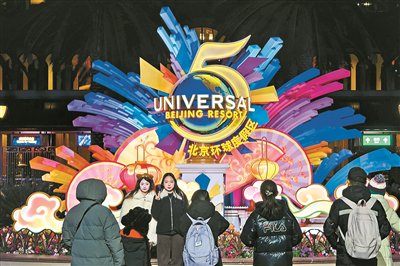
Core Viewpoint - The Beijing-Tianjin-Hebei (Jing-Jin-Ji) coordinated development is transitioning from planning to practical implementation, with significant impacts on tourism and local economies driven by cultural and tourism integration [5][6]. Group 1: Cultural and Tourism Integration - The integration of cultural and tourism industries in Tongzhou, Wuqing, and Langfang is a vibrant aspect of Jing-Jin-Ji development, creating unique tourism IPs that cater to diverse consumer needs and facilitate mutual customer flow [6][9]. - Universal Studios Beijing has become a major tourist destination, significantly boosting local industries such as hospitality and transportation, with a reported GDP multiplier effect of 6:1 for every yuan spent in the park [6][7]. - The Bay Area project near Universal Studios achieved over 3 billion yuan in sales within its first month, with more than 35% of visitors coming from outside Beijing, indicating strong regional tourism appeal [7]. Group 2: Transportation Connectivity - A comprehensive transportation network supports the Jing-Jin-Ji coordinated development, creating an "hourly living circle" that enhances mobility and resource sharing among Tongzhou, Wuqing, and Langfang [10][11]. - The integration of road, rail, and water transport has improved commuting efficiency, exemplified by high-speed rail facilitating daily cross-regional travel for professionals [10][11]. - Upgrades to key transportation nodes, such as inspection stations, have significantly improved traffic flow and reduced wait times, enhancing the overall commuting experience [13][14]. Group 3: Mechanism Innovation - The Beijing Daxing International Airport Economic Zone exemplifies innovative management mechanisms that break down administrative barriers, fostering a collaborative development model between Beijing and Hebei [16][18]. - Policy coordination has enabled seamless service delivery across regions, with numerous administrative processes streamlined for efficiency, supporting industrial integration [16][17]. - The economic zone has attracted significant investment and projects, demonstrating the effectiveness of cross-regional collaboration in enhancing economic dynamism [17][18].
【雄安之声】雄安综合保税区实现全域封关运营
Sou Hu Cai Jing· 2026-02-25 17:13
Core Viewpoint - The approval of the Xiong'an Comprehensive Bonded Zone (Phase II) marks a significant step in enhancing the region's capacity for high-level opening-up and supporting the coordinated development of the Beijing-Tianjin-Hebei area [1][2]. Group 1: Project Overview - The Xiong'an Comprehensive Bonded Zone was established on June 25, 2023, and is being developed in two phases, with Phase I covering 0.42 square kilometers and set to commence operations in January 2024 [2]. - Phase II, covering 0.21 square kilometers, focuses on high-end manufacturing, smart logistics, research and design, and testing and maintenance, aiming for seamless integration with Phase I [2]. Group 2: Operational Enhancements - The bonded zone will implement a highly efficient customs clearance model, allowing for direct customs clearance of export goods at Xiong'an and direct pickup of import goods at the port [2]. - The zone aims to achieve a total import and export value of 60.008 billion yuan by 2025 [2]. Group 3: Strategic Development - The Xiong'an Free Trade Zone Administration plans to leverage policy advantages to create a dual-driven open structure of "Bonded Zone + Free Trade Zone," enhancing the level of industrial and foreign trade development [3]. - The Xiong'an Customs will enhance regulatory services and implement a "one-stop" customs clearance service, utilizing technologies such as IoT, big data, and blockchain to create a smart customs environment [3].
北京将加快实施京津冀人形机器人产业链协进工程
Zhong Guo Xin Wen Wang· 2026-02-25 11:54
Group 1 - Beijing will accelerate the implementation of the Beijing-Tianjin-Hebei humanoid robot industry chain coordination project, enhancing the robot industry ecosystem [1] - The Beijing-Tianjin-Hebei collaborative development strategy has been in place for 12 years, with Beijing playing a pivotal role in driving regional innovation and industrial cooperation [1] - In 2023, Beijing established a consultation mechanism for party and government leaders in the region, forming a joint office and 18 specialized working groups to promote collaborative development [1] Group 2 - The Xiong'an New Area is seeing significant development, with 132 new registered enterprises and over 1,900 innovative talents attracted, indicating an initial industrial clustering effect [2] - The Beijing urban sub-center is advancing high-quality development, with major projects like the East Sixth Ring Road renovation and the opening of the Beijing Tongzhou Station [2] - The National Green Development Demonstration Zone has achieved substantial results, with a cumulative transaction volume of 630 million yuan in the national voluntary greenhouse gas reduction trading market [2] Group 3 - By 2025, the technology contract transaction volume flowing from Beijing to Tianjin and Hebei is expected to reach 99.61 billion yuan, with a cumulative total exceeding 320 billion yuan during the 14th Five-Year Plan period, marking a 1.7 times increase compared to the previous period [3] - The three regions have jointly revised and updated six industrial chain maps, achieving breakthroughs in 36 key areas, particularly in hydrogen energy and biomedicine [3] - The advanced manufacturing cluster in the region has seen significant growth, with the pharmaceutical industrial output value accounting for over 20% of the national total [3] Group 4 - This year, Beijing will fully support the construction of the Xiong'an New Area and enhance the integration of the commuting circle, promoting high-quality development in the Tongzhou District and surrounding areas [4] - The establishment of the Beijing-Xiong'an talent innovation corridor aims to strengthen the modern urban framework [4] - The region will deepen industrial cooperation and enhance the efficiency of collaborative innovation platforms, fostering the development of the Beijing-Tianjin-Xiong'an innovation cluster [4]
