光计算

Search documents
光计算系统解决方案商「光本位」半年完成两轮融资,获两地国资加持丨36氪首发
3 6 Ke· 2025-07-07 06:04
Core Insights - The surge in demand for AI computing power has led to a wave of IPO submissions from domestic GPU manufacturers, while a new paradigm of AI computing based on light is gaining traction among investors [1] - "Light-based Technology" has completed strategic financing rounds, indicating strong investor interest and confidence in its innovative approach to AI computing [1][3] Company Overview - "Light-based Technology" was established in 2022 and is the first company globally to commercialize light computing chips that integrate silicon photonics and phase change materials (PCM) [3] - The company has achieved significant milestones, including the development of a light computing chip with a matrix size of 128x128, surpassing the previous industry ceiling of 64x64 [3][5] Technology and Product Development - The technology path adopted by "Light-based Technology" allows for a tenfold increase in integration density, making it suitable for large-scale AI computing scenarios [3] - The company is currently working on the production of 256x256 light computing chips and has designs for 512x512 chips, which are expected to exceed the performance of current leading electronic chip products [3][5] Strategic Partnerships and Collaborations - In December 2024, "Light-based Technology" established a strategic partnership with a leading domestic internet company to collaborate on AI computing hardware [5] - The company is actively exploring product requirements with core users in high-performance computing fields, including large models and scientific calculations [5] Investor Sentiment - Investors view photon computing as a breakthrough technology that addresses the limitations of traditional computing paradigms, with "Light-based Technology" positioned as a leader in this field [6][7] - The unique "PCM + Crossbar" technology route of "Light-based Technology" is recognized for its potential to enhance AI inference speed and significantly reduce power consumption [7][9] Market Position and Future Outlook - "Light-based Technology" is seen as a key player in the AI computing landscape, with its technology aligning with national strategic priorities for computing infrastructure and artificial intelligence [8] - The company is expected to redefine the AI chip market landscape through its innovative solutions and strong execution capabilities [9]

这里,已成为“人工智能第一城”
Jin Rong Shi Bao· 2025-06-20 11:00
Core Insights - Beijing has over 2,400 artificial intelligence companies and a core industry scale of nearly 350 billion yuan, accounting for half of the national total, establishing itself as the "capital of artificial intelligence" in China [2] - The city has a rich innovation resource base, with 21 national key laboratories and over 40% of the country's top talent concentrated there [5] - Beijing has implemented various policies to accelerate the development of AI, including a three-year action plan for embodied intelligence and initiatives for AI in new materials [5][6] Group 1: Innovation Resources - Beijing has established 23 key laboratories in AI, focusing on areas such as large models and AI safety, and has created four new research institutions in the field [5] - The city has produced globally leading original achievements, including the world's first native multimodal large model, Emu [5] - Original innovation capabilities are being enhanced, with breakthroughs in optical computing and wafer-level chips, including the world's first optical training chip [5] Group 2: Infrastructure and Data - Beijing's implementation plan for computing infrastructure aims to add 8,620 PetaFLOPS of computing power by 2024, bringing the total to over 33,000 PetaFLOPS [6] - The city has launched the first data foundation system pilot area in China, aggregating over 180 general and industry data sets, totaling more than 2,000 TB of data [6] Group 3: Future Development Plans - The city plans to focus on original innovation in frontier fields such as embodied intelligence and AI for life sciences, aiming to secure a leading position in AI [6] - There will be an emphasis on the integration of data and application development, promoting the implementation of large model products across departments and regions [6] - Beijing aims to create a first-class development environment by enhancing the training of potential young talents [6] Group 4: Global Cooperation - The city is committed to becoming a global "open-source capital" and is working towards establishing a global AI safety and governance system [7]

港股收评:恒指收复23500点关口,石油、军工等避险板块走低
Ge Long Hui· 2025-06-20 08:50
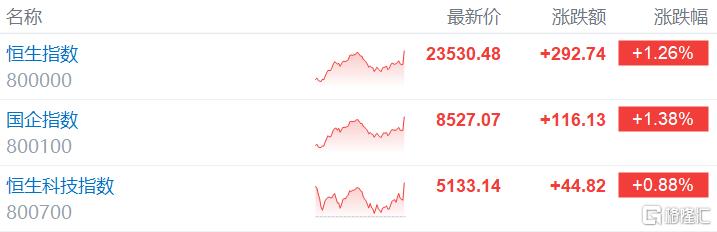
Market Overview - The Hong Kong stock market experienced a rebound with the Hang Seng Index rising by 1.26% to close at 23,530.48 points, ending a three-day losing streak [1][2] - The Hang Seng China Enterprises Index and the Hang Seng Tech Index increased by 1.38% and 0.88%, respectively [1] Sector Performance - Major technology and financial stocks contributed significantly to the market's recovery, with Tencent and Alibaba both rising by 1.5% [2][4] - Insurance stocks saw notable gains, with China Life increasing by nearly 5% and other major insurers also performing well [5][6] - Coal stocks showed strength, with Mongolian Energy surging by 8.47% and other coal companies also rising [6][9] - Semiconductor stocks remained active, with companies like Meijiaxin Holdings and Zhongdian Huada Technology rising over 6% [7][8] Specific Stock Movements - Notable gainers included Tencent, Alibaba, and Baidu, with their respective increases of 1.51%, 1.55%, and 1.36% [4][12] - Insurance stocks such as China Life and New China Life rose by 4.74% and 4.22%, respectively [5] - The banking sector saw a general uplift, with Harbin Bank rising over 4% and several other banks increasing by more than 3% [6] Investment Trends - The market is currently in a policy observation phase, with expectations of potential interest rate cuts in the second half of the year [6] - Southbound capital inflows into Hong Kong stocks reached a net purchase of 15.51 billion HKD, indicating strong interest from mainland investors [18] - Analysts predict that the overall macroeconomic environment in China, despite needing repair, presents structural opportunities for Hong Kong stocks, particularly in sectors like new consumption and AI technology [20]
中国实现世界首颗超高并行光计算芯片:到底是啥?
Hu Xiu· 2025-06-20 01:12
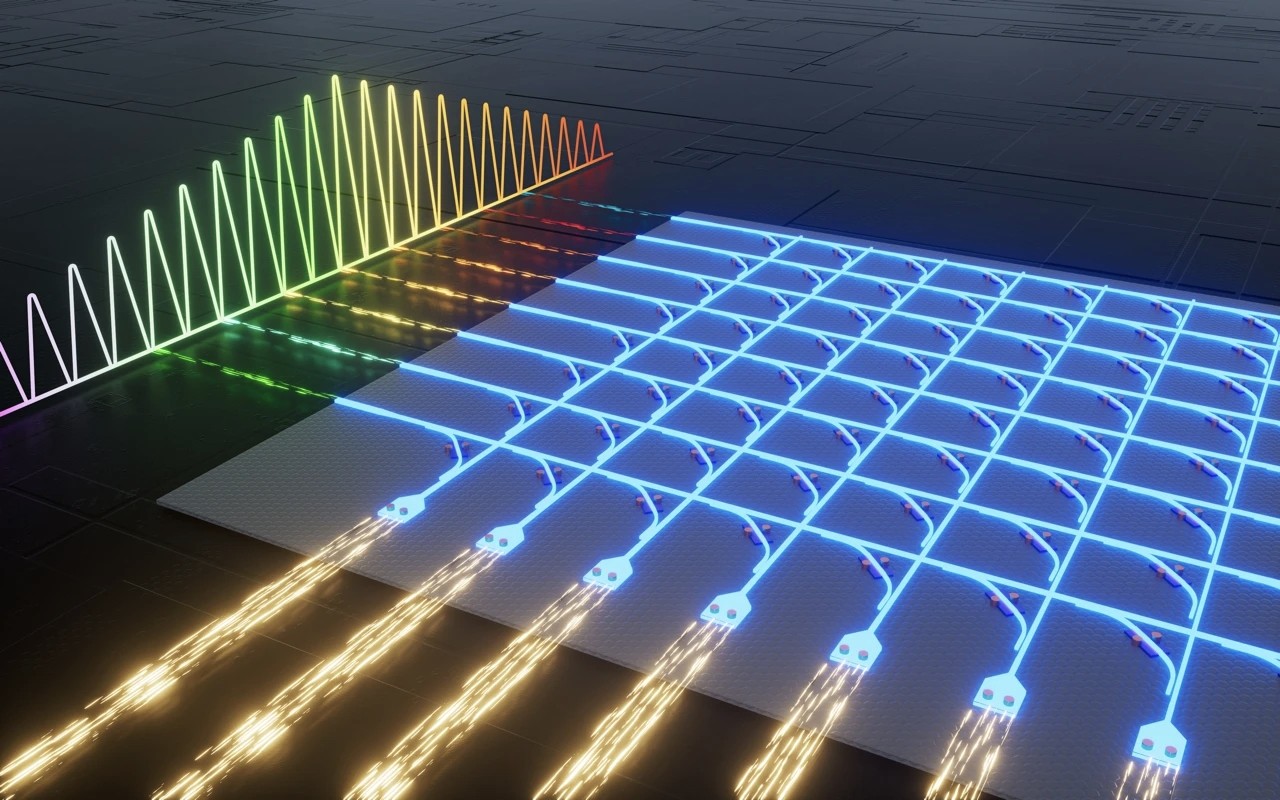
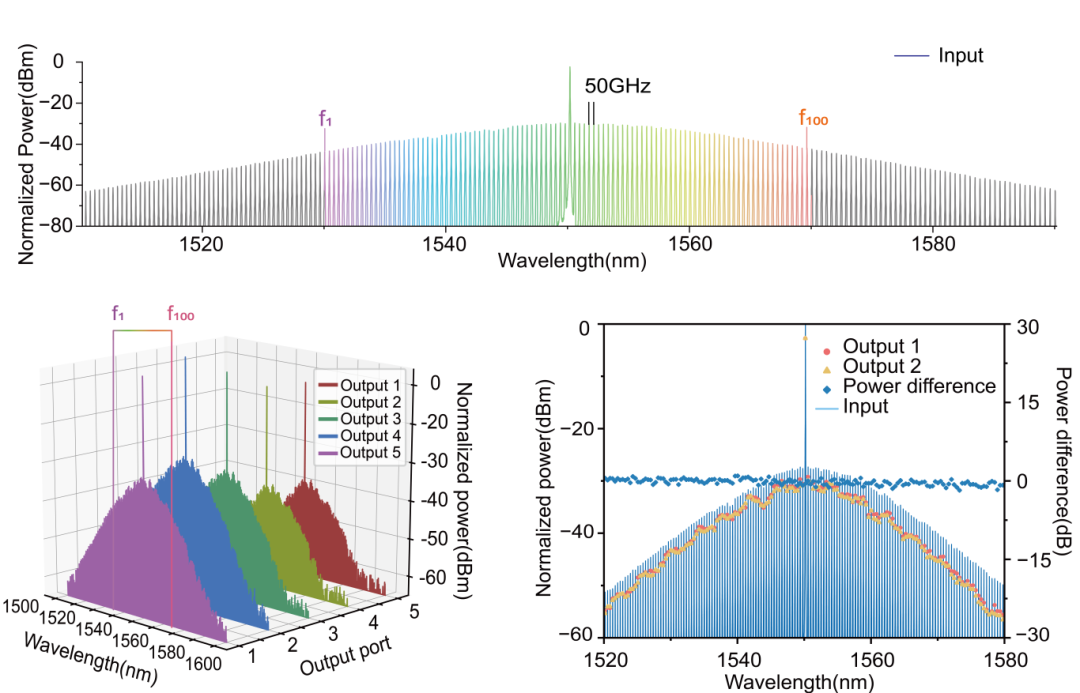
Group 1 - The core achievement is the development of the "Meteor One" chip, which demonstrates a parallelism greater than 100 at an optical main frequency of 50GHz, addressing the challenge of high-density information processing on optical chips [1][6][9] - The chip utilizes a parallel optical computing architecture driven by soliton micro-comb sources and Mach-Zehnder interferometer (MZI) networks, showcasing significant advancements in optical computing technology [3][4][6] - The chip's design incorporates a 90nm CMOS-compatible process on a silicon-on-insulator (SOI) platform, featuring a high-performance parallel computing core with a theoretical peak computing power exceeding 2560 TOPS and a power efficiency of over 3.2 TOPS/W [7][9] Group 2 - Optical computing is positioned as a solution to the limitations of traditional electronic computing, particularly in addressing the increasing computational demands driven by advancements in artificial intelligence [10][29] - The technology is characterized by its low power consumption, high speed, and scalability, making it a key player in the post-Moore's Law era for large-scale data processing [10][30] - The global optical chip market is projected to reach $5.6 billion by 2027, indicating significant growth opportunities in the optical computing sector as it evolves to meet industry demands [31] Group 3 - Various companies are actively developing optical computing technologies, with notable players including Shanghai Xizhi Technology, Suzhou Guangbenwei Technology, and Beijing Xinsuan Technology, each focusing on different technological approaches and product offerings [22][23][24] - Internationally, companies like Lightmatter and Luminous Computing are also making strides in optical computing, leveraging advanced research from institutions like MIT and Princeton [26][27] - The industry is still in its early stages, with ongoing developments aimed at enhancing performance and energy efficiency, positioning optical computing as a complementary technology to existing GPU architectures [30]
我国团队最新突破,世界首颗超高并行光计算芯片问世,光计算瓶颈有望被打破
Xuan Gu Bao· 2025-06-18 23:35
Group 1 - The research team at the Shanghai Institute of Optics and Fine Mechanics has developed a high-parallel optical computing integrated chip named "Meteor No. 1," achieving a parallelism greater than 100 in photon computing prototype verification [1] - This advancement addresses the bottleneck in computing density for optical computing, paving the way for the development of low-power, low-latency, high-performance, and high-speed super photonic computers [1] - The Chinese Communication Association has indicated the importance of incorporating optical computing chips into national development strategies, promoting the foundational development of semiconductor materials and optical chip devices [1] Group 2 - Tianfeng Securities highlights that optical computing or optoelectronic hybrid computing is currently the most promising technology to address computing power supply and low-power data processing challenges [2] - The use of photonic chips allows for data transmission with minimal electromagnetic interference, enabling operation at higher frequencies, thus providing greater data bandwidth and lower energy consumption [2] - According to Yole data, the photonic integrated circuit market is expected to reach $54 billion by 2035, driven by demand in artificial intelligence and data communication sectors [2] Group 3 - Shijia Photonics focuses on the optical communication industry, with its main business covering optical chips and devices, indoor optical cables, and cable materials [3] - Robotec is recognized as one of the leading companies in precision coupling packaging equipment for optical communication [4]
中科院上海光机所在超高并行光计算集成芯片方面取得突破性进展
财联社· 2025-06-18 09:23
Core Viewpoint - The research team at the Shanghai Institute of Optics and Fine Mechanics has achieved a breakthrough in high-density information parallel processing on optical chips, developing the "Meteor One" ultra-high parallel optical computing integrated chip, which validates a prototype system with a parallelism greater than 100 [1][2] Group 1 - The "Meteor One" chip utilizes photons as carriers for information transmission, interaction, and computation, offering advantages such as low power consumption, low latency, and high parallelism, making it an effective solution for building new computational infrastructure in the post-Moore era [2] - This research progress addresses the computational density bottleneck in optical computing, enhancing its performance and paving the way for the development of low-power, low-latency, high-performance, and high-speed super photonic computers [2]

刚刚!利好,来了!
中国基金报· 2025-06-18 07:56
Market Overview - The A-share market experienced a slight increase on June 18, with the Shanghai Composite Index rising by 0.04%, the Shenzhen Component Index by 0.24%, and the ChiNext Index by 0.23% [2] - A total of 1,813 stocks rose, while 3,479 stocks fell, with 49 stocks hitting the daily limit up [3][4] Sector Performance - The computing hardware sector saw a collective surge, with PCB and CPO sectors leading the gains, and stocks like Yihua New Materials, Kexiang Co., and Hudian Co. hitting the daily limit up [4] - The banking sector showed strong performance, with several banks, including Agricultural Bank of China and Shanghai Pudong Development Bank, reaching historical highs [8][10] Technological Advancements - A significant breakthrough was reported by the Shanghai Institute of Optics and Fine Mechanics, where a team developed a high-parallel optical computing integrated chip, "Meteor No. 1," achieving a parallelism greater than 100 [5][6] - This advancement in optical computing is expected to enhance performance and open new avenues for low-power, low-latency, high-capacity optical computers, which are crucial for AI and large-scale data exchange [6] Policy Developments - The Chinese government issued an action plan to enhance Shanghai's status as an international financial center, focusing on attracting financial institutions and improving financial services [15][17] - The China Securities Regulatory Commission (CSRC) introduced new guidelines for the Sci-Tech Innovation Board, aimed at enhancing inclusivity and adaptability for high-quality technology enterprises [20][21]




刚刚,集体大反攻!两大利好,突袭!
券商中国· 2025-06-18 07:01
Core Viewpoint - The semiconductor industry is experiencing a significant rebound, driven by supply shortages and price increases, particularly in DDR4 memory chips, alongside technological advancements in optical computing [1][2][3]. Group 1: Market Performance - The semiconductor sector has shown strong performance, with notable stocks like Shengyi Electronics, Kexiang Co., and Zhongfu Circuit rising over 10%, and several stocks hitting the daily limit [1][2]. - The semiconductor ETF saw a rise of over 1%, indicating a positive market sentiment and a potential shift in investor focus towards this sector [2]. Group 2: Supply-Side Dynamics - Trend Force reported a 53% month-on-month increase in DDR4 prices in May, marking the largest increase since 2017, with prices continuing to surge into June [2][3]. - Major DRAM manufacturers, including Samsung, SK Hynix, and Micron, have announced production halts for DDR4, leading to a supply crunch and increased prices for existing stock [3]. - The market is expected to see a reduction in DDR4 production starting in Q1 2024, which may benefit domestic companies through price increases and order transfers [4]. Group 3: Technological Advancements - A breakthrough in optical computing was reported by the Shanghai Institute of Optics and Fine Mechanics, with the development of the "Meteor One" chip, which addresses high-density information processing challenges [3]. - This advancement is anticipated to enhance the performance of optical computing systems, paving the way for low-power, high-speed computing solutions [3]. Group 4: Demand-Side Trends - The consumer electronics sector is witnessing a recovery, with specific growth in AI and automotive applications driving demand for semiconductors [5]. - Global smartphone shipments are projected to grow by 1.5% year-on-year in Q1 2025, while PC shipments are expected to increase by 4.9% in the same period [6][7]. - The wearable technology market is experiencing significant growth, with AI glasses expected to see a 216% increase in shipments year-on-year in Q1 2025 [8].

引领AI创新浪潮 北京成就“人工智能第一城”
Zhong Guo Jing Ji Wang· 2025-06-17 08:04
Group 1 - The core viewpoint is that Beijing has established itself as the "Artificial Intelligence Capital" of China, with over 2,400 AI companies and a core industry scale of nearly 350 billion yuan, accounting for half of the national total [1] - Beijing has a highly concentrated innovation resource environment, hosting 21 national key laboratories and over 40% of the country's top talent, which supports advancements in AI technology and applications [1] - The city is focusing on major technological directions such as large models, embodied intelligence, and AI safety, and has established 23 key laboratories in the AI field [1][3] Group 2 - Beijing is seizing opportunities in AI development by implementing various industry policies, including a three-year action plan for embodied intelligence and initiatives to integrate AI with new materials [3] - The city is concentrating on disruptive technologies like optical computing and wafer-level chips, leading to the production of the world's first optical training chip [3] - Beijing's key enterprises have launched and iterated leading general-purpose foundational models, with 132 large models registered and online, ranking first in the nation [3]
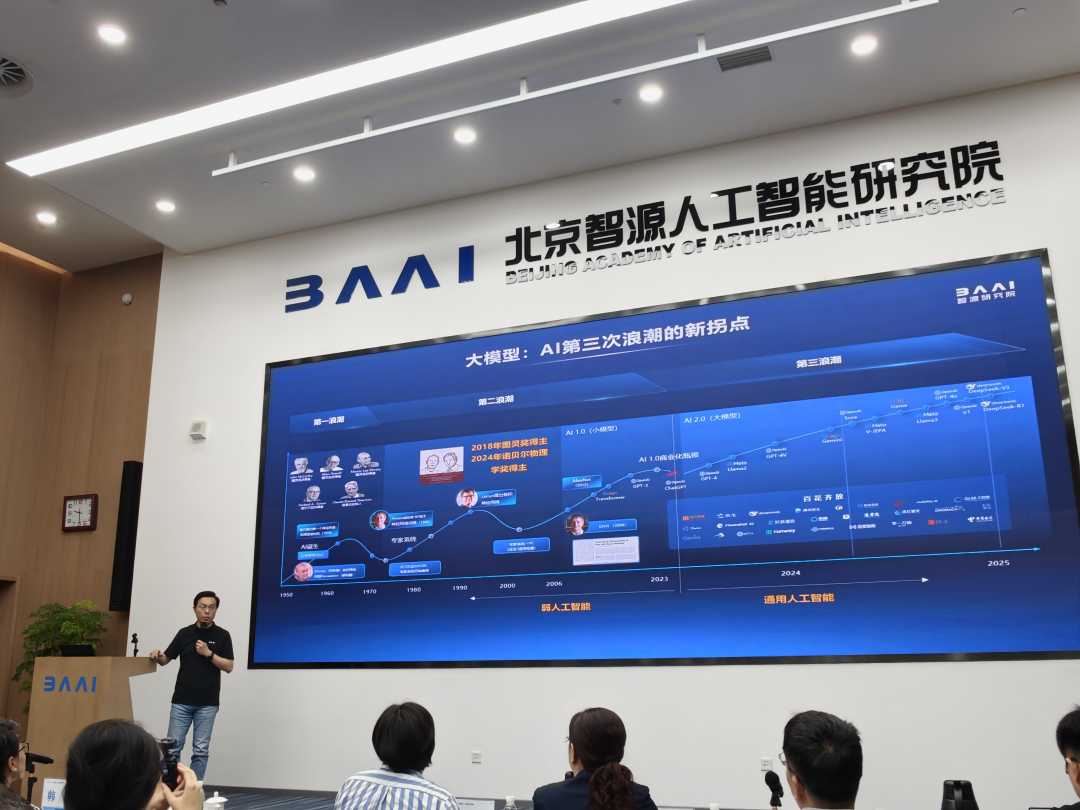
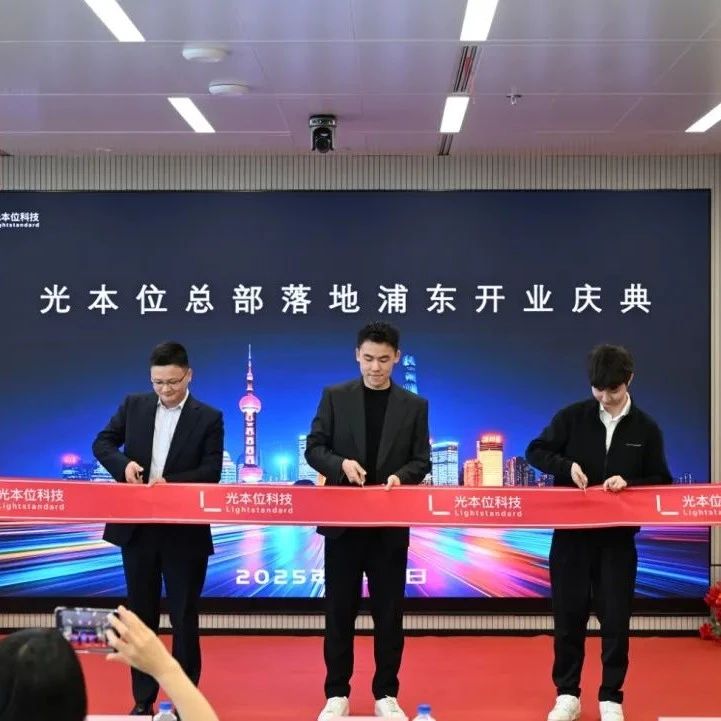
“追光”的事业,中国首家实现存算一体的光计算芯片公司落位浦东
半导体芯闻· 2025-06-13 09:41
Core Viewpoint - The establishment of Guangbenwei in Pudong marks a new chapter in AI computing, focusing on photon-based computing chips and photonic integration to significantly reduce computing costs and improve performance [1][10][12]. Group 1: Company Overview - Guangbenwei was founded in 2022 and aims to create a new paradigm of AI computing based on light standards [1]. - The company has developed photon storage computing chips and photonic integration computing cards, achieving world-leading levels in computing density and precision [1][12]. - The company has attracted a talented team, including returnees and experienced professionals from major tech firms, to drive its mission [3][22]. Group 2: Technological Advancements - Guangbenwei's first photon computing chip was successfully produced in July 2022, marking a significant milestone in the engineering application of cutting-edge technology [6][8]. - The company plans to release a new photon computing chip with a matrix size of 128x128 by June 2024, which will meet commercial standards and surpass traditional electronic chips in computing density [10][12]. - Guangbenwei is the first company in China to achieve commercial integration of photon chips for storage and computing [12][14]. Group 3: Market Context and Future Prospects - The demand for computing power is surging due to the rapid growth of AI models, creating a need for alternative computing solutions like photon computing chips [10][18]. - Guangbenwei anticipates that 2025 will be a pivotal year for the commercialization of its products, supported by recent strategic financing [15][22]. - The company is collaborating with various industry partners, including leading semiconductor manufacturers and research institutions, to explore the potential applications of photon computing [15][19]. Group 4: Vision and Mission - Guangbenwei aims to be a platform where individuals can realize their potential and career aspirations, fostering a collaborative and innovative work environment [4][22]. - The company is committed to integrating into the semiconductor and AI industry ecosystem in Shanghai, aspiring to become a leading player in the global photon computing market [16][23].