关税影响

Search documents
Kimball Electronics(KE) - 2026 Q1 - Earnings Call Transcript
2025-11-06 16:00
Financial Data and Key Metrics Changes - Net sales for Q1 fiscal 2026 were $366 million, a 2% decline compared to Q1 fiscal 2025 [5][10] - Gross margin rate improved to 7.9%, a 160 basis point increase from 6.3% in the same period last year [10] - Adjusted income for Q1 was $17.5 million, or 4.8% of net sales, compared to $12.6 million, or 3.4% of net sales last year [11][12] - Adjusted net income was $12.3 million, or $0.49 per diluted share, up from $5.5 million, or $0.22 per diluted share last year [12][13] - Cash and cash equivalents at the end of Q1 were $75.7 million, with cash generated from operations at $8.1 million [13][15] Business Line Data and Key Metrics Changes - Medical sales were $102 million, up 13% year-over-year, accounting for 28% of total revenue [5][6] - Automotive sales were $164 million, down 10% year-over-year, representing 45% of total sales [7] - Industrial sales totaled $100 million, a 1% decrease compared to Q1 last year, making up 27% of total sales [7][8] Market Data and Key Metrics Changes - Medical sales growth was driven by strong performance in North America, Asia, and Europe [5][6] - Automotive sales decline was primarily due to lower sales in North America and Asia, partially offset by growth in Europe [7] - Industrial business saw a decline in North America due to softening demand for HVAC, while Asia reported strong sales growth [8] Company Strategy and Development Direction - The company aims to expand its capabilities in the medical sector, focusing on higher-level assemblies and finished medical devices [6][18] - A tuck-in acquisition strategy is being pursued to add new end markets and manufacturing capabilities [18] - The company is committed to returning to profitable growth, particularly in the medical space, while managing costs and improving margins [19] Management's Comments on Operating Environment and Future Outlook - Management expressed confidence in returning to profitable top-line growth next year and reiterated guidance for fiscal 2026 [4][16] - The company is monitoring the evolving global tariff landscape and expects to recover tariff costs by passing them on to customers [8][9] - Management highlighted the importance of maintaining a strong balance sheet while preparing for growth [43][44] Other Important Information - Cash conversion days improved to 83 days, representing the lowest level in over three years [13][14] - Capital expenditures in Q1 were $10.6 million, primarily for leasehold improvements and the new facility in Indianapolis [15][16] - The company has $14.8 million remaining on its share repurchase program [15] Q&A Session Summary Question: Will working capital increase as top-line growth resumes? - Management does not expect a significant increase in working capital as they have improved inventory management [21][22] Question: Is the current cash conversion days level stable? - Management aims for cash conversion days to remain in the low 80s as the business grows [23] Question: What are the expectations for EBITDA margins? - Management does not expect a deterioration in EBITDA margins and anticipates improvements as growth resumes [24] Question: What is the focus for potential acquisitions in the medical segment? - The company is exploring acquisitions in the medical CMO space, focusing on new technologies and geographies [28] Question: How does the pipeline of medical projects look for revenue growth? - The company has a strong pipeline of medical projects and expects to close several as the year progresses [37][38] Question: What is the outlook for the automotive segment? - Management anticipates continued pressure in the automotive market but remains strategically focused on high-visibility revenue [41] Question: How is the company balancing organic growth and potential acquisitions? - Management is focused on disciplined capital allocation and will consider acquisitions that enhance their CMO strategy [43][44] Question: What impact does accelerated depreciation have on the company? - Accelerated depreciation is beneficial, particularly regarding interest expense deductions [46]

Watts Water(WTS) - 2025 Q3 - Earnings Call Transcript
2025-11-06 15:00
Financial Data and Key Metrics Changes - Organic sales increased by 9% in Q3 2025, driven by favorable pricing in the Americas and pull-forward demand, despite a decline in Europe [4][6] - Reported sales reached $612 million, reflecting a 13% increase on a reported basis and a 9% increase on an organic basis [7][9] - Adjusted EBITDA of $128 million increased by 21%, with an adjusted EBITDA margin of 20.9%, up 140 basis points [8][9] - Adjusted earnings per share rose to $2.50, a 23% increase compared to the prior year [9] Business Line Data and Key Metrics Changes - In the Americas, reported sales were up 16%, with organic sales up 13%, driven by favorable pricing and approximately $11 million of pull-forward demand [7][8] - Europe reported a 4% increase in sales, but organic sales declined by 2% due to market weakness [8] - APMEA sales decreased by 1% on a reported basis and were flat on an organic basis, with growth in Australia and the Middle East offset by declines in China and New Zealand [8] Market Data and Key Metrics Changes - The Americas segment margin increased by 180 basis points to 23.7%, while Europe segment margin increased by 160 basis points to 12.2% [8][9] - The company anticipates stronger sales growth in the Americas and Europe, while Asia-Pacific is projected to be slightly below previous expectations [11][12] Company Strategy and Development Direction - The company is focused on integrating the recently acquired HAWS Corporation, which is expected to enhance its product portfolio and capabilities [5][11] - The company continues to manage tariff-related challenges through strategic pricing and supply chain optimization [5][6] - The outlook for 2025 has been raised due to strong Q3 performance and expectations for Q4, with anticipated organic sales growth of 4% to 5% [11][12] Management's Comments on Operating Environment and Future Outlook - Management expressed confidence in the resilience of the business despite an uncertain trade environment and ongoing supply chain disruptions [15] - The company expects continued slow growth in the multifamily and residential markets, with a cautious outlook for Europe until geopolitical issues stabilize [35][36] - Management noted that the tariff environment remains uncertain, with an estimated direct tariff impact of $40 million for 2025 [6][12] Other Important Information - The balance sheet remains strong, with a net debt-to-capitalization ratio of negative 15% and net leverage of negative 0.5x [10] - The company expects to achieve free cash flow conversion of greater than or equal to 100% of net income in 2025 [12] Q&A Session Summary Question: Can you talk about the price contribution in Q3 and expectations for Q4? - The price contribution in Q3 was about 6%, and expectations for Q4 are slightly higher due to increased pricing to cover tariffs [20][22] Question: How does HAWS compete in the drinking water business? - HAWS has a niche market primarily on the West Coast, and the acquisition was mainly for their safety products, which complement the Bradley business [25][26] Question: What is the outlook for end markets in North America and Europe? - The company expects slow growth in multifamily and residential markets in North America and continued slow growth in Europe until geopolitical issues are resolved [35][36] Question: What is the expected carryover price into 2026? - There will be some carryover of price increases into 2026, but the situation remains fluid due to ongoing tariff adjustments [42] Question: What are the historical growth rates for HAWS and expected margins? - HAWS is expected to have growth rates similar to institutional growth, with current EBITDA margins in the mid to high single digits, aiming to reach overall company margins over time [61][64]

Koss Returns to Earnings in Q1 on Strong DTC Growth, Stock Down 6%
ZACKS· 2025-11-05 19:31
Core Insights - Koss Corporation's shares have declined 5.7% since the earnings report for the quarter ended September 30, 2025, underperforming the S&P 500 index, which saw a 0.4% decline [1] - The company reported a return to profitability with earnings per share (EPS) of 3 cents, compared to a loss of 5 cents per share a year earlier, driven by better cost discipline and higher-margin sales [2] - Net sales increased by 27.1% to $4.1 million from $3.2 million in the same quarter last year, indicating strong demand dynamics [2] Financial Performance - Gross profit rose to $1.6 million from $1.2 million a year ago, with gross margin expanding by 340 basis points to 40% from 36.6%, attributed to a favorable customer and market mix [3] - Selling, general and administrative (SG&A) expenses decreased to $1.7 million from $1.8 million, contributing to a significant reduction in operating losses, which narrowed to $0.05 million from $0.6 million [4] - Interest income improved to $0.3 million from $0.2 million, further enhancing overall profitability [4] Management Insights - Chairman and CEO Michael J. Koss attributed revenue growth to a large order from the Education sector and a 22.5% increase in direct-to-consumer (DTC) sales, supported by new product launches [5] - Despite a decline in European sales due to delayed orders, strong performance in Asian markets helped mitigate losses [5] - The company faces margin pressure from high tariffs on goods produced in China, specifically a 145% tariff rate, although this was partially offset by improved absorption of fixed manufacturing costs [6] Strategic Focus - The recovery in profitability is linked to a strategic focus on expanding the DTC segment, which has improved both top-line growth and gross margin structure [7] - Operational efficiencies, including reductions in SG&A expenses, have enhanced cost control [7] - Ongoing monitoring of the U.S.-China tariff environment is crucial, as it significantly impacts operations due to sourcing dependencies [8] Leadership Changes - Koss Corporation promoted Michael J. Koss, Jr. to executive vice president, expanding his role to include oversight of sourcing and logistics, emphasizing the company's focus on product innovation and operational execution [9][10]



Pinterest plunges 20% after weak results as tariffs drag on ad revenue
CNBC· 2025-11-05 16:38
Core Insights - Pinterest shares dropped 20% following disappointing third-quarter earnings, with advertising revenue impacted by larger retailers facing tariff challenges [1] - The company reported adjusted earnings of 38 cents per share, below the expected 42 cents, while revenue met estimates at $1.05 billion [1] Financial Performance - Third-quarter sales in the U.S. and Canada were $786 million, falling short of StreetAccount's estimate of $799 million [2] - The finance chief indicated that there were "pockets of moderating ad spend" due to pressure on margins from tariffs affecting larger U.S. retailers [3] Market Dynamics - Analysts noted that tariff-related weaknesses are emerging in the digital advertising space, highlighting Pinterest's lack of customer diversity and increased macro sensitivity [2] - Several banks have lowered their price targets for Pinterest, citing rising competition from platforms like Instagram and TikTok, as well as macroeconomic headwinds [4] - Despite concerns, 81% of analysts still maintain an outperform or buy rating for the company [4]


Why Caterpillar Stock Surged 21% in October
Yahoo Finance· 2025-11-05 13:20
Core Insights - Caterpillar reported strong third-quarter results, exceeding analyst expectations and leading to a stock rally [1][3] - Revenue increased by 10% year-over-year to $17.6 billion, driven by higher equipment sales, while adjusted earnings per share were $4.95, down from $5.17 in the previous year [2][4] - The company's backlog reached a record $39.8 billion, indicating strong future demand [4] Revenue and Earnings - Third-quarter revenue of $17.6 billion marked an all-time quarterly record for Caterpillar [4] - Adjusted earnings per share decreased to $4.95, impacted by a higher effective tax rate and a discrete tax charge [2][6] Segment Performance - Sales growth was observed across all three core segments: Construction Industries up 7%, Resource Industries up 2%, and Energy & Transportation up 17% [5] - Energy & Transportation was the only segment to report an increase in profit margins, benefiting from higher prices and increased sales [5] Outlook and Challenges - Caterpillar raised its full-year sales outlook, expecting modest revenue growth compared to 2024 [6] - Anticipated tariffs in 2025 are projected to cost the company between $1.6 billion and $1.75 billion, which will negatively impact profit margins [6][7] Cash Flow and Stock Performance - The company expects free cash flow, excluding the financial business, to exceed the midpoint of its target range, with $3.2 billion reported in the third quarter [7] - Caterpillar's stock has increased approximately 50% year-to-date, recovering significantly after an initial drop in April due to tariff announcements [10]

Philips(PHG) - 2025 Q3 - Earnings Call Transcript
2025-11-04 10:02
Financial Data and Key Metrics Changes - Order intake grew by 8%, marking the fourth consecutive quarter of improvement, reflecting robust demand and disciplined execution [4] - Comparable sales growth increased to 3% year-on-year, with all businesses contributing to growth [4] - Adjusted EBITDA margin expanded by 50 basis points to 12.3%, despite the impact of tariffs [4][24] - Free cash flow for the quarter was EUR 172 million, representing a EUR 150 million improvement year-over-year [28] Business Line Data and Key Metrics Changes - Personal Health saw a strong performance with an 11% increase in comparable sales, driven by robust demand across all regions [22] - Diagnosis & Treatment (D&T) experienced a 1% year-over-year increase in comparable sales, with image-guided therapy showing solid growth [19][20] - Connected Care's comparable sales grew by 5%, supported by strong growth in monitoring solutions [21] Market Data and Key Metrics Changes - North America was a key growth driver, with strong demand for hospital patient monitoring solutions [8][16] - In China, tender activity has been gradually increasing, but market growth remains subdued due to centralized procurement challenges [17][59] - Capital spending in Europe and Latin America remains stable, while India and Saudi Arabia continue to invest in healthcare and digitization [17] Company Strategy and Development Direction - The company aims to maintain momentum with disciplined execution into the fourth quarter to achieve full-year plans [5] - Continued focus on innovation and productivity improvements, leveraging AI to enhance operational efficiency [26] - The company is actively engaging with industry associations and authorities to advocate for patients and ensure access to care [18] Management's Comments on Operating Environment and Future Outlook - Management expressed confidence in achieving full-year commitments, with expectations for comparable sales growth in the range of 1%-3% [29] - The company anticipates a net impact of EUR 150 million-EUR 200 million from tariffs after substantial mitigation efforts [24] - Management remains cautious about the near-term outlook for China but is optimistic about long-term growth potential [17][59] Other Important Information - The company passed six out of nine FDA inspections with no observations, reflecting progress in quality systems [12] - A recent FDA warning letter is being addressed with full remediation efforts, with no expected impact on commercial operations [14][58] Q&A Session Summary Question: Future Price Increases - Management indicated that price increases may occur due to inflation and the inherent value of innovations, but growth remains a priority [35][37] Question: Personal Health Performance - Personal Health's strong sales were partially aided by a low comparable base in China, with no restocking observed [39] Question: Maintaining Productivity Momentum - Management is focused on delivering strong performance in 2025, with confidence in mitigating tariff impacts [43][44] Question: Order Timing in D&T - Management noted uneven order timing, with expectations for D&T to step up in Q4 [49][50] Question: Impact of GE's Decision - Management sees potential for competitive positioning improvement due to GE's decision to sell its Chinese business [67][69] Question: Tariff Impact on Margins - Management acknowledged that tariffs will have a larger impact next year but remains focused on improving margins [76] Question: VBP Impact in China - Management confirmed that the procurement rollout affects their business, contributing to slower market growth [78]

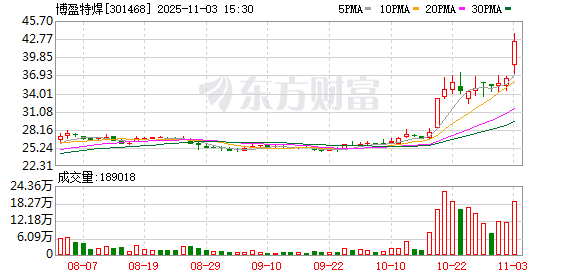
博盈特焊:美国加征关税对公司带来的影响非常小
Zheng Quan Ri Bao· 2025-11-03 08:41
(文章来源:证券日报) 证券日报网讯博盈特焊11月3日发布公告,在公司回答调研者提问时表示,美国加征关税对公司带来的 影响非常小。目前国内公司来自美国市场的订单数量少,营收占比较小。未来公司的美国订单将主要在 越南基地生产,美国对越南加征的关税较低,且越南公司出口至美国的商品关税一般由客户承担。 ...
Fed is driving through a fog right now without data, says Randy Kroszner
Youtube· 2025-10-30 15:30
Core Insights - The Federal Reserve is currently navigating uncertainty in the labor market, which complicates their decision-making process regarding interest rates [2][3][4] - There is a cautious tone from the Fed, as they lack real-time data on jobs and economic indicators, leading to a reliance on interpretation rather than concrete data [4][6] - The market seems to be absorbing the impact of tariffs as temporary and muted, with inflation remaining above the Fed's target but not showing significant upward pressure [8][9][10] Interest Rate Outlook - The Fed is preserving optionality in their approach to interest rates, indicating a division within the committee on future rate paths [2][4] - There is a suggestion that the labor market's weakness may be prolonged rather than a short-term blip, which could influence future rate cuts [4][5] - The Fed is cautious about making decisions based on sentiment rather than data, highlighting the importance of upcoming labor market data [6][10] Inflation and Market Response - Long-term Treasury yields are not reflecting heightened inflation concerns, suggesting that the market is comfortable with the current inflation levels [7][10] - Inflation has not shown a significant decline, remaining flat due to tariffs, but there is an expectation that it will eventually decrease as tariffs are absorbed [9][10] - The Fed is wary of incorporating assumptions into their policy decisions without clearer labor market data, which could lead to unexpected outcomes [10]

Regal Beloit(RRX) - 2025 Q3 - Earnings Call Transcript
2025-10-30 15:00
Financial Data and Key Metrics Changes - Third quarter sales increased by approximately 2% year-over-year, with orders up about 10% [12] - Adjusted EPS for the quarter was $2.51, an increase compared to the prior year [16] - Adjusted gross margin for the third quarter was 37.6%, down 80 basis points from the prior year [16] - Free cash flow generated in the third quarter was $174 million, with no variable rate debt at the end of the quarter [16] Business Line Data and Key Metrics Changes - Automation and Motion Control (AMC) sales were down 1% year-over-year, primarily due to project timing and challenges in sourcing rare earth magnets [27] - Industrial Powertrain Solutions (IPS) sales increased by 1.6% year-over-year, driven by strength in energy and metals and mining [30] - Power Efficiency Solutions (PES) sales were up just under 1% year-over-year, with strong growth in pool and commercial HVAC [31] Market Data and Key Metrics Changes - Orders in AMC were up 31.7% year-over-year, with a book-to-bill ratio of 1.23 [29] - IPS orders increased by 2.3% on a daily basis, marking the fifth consecutive quarter of positive orders growth [30] - PES orders were up 1.7% on a daily basis, with a book-to-bill ratio of 1.02 [32] Company Strategy and Development Direction - The company is focusing on expanding its data center business, which is expected to significantly contribute to enterprise sales growth [25] - Investments are being made to enhance manufacturing capacity and support new product offerings like modular electrical pods (ePods) [22] - The company aims to achieve margin neutrality on tariffs by the end of next year and is optimistic about growth in 2026 [40] Management's Comments on Operating Environment and Future Outlook - Management expressed optimism about order strength in the fourth quarter, setting the stage for solid growth in 2026 [14] - The company anticipates challenges from tariffs and rare earth magnet sourcing to persist into early 2026, but expects to see benefits from backlog reduction thereafter [28] - Management highlighted the importance of their strong technology team and disciplined execution in navigating current challenges [12] Other Important Information - The company announced a succession plan for its CEO, with a transition expected to take about four to six months [99] - The board is conducting a comprehensive search for a new leader, focusing on candidates with strong operational and growth leadership skills [105] Q&A Session Summary Question: Can you discuss the sequential changes expected in the fourth quarter? - Management expects residential HVAC to decline in the fourth quarter, while data center orders are anticipated to increase significantly due to backlog timing [51][52] Question: What is the outlook for the data center business? - The data center business is projected to grow significantly, potentially doubling over the next two years, contributing meaningfully to overall growth [60] Question: How will tariffs and rare earth challenges impact margins? - Management expects to achieve margin neutrality by the end of next year, with some margin pressures anticipated in the first half of 2026 [79] Question: What is the expected contribution of the new facility? - The new facility is expected to begin shipping products by mid-2026, with contribution margins anticipated to be accretive to the overall business [107]

Cactus(WHD) - 2025 Q3 - Earnings Call Transcript
2025-10-30 15:00
Financial Data and Key Metrics Changes - Total Q3 revenues were $264 million, a sequential decline of 3.5% [5] - Adjusted EBITDA was $87 million, approximately flat from the second quarter, with an adjusted EBITDA margin of 32.9% compared to 31.7% in the second quarter [6][8] - GAAP net income for Q3 was $50 million, up from $49 million in Q2, with adjusted net income of $54 million and earnings per share of $0.67, compared to $53 million and $0.66 per share in Q2 [7][8] Business Line Data and Key Metrics Changes - Pressure Control segment revenues were $169 million, down 6.2% sequentially, but operating income increased by $2.2 million or 5.2% sequentially, with operating margins increasing by 290 basis points [5][6] - Spoolable Technologies segment revenues were $95 million, down 1% sequentially, with operating income decreasing by $2.2 million or 8% sequentially [5][6] Market Data and Key Metrics Changes - The company continues to face a challenging tariff environment, with a 70% tariff on goods imported from China and a 50% tariff on goods from Vietnam [11] - The U.S. land rig count is expected to drift modestly lower through the year-end, indicating subdued domestic activity levels [12] Company Strategy and Development Direction - The company is focusing on mitigating tariff impacts and enhancing profitability through cost reduction initiatives and supply chain flexibility [11][12] - The planned acquisition of a majority interest in the Surface Pressure Control business of Baker Hughes is expected to close in early 2026, which will enhance the company's market position [16] Management's Comments on Operating Environment and Future Outlook - Management expressed concerns about the downside risk of oil prices, suggesting they may stabilize between $55 and $60, which could impact upstream spending in 2026 [25] - The company anticipates that most industry activity declines for 2025 are behind them, with expectations for flat revenue in the Pressure Control segment for Q4 [12][13] Other Important Information - The company paid a quarterly dividend of $0.14 per share, resulting in a cash outflow of approximately $11 million [8][10] - The cash balance increased to $446 million, a sequential increase of approximately $40 million [8] Q&A Session Summary Question: Insights on U.S. customer sentiment and oil prices - Management indicated that customers are cautious, with concerns about potential declines in oil prices, and are not basing budgets on higher oil prices [25][26] Question: International opportunities for spoolable technologies - Management noted strong international demand, particularly in the Middle East and Africa, with new orders and increased personnel in these regions [27][28] Question: Pressure Control margin performance - Management attributed margin improvements to effective supply chain management and customer support, emphasizing the flexibility of their variable cost structure [30][31] Question: Update on the new wellhead system introduction - Management confirmed plans to introduce the new wellhead system in Q1 2026 [34] Question: Cactus SPC transaction and earnings power - Management provided insights on the integration planning for the Baker Hughes acquisition, expressing cautious optimism about future earnings potential [42][43]