
分级诊疗

Search documents
提升全民健康获得感的关键所在——从2025年中国卫生发展论坛看“三医”协同
Xin Hua She· 2025-09-27 14:24
Core Viewpoint - The key to enhancing the sense of health among the public lies in promoting the coordinated development and governance of the "three medicines" (medical services, medical insurance, and pharmaceuticals) [1] Group 1: Medical Services - The shift in focus from "disease-centered" to "health-centered" medical services is crucial for high-quality development in the health sector [2] - As of now, 338 cities in China have achieved mutual recognition of medical examination results, with over 200 items recognized [2] - The construction of tightly-knit urban medical groups and county-level medical communities is accelerating, with a projected 36 million two-way referrals by 2024, a 46% increase from 2020 [2] - There is still room for improvement in graded diagnosis and treatment, integration of medical and preventive care, and continuity of services [2] Group 2: Medical Insurance - China has established the world's largest medical insurance network, with annual fund expenditures nearing 3 trillion yuan [4] - The payment method has transitioned from "fee-for-service" to "disease-based payment," achieving a coverage rate of 95% for disease types [4] - By 2024, 96% of designated grassroots medical institutions will be included, and 97% of administrative villages will have access to medical insurance services [4] - A pilot program for disease-based payment for 57 types of traditional Chinese medicine (TCM) is set to launch [4] Group 3: Pharmaceuticals - The drug safety inspection pass rate has improved from 97.9% in 2017 to 99.4% in 2024, indicating a stable overall drug safety situation [6] - The number of new drugs under research in China has reached 1,250, accounting for about 30% of the global total [7] - In the first half of 2025, the total value of innovative drug licensing transactions reached 66 billion USD, establishing China as a significant source of global drug innovation [7] - The approval of new drugs and innovative medical devices has seen significant growth, with increases of 59% and 87% respectively [7]
医保新规下!2025年开始,这5项费用或将不能再报销
Sou Hu Cai Jing· 2025-09-18 22:38
Core Insights - The new healthcare regulations set to take effect in 2025 will lead to the exclusion of certain medical expenses from insurance reimbursement, impacting patients financially [1][2][10] - The adjustments are necessary due to the increasing financial pressure on the healthcare insurance fund, driven by an aging population and rising medical costs [1][7] Summary by Categories Changes in Reimbursement - Five categories of expenses are likely to be removed from insurance coverage, including: 1. Certain auxiliary examinations and premium medical services, such as high-end health check packages and non-essential imaging tests [4] 2. Inefficient or replaceable medications, particularly those with low clinical value or cheaper alternatives [5] 3. Non-essential rehabilitation treatments and medical devices that do not directly impact disease treatment [6] 4. Specific traditional Chinese medicine treatments that are not deemed essential [6] 5. Non-emergency cross-regional medical services that do not follow referral procedures [6] Rationale Behind Adjustments - The adjustments aim to alleviate the financial strain on the healthcare fund by focusing resources on essential medical services [7] - The policy changes are designed to encourage rational medication use and medical service selection, reducing unnecessary healthcare expenditures [7] - The adjustments also promote the development of the domestic pharmaceutical industry by encouraging the use of innovative and cost-effective medications [7] Strategies for Patients - Patients are advised to understand the new insurance policies and their local variations to avoid unexpected costs [8] - Emphasizing tiered medical care by initially visiting primary healthcare facilities can enhance reimbursement rates [8] - Choosing medications and treatments within the insurance directory can significantly reduce personal expenses [8] - Staying informed about policy changes is crucial for adapting healthcare choices accordingly [8] - Considering supplemental commercial health insurance can provide additional coverage for high-end medical services or specialized medications [9] Positive Signals - Despite the exclusion of certain items from coverage, there are positive developments, such as the inclusion of new cancer drugs and rare disease medications in the insurance directory [10] - The adjustments reflect ongoing efforts to balance the sustainability of the healthcare fund with the medical needs of the population [10]

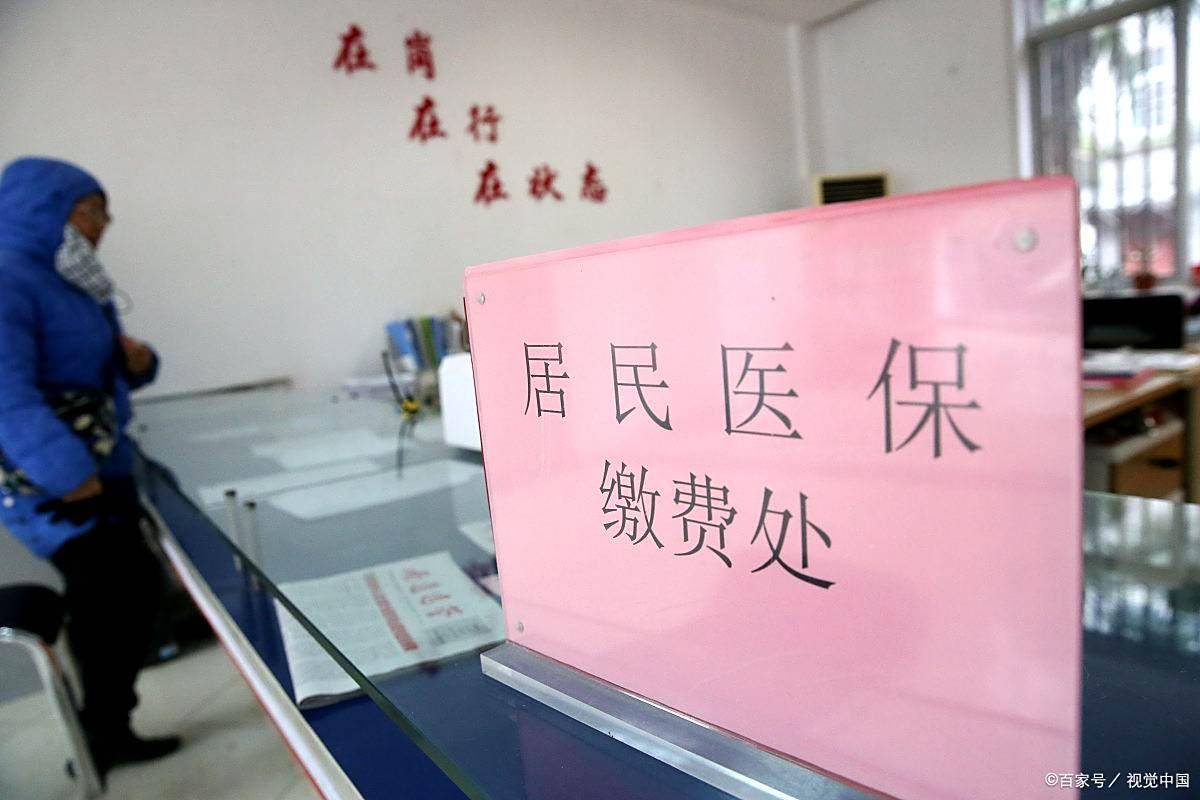
建成世界上规模最大的医疗服务体系和疾病预防控制体系 我国居民健康水平持续提升
Ren Min Ri Bao· 2025-09-12 00:01
Core Insights - China has established the world's largest healthcare service and disease prevention system, leading to continuous improvement in residents' health levels [1] Group 1: Healthcare Accessibility - The government aims to address urgent healthcare needs by providing comprehensive health services, with a focus on local solutions for different levels of medical issues [2] - By the end of 2024, the total number of healthcare institutions in China is expected to reach 1.09 million, with over 90% of residents able to access medical services within 15 minutes [2] - The implementation of a tiered medical service system has resulted in a 46% increase in the number of patients referred between different levels of care since 2020, reaching 36 million by 2024 [2][3] Group 2: Quality of Medical Services - 87% of secondary and higher-level public hospitals have implemented appointment-based services, reducing waiting times for outpatient care [3] - Over 5,500 hospitals have established "one-stop" service centers, and more than 2,000 secondary hospitals have adopted multidisciplinary integrated treatment models [3] - The number of internet hospitals has grown to 3,756, with expected online consultations reaching 130 million by 2024, significantly enhancing patient access to healthcare [3] Group 3: Focus on Vulnerable Populations - The government is prioritizing health services for the elderly and children, with significant investments in specialized medical centers and training for pediatric healthcare providers [4][6] - By the end of 2024, the number of pediatric practitioners is projected to reach 243,900, a 49.3% increase from 2020 [4] - The establishment of elderly-friendly medical institutions has been implemented in 94.4% of secondary public hospitals, enhancing access for older patients [4] Group 4: Public Health and Disease Control - A modernized disease control system is being developed, focusing on preventing major public health risks and enhancing response capabilities to outbreaks [7][8] - The country has successfully achieved WHO certification for malaria elimination, with a continuous decline in tuberculosis and hepatitis infection rates [7] - The vaccination program has been optimized, including the introduction of HPV vaccines into the national immunization plan, aimed at improving women's health [7][8]
新华社权威速览·非凡“十四五”丨解决看病就医急难愁盼,卫生健康部门这样干
Xin Hua Wang· 2025-09-11 10:04
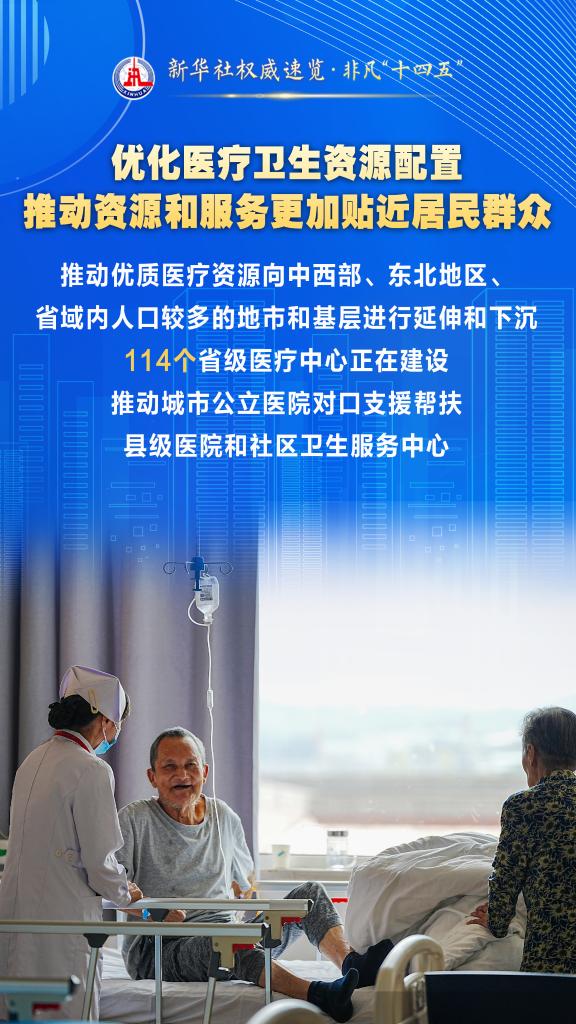
Group 1 - The core objective is to provide comprehensive health services to residents, addressing urgent healthcare needs by ensuring that major illnesses are treated within provinces, general illnesses are managed at city and county levels, and routine health issues are handled at the grassroots level [1] - The initiative aims to optimize the allocation of medical resources, extending quality healthcare services to central and western regions, northeastern areas, and densely populated cities and grassroots levels [2] - A total of 114 provincial medical centers are under construction to support this initiative [2] Group 2 - The plan promotes graded diagnosis and treatment, enhancing the continuity of medical services and improving the first diagnosis responsibility system [3] - It includes strengthening referral services and mutual recognition of laboratory test results, while eliminating advance payment for outpatient services [3] - By 2024, the number of two-way referrals in the healthcare system is expected to reach 36 million [3]
推动医保报销待遇向基层医院倾斜,国务院发文→
Di Yi Cai Jing· 2025-09-11 05:26
Core Viewpoint - The implementation of the "Medical and Health Strengthening Project" aims to enhance the capacity of grassroots medical services in China, addressing the uneven development and insufficient capabilities of the healthcare system at the grassroots level [2][3]. Summary by Sections Implementation Plan Overview - The State Council officially released the "Implementation Plan for Strengthening Medical and Health Services" on September 10, which was jointly drafted by the National Health Commission and the National Development and Reform Commission [2]. - The plan aims to improve the layout of grassroots medical institutions by 2027, ensuring that residents can reach the nearest medical service point within 15 minutes [3]. Key Goals and Tasks - By 2030, the grassroots medical service system is expected to be further improved, with a significant increase in the service volume of county-level and lower medical institutions [3]. - The plan outlines 12 key tasks focusing on system improvement, service optimization, and strengthening disease control and traditional Chinese medicine [3]. Strengthening Grassroots Medical Services - The plan emphasizes the need for continuous service for key populations, aiming for a 70% management rate for hypertension and type 2 diabetes patients at the grassroots level by 2030 [3][4]. - It also aims to enhance the capabilities of grassroots medical institutions to perform specific medical procedures, such as cataract surgery and dialysis, by 2030 [4]. Resource Allocation and Incentives - The plan encourages the allocation of resources from higher-level hospitals to grassroots institutions, including reserving appointment slots for local healthcare facilities [6]. - It proposes a multi-channel income mechanism for grassroots healthcare institutions, with a reported increase of 15% in medical service revenue for government-run grassroots institutions in 2023, totaling over 140 billion yuan [6][7]. Healthcare Financing and Payment Reforms - The plan includes reforms in medical service pricing and payment methods, promoting a multi-faceted payment system that favors grassroots healthcare institutions [7]. - It emphasizes the need for increased fiscal support for public health institutions and basic public health services, ensuring that government funding is directed towards grassroots healthcare [7].

推动医保报销待遇向基层医院倾斜,国务院发文→
第一财经· 2025-09-11 04:26
Core Viewpoint - The article emphasizes that the integration of the "three medical" systems and the downward flow of quality resources are key to addressing the weak capacity of grassroots medical services in China. The government plans to enhance medical insurance reimbursement for grassroots institutions and improve the linkage mechanism for medication between different levels of healthcare facilities [3][4]. Summary by Sections Implementation Plan Overview - The State Council has officially released the "Implementation Plan for Strengthening Basic Medical and Health Services," which aims to enhance the capacity of grassroots medical services during the 14th Five-Year Plan period. The plan is a crucial part of building a healthy China and promoting comprehensive rural revitalization [3][4]. Goals and Objectives - By 2027, the plan aims for a more rational layout of grassroots medical institutions, with a target for residents to reach the nearest medical service point within 15 minutes. By 2030, the service volume of county-level and below medical institutions is expected to increase significantly, and the construction of a hierarchical diagnosis and treatment system will show notable results [4]. Key Tasks - The plan outlines 12 key tasks focusing on system improvement, service optimization, strengthening disease control, and enhancing resource support. Specific targets include achieving a 70% management rate for hypertension and type 2 diabetes patients at the grassroots level by 2030 [4][5]. Financial and Resource Allocation - The plan encourages the participation of social medical institutions in government-purchased basic public health services. It sets quantitative indicators for improving grassroots diagnostic capabilities, such as ensuring that counties with a population of over 50,000 can perform cataract surgeries and dialysis by 2030 [5][6]. Incentives and Reforms - To enhance grassroots medical capabilities, the plan proposes various reforms, including adjusting medical service prices, reforming medical insurance payment methods, and establishing a dynamic adjustment mechanism for staffing. It aims to create a robust incentive mechanism for grassroots development [6][7]. Fiscal Support - The plan highlights the need for increased fiscal investment, ensuring that the government fulfills its financial responsibilities for public health institutions and basic public health services, with a focus on increasing funding for grassroots medical institutions [8].

医疗也要强基!国务院发文推动医保报销待遇向基层医院倾斜
Di Yi Cai Jing· 2025-09-10 13:03
Core Points - The implementation of the "Healthcare Strengthening Project" aims to enhance grassroots medical service capabilities and is a key component of the "14th Five-Year Plan" [1][2] - The project emphasizes the integration of medical insurance reimbursement benefits towards grassroots healthcare and aims for comprehensive coverage of mobile medical services in under-resourced counties [1][4] Group 1: Implementation Goals - By 2027, the layout of grassroots medical institutions will be more rational, with a goal for residents to reach the nearest medical service point within 15 minutes [2] - By 2030, the service volume of county-level and below medical institutions is expected to increase significantly, with a notable improvement in the hierarchical diagnosis and treatment system [2][3] Group 2: Key Tasks and Metrics - The implementation plan outlines 12 key tasks focusing on system improvement, service optimization, and strengthening disease control and traditional Chinese medicine [2] - Specific targets include achieving a 70% management rate for hypertension and type 2 diabetes patients at the grassroots level by 2030 [2][3] Group 3: Resource Allocation and Support - The plan encourages the allocation of medical resources from higher-level hospitals to grassroots institutions and promotes a "fixed + mobile" service supply model [4] - It also emphasizes the need for a performance evaluation system to enhance the quality of grassroots healthcare services [4][6] Group 4: Financial and Policy Support - The project highlights the importance of increasing financial input from both central and local governments to support public health institutions and basic public health services [6] - Reforms in medical service pricing and insurance payment methods are proposed to ensure that grassroots healthcare institutions receive a larger share of funding [5][6]
取消三级医院门诊统筹报销,也需谨防“误伤”患者
Xin Jing Bao· 2025-08-27 10:27
Core Points - The recent notification from the New Xiang City Medical Insurance Bureau suspends outpatient comprehensive services for urban and rural residents at tertiary medical institutions, meaning non-employment insured individuals can only use personal accounts for reimbursement at large hospitals [1][4] - This policy aligns with a national trend to promote hierarchical medical care and control medical insurance fund expenditures, as seen in various provinces like Hainan and Jiangxi [2][3] Summary by Sections Policy Changes - The New Xiang City policy is part of a broader initiative to enhance the efficiency of medical insurance fund usage and ensure fund security, particularly in light of declining fund balances [3][4] - The policy does not eliminate all reimbursement for outpatient services but specifically targets the outpatient comprehensive reimbursement at tertiary hospitals, preserving it for primary and secondary healthcare institutions [4] National Trends - The move to limit outpatient services at tertiary hospitals is becoming a nationwide trend, with various provinces implementing similar measures to promote hierarchical diagnosis and treatment [2][3] - The national medical insurance system has previously implemented several beneficial measures due to a surplus in funds, but recent data indicates a decline in fund balances, prompting a tightening of policies [3] Impact on Healthcare System - The policy aims to encourage insured individuals to seek initial treatment at primary healthcare facilities, thereby reducing overcrowding at large hospitals [5][6] - The push for hierarchical medical care has been ongoing since the 2009 healthcare reform, with various guidelines emphasizing the need for a tiered healthcare system [6][8] Challenges and Considerations - Despite the push for primary care, many patients still prefer tertiary hospitals due to a lack of trust in primary care providers, highlighting the need for improvements in primary healthcare services [8][9] - The implementation of this policy raises questions about balancing access to care for patients with legitimate needs for tertiary services while discouraging unnecessary visits [9][10]
预防医学提质升级,离不开社会力量参与
Xin Jing Bao· 2025-08-26 09:20
Core Perspective - The release of the "Healthy China 2030 Planning Outline" signifies a profound shift in China's health care system from a "disease-centered" model to a "people-centered" approach, emphasizing prevention and the need for a robust preventive medical system [1] Group 1: Resource Allocation and Optimization - The concentration of quality medical resources in large public hospitals has led to high operational loads, with 9.55 billion total medical visits reported in 2023, many of which are for routine checks rather than urgent care [2][3] - The growth of professional health examination institutions provides an efficient "diversion" channel, allowing public hospitals to focus on critical medical challenges while meeting preventive health needs in a more optimized environment [3] Group 2: Enhancing Public Health Awareness - The entry of social capital into the health examination market has significantly increased service accessibility and frequency, transforming annual health checks from a privilege to a standard practice for the majority [4] - Market competition has driven profound changes in service models, with institutions focusing on improving service experiences and educating the public on health management tailored to different age groups [4] Group 3: Innovation in Service Models - The innovations in service models and management mechanisms by private institutions contribute qualitatively to the healthcare system, creating a "catalytic" effect that enhances overall service quality [5][6] - These institutions are adopting digital health accounts and integrating AI technologies into various health services, improving diagnostic efficiency and pushing for technological advancements in the industry [6] Group 4: Collaborative Ecosystem - The collaboration between public and private healthcare entities is essential for deepening the preventive medical system, ultimately aiming for comprehensive health and well-being for all citizens [7]
阳江阳春首批健康驿站启用 优质医疗资源送到“家门口”
Nan Fang Ri Bao Wang Luo Ban· 2025-08-22 08:05
Core Insights - The launch of the health station in Yangchun City is part of the "High-Quality Development Project for Hundreds of Counties, Thousands of Towns, and Ten Thousand Villages" [1] - The health station is perceived as a "medical convenience store" by residents, significantly enhancing their daily convenience and sense of safety [1] - The health station serves as the "first gatekeeper" for residents' health and an effective referral point for graded diagnosis and treatment [1] Summary by Sections Health Station Operations - The health station provides free health check-up services, including blood pressure measurement and routine blood tests, particularly benefiting the elderly and those with mobility issues [1] - Currently, there are six operational health stations in Yangchun City, with three more under construction, expected to open by the end of the year [2] Future Plans - The health station aims to integrate health records through information technology, guiding patients with common and chronic diseases to seek initial treatment and rehabilitation at the grassroots level [1] - Plans are in place to introduce expert resources from secondary and tertiary hospitals for consultations, enhancing family doctor services and creating a "home-based" health service network [1]