
基本公共服务均等化

Search documents
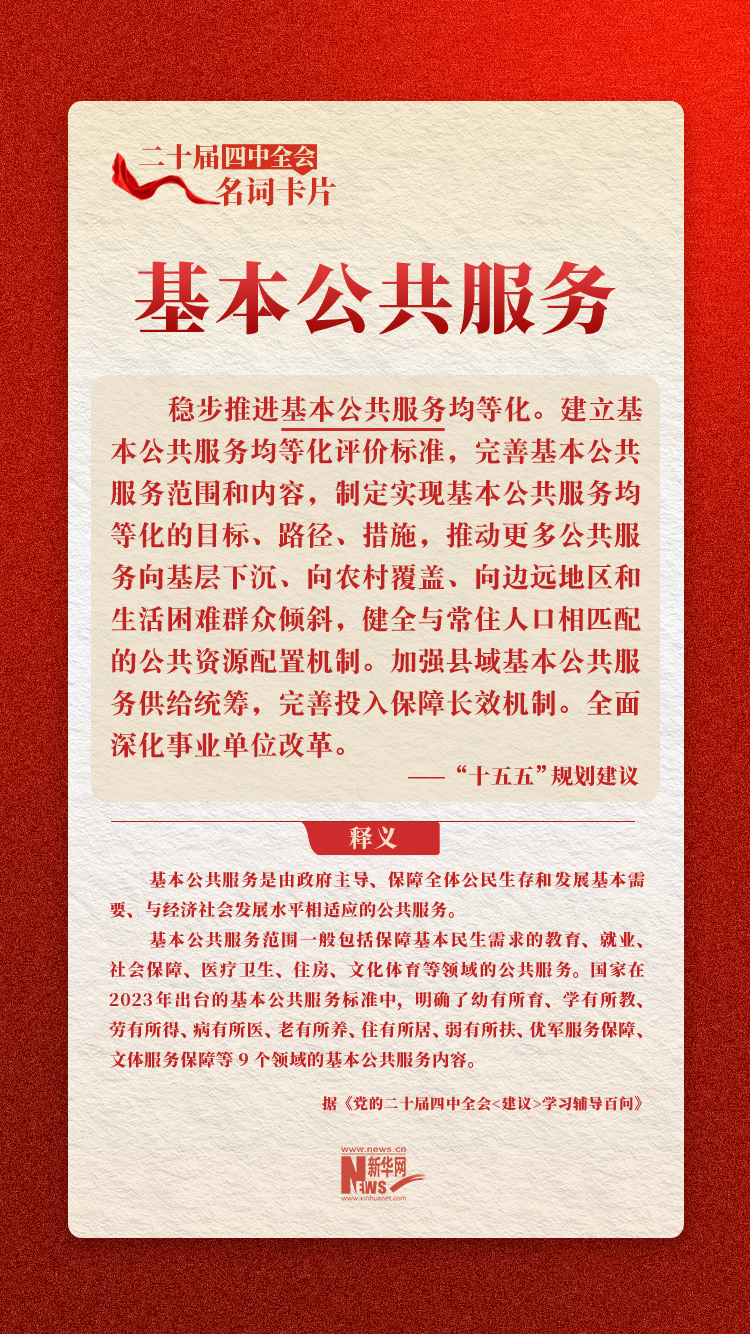
二十届四中全会名词卡片:基本公共服务
Xin Hua Wang· 2025-11-22 07:33
Core Viewpoint - The article emphasizes the steady advancement of equalization in basic public services, highlighting the establishment of evaluation standards and mechanisms to ensure that public services are accessible to all citizens, particularly in rural and underserved areas [2][4]. Summary by Relevant Sections Basic Public Services Definition - Basic public services are government-led services that meet the fundamental needs of all citizens and are aligned with the level of economic and social development. These services include education, employment, social security, healthcare, housing, and cultural sports [3]. Key Work Areas for Equalization - The key areas for promoting equalization in basic public services include: 1. **Systematic Framework**: Establishing a comprehensive system for basic public services, including evaluation standards and clear goals for equalization [4]. 2. **Service for Permanent Residents**: Improving the provision of basic public services for non-resident populations by linking services to residency duration and ensuring equal access for eligible migrants [4]. 3. **Resource Allocation**: Optimizing the allocation of public resources to ensure balanced and equitable distribution, particularly focusing on rural and disadvantaged areas [4]. 4. **Increased Support**: Enhancing the financial commitment to basic public services by increasing their share of total fiscal expenditure and creating a multi-source supply structure [5].

专家热议:“十五五”时期如何推进新型城镇化?
Zhong Guo Xin Wen Wang· 2025-11-15 03:18
Core Viewpoint - The article discusses the transition of China's urbanization from rapid growth to stable development, emphasizing the need to align with the new goals of the "14th Five-Year Plan" and to focus on quality improvement and efficiency in urban development [1][4]. Group 1: Urbanization Development Strategies - The current phase of urbanization should be understood within the context of China's modernization and global changes, aiming to meet the growing needs of the population [1]. - The "14th Five-Year Plan" period should focus on the deep integration of urban areas across seven dimensions: regional, urban-rural, industrial, digital, green, cultural, and safety [1]. - Urbanization is crucial for achieving economic and social development goals, serving as both a primary content and an important support for building a modern socialist society [2]. Group 2: Key Focus Areas for Urbanization - Emphasis on collaborative efforts to optimize urban clusters and metropolitan areas, ensuring infrastructure and public services are interconnected while allowing for distinctive local developments [2][3]. - High-quality urban development should be assessed through three dimensions: development capacity, livability, and safety, with a focus on creating a unique industrial structure and a responsive safety management system [2]. - Promoting rural-urban integration through reforms that facilitate the movement of farmers to cities and the flow of urban resources to rural areas is essential for modernizing agriculture and rural areas [3]. Group 3: Government Role and Challenges - The implementation of new urbanization should stimulate domestic demand by integrating rural populations into the modern economy, with a focus on local government incentives and accountability [3]. - Addressing the debt issues faced by local governments is critical to ensure continued investment in urbanization, household registration reform, and public services [3]. - The predicted urbanization speed during the "14th Five-Year Plan" period is expected to remain around 0.7 percentage points, with a primary focus on improving the quality of urbanization [4].
奋进“十五五”|让人民群众生活品质的成色更足
Zhong Guo Jing Ji Wang· 2025-11-12 07:22
Core Viewpoint - The article emphasizes the importance of improving the quality of life for the people as a central goal of economic and social development during the "14th Five-Year Plan" period, highlighting the need for reforms that prioritize the well-being of citizens [1][2]. Group 1: Economic Growth and Income Distribution - Since the beginning of the "14th Five-Year Plan," the growth of residents' income has been in sync with economic growth, leading to a reduction in the income gap between urban and rural areas [1]. - The article mentions that the number of people benefiting from cross-province medical treatment settlements reached 560 million, and the average life expectancy of residents has increased to 79 years [1]. - The article stresses the need for a more equitable income distribution system to promote high-quality employment and increase property income for urban and rural residents [1]. Group 2: Enhancing Public Services and Employment - The article discusses the importance of improving basic public service systems and addressing the most pressing concerns of the people to ensure that the benefits of modernization are shared more equitably [1][2]. - It highlights the necessity of policies that support job creation and address structural employment issues, ensuring that both job seekers and employers are effectively matched [1]. - The article also emphasizes the need for multi-channel approaches to increase residents' income and reduce the financial burden on low- and middle-income groups [1]. Group 3: Investment in Human Capital - The article points out that improving the quality of life requires not only material wealth but also the comprehensive development of individuals, necessitating greater investment in human capital [2]. - It mentions various city-level talent policies that include entrepreneurial subsidies and tax reductions as part of a comprehensive welfare package aimed at enhancing human investment [2]. - The promotion of green industries and the provision of childcare subsidies are also highlighted as essential components of investing in people [2]. Group 4: Balancing Development and Sustainability - The article stresses the need for a balanced approach that considers social interests while ensuring sustainable economic development, indicating that improving living standards is a long-term and systematic endeavor [3]. - It emphasizes that addressing small but significant issues related to people's livelihoods can lead to substantial national development outcomes [3].
集学术性和可读性于一身,《民生大国:中国式现代化的大国策》在京发布
Bei Jing Ri Bao Ke Hu Duan· 2025-11-09 07:35
Core Viewpoint - The book "A Country of People's Livelihood: The Great Strategy of Chinese-style Modernization" by Chi Fulin emphasizes the importance of prioritizing people's livelihoods in China's modernization efforts, addressing new demands arising from social contradictions and advocating for systemic reforms to enhance public welfare [3][7]. Group 1: Book Overview - The book is a culmination of over 40 years of research on reform, addressing how to solidify the foundation of common prosperity through livelihood construction [3]. - It discusses the transition of livelihood construction from "basic security" to "quality enhancement" and the need for systemic advancement rather than just localized breakthroughs [3][7]. - The book consists of 330,000 words, divided into an introduction and eight chapters, providing both academic insights and engaging narratives [9]. Group 2: Key Themes and Proposals - The construction of a "livelihood country" is seen as a crucial aspect of Chinese-style modernization, with a focus on improving the income levels of low-income groups and enhancing national income redistribution [5][7]. - The book advocates for a people-centered reform approach, emphasizing that the ultimate goal of reform is to improve the happiness of the populace [7]. - It highlights the importance of equal access to basic public services and the need for urbanization that prioritizes human investment as key strategies for building a livelihood-oriented nation [7]. Group 3: Implications for Future Development - The construction of a livelihood country is expected to respond to the needs and aspirations of over 1.4 billion people, thereby enhancing the synergy of comprehensive deepening reforms and injecting vital momentum for high-quality development over the next decade [7][9]. - The discussions during the event underscored the interconnection between being an economic power, an open nation, and a livelihood-oriented country, which collectively contribute to sustainable economic development [9].
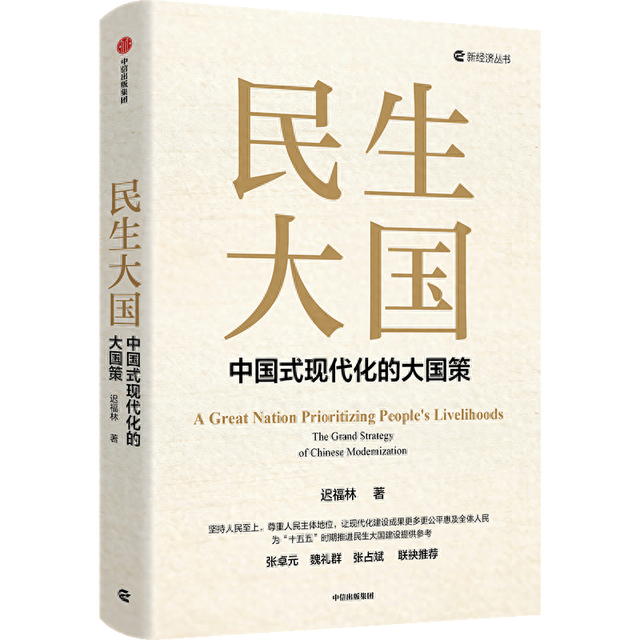
民生为本,大国之策:中国式现代化的价值锚点
Jing Ji Guan Cha Wang· 2025-11-09 05:34
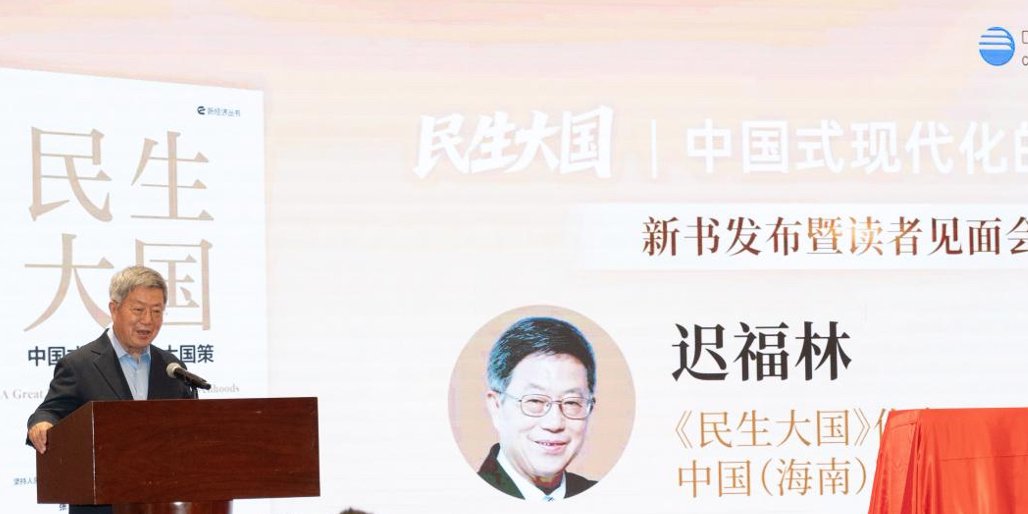
Core Viewpoint - The article discusses the release of a new book titled "A People-Centric Nation: The Great Strategy of Chinese-style Modernization," which emphasizes the importance of improving people's livelihoods as a foundation for national strength and outlines a path for modernization that benefits all citizens [2][3]. Group 1: Book Release and Significance - The book was officially launched by the China (Hainan) Reform and Development Research Institute and CITIC Publishing Group, with participation from various media and academic representatives [2]. - The author, Professor Chi Fulin, highlights that the book addresses new demands arising from changes in China's social contradictions and provides strategic insights for the 14th Five-Year Plan and the 2035 vision [3][4]. Group 2: Key Themes and Proposals - The book argues for prioritizing people's well-being in reforms, emphasizing that the ultimate goal of reform is to enhance the happiness of citizens [5]. - It proposes that building a "People-Centric Nation" requires equal access to basic public services, urbanization centered on human needs, and increased investment in human capital [8]. - The book also stresses the importance of responding to people's needs through reforms, which will enhance the synergy of comprehensive reforms and drive high-quality development over the next decade [5][8]. Group 3: Expert Opinions and Discussions - Experts participating in the discussion emphasized that viewing China as a "People-Centric Nation" will contribute to sustainable economic development and high-quality growth [6]. - The book is seen as a significant academic contribution that translates the concept of reform for the people into scholarly language, aligning with the spirit of the 20th National Congress of the Communist Party of China [6]. - The historical and practical significance of the book is recognized, with its insights deemed crucial for understanding national conditions and development directions [6].
中国经济微观察:从“有没有”到“好不好” 民生建设发生深刻转变
Ren Min Wang· 2025-11-05 03:00
Group 1 - The core focus of the "14th Five-Year Plan" is on improving people's livelihoods, with over one-third of the indicators dedicated to social welfare, the highest proportion in any five-year plan to date [1] - The plan emphasizes the construction of a service system for the elderly and children, aiming for a 64.6% share of nursing care beds and coverage of over 300 cities by childcare service institutions [1][2] - The government aims to transition from basic service provision to a more integrated approach that includes professional medical, rehabilitation, and nursing services for the elderly [2] Group 2 - The design of quantifiable and assessable indicators for social welfare serves as a strong policy directive, ensuring that resources are allocated to enhance public welfare [3] - The plan promotes equal access to basic public services through optimized resource allocation and new urbanization strategies, addressing disparities between urban and rural areas [3][4] - Standardization of public service quality is crucial for ensuring fairness in basic services, with clear guidelines established for nursing care facilities and other essential services [4] Group 3 - The integration of livelihood improvement into regional development strategies is a key focus, with initiatives aimed at reducing urban-rural disparities through targeted support and resource allocation [5] - The approach combines economic development with social welfare improvements, creating a sustainable cycle that benefits both sectors [5]
中国经济微观察 从“有没有”到“好不好” 民生建设发生深刻转变
Ren Min Wang· 2025-11-05 01:46
Core Insights - The article emphasizes the Chinese government's focus on improving people's livelihoods during the "14th Five-Year Plan" period, shifting from merely providing basic services to enhancing service quality [1][2][3] Group 1: Elderly Care - The proportion of nursing care beds has increased to 64.6%, indicating a shift in elderly care services from basic living needs to professional medical, rehabilitation, and nursing services [1][3] - The aging population in China faces challenges not only in basic care but also in providing quality care for the elderly, particularly those who are disabled or semi-disabled [3] Group 2: Childcare Services - Over 300 cities have established inclusive childcare service institutions, supported by government policies, funding, and standards, reflecting a commitment to building a comprehensive childcare service system [1][3] - The development of affordable childcare services aims to alleviate the burden on young parents, allowing them to balance work and family life while contributing to population structure optimization [3] Group 3: Public Service Standards - More than one-third of the indicators in the "14th Five-Year Plan" focus on public welfare, marking a strong policy direction towards measurable and assessable outcomes in various sectors including income, employment, education, healthcare, and social security [4][5] - The establishment of basic public service standards ensures that services meet national quality requirements, promoting fairness and accessibility in public welfare [5] Group 4: Regional Development and Coordination - The government is promoting equal access to basic public services by extending resources to underdeveloped areas through initiatives like county medical communities and unified insurance systems [4][5] - The integration of livelihood improvement into regional development strategies aims to enhance living standards in rural areas while reducing urban-rural disparities [5]
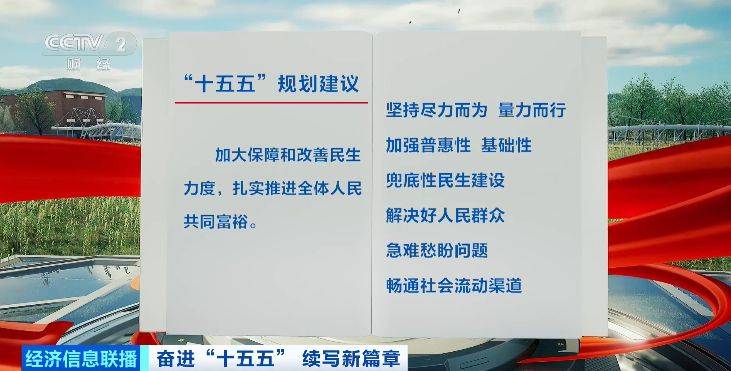
“十五五”关键部署:加大保障和改善民生力度 扎实推进全体人民共同富裕
Sou Hu Cai Jing· 2025-10-31 14:22
Core Viewpoint - The "14th Five-Year Plan" emphasizes enhancing and improving people's livelihoods, aiming for common prosperity for all citizens, with a focus on fulfilling the people's aspirations for a better life [1][3]. Group 1 - The plan advocates for a pragmatic approach to social welfare, emphasizing inclusive, foundational, and safety-net measures to address urgent public concerns [3]. - It aims to improve the quality of life by promoting high-quality employment, refining income distribution systems, and ensuring satisfactory education and social security [3]. - The initiative includes promoting high-quality development in real estate, advancing health initiatives, and ensuring equitable access to basic public services [3].
专访迟福林:拉动内需,全面“投资于人”是关键
3 6 Ke· 2025-10-31 10:40
Core Viewpoint - The current focus of China's economic development is to boost consumption, creating a model driven by domestic demand and endogenous growth, with "investment in people" being crucial for enhancing consumer capacity, confidence, and expectations [1][2]. Group 1: Investment in People - "Investment in people" is essential for addressing uncertainties and establishing new development advantages, serving as a foundation for stable economic growth over the next decade [4]. - Enhancing public services and social security through "investment in people" can fundamentally resolve issues of insufficient consumer willingness and weakened confidence, unlocking the consumption potential of over 1.4 billion people [4][5]. - The combination of "China manufacturing" and "China consumption" is vital for a strong domestic market, with high-quality development requiring both a modern industrial system and a service-oriented consumption system [4]. Group 2: Economic Projections - If China's final consumption reaches the same global share as its manufacturing, it could create an additional consumption market of no less than $10 trillion, positioning consumption as a key driver of economic growth over the next decade [5]. - In 2023, China's economic output accounted for approximately 17% of the global total, with projections indicating that by 2024, its share in global manufacturing will rise to 28% [4]. Group 3: Focus Areas for Investment - "Investment in people" should concentrate on key areas that enhance human capital and ensure social equity, particularly in sectors like education, healthcare, elderly care, and community development, which are closely linked to improving quality of life [6]. - Recommendations include reforming the fiscal system to prioritize effective investment in education, healthcare, and social security, while removing barriers to labor and talent mobility across regions and ownership types [6]. - The role of state-owned capital should be emphasized as a strategic leader and resource provider in "investment in people," facilitating broader societal benefits from capital appreciation [6].
把人民至上作为推进共同富裕的根本遵循
Huan Qiu Shi Bao· 2025-10-31 04:24
Group 1 - The core viewpoint emphasizes the importance of improving and safeguarding people's livelihoods as a key focus of the "15th Five-Year Plan" [1][7] - The plan aims to enhance public products and services, balancing economic vitality with social inclusion and ecological stability [8][12] - The government will prioritize high-quality employment and income distribution reforms to ensure social equity [3][11] Group 2 - The "15th Five-Year Plan" highlights the need for investment in human capital to adapt to the challenges posed by artificial intelligence and emerging technologies [4][13] - There is a focus on improving healthcare systems and increasing life expectancy, with a target of reaching an average life expectancy of 80 years [5][6] - The plan includes measures to ensure equal access to basic public services, addressing regional disparities and enhancing social mobility [6][10] Group 3 - The strategy involves strengthening the collaboration between industry and employment, promoting short-term skills training to meet market demands [2][11] - The plan aims to innovate asset accumulation systems to optimize income distribution and support low-income groups [3][12] - The government will enhance public investment in healthcare, education, and social security to foster economic resilience and social cohesion [9][12]