多智能体协作

Search documents
“巨硬”真的来了!马斯克硬刚微软,官宣新公司:要靠 AI “复刻”整个微软
程序员的那些事· 2025-09-11 00:19
Core Viewpoint - Elon Musk's announcement of a new AI software company named Macrohard aims to challenge Microsoft by leveraging AI agents to replicate Microsoft's software capabilities [1][4][12] Group 1: Company Overview - Macrohard is positioned as a purely AI-driven software company, intending to simulate the operations of Microsoft without the need for hardware production [5][6] - The name "Macrohard" was initially a joke made by Musk in 2021, but it has now been formalized into a legitimate business venture [2][4] Group 2: Business Model and Strategy - The core logic behind Macrohard is that AI can perform the same functions as a traditional software company like Microsoft, focusing on software products and subscription services [5][6] - Macrohard will utilize a multi-agent system where hundreds of specialized AI agents will collaborate on tasks such as programming, image/video generation, and user interaction simulations [6][7][8] Group 3: Technological Infrastructure - The backbone of Macrohard's operations is expected to be supported by the Colossus 2 supercomputer cluster, which is being developed by xAI and will feature 1 million NVIDIA GPUs, significantly enhancing computational power [9][10] - Colossus 2 is projected to achieve peak performance between 2000-4000 EFLOPS, marking a fivefold increase from the current Colossus setup [10] Group 4: Competitive Landscape - Microsoft has been a significant player in the AI space, investing over $10 billion in OpenAI and integrating AI models into its products [11] - Musk's criticism of OpenAI and its partnership with Microsoft highlights a competitive tension, with Macrohard representing a direct challenge to Microsoft's dominance in the software industry [11][12]



多智能体的协作悖论
3 6 Ke· 2025-08-27 13:44
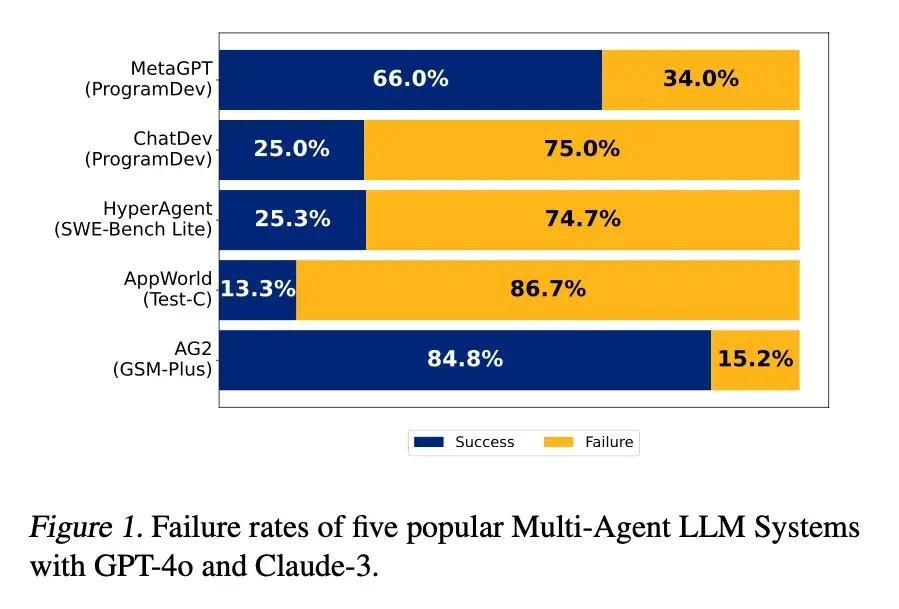
Core Viewpoint - The article discusses the emerging trend of collaborative AI systems, where multiple AI agents work together like a human team, potentially surpassing the limitations of single large models [1][2]. Group 1: Collaborative AI Systems - According to IDC, by 2027, 60% of large enterprises are expected to adopt collaborative AI systems, improving business process efficiency by over 50% [2]. - Collaborative AI systems consist of multiple autonomous agents that can perceive, decide, act, and communicate with each other, leading to enhanced problem-solving capabilities [4]. - The performance of multi-agent systems can exceed that of the best single agent by significant margins, as demonstrated by the Claude Opus system, which outperformed the strongest single agent by 90.2% without a substantial increase in generation time [5]. Group 2: Advantages and Challenges - Multi-agent collaboration allows for parallel processing of tasks, significantly reducing task completion time without sacrificing efficiency [5]. - However, the complexity of coordination increases with the number of agents, leading to potential miscommunication and decreased accuracy in outputs [6][8]. - High communication costs can lead to increased computational resource consumption, with token usage in multi-agent interactions being up to 15 times higher than standard conversations [8]. Group 3: Management and Coordination - To manage the complexities of multi-agent systems, a coordinator agent can be introduced to oversee task distribution and conflict resolution, ensuring alignment towards common goals [10]. - Standardized communication protocols can help reduce integration complexity and facilitate efficient information exchange among agents [13]. - The balance between distributed decision-making and centralized control is crucial for the effective functioning of multi-agent systems, requiring ongoing advancements in technology for reliability and security [14].
最新智能体自动操作手机电脑,10个榜单开源SOTA全拿下|通义实验室
量子位· 2025-08-25 23:05
Core Viewpoint - The article discusses the launch of the Mobile-Agent-v3 framework by Tongyi Lab, which achieves state-of-the-art (SOTA) performance in automating tasks on mobile and desktop platforms, showcasing its ability to perform complex tasks through a multi-agent system [2][9]. Group 1: Framework and Capabilities - The Mobile-Agent-v3 framework can independently execute complex tasks with a single command and seamlessly switch roles within a multi-agent framework [3][9]. - It has achieved SOTA performance across ten major GUI benchmarks, demonstrating both foundational capabilities and reasoning generalization [9][11]. Group 2: Data Production and Model Training - The framework relies on a robust cloud infrastructure built on Alibaba Cloud, enabling large-scale parallel task execution and data collection [11][13]. - A self-evolving data production chain automates data collection and model optimization, creating a feedback loop for continuous improvement [13][15]. - The model is trained using high-quality trajectory data, which is generated through a combination of historical task data and large-scale pre-trained language models [22][23]. Group 3: Task Execution and Understanding - The framework emphasizes precise interface element localization, allowing the AI to understand the graphical interface effectively [18][19]. - It incorporates complex task planning, enabling the AI to strategize before executing tasks, enhancing its ability to handle long-term and cross-application tasks [21][22]. - The model understands the causal relationship between actions and interface changes, which is crucial for effective task execution [24][25]. Group 4: Reinforcement Learning and Performance - The Mobile-Agent team employs reinforcement learning (RL) to enhance the model's decision-making capabilities through real-time interactions [28][29]. - An innovative TRPO algorithm addresses the challenges of sparse and delayed reward signals in GUI tasks, significantly improving learning efficiency [31][36]. - The framework has shown a performance increase of nearly 8 percentage points in dynamic environments, indicating its self-evolution potential [36][40]. Group 5: Multi-Agent Collaboration - The Mobile-Agent-v3 framework supports multi-agent collaboration, allowing different agents to handle various aspects of task execution, planning, reflection, and memory [33][34]. - This collaborative approach creates a closed-loop enhancement pipeline, improving the overall efficiency and effectiveness of task execution [34][35]. - The framework's design enables AI to act with purpose, adjust based on feedback, and retain critical information for future tasks [35][36].

“专家团”齐上阵,全球首个全端通用智能体发布
Bei Jing Ri Bao Ke Hu Duan· 2025-08-19 00:45
Core Insights - The article discusses the launch of GenFlow2.0 by Baidu Wenku and Baidu Wangpan, which is the world's first all-end universal intelligent agent capable of completing multiple complex tasks simultaneously [1][2] - GenFlow2.0 can operate over 100 expert intelligent agents at once, completing more than five complex tasks in just three minutes, with the ability for users to intervene and track memory throughout the process [1][2] Group 1 - GenFlow2.0 addresses issues from its predecessor, GenFlow1.0, such as difficulty in agent description, long wait times, poor delivery, and lack of editability [1] - The system can autonomously understand user intent and switch between different collaboration modes, allowing for real-time intervention and modifications based on user needs [1][2] Group 2 - GenFlow2.0 enhances personalization by recording and utilizing user history, including communication records and file uploads, to provide tailored content results [2] - The multi-agent collaboration trend is becoming a competitive focus among major tech companies, with challenges in task allocation, parameter transfer, and context management being critical for effective teamwork [2]

最新Agent框架,读这一篇就够了
自动驾驶之心· 2025-08-18 23:32
Core Viewpoint - The article discusses various mainstream AI Agent frameworks, highlighting their unique features and suitable application scenarios, emphasizing the growing importance of AI in automating complex tasks and enhancing collaboration among agents [1]. Group 1: Mainstream AI Agent Frameworks - Current mainstream AI Agent frameworks are diverse, each focusing on different aspects and applicable to various scenarios [1]. - The frameworks discussed include LangGraph, AutoGen, CrewAI, Smolagents, and RagFlow, each with distinct characteristics and use cases [1][2]. Group 2: CrewAI - CrewAI is an open-source multi-agent coordination framework that allows autonomous AI agents to collaborate as a cohesive team to complete tasks [3]. - Key features of CrewAI include: - Independent architecture, fully self-developed without reliance on existing frameworks [4]. - High-performance design focusing on speed and resource efficiency [4]. - Deep customizability, supporting both macro workflows and micro behaviors [4]. - Applicability across various scenarios, from simple tasks to complex enterprise automation needs [4][7]. Group 3: LangGraph - LangGraph, created by LangChain, is an open-source AI agent framework designed for building, deploying, and managing complex generative AI agent workflows [26]. - It utilizes a graph-based architecture to model and manage the complex relationships between components in AI workflows [28]. Group 4: AutoGen - AutoGen is an open-source framework from Microsoft for building agents that collaborate through dialogue to complete tasks [44]. - It simplifies AI development and research, supporting various large language models (LLMs) and advanced multi-agent design patterns [46]. - Core features include: - Support for agent-to-agent dialogue and human-machine collaboration [49]. - A unified interface for standardizing interactions [49][50]. Group 5: Smolagents - Smolagents is an open-source Python library from Hugging Face aimed at simplifying the development and execution of agents with minimal code [67]. - It supports various functionalities, including code execution and tool invocation, while being model-agnostic and easily extensible [70]. Group 6: RagFlow - RagFlow is an end-to-end RAG solution focused on deep document understanding, addressing challenges in data processing and answer generation [75]. - It supports various document formats and intelligently identifies document structures to ensure high-quality data input [77][78]. Group 7: Summary of Frameworks - Each AI Agent framework has unique characteristics and suitable application scenarios: - CrewAI is ideal for multi-agent collaboration and complex task automation [80]. - LangGraph is suited for state-driven multi-step task orchestration [81]. - AutoGen is designed for dynamic dialogue processes and research tasks [86]. - Smolagents is best for lightweight development and rapid prototyping [86]. - RagFlow excels in document parsing and multi-modal data processing [86].
智能体崛起,百融云创首倡“硅基劳动力”新范式
Xin Lang Ke Ji· 2025-08-12 03:19
Core Insights - The rise of AI agents is transforming industries globally, with predictions that 2025 will be the year of AI agents, following the emergence of large models in 2023 [2][5] - AI agents are being integrated into various sectors, including banking, telecommunications, and retail, performing tasks traditionally handled by human employees [2][3] - The market for AI agents is expected to grow significantly, with estimates suggesting a contribution of $6.6 trillion to the global economy by 2030 and a market exceeding $22 billion by 2025, with a compound annual growth rate of 45% [6][26] Industry Trends - Major tech companies like OpenAI, Meta, and Google are heavily investing in AI agents, indicating a robust global trend [3][4] - The traditional software business model may not be applicable in the Chinese market, where customization and project-based approaches dominate, leading to challenges in establishing sustainable revenue streams [8][10] - The concept of AI agents as "silicon-based labor" rather than mere software is gaining traction, suggesting a shift in how businesses perceive and utilize AI technology [11][12] Company Strategies - Companies like 百融云创 are redefining AI agents as essential components of the workforce, emphasizing their role in business operations rather than as standalone tools [21][30] - 百融云创's platform, CybotStar, allows for the rapid development and deployment of AI agents tailored to specific business needs, integrating industry knowledge and best practices [20][30] - The business model proposed by 百融云创 focuses on service delivery and value creation, moving away from traditional software sales to a model where AI agents are treated as employees [21][30] Future Outlook - The future of enterprise productivity is expected to be driven by multi-agent collaboration, where AI agents work together to enhance efficiency and decision-making [27][28] - The integration of AI agents into business processes is not just a theoretical concept but is already being realized in various industries, demonstrating tangible benefits [22][29] - The vision for the future includes a workforce that combines both carbon-based and silicon-based employees, working collaboratively to drive innovation and productivity [30][31]
4个月,创建20万个应用,这是背后的产品|对话百度秒哒
量子位· 2025-08-09 07:01
Core Viewpoint - The article highlights the rapid success of Baidu's no-code application building platform, Miaoda, which has enabled users to create 200,000 applications in just four months without writing any code [1][39]. Group 1: No-Code Development - Miaoda allows users without programming experience to develop applications easily, emphasizing that creativity is the most important aspect of application development [11][30]. - The platform integrates various tools from the Baidu ecosystem, enabling users to utilize features like maps, voice functions, and SMS services seamlessly [8][19]. - Miaoda employs a dual interaction model, combining natural language interaction for initial creation and graphical user interface (GUI) for subsequent modifications, enhancing user experience [15][16]. Group 2: User Engagement and Creativity - The platform aims to democratize application development, allowing a broader range of individuals to participate and express their ideas [14][30]. - Users can draw inspiration from others' projects on the platform, facilitating a community-driven approach to creativity and application development [28][43]. - The success of applications created on Miaoda demonstrates that innovative ideas often come from non-programmers, highlighting the potential of diverse perspectives in application creation [30][34]. Group 3: Future Developments - Miaoda plans to expand its functionalities in phases, starting with tools for individual users and small businesses, eventually moving towards enterprise-level solutions [46][48]. - The platform is set to introduce features that allow users to view and adjust the underlying code, providing flexibility while maintaining a no-code approach [45]. - Continuous user feedback is integral to Miaoda's development, with plans to enhance community engagement through events and collaborative initiatives [52].
这群95后,要为30亿人重造上网入口
混沌学园· 2025-08-09 04:08
Core Viewpoint - The article discusses the emergence of Fellou, an "agentic browser" designed to automate tasks traditionally performed by users, thereby enhancing productivity and transforming the browsing experience [4][11][31]. Group 1: User Pain Points - Users are currently burdened with excessive manual tasks, such as opening an average of 40 websites and switching between 26 tabs daily, which consumes valuable time and cognitive resources [8][10]. - The traditional browser model requires users to sift through information lists and perform manual operations, leading to a sense of being "operational slaves" to the browser [9][11]. Group 2: Innovation and Development - Fellou aims to revolutionize the browser by integrating capabilities that allow it to act autonomously, transforming it from a mere information tool into a task executor [21][24]. - The development of Fellou draws inspiration from various fields, including RPA (Robotic Process Automation) and multi-agent collaboration, to create a user-friendly "browser-level RPA" [17][19]. Group 3: Performance and Efficiency - Fellou has demonstrated significant efficiency improvements, completing complex tasks in an average of 3.7 minutes, which is 3 to 5 times faster than similar AI products and drastically faster than manual processes [24]. - A notable case highlighted that a task that previously took three days to complete manually was accomplished by Fellou in just 7 minutes and 49 seconds, showcasing its effectiveness [24]. Group 4: Competitive Positioning - Fellou distinguishes itself from traditional browsers by providing structured knowledge summaries instead of mere links, effectively acting as an intelligent research assistant [28]. - Unlike other AI browsers that merely assist users, Fellou automates the entire task execution process, significantly reducing user effort and enhancing productivity [29][30]. Group 5: Future Implications - The article suggests that Fellou's innovative approach could redefine the browser landscape, challenging established players like Chrome and setting a new standard for user experience [32][33]. - The success of Fellou serves as a case study for future entrepreneurs, emphasizing the importance of identifying deep user pain points and rethinking value creation in product development [33].

纳米AI多智能体蜂群上线 有突破亦有挑战
Zhong Guo Jing Ying Bao· 2025-08-07 11:44
Core Viewpoint - 360 Group has officially announced the rebranding of its Nano AI to "Multi-Agent Swarm," which enables multiple agents to collaborate and complete complex tasks autonomously, leveraging collective intelligence to deliver results directly to users [2] Group 1: Technology and Development - The Nano AI Multi-Agent Swarm technology is developed from 360's Intelligent Agent Factory, allowing users to build agents without coding, using natural language for simple setup [3] - The Multi-Agent Swarm represents the L4 level of intelligent agents, capable of team collaboration and executing complex tasks, with the ability to expand the team size as needed [4][6] - Prior to L4, intelligent agents evolved through L1 (chat assistants), L2 (low-code workflow agents), and L3 (reasoning agents) stages, with L4 being a significant advancement in collaborative capabilities [5][7] Group 2: Advantages and Applications - The Multi-Agent Swarm boasts strong collaboration capabilities, utilizing a unique "swarm collaboration framework" that enhances task distribution and parameter transmission, achieving a collaboration success rate of 82% with 128 agents [8] - The technology has demonstrated efficiency improvements, such as reducing the time to produce a 10-minute film from 2 hours to 20 minutes, representing a 600% increase in efficiency [8] - The application scenarios are diverse, with over 10 types of multi-agent swarms launched, covering video production, content creation, industry research, e-commerce, and travel planning [8] Group 3: Challenges and Considerations - The system requires significant computational resources, with an average task needing 32 A100 GPUs, leading to operational costs of $18 per task, which poses challenges for large-scale commercialization [8] - Decision transparency is limited, as the "decision traceability sandbox" technology increases system latency by 40%, making it difficult to ensure transparency across all scenarios [9] - Ethical risks are present, as the swarm system can theoretically expand indefinitely, raising concerns about potential misuse in automated propaganda or financial manipulation, despite the publication of an ethical white paper [9]

拥抱 AGI 时代的中间层⼒量:AI 中间件的机遇与挑战
3 6 Ke· 2025-08-05 09:52
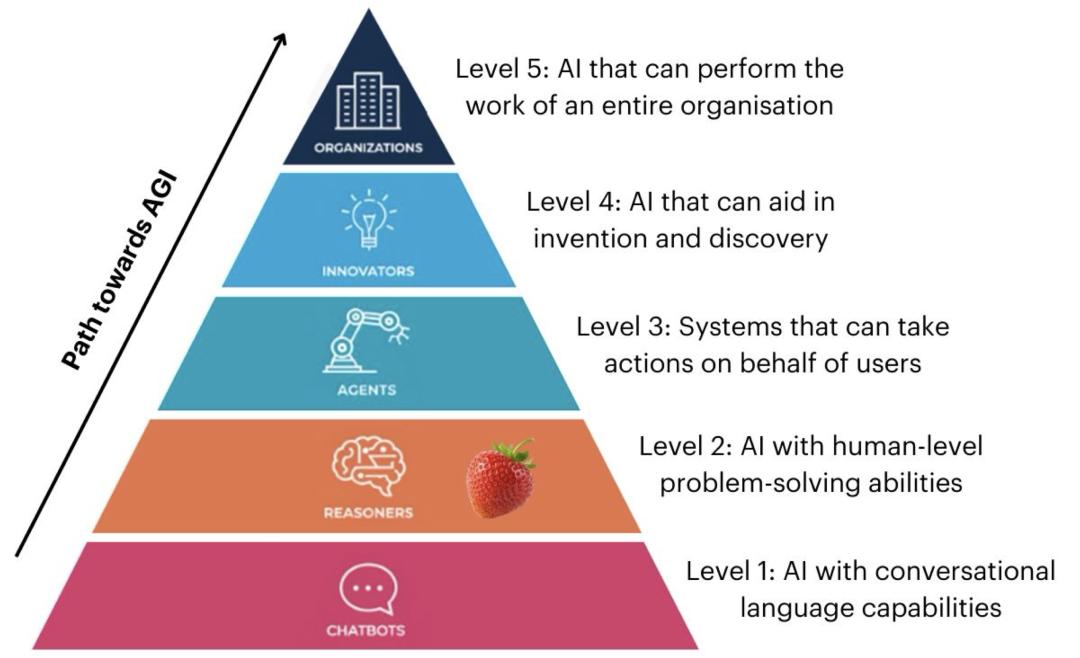
Group 1: Development Trends of Large Models - The rapid development of large models in the AI field is transforming the understanding of AI and advancing the dream of AGI (Artificial General Intelligence) from science fiction to reality, characterized by two core trends: continuous leaps in model capabilities and increasing openness of model ecosystems [1][4]. - Continuous improvement in model capabilities is achieved through iterative advancements and technological innovations, with examples like OpenAI's ChatGPT series showing significant enhancements in language understanding and generation from GPT-3.5 to GPT-4 [1][2]. - The breakthrough in multimodal capabilities allows models to natively support various data types, including text, audio, images, and video, enabling more natural and rich interactions [2][3]. Group 2: Evolution of AI Applications - The rapid advancement of large model capabilities is driving profound changes in AI application forms, evolving from conversational AI to systems capable of human-level problem-solving [5][6]. - The emergence of AI agents, which can take actions on behalf of users and interact with external environments through tool usage, marks a significant evolution in AI applications [6][8]. - The recent surge in AI agents, both general and specialized, demonstrates their potential in solving a wide range of tasks and enhancing efficiency in various domains [8][9]. Group 3: AI Middleware Opportunities and Challenges - AI middleware is emerging as a crucial layer that connects foundational large models with specific applications, offering opportunities for agent development efficiency, context engineering, memory management, and tool usage [13][19][20]. - The challenges faced by AI middleware include managing complex contexts, updating and utilizing persistent memory, optimizing retrieval-augmented generation (RAG) effects, and ensuring safe tool usage [26][29][30]. - The future of AI middleware is expected to focus on scaling AI applications, providing higher-level abstractions, and integrating AI into business processes, ultimately becoming the "nervous system" of organizations [39][40].