数智化转型

Search documents
瞄准高附加值寻求突破
Jing Ji Ri Bao· 2026-02-11 22:02
Core Insights - Hebei Qinghe cashmere industry has been successfully included in the national-level characteristic industrial cluster cultivation list, highlighting its significant market share and establishing its position as a leader in the global cashmere market [1] - To achieve the goal of expanding the industrial cluster scale from 50 billion to 100 billion yuan, the industry must continue to advance in key areas such as brand value enhancement, digital transformation, and global operational capabilities [1][2] Group 1: Brand Development - The industry needs to shift from "OEM" to "brand output" to overcome the challenge of "high quality but low price," where similar products can have price differences of several times after branding [1] - A comprehensive value system integrating "design, brand, and channel" must be established to enhance product premium through international design resources and digital marketing [1] Group 2: Digital Transformation - The transition from "equipment intelligence" to "ecological collaboration" is essential, as the industry has made progress in digital applications but still faces challenges in technology, funding, and talent for small and medium-sized enterprises [1] - Accelerating the construction of an industrial internet platform is necessary to promote data connectivity across the entire supply chain, particularly in addressing the shortcomings of cross-border e-commerce [1] Group 3: Global Expansion - The industry must move from "product export" to "system export," focusing on enhancing global operational capabilities and establishing a new model of "China R&D + global manufacturing + world sales" [2] - Understanding and applying international standards and intellectual property rules is crucial for integrating into the global value chain [2] Group 4: Innovation Ecosystem - Achieving the 100 billion yuan target requires collaboration between government and enterprises to build an innovative ecosystem, addressing the shortage of design and R&D talent [2] - Establishing a collaborative mechanism among "industry, academia, research, and application" is vital to create a favorable environment for innovation [2]
北京去年新设经营主体38.01万户
Xin Lang Cai Jing· 2026-02-11 21:49
Group 1: Market Dynamics - In 2025, Beijing is expected to establish 380,100 new business entities, bringing the total to 2,869,700, representing a year-on-year growth of 6.83% [1] - Over 40% of the new business entities are technology-based, indicating a shift towards more innovative industries [1] - The survival rate of enterprises in the past three years has consistently remained above 75%, reflecting enhanced competitiveness among business entities [1] Group 2: Regulatory Environment - Beijing has implemented a series of measures to improve the business environment, including the release of local standards for business registration services and the introduction of a new model for equity trust property registration [1] - The city has optimized drug retail licensing management, increasing the chain rate of pharmacies from 58% to 71% [1] - A cloud service for credit repair has been launched, benefiting 80,000 business entities with "invisible" credit restoration [1] Group 3: Digital Transformation and Safety Regulation - The "1+5+N" work system has been established to enhance digital transformation, with a daily regulatory digital support rate reaching 95% and a total data volume exceeding 6.1 billion records [2] - A comprehensive food safety regulatory plan has been introduced, including a "red light mechanism" for agricultural wholesale markets and a digital platform for monitoring off-campus meal providers [2] - A lifecycle management system for drugs has been launched, ensuring 100% of drug sales in pharmacies are scanned [2] Group 4: Consumer Protection and Platform Economy - Efforts to regulate the platform economy focus on addressing "inward competition" in accommodation and dining sectors, with the establishment of compliance service stations for platform enterprises [3] - The city has released local standards for administrative mediation of consumer disputes and is managing single-purpose prepaid card usage to combat fraudulent practices [3] - A total of 12.4 million yuan worth of counterfeit goods has been destroyed, highlighting the commitment to consumer rights protection [3]
2025年全国油气勘探开发十大标志性成果
国家能源局· 2026-02-11 11:09
Core Insights - The article highlights the significant achievements in oil and gas exploration and development in China, with record production levels and strategic advancements in various regions by 2025 [3][4][5][6][7][8][9][10][11][12][13][14] Group 1: National Production Achievements - In 2025, domestic crude oil production reached 216 million tons, a historical high, while natural gas production exceeded 260 billion cubic meters, marking a significant milestone with a total equivalent production surpassing 200 million tons [3] - The cumulative newly proven geological reserves of oil and gas from 2019 to 2025 exceeded 10 billion tons and 10 trillion cubic meters, respectively, reinforcing the foundation for sustained production [3] Group 2: Regional Developments - The Ordos Basin achieved an oil and gas equivalent production of over 100 million tons in 2025, with crude oil production stabilizing at 38 million tons and natural gas production nearing 80 billion cubic meters [4] - The Sichuan Basin's natural gas production surpassed 80 billion cubic meters, contributing over 40% to the national total, with shale gas production around 27 billion cubic meters [5] Group 3: Marine Oil and Gas Production - Marine crude oil production exceeded 66 million tons, with natural gas production around 30 billion cubic meters, leading to a total marine oil and gas equivalent production of 90 million tons [6][7] Group 4: Shale Oil Development - By 2025, three national-level shale oil demonstration zones were established, significantly enhancing production capacity and supporting the national crude oil output [8] Group 5: Deep Earth Exploration - Major advancements in deep earth exploration were reported, with significant drilling achievements in the Tarim Basin, including the first discovery of oil and gas at depths exceeding 10,000 meters [9] Group 6: Technological Innovations - The industry is advancing towards high-end technology with the development of core equipment for exploration and production, including the first domestically produced high-precision seismic source and automated drilling rigs [10] Group 7: Intelligent Operations - China National Offshore Oil Corporation's "Deep Sea One" project is leading in digital transformation, becoming a model for intelligent operations in deep-water oil and gas production [11] Group 8: Clean Energy Integration - Sinopec's Victory Oilfield has innovated a clean energy utilization model, achieving significant energy savings and promoting the integration of geothermal energy with oil and gas production [12][13] Group 9: Green Transformation Initiatives - The "Honggang Model" developed by China National Petroleum Corporation in Jilin Oilfield demonstrates a successful path for green transformation, significantly increasing oil production while reducing carbon emissions [14]





银行工作会议定调2026:风控为首,特色经营,数智转型
2 1 Shi Ji Jing Ji Bao Dao· 2026-02-11 09:32
2026年是"十五五"规划开局之年。1月末以来,银行密集召开2025年年度工作会议,在全面总结上年成 果的同时,深入分析当下形势,全面谋划新一年的工作重点。 截至目前,已有六大国有银行和近10家股份制银行召开了2025年度工作会议。从部署方向看,国有大行 主要聚焦于服务国家战略,股份行则更侧重结构调整和提质增效。 2025年以来,银行业净息差已现企稳迹象,多家银行营收增速转正。21世纪经济报道记者梳理发现,展 望2026年,银行普遍将发力点集中在强化风险管控、加强精细化管理、推进数智化转型等方面。不少机 构正在淡化规模目标,转而追求细分领域的深耕。 国有大行:全面加强风险防控 四大行的最新部署以服务国家战略为主线,积极对接"十五五"规划。但面对复杂环境,各银行均将风险 防控置于突出位置。 工商银行在2026年党建暨经营管理工作会议上,将"防风险"置于全年六项部署的首位。该行表示,推动 全面风险管理取得新进步,加快智能化风控平台进业务进场景,有效防控重点领域风险,确保各类风险 总体可控、资产质量基本稳定。对于2026年重点工作,要有效防范化解重点领域风险,加快推进产品客 户对位。突出主责主业,加大贷款投放、债券 ...
建科智能股价上涨5.13%,业务转型与专利布局同步推进
Jing Ji Guan Cha Wang· 2026-02-11 05:28
Stock Performance - The stock price of JianKe Intelligent increased by 5.13% on February 2, 2026, reaching 17.83 CNY per share, with a trading volume of 58.12 million CNY and a total market capitalization of approximately 2.335 billion CNY [2] - On the same day, there was a net inflow of main funds, with products from Nuoan Fund increasing their holdings to 1.034 million shares, representing 1.22% of the circulating shares [2] - Data from January 6, 2026, indicated that main funds had a continuous net inflow for four days, totaling 1.477 million CNY [2] Strategic Development - The company is transitioning from an intelligent equipment manufacturer to a provider of "overall solutions for rebar processing smart factories," focusing on digital transformation [3] - The strategy aims to address cyclical fluctuations in the industry, although short-term operations are under pressure, with revenue declining by 12.74% year-on-year in the first three quarters of 2025 [3] Product R&D Progress - In December 2025, the company obtained two invention patents and twelve utility model patents related to rebar processing technology, and registered international trademarks in Georgia and Thailand to strengthen its technological barriers and global presence [4]
数智驱动的企业级业务架构 建设实践
Jin Rong Shi Bao· 2026-02-11 01:43
数智化转型是金融行业立足金融工作的政治性和人民性、加快推进金融强国建设、做好金融"五篇 大文章"的战略使命与核心任务。作为服务实体经济、助力乡村全面振兴的金融主力军,农业银行深刻 把握数智化发展时代趋势,将数智化转型作为推动业务流程重塑、实现高质量发展的必然选择,自2019 年启动数智化转型工作以来,探索形成数智驱动的企业级业务架构建设实践路径,以数智化赋能金融服 务质效全面提升。 金融行业数智化转型兼具复杂性与挑战性,既面临行业共性的转型难题,也受限于金融强监管的行 业属性,需在保障业务连续、运营安全、合规发展的前提下稳步推进。农业银行经深入调研分析,梳理 出转型过程中亟待破解的五个痛点:高质量数据供给不足、部分领域数据存在缺失;智能能力转化为业 务生产力的效率相对碎片化;业务"用数"需求日益增长但应用场景相对零散,体系化程度有待提升;数 据驱动银行业务流程升级的能力不足、人机协同的体系化运营模式尚未完全形成;支撑体系化转型的技 术平台、工艺标准、运营管控等基础能力亟待加强。同时,转型工作还面临三大约束:市场竞争日趋激 烈、产品开发迭代提速、业务连续稳定保障,这些都对转型提出了极高要求。 农业银行立足行业发 ...

强投资 推数智 优服务
Jin Rong Shi Bao· 2026-02-11 01:32
Core Viewpoint - The life insurance industry is at a critical stage of value transformation and service model upgrade in 2026, facing both challenges and opportunities due to new accounting standards, complex market environments, and deepening population aging [1] Group 1: Asset-Liability Management and Investment Capability - Strengthening asset-liability management and enhancing investment capabilities are crucial for life insurance companies to establish a solid foundation for stable operations in 2026 [2] - Companies are focusing on a collaborative development model of "insurance + investment + service" to enhance their competitive edge and build a robust investment foundation [2] - Emphasis on innovation in insurance product service models to alleviate interest spread risk and enhance the supply of pension annuities and long-term care insurance [3] Group 2: Digital Transformation - The life insurance industry is advancing from initial exploration to large-scale application of digital transformation, integrating AI, big data, and cloud computing to enhance operational efficiency and create differentiated competition [5] - Companies are prioritizing digital transformation as a key strategy for high-quality development, with specific goals set for 2026 [5][6] Group 3: Customer-Centric Approach - The industry is shifting from scale-driven to value-driven growth, with a focus on upgrading channels and improving service quality to meet diverse consumer demands [7] - Companies are implementing new marketing models centered around customer needs and enhancing their sales teams to adapt to business transformations [7] - Emphasis on improving service quality through the integration of medical, health, and care services, aiming to enrich service offerings and enhance customer experience [8]

新春走基层|山东汶上:服装产业从织造到“智造”
Xin Hua Wang· 2026-02-11 00:28
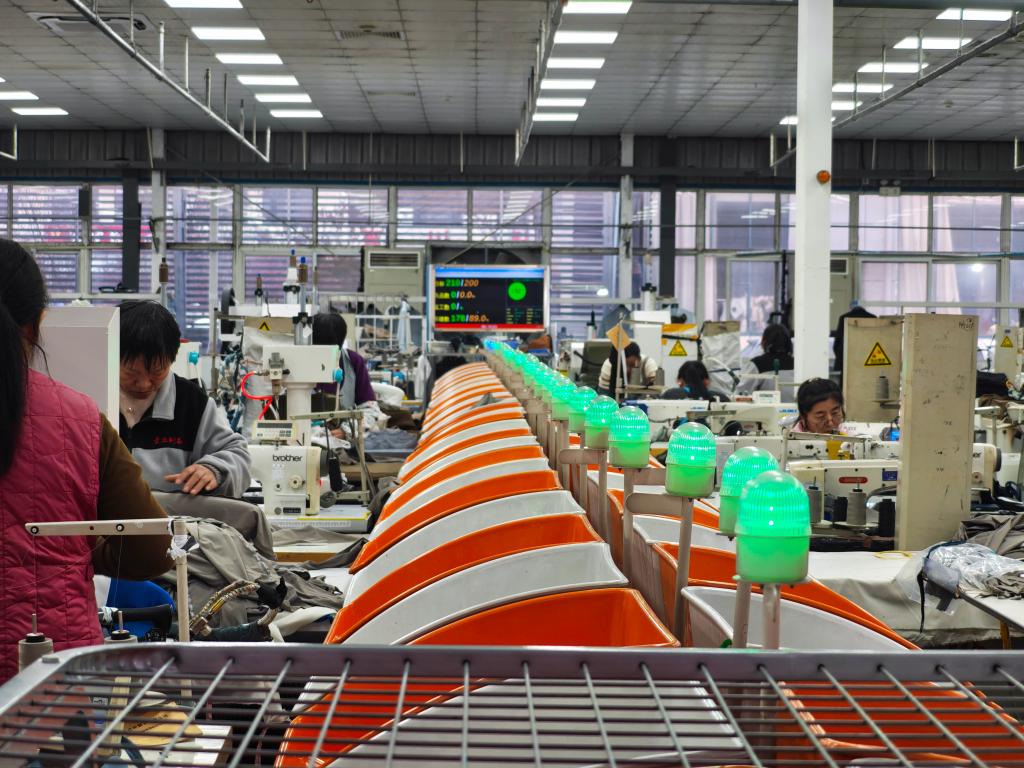
Core Insights - The textile and apparel industry in Wenshang County, Shandong, is undergoing a digital transformation, enhancing productivity and efficiency through smart manufacturing technologies [2][3] - Companies like Aisi Garment Co., Ltd. and Hongruixuan Clothing Co., Ltd. are implementing advanced equipment and systems to meet the demands of small-batch and fast-fashion production [2][3] Group 1: Company Developments - Aisi Garment Co., Ltd. has improved its production efficiency by 15% with the introduction of smart assembly lines, processing over 200 sets of clothing per shift [1] - Hongruixuan Clothing Co., Ltd. utilizes an "industrial brain" system that provides eight service modules for production intelligence and digital marketing, enabling rapid market trend analysis and product design adjustments [2][3] - The company produces over 2 million casual clothing items annually by enhancing its R&D capabilities and integrating supply chain operations [3] Group 2: Industry Trends - Wenshang County has nearly 700 registered textile and apparel enterprises, producing over 400 million garments annually [2] - The local industry is shifting towards small-batch and quick-response production models, necessitating the adoption of automated cutting tables and other advanced manufacturing technologies [2] - The county aims to create a high-end, intelligent, and green flexible manufacturing base for the apparel industry, promoting sustainable growth and innovation [3]
千金药业2025年归母净利增24.74% 6.23亿并购落地推动业绩反转
Chang Jiang Shang Bao· 2026-02-10 23:53
Core Viewpoint - Qianjin Pharmaceutical (600479) demonstrates stable revenue and strong profit growth, achieving a high-quality turnaround despite industry challenges [1][2]. Financial Performance - The company reported a total revenue of 3.635 billion yuan for 2025, a slight increase of 0.13% year-on-year, while the net profit attributable to shareholders rose significantly by 24.74% to 288 million yuan [1][2]. Strategic Acquisitions - Qianjin Pharmaceutical completed acquisitions worth 623 million yuan, acquiring 28.92% of Qianjin Xiangjiang Pharmaceutical and 68% of Qianjin Xieli Pharmaceutical, which were crucial for reversing the company's performance [2]. - The acquisitions were finalized in October and November 2025, enhancing Qianjin's stake in Xiangjiang to 79.92% and achieving full ownership of Xieli, thereby solidifying its core pharmaceutical industrial layout [2]. Business Integration and Growth - The acquired companies are profitable assets, with Xiangjiang and Xieli reporting net profits of 107 million yuan and 23.8369 million yuan, respectively, directly contributing to the listed company's earnings [2]. - Xiangjiang focuses on major disease areas such as cardiovascular and psychiatric specialties, while Xieli specializes in liver disease, hypertension, and rheumatology, complementing Qianjin's strengths in gynecological traditional Chinese medicine [2]. Strategic Planning - The acquisitions represent a key step in the company's "one main, two auxiliary" strategy, aiming for a revenue target of 8 billion yuan by 2031, with 5 billion yuan from the pharmaceutical industry [3]. Digital Transformation - Qianjin Pharmaceutical is leveraging digital transformation to enhance efficiency and profitability, with a data platform and AI applications improving operational efficiency by 62% [4]. - Key production processes have seen over 50% automation in scheduling, and logistics efficiency has improved by 50%, contributing to significant cost reductions [4]. Product Performance - The company's gynecological traditional Chinese medicine series is performing well, with sales expected to exceed 800 million yuan in 2024 and over 470 million yuan in the first half of 2025 [4]. - The company holds 173 drug approvals and has over 30 chemical drug varieties passing consistency evaluations, positioning it favorably in the market [4]. Market Position and Future Outlook - Industry experts believe Qianjin Pharmaceutical has emerged from a growth trough, entering a new phase of high-quality development, supported by its strong position in the gynecological sector and benefits from acquisitions and digital reforms [5]. - The company is expected to maintain steady growth, capitalizing on new product launches and market opportunities in the traditional Chinese medicine and women's health sectors [5].

以科技为支撑,红豆集团开启新一轮产业突围
Ge Long Hui· 2026-02-10 02:45
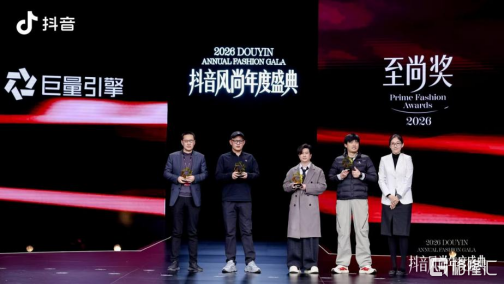
Core Viewpoint - Hongdou Group is undergoing a self-revolution centered on technology to drive its transformation and upgrade in the apparel industry, aiming to leverage AI and robotics for a new industrial breakthrough [1][10]. Group 1: Industry Recognition - Hongdou Group won the "Annual All-Domain Management Brand" award at the first "Zhishang Award" during the "Douyin Fashion Year-End Gala" for its excellence in "AI + Apparel" and innovative brand marketing [3]. - This award signifies recognition of Hongdou's forward-looking strategy to reshape industry logic through technology [3]. Group 2: Innovation and Product Development - Hongdou has developed 128 comfort patents and launched over 2 million units of its "Zero-Sense Comfort Shirt" and 180 million units of its soft innerwear, showcasing its commitment to innovation [5]. - The company is focusing on a triad strategy of "AI + Apparel + Robotics" to achieve digital transformation beyond single product innovation [5]. Group 3: Technological Integration Across the Value Chain - Hongdou's technological transformation encompasses the entire value chain, from R&D to production, sales, and service [7]. - The company has established the first 5G fully connected smart factory in the apparel industry and created a domestic industrial internet platform for textiles, marking a shift from traditional to smart manufacturing [7]. Group 4: Strategic Partnerships in Robotics - Hongdou is strategically investing in the robotics sector, including a partnership with Zhongdian Ke Robot Co., Ltd. to develop AI wearable robots for outdoor exploration and health [9][11]. - This collaboration combines Hongdou's ergonomic and functional fabric expertise with advanced robotics technology, enhancing product comfort and application [13]. Group 5: Digital Ecosystem and Market Performance - Hongdou has built a commercial loop through Douyin, integrating short video content, live streaming, and in-store experiences, leading to significant growth in GMV [15]. - The introduction of AI management systems and robotic applications aims to enhance operational efficiency and customer experience in physical stores [17]. Group 6: Future Outlook and Strategic Vision - Hongdou's partnership with Zhongdian Ke is seen as a crucial step in seizing opportunities in the upcoming industrial wave, aligning with the spirit of collaborative innovation [17]. - The company aims to become a leader in the smart wearable and robotics application sectors, establishing a robust all-domain management moat in the experiential consumption market [17].