
材料科学

Search documents
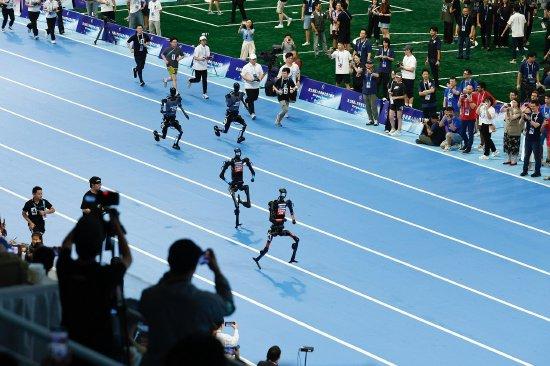
人形机器人首个百米“飞人”跑21.50秒,为何机器人跑这么慢?
Xin Lang Cai Jing· 2025-08-19 01:26
Core Insights - The humanoid robot Tiangong Ultra completed a 100-meter run in 21.50 seconds, marking a significant breakthrough in artificial intelligence and mechanical engineering despite its slower speed compared to human athletes [2][3] - The achievement highlights the robot's autonomy, as it ran the entire distance without remote control, showcasing a leap from zero to one in robotics [3][4] Group 1: Technological Breakthrough - The 21.50 seconds is not merely a measure of speed but a milestone in autonomy, as Tiangong Ultra independently navigated the course using laser radar and cameras [3][4] - Compared to other robots that rely on remote control, Tiangong Ultra's performance demonstrates a higher level of sophistication and capability [3][4] Group 2: Engineering Challenges - Human running relies on a complex biological system, while robots must simulate this using numerous sensors and algorithms, making their task significantly more challenging [4][5] - Key issues for robots include power, balance, and energy efficiency, with current technology requiring compromises that hinder speed [5][6] Group 3: Future Prospects - Experts suggest that achieving speeds comparable to elite human athletes like Usain Bolt is unlikely within the next decade due to physical limitations and technological constraints [6][7] - The true value of robots lies not in speed but in their ability to operate in hazardous environments, indicating a shift from being mere toys to essential tools for safety and rescue operations [7][8]


亚太首台!布鲁克在武汉大学成功安装800 MHz宽腔核磁共振系统,助力多领域研究
仪器信息网· 2025-08-14 04:09
Group 1 - The article highlights the successful installation of the Bruker 800 MHz solid-state NMR system at Wuhan University's Core Facility, marking a significant advancement in high-end research facilities [1][2] - This system is the first of its kind delivered in the Asia-Pacific region, which will greatly enhance the platform's capabilities in high-field solid-state NMR analysis [2] - The new equipment will provide strong support for research in cutting-edge fields such as structural biology, materials science, and clean energy [2]

2025“名校菁英武汉行”启动,牛津剑桥等28位博士及博士后齐聚
Chang Jiang Ri Bao· 2025-07-27 10:38
Group 1 - The "Elite Schools Wuhan Tour" event was launched in Wuhan, featuring 28 PhD and postdoctoral researchers from top universities such as Oxford, Cambridge, and National University of Singapore, aimed at connecting them with over 40 key employers in Wuhan [1] - The invited researchers possess educational backgrounds from developed countries and are from critical fields such as biomedicine, electronic information, artificial intelligence, and materials science, which are in high demand in Wuhan's "965" key industries [1] - During the event, several researchers conducted high-quality presentations and creative sharing, attracting interest from investment institutions and establishing preliminary connection intentions [1] Group 2 - The "Elite Schools Wuhan Tour" is a talent attraction initiative by Wuhan city, designed to create an efficient bridge for overseas elite students and local employers, focusing on deep integration of "industry, academia, research, and application" [2] - The event includes a three-day in-depth visit to benchmark enterprises such as Optics Valley Biomedicine City, Lantu Automotive, and Kangshenda Medical, showcasing Wuhan's industrial strength, innovation ecosystem, and talent development environment [2] - This initiative is part of Wuhan's "Talent Strong City" strategy, aiming to attract talent through urban development opportunities and retain them with a quality ecosystem, providing intellectual support for building a nationally influential technology innovation center [2]
新材料的时空奇遇:从火种到星尘的文明故事
材料汇· 2025-07-18 15:50
Core Viewpoint - The article explores the evolution of materials throughout human history, highlighting their significance in shaping civilization and technological advancements. Group 1: Ancient and Early Materials - The discovery of tools made from volcanic rock by early humans marks the beginning of material use in civilization [3] - Flint was used as a tool for cutting and creating fire, showcasing early human ingenuity in material manipulation [6] - The invention of pottery allowed for food storage and contributed to the development of early urban civilizations [7] - Jade, particularly in ancient cultures, symbolized power and status, reflecting the societal hierarchy based on material rarity and craftsmanship [8][9] Group 2: Industrial Revolution - The Bessemer process revolutionized steel production, significantly reducing the time required to produce steel and increasing its availability for infrastructure [12] - The invention of celluloid provided a sustainable alternative to ivory for billiard balls, leading to broader applications in film and photography [13] Group 3: Electrical and Information Revolution - The development of tungsten filaments in light bulbs greatly improved their longevity and efficiency, making electric lighting accessible to households [16] - The invention of silicon chips laid the foundation for modern computing, enabling the integration of billions of transistors on a single chip [17] - Optical fibers transformed communication by allowing high-speed data transmission over long distances, significantly enhancing global connectivity [18][19] Group 4: AI and Future Materials - Graphene, discovered in 2004, exhibits extraordinary strength and conductivity, paving the way for innovations in electronics and energy storage [25] - Shape memory alloys, such as nickel-titanium, have applications in medical devices and robotics due to their ability to return to a predetermined shape [26] - AI-driven material design is revolutionizing the development of new materials, enabling rapid identification of high-performance candidates for various applications [27][28] Group 5: Speculative Future Materials - Bio-steel, derived from genetically modified organisms, promises lightweight and strong materials for protective gear [32] - Time crystals, which maintain a stable oscillation state, could lead to advancements in precision timekeeping and quantum computing [34] - Dark matter composites may enable anti-gravity technologies, revolutionizing transportation and space exploration [35] Group 6: Conclusion - The article emphasizes the continuous evolution of materials as a reflection of human creativity and technological progress, suggesting that future innovations will further transform society [46]

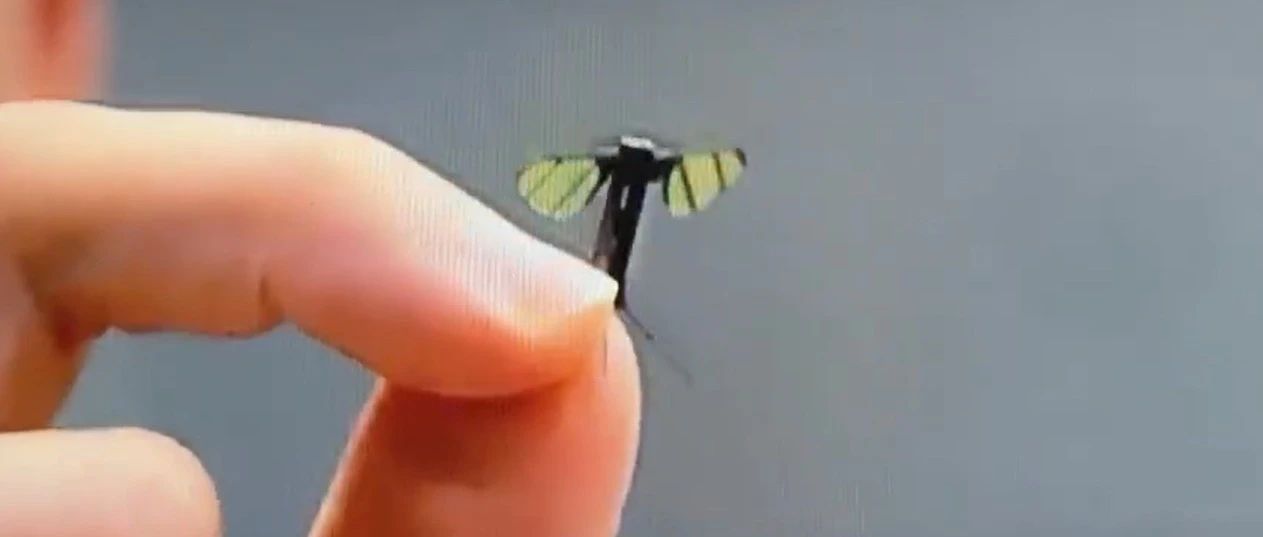
新突破!我国成功研发蚊子大小仿生机器人
是说芯语· 2025-06-19 04:12
Core Viewpoint - The successful development of a bionic robot the size of a mosquito by the National University of Defense Technology represents a significant advancement in the integration of biological characteristics and cutting-edge technology, potentially reshaping future battlefield reconnaissance methods [1][2]. Group 1: Technological Integration - The creation of a mosquito-sized robot involves collaborative efforts across multiple disciplines, including micro-electromechanical systems (MEMS), materials science, and biomimicry [2]. - The design and manufacturing of microchips for this robot require high precision to integrate sensors, power devices, and control circuits into a very small space [2]. - In materials science, there is a need for lightweight, high-strength, and flexible materials to mimic the flight posture and movements of mosquitoes [2]. Group 2: Application and Advantages - The bionic robot's small size, light weight, and excellent concealment make it particularly suitable for intelligence reconnaissance and other special tasks on the battlefield [1][2]. - Traditional reconnaissance methods have limitations in certain scenarios, while the mosquito-sized bionic robot can easily overcome these constraints, allowing it to infiltrate enemy positions undetected [1][2].
80后材料科学家张桥,出任苏州大学校长
生物世界· 2025-06-09 06:42
Core Viewpoint - The article highlights the appointment of Zhang Qiao as the youngest president of Suzhou University since its renaming in 1982, emphasizing his academic and administrative background in materials science and technology [1]. Background of Zhang Qiao - Zhang Qiao, born in June 1982, graduated with a bachelor's degree from the University of Science and Technology of China in 2004, followed by a master's degree in 2007 and a Ph.D. from the University of California, Riverside in 2012 [2]. - He has held various positions at Suzhou University, including professor and vice dean, and has served in local government roles such as deputy mayor of Kunshan and Suzhou, and deputy director of the Jiangsu Provincial Department of Science and Technology [2]. Research Contributions - Zhang Qiao's research focuses on physical chemistry, materials science, catalysis, and nanomaterials, with over 200 published papers and a total citation count of 29,242, achieving an H-index of 87 [3][4]. - His notable works include a review on oriented attachment growth and functional materials synthesis, which has been cited 693 times [6]. - A significant paper during his doctoral studies demonstrated that H₂O₂ is a key reagent in the synthesis of silver nanoplates, challenging previous beliefs and garnering 933 citations [9]. Independent Research Phase - After establishing an independent lab at Suzhou University in 2014, Zhang published a paper on the one-pot synthesis of highly stable CsPbBr₃@SiO₂ core-shell nanoparticles, contributing to the field of nanomaterials [12][14]. - His most cited work, published in 2016, reviews the synthesis, properties, and applications of hollow micro/nanostructures, with 1,426 citations, discussing various synthesis strategies and applications across multiple fields [14].

外骨骼机器人火爆多家景区,相关上市公司股价大涨超七成
Xin Lang Cai Jing· 2025-05-19 03:06
Group 1 - The core viewpoint of the articles highlights the growing popularity and commercialization of exoskeleton robots in tourist attractions, particularly in China, with a focus on their use in mountain climbing [1][3] - The Taishan scenic area has introduced approximately 400 exoskeleton robots, allowing tourists to rent them for 80 yuan, significantly enhancing their climbing experience by reducing the time taken to ascend [1] - The exoskeleton robots, developed by Taishan Cultural Tourism Group and Shenzhen Keng Technology Co., are priced at 8,280 yuan, indicating a significant investment in this technology [1] Group 2 - The global exoskeleton robot market is experiencing rapid growth, with a market size of 1.8 billion USD last year and projections to exceed 12 billion USD by 2030, reflecting a compound annual growth rate of 28% [3] - The integration of exoskeletons into China's "14th Five-Year Plan" as a key development area for high-end medical equipment, along with insurance coverage for certain rehabilitation exoskeletons, is expected to accelerate commercialization in the medical rehabilitation sector [3] - The market potential for exoskeleton robots is anticipated to expand further due to advancements in AI and materials science, as well as the increasing demand from an aging population, with applications extending into home care and outdoor sports [3]



专访港城大校长梅彦昌:港浙协同创新 共塑科技未来
Zhong Guo Xin Wen Wang· 2025-05-14 15:18
Group 1 - The core viewpoint emphasizes the transformation of Hangzhou from a city known for silk and cuisine to one recognized for digital technology and innovation, highlighting the importance of collaboration over competition in urban development [1] - The president of City University of Hong Kong, Mei Yanchang, sees significant potential for collaboration between Hong Kong and Zhejiang in technology innovation and educational cooperation, positioning the university as a "super connector" for global innovation resources [1][3] - Mei Yanchang's vision for the university includes establishing interdisciplinary platforms such as an Innovation Academy and a Digital Medicine Research Institute, focusing on long-term development rather than short-term gains [2] Group 2 - The integration of AI with healthcare and finance is noted as a burgeoning area of growth, with Hangzhou's "Six Little Dragons" making strides in AI, large models, and robotics, attracting global attention [2] - The trend of "two-way flow" of students between Hong Kong and mainland China is reshaping the educational landscape, with initiatives to enhance international resources and collaboration [3] - Mei Yanchang aims for Hong Kong-Zhejiang cooperation to extend beyond technology transfer, aspiring to create a comprehensive innovation system that encompasses basic research, application development, and industrial implementation [4]
国泰海通|新能源:从概念到产业化,市场空间广阔——外骨骼行业专题报告
国泰海通证券研究· 2025-05-14 15:05
Core Insights - The article emphasizes the growing maturity and market potential of exoskeleton robots, which have applications in military, industrial, medical, and consumer sectors, driven by advancements in technology and increasing demand from an aging population [1][2]. Market Overview - Exoskeleton robots originated from military needs and have evolved over a century, now achieving large-scale applications in medical and industrial fields. The market is expected to expand further due to breakthroughs in AI and materials science, as well as the increasing demand for elderly care [1][2]. - The global market for exoskeleton robots is projected to reach $6.8 billion by 2030, indicating significant growth potential [2]. Applications - In the military sector, exoskeleton robots enhance individual combat capabilities. In industrial settings, they improve efficiency and reduce injury risks, particularly in high-intensity tasks such as logistics, automotive manufacturing, and mining [2]. - In outdoor activities, exoskeleton robots enhance experiences in hiking and climbing, with testing and operations already underway in various scenic areas, and prices are becoming more consumer-friendly [2]. - In the medical field, exoskeleton robots show great promise in rehabilitation and elderly care, further expanding their application scope [2]. Industry Participation - Numerous companies are entering the exoskeleton robot market through self-research, collaborative development, establishing subsidiaries, or investing in startups, indicating a competitive and dynamic industry landscape [3].

外骨骼助力爬山:热潮背后的商业逻辑
3 6 Ke· 2025-05-09 00:01
Core Insights - The exoskeleton technology is rapidly gaining popularity in mountain tourism, particularly during the May Day holiday, as it offers a "pain-free climbing" experience, attracting significant attention from tourists [1][2] - The exoskeleton market is transitioning from concept validation to commercialization, driven by unmet consumer demands and technological advancements [1][13] Market Potential - The global exoskeleton market is projected to grow from 107,000 units in 2025 to 301,000 units by 2028, with a compound annual growth rate (CAGR) exceeding 33% [4] - By 2030, the global exoskeleton market size is expected to reach $14.67 billion, with a CAGR of 42.2% [4] - The increasing demand for exoskeletons in various sectors indicates a market potential exceeding hundreds of billions, particularly with the aging population in China [4][6] Technological Innovations - The exoskeletons utilize advanced materials like carbon fiber and titanium alloys, significantly reducing weight while enhancing strength [7] - Multi-modal sensors, including electromyography (EMG) and pressure sensors, enable real-time monitoring of user movements, providing precise assistance [7] - Adaptive control algorithms allow for automatic adjustment of support strength based on user activity, enhancing the overall experience [7] Business Model - Exoskeletons lower the barriers to mountain climbing, making it accessible to a broader audience, including the elderly and those with limited physical capabilities [9] - The rental pricing of exoskeletons is competitive with cable cars, offering a superior experience and flexibility [9] - The introduction of exoskeletons in scenic areas enhances visitor satisfaction and can lead to increased revenue through extended visitor stays and additional spending [9][11] Industry Participation - Several listed companies are actively involved in the exoskeleton supply chain, contributing to its commercialization [11] - The demand for upstream materials and high-precision sensors is increasing, while collaborations between outdoor brands and technology firms are emerging [11] Future Outlook - Despite the promising market, challenges such as technological limitations and high costs remain [12] - The potential for exoskeletons to become commonplace in daily activities suggests a vast market for lifestyle enhancement products in the future [12][14]
