
生成式人工智能

Search documents
微短剧国际传播的现状考察、特征识别与优化策略——基于ReelShort平台的实证分析
Jing Ji Guan Cha Wang· 2026-02-14 12:52
Core Insights - The article emphasizes the leading position of China in the international communication of short-form dramas, highlighting the successful global dissemination and transformation effects of these dramas, particularly through the ReelShort platform [3][4][5]. Group 1: Current Status and Characteristics of International Communication - China's short-form dramas dominate the international market, accounting for approximately 80% of the total number of short-form dramas available overseas, with those containing Chinese cultural elements making up about 30% [6]. - The international communication of short-form dramas exhibits characteristics such as aggregation of subjects, content, channels, and audiences, as well as precision in effects and industrialization of the chain [3][4]. - The success of short-form dramas in international markets is attributed to their ability to resonate emotionally with global audiences, particularly through themes of romance and relationships, which constitute about 80% of the content [19][20]. Group 2: Platforms and Distribution Channels - The ReelShort platform has emerged as a significant player in the international dissemination of short-form dramas, achieving a peak download rate that surpassed TikTok in the U.S. App Store in November 2023 [5]. - The international communication strategy involves both proprietary platforms and mainstream media platforms like YouTube and TikTok, allowing for a comprehensive approach to audience engagement [24][25]. - The average pricing for short-form dramas ranges from $0.20 to $0.70 per episode, indicating a premium positioning in the market compared to other streaming services [26]. Group 3: Audience and Engagement - The primary audience for short-form dramas in international markets is predominantly female, with women making up about 70% of the user base on the ReelShort platform in the U.S. [27]. - The content is tailored to appeal to the emotional needs of viewers, particularly focusing on strong female characters and relatable life experiences, which resonate well with the target demographic [28]. - Engagement metrics indicate that short-form dramas have achieved significant viewership, with average views per episode around 1.068 million, showcasing their popularity and effectiveness in international markets [29]. Group 4: Future Opportunities and Strategies - The article suggests that there is a need to enhance the international communication of short-form dramas by leveraging generative artificial intelligence to support the production process and improve content quality [3][4]. - It highlights the importance of localizing content to meet the cultural preferences of international audiences, which is crucial for the continued success of short-form dramas abroad [12][13]. - The industry is encouraged to explore further research into the international dissemination of short-form dramas to maximize their cultural export potential and enhance communication effectiveness [7][8].


马年说马丨马的新年画
Xin Lang Cai Jing· 2026-02-14 10:19
Core Viewpoint - The article discusses the evolution of traditional Chinese New Year paintings, particularly focusing on the representation of horses, and highlights the integration of modern technology and aesthetics in creating new artworks while preserving cultural heritage [2][3]. Group 1: Traditional Elements - Horses are a common motif in traditional woodblock New Year paintings, symbolizing auspiciousness and protection [2]. - Various regional styles, such as Yangliuqing and Taohuawu, incorporate horses to convey wishes for success and academic achievement [2]. - In Hebei's Wuqiao paintings, horses often accompany deities, serving as guardians of homes and bringers of good fortune [2]. Group 2: Modern Adaptations - The term "new year painting" has emerged as traditional experiences and dissemination methods evolve, with contemporary artists reinterpreting traditional elements through collage and redesign [2]. - Generative artificial intelligence has lowered the barriers for creating new year paintings, allowing for the generation of digital images based on traditional styles [2]. - The integration of modern technology with traditional art forms highlights the ongoing relevance and creative potential of these cultural symbols [3]. Group 3: Value of Traditional Craftsmanship - Despite the rise of digital media, the tactile qualities and craftsmanship of physical New Year paintings remain invaluable, as they embody a sense of time and authenticity that screens cannot replicate [3]. - The continued appreciation for New Year paintings signifies the enduring cultural significance and the importance of preserving this intangible heritage [3].

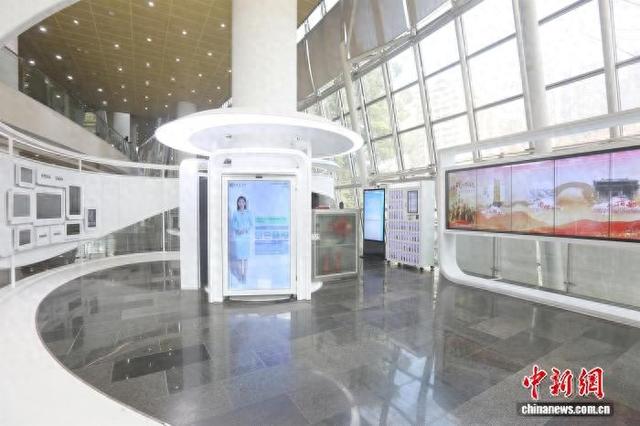
(新春走基层)重庆图书馆开放“抗战文献智慧体验区”
Xin Lang Cai Jing· 2026-02-14 08:18
Core Viewpoint - The Chongqing Library has opened an "Anti-Japanese War Literature Smart Experience Zone," integrating digital technology with historical documents to enhance public engagement and understanding of wartime history [1][5]. Group 1: Experience Zone Features - The experience zone features a "digital librarian" powered by a large language model, providing real-time explanations and knowledge services related to anti-war literature [2]. - A "Cultural Corridor" presents a timeline of significant events from the Anti-Japanese War, allowing readers to interact with historical materials [2]. - Virtual reality (VR) technology enables readers to immerse themselves in historical settings, such as the Roosevelt Library, and experience period costumes for an interactive learning experience [2]. Group 2: Technological Integration and Impact - The Chongqing Library has transitioned from static preservation of literature to dynamic service, utilizing over 30,000 anti-war documents for digital organization and intelligent application [5]. - The integration of smart technologies enhances the reading experience and transforms the way public libraries organize and disseminate knowledge [5]. - The establishment of the experience zone reflects a commitment to making unique collections accessible to the public, thereby increasing cultural awareness and participation [5]. Group 3: Future Developments - The Chongqing Library plans to continue advancing its smart library initiatives, improving its specialized literature knowledge base, and expanding intelligent service scenarios [5].
拆解GEO:未来营销新变局
Jing Ji Guan Cha Wang· 2026-02-14 03:21
Core Concept - Generative Engine Optimization (GEO) is emerging as a new focus for both capital markets and the marketing industry, driven by the accelerated application of generative artificial intelligence [2] - GEO aims to influence the information sources and content weight used by large language models in generating answers, marking a structural adjustment in marketing logic as user information acquisition shifts from "search" to "conversation" [2][3] Shift in Marketing Logic - The core objective of marketing optimization has shifted from improving link rankings based on click-through rates to securing "answer share" in the context of generative AI, where users receive integrated answers directly from models [3] - This transition indicates that GEO's impact extends beyond traditional SEM/SEO budgets, potentially reshaping content marketing, public relations, KOL collaboration, and reputation management [3] Industry Structure - GEO involves multiple participants, from foundational model providers to application layer collaborators, indicating a collaborative ecosystem rather than a single company's domain [5][6] - The foundational layer consists of technology companies providing large model capabilities, which determine information synthesis, ranking logic, and citation rules [6] - Platform providers, such as search engines and super apps, hold a natural advantage in information distribution due to their large user bases, making them key players in the GEO ecosystem [6][7] - Brands and enterprises must focus on providing reliable, verifiable, and continuously updated factual information to enhance their chances of being included in model-generated answers [6] Content Production Logic - The adoption of GEO may lead to a fundamental change in content production and dissemination, prioritizing information with clear sources, data support, and structured expression over narrative and style [8] - The demand for original content may increase, as high-quality facts and authoritative sources become more critical, potentially stimulating deeper professional content creation [8][9] Future Marketing Strategies - Companies should view GEO as a "defensive first, offensive later" capability, focusing initially on brand safety and information accuracy before actively influencing user perceptions [12] - The urgency to enter the GEO space varies by industry; high-value, reputation-sensitive sectors may need to act quickly, while price-sensitive markets may have more flexibility [12] - Long-term, GEO represents just one aspect of how AI will reshape marketing, with increasing algorithmic involvement in content generation, creative optimization, pricing, promotions, and inventory management [12][13] Measurement and Interaction Changes - The digitalization of marketing chains may alleviate long-standing attribution issues, leading to more data-driven and model-based marketing decisions [13] - Both supply-side companies and demand-side user behaviors are expected to evolve, with the ultimate impact of generative AI on their interactions remaining to be seen [14]

2026年中国GenAI+教育行业发展报告
艾瑞咨询· 2026-02-14 01:19
Core Insights - The article emphasizes that 2025 will be a pivotal year for smart education in China, driven by advancements in Generative AI (GenAI) technologies, which are set to transform educational productivity and personalized learning experiences [1][7][10] - The report highlights a 40/60 split in education, where 40% of educational tasks can be automated by technology, while 60% remains the domain of human educators, focusing on emotional engagement and complex problem-solving [2][5] Group 1: Technological Impact on Education - GenAI technology is expected to bring significant changes in educational information forms, tool applications, spatial scenarios, and organizational structures, aiming for scalable personalized supply and quantifiable teaching outcomes [3][7] - The report identifies that GenAI will facilitate a shift from static teaching information to dynamic interactive agents, enhancing the learning process and classroom engagement [3][5] Group 2: Market Growth and Projections - The Chinese AI industry is projected to maintain a compound annual growth rate (CAGR) of 32.1% from 2025 to 2029, with the market size expected to exceed 1 trillion yuan by 2029 [7][10] - By 2025, the total scale of GenAI-related educational products and services is anticipated to reach approximately 344.2 billion yuan, with a projected CAGR of 37% leading to 891 billion yuan by 2028 [18][19] Group 3: School and Consumer Market Dynamics - In the school sector, GenAI-related procurement is expected to account for 25%-35% of total purchases in higher education and 20%-30% in primary and secondary education by 2025 [10][12] - The consumer education market is projected to reach 1.3 trillion yuan in 2025, with GenAI products covering 15%-20% of adult education and 10%-15% of K12 education [15][18] Group 4: GenAI Usage in Educational Settings - GenAI is significantly penetrating adult learning, K12 self-study, and parental tutoring scenarios, with 57.3% of parents using GenAI applications to assist their children [12][13] - The report indicates that GenAI applications are becoming integral to family education and personal development, with 74.8% of children accessing GenAI through general AI assistants [13][15] Group 5: Parental Attitudes and Concerns - Parents exhibit a cautious yet positive attitude towards GenAI, recognizing its potential to enhance learning while expressing concerns about over-reliance and reduced critical thinking among children [54][60] - The report outlines that GenAI is reshaping parental education spending, transitioning from high-investment strategies to more efficient AI-driven solutions [57][66] Group 6: GenAI Procurement Characteristics - In ordinary universities, 27% of educational procurement projects involve GenAI, with a focus on smart teaching and campus management [21][24] - Vocational colleges show a 35% involvement of GenAI in procurement, emphasizing its application in smart teaching and practical training [28][32] Group 7: Future Trends and Competitive Landscape - The market for educational vertical models is evolving towards a focus on scene cultivation and value delivery, with competition intensifying among tech giants, traditional education firms, and startups [74][78] - The integration of general and vertical models is becoming a common strategy among leading educational technology companies, enhancing their competitive edge in the AI education sector [79]

2026年中国GenAI+教育行业发展报告
艾瑞咨询· 2026-02-14 00:08
Core Insights - The article emphasizes that 2025 will be a pivotal year for smart education in China, driven by advancements in Generative AI (GenAI) technologies, which are set to transform educational productivity and personalized learning experiences [1][7]. - The report highlights a 40/60 split in education, where 40% of tasks can be automated by technology, while 60% remains the domain of human educators, focusing on emotional engagement and complex problem-solving [2][5]. Group 1: Technological Impact on Education - GenAI technology is expected to bring significant changes in the education sector by transforming static information into dynamic, interactive learning experiences, enhancing teaching efficiency, and enabling personalized education [3][10]. - The report outlines that the Chinese AI industry is projected to grow at a compound annual growth rate (CAGR) of 32.1% from 2025 to 2029, reaching a market size of over 1 trillion yuan by 2029 [7]. Group 2: Market Dynamics and Procurement Trends - The budget for educational digitalization in China is expected to grow steadily, reaching approximately 551.5 billion yuan in 2025 and 680.2 billion yuan by 2028, with GenAI-related procurement demand increasing significantly in schools [10][18]. - In the C-end education market, the total scale is projected to reach 1.3 trillion yuan in 2025, with GenAI products covering 15-20% of adult education and 10-15% of K12 education [15][18]. Group 3: User Engagement and Adoption - By the end of 2025, the user base for Generative AI in China is expected to reach 602 million, a 141.7% increase from 2024, with a penetration rate of 42.8% among young and highly educated individuals [12][13]. - Parents are increasingly using GenAI applications for assisting their children with homework, with 57.3% of parents reporting usage in tutoring scenarios [12][44]. Group 4: Educational Institutions' Procurement Characteristics - In ordinary universities, GenAI-related projects account for about 27% of procurement needs, with a focus on smart teaching and campus management [21][24]. - Vocational colleges show a higher proportion of GenAI projects at 35%, emphasizing the need for technology to reduce teacher workload and enhance personalized teaching [27][30]. Group 5: Future Projections and Trends - The total scale of GenAI+ educational products and services is expected to reach 8.91 billion yuan by 2028, with a CAGR of 37% from 2025 [18][19]. - The report indicates that the value of GenAI technology in educational services is projected to increase, with an average of 20% of service costs attributed to technology capabilities [19][40].



MSCI中国指数季度调整,新增37只成份股
Jing Ji Guan Cha Wang· 2026-02-13 22:17
MSCI董事长兼首席执行官Henry Fernandez在近期亚太地区的投资者会议上表示,生成式人工智能正在 重新定义金融与投资的本质,并指出私募资产在亚太地区配置比例呈上升趋势。这些观点反映了公司对 前沿技术的关注及其对投资领域影响的判断。 公司状况 近期财报:MSCI最近一期公布的财报为2025财年三季报(累计),报告期内公司营业收入为23.12亿美 元,净利润为9.18亿美元,均实现同比增长。 市场表现:在2025年12月期间,MSCI股票成交额波动较大,股价呈现一定下行趋势。 以上内容基于公开资料整理,不构成投资建议。 经济观察网根据近期公开信息,明晟公司(MSCI)有以下几项值得关注的事件动态: 近期事件 MSCI中国指数季度调整 事件概述:MSCI公布了2026年2月的指数季度审核结果。其中,MSCI中国指数新纳入37只成份股(包括 33只A股和4只港股),同时剔除了16只成份股,如复星国际、长城汽车(601633)和万科企业等。 生效时间:本次调整将于2026年2月27日收盘后正式生效。由于跟踪该指数的被动资金规模庞大,成份 股的调整通常会在生效日前后引起相关股票的流动性变化。 公司高层对行业趋 ...
Seedance2.0“真人素材参考”功能被暂停,爆火背后有两道必答题
Huan Qiu Wang Zi Xun· 2026-02-13 07:26
Core Viewpoint - ByteDance's newly launched video model Seedance 2.0 has generated significant online discussion due to its ability to create movie-quality videos from simple prompts, raising concerns about privacy and content security as it can closely mimic real-life individuals and voices [1][6]. Group 1: Seedance 2.0 Capabilities - Seedance 2.0 addresses a common pain point in generative AI by improving content consistency, which is crucial for its application in serious film production [2][5]. - The model allows for rapid generation of complex visual effects that previously required extensive manual adjustments, significantly enhancing productivity in the film industry [2][3]. - The technology enables creators to bypass technical barriers, allowing for a focus on storytelling rather than technical execution, which could democratize high-quality film production [5][6]. Group 2: Industry Impact - The advancements in Seedance 2.0 could lead to a shift in the film industry, where high-quality effects can be produced at lower costs, making it accessible for smaller studios [5][6]. - The model's ability to generate consistent results is seen as a transformative step that could change the role of AI from a mere entertainment tool to a serious production asset [2][3]. Group 3: Privacy and Security Concerns - The rapid development of video generation technology poses new challenges for privacy protection and content security, particularly concerning deepfakes and misinformation [6][7]. - Experts emphasize the need for evolving regulatory frameworks to keep pace with technological advancements to prevent misuse, such as scams using deepfake technology [7][8]. - A collaborative approach involving technology, regulation, and legal frameworks is necessary to effectively manage the risks associated with these advanced tools [8].

盘后大涨超5%!爱彼迎(ABNB.US)Q4营收超预期 预计2026年增长至少低双位数!
美股IPO· 2026-02-12 23:58
民宿预订平台爱彼迎(ABNB.US)周四发布了强劲的第四季度业绩报告,并对2026年给出了乐观的收入指引,显示出全 球旅行需求依然坚挺。受此消息提振,公司股价在盘后交易中一度上涨近7%。 这一业绩指引紧随上月美国航空业发布的乐观报告,表明尽管地缘政治紧张局势加剧,美国多地遭遇严寒天气, 旅游需求仍保持稳健。这对爱彼迎而言无疑是利好——目前公司正借助当前进行的冬季奥运会以及即将到来的世 界杯等重大体育赛事,积极吸引旅客和新房东入驻平台。 作为核心运营指标,爱彼迎第四季度"预订的入住晚数和体验活动数量"达到1.219亿,同比增长10%,远超市场 预期的1.176亿。总预订金额(涵盖房东收入、服务费、清洁费及税费)达204亿美元,同比上升16%,同样高于 分析师预测的194亿美元。 公司表示,去年在美国推出的"先订后付"预订选项受到用户欢迎,有效推动了第四季度订单增长。2026年,预 计这一灵活支付方式将向全球更多用户开放。此外,更宽松的退订政策也帮助提升了假日季预订量,并减少了客 服咨询量。 从区域看,印度、巴西和日本等新兴市场成为增长主力。以印度为例,首次预订用户增幅超过60%,新兴国际市 场的增速约为成熟市场 ...


视频模型Seedance2.0火爆,“真人素材参考”功能已被暂停,给隐私保护和素材安全提出哪些新课题?
Yang Guang Wang· 2026-02-12 12:31
Core Viewpoint - The launch of ByteDance's video model Seedance 2.0 has generated significant online discussion due to its ability to create high-quality videos from simple prompts, raising questions about privacy and content security [1] Group 1: Technology and Features - Seedance 2.0 allows users to generate movie-quality videos with just a few lines of prompts, showcasing its advanced AI capabilities [1] - The model has been noted for its strong imitation ability, capable of generating videos that closely resemble real-life individuals and their voices, leading to concerns about authenticity [1] - The model addresses a common issue in generative AI regarding consistency, which is crucial for its application in serious film production [2] Group 2: Industry Impact - The advancements in Seedance 2.0 could significantly enhance productivity in the film industry, allowing for quicker and more efficient production processes [2][3] - The use of AI tools in the entire filmmaking process, from scriptwriting to post-production, is becoming more prevalent, although current AI tools still face challenges in reliability [3] - The ability to create high-quality effects at lower costs may democratize film production, enabling smaller studios to compete with larger ones [4] Group 3: Challenges and Concerns - The rapid development of video generation technology raises new challenges for privacy protection and content security, particularly concerning deepfake technology [4] - There is a need for regulatory frameworks to evolve alongside technological advancements to prevent misuse, such as scams using deepfake technology [4]