
稳投资

Search documents
深夜食堂第十三季|在波动市场中寻找“稳”的力量
Shang Hai Zheng Quan Bao· 2025-11-06 13:54
Core Viewpoint - The concept of "stability" in investment is often misunderstood as conservatism, but it is actually about active management aimed at optimizing the holding experience and ensuring long-term investment success [1][2]. Group 1: Market Conditions - The Shanghai Composite Index successfully broke through the 4000-point mark on October 28, marking the first time since August 18, 2015, but experienced slight fluctuations on the same day [3]. - The current market is characterized as a "structural market," with only 10% to 20% of stocks doubling in value since September 24 of last year, indicating significant differentiation and a lack of widespread profit-making [4]. Group 2: Investment Strategy - The investment strategy focuses on controlling portfolio volatility to achieve stability during market fluctuations, with the current portfolio positioned at a neutral level, resulting in a significantly lower overall drawdown compared to the market average [5]. - The investment framework emphasizes macroeconomic research to identify turning points and opportunities, with recent allocations to utilities and transportation sectors based on predictions of counter-cyclical adjustments and policy support [5][6]. Group 3: Portfolio Management - The essence of left-side trading is to buy when assets are overlooked, requiring patience and a balanced portfolio to mitigate risks while waiting for market adjustments [7]. - Dynamic balance in portfolio management is crucial, with adjustments made based on market conditions and asset performance, ensuring that the portfolio remains aligned with the investor's objectives [8]. Group 4: Investor Experience - The ultimate goal of a stable investment strategy is to enhance the investor's experience by avoiding significant or prolonged losses and maintaining a smooth upward trajectory in returns [9]. - The philosophy emphasizes that a positive investment experience is achieved when the time spent in profitable conditions outweighs the time in losses, reflecting a long-term view of stability's value [9].
深夜食堂第十三季|对话国泰基金张容赫:“稳”是一种被低估的力量
Zhong Guo Ji Jin Bao· 2025-11-06 05:13
Core Viewpoint - The concept of "stability" is undervalued in volatile markets, as articulated by Zhang Yonghe of Guotai Fund, emphasizing that it is not conservative but rather an active management strategy aimed at optimizing the investment experience and ensuring long-term stability [1][2]. Group 1: Market Conditions - The Shanghai Composite Index successfully broke the 4000-point barrier on October 28, marking the first time since August 18, 2015, but experienced slight fluctuations on the same day, indicating market volatility [4]. - The current market is characterized as a "structural market" rather than a typical bull market, with only 10% to 20% of stocks doubling in value since September 24, 2022, primarily in small-cap and AI-related sectors [5][6]. Group 2: Investment Strategy - The investment strategy focuses on controlling portfolio volatility to achieve stability during market fluctuations, with a neutral overall position that has resulted in significantly lower drawdowns compared to the market average [6][7]. - Zhang Yonghe emphasizes macroeconomic research as a core element of investment decisions, aiming to identify turning points and opportunities based on economic trends, corporate earnings, and liquidity conditions [7][8]. Group 3: Portfolio Management - The investment approach incorporates a strong contrarian mindset, suggesting that opportunities often arise when assets are overlooked by the market [9]. - The strategy involves dynamic portfolio management, adjusting asset allocations based on market conditions and the relative value of assets, ensuring a balance between different investment styles [10][13]. Group 4: Enhancing Investor Experience - The ultimate goal of a stable investment strategy is to enhance the investor's experience by minimizing significant or prolonged losses and maintaining a smooth upward trajectory in returns [15]. - Zhang Yonghe's philosophy aligns with the idea that a positive investment experience is paramount, allowing investors to feel secure in their equity market investments without the stress of timing the market [15].
对话国泰基金张容赫:“稳”是一种被低估的力量
Zhong Guo Ji Jin Bao· 2025-11-06 04:29
Core Insights - The concept of "stability" in investment is emphasized as an undervalued strength, aiming to optimize the holding experience and support long-term investment success [1][2] - The investment strategy focuses on macroeconomic and market judgments to enhance the investment experience for holders, avoiding significant and prolonged losses [2][4] Market Context - The Shanghai Composite Index successfully broke the 4000-point mark on October 28, marking its first time above this level since August 18, 2015, although it experienced slight fluctuations on the same day [3] - The current market is characterized as a "structural market," with only 10% to 20% of stocks doubling in value since September 24, 2022, indicating significant market differentiation and a lack of widespread profit [4] Investment Strategy - The investment approach is centered on controlling portfolio volatility to achieve stability during market fluctuations, with a neutral overall position that has resulted in lower drawdowns compared to the market average [5] - The investment framework involves macroeconomic research to identify turning points and opportunities, with recent allocations to utilities and transportation sectors based on predictions of counter-cyclical adjustments [5][6] Portfolio Management - The strategy includes left-side trading, which requires patience and is supported by a diversified portfolio that allows for waiting on underperforming assets [7] - Dynamic balance in portfolio management is crucial, adjusting asset weights based on market conditions and the actual value changes of assets [8] Investor Experience - The ultimate goal of the investment strategy is to enhance the investor's experience by minimizing significant losses and ensuring a smooth upward trajectory of returns [9] - The philosophy emphasizes that a positive investment experience is achieved when the time spent in profitable conditions outweighs the time in losses, reflecting a long-term view of stability [9]
深夜食堂第十三季|对话国泰基金张容赫:“稳”是一种被低估的力量
中国基金报· 2025-11-06 04:24
Core Viewpoint - The concept of "stability" in investment is undervalued and should be seen as proactive management aimed at optimizing the holding experience and ensuring long-term investment success [2][3] Market Analysis - The recent market is characterized as a "structural market" rather than a typical bull market, with only 10% to 20% of stocks doubling in value since September 24, 2022, primarily in small-cap and AI-related sectors [6][7] - Despite some active trading phases, the median gain across the A-share market is significantly lower than the index gains, indicating a clear divergence in market performance [7] Investment Strategy - The focus on "stability" is crucial for managing portfolio volatility, allowing for sustained performance amid market fluctuations. The overall portfolio positioning has been neutral, with a notable reduction in drawdown compared to market averages [8] - A robust investment framework has been developed, emphasizing macroeconomic research to identify turning points and opportunities for left-side positioning [9][10] Portfolio Management - Left-side trading requires patience, as evidenced by the successful positioning in brokerage stocks that began in the second half of 2023, with benefits realized in 2024 [12] - Dynamic portfolio management is essential, adapting to market style shifts and adjusting asset allocations based on actual value changes [13][14] Investor Experience - Enhancing the investor experience is a primary goal, focusing on avoiding significant or prolonged losses while ensuring a smooth upward trajectory in returns [15][16] - The ultimate aim is to provide investors with peace of mind in equity investments, minimizing the need for complex timing decisions [16]


四季度国内投资发力重点在哪?解读梳理↓
Yang Shi Wang· 2025-10-22 03:49
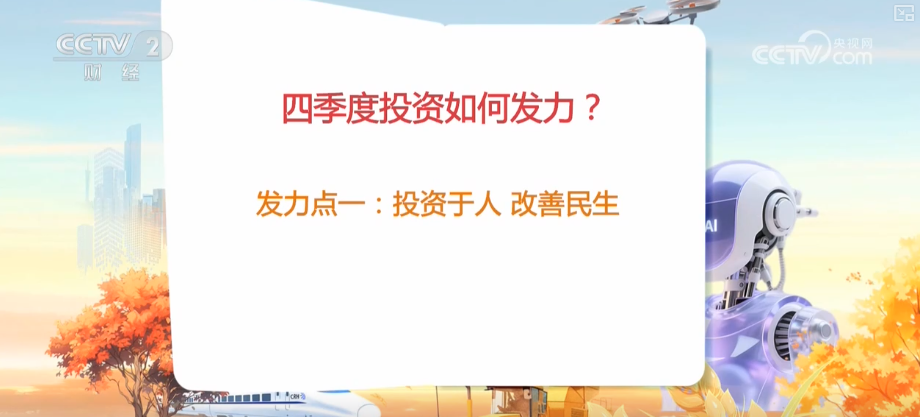
Group 1 - Investment focus on improving people's livelihoods through projects such as urban renewal, underground pipeline renovation, parking lot construction, and high-standard farmland [2][3] - Emphasis on innovation investment in the technology sector to accelerate the formation of new productive forces, contributing to long-term development advantages [6][7] Group 2 - The National Development and Reform Commission announced a new policy financial tool with a scale of 500 billion yuan, aimed at supplementing project capital and alleviating local government investment pressure, potentially leveraging around 3 trillion yuan in investments [9][10] - The new financial tools are expected to guide and boost investment expectations, signaling stable investment and continuous improvement in future development [12]
【财经分析】近3000亿元政策性金融工具加速投放 有望撬动数万亿投资动能
Xin Hua Cai Jing· 2025-10-21 13:35
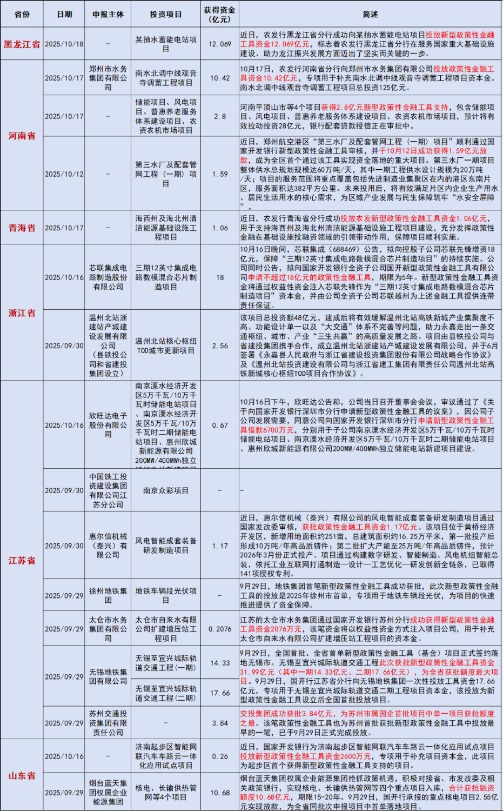
Core Insights - The new policy financial tools are being implemented at an unprecedented speed, with a total of 189.35 billion yuan allocated by the China Development Bank (CDB) and 100.11 billion yuan by the Agricultural Development Bank (ADB) as of October 17, 2023, expected to leverage a total investment of approximately 28 trillion yuan [1][8] - The tools are designed to address the capital shortage for major projects, acting as a market-oriented quasi-fiscal mechanism to stimulate investment and support economic stability [6][7] Group 1: Financial Tool Implementation - As of October 17, 2023, the CDB has allocated 189.35 billion yuan, which is expected to drive a total investment of 2.8 trillion yuan, while the ADB has allocated 100.11 billion yuan, expected to drive over 1.26 trillion yuan in total investment [1][8] - The new policy financial tools have a total initial scale of 500 billion yuan, aimed solely at supplementing project capital [1][6] Group 2: Investment Focus and Allocation - The funds are primarily directed towards key economic sectors, with 77.4% of CDB's investments going to 12 major provinces and 28.8% supporting private investment projects [2] - The focus areas include digital economy, artificial intelligence, and consumer sectors, with CDB investing 710.5 billion yuan in these fields, accounting for 37.5% of its total allocation [2][8] Group 3: Expected Economic Impact - The new financial tools are projected to have a significant economic impact, with estimates suggesting they could leverage between 1.5 trillion to 5 trillion yuan in infrastructure investment [8][9] - The tools are expected to facilitate a recovery in infrastructure investment growth rates, with projections indicating a potential increase to 6.0% year-on-year by the end of the year [9][10] Group 4: Long-term Structural Changes - The implementation of these tools is seen as a shift from traditional stimulus measures to a focus on structural repair, aiming to restore investment cycles without significantly increasing government debt or monetary supply [7][8] - The tools are also intended to support the transition towards new productive forces, particularly in emerging sectors like low-carbon economy and digital technologies, laying the groundwork for future economic growth [8][9]
北京:打好提振消费“组合拳” 推动大宗消费扩容升级
Zheng Quan Shi Bao Wang· 2025-10-16 15:25
Core Insights - The meeting emphasized the importance of the fourth quarter as a critical period for achieving annual goals and completing the 14th Five-Year Plan, laying a solid foundation for the 15th Five-Year Plan [1] - There is a focus on aligning with central government requirements, enhancing operational scheduling, and striving for better outcomes [1] - Efforts will be made to stabilize enterprises, markets, and expectations to boost social confidence [1] Group 1 - The government aims to target key areas and critical links to maintain momentum [1] - A "combination punch" strategy will be implemented to boost consumption, promoting the expansion and upgrading of bulk consumption [1] - Development of new consumption models will be prioritized, alongside the integration of culture, commerce, tourism, and sports [1] Group 2 - Forward-looking planning will include services such as housekeeping and elderly care to enhance consumer services [1] - There will be an emphasis on stabilizing investment and ensuring the smooth operation of industrial and supply chains [1] - Support for major engineering projects will be strengthened [1] Group 3 - The integration of technological innovation and industrial innovation will be promoted to develop new productive forces [1] - There is a strong push for the professionalization and high-end development of the service industry [1]
上证报援引专家:四季度稳投资、稳消费、稳外贸等领域或将推出增量政策
Sou Hu Cai Jing· 2025-10-12 22:45
Core Viewpoint - The fourth quarter is crucial for the completion of annual economic work and planning for the next year's development, with a series of macro policies being implemented at both central and local levels, showing effectiveness [1] Investment and Consumption - It is estimated that a total investment of approximately 15 trillion yuan and consumption between 13 trillion to 14 trillion yuan will be needed in the fourth quarter [1] Policy Measures - Incremental policies may be introduced in areas such as stabilizing investment, consumption, and foreign trade, while existing policies will be reinforced through a combination of fiscal, monetary, and industry policies [1]
新型政策性金融工具来了 规模共5000亿元 全部用于补充项目资本金
Shang Hai Zheng Quan Bao· 2025-09-29 17:46
Core Insights - The new policy financial tool has a total scale of 500 billion yuan, aimed at enhancing financial support for the real economy and promoting effective investment [1][2] - The tool is expected to address capital shortages for project construction, lower financing thresholds, and facilitate industrial upgrades, playing a significant role in stabilizing investment and promoting innovation by the second half of 2025 [1][2] Group 1 - The National Development and Reform Commission (NDRC) is actively working to deploy the new policy financial tool funds into specific projects, urging local governments to accelerate project commencement to generate tangible work volume [1] - The new policy financial tool is characterized as a "quasi-fiscal" instrument, with government-determined funding areas and market-oriented operations, focusing on emerging industries and infrastructure projects [2] - The implementation of this tool is expected to boost infrastructure investment, which has seen a slowdown in growth during the first half of the year, thereby supporting economic stability [2] Group 2 - The NDRC plans to continuously enhance macroeconomic policies and strengthen economic monitoring, forecasting, and early warning systems to adapt to changing circumstances [2] - There is confidence in maintaining stable and healthy economic development and achieving annual targets as the effects of various policies are fully realized [2]
新政策工具,定了!规模5000亿元
Shang Hai Zheng Quan Bao· 2025-09-29 08:35
Core Viewpoint - The National Development and Reform Commission (NDRC) has announced a new policy financial tool with a total scale of 500 billion yuan, aimed at enhancing financial support for the real economy and promoting effective investment [1][2]. Group 1: Financial Tool Details - The new policy financial tool is designed to supplement project capital and is expected to leverage between 1.5 trillion yuan to 2.5 trillion yuan in infrastructure investment, potentially increasing the annual growth rate of infrastructure investment to 6.0% [1][2]. - The NDRC is actively working to allocate the funds from the new financial tool to specific projects and will encourage local governments to expedite project construction to generate tangible work volume [1][2]. Group 2: Project Preparation and Support - Various regions are preparing for project applications related to the new financial tool, with a focus on new industries and infrastructure projects [2][3]. - The NDRC has emphasized the importance of understanding policy requirements and seizing opportunities to ensure effective project preparation and application processes [2]. Group 3: Broader Economic Impact - The policy financial tool is expected to play a dual role in adjusting the economic structure and stabilizing the economy by supporting both new industries and infrastructure [3]. - The NDRC plans to coordinate with various departments and localities to accelerate project construction and ensure high-quality implementation of investment initiatives [3].