芯片设计

Search documents
布局硬科技,再添新工具!天弘科创板芯片设计主题ETF正式获批
Sou Hu Cai Jing· 2025-11-22 03:19
Core Insights - The approval of multiple hard technology funds, including the Tianhong Sci-Tech Board Chip Design Theme ETF, aligns with national strategies and industrial policies, directing investments towards high-quality listed companies in artificial intelligence, chips, and chip design sectors [1][2] - The Tianhong ETF tracks the Shanghai Stock Exchange Sci-Tech Board Chip Design Theme Index, which reflects the overall performance of listed companies in the chip design field [1] - The index has shown a cumulative increase of 45% since the beginning of the year, outperforming the Shanghai Composite Index by 30.59 percentage points [1] Industry Analysis - Companies in the Sci-Tech Board chip design sector exhibit strong advantages, including significant industry representation, advanced technology and patents, and substantial growth potential [2] - The approval of the Tianhong ETF is expected to provide better investment tools for investors targeting hard technology companies and enhance the clustering and demonstration effects of advanced industries [2] - The product represents another important move by Tianhong in the Sci-Tech Board following the launch of the Sci-Tech Comprehensive Index [2]
长龄液压易主背后,隐现“芯片大佬”胡康桥的资本棋局
Huan Qiu Lao Hu Cai Jing· 2025-11-18 13:17
Core Viewpoint - The recent ownership change of Changling Hydraulic has progressed, with the completion of the share transfer process, leading to a new control structure involving significant players in the semiconductor industry and state-owned enterprises [1][3][6]. Group 1: Ownership Change Details - On November 15, Changling Hydraulic announced the completion of the share transfer, with Hu Kangqiao and state-owned enterprises acquiring a combined 41.99% stake [1][3]. - The total transaction amount for the ownership change is approximately 20.88 billion yuan, with Hu Kangqiao's group contributing around 14.68 billion yuan for 29.99% of the shares [2][5][6]. - Following the transaction, the actual controllers of the company will include the Jiangyin High-tech Zone State-owned Assets Office, Hu Kangqiao, and Xu Lantao [2][6]. Group 2: Background of New Controllers - Hu Kangqiao, the new key figure, has a strong background in semiconductor design, having founded Corelink Interconnect and raised over 600 million yuan in funding from top investment firms [2][8][9]. - Corelink Interconnect specializes in mixed-signal chip design and has been recognized as a national-level "little giant" enterprise, indicating its significant role in the semiconductor industry [9][10]. Group 3: Financial Performance of Changling Hydraulic - Changling Hydraulic has faced declining financial performance since its IPO in 2021, with revenue fluctuating between 806 million yuan and 907 million yuan and net profit decreasing from 202 million yuan to 95 million yuan [12][13]. - Despite the financial struggles, the company has maintained a high dividend payout ratio, distributing 94 million yuan and 61 million yuan in cash dividends for 2024 and 2025, respectively [14].

瑞芯微:公司不同SoC均具备多类型DDR支持能力 下一代旗舰芯片计划明年推出
Xin Lang Cai Jing· 2025-11-14 07:11
Core Insights - The company’s various SoCs support multiple types of DDR, enhancing the promotion of its mid-to-high-end products [1] - The RK3588 and RK3576 are among the few chips in their class that support LPDDR5, which is beneficial for the company’s mid-to-high-end product expansion [1] - The next-generation flagship chip RK3688 and the sub-flagship chip RK3668 are currently in design, with plans for release next year [1]

这些芯片工程师,难被AI取代
半导体行业观察· 2025-10-31 01:35
Core Viewpoint - The article discusses the nuanced impact of artificial intelligence (AI) on engineering roles, emphasizing that while AI tools can assist in various tasks, human engineers remain essential for complex and creative aspects of design and verification [2][5][14]. Group 1: Human-Centric Tasks - Certain tasks in the EDA process, such as architecture/concept design, require human intuition and cross-domain reasoning, which AI struggles to replicate [2]. - Defining chip specifications necessitates deep market and technical understanding, ensuring designs meet business and regulatory needs [3]. - Analog circuit design demands extensive expertise and creative problem-solving, making full automation by AI a challenge [3]. - Safety-critical design decisions must be validated by humans to prevent catastrophic failures [3]. - Final verification and quality assurance require human judgment to interpret results and assess risks, especially in atypical scenarios [3]. - Decisions regarding manufacturability and yield require expert knowledge, with engineers overseeing final designs [3]. - Novel problem-solving and handling exceptions necessitate creative thinking and interdisciplinary expertise, which AI cannot fully automate [3]. Group 2: AI's Role and Limitations - AI may evolve to solve new problems through random exploration of options, but current capabilities are limited compared to human creativity [4]. - Engineers must input accurate knowledge into AI systems and verify the outputs, as AI cannot autonomously ensure optimal solutions [5]. - Verification is crucial to avoid costly errors, especially in integrated circuit manufacturing where costs are high [5]. - Trust in AI systems is essential, but human intervention is necessary to determine where to implement safety measures and verification steps [6]. - Many startups focus on RTL verification, but trust in AI-generated solutions remains low, requiring years of development and iteration [6]. Group 3: Complexity in Analog and Mixed-Signal Design - Analog design is inherently complex, with AI tools facing challenges in providing effective solutions [8]. - Engineers are increasingly distanced from core problem-solving as they focus on mastering AI tools rather than addressing design challenges directly [9]. - The complexity of analog/mixed-signal processing has increased due to customized tools and skills, complicating the design process further [9][10]. Group 4: Industry Adaptation and Future Outlook - Industries like aerospace and defense may adopt AI more slowly due to cultural and regulatory factors, but they cannot ignore the trend [12]. - The next generation, particularly those familiar with programming, may find new roles in coordinating AI rather than traditional programming tasks [12]. - There are concerns about the dangers of unsupervised AI code generation, highlighting the need for domain expertise to ensure functionality [13]. - AI is making strides in semiconductor design, particularly in automating tasks like functional verification and regression testing [14]. - The industry must prepare for scenarios where reliance on AI could be disrupted, emphasizing the need for skills that do not depend solely on AI [14].

联芸科技10月29日获融资买入8690.87万元,融资余额4.55亿元
Xin Lang Cai Jing· 2025-10-30 01:44
Core Insights - On October 29, Lianyun Technology experienced a decline of 3.66% with a trading volume of 600 million yuan [1] - The company reported a financing buy-in amount of 86.91 million yuan and a net financing buy-in of 31.52 million yuan on the same day [1] - As of October 29, the total financing and securities lending balance for Lianyun Technology was 455 million yuan, accounting for 10.55% of its market capitalization [1] Financial Performance - For the period from January to September 2025, Lianyun Technology achieved a revenue of 921 million yuan, representing a year-on-year growth of 11.59% [2] - The net profit attributable to the parent company was 90.06 million yuan, reflecting a year-on-year increase of 23.05% [2] Shareholder Information - As of October 20, the number of shareholders for Lianyun Technology reached 15,100, an increase of 3.02% from the previous period [2] - The average number of circulating shares per shareholder decreased by 2.94% to 4,627 shares [2] - Notable new institutional shareholders include the Jiashi Shanghai Stock Exchange Science and Technology Innovation Board Chip ETF and several mixed funds [2]
或套现36亿,虞仁荣再度减持豪威集团
Huan Qiu Lao Hu Cai Jing· 2025-10-09 10:01
Core Viewpoint - The announcement from OmniVision Technologies regarding the planned share reduction by its controlling shareholder, Yu Renrong, highlights the company's ongoing financial strategies and market positioning in the semiconductor industry [1][2]. Group 1: Share Reduction Details - Yu Renrong plans to reduce his shareholding by up to 24 million shares, representing a maximum of 1.99% of the total shares, between October 29, 2025, and January 28, 2026 [1]. - The estimated market value of the shares to be sold, based on the closing price of 151.17 yuan on September 30, is approximately 3.628 billion yuan [1]. - The reason for the share reduction is to repay loans and lower the pledge ratio, as Yu Renrong and his associates have pledged 198 million shares, accounting for 48.54% of their holdings and 16.44% of the company's total shares [1]. Group 2: Financial Performance - In the first half of the year, OmniVision reported revenue of 13.956 billion yuan, a year-on-year increase of 15.42%, and a net profit attributable to shareholders of 2.028 billion yuan, up 48.34% [2]. - The image sensor solutions segment generated 10.346 billion yuan in revenue, making up 74.21% of total revenue, with a year-on-year increase of 11.10% driven by demand in emerging fields such as automotive electronics [2]. - The automotive CIS business alone generated 3.789 billion yuan, reflecting a growth of 30.04% year-on-year, with a projected market share of 32.9% in the global automotive CIS market by 2024 [2].

盛景微9月30日获融资买入1025.08万元,融资余额1.09亿元
Xin Lang Cai Jing· 2025-10-09 01:36
Group 1 - The core viewpoint of the news highlights the financial performance and market activity of Shengjing Microelectronics, indicating a slight increase in stock price and notable trading volumes [1] - As of September 30, Shengjing Microelectronics experienced a financing buy-in of 10.25 million yuan, with a net financing buy of 1.65 million yuan, and a total financing balance of 109 million yuan, which represents 4.08% of its market capitalization [1] - The company has a high financing balance, exceeding the 80th percentile of the past year, indicating strong investor interest [1] Group 2 - As of September 20, the number of shareholders for Shengjing Microelectronics decreased by 12.08% to 15,600, while the average circulating shares per person increased by 13.74% to 4,087 shares [2] - For the first half of 2025, Shengjing Microelectronics reported a revenue of 235 million yuan, reflecting a year-on-year growth of 2.40%, and a net profit attributable to shareholders of 14.38 million yuan, which is a significant increase of 57.66% [2] - The company has distributed a total of 50.33 million yuan in dividends since its A-share listing [3] Group 3 - As of June 30, 2025, among the top ten circulating shareholders, CITIC Prudential Multi-Strategy Mixed Fund (LOF) A is the fifth largest shareholder with 660,600 shares, marking it as a new shareholder [3] - The eighth largest shareholder is the Great Wall CSI 360 Internet + Index A, holding 417,700 shares, also a new shareholder [3]
华尔街日报:英特尔融资内幕,与苹果、台积电CEO商谈,特朗普政府入股前已启动
美股IPO· 2025-09-27 02:01
Core Viewpoint - Intel is actively seeking investments and customer commitments to recover from its current challenges, with efforts being accelerated following the U.S. government's acquisition of a 10% stake in the company [1][3]. Group 1: Investment and Partnerships - Intel is in discussions with companies like Apple and TSMC to secure investments or manufacturing collaborations [3]. - The U.S. government, particularly through Commerce Secretary Howard Lutnick, has been encouraging tech companies to collaborate more closely with Intel, leading to investments from SoftBank and NVIDIA [3][6]. - Despite receiving commitments of $2 billion from SoftBank and $5 billion from NVIDIA, Intel still requires additional funding due to a $3.7 billion loss in the first half of the year [6]. Group 2: Strategic Direction - Intel has faced pressure from shareholders and analysts to divest its wafer manufacturing business and focus on chip design, but the CEO believes maintaining manufacturing is crucial for U.S. national security [6]. - Prior to the appointment of the current CEO, there were pushes within the company to separate the manufacturing business, but Intel is now working on establishing a firewall between design and manufacturing to reassure clients [6].

芯片,将如何被颠覆?
半导体芯闻· 2025-09-25 10:21
Core Viewpoint - The integration of AI into EDA tools has the potential to fundamentally change chip design processes, but true disruption will occur when the tasks being executed change rather than just improving productivity [1][5]. Group 1: AI and EDA Integration - AI is expected to disrupt the entire EDA process, but current advancements are more about productivity enhancement rather than true disruption [1]. - The introduction of AI-driven tools could lead to significant changes in chip design, particularly in areas like High-Level Synthesis (HLS), where tools can be trained on large architectures [5]. - The potential for AI to generate code from specifications could expand the user base significantly, possibly by 10 to 100 times, thereby transforming the EDA landscape [5]. Group 2: Challenges and Limitations - The complexity of chip design has increased due to the demands of Moore's Law, leading to compromises primarily in creativity [3]. - There is skepticism about whether AI can independently achieve breakthroughs in parallel processing design due to existing biases in single-processor architectures [3]. - The idea of training semiconductor AI systems on all existing data is impractical, as companies focus on specific chip types and problems, leading to entrenched biases [4]. Group 3: Future of Semiconductor Industry - Disruption in the semiconductor industry is expected to be gradual rather than sudden, with initial changes likely occurring in advanced synthesis tools [5]. - The evolution of AI in semiconductor design will require significant improvements in virtual prototyping and error detection processes [5]. - The introduction of more AI assistants in core processes will address issues like power consumption and cost over time [5].
20年英特尔芯片架构师回清华任教!
国芯网· 2025-09-23 13:56
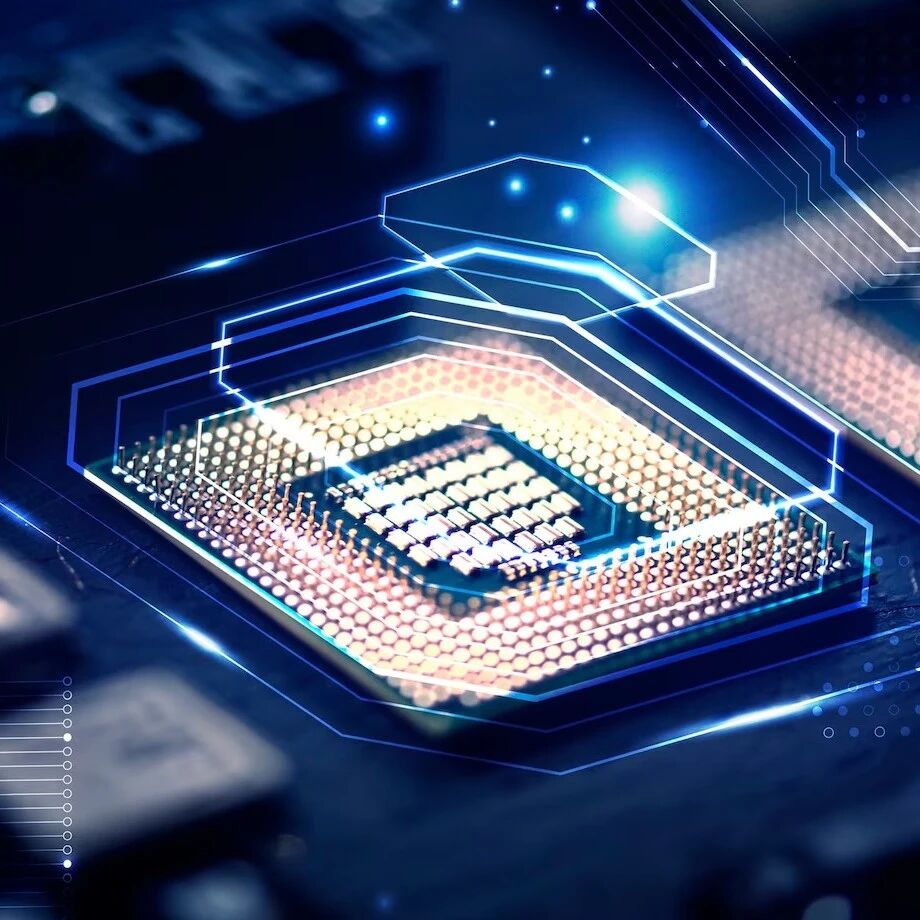
Core Viewpoint - The article highlights the return of a prominent semiconductor architect, Sophie, to Tsinghua University, emphasizing the importance of revitalizing the domestic semiconductor industry in China and its global implications [4][6]. Group 1: Background of Sophie - Sophie has nearly 20 years of experience at Intel and is recognized as one of the world's leading semiconductor architects [4]. - She obtained her bachelor's and master's degrees in automation from Tsinghua University in 1999 and 2001, respectively, and earned her Ph.D. from Duke University in 2006 [4]. - Her research focuses on chip testing and testability, reliability design, and lifecycle management of chips, with applications in several influential chip products [5]. Group 2: Contributions and Achievements - Sophie has played a significant role in establishing global standards for chip design and has guided research at American universities to address challenges in the field [6]. - She has received multiple industry honors for her work and is a senior member of the IEEE, serving as the associate editor for IEEE's "Design and Test" [6].