
金融高水平开放

Search documents
第八届立信金融论坛在沪举办
Zhong Guo Jing Ji Wang· 2025-10-24 03:09
第八届立信金融论坛日前在上海召开。本届论坛由上海立信会计金融学院金融学院和中国社科院财经战 略研究院《财贸经济》编辑部共同主办,主题为"金融强国建设与金融高水平开放"。 上海立信会计金融学院党委副书记刘艳表示,建设金融强国与推动高水平开放,是走好中国特色金融发 展之路的重要路径。上海作为国际金融中心,肩负先行先试使命,应在制度型开放等方面走在前列,贡 献核心力量。 中国社科院财经战略研究院原院长、中国社会科学院大学商学院院长何德旭表示,构建中国特色、全面 覆盖、高效灵活的金融监管体系至关重要,尤其要聚焦金融科技、绿色金融等重点领域,推动其创新发 展;要加强中央与地方监管协同,倡导支持型、服务型监管理念,在确保金融安全与激发创新活力间寻 求最佳平衡。 上海财经大学党委常委、副校长、教育部长江学者特聘教授刘莉亚表示,强监管和促发展在微观机制上 是内在统一、并行不悖的。她建议,要通过监管智慧和银行能力的共同进化,推动监管引导银行从"被 动合规"转向提升自身竞争力的"主动治理"。 上海交通大学文科建设处处长、教育部长江学者特聘教授吴文锋表示,政府部门内和部门间的取向一致 性均是实体效应的重要来源,其中在经济类和执行类 ...
第八届立信金融论坛召开,与会嘉宾共议“金融强国建设与金融高水平开放”
Jin Rong Shi Bao· 2025-10-22 04:33
Group 1: Financial Forum Overview - The 8th Lixin Financial Forum was held in Shanghai, focusing on "Building a Financial Power and High-Level Financial Openness" [1] - Keynote speeches were delivered by Liu Yan from Shanghai Lixin University of Accounting and Finance and He Dexu from the Chinese Academy of Social Sciences [1] Group 2: Keynote Insights - Liu Liya from Shanghai University emphasized the relationship between regulatory penalties and banking operations, noting that penalties drive banks to transform their operational paradigms, leading to lower loan rates and increased corporate revenues [1] - Wu Wenfeng from Shanghai Jiao Tong University reported that since 2016, the consistency of China's macro policy orientation has shown a rising trend, positively impacting corporate investment levels and efficiency [2] Group 3: Roundtable Discussions - Jin Lianming from Agricultural Bank of China discussed the importance of serving the broader community in building a strong financial nation, highlighting the need for financial services to support both domestic and international economic interactions [3] - Jia Zhanfeng from the Yangtze River Delta G60 Innovation Corridor introduced a comprehensive financial service system for tech enterprises, which includes over 20 specialized financial products and has seen 123 listed companies across nine cities, accounting for 21% of the national total [3] Group 4: Innovations in Financial Services - He Liehui from the China-Africa Friendship Association advocated for diversified guarantees and innovative cross-border financial services to support Chinese enterprises going abroad [4] - Zheng Tingqiang from Taikang Life Insurance introduced a new insurance model that integrates traditional insurance, stable asset growth, and healthcare services, emphasizing the long-term investment approach of insurance capital [4] Group 5: Educational Collaborations - Shanghai Lixin University has collaborated with Agricultural Bank of China since 2014 to develop a talent cultivation model that combines academic and practical training in finance [5] - The establishment of the Yangtze River Delta Collaborative Innovation Center for Financial Services in 2021 marks a significant achievement in supporting the financial needs of the G60 Innovation Corridor [5]
扎实迈向更高水平金融开放
Jin Rong Shi Bao· 2025-09-29 02:05
Core Viewpoint - China's financial opening during the "14th Five-Year Plan" period has been steady and robust, contributing significantly to high-quality economic development [1][2][3] Group 1: Financial Opening Achievements - The financial sector has seen a clear "construction blueprint" for opening up, with specific achievements over the past five years [1] - The international status of the Renminbi has steadily risen, and the construction of international financial centers has progressed [1] - The business environment has become more friendly and inclusive, enhancing the ability to prevent financial risks within an open framework [1] Group 2: Future Directions for Financial Opening - The commitment to expanding high-level financial opening remains unchanged, focusing on building a mutually beneficial financial development framework [2] - There is a need to continue expanding institutional financial opening, leveraging successful experiences from free trade zones and ports [2] - Enhancing financial services for the real economy is crucial, supporting enterprises to utilize both domestic and international markets effectively [2] Group 3: Long-term Vision - Financial high-level opening is a long-term and systematic project, with significant progress made during the "14th Five-Year Plan" period [3] - The future of financial opening will advance to higher levels, deeper layers, and broader fields, continuing to move forward steadily [3]
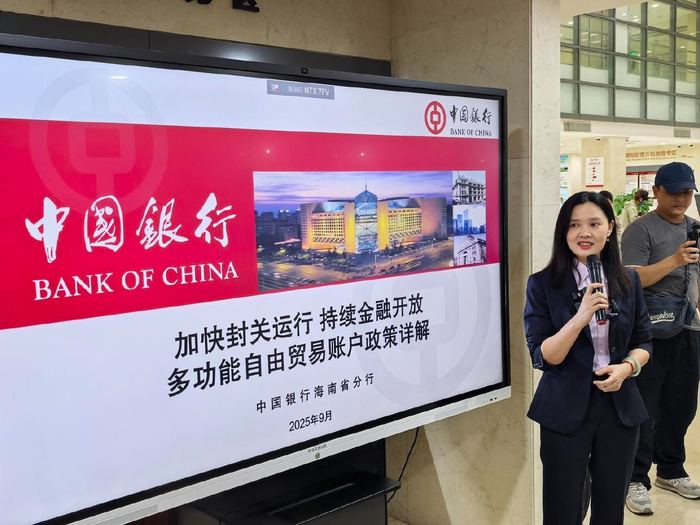
活力中国调研行 | 海南自贸港:跨境资金流动有了“高速路” 一年多来完成上千亿元结算
Zhong Guo Qing Nian Bao· 2025-09-23 06:13
Core Insights - The multi-functional free trade account (EF account) in Hainan Free Trade Port has facilitated over 170 billion yuan in cross-border fund flows since its launch on May 6, 2022, covering transactions with 61 countries and regions [2][4]. Group 1: EF Account Overview - The EF account is a crucial financial infrastructure for Hainan Free Trade Port, promoting high-level financial openness and facilitating the free flow of cross-border funds [2]. - The management of funds in the EF account follows the principle of "one line open, two lines under cross-border management," allowing for significant freedom in fund transfers with international financial markets [2][4]. Group 2: Beneficiary Enterprises - Yuan Cheng Technology (Hainan) Co., Ltd., recognized as the first cross-border fund concentration operation center in Danzhou, has seen its cross-border settlement business volume double compared to the previous year, with offshore trading reaching 820 million USD by the end of August 2025 [4]. - Ri Sheng Fuel (Hainan) Co., Ltd., a subsidiary of Ri Sheng Fuel Group, reported an offshore trading settlement volume of 430 million USD by the end of August 2025, benefiting from the EF account and high-level open policies [5]. Group 3: Growth Metrics - As of August 2025, the Bank of China Hainan Branch has opened EF accounts for 61 domestic and foreign market entities, processing 601 transactions totaling 27.929 billion yuan [5]. - The banking system in Hainan has established over 500 EF accounts, with a total transaction volume exceeding 170 billion yuan in just over a year [5].

以金融高水平开放推动金融高质量发展
Jin Rong Shi Bao· 2025-09-23 01:21
Core Insights - Financial industry opening is a crucial part of China's overall reform and opening-up strategy, with significant progress made during the "14th Five-Year Plan" period [2][3][4][5] Group 1: Financial Market Opening - The institutional opening of the financial sector is steadily deepening, with efforts to enhance financial services and market connectivity, optimizing mechanisms like Shanghai-Hong Kong Stock Connect and Bond Connect [2] - As of the end of July, foreign institutions and individuals held over 10 trillion yuan in domestic stocks, bonds, and deposits, with the issuance of panda bonds exceeding 1 trillion yuan [2] Group 2: Internationalization of the Renminbi - The international status of the Renminbi is steadily rising, with improvements in cross-border usage arrangements and financial infrastructure, and bilateral currency swap agreements signed with 32 countries and regions [3] - The Renminbi has become the largest currency for China's external payments and ranks among the top three currencies for global trade financing and payments [3] Group 3: Development of International Financial Centers - The People's Bank of China supports Shanghai in becoming a global center for Renminbi asset allocation and risk management, with various policies and initiatives to enhance market participation [3] - Continuous deepening of financial cooperation between the mainland and Hong Kong is aimed at strengthening Hong Kong's role as an offshore Renminbi business hub [3] Group 4: Improved Business Environment - The business environment is becoming more friendly and inclusive, with significant advancements in cross-border Renminbi and foreign exchange management reforms [4] - A diversified cross-border payment system has been established, including systems for Renminbi payments and retail payment systems developed by major payment platforms [4] Group 5: Financial Risk Management - The capacity for financial risk prevention and control is continuously enhancing, with a focus on monitoring, assessing, and warning against cross-border financial risks [5] - The People's Bank of China aims to deepen financial opening and cooperation while maintaining national financial security and promoting high-quality financial development [5]

12组中外资银行青岛“牵手”
Qi Lu Wan Bao· 2025-09-18 12:01
Core Points - The meeting held on September 16 focused on supporting the development of foreign banks in Qingdao, with the release of 15 specific support policies across three main areas [1][2] - The establishment of a Foreign Banks Working Committee aims to enhance communication and collaboration between foreign banks and local government, facilitating better integration into the local economy [3] - Twelve groups of domestic and foreign banks signed cooperation memorandums, covering key areas such as syndicated loans, cross-border financial services, and overseas bond issuance, highlighting the potential for synergistic partnerships [4] Group 1: Policy Support - The 15 support policies include measures to streamline service channels, strengthen policy transmission, implement differentiated regulation, and encourage foreign banks to expand their business [2] - These policies are designed to optimize the operating environment for foreign banks in Qingdao and provide a solid institutional guarantee for deepening cooperation between domestic and foreign banks [2] Group 2: Communication and Collaboration - The newly established Foreign Banks Working Committee will integrate resources from all foreign banks in Qingdao, facilitating regular communication through research, enterprise exchanges, and policy training [3] - Qingdao is home to 16 foreign bank branches from six countries and regions, ranking sixth nationally in terms of the number of foreign banks, indicating a strong presence and open atmosphere for foreign financial institutions [3] Group 3: Cooperation Memorandums - The signed memorandums between domestic and foreign banks aim to leverage the strengths of both parties, with domestic banks providing local market expertise and foreign banks offering global networks and cross-border experience [4] - This "1+1" partnership model is expected to enhance the ability to serve the real economy and support enterprises in cross-border operations, creating a more effective collaboration [4]
报告显示:2024年中国金融高水平开放稳步前行
Zhong Guo Jing Ji Wang· 2025-08-26 03:32
Group 1 - The report emphasizes that high-level opening and cooperation in the financial industry is crucial for enhancing international competitiveness and achieving high-quality financial development in China [1] - In 2024, China will continue to promote financial market reforms and opening-up policies, focusing on optimizing connectivity mechanisms and facilitating cross-border investment [1] Group 2 - The action plan released by the State Council aims to attract more foreign investment by expanding market access and creating a fair competitive environment [2] - The plan includes measures to enhance the operational convenience for foreign institutions in China and improve the integration with international financial markets [2] Group 3 - The updated guidelines for capital project foreign exchange management aim to simplify processes and enhance the regulatory framework for cross-border capital flows [2] - The new guidelines provide a compliance framework for enterprises engaging in cross-border investment, improving market transparency [2] Group 4 - The CSRC is promoting the optimization of the mutual recognition mechanism between mainland and Hong Kong funds, allowing for an increase in the sales ratio limit for mutual recognition funds from 50% to 80% [3] - The new regulations enable fund managers to delegate investment management functions to overseas affiliates, attracting more international asset management institutions [3] - The introduction of additional fund types recognized by the CSRC into the mutual recognition framework will provide mainland investors with a wider range of investment options [3]
宗良 马高欢:外资增持视角下中国债券市场的国际化机遇与实践
Xin Lang Cai Jing· 2025-08-14 23:26
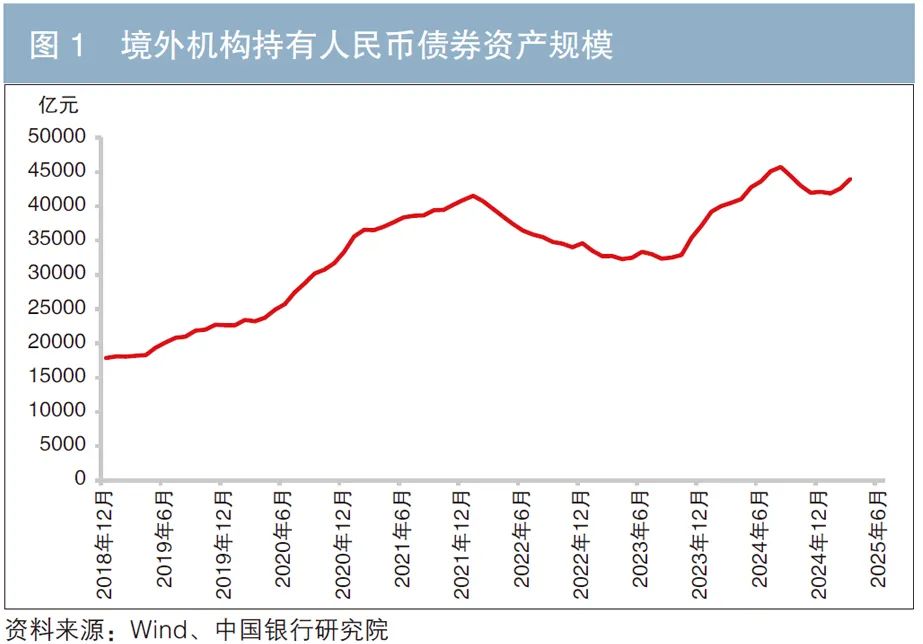
Core Viewpoint - The article focuses on the high-quality development direction of China's bond market internationalization, highlighting significant progress in areas such as openness, foreign investment scale, green sovereign bond innovation, and market connectivity [1][2]. Summary by Relevant Sections Progress in China's Bond Market Internationalization - China's bond market has seen notable advancements, characterized by increased openness and expanded scope since the implementation of the Qualified Foreign Institutional Investor (QFII) system in 2002 [3]. - In 2024, the interbank bond market recorded a transaction volume of 377.8 trillion yuan, with an average daily transaction of 1.5 trillion yuan, while the exchange bond market had a transaction volume of 41.7 trillion yuan [3]. - The scale of foreign investment in RMB bonds has been rising, with foreign institutions holding a total of 4.5 trillion yuan in RMB bonds as of April 15, 2025, marking an increase of over 270 billion yuan from the previous year [5]. Green Sovereign Bonds as a New Breakthrough - The domestic green finance market has developed rapidly, with green bond stock reaching approximately 2.1 trillion yuan by the end of 2024 [8]. - In February 2025, China issued its first green sovereign bond worth 6 billion yuan, marking a significant step in integrating green elements into the sovereign offshore multi-currency yield curve [8]. Deepening Market Connectivity - The range of investor participation has expanded, allowing various types of investors to engage more easily in the bond market [9]. - The infrastructure of the bond market has been continuously improved, enhancing operational efficiency and reducing transaction costs [9]. New Opportunities for Bond Market Internationalization - China's economy is projected to grow at around 5% in 2025, providing a solid foundation for the internationalization of the bond market [10]. - The high level of financial openness has significantly enhanced the recognition and acceptance of RMB bonds in international markets [11]. - The relative stability of RMB bonds has become more apparent amid increasing concerns over dollar assets, making them an attractive option for global investors [14]. International Experience to Learn From - Mature bond markets typically feature a comprehensive legal framework, rigorous regulatory structures, and effective risk management systems, which can serve as a reference for China's bond market development [15][16]. - A multi-tiered operational mechanism is common in developed bond markets, where institutional investors play a dominant role, ensuring market stability and liquidity [17]. Policy Recommendations for High-Quality Development - It is suggested to enhance the trading mechanism of the bond market to better serve the real economy, including establishing a unified market infrastructure and optimizing trading mechanisms [21]. - Strengthening the role of government bonds as a market benchmark and improving the structure of government bond issuance is recommended to address asset scarcity [23]. - Expanding funding channels and promoting a diverse investor structure, including encouraging pension funds and insurance capital to invest in long-term bonds, is also advised [24].
李云泽:坚定不移推动金融高水平开放 中国必将是全球金融机构展业兴业的沃土
Jin Rong Shi Bao· 2025-08-08 07:57
Group 1 - The core viewpoint emphasizes China's unwavering commitment to expanding high-level financial openness and building a mutually beneficial financial development framework, as stated by Li Yunzhe at the 2025 Lujiazui Forum [1] - The Financial Regulatory Bureau plans to further broaden and deepen financial openness to inject more momentum and vitality into high-quality development [1] - A joint action plan to support the construction of Shanghai as an international financial center was released, including measures to encourage innovation in technology finance and cross-border finance [1] Group 2 - Since the 18th National Congress, China's financial reform and development have been driven by openness, significantly enhancing the comprehensive strength of the financial industry [2] - Currently, 42 of the world's top 50 banks have established institutions in China, and nearly half of the 40 largest insurance companies have entered the Chinese market [2] - Foreign insurance companies' market share has increased from 4% in 2013 to 9% currently, while foreign banks' derivative business accounts for nearly one-fifth of the domestic market [2] Group 3 - The strategy to build a new high-level open financial framework includes steadily expanding institutional openness and replicating successful experiences from free trade zones [3] - Efforts will be made to optimize the business environment for foreign investment, ensuring a transparent and stable policy environment [3] - China aims to strengthen global financial security by actively participating in the formulation and maintenance of international financial regulatory rules [3] Group 4 - Over the past 40 years, China has achieved rapid economic growth and long-term social stability, with the financial industry maintaining healthy development [4] - China is accelerating its transformation into the world's largest consumer market, attracting foreign institutions with expertise in consumer finance [4] - The green finance market in China is leading globally, with significant funding needs projected for carbon peak goals by 2030, inviting foreign participation [4][5] Group 5 - The aging population in China is expected to exceed 400 million by 2035, with the silver economy projected to reach 30 trillion yuan, encouraging foreign institutions to engage in the pension market [5] - China's middle-income group is the largest globally, with household cash and savings significantly higher than the OECD average, prompting a demand for wealth management services [5]

推进粤港澳金融市场互联互通 加快建设规则衔接机制对接高地
Zheng Quan Ri Bao· 2025-08-08 07:24
Core Viewpoint - The People's Bank of China, along with other regulatory bodies, has issued a set of 30 key measures to enhance financial support for the Guangzhou Nansha area, aiming to strengthen its role in the Guangdong-Hong Kong-Macao Greater Bay Area's development and modernization efforts [1][2][3]. Group 1: Financial Services Enhancement - The measures include improving financial services for innovation and entrepreneurship, supporting the establishment of technology innovation industry cooperation bases, and promoting diverse intellectual property financial services [1]. - There is a focus on expanding financial services for social welfare, including the trial of bank account openings for Hong Kong and Macao residents and cross-border cooperation in credit reporting [2]. Group 2: Development of Specialized Financial Services - The initiative encourages the Guangzhou Futures Exchange to explore electricity futures and enhance the renewable energy futures product system [2]. - It supports the development of generative artificial intelligence models and their applications in the financial sector, including smart credit, investment, and risk control services [2]. Group 3: Financial Market Connectivity - The measures promote the use of free trade accounts and other mechanisms to provide comprehensive financial services to foreign institutions [2]. - There is encouragement for cross-border cooperation in futures products between the Guangzhou Futures Exchange and the Hong Kong Stock Exchange [2]. Group 4: Regulatory Mechanisms and Support - The plan emphasizes the need for coordinated regulatory efforts between central and local authorities, ensuring that financial management rules are uniformly applied [3]. - It includes support for policies related to housing, talent, and education to facilitate the development of an international talent zone in Nansha [3].