长江经济带发展

Search documents
优良水质比例提升近30个百分点,地区生产总值翻一番多
Ren Min Ri Bao· 2026-01-06 01:17
Core Insights - The development of the Yangtze River Economic Belt has led to significant improvements in environmental quality and economic performance over the past decade, with a focus on ecological protection and green development. Economic Performance - The per capita disposable income of residents increased from 23,000 yuan to 44,000 yuan, a growth of 91% [1][3] - The regional GDP more than doubled, with its share of the national total rising from 42.2% to 47.3% [1][5] Environmental Improvements - The proportion of good water quality increased from 67% to 96.5% [5] - The water quality of the Yangtze River main stream has maintained a Class II standard for six consecutive years, with flagship species like the Yangtze River dolphin seeing population increases [4][6] Industrial Transformation - The Yangtze River Economic Belt is promoting green and low-carbon transformation of industries, with 41 national advanced manufacturing clusters and 30 strategic emerging industry clusters established, accounting for 51% and 45% of the national totals, respectively [7] - Traditional industries such as steel and petrochemicals are undergoing green transformations, with 24 national carbon peak pilot cities and parks established [7] Infrastructure Development - The construction of a comprehensive transportation corridor along the Yangtze River has accelerated, with the high-grade waterways increasing from 8,000 kilometers to 11,000 kilometers [3][8] - The cargo throughput of trunk ports grew by 71%, reaching 4.2 billion tons, maintaining the world's leading position in inland river transport [3] Cultural and Social Aspects - Efforts to protect and promote the cultural heritage of the Yangtze River are ongoing, with initiatives to enhance the cultural park and support the creative transformation of traditional culture [3]
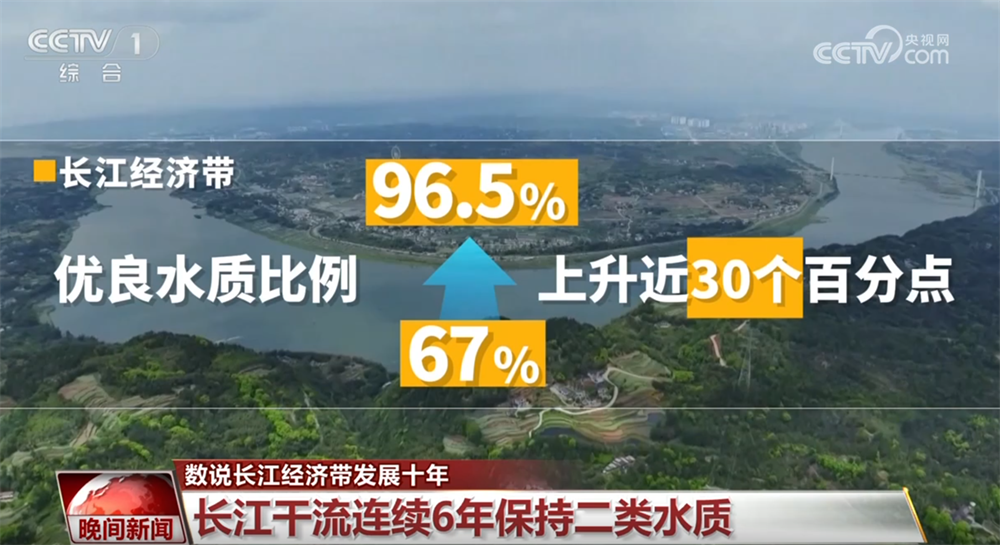
优良水质比例提升近30个百分点 地区生产总值翻一番多
Ren Min Ri Bao· 2026-01-06 00:49
Core Insights - The Yangtze River Economic Belt has achieved significant ecological and economic advancements over the past decade, emphasizing ecological priority and green development. Group 1: Environmental Improvements - The proportion of good water quality has increased from 67% to 96.5% [1] - The main stream of the Yangtze River has maintained a Class II water quality for six consecutive years, with flagship species like the Yangtze dolphin showing population recovery [4][6] - A total of 1,361 illegal docks have been thoroughly cleaned and rectified, and black and odorous water bodies in major cities along the river have been largely eliminated [2] Group 2: Economic Growth - The regional GDP has more than doubled, increasing its share of the national GDP from 42.2% to 47.3% [1] - Per capita disposable income of residents has risen from 23,000 yuan to 44,000 yuan, marking a 91% increase [1][3] Group 3: Industrial Transformation - The Yangtze River Economic Belt is actively promoting green and low-carbon transformation of industries, with significant progress in traditional sectors like steel and petrochemicals [7] - A total of 41 national-level advanced manufacturing clusters and 30 strategic emerging industry clusters have been cultivated, accounting for 51% and 45% of the national totals, respectively [7] Group 4: Infrastructure Development - The length of high-grade navigable waterways in the Yangtze River system has increased from 8,000 kilometers to 11,000 kilometers, with cargo throughput at mainline ports growing by 71% to reach 4.2 billion tons [3] - The construction of green service facilities along the Yangtze River has been completed, including 20 green service areas and 13 washing stations [8]
长江经济带生产总值占全国比重升至47.3%
Yang Guang Wang· 2026-01-06 00:33
王昌林:基本消除沿江地级及以上城市黑臭水体,坚定不移推进长江十年禁渔,长江干流水质由部 分Ⅴ类提升到全线Ⅱ类。 十年来,横贯东西、承接南北、通江达海的优势在长江经济带持续释放。 央广网北京1月6日消息(记者侯艳)据中央广播电视总台中国之声《新闻和报纸摘要》报道,国务 院新闻办公室昨天(5日)举行新闻发布会,介绍长江经济带发展十年工作进展和成效。相关负责人表 示,十年来,长江经济带生产总值占全国比重提升到47.3%,优良水质比例从67%提升到96.5%。 国家发展改革委副主任王昌林表示,十年来,共抓大保护、不搞大开发的理念在长江经济带落地生 根,生态长江底色更加鲜明。 王昌林:我们坚持巩固提升长江黄金水道功能,加快构建沿江综合立体交通走廊,长江水系高等级 航道由0.8万公里增加到1.1万公里,干线港口货物吞吐量增长71%、达到42亿吨、稳居世界内河第一。 王昌林:实现了保护和发展的相互促进、相得益彰,绘就了人与自然和谐共生的中国式现代化的长 江画卷。 十年来,沿江居民人均可支配收入从2.3万元提高到4.4万元,增长了91%。 ...
优良水质比例提升近30个百分点,地区生产总值翻一番多(权威发布)
Ren Min Ri Bao· 2026-01-06 00:28
Core Viewpoint - The development of the Yangtze River Economic Belt has achieved significant progress over the past decade, focusing on ecological protection and green development, resulting in improved water quality, economic growth, and increased residents' disposable income. Group 1: Environmental Improvements - The proportion of good water quality in the Yangtze River has increased from 67% to 96.5% [1] - The water quality of the main stream has maintained a Class II standard for six consecutive years, with flagship species like the Yangtze River dolphin showing population recovery [4] - A total of 1361 illegal docks have been thoroughly cleaned up, and black and odorous water bodies in cities along the river have been largely eliminated [2] Group 2: Economic Growth - The regional GDP of the Yangtze River Economic Belt has more than doubled, increasing its share of the national GDP from 42.2% to 47.3% [1] - Residents' per capita disposable income has risen from 23,000 yuan to 44,000 yuan, representing a 91% increase [1][3] Group 3: Industrial and Technological Development - The Yangtze River Economic Belt has fostered the emergence of innovative companies and advanced technology in fields such as artificial intelligence and quantum information [6] - A total of 41 national-level advanced manufacturing clusters and 30 strategic emerging industry clusters have been cultivated, accounting for 51% and 45% of the national totals, respectively [6] Group 4: Infrastructure and Transportation - The high-grade navigable waterways of the Yangtze River have increased from 8,000 kilometers to 11,000 kilometers, with cargo throughput at trunk ports growing by 71% to reach 4.2 billion tons [3] - The construction of green service facilities along the Yangtze River has been completed, including 20 green service areas and 13 washing stations [7] Group 5: Disaster Prevention and Management - The water and drought disaster prevention system in the Yangtze River basin has shown significant effectiveness, successfully managing major floods and droughts in recent years [5] - The Yangtze River fishing ban has led to a positive recovery in aquatic biodiversity, with the number of native fish species monitored increasing by 36 since the ban [5]
长江母亲河焕发生机活力(锐财经)
Ren Min Ri Bao Hai Wai Ban· 2026-01-05 22:50
Core Viewpoint - The development of the Yangtze River Economic Belt has achieved significant progress over the past decade, focusing on ecological protection and green development, leading to a revitalization of the region's economy and environment [3][4]. Group 1: Ecological and Economic Development - The concept of "coordinated major protection, not major development" has been firmly established in the Yangtze River Economic Belt, enhancing ecological integrity [3]. - Over the past ten years, the integration of technological and industrial innovation has accelerated, resulting in world-class technological achievements and competitive enterprises [3]. - The cumulative water supply from the South-to-North Water Diversion Project has exceeded 840 billion cubic meters, benefiting 48 cities and 195 million people [4]. Group 2: Transportation and Infrastructure - The modernization of Yangtze River shipping is crucial for supporting high-quality development in the region [5]. - Significant upgrades to shipping channels have been implemented, with 29 projects aimed at enhancing capacity, including the Wuhan to Anqing section [5][6]. - The Yangtze River's high-grade shipping channels now span 11,500 kilometers, allowing for larger vessels to reach major cities [6]. Group 3: Green and Low-Carbon Transition - The Yangtze River Economic Belt is a key area for industrial aggregation, with efforts focused on promoting green and low-carbon transitions [7]. - The establishment of innovation platforms has led to breakthroughs in critical technologies across various fields, including artificial intelligence and quantum information [7]. - The region has seen the creation of 41 national advanced manufacturing clusters and 30 strategic emerging industry clusters, representing 51% and 45% of the national totals, respectively [7].

十年来 优良水质比例增近三成 地区生产总值翻一番多 长江经济带绿色发展成效显著
Jing Ji Ri Bao· 2026-01-05 22:49
Core Insights - The Yangtze River Economic Belt has seen a significant improvement in water quality, with the proportion of good water quality rising from 67% to 96.5% over the past decade, while the regional GDP has more than doubled, increasing its share of the national GDP from 42.2% to 47.3% [1] Group 1: Environmental Protection and Green Development - The principle of "coordinated protection, not large-scale development" has been firmly established in the Yangtze River Economic Belt, leading to enhanced ecological quality [2] - Over the past decade, more than 1,300 national nature reserves have completed rectification of key ecological issues, and 17 integrated ecological protection and restoration projects have been implemented [2] - The region has established 24 national carbon peak pilot cities and parks, and 14 zero-carbon parks, while supporting the scrapping and updating of approximately 10,000 old operating vessels [2] Group 2: Technological and Industrial Innovation - The Yangtze River Economic Belt has become a hub for technological resources and innovation, with the establishment of 3 technology innovation centers and 8 national laboratories, leading to breakthroughs in key core technologies [3] - The region has cultivated 41 national advanced manufacturing clusters and 30 strategic emerging industry clusters, contributing nearly half of the national GDP while accounting for about one-third of energy consumption and carbon emissions [3] Group 3: Infrastructure and Transportation - The development of the Yangtze River Economic Belt has focused on enhancing the functionality of the Yangtze Golden Waterway, with the high-grade navigable waterways increasing from 8,000 kilometers to 11,500 kilometers [3] - The cargo throughput of major ports has increased by 71%, reaching 4.2 billion tons, maintaining its position as the world's leading inland waterway [3] Group 4: Social Welfare and Livelihood Improvement - The implementation of a 10-year fishing ban has led to improved biodiversity and stable management of fishing resources, with nearly 100% employment rate for retrained fishermen [4] - Measures have been taken to ensure social security for 231,000 retrained fishermen, including pension insurance and basic living guarantees for 12,000 low-income fishermen [4] Group 5: Cultural Heritage and Community Development - The Yangtze River Economic Belt emphasizes the protection and promotion of cultural heritage, with initiatives to enhance the cultural landscape and integrate traditional culture with modern development [5] - The region has achieved a harmonious coexistence between people and nature, fostering industrial upgrades and cultural tourism [5] Group 6: Future Development Plans - The Yangtze River Economic Belt is entering its second decade of development, with plans to implement a comprehensive development strategy focusing on ecological, innovative, open, cultural, and happy development [6]
长江经济带发展十年成绩亮眼
Xin Lang Cai Jing· 2026-01-05 19:46
《光明日报》(2026年01月06日 01版) 光明日报北京1月5日电(记者刘坤)国务院新闻办1月5日举行新闻发布会,介绍长江经济带发展十年工 作进展和成效。 [ 责编:袁晴 ] 十年来,长江水系高等级航道由0.8万公里增加到1.1万公里,干线港口货物吞吐量增长71%、达到42亿 吨、稳居世界内河第一。 十年来,生态长江底色更加鲜明。长江经济带优良水质比例从67%提升到96.5%,长江干流连续6年保持 Ⅱ类水质,江豚等旗舰物种数量增加。 十年来,创新长江动能更加强劲。地区生产总值翻了一番多、占全国比重从42.2%提升到47.3%,累计 培育国家级先进制造业集群41家、战略性新兴产业集群30家,分别占全国的51%和45%。 ...
2025年长江中游城市群和武汉都市圈十件大事出炉 联动、协同成关键词
Zhong Guo Jing Ying Bao· 2026-01-05 18:00
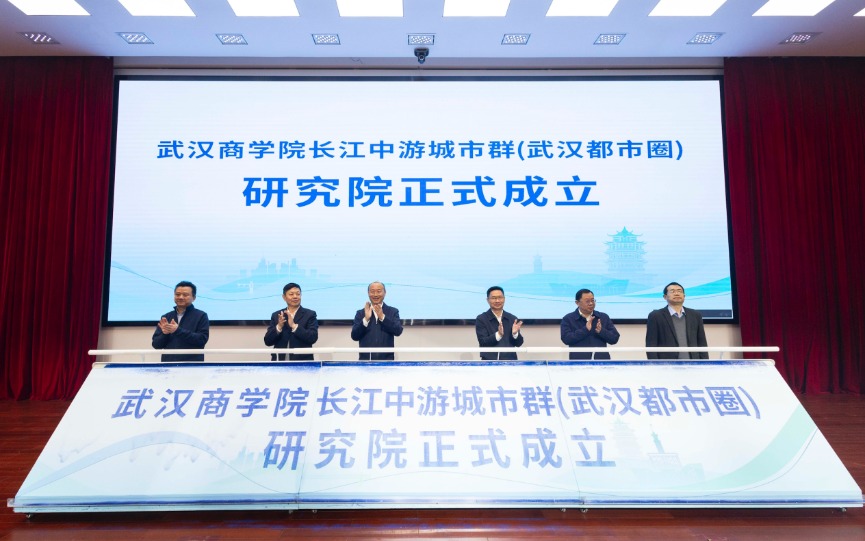
Core Viewpoint - The article highlights the progress and achievements of the Yangtze River Economic Belt over the past decade, emphasizing ecological protection and sustainable development as key priorities, with significant improvements in water quality and economic growth [1]. Group 1: Achievements of the Yangtze River Economic Belt - The proportion of good water quality in the Yangtze River Economic Belt increased from 67% to 96.5% over the past ten years [1]. - The regional GDP more than doubled, rising from 42.2% to 47.3% of the national total [1]. Group 2: Key Developments in the Yangtze River Middle Reaches Urban Agglomeration and Wuhan Metropolitan Area - The establishment of the Yangtze River Middle Reaches Urban Agglomeration Research Institute on November 16, 2025, marks a significant step in regional development [3]. - The ten major events for the Yangtze River Middle Reaches Urban Agglomeration include the recognition of its role as a growth pole for high-quality development and the establishment of various collaborative initiatives among provinces [3][4]. - The Wuhan Metropolitan Area's ten major events include the approval of the "1+8" city positioning in the 14th Five-Year Plan and the establishment of an offshore innovation alliance [16][24]. Group 3: Strategic Initiatives and Collaborations - The Hubei provincial government is advancing the collaborative development of the Yangtze River Middle Reaches Urban Agglomeration, focusing on leveraging the strengths of Hubei, Hunan, and Jiangxi provinces [7]. - The establishment of the "Xiang-Gan Border Cultural Tourism Alliance" aims to enhance cooperation in cultural tourism between Hunan and Jiangxi [10]. - The approval of the Three Gorges Waterway New Channel project is a strategic decision to promote high-quality development in the Yangtze River Economic Belt [11]. Group 4: Infrastructure and Economic Development - The Yangtze River Middle Reaches Urban Agglomeration has made strides in data element collaboration, with a strategic cooperation agreement signed among data industry groups from Hunan, Hubei, and Jiangxi [12]. - The establishment of a multi-modal transport enterprise alliance aims to optimize operations and enhance connectivity among ports in the region [13]. - The World VR Industry Conference held in Nanchang in 2025 focuses on the integration of VR and AI technologies, showcasing the region's commitment to innovation [15].
权威数读丨长江经济带发展十年,“母亲河”焕发新生
Xin Lang Cai Jing· 2026-01-05 17:41
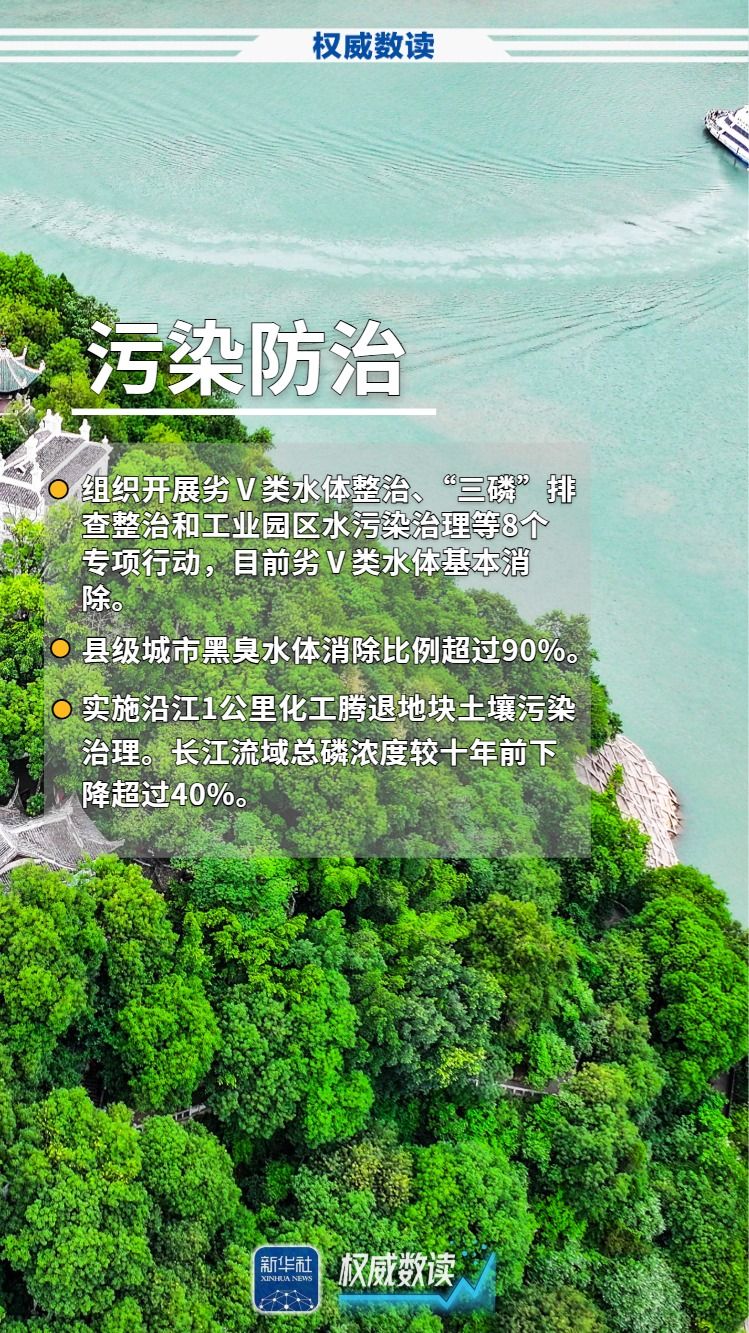
(来源:千龙网) 清江呈碧影,岸翠映芳洲,江豚逐浪起,鲟鱼竞洄游。十年来,沿江流域共抓大保护,不搞大开发,"长 江病"获得系统治疗,干流水质由部分Ⅴ类提升到全线Ⅱ类。岸线复绿、物种回归,母亲河焕发勃勃生 机,谱写了一首新时代绿色发展的"长江之歌"。跟随海报,一起了解。 权威数读 部华献 厨房. 权威数读 11 - 10 - 系统治 线绕开展流域督察和省域督察。 8:35 解决一批"两高"(高耗能、高翔波) 项目盲目上马、岸线生态破坏等突出 问题。 D 划定1.7万余个生态环境管控单元,基 本建立生态环境分区管控体系。 权威数读 权威数读 新华社 亚汉 同学文学 权威 · 内 保护修复 0 1300多个国家级自然保护区重点生态 环境问题目完成整改。 0 实施17个山水林田湖草沙一体化生态 保护和修复工程。 部华和 风险防范 ● 1800多座尾矿库完成了污染治理。 o 1280余条重点河流实现了环境应急 "一河一第一图"全覆盖。 权威数读 新华社 ...
透过多维度数据看生机与活力 长江经济带发展十年交出亮眼“答卷”
Yang Shi Wang· 2026-01-05 16:10
Core Viewpoint - The development of the Yangtze River Economic Belt over the past decade has focused on ecological protection while promoting high-quality development, resulting in significant improvements in environmental quality and economic growth [1]. Environmental Protection - The water quality of the Yangtze River mainstream has maintained Class II quality for six consecutive years, with the proportion of good water quality in the Yangtze Economic Belt increasing from 67% to 96.5%, a rise of nearly 30 percentage points [2]. - Over 1,361 illegal docks have been removed, and more than 90% of black and odorous water bodies in cities at or above the county level have been eliminated [4]. - The total phosphorus concentration in the Yangtze River basin has decreased by over 40% compared to 2015 [4]. Economic Development - The GDP of the Yangtze Economic Belt has more than doubled over the past decade, increasing its share of the national economy from 42.2% to 47.3% [11]. - The per capita disposable income of residents has risen from 23,000 yuan to 44,000 yuan, representing a growth of 91% [11]. Transportation and Infrastructure - The length of high-grade navigable waterways in the Yangtze River system has increased from 8,000 kilometers to 11,500 kilometers, and the cargo throughput of mainline ports has grown by 71% to reach 4.2 billion tons, maintaining the top position among inland rivers globally [8]. - The capacity for navigation has significantly improved, allowing 50,000-ton vessels to reach Nanjing and 10,000-ton vessels to reach Wuhan [11]. Innovation and Industry - The integration of technological and industrial innovation has been accelerated, with the establishment of international technology innovation centers in Shanghai and other regions, fostering the growth of emerging and future industries, including world-class clusters in automotive manufacturing and electronic information [6].