防沙治沙

Search documents
“三北”工程实施以来 内蒙古阿拉善盟累计治沙面积超亿亩
Ren Min Ri Bao· 2025-10-23 22:00
Core Viewpoint - Inner Mongolia's Alxa League has launched its autumn afforestation work, aiming to complete a task of 560,000 acres by the end of December, contributing to over 10 million acres of land treated since the implementation of the "Three-North" project in 1978 [1] Group 1: Afforestation Efforts - The afforestation plan includes the use of drought-resistant native shrubs and herbaceous plants such as Haloxylon ammodendron, Caragana korshinskii, and Ziziphus jujuba [1] - The region's ecological environment is extremely fragile, with three major deserts: Badain Jaran, Tengger, and Ulan Buh [1] Group 2: Economic and Ecological Integration - The Alxa League promotes the integration of sand prevention and control with the sand industry, encouraging local farmers and herdsmen to participate in project construction and management [1] - This initiative aims to create job opportunities and increase income for local residents, fostering a positive interaction between ecological protection and livelihood improvement [1]
内蒙古阿拉善防沙治沙突破1亿亩
Ren Min Ri Bao· 2025-10-21 20:54
Core Viewpoint - Inner Mongolia Alxa League has launched its autumn afforestation work, aiming to complete the task of planting 560,000 acres by the end of December 2025, highlighting the region's commitment to combating desertification and improving ecological conditions [1] Group 1: Afforestation Efforts - The afforestation initiative is part of a broader strategy that has seen over 10 million acres treated since the implementation of the "Three-North" project in 1978 [1] - The region's ecological efforts focus on using drought-resistant native species such as Haloxylon ammodendron, Caragana korshinskii, and Ziziphus jujuba, promoting a near-natural afforestation model [1] Group 2: Ecological Conditions - Alxa League is located in the westernmost part of Inner Mongolia, covering an area of 270,000 square kilometers, with an average annual precipitation of less than 200 millimeters and evaporation exceeding 3,000 millimeters [1] - The area is home to three major deserts: Badain Jaran, Tengger, and Ulan Buh, which together cover 94,700 square kilometers, accounting for 35.07% of Alxa League's land area and 83.04% of Inner Mongolia's total desert area [1] Group 3: Results of Efforts - The region has seen a dual increase in grassland vegetation coverage and forest coverage, alongside a dual decrease in desertified and sandy land areas, indicating the effectiveness of the ongoing ecological restoration efforts [1]
治沙三十载:书写“绿进沙退”生态画卷
Jing Ji Guan Cha Bao· 2025-10-06 02:06
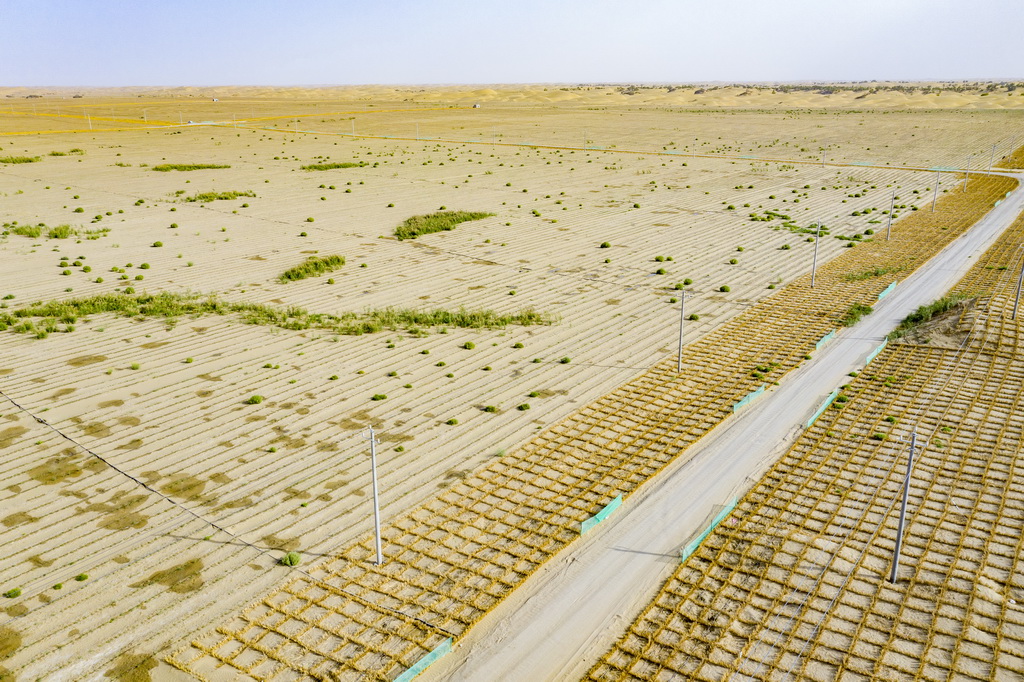
Core Insights - The transformation of Xiariha Town from a desert area with less than 5% vegetation cover to a region with 40% vegetation cover demonstrates the effectiveness of innovative sand control techniques and community involvement in ecological restoration [1][2] Group 1: Sand Control Techniques - A combination of sand control technologies, including 1.5m x 1.5m grass grid sand barriers, nylon bag sand barriers, and low-profile HDPE sand nets, has been developed to combat desertification effectively [1] - The grass grid sand barriers serve as the primary defense, while nylon bag barriers complement them by reducing sand movement, and HDPE nets lower material costs while allowing for vegetation growth [1] - The implementation of "Qingyang deep planting dry farming" techniques has increased the survival rate of saplings to over 80% by ensuring they are planted one meter deep in the sand [1] Group 2: Community Involvement and Economic Impact - The establishment of an "ecological caretaker + social caretaker" management system has engaged local communities in sand control efforts, providing employment opportunities and contributing to poverty alleviation [2] - The local population has transitioned from being "sand control workers" to "green guardians," with all residents achieving poverty alleviation by 2020 [2] - The ecological restoration efforts have led to a significant reduction in sandstorms, with a nearly 60% decrease in windy weather compared to previous years [2]
习言道丨这条“绿围脖”,习近平牵挂在心
Zhong Guo Xin Wen Wang· 2025-10-05 07:39
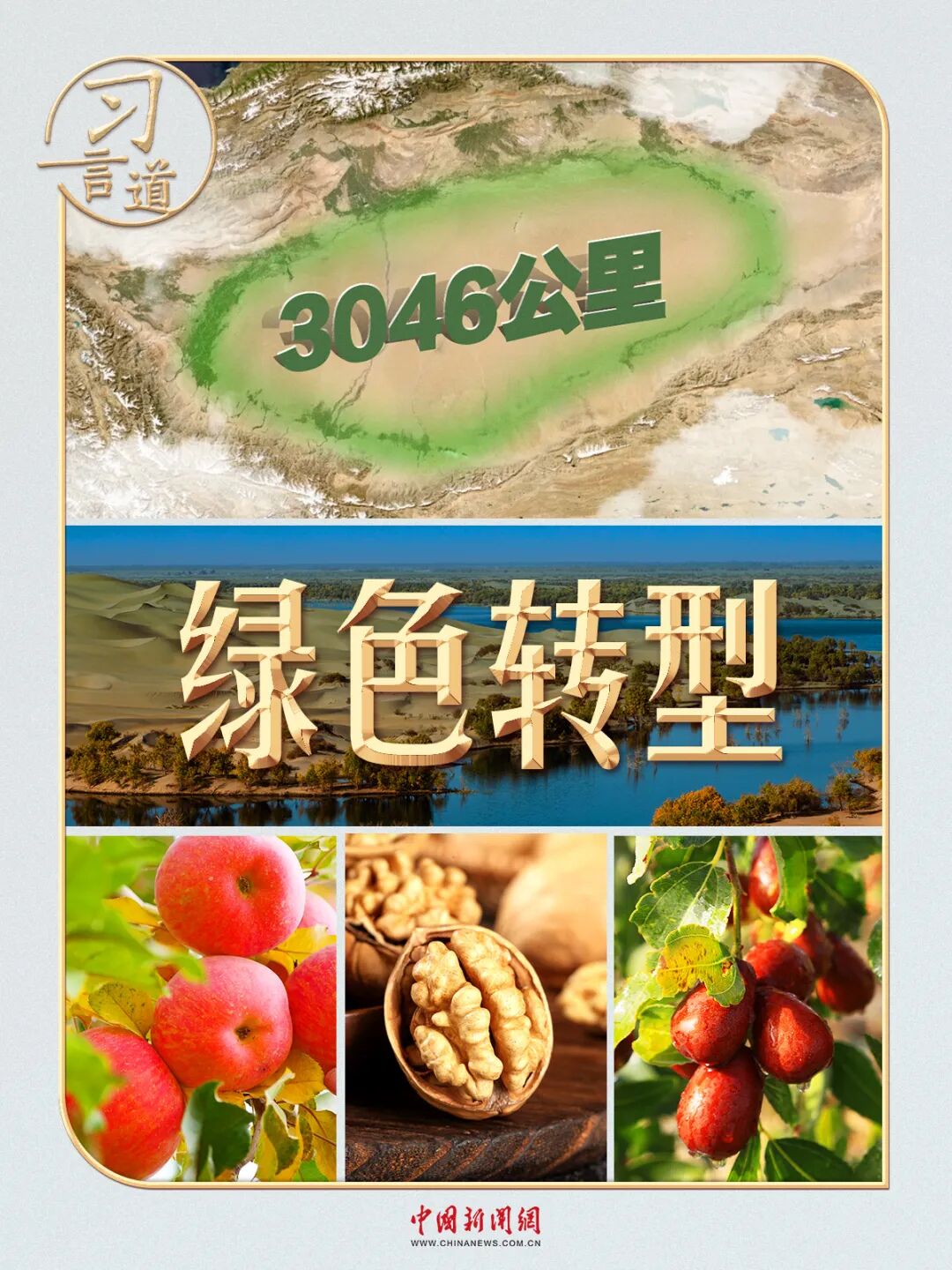
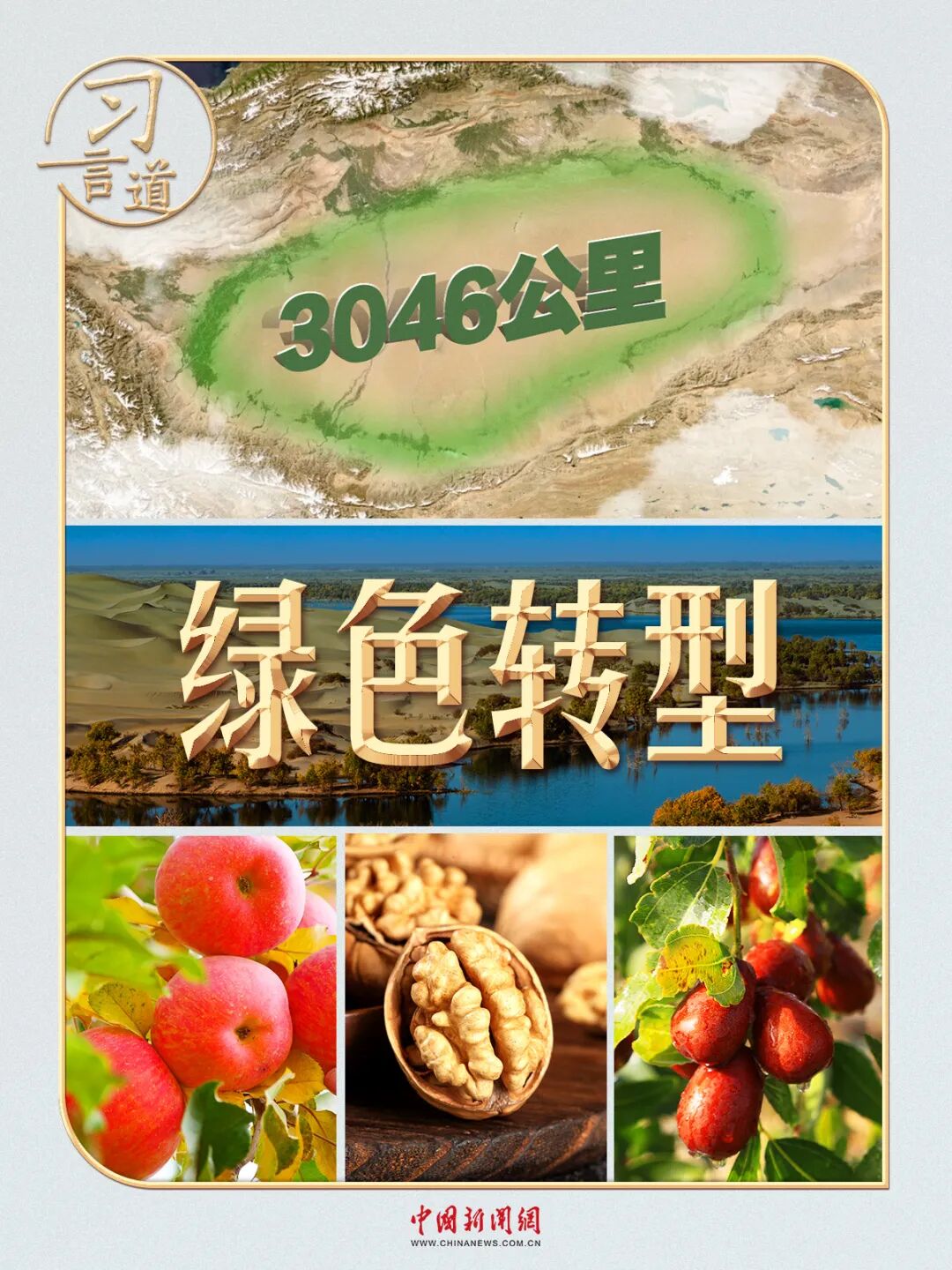
Core Points - The completion of the green protective belt project around the Taklamakan Desert marks a significant achievement in combating desertification in Xinjiang, covering a total length of 3,046 kilometers and addressing a previously existing gap of 285 kilometers [3] - The Taklamakan Desert, the largest desert in China, poses severe environmental challenges due to its extreme aridity, high evaporation rates, and significant sand movement, making ecological restoration efforts critical [3][4] - The ecological improvements in Xinjiang are expected to yield tangible economic benefits for local communities, with the sand industry alone generating an annual output value exceeding 4.37 billion yuan [6] Summary by Sections Environmental Challenges - Xinjiang is the province with the largest area of desertification and sandification in China, with the Taklamakan Desert being the most severely affected area [3] - The desert experiences extreme weather conditions, with average annual rainfall below 100 millimeters and evaporation rates between 2,500 to 3,400 millimeters [3] Government Initiatives - Since the 18th National Congress, the government has prioritized ecological protection in Xinjiang, with multiple directives from the President emphasizing the importance of environmental conservation [4][5] - The government has called for a comprehensive approach to ecological restoration, integrating various environmental elements such as mountains, waters, forests, fields, lakes, and sand [5] Economic Impact - The sand industry in Xinjiang has seen significant growth, with an annual production value surpassing 4.37 billion yuan, demonstrating the potential for economic development through ecological initiatives [6] - The transformation of barren land into productive orchards, such as apple and jujube cultivation, illustrates the successful implementation of green projects in the region [6]

【追光的你】习言道丨这条“绿围脖”,习近平牵挂在心
Zhong Guo Xin Wen Wang· 2025-10-05 07:00
Core Points - The completion of the green protective belt project around the Taklamakan Desert marks a significant achievement in combating desertification in Xinjiang, covering a total length of 3,046 kilometers [3] - The Taklamakan Desert, which spans 337,600 square kilometers, is the largest desert in China and the second-largest moving desert in the world, facing severe sandstorm activities and ecological challenges [3] - The project involved over 600,000 participants working tirelessly for more than 500 days to fill the remaining 285 kilometers of the green protective belt [3] Environmental Initiatives - Since the 18th National Congress of the Communist Party, there has been a consistent emphasis on ecological protection and sustainable development in Xinjiang, with directives from the General Secretary [4][5] - The ecological improvements in Xinjiang have led to tangible economic benefits for local communities, with the sand industry generating an annual output value exceeding 4.37 billion yuan [5] - The integration of ecological protection with economic development is highlighted as a priority, aiming for a comprehensive green transformation of the economy and society [5]
“核心价值观百场讲坛”第163场在新疆巴州库尔勒举办 宣讲防沙治沙与生态文明建设
Xin Hua She· 2025-09-29 12:33
Core Viewpoint - The event highlighted the significant achievements and experiences in desertification control and afforestation in China, emphasizing the importance of ecological restoration as a vital strategy for sustainable development and the well-being of millions of people [1] Group 1: Event Overview - The 163rd session of the "Core Values Forum" was held in Korla City, Xinjiang, co-hosted by the Publicity Department of the Central Committee and Guangming Daily [2] - The event featured a speech by Wu Bo, Deputy Director of the Ecological Protection and Restoration Research Institute of the Chinese Academy of Forestry, focusing on the theme of desertification control [1] Group 2: Key Insights from the Speech - Wu Bo discussed the causes and dangers of desertification, showcasing the remarkable achievements in sand control and afforestation efforts in China [1] - Under the guidance of Xi Jinping's ecological civilization thought, comprehensive progress has been made in desertification governance, creating a "green miracle" where deserts have turned into oases and barren lands into forests [1] - The governance of desertification is not only an ecological issue but also a crucial livelihood project that impacts the well-being of billions and is a strategic initiative for the sustainable development of the Chinese nation [1] Group 3: Personal Story - The event included a touching story shared by Fu Xinhui, son of the "Integrity Star" Fu Zhizhou, who recounted his father's 40 years of dedication to afforestation in the Gobi Desert and his own efforts to explore a development model that unites sand control with ecological prosperity [1]
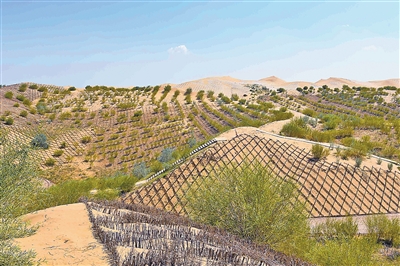
罗布麻让沙漠“披绿生金”
Ren Min Wang· 2025-09-22 03:17
Core Points - The news highlights the efforts in desertification control and ecological restoration in the Tarim River basin, specifically in the Weili County of Xinjiang [1][2][3][5][6] Group 1: Ecological Restoration Efforts - The area features Robu hemp planting zones and sand-fixing grass grids aimed at combating desertification [1] - Drip irrigation is utilized for the cultivation of Robu hemp, showcasing advanced agricultural techniques in arid regions [2] - Workers are actively monitoring the growth of Robu hemp and the condition of irrigation systems, indicating ongoing management and maintenance efforts [5][6]
生态工程也是富民工程
Ren Min Ri Bao· 2025-09-18 22:32
Core Insights - The article highlights the successful ecological restoration and economic development in the Kubuqi Desert, driven by innovative governance models and integrated projects that combine road construction with desertification control efforts [1][3]. Group 1: Ecological Restoration - The Kubuqi Desert, covering an area of 14,100 square kilometers, has seen significant ecological improvements, with over 6,000 square kilometers treated since the "14th Five-Year Plan," achieving a governance rate of 40% [1]. - The integration of various methods such as road management, photovoltaic technology, and engineering solutions has been pivotal in restoring ecological resources and developing the local economy [1][3]. Group 2: Infrastructure Development - The newly constructed 16.8-kilometer sand-crossing road, opened in May, exemplifies the "road management for desertification control" approach, facilitating both community access and the introduction of ecological industries [3]. - Over 4,000 kilometers of sand-crossing roads have been built, aiding in the management of over 4 million acres of desert land, creating a governance pattern that combines road infrastructure with desertification control [3][4]. Group 3: Technological Advancements - The use of high-capacity drones for aerial seeding has significantly increased efficiency and reduced costs compared to traditional methods, with approximately 130,000 acres seeded this year [6]. - The city has adopted various advanced technologies, including water-injection planting and biodegradable containers, to enhance desert management efforts [6]. Group 4: Economic Impact - The local population has benefited economically from the ecological restoration, with families in the region reporting annual incomes between 150,000 to 200,000 yuan, largely from tourism and agricultural activities [8]. - The development of over 500 family forest (grass) farms has resulted in a total ecological coverage of over 2 million acres, contributing to both ecological and economic benefits [8][9]. Group 5: Future Outlook - The city aims to continue its integrated management approach to desertification, water, and land, with a projected total output value of the forestry and grass industry reaching 7.5 billion yuan by 2024 [9].
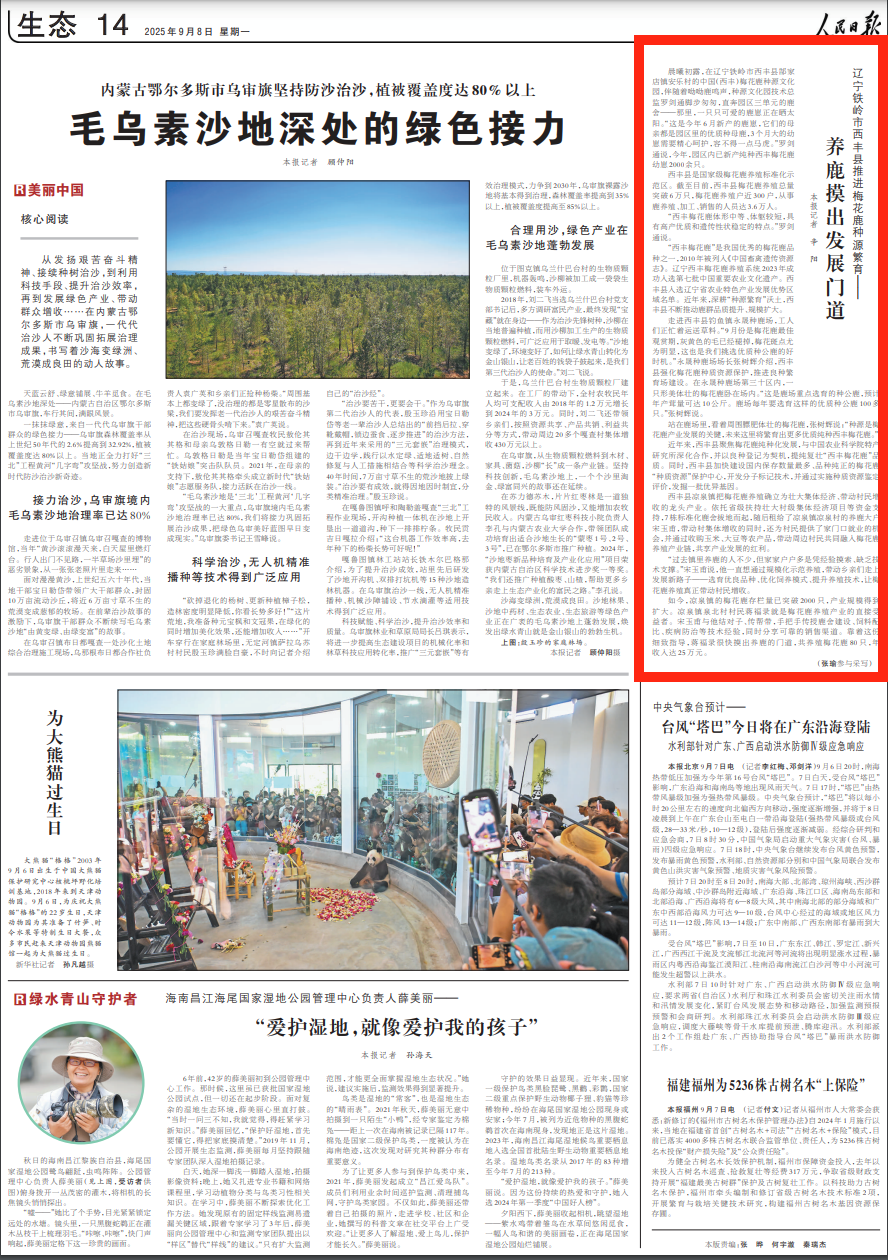
人民日报点赞辽宁铁岭市西丰县推进梅花鹿种源繁育——养鹿摸出发展门道
Ren Min Ri Bao· 2025-09-18 10:37
Group 1: Desertification Control and Ecological Restoration - Inner Mongolia's Uxin Banner has achieved over 80% vegetation coverage in the Mu Us Sandy Land through continuous afforestation and desertification control efforts [1][2] - The local government is committed to the "Three-North" project, aiming to create new achievements in desertification control in the new era [1] - Historical efforts since the 1950s have transformed nearly 60,000 acres of barren land into lush pastures, showcasing a successful narrative of turning deserts into oases [1] Group 2: Technological Innovations in Desertification Control - Advanced technologies such as drone-assisted precision seeding and various mechanized tools have been widely adopted to enhance the efficiency of desertification control [2] - The introduction of scientific methods, including the "three-dimensional" governance model, has led to significant improvements in afforestation practices [2] - The Uxin Banner Forestry and Grassland Bureau has developed 15 types of machinery to improve the mechanization rate of ecological construction projects [2] Group 3: Economic Development through Green Industries - The establishment of biomass pellet factories in the Mu Us Sandy Land has created new income opportunities for local farmers, with annual incomes rising from 12,000 yuan in 2018 to 30,000 yuan by 2024 [3] - The promotion of green industries, including ecological agriculture and tourism, is contributing to the economic upliftment of local communities [3] - The cultivation of drought-resistant crops and the development of a complete industrial chain from biomass to furniture are enhancing the economic landscape of the region [3] Group 4: Deer Farming Industry in Xifeng County - Xifeng County has established itself as a national standardization demonstration area for Sika deer farming, with a total population exceeding 60,000 deer and nearly 300 farming households [14][15] - The county's focus on purebred Sika deer has led to the successful selection of high-quality breeding stock, contributing to the local economy [15][16] - The integration of modern breeding techniques and collective economic projects has enabled local villagers to benefit from the deer farming industry, with some households reporting annual incomes of up to 250,000 yuan [16]
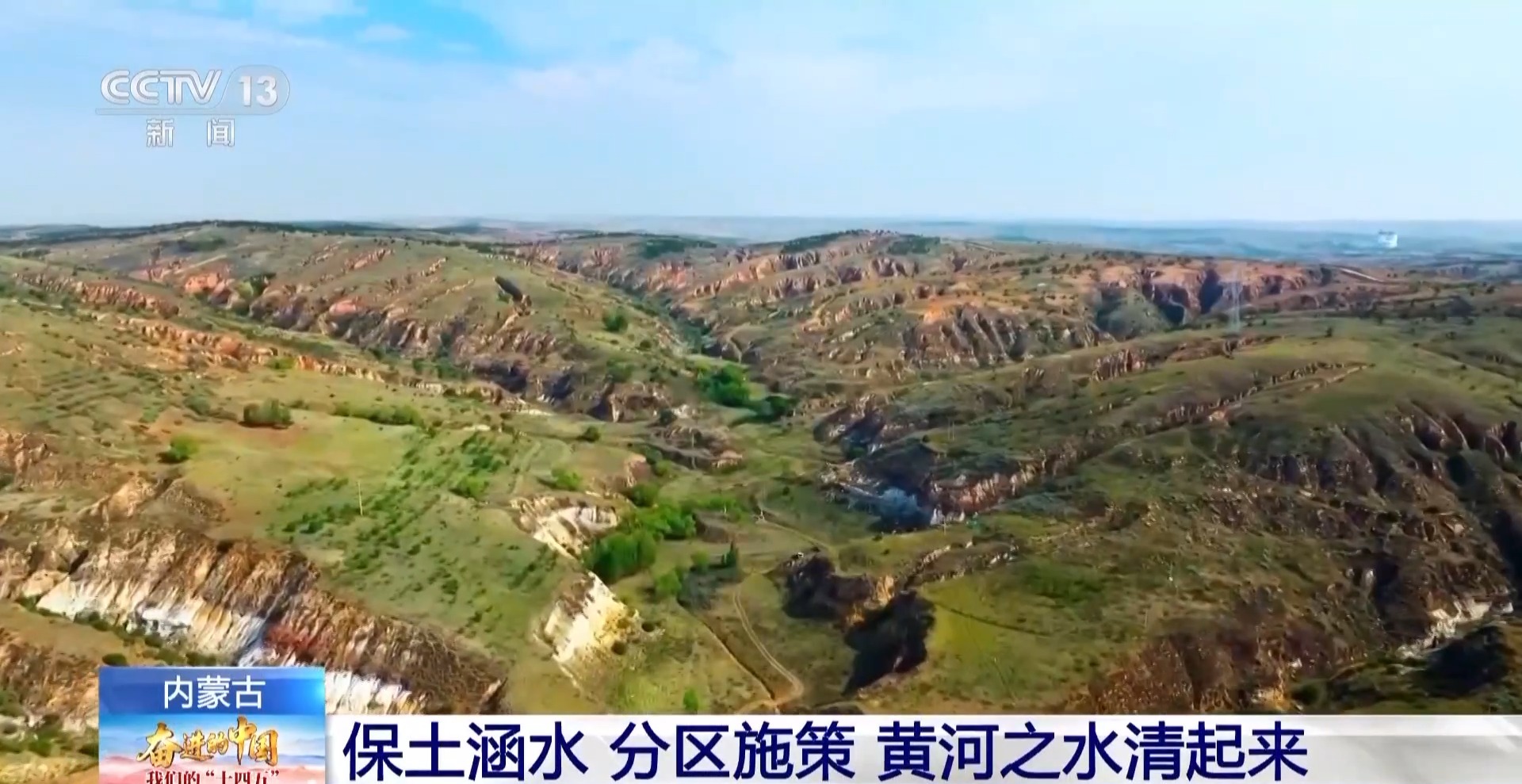
5年防沙治沙超6500万亩,内蒙古付出了哪些努力?
Yang Shi Xin Wen Ke Hu Duan· 2025-09-15 06:05
Group 1 - Inner Mongolia has prioritized sand prevention and control, completing over 100 million mu of the "Three North" project and more than 65 million mu of sand prevention and control in the past five years [1] - The Alxa League, located in the westernmost part of Inner Mongolia, experiences significant sediment flow from the Ulan Buh Desert, with approximately 100 million tons of sediment carried away by the Yellow River annually [1] - The ecological restoration project initiated in 2022 in Alxa has achieved over 84% vegetation coverage in a 11,000 mu area, preventing about 1.5 million tons of sand from entering the Yellow River each year [1] Group 2 - The "Ten Major Conduits" of the Yellow River in Inner Mongolia contribute over 27 million tons of sediment to the river annually, with a significant portion coming from the easily eroded arsenic-bearing rock [3][4] - The construction of 271 sediment retention dams in the "Ten Major Conduits" has effectively reduced sediment flow into the Yellow River, with sediment concentration decreasing from 1550 kg/m³ to 195 kg/m³ [4] - Forest coverage in the West Liugou area has increased from 10.19% to 28.9%, and vegetation coverage has risen from 64.4% to 78.8% [4] Group 3 - The integration of sand prevention and wind/solar energy development is a new approach in Inner Mongolia, exemplified by the "Photovoltaic Great Wall" project spanning 400 kilometers [6] - The "Photovoltaic Great Wall" is expected to generate an annual power output of 200 billion kWh while simultaneously restoring 3 million mu of desert land [6] - The project promotes a sustainable cycle of photovoltaic energy, planting, and livestock farming, enhancing both ecological and economic benefits [6][7] Group 4 - During the "14th Five-Year Plan" period, Inner Mongolia has implemented integrated sand prevention and wind/solar energy projects totaling 27.27 million kilowatts, restoring 238.88 million mu of desert land [7] - The ongoing transformation of previously barren land into productive ecosystems reflects a broader commitment to environmental restoration across Inner Mongolia [7]