Workflow
非物质文化遗产
icon
Search documents
近600件和田非遗展品汇聚中国非遗馆
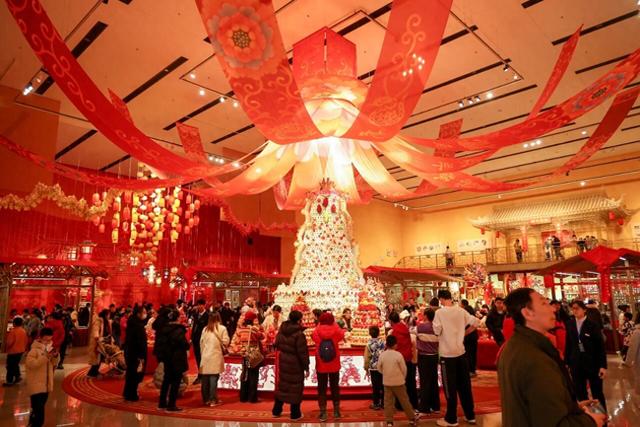
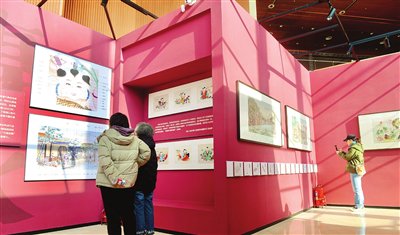
Core Points - The exhibition "Ten Thousand Harmonies from Yutian" celebrating the 70th anniversary of the Xinjiang Uyghur Autonomous Region opened on November 2 at the China Intangible Cultural Heritage Museum [1] - The exhibition features six units showcasing the intangible cultural heritage of the Hotan region, including Kunlun mythology, jade from Kunlun, Silk Road cities, and more [5][12] - Nearly 600 items are on display, highlighting various traditional crafts such as Adire silk dyeing, Aiyuan construction techniques, carpet weaving, and mulberry paper making [6][12] Exhibition Details - The exhibition aims to vividly present the cultural heritage, unique charm, and contemporary spirit of the Hotan region, linking its rich history and culture to the broader narrative of unity among ethnic groups in Xinjiang [12] - Organized by multiple cultural institutions, the exhibition will run until March 15, 2026, and will include various supporting activities such as performances, craft experiences, and lectures [16]
多所高校团队在沪展现AI赋能焕活文旅的奇思妙想
Zhong Guo Xin Wen Wang· 2025-11-03 07:52
Core Insights - The second National College Student AI + Intangible Cultural Heritage Innovation Challenge focuses on the integration of artificial intelligence with intangible cultural heritage, showcasing innovative solutions from various university teams [3][4]. Group 1: Event Overview - The event is themed "Intelligent Creation of Intangible Heritage, Revitalizing Cultural Tourism" and is organized by the National Pan-Hotel Industry Education Integration Community, in collaboration with several universities [3]. - The competition attracted participation from 1,243 universities nationwide, with nearly 120,000 participants across two editions [3]. - This year's entries emphasized practical solutions in three areas: hotel scenarios, tourism products, and scenic area management, transitioning from conceptual ideas to actionable plans [3]. Group 2: Innovative Solutions - The winning team from Guilin Tourism College proposed a "livable Tang Dynasty cultural living museum," utilizing a digital persona named "Wan Niang" to guide cultural narratives, combined with AR/VR experiences and themed room designs [4]. - The silver award was given to a team from Wuhan University of Light Industry, which developed a service model incorporating local cultural elements through unique gifts and traditional cultural ambiance in hotel settings [4]. - A team from Shanghai Business School designed an immersive AI-guided tour system for the ancient town of Zhujiajiao, integrating technology, culture, and consumerism [4]. Group 3: Educational Impact - The competition serves as a high-quality practical teaching experience, fostering student motivation, teamwork, and the application of classroom knowledge to real-world problems [4][5]. - Experts noted that the event enhances students' comprehensive abilities and encourages interdisciplinary collaboration, which is crucial for educational reform [8]. - The challenge is seen as a valuable channel for companies to gain innovative ideas while fostering ongoing collaboration between academia and industry [8][9].
桂花香里有非遗
Hang Zhou Ri Bao· 2025-11-03 02:32
Core Viewpoint - The article highlights the cultural significance and traditional craftsmanship of osmanthus flower food production in Manjue Long Village, emphasizing the efforts of Shen Rongyan, a representative inheritor of this intangible cultural heritage, to preserve and promote this ancient skill [6][9]. Group 1: Historical Background - The osmanthus food production technique has a long history dating back to the Tang Dynasty and flourished during the Southern Song Dynasty, becoming a unique local custom in Hangzhou [6]. - Since the early Republic of China, villagers have been selling homemade osmanthus sugar around West Lake, a tradition that continues today [6]. - In 2011, the osmanthus food production technique was listed as a representative project of intangible cultural heritage in Hangzhou [6]. Group 2: Craftsmanship and Production Process - Shen Rongyan emphasizes the importance of patience and meticulousness in making osmanthus sugar, which involves several steps including picking, marinating, and drying the flowers [7][8]. - The process begins early in the morning to ensure the flowers are fresh, followed by careful selection to remove impurities [7]. - The osmanthus flowers are then marinated in a special plum brine for two months before being mixed with sugar to create the final product [8]. Group 3: Cultural Events and Community Engagement - Manjue Long Village has hosted the Osmanthus Flower Culture Festival for 39 consecutive years since 1986, showcasing traditional food-making techniques and cultural performances [8]. - The festival features various activities, including dance, tea art, and music, aimed at providing a comprehensive cultural experience for visitors [8]. - Shen Rongyan has initiated educational programs to engage the community and students, promoting awareness and appreciation of this intangible cultural heritage [9].
细篾织春秋(说说我家乡的非遗)
Ren Min Ri Bao· 2025-10-31 22:32
Core Insights - The bamboo weaving craft in Shengzhou has deep cultural roots and has evolved from practical items to artistic masterpieces, gaining international recognition [1][2] - The craft's history dates back to the Neolithic era, with significant developments during various dynasties, and it was recognized as a national intangible cultural heritage in 2006 [2] Group 1: Historical Development - The origins of Shengzhou bamboo weaving can be traced back to the Neolithic period, with notable mentions in literature from the Eastern Jin dynasty [2] - The craft saw substantial advancements during the Song, Yuan, Ming, and Qing dynasties, particularly highlighted by exquisite bamboo fans in the Shengzhou Chenghuang Temple [2] - After the establishment of New China, the craft experienced rapid development, introducing new techniques such as flower patterns and bleaching [2] Group 2: Modern Revival - The traditional bamboo weaving is being revitalized in contemporary settings, with young artisans collaborating with masters to create modern decorative items [2] - Educational institutions like Tsinghua University and China Academy of Art are engaging with the craft, infusing it with modern aesthetics [2] - The craft is not only a cultural heritage but also plays a role in rural revitalization efforts, transforming traditional skills into vibrant economic opportunities [2]
新时代中国调研行之文化中华|兰州刻葫芦:针尖“匠心”雕刻文化密码
Xin Hua She· 2025-10-23 09:56
Core Points - Lanzhou carving gourd is recognized as one of the "Three Treasures of Lanzhou" alongside beef noodles and sheepskin rafts, and was included in the first batch of intangible cultural heritage protection list of Gansu Province in 2006 [3] Group 1 - Lanzhou carving gourd is a traditional craft that showcases the artistry and cultural significance of the region [3] - The story of artisan Ruan Xiyue, a post-85 generation folk artist, highlights the dedication and passion involved in preserving this cultural craft [3]
白鹤拳“洋弟子”福建永春学艺
Zhong Guo Xin Wen Wang· 2025-10-23 08:17
Core Viewpoint - The article highlights the practice of Yongchun White Crane Kung Fu by a group of German students in Fujian, China, emphasizing its cultural significance and international reach [1]. Group 1: Cultural Significance - Yongchun White Crane Kung Fu is one of the ancient Chinese martial arts, recognized as a national intangible cultural heritage in 2008 and as a provincial intangible cultural heritage in Fujian in 2022 [1]. - The martial art has spread to over 80 countries and regions globally, serving as an important cultural exchange link between Yongchun and the overseas community [1]. Group 2: Training and Participation - The German students, referred to as "洋弟子," engage in rigorous training for about five hours daily, reflecting their dedication and passion for martial arts [1]. - These students have been visiting Yongchun annually for approximately ten years, typically training for about half a month each October [1]. Group 3: Upcoming Events - The World Yongchun White Crane Kung Fu Inheritance and Development Conference is scheduled to take place in November, where practitioners from around the world will gather in Yongchun to exchange skills [1].
60余国非遗珍品汇聚大运河畔
Core Points - The 2025 Beijing International Intangible Cultural Heritage Week opened on October 17, featuring participants from over 60 countries and regions, showcasing nearly 10,000 exhibits under the theme "Intangible Heritage and a Better Life" [2][3] Group 1: Event Overview - The event runs from October 17 to 21 and includes four main segments: opening ceremony, international intangible heritage exhibition, intangible heritage dialogue, and heritage market [3] - The opening ceremony, themed "Wind, Elegance, and Praise," highlights the concept of "each beauty is beautiful, and beauty is shared" [3] Group 2: Exhibits and Cultural Exchange - The exhibition features diverse intangible cultural heritage items, such as Malaysia's "Kebaya" traditional attire and Georgia's textile pieces inspired by ancient murals [3] - A notable piece is a 2.6-meter-long glass "Nine-Dragon Wall," showcasing traditional Chinese architectural culture [3] Group 3: Integration into Daily Life - The event aims to integrate intangible heritage into daily life, creating immersive experiences for visitors [4] - Various cultural food items from different countries are presented, such as Turkish kebabs and Sri Lankan tea, alongside local Beijing specialties [4] Group 4: Tourism and Engagement - During the event, the Beijing Municipal Bureau of Culture and Tourism launched 10 themed tourism routes along the Grand Canal, promoting the charm of intangible heritage [5] - The "Intangible Heritage Dialogue: Co-creating Life" event gathered experts and representatives from various countries to discuss sustainable strategies for heritage transmission [5] Group 5: Innovation and Digital Engagement - The "Intangible Heritage Development Co-creation Camp" was initiated in collaboration with Douyin, focusing on sustainable solutions for heritage promotion [6] - The event emphasizes the need for innovative expressions to engage younger audiences and transform intangible heritage into a contemporary cultural force [6]
十余年磨一剑 北京非遗丛书百卷成果发布
Zhong Guo Jing Ji Wang· 2025-10-17 21:00
Core Points - The publication of the "Non-Material Cultural Heritage" series is a significant step in preserving and promoting Chinese cultural heritage, with 100 volumes published since 2012, covering various categories such as folk literature, traditional music, and crafts [1][3] - The series has created a systematic "cultural gene bank" for non-material cultural heritage, providing substantial support for its transmission, protection, and research [1][3] - 29 volumes have been translated into English, gaining popularity among international readers and serving as a new medium for showcasing Chinese traditional culture globally [1][3] Group 1 - The publication of the non-material heritage series is a practical effort to transmit Chinese cultural heritage and empower high-quality development in Beijing [3] - Future initiatives will focus on three main areas: continuous excavation and preservation of non-material heritage, collaboration with various cultural institutions for innovative development, and enhancing the visibility of Beijing's cultural heritage on a larger platform [3] - The series provides essential resources for future research and protection of non-material heritage, offering a platform for inheritors and inspiring the revitalization of these cultural practices [3] Group 2 - The launch event featured performances from representatives of four non-material heritage projects, showcasing the living traditions and skills associated with these cultural practices [5]
2025北京国际非遗周将于10月17日开幕
Bei Jing Shang Bao· 2025-10-10 09:24
"非遗市集·共享生活"则设置了国际非遗体验区、京津冀及运河非遗体验区、"非遗+品牌"体验区三大板 块。届时,市民可品尝土耳其烤肉、意大利披萨、斯里兰卡红茶等美食,体验北京兔儿爷彩绘、河北布 糊画制作等技艺。 非遗周的"非遗精品展"汇聚北京与港澳的非遗精华;"非遗风华·绽放生活"开幕展演汇聚多个人类非遗 代表作名录项目及各国传统音乐舞蹈表演。 北京商报讯(记者 关子辰 牛清妍)10月10日,北京商报记者从北京市文化和旅游局获悉,2025北京国 际非遗周将于10月17日国际非遗日当天开幕,活动持续至21日。本届非遗周以"非遗携手美好生活"为主 题,包含国际非遗展览、非遗对话、非遗市集、非遗共创营等板块,将覆盖北京大运河博物馆、北京城 市图书馆及城市绿心森林公园部分区域。 据介绍,本届非遗周邀请了来自亚洲、非洲、欧洲、美洲和大洋洲的61个国家和地区的非遗代表性传承 人。"非遗匠心·焕新生活"国际手工艺展将向观众展示形式多样、独具特色的非遗项目,涵盖手工艺、 表演、服饰、饮食等多个领域。例如,亚洲展区的巴基斯坦刺绣、土耳其水拓画,非洲展区的埃及莎草 纸、津巴布韦木石雕刻,欧洲展区的格鲁吉亚古乐,美洲展区的巴西战舞等。 ...
一根灯芯草,五十载传承路:老手艺“扇”起新风潮
Zhong Guo Xin Wen Wang· 2025-10-07 09:04
Core Viewpoint - The article highlights the revival and promotion of Linggen grass weaving, a traditional craft in Taizhou, Zhejiang, through the efforts of Zheng Xianhong, a fourth-generation inheritor, who has transformed it into a sustainable business while preserving cultural heritage [1][4][5]. Group 1: Traditional Craft and Techniques - Linggen grass weaving utilizes a unique local material, lamp wick grass, known for its smooth and resilient stalks, suitable for crafting various daily items such as hats and fans [2]. - Initially, straw hats were the primary products, but the resurgence of interest in traditional crafts has led to the reintroduction of fans, which are durable and carry a natural fragrance [2][4]. - The crafting process involves over ten intricate steps, with "embedding flowers" being a distinctive technique that allows artisans to create various intricate designs [2][4]. Group 2: Community Impact and Economic Development - Linggen grass weaving was once the main source of income for villagers, with nearly everyone in the community skilled in the craft; however, this knowledge was at risk of fading [4][5]. - Zheng Xianhong has established a "Common Prosperity Workshop" to train local women, reviving the craft and providing a source of income for the community [4][5]. - The integration of online sales through platforms like Taobao and WeChat has expanded the market for Linggen grass products, allowing them to reach a global audience [5]. Group 3: Cultural Significance and Future Prospects - The younger generation is increasingly interested in traditional crafts, as evidenced by children purchasing fans for their grandparents, indicating a successful cultural transmission [5][7]. - Zheng Xianhong emphasizes that practicality is key to the preservation of traditional crafts, as functional items are more likely to be passed down through generations [7]. - The narrative of Zheng Xianhong's dedication to her craft reflects a broader story of resilience, innovation, and community empowerment within the traditional arts sector [7].