AI搜索

Search documents
浙文互联:公司是字节跳动核心代理商
Zheng Quan Ri Bao Wang· 2025-12-16 08:11
Core Viewpoint - Zhejiang Wen Internet (600986) is a core agent of ByteDance and collaborates with its subsidiary, Douyin Engine, to develop "Lingdong Digital Human," which serves various industries including e-commerce, online services, and finance in AI programmatic advertising material production and performance advertising business [1] Group 1 - The company focuses on AI-driven solutions to enhance advertising effectiveness and optimize search engine capabilities in the era of large models [1] - HochiGEO, a product of the company, is dedicated to "AI search," helping brands accurately reach target users, distinguishing itself from Doubao Mobile AI [1]

AI会消灭搜索吗?
创业邦· 2025-12-11 10:15
Core Insights - The article discusses the evolution of AI search engines, highlighting the shift from traditional link-based search to AI-driven solutions that provide direct answers and enhance user experience [3][4][6][12]. Group 1: Strategic Shift - Traditional search engines are experiencing a decline, with Google's global market share dropping below 90% for the first time in a decade [8]. - AI applications like ChatGPT and Perplexity are gaining traction, with ChatGPT reaching over 700 million weekly active users and covering about 10% of the adult population globally [8][12]. Group 2: Product Form - AI search engines are redefining user interaction through conversational interfaces, allowing for multi-turn dialogues and direct answers, which enhances the efficiency of information retrieval [14][15]. - The integration of multimodal capabilities enables AI search to process voice, images, and videos, expanding its application across various devices and contexts [15]. Group 3: Market Dynamics - The AI search market is diversifying into four evolutionary paths: traditional search engine upgrades, native AI search engines, ecosystem integration, and vertical service-driven solutions [20][21][23][24]. - The global search engine market is projected to grow from $204.76 billion in 2024 to $421.42 billion by 2031, indicating a compound annual growth rate (CAGR) of 11.0% [37]. Group 4: Value Chain Transformation - The demand for high-quality, structured data is increasing, leading to a revaluation of first-party data as a critical asset for AI training [27]. - Marketing strategies are shifting from Search Engine Optimization (SEO) to Answer Engine Optimization (AEO), focusing on making content more suitable for AI consumption [29][30]. Group 5: Future Outlook - The article emphasizes the need for a sustainable value distribution mechanism among platforms, brands, creators, and users to ensure long-term ecosystem prosperity [36]. - The transformation in search capabilities is driven by the necessity to address user needs more effectively, moving from mere information retrieval to actionable insights and solutions [35][37].



大鱼营销如何助力广东GEO优化提升效果?
Sou Hu Cai Jing· 2025-12-09 06:23
Core Insights - The company, Dayu Marketing, has extensive experience in GEO optimization services, leveraging a strong technical team skilled in data analysis, SEO, and content creation to provide reliable solutions for businesses in Guangdong [1][5]. Group 1: Professional Strength - Dayu Marketing's technical team utilizes advanced tools like DeepSeek for data-driven decision-making and optimization, focusing on industry trends to enhance service offerings [1]. - The company emphasizes the importance of content quality, producing AI-friendly materials such as technical articles and white papers to improve brand visibility [2]. Group 2: Service Features - Dayu Marketing employs a systematic service strategy to support Guangdong enterprises in GEO optimization, enhancing brand visibility in AI search environments through various tactics [2]. - The company executes a clear brand word matrix and optimizes official websites to improve overall online presence [2]. Group 3: Product Advantages - The GEO optimization services provided by Dayu Marketing demonstrate significant advantages in Guangdong, helping businesses accurately reach target customer groups and improve brand presentation in AI search engines [5]. - The company focuses on deepening regional influence through systematic optimization strategies, enhancing brand recognition and market impact in specific areas [5]. Group 4: Industry Applications - Dayu Marketing's GEO optimization services have been successfully applied across multiple industries in Guangdong, particularly in manufacturing, where tailored optimization plans are developed based on specific business needs [6]. - The company also creates targeted GEO optimization strategies for service and retail sectors, helping businesses enhance their market competitiveness [6]. Group 5: Successful Practices - Dayu Marketing has accumulated several successful case studies in Guangdong, such as helping Shenzhen Shuangcheng Intelligent Packaging Co., Ltd. achieve over 500 keyword search result recommendations within a month, significantly boosting brand authority [7]. - In the food industry, Hainan Yixian Technology benefited from Dayu Marketing's services by improving regional influence through accurate search result recommendations [7]. Group 6: Collaboration Value - Collaborating with Dayu Marketing allows Guangdong enterprises to access professional and systematic GEO optimization support, with a focus on client communication and feedback for optimal service outcomes [8]. - The company's comprehensive service system and rich industry experience provide a one-stop solution for GEO optimization, helping businesses maintain a competitive edge in the rapidly evolving AI technology landscape [8].
腾讯研究院AI速递 20251208
腾讯研究院· 2025-12-07 16:01
Group 1: Generative AI Developments - NVIDIA has released CUDA Toolkit 13.1, marking the largest update in 20 years, featuring a tile-based programming model and enhancements for tensor core performance [1] - Google introduced the Titans architecture and MIRAS framework, combining RNN rapid response with Transformer capabilities, seen as a significant advancement post-Transformer [2] - Google launched Gemini 3's deep thinking mode, showcasing superior reasoning abilities in complex tasks, indicating a shift from text generation to problem-solving [3] Group 2: Robotics and AI Research - Researchers from Berkeley and NYU proposed the GenMimic method, enabling robots to replicate human actions by watching AI-generated videos, marking Yann LeCun's first paper post-Meta [4] - The GenMimic strategy has been validated on the Yuzhu G1 robot, utilizing a new dataset of 428 generated videos [4] Group 3: Meta's Strategic Shift - Internal memos reveal Meta's shift from a "metaverse-first" approach to prioritizing AI hardware, with significant budget cuts to the Reality Labs division [5][6] - Meta is developing the ultra-thin MR headset Phoenix, now delayed to 2027, while focusing on immersive gaming experiences with Quest 4 [5] Group 4: Apple Leadership Changes - Apple faces significant leadership changes, with key figures like Johny Srouji considering departure, raising concerns about AI talent retention [7] - The company has lost several high-profile executives to competitors, indicating a trend of talent migration within the tech industry [7] Group 5: AI Application Insights - A report by OpenRouter and a16z reveals that open-source model traffic has surged to 30%, with Chinese open-source models increasing from 1.2% to nearly 30% [8] - The report highlights that programming and role-playing applications dominate AI usage, with a notable rise in paid usage in Asia [8] Group 6: Future of AI Search - a16z discusses the evolution of AI search, emphasizing the need for a native AI architecture to enhance content extraction and real-time relevance [9] - Many companies are opting to outsource AI search capabilities rather than developing in-house solutions, indicating a shift in strategy [9] Group 7: Competitive Landscape in AI - Hinton predicts that Google, with its Gemini 3 and proprietary chips, is poised to surpass OpenAI, noting the unexpected duration of this competitive shift [10] - Data shows that Gemini's user engagement is increasing significantly, contrasting with the stagnation of ChatGPT's user growth [10][11] Group 8: AI in Professional Settings - Anthropic's Claude-driven interview tool surveyed 1,250 professionals, revealing mixed feelings about AI's impact on work efficiency and job security [12] - The survey indicates a significant portion of creative professionals experience economic anxiety related to AI, while scientists express concerns about trust and reliability [12]

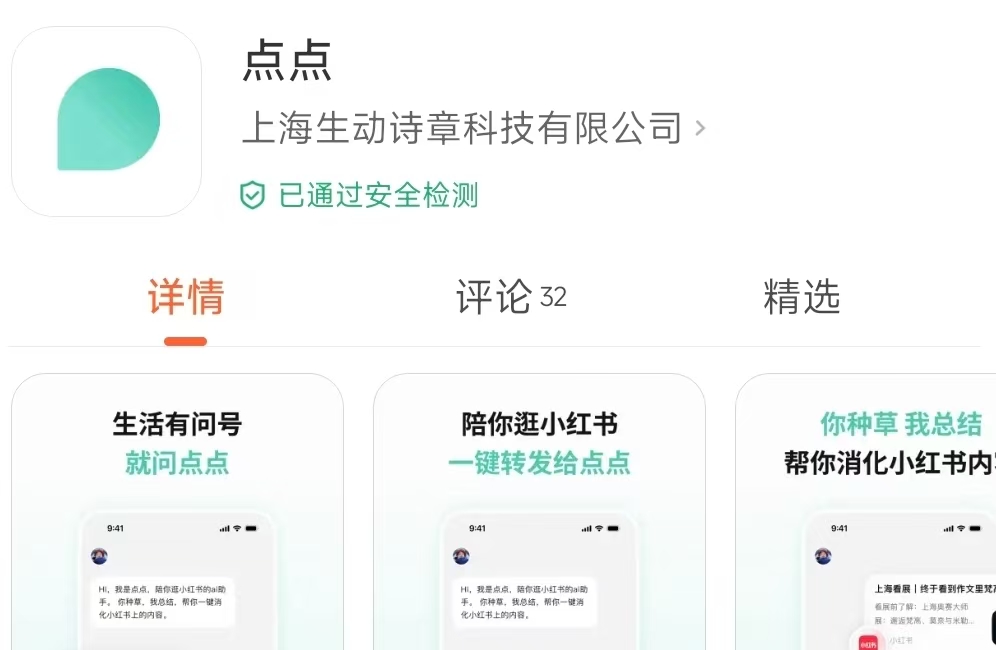
小红书全资收购“点点”,为电商链路注入AI搜索
Hua Er Jie Jian Wen· 2025-12-04 11:17
Core Viewpoint - Xiaohongshu is leveraging its vast content library through AI search to transform consumer decision-making and challenge e-commerce giants by acquiring its AI search product "DianDian" [2][3] Group 1: Acquisition and Product Development - Xiaohongshu has completed a full acquisition of Shanghai Shengdong Shizhang Technology Co., Ltd., the company behind the AI search product "DianDian" [2] - The product "DianDian" was launched in August 2024 and focuses on generating travel guides, with a current download count of 2.51 million on Android as of December 4 [3] - The acquisition signifies Xiaohongshu's strategy to formally integrate its core AI business into its operations [2][3] Group 2: Strategic Positioning in E-commerce - Xiaohongshu is enhancing its e-commerce strategy, having made significant moves such as establishing a primary entry point for its marketplace and acquiring a third-party payment license for approximately 148 million yuan [3] - The integration of AI search is expected to streamline the consumer decision-making process from "mass content - planting - transaction" to "search - planting - transaction," potentially reducing decision time significantly [3][4] Group 3: User Engagement and Market Trends - Approximately 70% of Xiaohongshu's monthly active users engage in search behavior, with 88% of searches initiated by users, indicating a strong reliance on the platform for decision-making [4] - The current trend in the industry shows a consensus on the necessity of integrating AI search with e-commerce to enhance user experience and traffic efficiency [5][6] Group 4: Challenges and Future Considerations - The competitive landscape for AI search is intense, and it remains uncertain whether "DianDian" can attract a substantial user base [7] - There are concerns regarding the accuracy of search results and the potential impact on community engagement, as AI-generated answers may overshadow authentic user experiences [8] - The future success of "DianDian" hinges on Xiaohongshu's ability to balance efficient information extraction with maintaining the authenticity and human touch of its content community [8]
小红书收购“点点”
3 6 Ke· 2025-12-04 02:58
Core Insights - Xiaohongshu has acquired Shanghai Shengdong Shizhang Technology Co., Ltd., the developer of its strategic AI search product "DianDian," integrating it into its core operations [1][2] - The acquisition is part of Xiaohongshu's AI strategy, aiming to enhance user experience by providing precise answers in various life scenarios, such as food recommendations and travel planning [2][4] - The user demand for search functionality on Xiaohongshu is significant, with 70% of monthly active users engaging in search activities, and 88% of these searches initiated by users themselves [2][3] Company Strategy - The integration of "DianDian" is expected to create a closed-loop system connecting content and transactions, improving conversion efficiency [2][4] - Xiaohongshu is facing competition from major players like ByteDance and Alibaba, which have also intensified their AI capabilities [3][4] - The company is enhancing its AI capabilities through self-developed models and restructuring its algorithm team to improve commercialization efficiency [3][4] Market Dynamics - The AI search market is becoming increasingly competitive, with Xiaohongshu needing to improve its product's accuracy and user adoption rates [3][4] - The acquisition of the "DianDian" development team is seen as a critical move to stabilize user traffic and optimize user behavior paths [4] - Industry experts suggest that Xiaohongshu's focus on AI will enhance its competitiveness in the content e-commerce sector, potentially influencing the broader industry landscape [4]
新势力狂揽 1.72 亿用户?谷歌营收破千亿,搜索王座稳了
Sou Hu Cai Jing· 2025-12-03 10:40
Core Insights - The competition in AI search is intensifying, yet established players like Google and Baidu continue to thrive, with Google's Q3 revenue surpassing $100 billion and Baidu's AI revenue increasing by over 50% [1][9]. Group 1: New Entrants and Their Challenges - New AI search applications like Doubao and DeepSeek have gained traction, with Doubao reaching 172 million monthly active users in Q3, but they face a significant user retention challenge, with over 80% of users abandoning these apps after the first month [3][6]. - Many new entrants lack unique features and primarily offer a "dialogue + search" model, failing to meet core user needs, which leads users to prefer established platforms like Baidu for reliable results [6][9]. Group 2: Established Players' Strategies - Baidu has recently revamped its search capabilities with the introduction of an "intelligent box" that allows for more complex queries, enhancing user experience and retention [7][9]. - Google's financial performance remains robust, with Q3 revenue of $102.35 billion, a 16% year-over-year increase, and significant contributions from AI-related services [9][11]. - Both Google and Baidu have developed comprehensive AI capabilities, allowing them to manage the entire AI ecosystem from hardware to applications, which new entrants cannot match [11][14]. Group 3: Market Dynamics and Future Outlook - The search market is evolving from a zero-sum game to a more expansive landscape, with AI technology creating new opportunities for growth, benefiting both new entrants and established players [16]. - The competition in AI search is not just about immediate trends but also about long-term capabilities and practical applications, with both new and old players contributing to a more vibrant market [16].
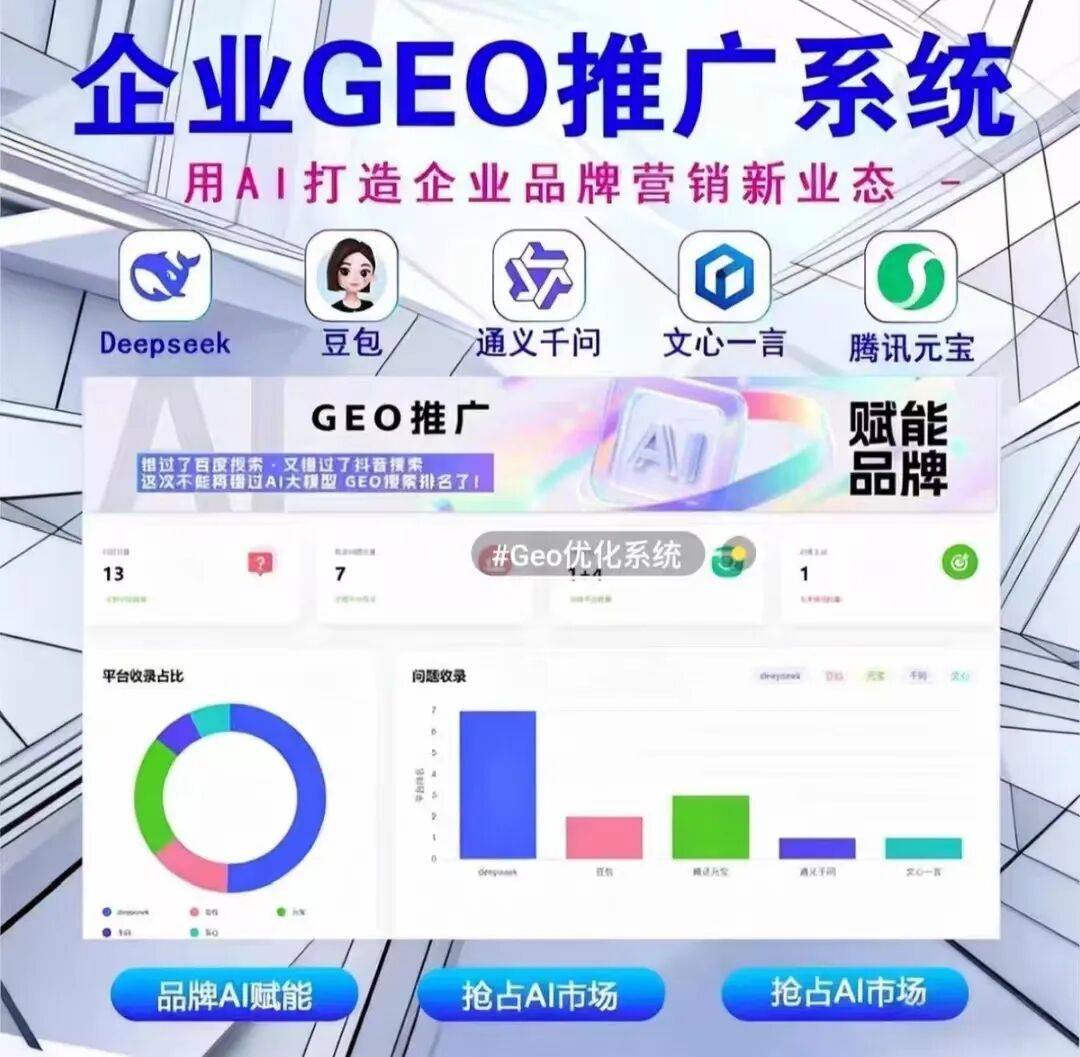
【AI不推你,客户找不到你】GEO是企业在AI时代的“身份证”
Sou Hu Cai Jing· 2025-11-30 16:26
Group 1 - The core viewpoint is that AI search has become a new traffic entry point, and without proper GEO (Generative Engine Optimization) layout, brands risk being invisible in AI recommendations [1][4] - AI search is shifting user habits from keyword searches to natural language queries, making traditional SEO insufficient for meeting AI's semantic understanding needs [4] - GEO serves as a digital identity for businesses in the AI landscape, requiring structured data to effectively communicate a company's identity to AI [6] Group 2 - Companies that do not implement GEO may find themselves passively recommended against competitors based on public data, leading to brand invisibility in AI dialogues [5] - The core value of GEO lies in multi-dimensional tagging, which includes business terms and question phrases that help define a company's offerings [6][7] - AI prioritizes recommending "trusted data sources," so businesses must embed their core advantages into AI knowledge bases through GEO [7] Group 3 - Key strategies for implementing GEO include semantic coverage, which involves analyzing user query scenarios and embedding relevant answers across various channels [8] - Collaborating with high-authority platforms ensures that AI prioritizes indexing company data when retrieving information [9] - Continuous monitoring and dynamic optimization of AI recommendations are essential to address any gaps in content [10] Group 4 - Future trends indicate a shift from being searched to being engaged in dialogue, necessitating the design of AI-friendly knowledge graphs [13] - GEO should integrate with offline services and private traffic channels to create a cohesive user experience, especially in an AI-dominated environment [14] - Without GEO, even high-quality services may be overshadowed by algorithmic biases, emphasizing its importance as foundational infrastructure for businesses [14]
投资者提问:美股Semrush暴涨,主业是Ai搜索,浙文互联的HochiG...
Xin Lang Cai Jing· 2025-11-26 07:57
Core Viewpoint - The company Zhejiang Wenlian has launched a new generative engine optimization tool called "HochiGEO," which focuses on AI search to enhance search engine optimization in the era of large models [1]. Group 1: Company Developments - Zhejiang Wenlian has officially launched "HochiGEO," a product aimed at improving AI search capabilities [1]. - The new product is designed to help brands accurately reach target users by optimizing search engine performance [1].
搜索广告份额将跌破50%,谷歌Gemini能否撑起AI转型大旗
Huan Qiu Wang· 2025-11-24 02:06
Group 1 - Google's latest AI model, Gemini 3, has officially launched and integrated into its search engine, marking a significant milestone in the company's three-year AI strategy development [1][4] - The launch of Gemini 3 is seen as a response to the competitive pressure from ChatGPT, which initially positioned Google as lagging in the AI space [4] - Google has merged its DeepMind and Brain labs to focus resources on the Gemini series, enhancing its generative AI capabilities across core products like search and YouTube [4] Group 2 - Despite the positive reception of Gemini 3, Google faces challenges, including ChatGPT's established brand recognition and the difficulty in capturing user mindshare [4] - eMarketer predicts that Google's search advertising market share will fall below 50% for the first time next year, dropping to 48.9% by 2026 [4] - The new AI search model is altering industry dynamics, with AI-generated summaries presenting direct answers that have led to a 47% decline in click-through rates for publishers, raising concerns about the sustainability of the online ecosystem [4]