点点

Search documents
传媒专题会议
2026-03-12 09:08
Summary of Conference Call Notes Company and Industry Overview - The conference call focuses on a media company that is expanding its user base and revenue streams through various strategies, particularly in the health and wellness sector, internet services, and e-commerce advertising. Key Points and Arguments User Growth and Structure - The company aims to reach 450 million Monthly Active Users (MAU) and over 200 million Daily Active Users (DAU) by 2025, targeting the male demographic born in the 1990s and 2000s through sports and gaming content, while also appealing to high-net-worth individuals aged 50 and above with content related to the Spring Festival and senior health [2][3][4]. Revenue Structure - Advertising is the core revenue pillar, projected to generate between 30 billion to 38 billion yuan by 2025, with a profit margin of 60%. The company also anticipates 10 billion yuan from influencer matchmaking services and 50 billion yuan in e-commerce Gross Merchandise Value (GMV) with a 3% commission [2][5][6]. Industry Growth Drivers - The main growth drivers identified are the health sector, internet services, and e-commerce advertising. Notably, there has been a significant increase in advertising spending in adult products and secondary medical devices, as well as AI models [2][3][7]. Search and AI Strategy - The company reports an average of 600 million searches per month, which is about 50% of Baidu's volume. Search advertising commands a premium of 5-10 times over information flow ads. The company is testing an AI application called "DianDian" and plans to launch a merchant tool named "NiKou" to enhance differentiation in product promotion [2][4][5]. Commercial Ecosystem - By September 2025, the company plans to enable direct links to Tmall and JD.com, significantly improving e-commerce ad conversion rates. Additionally, there are plans to acquire a payment license by 2026 to address transaction barriers in local life and e-commerce [2][3][4]. Investment Focus - The company is focusing on the health and emotional value sectors, halting investments in traditional food and beverage sectors. It aims to empower hardware with AI capabilities, such as AI recorders, to enhance creator ecosystems [3][8]. Revenue Breakdown - The revenue structure is primarily composed of four segments: advertising (over 60% of total revenue), influencer business (approximately 10 billion yuan), e-commerce GMV (around 50 billion yuan), and self-owned brands/IP (lower contribution) [5][6][7]. Advertising Growth Drivers - The advertising revenue growth is driven by three main sectors: health, internet services, and ads directing traffic to third-party e-commerce platforms. The health sector, particularly adult products and secondary medical devices, has seen substantial growth [6][7][9]. Notable Trends in Health Sector Advertising - The fastest-growing segments in health advertising include wellness products, targeting young professionals and middle-aged individuals concerned about health. There has also been a notable increase in advertising for health-related insurance products [9]. Additional Important Insights - The company is expanding its overseas e-commerce structure, with plans to establish a presence in Southeast Asia, particularly in Singapore, to capture traffic benefits from geopolitical shifts affecting TikTok [3][5][8]. - The company is also focusing on enhancing its user ecosystem by promoting e-commerce and local life services to create a transaction loop that meets user needs [4][5].
AI大乱战,小红书也配入局?
Sou Hu Cai Jing· 2026-02-11 01:27
Core Viewpoint - Xiaohongshu is developing an AI video editing product named OpenStoryline, marking its first foray into AI video editing and positioning it as the first open-source video editing AI product in China [1][3]. Group 1: Product Development - OpenStoryline is designed as an AI-driven video editing tool that allows users to upload images and edit videos through a conversational interface, similar to offerings from other companies like Jumei and SenseTime [3]. - The product aims to reconstruct the video editing process itself rather than merely enhancing existing editing tools, indicating a shift in Xiaohongshu's approach to AI [3]. - Xiaohongshu's previous AI initiatives include the launch of an independent AI search application called "Dian Dian" and the "Ask Dian Dian" feature within its main app, focusing on timely information and user-generated content [3]. Group 2: Strategic Positioning - Xiaohongshu's strategy appears to focus on micro-innovations in content production and interaction, rather than large-scale investments in AI capabilities like its competitors [5]. - The company is transitioning from a text-image community to a video-centric platform, leveraging AI to enhance user engagement and content supply without significantly increasing content subsidies [5][11]. - The introduction of AI video editing tools is seen as a way to lower the barriers for video creation, potentially increasing the density of video content on the platform [3][5]. Group 3: Competitive Landscape - The rise of AI in the content industry raises questions about Xiaohongshu's ability to maintain its competitive edge against platforms like Douyin and Kuaishou, which are heavily investing in AI [5]. - Xiaohongshu's focus on "small and beautiful" tool improvements may not be sufficient to sustain its advantage in the evolving market [5]. - The company aims to differentiate itself through authentic user experiences and personalized recommendations, which are seen as its core strengths in the competitive landscape [8][11].


AI大战烧到小红书
Mei Ri Jing Ji Xin Wen· 2026-02-11 00:45
Core Insights - Xiaohongshu is developing an AI video editing product named OpenStoryline, currently in testing and may be open-sourced in the future [1][2] - Unlike other major internet companies that are heavily investing in AI, Xiaohongshu's approach is more focused on lightweight, tool-based innovations that align closely with its business model [1][2] - The introduction of OpenStoryline aims to enhance Xiaohongshu's video creation tools, potentially filling existing gaps in its offerings [4] AI Strategy Expansion - OpenStoryline is positioned as an AI-driven video editing tool that allows users to create videos by uploading images and interacting through dialogue, similar to products from competitors [3][4] - Xiaohongshu's AI strategy is gradually expanding, with previous developments including an AI search product and plans for a dedicated large model team [7][8] Competitive Landscape - Xiaohongshu faces significant competition in the AI video editing space, particularly from ByteDance's Seedance 2.0, which has received positive reviews and is already available for user testing [5][6] - The competitive environment is intensifying, with other platforms rapidly advancing their AI capabilities, raising questions about Xiaohongshu's ability to maintain its competitive edge [2][6] User Engagement and Content Creation - The introduction of AI tools like OpenStoryline is expected to lower the barriers for content creators on Xiaohongshu, potentially increasing user engagement and content supply [4][14] - Analysts suggest that while Xiaohongshu's late entry into the AI space may be a disadvantage, having any AI capabilities is better than none, as it reflects the platform's commitment to meeting creator needs [9][14] Organizational Changes - Xiaohongshu has established a new independent department, Red&Live, focused on short video and interactive live streaming, indicating a strategic shift towards enhancing user engagement through these formats [10][11] - This department aims to integrate various functions to drive user growth and increase engagement time on the platform [10] Future Considerations - The ongoing development of AI tools raises fundamental questions for Xiaohongshu about how to preserve and amplify its core value of "real sharing" in an AI-dominated future [14] - Analysts believe that Xiaohongshu's unique community atmosphere and user-generated content can serve as a competitive advantage against generic AI assistants [13][14]

AI大战烧到小红书:内测AI视频剪辑 是进攻还是防御?
Mei Ri Jing Ji Xin Wen· 2026-02-10 15:15
Core Insights - Xiaohongshu is developing an AI video editing product named OpenStoryline, currently in testing and may be open-sourced in the future [1][2] - This marks Xiaohongshu's first public venture into AI video editing, focusing on lightweight and tool-oriented innovations rather than large-scale AI investments like competitors [2][4] - The product aims to lower the creative barrier for users and enhance content supply on the platform, particularly in fashion and beauty [3][6] AI Strategy and Competition - Xiaohongshu's entry into the AI video editing space is seen as a strategic move to broaden its AI capabilities, with previous developments including an AI search product and plans for a large model team [6][8] - Competitors like ByteDance's Seedance 2.0 are rapidly evolving, posing significant challenges to Xiaohongshu's market position [5][11] - The company is also restructuring to focus on short video and interactive live streaming, indicating a shift in strategic priorities [10][11] User Engagement and Market Position - Xiaohongshu's monthly active users surpassed 350 million, highlighting its substantial user base despite competition from AI assistants [11] - Analysts suggest that while AI tools can enhance user experience, Xiaohongshu's unique community-driven content remains a competitive advantage [12][13] - The platform's ability to integrate AI with its community ecosystem could strengthen its market position and user engagement [12][13]
小红书进击 AI 剪辑的动力
Hua Er Jie Jian Wen· 2026-02-09 09:41
Core Insights - The article discusses the launch of OpenStoryline, an AI video editing product by Xiaohongshu, marking a significant move in the AI content creation landscape [1][4][7] - OpenStoryline is positioned as the first open-source AI video editing tool in China, differentiating itself from competitors by focusing on an intelligent agent architecture rather than merely enhancing editing tools [2][4][6] Product Overview - OpenStoryline allows users to upload minimal images or materials and express creative intentions through dialogue, enabling automatic scene planning, segment generation, and editing [2][6] - The product utilizes an open-source architecture, incorporating the DeepSeek large language model and Alibaba's Qwen 3 series multimodal model with 8 billion parameters for text understanding and task planning [2][4] Market Context - The AI video generation market in China is projected to exceed 18 billion yuan by 2025, with a growth rate of over 40% expected in 2026 [4] - The consumer market is currently dominated by Jianying, which has over 85 million monthly active users, creating a competitive landscape characterized by strong platforms and ecosystems [4][6] Strategic Implications - OpenStoryline's open-source nature positions it as a foundational tool rather than a direct monetization product, emphasizing creative freedom over template-driven editing [4][6] - The product aims to benefit small and medium-sized businesses and creators within the Xiaohongshu ecosystem, enhancing video content supply without significantly increasing content subsidies [6][7] Challenges Ahead - OpenStoryline faces challenges in stability and user experience, needing to prove itself against established products like Jianying [7] - The highly concentrated AI video editing market poses difficulties for new tools to grow independently from platform ecosystems, necessitating deep collaboration with Xiaohongshu's content ecosystem [7][8]
你会用AI规划旅游线路吗?
Xin Lang Cai Jing· 2026-02-07 12:33
Core Insights - The article discusses the increasing reliance on AI for travel planning, particularly as the Spring Festival approaches, highlighting user interactions and preferences for AI-generated itineraries [3][4][10]. Group 1: AI in Travel Planning - AI has become an essential tool for travel planning, with significant user engagement noted on platforms like Fliggy, especially regarding Spring Festival travel [3][4]. - A family from Fuzhou tested five different AI travel planning tools against traditional travel agency offerings, revealing insights into the effectiveness and user experience of AI in itinerary creation [4][12]. - The family found that while AI-generated itineraries were comparable to those from travel agencies, the AI provided unique insights and suggestions that enhanced their travel experience [12][18]. Group 2: User Preferences and Experiences - Different family members had varying preferences for AI tools, with younger users valuing aesthetic and experiential recommendations, while older members prioritized clarity and ease of use [5][7][10]. - The AI tools evaluated included options like Xiaohongshu's Diandian, Byte's Doubao, and Tongcheng's Chengxin AI, each catering to different user needs and preferences [5][10][12]. - The family noted that AI could effectively summarize complex travel information, making it easier for users to understand and plan their trips [10][12]. Group 3: Cost Efficiency and Practicality - AI tools like Doubao and Fliggy's Q&A provided budget-friendly travel options, with Doubao offering multiple pricing strategies based on comfort and cost [25][26]. - However, the family encountered limitations with AI recommendations, such as overlooking the need for multiple hotel rooms for a family of five, indicating a gap in understanding practical family travel needs [26][30]. - The article emphasizes that while AI can assist in cost-saving and planning, users must remain vigilant and discerning about the recommendations provided [29][30]. Group 4: Future Expectations and Improvements - Users expressed a desire for AI to evolve further, providing more personalized and reliable travel experiences, especially for specific demographics like families and seniors [34][37]. - The article highlights the potential for AI to enhance travel planning by integrating user feedback and improving its understanding of nuanced travel needs [37][38]. - Overall, the family concluded that while AI tools were helpful in reducing planning time and offering new ideas, the final itinerary still required human input to ensure satisfaction [31][32].
小红书全资收购“点点”,为电商链路注入AI搜索
Hua Er Jie Jian Wen· 2025-12-04 11:17
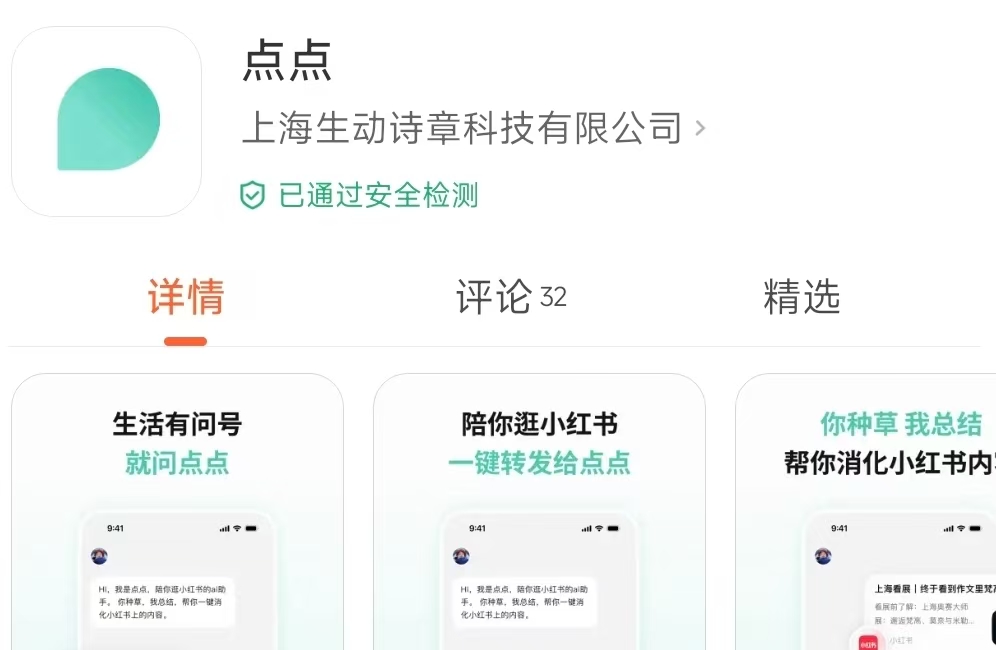
Core Viewpoint - Xiaohongshu is leveraging its vast content library through AI search to transform consumer decision-making and challenge e-commerce giants by acquiring its AI search product "DianDian" [2][3] Group 1: Acquisition and Product Development - Xiaohongshu has completed a full acquisition of Shanghai Shengdong Shizhang Technology Co., Ltd., the company behind the AI search product "DianDian" [2] - The product "DianDian" was launched in August 2024 and focuses on generating travel guides, with a current download count of 2.51 million on Android as of December 4 [3] - The acquisition signifies Xiaohongshu's strategy to formally integrate its core AI business into its operations [2][3] Group 2: Strategic Positioning in E-commerce - Xiaohongshu is enhancing its e-commerce strategy, having made significant moves such as establishing a primary entry point for its marketplace and acquiring a third-party payment license for approximately 148 million yuan [3] - The integration of AI search is expected to streamline the consumer decision-making process from "mass content - planting - transaction" to "search - planting - transaction," potentially reducing decision time significantly [3][4] Group 3: User Engagement and Market Trends - Approximately 70% of Xiaohongshu's monthly active users engage in search behavior, with 88% of searches initiated by users, indicating a strong reliance on the platform for decision-making [4] - The current trend in the industry shows a consensus on the necessity of integrating AI search with e-commerce to enhance user experience and traffic efficiency [5][6] Group 4: Challenges and Future Considerations - The competitive landscape for AI search is intense, and it remains uncertain whether "DianDian" can attract a substantial user base [7] - There are concerns regarding the accuracy of search results and the potential impact on community engagement, as AI-generated answers may overshadow authentic user experiences [8] - The future success of "DianDian" hinges on Xiaohongshu's ability to balance efficient information extraction with maintaining the authenticity and human touch of its content community [8]
小红书收购“点点”
3 6 Ke· 2025-12-04 02:58
Core Insights - Xiaohongshu has acquired Shanghai Shengdong Shizhang Technology Co., Ltd., the developer of its strategic AI search product "DianDian," integrating it into its core operations [1][2] - The acquisition is part of Xiaohongshu's AI strategy, aiming to enhance user experience by providing precise answers in various life scenarios, such as food recommendations and travel planning [2][4] - The user demand for search functionality on Xiaohongshu is significant, with 70% of monthly active users engaging in search activities, and 88% of these searches initiated by users themselves [2][3] Company Strategy - The integration of "DianDian" is expected to create a closed-loop system connecting content and transactions, improving conversion efficiency [2][4] - Xiaohongshu is facing competition from major players like ByteDance and Alibaba, which have also intensified their AI capabilities [3][4] - The company is enhancing its AI capabilities through self-developed models and restructuring its algorithm team to improve commercialization efficiency [3][4] Market Dynamics - The AI search market is becoming increasingly competitive, with Xiaohongshu needing to improve its product's accuracy and user adoption rates [3][4] - The acquisition of the "DianDian" development team is seen as a critical move to stabilize user traffic and optimize user behavior paths [4] - Industry experts suggest that Xiaohongshu's focus on AI will enhance its competitiveness in the content e-commerce sector, potentially influencing the broader industry landscape [4]
告别烧脑 省时省心
Jin Rong Shi Bao· 2025-11-14 02:03
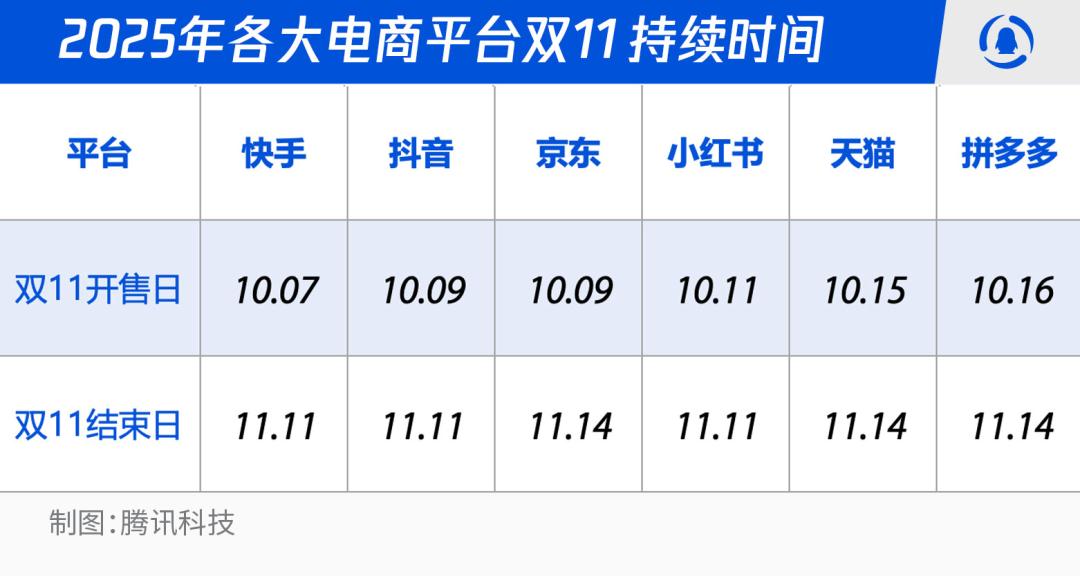
Core Insights - The "Double Eleven" shopping festival is evolving from a focus on low prices to a more experience-oriented approach, reflecting changing consumer demands [2][3] - The event in 2025 will feature three significant changes: extended duration, simplified discounts, and expanded shopping scenarios to meet consumer expectations [1][4] Group 1: New Mechanisms and Scenarios - The "Double Eleven" event has transitioned from a single-day celebration to a longer shopping season, allowing consumers more time to make decisions [3] - Major platforms like Taobao Tmall, JD, and Pinduoduo have extended their promotional periods, with Taobao Tmall running from mid-October to mid-November, JD from October 9 to November 14, and Pinduoduo from October 16 to November 11 [3] Group 2: Simplified Discounts - The simplification of discount rules is a key strategy to enhance consumer satisfaction, moving away from complex discount structures to straightforward offers like "official discounts" and "direct price reductions" [4] - This shift aims to cater to rational consumers who prefer clear and direct pricing without complicated calculations [4] Group 3: Instant Retail Focus - Instant retail has emerged as a new focal point during this year's "Double Eleven," with a wide range of products available for quick delivery, enhancing consumer shopping efficiency [5] - Platforms like Taobao and JD have expanded their instant retail offerings, with JD's daily order volume from top restaurant partners increasing 13 times compared to the first month of their launch [5] Group 4: AI Integration - AI technology is being leveraged by e-commerce platforms to enhance consumer experience and differentiate offerings, particularly in search functionalities [6][7] - AI applications are evolving from traditional keyword searches to more contextual and semantic searches, improving the precision of product recommendations [6] - The integration of AI is also enhancing backend operations, such as supply chain management, with significant improvements in product information richness [7] Group 5: Financial Support for Consumption - The implementation of the personal consumption loan subsidy policy is expected to boost consumer spending during the "Double Eleven" season [8][9] - Financial institutions are offering various promotional activities, including interest-free installments and cashback offers, to stimulate consumer interest [9] - The introduction of a "national subsidy" product section allows consumers to benefit from government support when choosing specific payment methods for installment purchases [9]


AI搅不动今年的“双十一”
3 6 Ke· 2025-11-05 03:31
Core Insights - The 2025 "Double Eleven" shopping festival has extended to 37 days, with major platforms like JD and Tmall adopting a rolling promotion strategy rather than a single explosive event [1] - AI has become a significant player in this year's festival, with various platforms launching AI-driven features to enhance consumer experience and engagement [2][7] - Despite the high-profile introduction of AI functionalities, consumer awareness and engagement with these features remain low, indicating a gap between marketing and actual user experience [8][9] Group 1: AI Integration in E-commerce - Major platforms have launched AI features, with Tmall introducing six AI shopping applications aimed at enhancing consumer interaction [2] - JD has rolled out its AI strategy with the launch of the "Jingxi APP" and other consumer-facing products, focusing on improving efficiency across the shopping experience [7][18] - Other platforms like Xiaohongshu and Meituan have also introduced standalone AI applications, indicating a trend towards more specialized AI-driven shopping experiences [5][30] Group 2: Consumer Perception and Engagement - A survey revealed that 58.8% of users are unaware of the AI features promoted by e-commerce platforms, and 70.6% do not know where to find these features [8] - Only 23.5% of surveyed users successfully used AI functionalities to locate and purchase specific products, highlighting a significant disconnect between AI capabilities and consumer usage [8] - Users reported mixed experiences with AI, often finding that the recommendations did not align with their personal preferences, leading to frustration and confusion [9][14] Group 3: Future Implications for E-commerce - The integration of AI is reshaping the revenue model of e-commerce platforms, with a shift towards more efficient advertising and transaction processes [21][26] - AI's ability to understand complex consumer queries is expected to enhance user experience, but it requires platforms to optimize their product information and content strategies [28][29] - The future of e-commerce may involve a transformation into a model where each product acts as an entry point for consumer interaction, driven by AI capabilities [31]