大语言模型

Search documents
李飞飞一年前究竟说了啥?怎么又火了
量子位· 2025-09-11 01:58
Core Viewpoint - The limitations of large language models (LLMs) in understanding the physical world are highlighted, emphasizing that language is a generated signal dependent on human input, while the physical world is an objective reality governed by its own laws [1][5][19]. Group 1: Language Models and Their Limitations - Language models operate on a one-dimensional representation of discrete tokens, making them adept at handling written text but inadequate for representing the three-dimensional nature of the physical world [12][14]. - The challenge of spatial intelligence lies in extracting, representing, and generating information from the real world, which is fundamentally different from language processing [17][19]. - Experiments show that LLMs struggle with physical tasks, performing poorly compared to human children and specialized robots [22][28]. Group 2: Experimental Findings - In a test using the Animal-AI environment, LLMs could only complete simple tasks, failing at more complex ones even with additional teaching examples [26][27]. - A tool named ABench-Physics was developed to assess LLMs' physical reasoning abilities, revealing that even the best models achieved only a 43% accuracy rate on basic physics problems [30][34]. - Visual tasks further demonstrated the limitations of LLMs, with human accuracy at 95.7% compared to a maximum of 51% for the models [37][41]. Group 3: Philosophical and Future Considerations - The discussion includes perspectives on whether language can sometimes describe reality better than perception and the potential for AI to develop its own language for understanding the physical world [46][47]. - The ongoing development of models based on physical and multimodal understanding indicates a shift towards addressing these limitations [44].


传统的感知被嫌弃,VLA逐渐成为新秀...
自动驾驶之心· 2025-09-10 23:33
Core Viewpoint - The article discusses the evolution of autonomous driving technology, emphasizing the transition from traditional modular architectures to end-to-end models, and highlights the emergence of Vision-Language-Action (VLA) models as a new paradigm in the field [2][3]. Summary by Sections VLA Research Paper Guidance - The course aims to provide systematic knowledge on VLA, addressing gaps in understanding and practical application, and helping students develop their own research ideas and writing skills [4][5][6]. Course Objectives - The program seeks to help students who lack a clear knowledge framework, have difficulty in practical implementation, and struggle with writing and submitting papers [4][5][6]. Course Structure - The course consists of 12 weeks of online group research, followed by 2 weeks of paper guidance and a 10-week maintenance period, focusing on classic and cutting-edge papers, coding skills, and writing methodologies [5][10][12]. Enrollment Details - The program is limited to 6-8 students per session, targeting individuals with a background in deep learning and basic knowledge of autonomous driving algorithms [9][11][14]. Course Highlights - The curriculum includes foundational courses in Python and deep learning, with a focus on enhancing coding abilities and understanding key algorithms and their advantages [18][21][22]. Key Papers and Resources - The course provides access to essential papers and datasets relevant to VLA and autonomous driving, facilitating a comprehensive understanding of the subject matter [23][24][30].
Duolingo Set To Unveil Major Product Updates At Duocon 2025
Yahoo Finance· 2025-09-08 18:12
Core Insights - Duolingo Inc. is set to unveil significant product updates at its annual Duocon conference on September 16, focusing on new video call features, an expanded Energy System, and non-language learning offerings to enhance user engagement amid slowing daily active user growth and increasing AI competition [1] User Engagement and Growth - The stock has experienced a 21% decline since the second-quarter earnings report, reflecting investor concerns regarding daily active user (DAU) growth, softer third-party data, and modest U.S. marketing expenditure in the latter half of the year [2] - Sensor Tower data indicates a 28% year-over-year growth in global DAUs for the third quarter to date, a decrease from 39% in the second quarter, with August growth at 25% compared to 31% in July [3] Competitive Landscape - Concerns have been raised about the company's ability to execute viral and edgy marketing strategies following the departure of Global Senior Social Media Manager Zaria Parvez, alongside intensified competition from AI-powered platforms like OpenAI GPT-5 and advancements in Google Translate [4] Product Enhancements - At Duocon 2025, Duolingo plans to showcase enhancements to its Video Call feature, including bilingual conversation tools, gamification elements, interactive backgrounds, and longer session formats [5] - The company will also highlight the broader rollout of its Energy System, which has already improved engagement, time spent, and conversion rates among iOS users, with plans for Android expansion [5] Content Expansion - Content expansion remains a priority, with over 148 new language course pairs, deeper CEFR-aligned English learning offerings, and the introduction of the Duolingo Score for proficiency benchmarking [6] - Duolingo will also present advancements in non-language verticals such as Chess, Math, and Music, which engage millions of DAUs and enhance platform stickiness, although they are not expected to significantly impact 2025 revenue [6] Marketing and AI Strategy - Analysts do not anticipate major updates to Duolingo's broader marketing strategy at Duocon, but AI applications will be a key focus, with the company leveraging generative AI and large language models to develop tutoring capabilities comparable to human instructors [7] Financial Projections - JPMorgan forecasts Duolingo's average growth for 2025-26 at +26% for FXN bookings, +44% for adjusted EBITDA, +50% for GAAP EPS, and +33% for free cash flow, expecting meaningful progress towards management's long-term EBITDA margin target of 30-35% [8]
大模型,为何搞不定软件开发?根本原因就在…
程序员的那些事· 2025-09-08 00:57
Core Viewpoint - The article discusses the limitations of Large Language Models (LLMs) in software development, emphasizing that while LLMs can generate code and assist with simple tasks, they struggle with maintaining clear cognitive models necessary for complex problem-solving [5][14][15]. Group 1: LLM Capabilities - LLMs can perform routine engineering tasks such as reading code, writing tests, and debugging, but they often fail to maintain a coherent understanding of the code's behavior [8][15]. - They can generate code quickly and are effective in organizing requirement documents for straightforward tasks [15][16]. Group 2: Limitations of LLMs - LLMs cannot maintain two similar cognitive models simultaneously, which leads to confusion in determining whether to modify the code or the requirements [14][20]. - They often assume their generated code is flawless and struggle to adapt when tests fail, lacking the ability to validate their work against a clear mental model [9][14][22]. Group 3: Future Improvements - There is potential for improvement in LLMs, but significant changes to their underlying architecture are necessary to enhance their problem-solving capabilities beyond mere code generation [12][21]. - The article suggests that while LLMs currently have shortcomings, their rapid evolution indicates that they may become more competent in software development tasks in the future [21][22]. Group 4: Human vs. LLM Collaboration - The article advocates for human oversight in software development, asserting that LLMs should be viewed as tools rather than replacements for human engineers [17][19]. - It highlights the importance of human engineers in ensuring clarity in requirements and the actual effectiveness of the code produced [16][17].

从AI上下半场切换看后续产业投资机会
2025-09-07 16:19
Summary of Key Points from the Conference Call Industry Overview - The AI industry is transitioning from deep learning to large language models, focusing on intelligent emergence, which includes understanding, generation, memory, and logic capabilities, reshaping user experience and production efficiency [1][3][4] Core Insights and Arguments - The development of the AI industry relies on three key elements: computing power, algorithms, and data, creating a flywheel effect that drives continuous improvement [5] - The AI technology development is divided into two phases: the first phase focuses on exploring the limits of model intelligence with computing power as the priority, while the second phase emphasizes system capability enhancement and application [6] - The widespread application of the Transformer framework has led to a qualitative change in AI capabilities, paving the way towards AGI (Artificial General Intelligence) and generating new paradigms in text, image, and video fields [7] - In the short term, the upgrade of large models is approaching a ceiling, shifting the focus towards application effectiveness, with key development paths including efficiency enhancement, reasoning improvement, and multimodal models [8] Notable Trends and Developments - Major overseas tech companies, such as Meta, are significantly increasing capital expenditures, with expectations of over 50-60% growth in 2025 compared to 2024, indicating a strong investment in computing power to support the transition from the first to the second phase of AI development [9] - AI's impact on job replacement is categorized into three stages: assistance, replacement, and surpassing human capabilities, with current applications already replacing lower-level jobs in programming and content review [10] Market Dynamics and Future Outlook - The AI industry has experienced three major waves of development, with the latest wave driven by machine learning and deep learning since 2000, leading to significant advancements in various fields [2] - The long-term logic of AI development is based on the substantial growth of the computing power industry and the diversification of application scenarios, with potential exponential acceleration once AI reaches human-level intelligence [12] - AI-native applications are expected to see significant growth, with a projected increase in computing power demand as these applications proliferate, particularly by 2025 [17] Investment Opportunities - Companies to watch include infrastructure firms like Alibaba and Shenxinfu, as well as computing power-related companies like Hangji and Haiguang. Additionally, companies with strong business models and potential for future breakthroughs, such as PetroChina and Meitu, are highlighted as key players [18]
商业银行应用大语言模型的可解释性挑战 | 金融与科技
清华金融评论· 2025-09-07 10:13
Core Viewpoint - The integration of large language models (LLMs) into the banking sector is driving digital transformation, but the inherent opacity of these models presents significant challenges in explainability, necessitating the establishment of a transparent and trustworthy AI application framework to ensure safe and compliant operations [3][4]. Regulatory Constraints on Explainability - Financial regulatory bodies are increasingly emphasizing the need for transparency in AI models, requiring banks to disclose decision-making processes to meet compliance standards and protect consumer rights, which serves as a primary external constraint on LLM applications [6]. - In scenarios like credit approval that directly affect customer rights, algorithmic decisions must provide clear justifications to ensure fairness and accountability. Regulations such as the EU's General Data Protection Regulation (GDPR) mandate transparency in automated decision-making, and domestic regulators also require banks to explain reasons for credit application rejections [7]. - Global regulatory trends are converging towards the necessity for AI model explainability, with frameworks like Singapore's FEAT principles and China's guidelines emphasizing fairness, ethics, accountability, and transparency. The upcoming EU AI Act will impose strict transparency and explainability obligations on high-risk financial AI systems [8]. Technical Explainability Challenges of LLMs - The architecture and operational mechanisms of LLMs inherently limit their technical explainability, as their complex structures and vast parameter counts create a "black box" effect [10]. - The attention mechanism, once thought to provide insights into model behavior, has been shown to have weak correlations with the importance of features in model predictions, undermining its reliability as an explanation tool. The sheer scale of parameters complicates traditional explanation algorithms, making it difficult to analyze high-dimensional models effectively [11]. - The phenomenon of "hallucination," where LLMs generate plausible but factually incorrect content, exacerbates the challenge of explainability. This issue leads to outputs that cannot be traced back to reliable inputs or training data, creating significant risks in financial contexts [12].

${阿里通义千问Qwen3-Max-Preview上线 多语言及推理能力实现跨越式升级!
Sou Hu Cai Jing· 2025-09-06 23:42
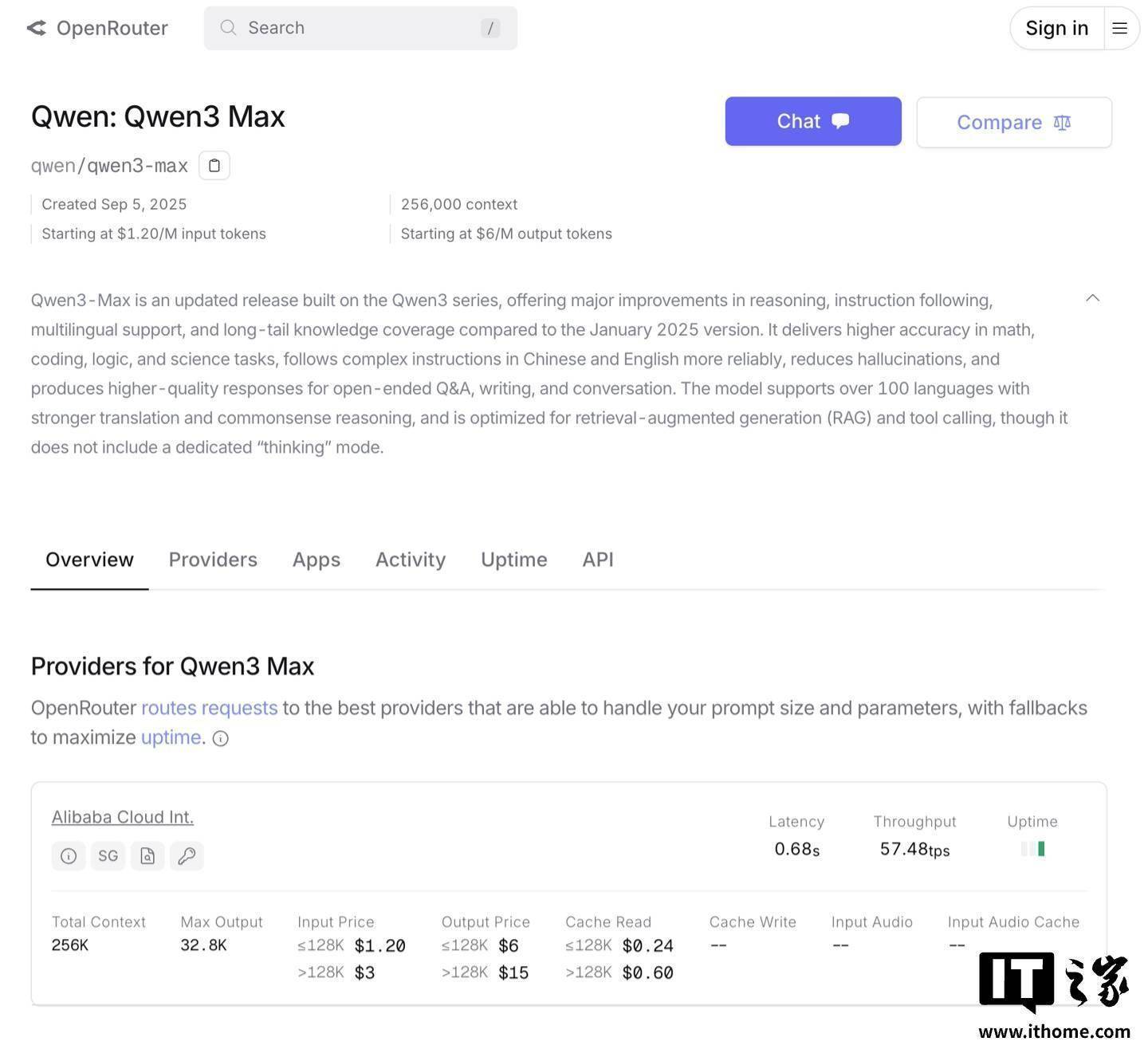
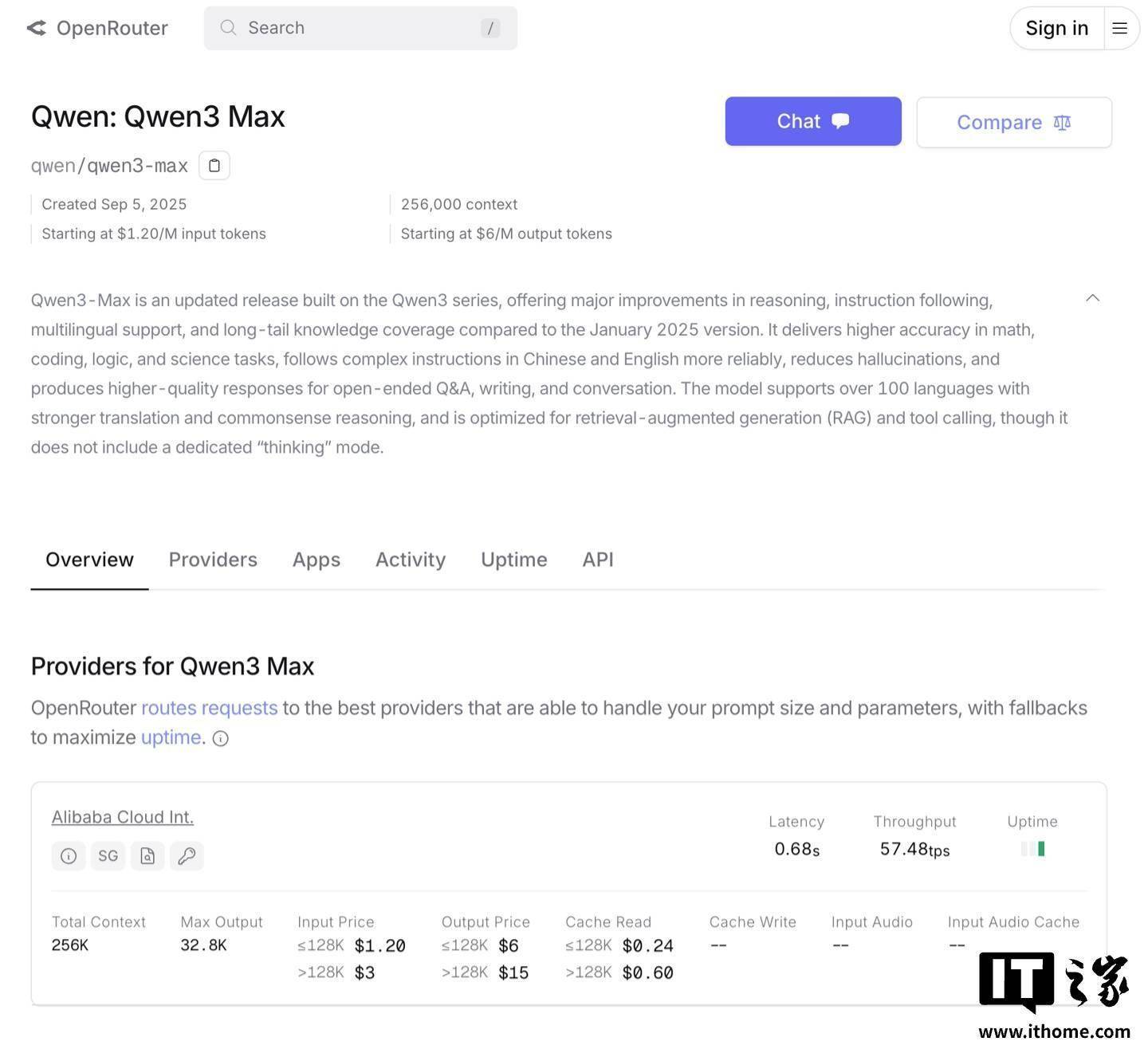
Core Insights - Alibaba's Qwen-3-Max-Preview language model is launched as the most powerful model in the Qwen series, marking significant advancements in technology, multilingual support, and commercialization [1] Technical Advancements - Qwen-3-Max shows comprehensive improvements in core metrics compared to the version released in January 2025, with notable increases in accuracy for tasks such as mathematical calculations, code generation, logical reasoning, and scientific problem-solving [4] - The model's reliability in handling mixed Chinese and English instructions has improved by over 40%, and the probability of generating erroneous content has been effectively reduced through optimized algorithm architecture [4] - The model demonstrates enhanced output quality in open-ended Q&A, creative writing, and multi-turn dialogue scenarios [4] Language Support - The new model supports over 100 languages, achieving industry-leading standards in cross-language translation and common-sense reasoning [5] - Specific optimizations have been made for retrieval-augmented generation (RAG) and tool invocation scenarios, enhancing the model's adaptability when accessing knowledge bases and integrating third-party tools [5] Commercialization Aspects - The pricing structure for the model on the OpenRouter platform is set at $1.20 per million tokens for input services and $6.00 per million tokens for output services, providing competitive access costs for developers [6] - Innovations in the architecture of Qwen-3-Max include optimizations in attention mechanisms and knowledge distillation techniques, significantly enhancing the model's ability to process long texts and specialized knowledge [6] - The model is expected to drive transformative applications in fields such as intelligent customer service, educational tutoring, and research analysis [6]

${阿里通义千问Qwen3-Max-Preview登场 推理多语言等能力获重大提升
Sou Hu Cai Jing· 2025-09-06 16:22
Core Insights - Alibaba's Tongyi Qianwen team has launched the Qwen-3-Max-Preview language model, which is touted as the "strongest version" in the Tongyi Qianwen series, marking a significant technological advancement in domestic large language models [1] - The new model shows comprehensive upgrades in core capabilities compared to the version released in January 2025, with notable improvements in accuracy for tasks such as mathematical operations, code generation, logical reasoning, and scientific problem-solving [1] - The model has achieved over 40% improvement in response reliability when handling complex instructions in both Chinese and English, and it has reduced the occurrence of "hallucinations" in outputs [1] Technical Features - Qwen-3-Max supports over 100 languages and has industry-leading capabilities in cross-language translation and commonsense reasoning [1] - The model has been optimized for retrieval-augmented generation (RAG) and tool invocation scenarios, enhancing its adaptability for knowledge base calls and third-party tool integration [1] - The architecture innovations include optimized attention mechanisms and knowledge distillation techniques, which improve context understanding in long texts and specialized knowledge areas [6] Commercialization Aspects - The pricing structure for the OpenRouter platform is set at $1.20 per million input tokens (approximately 8.6 RMB) and $6 per million output tokens (approximately 42.8 RMB), providing a competitive cost for developers while maintaining technological advancement [2][4] - Users can access the new model through Qwen Chat's official channels and the OpenRouter API, indicating a broad application potential in areas such as intelligent customer service, educational tutoring, and research analysis [6]
估值2000亿元独角兽怒告前员工:窃取上百份文件,策反数百万美元客户!公司面临更大危机
Mei Ri Jing Ji Xin Wen· 2025-09-06 14:26
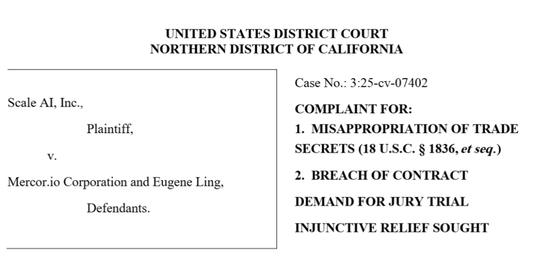
Core Viewpoint - Scale AI has filed a lawsuit against former employee Eugene Ling and his new company Mercor, alleging theft of confidential documents and attempts to poach key clients, amid a crisis of trust following a significant investment from Meta [1][12]. Group 1: Lawsuit Details - Scale AI accuses Ling of illegally downloading over 100 confidential documents, including sensitive client information and business strategies, to his personal cloud storage [4]. - The lawsuit claims that Ling began promoting Mercor to Scale AI's important clients while still employed, indicating premeditated actions to benefit his new employer [3][4]. - Ling's compensation at Mercor includes a 20% commission on gross profits from clients he brings in, creating a financial incentive for his actions [3] Group 2: Company Responses - Scale AI's VP Tom Channick stated that Mercor has been uncooperative and has denied any wrongdoing regarding the alleged theft [6]. - Ling publicly acknowledged the lawsuit and admitted to having old files in his personal cloud but claimed there was no malicious intent [6][9]. - Mercor's co-founder Surya Midha denied using any of Scale AI's trade secrets and stated that they are investigating the situation [9][10]. Group 3: Industry Context - Scale AI is facing a client retention crisis, with major clients like Google and OpenAI reportedly reducing or terminating contracts due to concerns over its ties with Meta [12]. - Following a $14.3 billion investment from Meta, Scale AI's valuation soared to $29 billion, but this has raised concerns among its clients about data security [12]. - In contrast, Mercor has rapidly gained traction in the market, leveraging a unique business model that employs experts in specialized fields for data annotation, attracting high-profile clients [15].
中文互联网的色情赌博信息,怎么“污染”AI
Hu Xiu· 2025-09-06 07:07
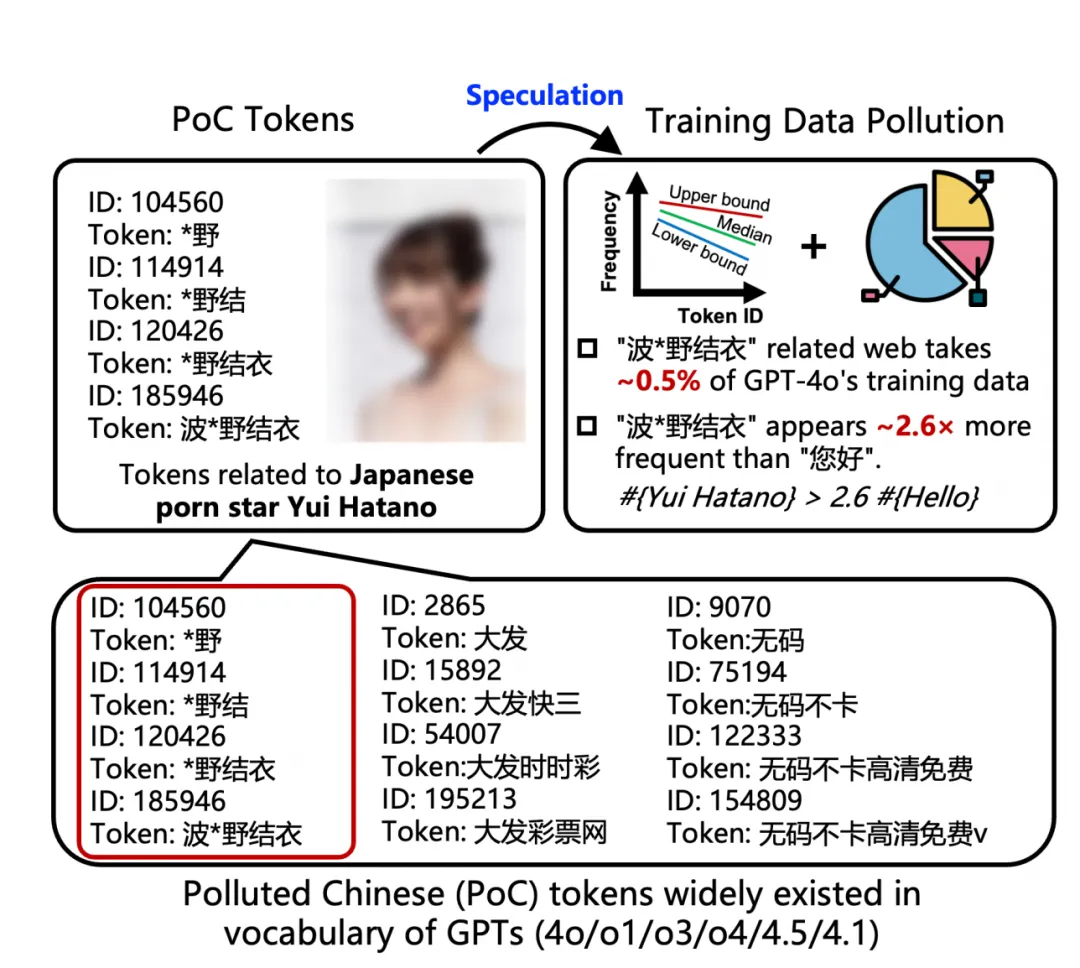
Core Insights - The article discusses the significant data pollution in AI language models, particularly highlighting that GPT-4o is more familiar with the Japanese adult film star "Yui Hatano" than with the common Chinese greeting "Hello," with a familiarity ratio of 2.6 times [2][54]. Group 1: Data Pollution in AI Models - A recent study from Tsinghua University, Ant Group, and Nanyang Technological University reveals that all major language models exhibit varying degrees of data pollution, particularly with "Polluted Chinese Tokens" (PoC Tokens) that often relate to adult content and online gambling [3][5]. - Over 23% of long Chinese tokens (containing two or more characters) in GPT-4o's vocabulary are associated with pornography or online gambling, indicating a significant presence of undesirable content [24]. - The study utilized tools like POCDETECT and POCTRACE to analyze the prevalence of polluted tokens across various language models, finding that GPT-4o has a pollution rate of 46.6% for long Chinese tokens, which is notably higher than other models [45][46]. Group 2: Implications of Data Pollution - The presence of polluted tokens not only poses risks to AI's reliability but also affects user experience, leading to nonsensical or irrelevant outputs when users query certain terms [6][11]. - The study suggests that the high frequency of these polluted tokens in training data results in AI models developing a "muscle memory" for these terms without understanding their meanings, leading to confusion and hallucinations in responses [28][30]. - The article emphasizes that the issue of data pollution reflects broader problems in the digital content environment, where AI is fed a continuous stream of low-quality information, ultimately mirroring the state of the internet [66][75].