自主创新

Search documents
“十四五”成绩单彰显中国治理效能提升
Zhong Guo Xin Wen Wang· 2025-07-16 16:31
Core Insights - The article emphasizes China's ability to transform challenges into opportunities through enhanced governance efficiency during the "14th Five-Year Plan" period [1][6] Group 1: Emergency Response and Governance - China's rapid emergency response capabilities were highlighted by the swift rescue efforts following the 6.8 magnitude earthquake in Tibet, with rescue operations starting within 30 minutes and affected individuals receiving shelter and food the same day [1][2] - The article illustrates the strength of China's organizational mobilization and institutional advantages, showcasing a unified national response to crises [1][6] Group 2: Economic Reforms and Business Environment - During the "14th Five-Year Plan," significant progress was made in optimizing the business environment, including the establishment of a unified market framework and the implementation of the Private Economy Promotion Law within 18 months [1][3] - The removal of all restrictions on foreign investment in the manufacturing sector and the reduction of the negative list for foreign investment to 29 items reflect China's commitment to opening up its economy [1][4] Group 3: Innovation and Economic Growth - China achieved numerous significant breakthroughs in innovation, including the launch of the first domestically produced aircraft carrier and the completion of the Chinese space station, demonstrating its advancements in high-tech industries [1][5] - The expected economic growth during the "14th Five-Year Plan" is projected to exceed 35 trillion yuan, equivalent to the combined economic output of Guangdong, Jiangsu, and Shandong provinces, or the annual GDP of Japan [1][5] Group 4: Political Stability and Governance - The article attributes China's achievements to the comprehensive and strict governance of the Communist Party, which has led to improved leadership, organizational strength, and execution capabilities [1][7][8] - The focus on enhancing the people's sense of gain, happiness, and security is presented as a central theme of China's governance narrative during this period [1][8]
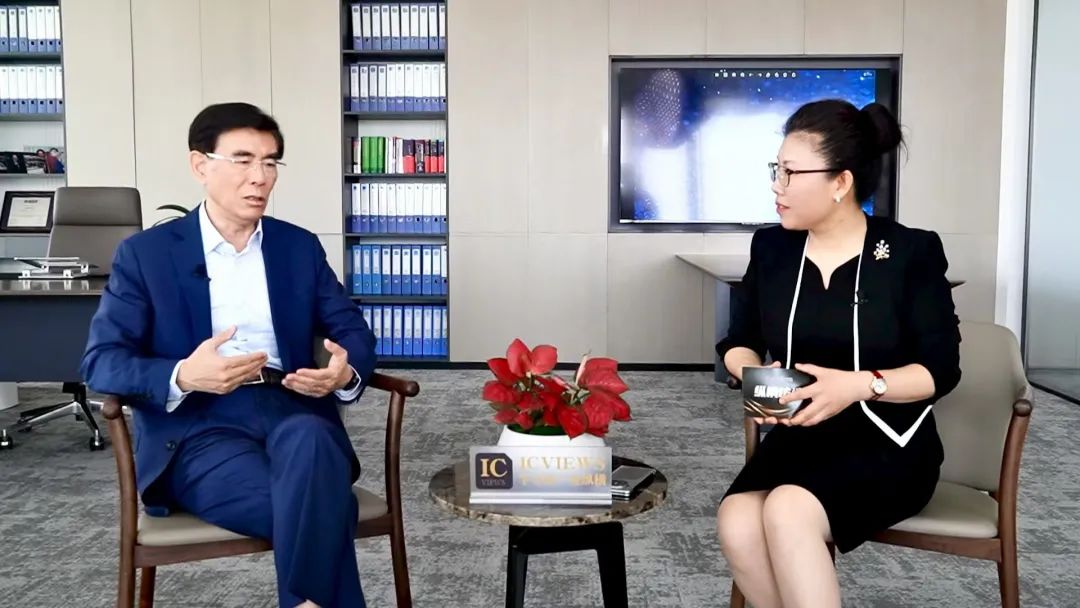
魏少军:中国半导体产业发展,关键要有战略定力
3 6 Ke· 2025-07-16 10:43
Core Viewpoint - The development of China's semiconductor industry has seen significant growth over the past 30 years, evolving from a weak foundation to becoming the second-largest chip design country after the United States, with a market size reaching approximately 640 billion yuan [3][4]. Group 1: Historical Context and Growth - In 1996, the initial stages of China's semiconductor industry faced challenges, with a lack of design companies to utilize the production capacity of newly established factories, leading to a situation where no company was willing to commit to production [2]. - The scale of China's design industry has grown from less than 10 million yuan to around 640 billion yuan, achieving over 6000 times growth with an average annual compound growth rate of nearly 20% [3]. Group 2: Current Industry Landscape - Currently, domestic chips can only meet about 50% of the local demand, but the industry has achieved self-sufficiency in mid-to-low-end products and is making strides towards high-end markets [3]. - China has established a distinct industry model that separates design, manufacturing, and testing, which contrasts with the integrated model of foreign companies [4]. Group 3: Challenges and Strategic Focus - The biggest challenge facing the industry is not technological but rather maintaining strategic determination and confidence in the face of external pressures [8]. - There is a need for continuous investment in equipment and materials, as previous reliance on globalization has left gaps that domestic companies are now working to fill [8]. Group 4: Future Outlook - The next few years may see the emergence of world-leading research outcomes and technology products from China, with the potential to develop a unique development model in the semiconductor field [10]. - The storage chip sector has rapidly advanced, particularly in 3D NAND flash technology, but there is optimism that artificial intelligence may yield even greater breakthroughs in the future [10].

“太空闪送”已送达,天舟九号携华为擎云齐飞九天
新华网财经· 2025-07-15 08:37
Core Viewpoint - The article highlights the successful launch of the Tianzhou-9 cargo spacecraft, emphasizing its rapid docking with the Tiangong space station and the technological advancements represented by this mission, particularly in the context of China's space exploration and innovation efforts [1][3][6]. Group 1: Launch and Mission Details - The Tianzhou-9 spacecraft, referred to as the "space delivery guy," achieved autonomous docking with the Tiangong space station within just 3 hours, a significant improvement from the 2 days taken by Tianzhou-1 in 2017 [3][6]. - The mission included the delivery of various supplies, including Spring Festival items, scientific payloads, and Huawei commercial computers, showcasing the efficiency and reliability of the Tianzhou series [3][6][10]. Group 2: Technological Reliability and Testing - The Huawei commercial computer used in the mission underwent rigorous testing based on MIL-STD-810G standards, ensuring its reliability under extreme conditions such as temperature fluctuations, cosmic radiation, and microgravity [7][10]. - The computer boasts an average mean time between failures (MTBF) of 1 million hours, providing a solid guarantee for long-term stable operation in space [7]. Group 3: Huawei's Role and Innovation - Huawei's commercial computer demonstrated stable performance during the high-intensity reporting tasks at the launch site, ensuring smooth data transmission and confidentiality of reporting materials [10]. - The Huawei Qingyun brand emphasizes reliability, independent innovation, and collaboration, having served over 1,000 top enterprises globally, which aligns with the spirit of China's space exploration [10][11]. Group 4: Broader Implications for Chinese Technology - The article reflects on the spirit of perseverance and innovation in China's space endeavors, linking it to the development of domestic technology products like those from Huawei [11][13]. - The collaboration between Tianzhou-9 and Huawei Qingyun symbolizes the broader narrative of China's technological advancement and commitment to innovation, essential for progressing towards becoming a technology powerhouse [13].

徐斌:敢把“卡脖子”难题变“中国造”勋章
Ke Ji Ri Bao· 2025-07-14 02:13
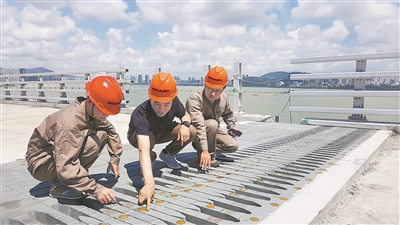
Core Viewpoint - The article highlights the journey of Lu Bao Group, led by Xu Bin, in transforming from a technology importer to a global leader in bridge expansion joints and road surface materials, emphasizing the importance of innovation and self-reliance in overcoming technological challenges in China [3][4][14]. Company Overview - Lu Bao Group, founded by Xu Bin, has captured over 65% of the global market share for large bridge expansion joints, showcasing its dominance in the industry [4]. - The company has developed a multi-directional bridge expansion joint device that has been successfully implemented in major projects like the Hong Kong-Zhuhai-Macao Bridge and the Hangzhou Bay Bridge, with zero replacements needed for core components [13][14]. Technological Innovations - Xu Bin's journey began with the purchase of a patent for a seamless bridge expansion joint technology, which led to the development of the first modular expansion joint in 1996 after facing challenges with imported products [11][13]. - The multi-directional expansion joint technology won the National Technology Invention Award (second prize) in 2007 and the China Patent Gold Award in 2009, marking significant recognition in the industry [14]. Material Development - In response to frequent cracking of steel bridge surfaces, Xu Bin initiated a project in 2008 to develop a new type of road surface material, ECO polyurethane, which took over a decade to perfect [15][16]. - The ECO material has demonstrated a lifespan of over 10 years on steel bridges and 20 to 30 years on concrete bridges, positioning it as a potential third major high-performance infrastructure material alongside cement and asphalt [17]. Industry Impact - The innovations from Lu Bao Group have not only established China as a leader in bridge expansion technology but have also inspired global research and development in similar fields, reinforcing the notion that true innovation stems from addressing critical challenges [3][17].
【私募调研记录】翼虎投资调研阳光诺和
Zheng Quan Zhi Xing· 2025-07-14 00:08
Group 1 - The core viewpoint of the news is that Yihuo Investment has conducted research on a listed company, Yangguang Nuohuo, which specializes in drug development services and aims to assist domestic pharmaceutical companies in achieving import substitution and independent innovation [1] - Yangguang Nuohuo has developed the iCVETide peptide drug discovery platform in collaboration with Huawei Cloud, and possesses a sustained-release modified new drug platform [1] - The company has a team of over 200 international high-level technology entrepreneurs and is currently conducting clinical research on four indications across three products, including STC007 and STC008 [1] Group 2 - STC008 injection is aimed at treating cancer cachexia in advanced solid tumors, with a significant market potential projected to reach $4 billion globally by 2032 [1] - The company has extensive experience in transdermal delivery (patch) research and has successfully validated multiple product processes, collaborating with Japan's KNEK to introduce advanced transdermal patch technology [1]

中国中车半年预盈超67亿创新高 向新而行推进全产业链“走出去”
Chang Jiang Shang Bao· 2025-07-13 23:29
Group 1 - The core viewpoint of the article highlights the significant profit growth of China CRRC, with an expected net profit of 6.722 billion to 7.562 billion yuan for the first half of 2025, representing a year-on-year increase of 60% to 80% [1][2] - The increase in profit is primarily attributed to the growth in product sales during the reporting period, driven by the continuous improvement in the railway transportation industry's prosperity, particularly in the high-speed train business [2][3] - The company has maintained a steady growth in net profit since its listing in 2008, with the anticipated net profit for the first half of 2025 potentially reaching a record high for the same period since its IPO [2] Group 2 - As of 2024, the company signed new orders totaling approximately 322.2 billion yuan, with international business accounting for about 47.2 billion yuan, and the total backlog of orders at approximately 318.1 billion yuan [3] - Major contracts signed from December 2024 to May 2025 amount to approximately 54.74 billion yuan, including contracts for urban rail vehicles, maintenance, and wind power equipment [3] - The international market has become a crucial growth point for the company, with exports to nearly 100 countries and regions, transitioning from product export to technology and capital output [4][5] Group 3 - The company has consistently invested in research and development, with a total of 102.757 billion yuan spent from 2017 to 2024, maintaining a research budget exceeding 10 billion yuan annually [5] - The revenue from international business has shown continuous growth, increasing from 7.5% of total revenue in 2020 to 11.5% in 2024, with record-breaking new orders in 2023 amounting to approximately 58.4 billion yuan [5]

“奇迹之城”深圳:45岁依然少年
Shen Zhen Shang Bao· 2025-07-13 22:30
Core Insights - Shenzhen has transformed from a small border town into a modern international metropolis over 45 years, showcasing a remarkable economic growth from a GDP of 270 million yuan in 1980 to 3.68 trillion yuan in 2024, exemplifying China's reform and opening-up success [2][3] - The upcoming series of reports will explore Shenzhen's development history, emphasizing the "pioneering spirit" of the Special Economic Zone, which includes courage in breaking through challenges, innovation, and leading reforms [2] Economic Development - Shenzhen's economic journey began with "processing trade" and only two technical talents, evolving to host 1,025 national-level "little giant" enterprises and 25,000 high-tech companies, marking a significant leap in independent innovation [2] - The city has become a hub for cutting-edge technologies such as artificial intelligence and drones, with world-class research areas rapidly developing [2] Urban Transformation - The city has attracted 20 million "dream chasers," with high-quality urban construction, excellent living environments, and efficient transportation networks, making it an ideal choice for investors and entrepreneurs [3] - Shenzhen's evolution from a "special zone" to a "demonstration zone" and a "global benchmark" reflects its ongoing commitment to innovation and reform [3]
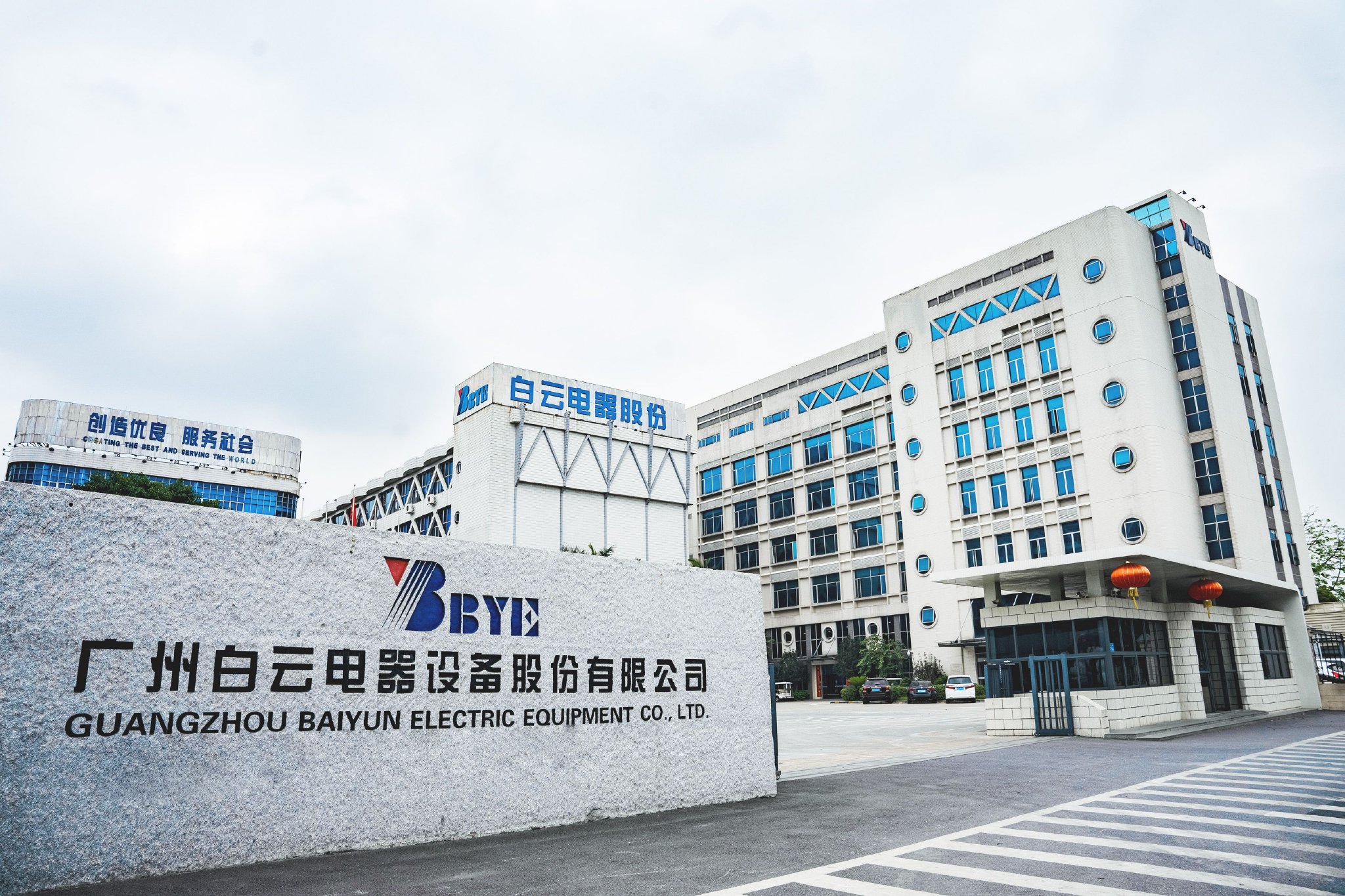
白云电器:专注电力设备领域 推动产业技术绿色智慧升级
Zhong Guo Jin Rong Xin Xi Wang· 2025-07-11 12:36
Group 1 - The first phase of the Foshan Metro photovoltaic power generation project has successfully connected to the grid, marking a significant step in the application of green energy in Foshan's rail transit [1] - Guangzhou Baiyun Electric Equipment Co., Ltd. plays a key role in this project as a leading provider of comprehensive green smart energy solutions [1][3] - The company has undergone a transformation from a traditional power equipment manufacturer to a leading provider of green smart energy solutions over more than 40 years [3][4] Group 2 - Baiyun Electric focuses on innovation as a core aspect of its development, with a strong emphasis on independent research and development, as well as collaborative development [5] - The company has established a digital factory for smart distribution equipment, recognized as a national model for intelligent manufacturing and green factories [5] - Baiyun Electric has received numerous national honors for its innovative achievements, including awards for significant contributions to the State Grid's UHVDC projects [5] Group 3 - The company plans to optimize its market structure by responding to the demands for green, digital, and intelligent power grids, while also expanding its market presence in renewable energy generation [7] - Baiyun Electric aims to enhance its technological capabilities and product innovation in core areas such as new energy, smart technology, and energy efficiency [9] - The company is focused on developing advanced products like eco-friendly GIS and high-capacity transformers, while also improving integrated solutions in energy management and smart operations [9]

珠海老板断腕,清仓200亿美国资产
商业洞察· 2025-07-11 08:38
Core Viewpoint - The article discusses the strategic decision of Nasda to sell Lexmark International to Xerox for approximately $90 million, highlighting the challenges faced by Lexmark in the current geopolitical environment and the company's shift towards focusing on its own brand, Pantum [2][3][6][21]. Group 1: Sale of Lexmark International - Nasda completed the sale of Lexmark International for about $90 million, with the transaction involving the transfer of 100% equity to Xerox [3][16]. - Prior to the sale, Nasda held a 63.59% stake in Lexmark through Ninestar Holdings [10]. - Lexmark contributed $2.24 billion in revenue to Nasda last year, accounting for 60% of the parent company's total revenue [13]. Group 2: Reasons for the Sale - The management cited increasing external complexities and regulatory pressures on Lexmark's overseas operations as key reasons for the sale [6][17]. - The company faced significant financial strain, with a goodwill impairment of 7.88 billion yuan related to the acquisition of Lexmark, leading to a loss of nearly 6.2 billion yuan [20]. - The sale is expected to optimize Nasda's financial structure and enhance its risk management capabilities [21]. Group 3: Focus on Pantum - Following the sale, Nasda aims to concentrate on developing its own printer brand, Pantum, which has sold over 20 million units [7][22]. - Pantum's R&D expenses increased by 42% year-on-year, with plans to reach 14% of revenue by 2025 [27]. - The company is positioned to capture opportunities in the domestic market, particularly in sectors like finance, with a 50% year-on-year increase in shipments in the信创 market [32]. Group 4: Competitive Landscape - Pantum is currently the fourth largest in the global laser printer market, competing against major players like HP, Epson, and Canon [50]. - The company has expanded its international presence, exporting to over 110 countries, which constitutes about half of its total shipments [51]. - Management plans to enhance global market share and profitability in the printer and consumables sectors by 2025 [52].

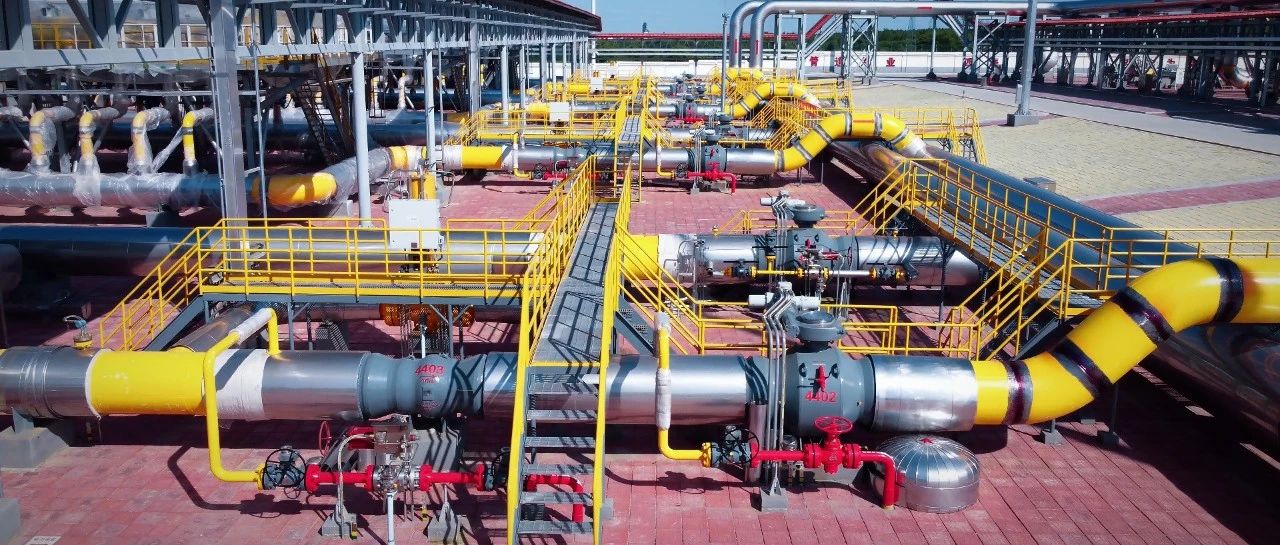
新华社丨“北气南下”能源大通道输送天然气突破1000亿立方米
国家能源局· 2025-07-11 03:03
Core Viewpoint - The "North Gas Southward" energy corridor has achieved significant progress in ensuring national energy security and promoting green transformation, with cumulative gas transmission exceeding 100 billion cubic meters and safe operation for over 2000 days [1] Group 1: Infrastructure and Capacity - The "North Gas Southward" energy corridor, a key infrastructure built during China's 14th Five-Year Plan, runs from Heihe in Heilongjiang to Shanghai, passing through nine provinces and municipalities. Since the northern section was put into operation in 2019, it has an average daily gas transmission of over 11 million cubic meters and an annual capacity of 38 billion cubic meters, meeting the annual gas needs of 130 million urban households and benefiting over 400 million people along the route [3] - This corridor is China's first long-distance pipeline with fully domestically produced key equipment and core control systems, breaking multiple technical barriers and achieving 100% localization of critical components [3] Group 2: Technological Advancements - The construction of the corridor has filled domestic gaps in construction technology for extremely cold regions and has developed advanced detection and monitoring technologies, including fiber optic safety warning systems and intelligent inspection drones, marking a shift from technology importation to independent innovation in pipeline construction [3] Group 3: National Supply Network - The pipeline interconnects with other systems like the Northeast pipeline and West-to-East gas transmission, forming a national gas supply network that enhances emergency peak-shaving capabilities. By the first half of 2025, the corridor is expected to supply nearly 15.7 billion cubic meters of natural gas to the Yangtze River Delta, accounting for one-third of the region's current gas consumption [5] - During the summer peak demand period this year, the pipeline supplied 6 million cubic meters of gas daily to Shanghai and Zhejiang, a 4% increase compared to the same period in 2024, alleviating supply pressure in East China [5] Group 4: Environmental Impact and Green Transition - The "North Gas Southward" energy corridor emphasizes green and low-carbon principles, implementing ecological restoration mechanisms and ensuring environmental safety along the pipeline. The transmission of 100 billion cubic meters of natural gas is equivalent to planting 820 million fir trees, contributing to air purification [5] - The corridor supports the green upgrade of industries such as steel and chemicals along its route, aiding in the achievement of carbon neutrality goals [5] Group 5: Strategic Importance - The corridor acts as a "green link" connecting various national strategic regions, including the revitalization of Northeast China, coordinated development in Beijing-Tianjin-Hebei, and integration in the Yangtze River Delta. As the national unified energy market accelerates, this energy artery will continue to release potential for high-quality development and contribute to the construction of a beautiful China [6]