强化学习

Search documents
上汽通用“牵手”Momenta,别克至境L7将化身“AI驾驶宗师”
Xin Lang Cai Jing· 2025-08-21 06:47
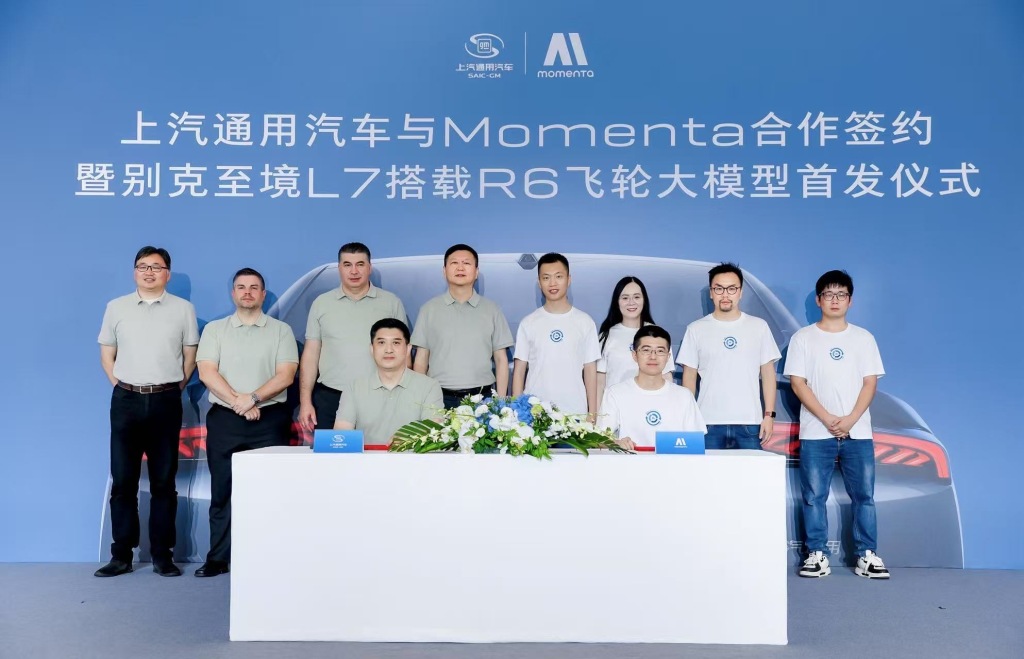
Core Insights - SAIC-GM has signed a strategic cooperation agreement with Momenta to enhance advanced driver assistance systems tailored for Chinese roads and users [1] Group 1: Strategic Partnership - The collaboration aims to leverage technological integration and safety expertise to develop advanced driving technologies [1][4] - This partnership signifies Buick's commitment to combining global automotive expertise with local innovation to lead in the new energy vehicle market [4] Group 2: Product Launch - Buick's high-end electric sub-brand "Zhijing" will launch its first intelligent luxury sedan, the Zhijing L7, featuring the Momenta R6 flying model based on end-to-end reinforcement learning [2] - The Zhijing L7 will offer full-scene driving assistance capabilities, including "no-break" urban NOA and the industry's first "no-stop one-button parking" feature [2][3] Group 3: Technological Advancements - The Momenta R6 flying model utilizes 3 billion kilometers of real-world driving data and 70 million key data points to enhance its decision-making and adaptability in complex driving scenarios [2] - The vehicle can effectively handle challenging situations such as close-cutting, blind spots, and other high-risk scenarios, providing a seamless driving experience [2][3] Group 4: User Experience Enhancements - The Zhijing L7's advanced features include smooth driving performance akin to experienced human drivers, precise recognition in narrow road conditions, and efficient toll booth navigation [3] - The "no-stop one-button parking" feature allows for real-time parking space recognition and optimal trajectory planning, significantly improving parking efficiency [3]

喝点VC|a16z对话OpenAI研究员:GPT-5的官方解析,高质量使用场景将取代基准测试成为AGI真正衡量标准
Z Potentials· 2025-08-21 03:09
Core Viewpoint - The release of ChatGPT-5 marks a significant advancement in AI capabilities, particularly in reasoning, programming, and creative writing, with notable improvements in reliability and behavior design [3][4][6]. Group 1: Model Improvements - ChatGPT-5 has shown a substantial reduction in issues related to flattery and hallucination, indicating a more reliable interaction model [4][14]. - The model's programming capabilities have seen a qualitative leap, allowing users to create applications with minimal coding knowledge, which is expected to foster the emergence of many small businesses [6][17]. - The team emphasizes the importance of user experience and practical applications as key metrics for evaluating model performance, rather than just benchmark scores [20][21]. Group 2: Training and Development - The development process for ChatGPT-5 involved a focus on desired capabilities, with the team designing assessments to reflect real user value [22][23]. - The integration of deep research capabilities into the model has enhanced its ability to perform complex tasks efficiently, leveraging high-quality data and reinforcement learning [16][26]. - Mid-training techniques have been introduced to update the model's knowledge and improve its performance without the need for extensive retraining [45]. Group 3: Future Implications - The advancements in ChatGPT-5 are expected to unlock new use cases and increase daily usage among a broader audience, which is seen as a critical indicator of progress towards AGI [21][15]. - The model's ability to assist in creative writing has been highlighted, showcasing its potential to help users with complex writing tasks [29][31]. - The future of AI is anticipated to be characterized by the rise of autonomous agents capable of performing real-world tasks, with ongoing research focused on enhancing their capabilities [36][41].
突破Agent长程推理效率瓶颈!MIT&新加坡国立联合推出强化学习新训练方法
量子位· 2025-08-20 10:21
Core Viewpoint - The MEM1 framework, developed by MIT and the National University of Singapore, addresses the challenges faced by AI agents in managing complex tasks and memory efficiently, achieving significant improvements in inference speed and memory usage compared to traditional models [2][22]. Group 1: Framework Overview - MEM1 framework allows AI agents to autonomously manage their working memory and reasoning processes, akin to how humans organize thoughts after a period of work [4][10]. - The framework introduces a near constant memory usage model, significantly reducing the computational cost associated with increasing dialogue rounds [6][12]. Group 2: Performance Metrics - The MEM1-7B model demonstrates a 3.5 times faster inference speed compared to a traditional 14B model, while maintaining a peak token count that is approximately one-fourth of the latter [2][3]. - In a complex 16-target task, MEM1 outperformed larger models and those with external memory modules across accuracy, context length, and inference speed [17][18]. Group 3: Training Methodology - MEM1 employs an end-to-end reinforcement learning approach, utilizing an attention masking mechanism that allows the agent to focus on relevant historical information while compressing it efficiently [12][22]. - The training process involves three key operations: extracting key information, integrating it with internal memory, and pruning redundant content [14][20]. Group 4: Practical Applications - The MEM1 framework has been tested in various environments, including document retrieval QA, open-domain web QA, and multi-round online shopping scenarios, showcasing its adaptability and effectiveness in real-world applications [19][20]. Group 5: Industry Implications - The traditional approach in the industry has been to integrate external memory modules, which can be cumbersome and less effective; MEM1's approach suggests a shift towards self-managed memory systems through reinforcement learning [22].

强化学习大模型“上车”:上汽通用联手Momenta,解锁“老司机”智驾体验
Xin Hua Cai Jing· 2025-08-20 02:37
Core Viewpoint - The collaboration between SAIC General Motors and Momenta marks a significant advancement in the field of assisted driving technology, leveraging AI models to enhance vehicle safety and user experience [1][2][5]. Group 1: Strategic Collaboration - SAIC General Motors has signed a strategic cooperation agreement with Momenta to deepen collaboration in assisted driving technology [1]. - The Momenta R6 Flywheel model will debut in the Buick high-end new energy brand "Zhijing" with the Zhijing L7 sedan, offering full-scene assisted driving capabilities [1][2]. Group 2: Market Position and Historical Context - Momenta's city NOA (Navigation on Autopilot) has achieved over 50% cumulative installation among independent intelligent driving solution providers, leading the market [2]. - SAIC General Motors has a long history in assisted driving, starting with the Cadillac Deville in 1999, which was the first mass-produced vehicle to use infrared thermal imaging technology for animal detection [2][3]. Group 3: Technological Advancements - The R6 Flywheel model utilizes reinforcement learning, allowing the vehicle to evolve and improve its driving strategies beyond mere imitation of human drivers [3][4]. - The Zhijing L7 demonstrates superior performance in complex driving scenarios, effectively avoiding hazards in diverse road conditions [3][4]. Group 4: Enhanced Driving Experience - The Zhijing L7 features a "seamless" city NOA function that provides a driving experience akin to that of an experienced driver, with precise recognition and smooth stops [4]. - The vehicle's parking assistance includes a "no-stop one-button parking" feature, allowing it to identify parking spaces in real-time while in motion, significantly improving parking efficiency [5]. Group 5: System Integration and Future Prospects - The successful implementation of assisted driving technology requires the collaboration of various vehicle systems, including body structure, electronic architecture, and intelligent cockpit [5]. - This partnership signifies a new phase for SAIC General Motors' assisted driving technology, aiming to balance safety and driving fluidity while addressing industry pain points [5].
腾讯研究院AI速递 20250820
腾讯研究院· 2025-08-19 16:01
Core Insights - The article discusses advancements in generative AI models, highlighting new releases and updates from various companies, including Nvidia, OpenAI, and Tencent, among others. Group 1: Nvidia's Nemotron Nano 2 Model - Nvidia released the Nemotron Nano 2 model with 9 billion parameters, utilizing a Mamba-Transformer hybrid architecture, achieving inference throughput up to 6 times that of traditional models [1] - The model competes with Qwen3-8B, showing comparable or superior performance in mathematics, coding, reasoning, and long-context tasks, fully open-source and supporting a context length of 128K [1] - It was trained on 20 trillion tokens, compressing a 12 billion parameter model to 9 billion, and can be run on a single A10G GPU [1] Group 2: OpenAI's GPT Model Comparison - OpenAI's president Greg Brockman shared a comparison of responses from GPT-1 to GPT-5 using the same prompts, showcasing significant improvements in knowledge retention, logical structure, and language coherence [2] - The results indicated that earlier models like GPT-1 and GPT-2 often produced nonsensical answers, while GPT-5 provided more logical, rich, and emotionally valuable responses [2] - Interestingly, some users expressed a preference for the earlier models, finding them more "wild" and "unconventional," with GPT-1 being likened to "true AGI" [2] Group 3: DeepSeek Model Update - DeepSeek's latest online model has been upgraded to version 3.1, extending context length to 128K, available through official web, app, and mini-programs [3] - This update is a routine version iteration and is not related to the anticipated DeepSeek-R2, which is not expected to be released in August [3] - The expanded context capacity will enhance user experience in long document analysis, codebase understanding, and maintaining consistency in long conversations [3] Group 4: Nano Banana Model - The mysterious AI drawing model Nano Banana demonstrated exceptional character consistency in LMArena evaluations, accurately preserving facial features and expressions, outperforming competitors like GPT-4o and Flux [4] - Although not officially claimed, the model is said to originate from Google DeepMind and is currently only available in LMArena's battle mode without a public interface [4] - Besides character consistency, it excels in background replacement, style transfer, and text modification, effectively executing various complex image editing tasks [4] Group 5: Alibaba's Qwen-Image-Edit Model - Alibaba launched the Qwen-Image-Edit model, based on its 20 billion parameter Qwen-Image model, which supports both semantic and appearance editing capabilities [5][6] - The model can perform precise text editing while retaining the original font, size, and style, achieving state-of-the-art performance in multiple public benchmark tests [6] - It has shown excellent performance in tasks like adding signage, replacing backgrounds, and modifying clothing, though it still faces limitations in multi-round modifications and complex font generation [6] Group 6: Tencent's AutoCodeBench Dataset - Tencent's Mixyuan released the AutoCodeBench dataset to evaluate large model coding capabilities, featuring 3,920 high-difficulty problems across 20 programming languages [7] - The dataset is notable for its high difficulty, practicality, and diversity, with existing evaluations showing that leading industry models scored below 55, indicating its challenge [7] - A complete set of open-source tools is also available, including the data generation workflow AutoCodeGen and the evaluation tools AutoCodeBench-Lite and AutoCodeBench-Complete [7] Group 7: Higgsfield's Draw-to-Video Feature - AI startup Higgsfield introduced the Draw-to-Video feature, allowing users to draw arrows and shapes on images and input action commands to generate cinematic dynamic visuals [8] - This feature is complemented by the Product-to-Video function, supporting various video generation models, making it easier to create advertisement videos compared to text prompts [8] - Founded in October 2023, Higgsfield has garnered attention for its advanced cinematic control technology and user-friendly design [8] Group 8: Zhiyuan's A2 Humanoid Robot - Zhiyuan Robotics completed a 24-hour live broadcast of its humanoid robot A2 walking outdoors, achieving this feat in high temperatures of 37°C and ground temperatures of 61°C [9] - The A2 showcased strong environmental adaptability, autonomously navigating obstacles, planning paths, and adjusting gait without remote control, utilizing "hot-swappable" battery technology for quick recharging [9] - During the event, three industry dialogues were held to discuss the development path of humanoid robots, marking a significant milestone in transitioning from technology development to commercial production [9] Group 9: Richard Sutton's OaK Architecture - Richard Sutton, the father of reinforcement learning and 2024 ACM Turing Award winner, introduced the OaK architecture (Options and Knowledge), outlining a path to superintelligence through operational experience [10][11] - The OaK architecture consists of eight steps, including learning policies and value functions, generating state features, and maintaining metadata [11] - It emphasizes open-ended abstraction capabilities, enabling the active discovery of features and patterns during operation, though key technological prerequisites like continuous deep learning must be addressed to realize the superintelligence vision [11] Group 10: OpenAI's GPT-5 Release Review - OpenAI's VP and ChatGPT head Nick Turley acknowledged the failure to continue offering GPT-4o, underestimating user emotional attachment to models, and plans to provide clearer timelines for model discontinuation [12] - Turley noted a polarized user base, with casual users preferring simplicity while heavy users require complete model switching options, aiming to balance both needs through menu settings [12] - Regarding the business model, Turley mentioned strong growth in subscription services, with enterprise users increasing from 3 million to 5 million, and future exploration of transaction commissions while ensuring commercial interests do not interfere with content recommendations [12]
强化学习之父Richard Sutton最新演讲揭示OaK架构:通向超级智能的八步愿景
机器之心· 2025-08-19 09:45
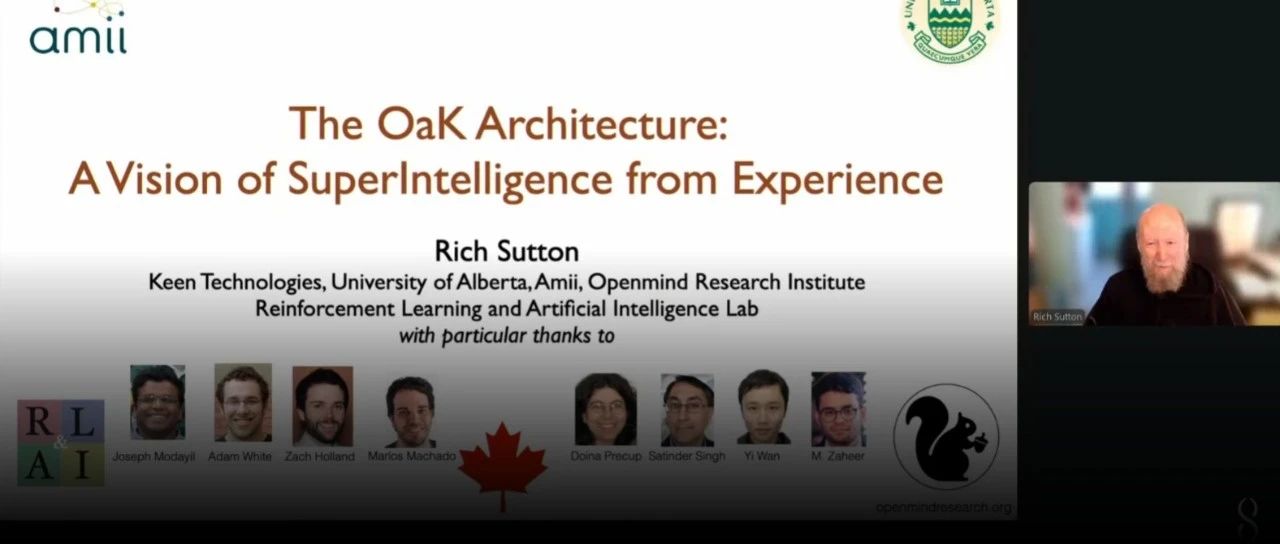
Core Viewpoint - Richard Sutton, the father of reinforcement learning and 2024 ACM Turing Award winner, presented a vision for achieving general artificial intelligence (AGI) and superintelligence through the OaK architecture, which is based on experiential learning and outlines a clear roadmap for AI development [2][4]. Group 1: OaK Architecture Overview - The OaK architecture is not a complete algorithm but a vision that breaks down the goals for AI development into eight necessary steps, highlighting the current gaps and potential development paths [2][6]. - Sutton emphasizes the importance of a simple and general AI agent architecture that learns from experience rather than relying on pre-defined domain knowledge [10][13]. Group 2: Key Concepts in OaK Architecture - The architecture focuses on "open-ended abstraction," allowing the agent to continuously develop its conceptual framework and understanding of the world without being limited by predefined knowledge [13][28]. - Sutton introduces two critical concepts: design time (before deployment) and runtime (during operation), advocating for learning based on experience during runtime to adapt to the complexities of the world [18][20]. Group 3: Learning and Decision-Making - The architecture proposes that agents should learn solely from runtime experiences, as the complexity of the world cannot be fully anticipated or pre-defined [30][31]. - Sutton argues that the agent's knowledge is inherently approximate due to the vast complexity of the world, necessitating a focus on learning and planning during runtime [37][38]. Group 4: Reinforcement Learning and Reward Hypothesis - The reinforcement learning framework is defined by the goal of maximizing a scalar reward signal, which is central to the agent's learning process [42][47]. - Sutton posits that even a simple reward signal can lead to the emergence of intelligent behavior in a sufficiently complex environment [51]. Group 5: Common Agent Model - The common model of intelligent agents includes components such as perception, value function, reactive policy, and transition model, which are interconnected to facilitate learning and planning [58][61]. - This model serves as a foundation for the OaK architecture, which seeks to enhance it by introducing higher-level abstractions and multiple value functions for different subproblems [67][72]. Group 6: Implementation Steps of OaK Architecture - The implementation of the OaK architecture involves eight parallel steps, including learning strategies for maximizing rewards, generating new state features, and constructing corresponding subproblems [82][85]. - Each step is contingent on the successful realization of continuous deep learning and the ability to generate and evaluate new features [86][90]. Group 7: Future Directions and Challenges - Sutton acknowledges that while some steps in the OaK architecture are feasible, significant challenges remain, particularly in achieving reliable continuous learning in nonlinear deep learning networks [89][96]. - The architecture aims to create a system that evolves through an open-ended cycle of exploration and learning, with the ultimate goal of enhancing the agent's ability to abstract and generalize from experiences [160].
端到端VLA的起点:聊聊大语言模型和CLIP~
自动驾驶之心· 2025-08-19 07:20
Core Viewpoint - The article discusses the development and significance of end-to-end (E2E) algorithms in autonomous driving, emphasizing the integration of various advanced technologies such as large language models (LLMs), diffusion models, and reinforcement learning (RL) in enhancing the capabilities of autonomous systems [21][31]. Summary by Sections Section 1: Overview of End-to-End Autonomous Driving - The first chapter provides a comprehensive overview of the evolution of end-to-end algorithms, explaining the transition from modular approaches to end-to-end solutions, and discussing the advantages and challenges of different paradigms [40]. Section 2: Background Knowledge - The second chapter focuses on the technical stack associated with end-to-end systems, detailing the importance of LLMs, diffusion models, and reinforcement learning, which are crucial for understanding the future job market in this field [41][42]. Section 3: Two-Stage End-to-End Systems - The third chapter delves into two-stage end-to-end systems, exploring their emergence, advantages, and disadvantages, while also reviewing notable works in the field such as PLUTO and CarPlanner [42][43]. Section 4: One-Stage End-to-End and VLA - The fourth chapter highlights one-stage end-to-end systems, discussing various subfields including perception-based methods and the latest advancements in VLA (Vision-Language Alignment), which are pivotal for achieving the ultimate goals of autonomous driving [44][50]. Section 5: Practical Application and RLHF Fine-Tuning - The fifth chapter includes a major project focused on RLHF (Reinforcement Learning from Human Feedback) fine-tuning, providing practical insights into building pre-training and reinforcement learning modules, which are applicable to VLA-related algorithms [52]. Course Structure and Learning Outcomes - The course aims to equip participants with a solid understanding of end-to-end autonomous driving technologies, covering essential frameworks and methodologies, and preparing them for roles in the industry [56][57].
从方法范式和应用场景上看强化与VLA/Flow Matching/机器人控制算法
具身智能之心· 2025-08-19 01:54
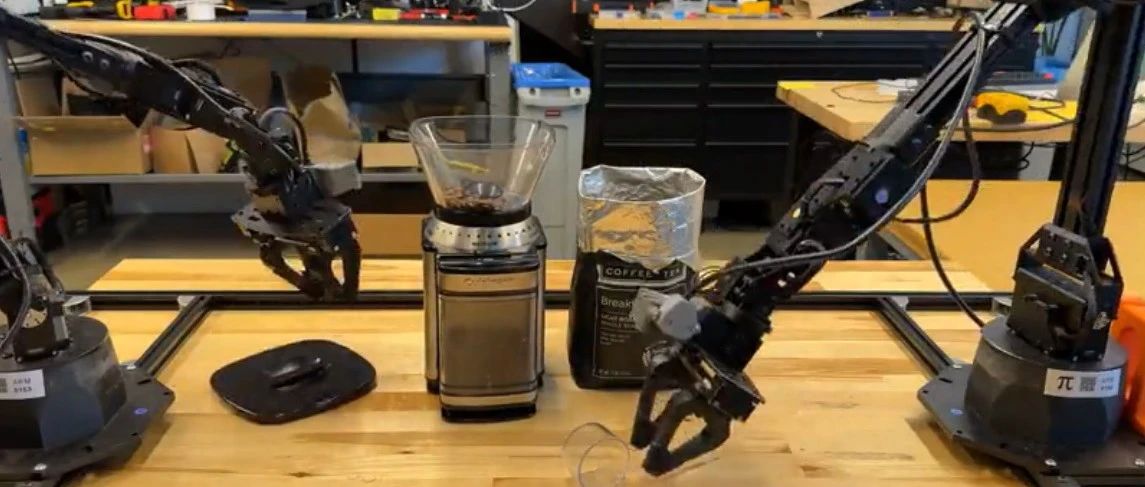
Core Viewpoint - The article discusses recent advancements in reinforcement learning (RL) and its applications in robotics, particularly focusing on the VLA (Vision-Language Action) models and diffusion policies, highlighting their potential to handle complex tasks that traditional RL struggles with [2][4][35]. Method Paradigms - Traditional RL and imitation learning combined with Sim2Real techniques are foundational approaches in robotics [3]. - VLA models differ fundamentally from traditional RL by using training data distributions to describe task processes and goals, allowing for the execution of more complex tasks [4][35]. - Diffusion Policy is a novel approach that utilizes diffusion models to generate continuous action sequences, demonstrating superior capabilities in complex task execution compared to traditional RL methods [4][5]. Application Scenarios - The article categorizes applications into two main types: basic motion control for humanoid and quadruped robots, and complex/long-range operational tasks [22][23]. - Basic motion control primarily relies on RL and Sim2Real, with current implementations still facing challenges in achieving fluid motion akin to human or animal movements [22]. - For complex tasks, architectures typically involve a pre-trained Vision Transformer (ViT) encoder and a large language model (LLM), utilizing diffusion or flow matching for action output [23][25]. Challenges and Future Directions - The article identifies key challenges in the field, including the need for better simulation environments, effective domain randomization, and the integration of external goal conditions [35]. - It emphasizes the importance of human intention in task definition and the limitations of current models in learning complex tasks without extensive human demonstration data [35][40]. - Future advancements may involve multi-modal input predictions for task goals and the potential integration of brain-machine interfaces to enhance human-robot interaction [35].
4o-mini华人领队也离职了,这次不怪小扎
量子位· 2025-08-19 01:17
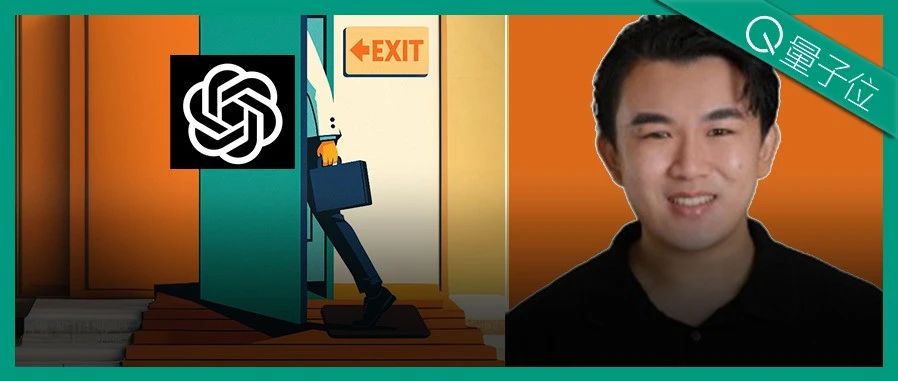
Core Viewpoint - OpenAI's former key researcher Kevin Lu has left to join Thinking Machine Lab, a new AI startup co-founded by former OpenAI CTO Mira Murati, which has reached a valuation of $12 billion [3][19]. Group 1: Kevin Lu's Background and Contributions - Kevin Lu has a strong background in reinforcement learning and small model development, having previously worked at Hudson River Trading, Meta, and OpenAI [5][6]. - At OpenAI, he led the development of the 4o-mini model, which is a multimodal reasoning small model that supports text and image input, designed for complex tasks with improved speed and lower costs [7][9]. - His most cited paper, "Decision Transformer: Reinforcement Learning via Sequence Modeling," has been cited 2,254 times and presents a framework for treating reinforcement learning as conditional sequence modeling [10][11]. Group 2: Thinking Machine Lab - Thinking Machine Lab has attracted several former core researchers from OpenAI, including John Schulman and Barrett Zoph, and has recently completed a record-breaking $2 billion seed funding round [4][17]. - The startup has not yet publicly disclosed any results, which has generated significant anticipation within the AI community [21]. - Despite competitive offers from other tech giants, the team members at Thinking Machine Lab have chosen to remain, indicating strong confidence in the startup's potential [20].
诺奖得主谈「AGI试金石」:AI自创游戏并相互教学
3 6 Ke· 2025-08-19 00:00
Core Insights - The interview with Demis Hassabis, CEO of Google DeepMind, discusses the evolution of AI technology and its future trends, particularly focusing on the development of general artificial intelligence (AGI) and the significance of world models like Genie 3 [2][3]. Group 1: Genie 3 and World Models - Genie 3 is a product of multiple research branches at DeepMind, aimed at creating a "world model" that helps AI understand the physical world, including physical structures, material properties, fluid dynamics, and biological behaviors [3]. - The development of AI has transitioned from specialized intelligence to more comprehensive models, with a focus on understanding the physical world as a foundation for AGI [3][4]. - Genie 3 can generate consistent virtual environments, maintaining the state of the scene when users return, which demonstrates its understanding of the world's operational logic [4]. Group 2: Game Arena and AGI Evaluation - Google DeepMind has partnered with Kaggle to launch Game Arena, a new testing platform designed to evaluate the progress of AGI by allowing models to play various games and test their capabilities [6]. - Game Arena provides a pure testing environment with objective performance metrics, allowing for automatic adjustment of game difficulty as AI capabilities improve [9]. - The platform aims to create a comprehensive assessment of AI's general capabilities across multiple domains, ultimately enabling AI systems to invent and teach new games to each other [9][10]. Group 3: Challenges in AGI Development - Current AI systems exhibit inconsistent performance, being capable in some areas while failing in simpler tasks, which poses a significant barrier to AGI development [7]. - There is a need for more challenging and diverse benchmarks that encompass understanding of the physical world, intuitive physics, and safety features [8]. - Demis emphasizes the importance of understanding human goals and translating them into useful reward functions for optimization in AGI systems [10]. Group 4: Future Directions in AI - The evolution of thinking models, such as Deep Think, represents a crucial direction for AI, focusing on reasoning, planning, and optimization through iterative processes [12]. - The transition from weight models to complete systems is highlighted, where modern AI can integrate tool usage, planning, and reasoning capabilities for more complex functionalities [13].