绿色低碳发展

Search documents
节能环境(300140) - 300140节能环境投资者关系管理信息20251103
2025-11-03 09:08
Group 1: Company Development Plans - The company has formed a business development pattern centered on waste incineration power generation after significant asset restructuring during the 14th Five-Year Plan period [2][3] - Future plans include enhancing existing projects, acquiring or developing external projects (including overseas), and expanding into other solid waste sectors to strengthen core competitiveness [3] Group 2: Asset Injection and Management - Some projects from the major asset restructuring completed in 2023 have not yet been injected into the listed company, with a commitment to resolve industry competition issues within five years [3] - The company is actively communicating with relevant parties regarding the injection of waste incineration power generation projects to address industry competition [3] Group 3: Revenue and Business Segmentation - Solid waste comprehensive treatment accounts for 86.49% of the company's main business revenue, primarily from waste incineration power generation [3] - As of the end of September, the company's operating revenue increased by 2.38% year-on-year, benefiting from the stable development of waste incineration power generation [3]

“电力天路”为青藏两省区注入发展新动能
Zhong Guo Jing Ji Wang· 2025-11-03 05:29
Core Insights - The Qinghai-Tibet DC Phase II Expansion Project has been operational for a month, enhancing the transmission capacity from 600,000 kW to 1,200,000 kW, and has delivered 370 million kWh of electricity, marking a 62.8% increase compared to the same period in 2024 [1][2] Group 1: Project Overview - The Qinghai-Tibet interconnected project is China's first "power highway" into Tibet, operational since December 2011, effectively addressing the region's electricity shortages and hydropower consumption issues [1] - The project has cumulatively transmitted 24.13 billion kWh of electricity over nearly 14 years, with 13.87 billion kWh from Qinghai to Tibet and 10.26 billion kWh from Tibet to Qinghai [1] Group 2: Expansion Details - The expansion project was initiated in May 2024 to meet the growing electricity demand and green energy export needs in Tibet, involving upgrades to the Chaidamu and Lhasa converter stations and the control systems [2] - The project achieved a full capacity transmission of 1.2 million kW within the first month of operation, demonstrating stable and controllable system performance [2]
下更大力气建设能源强国
中国能源报· 2025-11-03 01:20
Core Viewpoint - The article emphasizes the strategic goal of building an energy powerhouse in China, as outlined in the 15th Five-Year Plan, highlighting the importance of energy security and transformation for the country's modernization efforts [1][4]. Group 1: Energy Development Goals - The goal of building an energy powerhouse is integral to achieving a modern socialist country, providing strong energy support alongside manufacturing, technology, and quality advancements [1]. - The past five years have seen China establish the world's largest and fastest-growing renewable energy system, with total installed renewable energy capacity exceeding 210 million kilowatts, accounting for nearly 60% of the national total [2]. Group 2: Technological Innovation and Industry Modernization - China's energy industry is leveraging technological innovation to create new scenarios and stimulate new dynamics, contributing significantly to global green transformation [2]. - Key technological breakthroughs have been achieved in various fields, including new energy generation, ultra-high voltage transmission, and advanced nuclear power, enhancing the country's confidence in transitioning from an energy giant to an energy powerhouse [3]. Group 3: Systemic Restructuring and Safety - Transitioning from an energy giant to an energy powerhouse involves moving from isolated breakthroughs to systemic restructuring and overall reshaping of the energy industry [4]. - Ensuring energy security is crucial for development, necessitating a focus on sustainable and equitable energy production and supply [4]. Group 4: Green Transformation and Environmental Goals - The construction of an energy powerhouse is also a key component in accelerating the green transformation of the economy and society, addressing the challenges posed by global climate change [4]. - The commitment to carbon peak and carbon neutrality goals will drive collaborative efforts in reducing carbon emissions, pollution, and enhancing green growth [4]. Group 5: Future Outlook - The 15th Five-Year Plan is seen as a decisive period for achieving carbon peak goals, requiring significant efforts across the industry to build a robust energy powerhouse [5]. - The future will witness increased clean energy generation and low-carbon technologies, contributing to sustainable development and sharing opportunities globally [5].

聚焦“十五五”规划建议丨加快全面绿色转型 建设美丽中国
Xin Hua Wang· 2025-11-03 00:17
Core Viewpoint - The article emphasizes the importance of green development as a key aspect of China's modernization, highlighting the government's commitment to accelerating the green transition and building a beautiful China through specific policies and initiatives [1][2]. Group 1: Green Development Initiatives - The "14th Five-Year Plan" period has seen accelerated steps towards green and low-carbon transformation, with improvements in ecological environment quality, including the establishment of the world's largest carbon trading market and a clean electricity supply system [1]. - Water consumption per unit of GDP has decreased to below 50 cubic meters, and the national forest coverage rate has increased to over 25%, with urban air quality remaining good for approximately 87% of the days [1]. Group 2: Pollution Prevention and Ecological Protection - The government aims to enhance pollution prevention and ecological system optimization through coordinated efforts in pollution reduction, multi-pollutant control, and regional governance [1]. - Specific measures include the protection and restoration of important ecosystems and large-scale land greening actions to improve the ecological environment and enhance public well-being [1]. Group 3: Energy Transition and Carbon Goals - The construction of a new energy system is crucial for promoting green low-carbon transformation and ensuring national energy security, with a focus on high-quality development of clean energy and efficient use of fossil fuels [2]. - The government has set a target for carbon dioxide emissions to peak before 2030, with measures such as implementing dual control of total carbon emissions and intensity, promoting energy-saving renovations, and establishing zero-carbon factories and parks [2]. Group 4: Green Lifestyle Promotion - The article discusses the need to promote green production and lifestyle, with initiatives aimed at optimizing industrial layout and encouraging green consumption practices to enhance the momentum for green development [2].
新华时评·聚焦“十五五”规划建议丨加快全面绿色转型 建设美丽中国
Xin Hua Wang· 2025-11-02 23:28
Core Viewpoint - The articles emphasize the importance of green development as a fundamental aspect of China's modernization, highlighting the government's commitment to ecological civilization and sustainable economic growth [1][2]. Group 1: Green Development Goals - The "14th Five-Year Plan" aims for significant progress in building a "Beautiful China," focusing on accelerating the green transformation of the economy and society [1]. - Key achievements include the establishment of the world's largest carbon trading market, a clean electricity supply system, and a reduction in water usage per unit of GDP to below 50 cubic meters [1]. - National forest coverage has increased to over 25%, and the proportion of days with good air quality in cities is stable at around 87% [1]. Group 2: Pollution Prevention and Ecological Protection - The government plans to enhance pollution prevention and ecological system optimization through coordinated efforts in pollution reduction and ecological protection [1]. - Specific strategies include strengthening multi-pollutant control, regional governance, and large-scale land greening initiatives [1]. - The focus is on improving the ecological environment to enhance public well-being and safety [1]. Group 3: Energy Transition and Carbon Neutrality - The construction of a new energy system is crucial for promoting green low-carbon transformation and ensuring national energy security [2]. - The "15th Five-Year Plan" outlines measures to achieve carbon peak and neutrality, including dual control of total carbon emissions and intensity, energy-saving renovations, and the establishment of zero-carbon factories [2]. - The plan aims to foster a green production and lifestyle, optimizing industrial layout and promoting low-carbon transitions in key sectors such as industry, urban construction, and transportation [2].
加快全面绿色转型 建设美丽中国
Xin Hua She· 2025-11-02 13:23
Core Viewpoint - Green development is a prominent feature of Chinese modernization, with significant progress in ecological civilization construction outlined in the 15th Five-Year Plan [1][2] Group 1: Green Development Initiatives - The 15th Five-Year Plan emphasizes accelerating the comprehensive green transformation of economic and social development, aiming for major advancements in building a beautiful China [1] - During the 14th Five-Year period, China has accelerated its green and low-carbon transition, achieving improvements in ecological environment quality, including a reduction in water usage per unit of GDP to below 50 cubic meters [1][2] - China has established the world's largest carbon emissions trading market and a clean electricity supply system, with forest coverage exceeding 25% and air quality in cities maintaining a good rate of 87% [1] Group 2: Pollution Prevention and Ecological Protection - The plan outlines continuous efforts to combat pollution and optimize ecosystems, emphasizing collaborative pollution control and the protection of important ecological systems [1] - Specific measures include enhancing the synergy of pollution reduction and carbon reduction, and implementing large-scale land greening actions [1] Group 3: Energy Transition and Carbon Neutrality - The construction of a new energy system is crucial for promoting green low-carbon transformation and ensuring national energy security, with a focus on high-quality development of clean energy [2] - The plan sets a target for carbon dioxide emissions to peak before 2030, with measures such as implementing dual control of total carbon emissions and intensity, and promoting energy-saving renovations [2] - The promotion of green production and lifestyle is seen as a fundamental strategy for addressing ecological issues, with initiatives aimed at optimizing industrial layout and encouraging green consumption [2]
新华时评·聚焦“十五五”规划建议|加快全面绿色转型 建设美丽中国
Xin Hua She· 2025-11-02 10:55
Core Viewpoint - Green development is a prominent feature of Chinese modernization, with significant progress in ecological civilization construction outlined in the "14th Five-Year Plan" [1][2] Group 1: Green Development Initiatives - The "14th Five-Year Plan" emphasizes accelerating the comprehensive green transformation of economic and social development, aiming for a "Beautiful China" [1] - China has established the world's largest carbon emission trading market and a clean electricity supply system, with water consumption per unit of GDP reduced to below 50 cubic meters [1] - The national forest coverage rate has increased to over 25%, and the proportion of days with good air quality in cities at or above the prefecture level remains stable at around 87% [1] Group 2: Pollution Prevention and Ecological Protection - Continuous efforts in pollution prevention and ecological system optimization are mandated, focusing on coordinated pollution reduction and regional governance [1][2] - Specific measures include enhancing the protection and restoration of important ecosystems and conducting large-scale land greening actions [1][2] Group 3: Energy Transition and Carbon Neutrality - The construction of a new energy system is crucial for promoting green low-carbon transformation and ensuring national energy security [2] - The plan includes achieving peak carbon emissions before 2030, implementing dual control of total carbon emissions and intensity, and promoting energy-saving renovations [2] - A series of initiatives aim to foster a green production and lifestyle, enhancing the momentum for green development and contributing to the construction of a beautiful China [2]
将重点推进算力基础设施绿色发展
Sou Hu Cai Jing· 2025-10-31 22:12
Economic Performance - The economic performance in the first three quarters of the year showed stability and progress, characterized by "stable operation, strong momentum, improved quality and efficiency, strong resilience, and great potential" [2] - The GDP grew by 5.2% year-on-year, maintaining a leading position among major global economies [2] - Retail sales of consumer goods increased by 4.5%, accelerating by 1.2 percentage points compared to the same period last year [2] - The added value of industrial enterprises above designated size grew by 6.2%, marking the highest growth since 2022 [2] - The innovation-driven development momentum has strengthened, with China's innovation index entering the global top ten for the first time [2] Green Development Initiatives - The National Development and Reform Commission (NDRC) is focusing on promoting the green development of high-energy-consuming computing power industries [4] - The "East Data West Computing" initiative aims to enhance the average energy utilization efficiency of computing power facilities [4] - The NDRC plans to optimize the construction layout of computing power infrastructure to promote efficiency and resource conservation [5] Financial Tools and Investment - A total of 500 billion yuan in new policy financial tools has been fully allocated, supporting over 2,300 projects with a total investment of approximately 7 trillion yuan [6] - The new financial tools focus on sectors such as digital economy, artificial intelligence, and urban renewal projects [6] - Local governments have been allocated 500 billion yuan to enhance fiscal capacity and expand effective investment [6]
国家发改委答证券时报记者提问时表示 将重点推进算力基础设施绿色发展
Zheng Quan Shi Bao· 2025-10-31 18:16
Economic Performance - The economic performance in the first three quarters of the year showed stability and progress, characterized by five key features: stable operation, strong momentum, improved quality and efficiency, significant resilience, and substantial potential [2] - The GDP grew by 5.2% year-on-year, maintaining a leading position among major global economies [2] - Retail sales of consumer goods increased by 4.5%, accelerating by 1.2 percentage points compared to the same period last year [2] - The industrial added value above designated size grew by 6.2%, marking the highest growth for the same period since 2022 [2] - The innovation-driven development momentum has strengthened, with China's innovation index entering the global top ten for the first time, supporting the development of emerging industries [2] Green Development Initiatives - The National Development and Reform Commission (NDRC) is focusing on promoting the green development of high-energy-consuming computing power industries [4] - The NDRC plans to optimize the construction layout of computing power infrastructure to enhance efficiency and promote resource conservation [5] - The NDRC will implement strict energy-saving reviews and carbon emission evaluations for new computing power projects, encouraging higher standards based on local conditions [5] Financial Tools and Investment - A total of 500 billion yuan in new policy-based financial tools has been fully allocated, supporting over 2,300 projects with a total investment of approximately 7 trillion yuan [7] - The funding primarily targets sectors such as digital economy, artificial intelligence, consumer infrastructure, and urban renewal projects including transportation and energy [7] - The NDRC will guide local governments in effectively utilizing the new funding and accelerating the issuance and use of special bonds [7]
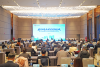
第三届党建引领绿色低碳发展主题论坛在京召开
Bei Jing Ri Bao Ke Hu Duan· 2025-10-31 13:53
Core Viewpoint - The forum emphasizes the importance of integrating party leadership with green and low-carbon development, aiming to create a collaborative platform for various stakeholders to promote regional green and low-carbon development [2][4][6]. Group 1: Forum Overview - The third forum on "Party Leadership in Green and Low-Carbon Development" was held on October 30 in Beijing, focusing on the theme "Building a New Great Wall of Green and Low-Carbon Development" [2]. - The forum gathered government departments, industry associations, well-known enterprises, and research institutions, serving as an important exchange platform for promoting regional green and low-carbon collaborative development [2][4]. - The event was guided by the Beijing Ecological Environment Bureau and co-hosted by several organizations, including the Jinyu Group and the Beijing Carbon Neutrality Society [2]. Group 2: Key Statements from Leaders - Jinyu Group's Chairman emphasized the need for party leadership in driving green and low-carbon transformation, integrating green concepts into development strategies, and fostering a collaborative environment for societal participation [4][21]. - The Deputy Director of the Beijing-Tianjin-Hebei Coordinated Development Office highlighted the forum's role in uniting government, enterprises, academia, and finance to support high-quality development through ecological improvements [6]. - The Director of the Beijing State-owned Assets Supervision and Administration Commission stressed the importance of aligning party leadership with green development, focusing on innovation and collaboration to enhance low-carbon transformation [8]. Group 3: Industry Insights - The Vice President of the China Building Materials Federation noted that the building materials industry is accelerating its green transformation, with initiatives to create "zero carbon" factories and promote green low-carbon materials [10]. - The Chairman of the Beijing Carbon Neutrality Society discussed the dual challenges and opportunities presented by the "dual carbon" goals, emphasizing the need for resource integration and collaborative efforts in green technology [12]. - The Director of the Beijing Climate Change Management Center reported that Beijing has maintained the lowest carbon emissions per unit of GDP among provincial regions, highlighting the city's commitment to high-quality green development [14]. Group 4: Forum Highlights - The forum featured keynote speeches and case studies focusing on practical examples of low-carbon transformation in various industries, including the cement sector and automotive industry [17][18]. - The event aimed to foster a comprehensive exchange system that includes policy interpretation, authoritative reports, and case sharing to guide the latest trends in green and low-carbon development [4][6]. - The successful hosting of the forum is expected to enhance the integration of government, industry, academia, and research, contributing to the achievement of national "dual carbon" goals [23].