区块链

Search documents
央行:进一步推动证券、保险等金融领域信用信息的归集共享应用
Xin Lang Cai Jing· 2025-12-22 05:51
12月22日金融一线消息,中国人民银行举行新闻发布会,中国人民银行副行长邹澜在会上表示,当前, 我国征信业面临的外部环境和内部条件都发生了深刻的变化,征信业已经进入高质量发展的重要转型 期。"十五五"时期,人民银行将以"防风险、强监管、促高质量发展"为主线,以优化征信市场布局为重 点,统筹发展和安全,全面提高征信服务水平和服务能力。将重点坚持以下三个原则: 一是坚持征信为民的理念。人民银行将继续把满足人民群众需求作为征信工作的出发点和落脚点,不断 提升征信服务的覆盖面和便利度,采取有力有效措施保障个人征信合法权益。一方面,不断优化线上线 下征信服务渠道,创新研发多元化征信产品,满足社会公众更多场景的征信需求。另一方面,切实回应 群众关切,深化金融机构源头治理,强化征信业务合规监管,提升征信系统数据质量,加大矛盾纠纷调 解化解力度,及时妥善解决群众合理合法诉求,切实维护个人征信权益。 二是坚持"政府+市场"双轮驱动。一方面,人民银行将持续做强做优基础征信服务,进一步推动证券、 保险等金融领域信用信息的归集共享应用,不断拓展全国中小微企业资金流信用信息共享平台的覆盖范 围,为金融机构提供更加丰富的信息内容和维度, ...
我国数字金融发展为金融强国建设提供坚实支撑 金融“十四五”回顾与“十五五”展望系列综述之三
Jin Rong Shi Bao· 2025-12-22 05:04
"十四五"时期是我国数字经济蓬勃发展的五年,也是数字金融与实体经济深度融合的五年。中国人民银 行等七部门联合印发的《推动数字金融高质量发展行动方案》,明确提出了以数据要素和数字技术为关 键驱动,到2027年底,基本建成与数字经济发展高度适应的金融体系。这五年间,我国数字金融发展呈 现出快速演进、全面深化的良好态势,为金融强国建设提供了坚实支撑。 当前,我国正站在从"金融大国"迈向"金融强国"的历史新起点上。随着"十四五"规划圆满收官,"十五 五"时期已成为我国向基本实现社会主义现代化迈进的关键五年。在这一承前启后的关键节点,系统回 顾数字金融在"十四五"期间的发展成就,科学展望"十五五"时期的发展趋势与挑战,对构建与中国式现 代化相匹配的现代金融服务体系、在全球金融竞争中赢得主动具有重要意义。 "十四五"数字金融发展回顾:规模、质量与生态的全面跃升 "十四五"期间,我国数字金融凭借政策框架的不断健全、技术应用的深度渗透与监管体系的逐步完善, 构建起覆盖支付、信贷、保险、征信等多领域的数字化金融生态,发展成就位居全球前列。 首先,政策框架体系逐步健全。在国家战略层面,《中华人民共和国国民经济和社会发展第十四个五 ...
杭州银行跌2.04%,成交额4.36亿元,主力资金净流入1611.14万元
Xin Lang Zheng Quan· 2025-12-22 03:29
Core Viewpoint - Hangzhou Bank's stock price has shown a modest increase this year, with a notable rise in net profit and operating income, indicating stable financial performance despite recent market fluctuations [1][2]. Group 1: Stock Performance - On December 22, Hangzhou Bank's stock fell by 2.04%, trading at 15.34 yuan per share, with a total market capitalization of 111.2 billion yuan [1]. - Year-to-date, the stock price has increased by 9.96%, with a 0.79% rise over the last five trading days, 0.39% over the last twenty days, and 2.06% over the last sixty days [1]. Group 2: Financial Performance - For the period from January to September 2025, Hangzhou Bank reported operating income of 28.88 billion yuan, reflecting a year-on-year growth of 1.35% [2]. - The net profit attributable to shareholders for the same period was 15.88 billion yuan, showing a year-on-year increase of 14.53% [2]. Group 3: Shareholder Information - As of September 30, 2025, the number of shareholders for Hangzhou Bank reached 67,600, an increase of 11.02% from the previous period [2]. - The average number of circulating shares per shareholder decreased by 9.93% to 107,281 shares [2]. Group 4: Dividend Distribution - Since its A-share listing, Hangzhou Bank has distributed a total of 21.85 billion yuan in dividends, with 12.46 billion yuan distributed over the last three years [3]. Group 5: Institutional Holdings - As of September 30, 2025, Hong Kong Central Clearing Limited was the seventh largest circulating shareholder, holding 240 million shares, a decrease of approximately 6.95 million shares from the previous period [3].

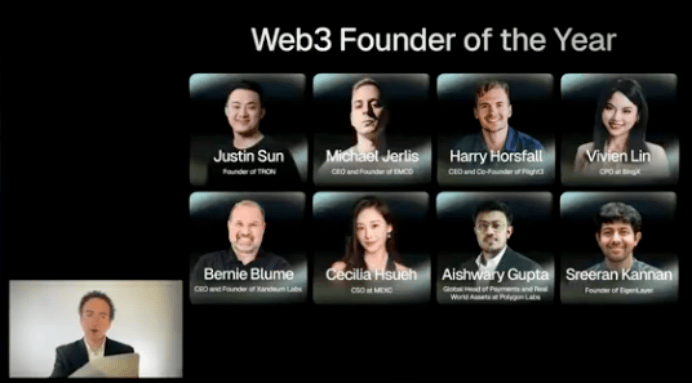
孙宇晨荣膺Web3年度创始人奖,波场TRON生态再获全球认可
Sou Hu Cai Jing· 2025-12-22 03:10
Core Insights - The "BeInCrypto 100 Awards 2025" recognized Sun Yuchen, founder of TRON, with the "Web3 Founder of the Year" award and TRON with the "Best Developer Ecosystem Project" award, highlighting their contributions to Web3 technology and ecosystem development [1][4] Group 1: Awards and Recognition - The awards were judged by a panel of over a hundred blockchain media, academic institutions, and industry leaders, assessing candidates on technical innovation, ecosystem activity, and social impact [4] - Previous awardees include notable figures such as Vitalik Buterin and Sandeep Nailwal, underscoring the awards' authority and industry influence [4] - The dual awards for TRON and Sun Yuchen signify an enhanced voice for Chinese blockchain teams in global technology competition [4] Group 2: Technical Innovations and Ecosystem - TRON's network, launched in 2018, utilizes an improved DPoS consensus mechanism and a three-layer architecture (storage, core, application) to achieve high throughput and low-latency transactions, processing over 2,000 transactions per second at a cost of $0.001 per transaction [5] - The TRON Virtual Machine (TVM) supports multi-language development environments, significantly lowering the technical barriers for developers and fostering a thriving DApp ecosystem [5] - TRON invests $50 million annually through a "Developer Incentive Program" to support quality DApps with resources for traffic support, technical training, and marketing, creating a positive feedback loop in the ecosystem [5] Group 3: Compliance and Global Impact - Sun Yuchen has established communication mechanisms with regulatory bodies in over 30 countries, and the "Decentralized Application Compliance Guidelines" he led have been adopted as industry standards by the EU Blockchain Observatory [6] - More than half of the DApps in the TRON ecosystem have received compliance certifications such as GDPR and MSB, surpassing industry averages [6] Group 4: Developer Community and Future Plans - As of November 2025, TRON has 1.5 million registered developer accounts across 200 countries, with many developers coming from traditional tech giants like Google, Amazon, and Microsoft [7] - TRON's developer forum sees over 30,000 posts daily, indicating a highly active self-sustaining technical community [7] - The total number of DApps on TRON exceeds 8,500, with over 30 "super applications" having more than 100,000 daily active users [7] - TRON has submitted over 2,200 blockchain-related patents, with core technologies included in international standards by IEEE and ISO, and over 70% of its code is open-source, making it one of the most referenced blockchain codebases globally [7] - TRON aims to continue advancing cross-chain technology integration, deepening its developer ecosystem, and bridging traditional finance with the crypto ecosystem, while expanding its global talent development initiatives [7]

新加坡商人吕文扬深耕数字贸易赛道抢占发展先机
Sou Hu Cai Jing· 2025-12-21 14:56
Core Insights - Digital trade is reshaping the global trade landscape and becoming a new engine for economic growth [1] - Singapore is positioned as a core hub for digital trade development in the Asia-Pacific region due to its advanced digital infrastructure and efficient trade facilitation systems [1] Group 1: Integrated Digital Trade Platform - The establishment of a comprehensive cross-border digital trade service platform integrates customs clearance, logistics tracking, payment settlement, and compliance consulting [3] - The platform enhances document processing efficiency by over 80% and significantly reduces transaction costs for businesses [3] - A dedicated area for empowering small and medium-sized enterprises (SMEs) is created to provide guidance on digital transformation, helping them enter the global digital trade market [3] Group 2: Focus on Technological Innovation - The integration of blockchain and artificial intelligence technologies into digital trade is emphasized to enhance core competitiveness [3] - A digital trade evidence system using blockchain ensures traceability and immutability of electronic contracts and transaction documents, addressing trust issues in cross-border trade [3] - An intelligent supply-demand matching module powered by AI algorithms improves resource matching efficiency by accurately pushing business opportunities based on global market data [3] Group 3: Linking Global Resources - The platform actively collaborates with members of the Digital Economy Partnership Agreement (DEPA) and establishes strategic partnerships with major global e-commerce platforms and digital service providers [4] - Tailored digital trade solutions are developed for different regional markets, focusing on live commerce and social commerce in ASEAN and digital service exports in Europe and the U.S. [4] - Financial institutions in Singapore are engaged to offer specialized financing services for digital trade, addressing cash flow challenges for businesses [4] Group 4: Collaborative Development Ecosystem - The digital trade ecosystem has expanded to cover over 30 countries and regions, serving more than 2,000 enterprises across various sectors [4] - The platform's empowerment has led to an average efficiency improvement of over 50% in cross-border transaction processes [4] - Digital service export projects facilitated by the platform have seen an annual growth rate of 30%, becoming a significant driver of regional digital trade growth [4] Group 5: Strategic Vision and Practical Implementation - The strategic vision and practical measures taken by the company have positioned it as a leader in the digital trade sector [6] - The core competitiveness of digital trade is identified as being rooted in technological empowerment and ecosystem collaboration [6] - Singapore's institutional advantages and digital infrastructure provide solid support for innovative development in digital trade [6]
紧扣关键领域推动湾区标准建设
Jing Ji Ri Bao· 2025-12-20 22:09
Core Viewpoint - The article emphasizes the importance of establishing a robust standard system in the Guangdong-Hong Kong-Macao Greater Bay Area to support high-quality development and enhance global competitiveness through regional collaboration and international standardization efforts [1][4]. Group 1: Standard System Development - The Greater Bay Area has jointly announced 262 "Bay Area Standards" covering 36 fields, including transportation, water conservancy, traditional Chinese medicine, green ecology, and elderly care, creating a positive ecosystem driven by government guidance, market leadership, and collaboration among the three regions [1]. - A focus on emerging industries and future sectors is essential to build a forward-looking standard system that guides industrial upgrades and provides regulatory support, particularly in artificial intelligence and digital economy sectors [2][3]. Group 2: Internationalization and Regional Collaboration - The article discusses the need for a dual empowerment mechanism of "standard internationalization + regional collaboration" to enhance global rule-making power, advocating for the integration of Bay Area standards with international standards [4][5]. - Strengthening regional collaboration and establishing a multi-level international cooperation network is crucial, including standard mutual recognition mechanisms with countries along the Belt and Road Initiative [5]. Group 3: Implementation and Governance - A "technology empowerment + governance innovation" framework is proposed to ensure effective implementation of standards, utilizing advanced technologies like big data and artificial intelligence for real-time monitoring and evaluation [6][7]. - The establishment of incentive mechanisms for enterprises adopting Bay Area standards is recommended, including tax benefits and funding support, to encourage compliance and participation in standard formulation [7].
5000 万枚 USDT 钓鱼损失受害方喊话黑客:若 48 小时内返还资金,愿提供 100 万美元白帽赏金
Xin Lang Cai Jing· 2025-12-20 14:58
Core Viewpoint - A phishing attack resulted in the theft of 50 million USDT, leading the affected party to file a criminal case and seek the return of the stolen assets within 48 hours, threatening legal action if demands are not met [1] Group 1: Incident Details - The address involved in the phishing attack has lost approximately 50 million USDT, equivalent to about 50 million USD [1] - The victim has initiated a criminal case regarding the theft and is collaborating with law enforcement, cybersecurity agencies, and various blockchain protocols to gather actionable leads [1] Group 2: Recovery Demands - The victim demands that the hacker return 98% of the stolen assets to a specified address within 48 hours [1] - The victim is willing to allow the hacker to retain 1 million USD as a white hat bounty, contingent upon the full and timely return of the assets [1] - Failure to comply with these demands will result in escalation to legal and international enforcement channels for both criminal and civil accountability [1]
Infini 创始人 Christian:好的创业者要有舍弃的勇气
Xin Lang Cai Jing· 2025-12-20 12:56
Core Insights - The article discusses the evolution of the fintech industry and the challenges faced by new entrepreneurs, particularly in the context of trust and risk management in financial services [2][6][20] Group 1: Industry Challenges - The fintech landscape has shifted, emphasizing the importance of trust over efficiency, as a single incident can destroy credibility [2][3] - New entrepreneurs are often learning on the job, adapting to a more complex regulatory environment while trying to innovate [2][3] - The need for a transparent payment system is highlighted, as many startups struggle with traditional banking processes that hinder their growth [11][20] Group 2: Entrepreneurial Insights - Successful entrepreneurs must be willing to pivot and abandon projects that do not meet their long-term goals, even if they are currently performing well [3][13] - Understanding customer needs and providing timely support is crucial for building trust and loyalty in a competitive market [19][20] - The importance of risk management is emphasized, with a focus on educating users about financial products rather than just offering better options [7][20] Group 3: Product Development and Strategy - Infini aims to create a financial operating system that provides a seamless experience for users, particularly in payment processing and fund management [13][21] - The company recognizes the potential of stablecoins in enhancing payment efficiency and expanding market reach, especially for small businesses and independent developers [16][23] - A shift from traditional asset management to a focus on payment solutions reflects a strategic pivot to meet current market demands [7][20] Group 4: Team and Management Philosophy - The article stresses the importance of team dynamics and the need for leaders to be actively involved in operations to foster a strong organizational culture [30][32] - Continuous evaluation and adjustment of team composition are essential for maintaining high performance and adaptability in a startup environment [32][33] - The selection of team members based on curiosity, long-term commitment, and transparency is crucial for building a resilient organization [33][34]


香港证监会原主席梁定邦:智能金融不“唯大模型”论 监管需严保数据真实与风险可控
Xin Lang Cai Jing· 2025-12-20 10:02
Core Insights - The former chairman of the Hong Kong Securities and Futures Commission, Liang Ding-bong, discussed the development of smart finance and artificial intelligence in the Hong Kong-Macau region at the Shenzhen Xiangmi Lake Financial Annual Conference [5][7]. Group 1: Smart Finance Coverage - Smart finance in the Hong Kong-Macau region encompasses five areas: banking, securities, insurance, cross-border finance, and electronic payments [3][7]. - Hong Kong's approach to integrating artificial intelligence into traditional finance involves a multi-layered and multi-architecture technology fusion strategy, rather than solely relying on large language models (LLMs) [3][7]. Group 2: Regulatory Perspective - From a regulatory standpoint, "big data" remains the foundation of fintech applications in Hong Kong, with "large models" being just one component [3][7]. - Since 2019, Hong Kong has incorporated various technologies such as big data analysis, expert systems, and machine learning into its regulatory framework, prioritizing verifiable and traceable underlying real data in core business operations [3][7]. Group 3: Caution in AI Application - Liang Ding-bong cautioned about the "hallucination" risks associated with large models, emphasizing the need for a prudent approach to AI in financial regulation and business scenarios [3][7]. - The application of generative artificial intelligence in front-office customer interaction remains cautious, primarily focusing on back-office risk management and data analysis support roles [3][7]. - Final decision-making should involve risk management committees and risk officers, combining personal experience with multi-dimensional data, rather than relying solely on model outputs [3][7]. Group 4: Commitment to Data Integrity - Hong Kong maintains a highly open attitude towards the development of smart finance, but emphasizes the need to ensure data authenticity and risk control in client-facing and core business areas to guarantee the safety and stability of the financial system [3][7].

首富夫妻末路:一个暴力抗法,一个卷走10亿被抓
商业洞察· 2025-12-20 09:21
Core Viewpoint - The article discusses the case of Hao Bin, the wife of Jiang Jian, who was involved in a financial scandal and was recently apprehended after fleeing to Singapore. The case highlights issues of financial misconduct and the consequences faced by those in positions of power within the corporate sector [6][12][34]. Group 1: Background of the Case - Hao Bin is identified as the actual controller of several companies and was previously associated with a real estate firm where she held significant shares [8]. - The financial misconduct involved the embezzlement of approximately 9.7785 billion, leading to her fleeing to Singapore in 2023 [9][33]. - The couple, having previously worked in the material system in Qingdao, transitioned into real estate and later attempted to pivot into new media and industrial hemp investments [14][20]. Group 2: Corporate Misconduct - The company, Shen Datong, faced financial difficulties and attempted to recover by acquiring other companies, which ultimately led to significant losses and allegations of asset misappropriation [15][19]. - In 2018, Shen Datong was involved in a violent incident with regulatory authorities, which resulted in penalties and market bans for key individuals, including Jiang Jian [31][32]. - By 2023, Shen Datong was delisted due to financial fraud, culminating in Hao Bin's flight and subsequent capture [33][34]. Group 3: Legal Consequences - The legal ramifications for Hao Bin include potential imprisonment for over seven years due to the scale of the financial misconduct [11]. - The case is expected to proceed to trial, where the whereabouts of the embezzled funds will need to be clarified [35].