高质量发展

Search documents
2026年目标:安徽地区生产总值增长5%~5.5%
Xin Lang Cai Jing· 2026-02-05 17:12
3 2026年重点工作 经济社会发展的主要预期目标 ● 精准施策经济,回升向好态势巩固拓展。 ● 推动科技创新和产业创新深度融合,新质生产力发展壮大。 ● 推进深层次改革和高水平开放,发展活力和潜能持续激发。 ● 强化乡村振兴和新型城镇化有机结合,城乡融合发展机制加快构建。 ● 推动文化和旅游融合发展,安徽文旅品牌吸引力和影响力不断增强。 ● 用心用情办好民生实事,民生保障水平得到提升。 ● "十五五"时期是安徽夯实基础、全面发力、创先争优、奋力追赶的关键时期。 ● 坚持科技打头阵,打造具有重要影响力的科技创新策源地实现新突破。 ● 因地制宜发展新质生产力,打造具有重要影响力的新兴产业聚集地实现新突破。 ● 争当击楫中流的改革先锋,打造具有重要影响力的改革开放新高地实现新突破。 ● 坚决守护好山好水,打造具有重要影响力的经济社会发展全面绿色转型区实现新突破。 ● 发挥多重国家发展战略叠加优势,深度融入新发展格局取得新的更大进展。 ● 以新发展理念引领发展,推动高质量发展取得新的更大进展。 ● 扎实推进共同富裕,全面建设美好安徽取得新的更大进展。 2月5日,安徽省十四届人大四次会议在合肥召开。会上听取并审议了2 ...
张丽洁代表:上海需引进高端金融复合型人才
Guo Ji Jin Rong Bao· 2026-02-05 15:18
Core Viewpoint - Shanghai is well-developed in terms of "hardware" for building an international financial center, but it lacks in "software," particularly in talent acquisition for the financial asset management industry [1] Group 1: Talent Acquisition - There is a pressing need for Shanghai to attract high-end financial asset management talent, especially those skilled in AI, data, and quantitative techniques to address the integration of finance and technology [1] - The aging population in Shanghai necessitates the introduction of composite talents to support the evolving financial landscape [1] Group 2: Role of Public Funds - Public funds should play a crucial role in building a strong financial nation by guiding long-term capital from pensions and social security funds to support the real economy through technological innovation [1] - Public funds are increasing their support for the technology sector, with equity products investing significantly in leading technology companies and newly listed firms on the ChiNext and STAR Market [1] Group 3: Long-term Capital Management - Public funds face high liquidity management requirements, making it challenging to fully align with the long-term capital needs of technological innovation [2] - The establishment of government-led guiding funds is suggested to better direct long-term investment from public funds towards strategic emerging industries [2] Group 4: Focus Areas for Development - The focus on technological innovation and high-quality development is seen as a core driver of macroeconomic growth, with an emphasis on addressing social issues such as green low-carbon initiatives and solutions for the aging population and children [2]
张丽洁代表:上海需引进高端金融复合型人才|上海两会
Guo Ji Jin Rong Bao· 2026-02-05 15:17
Core Viewpoint - Shanghai is well-developed in terms of "hardware" for building an international financial center, but it lacks in "software," particularly in talent acquisition for the financial asset management industry [1]. Group 1: Talent Acquisition - There is a pressing need for Shanghai to attract high-end financial asset management talent, especially those skilled in AI, data, and quantitative techniques, to address the integration of finance and technology [1]. - The aging population in Shanghai necessitates the introduction of composite talents to support the evolving financial landscape [1]. Group 2: Role of Public Funds - Public funds should play a crucial role in building a strong financial nation by guiding long-term capital from pensions and social security funds to support the real economy through technological innovation [1][2]. - There is a need for public funds to lower fees and develop long-term return products to enhance the benefits for fund holders and serve the public [1]. Group 3: Government Initiatives - The government is encouraged to establish guiding funds that can be supported by public fund management companies, which would help meet residents' long-term investment needs and direct social capital towards strategic emerging industries [2]. - The focus on technological innovation and high-quality development is seen as a core driver of macroeconomic growth, with an emphasis on addressing social issues such as green development and solutions for the elderly and children [2].
长清区“十四五”发展成绩单
Qi Lu Wan Bao· 2026-02-05 14:28
三大主导产业产值占规上工业产值比重超83%,集聚上下游配套企业百余家,制造业增加值占规上工业比 重提升至95%,主导产业引领作用凸显。 累计培育"四上"企业620家,市场主体总量突破7万户,年均增长8.9%。 地区生产总值实现473.9亿元。一般公共预算收入达31.54亿元,货物进出口总额预计年均增长18.7%。 累计实施重点项目791个,完成投资1076.67亿元,高质量发展根基更加牢固。 高新技术产业产值比重提升至78.9%,五年新增人才1.47万人。 累计建设5G基站3200余个,新基建支撑作用持续凸显;共出让土地4385亩,其中产业用地占比60.6%。 累计建成52个省级和美乡村、7个乡村振兴片区,农村公路总里程达1525公里,基本实现村村通、户户通。 累计投资4.5亿元实施南北大沙河综合治理,完成崮头水库等5座中小型水库除险加固。 滩区迁建任务圆满收官,63个村、4.2万名群众喜迁新居。 街镇污水处理厂实现全覆盖,全区污水日处理能力达11.5万吨,比"十三五"末翻一番。 空气优良天数年均达224天,同比增长17.3%,蓝天常驻成为常态。 受污染耕地、地块安全利用率均达100%,成功获评国家级、省级" ...
打牢三根桩 深耕五领域!省委书记围绕“夯实基础 全面发力”为云南“十五五”开局划重点
Xin Lang Cai Jing· 2026-02-05 14:08
Core Viewpoint - The "14th Five-Year Plan" period has seen solid steps in the practice of Chinese-style modernization in Yunnan, with the "15th Five-Year Plan" period being crucial for laying a solid foundation and fully exerting efforts towards socialist modernization [1] Group 1: Economic Development - The "3815" strategic development goal emphasizes the importance of solidifying the foundation of livelihood as a fundamental task [1] - The focus on increasing farmers' income is paramount, with leaders being responsible for ensuring that income levels for the underprivileged are addressed [6] - Employment is highlighted as the most basic aspect of livelihood, necessitating skill enhancement and local job creation [8] Group 2: Social Stability - Stability is crucial for development, requiring a balance between development and security, and effective grassroots governance [10] - The three foundational tasks of increasing income, ensuring employment, and maintaining social harmony are likened to pillars that support overall stability [10] Group 3: Industry and Innovation - The industrial sector is identified as the backbone of the economy, with a push towards industrial development and diversification of tourism products [13] - Emphasis on expanding openness as a pathway to high-quality development, particularly through leveraging the China-Laos railway for trade [15] - The importance of ecological protection is noted, with a focus on green electricity and advanced manufacturing as new advantages [17] - The role of technology in driving industrial upgrades is underscored, with a focus on integrating technology with industry, particularly in smart technology and low-altitude economy [21]

热贡艺术之乡交出亮眼五年“答卷”:步入发展最快 惠民最多时期
Xin Lang Cai Jing· 2026-02-05 14:04
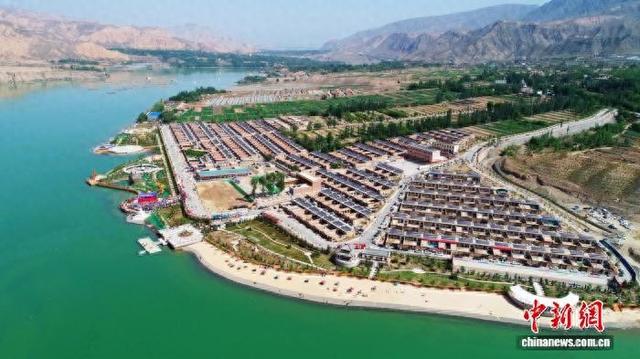
据介绍,过去五年,黄南州颁布施行多项生态保护条例,创新建立"河湖长+林草长"联动协作机制,生 态文明制度体系日趋完善。通过实施大规模国土绿化、水土流失治理、河湖保护修复等工程,累计完成 国土绿化400万亩,治理水土流失369平方公里。 在高质量发展方面,黄南州经济质效稳步提升。该州地区生产总值突破120亿元,较"十三五"末增长 14.8亿元。全社会固定资产投资累计完成281.2亿元。城乡居民人均可支配收入年均分别增长4.1%和 7.1%,农村居民收入增速快于城镇居民,发展成果更多惠及于民。 资料图为青海省黄南藏族自治州尖扎县德吉村。(无人机照片)黄南州委宣传部 供图 聚焦产业"四地"建设,黄南州现代产业体系加速构建。绿色农牧业实现有机认证、质量追溯等"四个全 域覆盖",建成一批特色种植养殖基地,农畜产品加工转化率达64.3%。清洁能源产业迅猛发展,风 电、光伏等新增装机178万千瓦,总装机达418万千瓦。文化旅游深度融合,热贡文化国际影响力持续扩 大,年度旅游人次突破千万,旅游总花费达36.4亿元。 中新网西宁2月5日电 (李江宁)"过去五年,黄南州圆满完成'十四五'规划主要目标任务,全州经济实 力、生态环境 ...
一财社论:以标准升级促进汽车安全水平提升
Xin Lang Cai Jing· 2026-02-05 14:03
Core Viewpoint - The automotive industry can only achieve "high-quality development" under the guidance of the "high-level safety" concept, emphasizing the need for standard upgrades to enhance safety and quality performance [1] Group 1: Industry Development - The automotive industry is a crucial pillar of the national economy, driving consumption and expanding domestic demand [1] - China's automotive industry has shown strong resilience, with a well-established supply chain and improved product performance [1] - By 2025, China's automotive production and sales are projected to reach 34.53 million and 34.40 million units, respectively, compared to 26.08 million and 26.27 million units in 2021 [1] Group 2: Safety Standards - The implementation of the "Automotive Door Handle Safety Technical Requirements" will require all new cars to have a manual opening mechanism after power loss or collision starting in 2027 [2] - The upcoming "Safety Requirements for Power Batteries in Electric Vehicles" will enhance safety standards by requiring batteries to not catch fire or explode, effective July 1, 2026 [4] - The "Safety Requirements for Intelligent Connected Vehicle Driver Assistance Systems" is expected to set benchmarks for safety performance in future autonomous driving applications [5] Group 3: Standard Enforcement - The Ministry of Industry and Information Technology will conduct special actions to enhance automotive product quality and safety, focusing on electric vehicles, autonomous driving, and software upgrades [6] - The industry must strictly adhere to safety standards and cannot use innovation as an excuse to bypass them, as accidents have already caused significant reputational damage [6] - Upgrading standards is increasingly urgent to promote safety levels and quality performance in the automotive sector [6]
李炳军在全省领导干部学习贯彻党的二十届四中全会精神专题轮训班上作辅导报告
Xin Lang Cai Jing· 2026-02-05 13:06
李炳军强调,"十四五"在贵州发展历程中具有里程碑意义。按照习近平总书记指引的方向,我们大力推动工作重心从以脱贫攻坚统揽全局转向以高质量发 展统揽全局,守好守牢底线任务,大力转变发展方式,坚持把产业发展摆在首要位置,下更大决心深化改革开放,竭尽全力防范化解债务风险,始终把保 障改善民生作为各项工作的出发点和落脚点,全省上下对推动高质量发展的认识不断深化、战略不断完善、实践不断创新,形成高度共识。"十五五"要运 用好行之有效的经验做法,加快建设贵州特色现代化产业体系,以科技创新引领新质生产力发展,进一步全面深化改革、扩大高水平对外开放,着力优化 营商环境,持续增进民生福祉,更好统筹发展和安全,推动高质量发展取得更大成效。 2月5日,省委副书记、省长李炳军在全省领导干部学习贯彻党的二十届四中全会精神专题轮训班上作辅导报告。他强调,要深入学习贯彻党的二十届四中 全会精神和习近平总书记在贵州考察时的重要讲话精神,更加坚决有力地贯彻党中央重大决策部署,推动贵州高质量发展和现代化建设取得新的更大成 效。省委副书记马汉成主持。省领导李元平、卢雍政、胡忠雄、李睿、王雷、郭锡文、曲林、李豫贵、董家禄、蔡朝林、张敬平、罗强、杨同光 ...
海南政府采购制度设计应统筹处理好七大关系
Xin Lang Cai Jing· 2026-02-05 13:06
(来源:中国政府采购报) 海南政府采购制度设计不能是封闭的"独角戏",而应是服务国家战略全局的"协奏曲"。笔者认为,应统 筹处理好七大关系。 一是保护国家核心利益与借鉴先进经验的关系。大胆引进国际先进的采购程序与工具,但在涉及国家安 全、核心技术的实体判断上,建立跨部门联合审查机制,确保清单化管理、透明化操作。换言之,坚持 程序借鉴,但实体审慎。 二是改革开放与扩大内需的关系。以开放促升级,利用全球竞争提升国内产品服务质量。同时,通过设 定创新、绿色等绩效标准,在"物有所值"框架下支持本国创新产品,培育其国际竞争力。 三是助力高质量发展与增强民众/企业获得感的关系。通过统一平台平抑物价,通过全球比价丰富选 择,通过简化流程和合同融资创造更多机会,将获得感作为检验改革成效的"试金石"。 四是自贸港建设与"一带一路"倡议的关系。海南在政府采购规则上率先与《全面与进步跨太平洋伙伴关 系协定》(CPTPP)等高标准国际经贸协定对接,所形成的成熟经验(如原产地规则、争议解决机 制),可为我国与"一带一路"国家升级双边投资贸易协定提供"中国方案"的实践范本。同时,利用中国 国际消费品博览会等平台,设立 "一带一路"政府采 ...
商务部:多国领导人访华开辟了双边经贸合作的广阔空间,中方敦促美方尊重WTO裁决
第一财经· 2026-02-05 12:30
Core Viewpoint - The article discusses the recent increase in foreign investment in China, driven by high-level visits from various countries' leaders, which enhances mutual understanding and trust in bilateral economic relations [3]. Group 1: Foreign Investment Growth - In 2025, South Korea's manufacturing investment in China grew by 14.1%, Canada's high-tech industry investment increased by 11.7%, Finland's manufacturing investment rose by 21.7%, and the UK's overall investment in China grew by 15.9% [3]. - A total of 70,392 new foreign-invested enterprises were established in China in 2025, marking a 19.1% year-on-year increase, while the actual utilized foreign capital amounted to 747.69 billion RMB, a decrease of 9.5% [4]. Group 2: Sector-Specific Investment Insights - The actual foreign investment in the manufacturing sector reached 185.51 billion RMB, while the service sector attracted 545.12 billion RMB. High-tech industries received 241.77 billion RMB, with significant growth in e-commerce services (75%), medical instruments (42.1%), and aerospace manufacturing (22.9%) [4]. - A survey by KPMG indicated that 94% of multinational companies plan to continue investing in the Chinese market, and over half of the surveyed companies expect to achieve profitability or significant profits in 2025 [4]. Group 3: Opportunities in Specific Markets - The UK-China Trade Association highlighted the potential for British companies in China's service sector, particularly in finance, healthcare, leisure, culture, and education, aligning with China's 14th Five-Year Plan to expand consumption and open up services [5]. - German companies view China as a long-term investment base and a key market for high-tech and high-quality products, with strong potential for cooperation in biopharmaceuticals, smart manufacturing, and sustainable development [6]. Group 4: Policy and Future Outlook - The Chinese government aims to maintain high-quality development and expand high-level openness during the 14th Five-Year Plan, which is expected to provide a favorable environment for foreign enterprises [6]. - The Ministry of Commerce plans to deepen foreign investment, reform mechanisms, and optimize the business environment to attract foreign capital, ensuring that foreign companies can thrive in China [6].