区域协调发展

Search documents
“借力”到“自立”,产业承接有智慧(现场评论)
Ren Min Ri Bao· 2025-08-07 22:10
区域协调发展是"在发展中促进相对平衡"。"平衡",就要缩小差距;"相对",则要尊重规律、循序渐进 山城重庆,赛力斯智慧工厂,生产线上机械臂翻飞,电动汽车鱼贯下线。赛力斯汽车产销两旺,是赛力 斯与华为联手结出的硕果,也是内陆腹地重庆与沿海大省广东产业协作的一道缩影。 也有人质疑:产业梯度转移主要是成本倒逼,设计研发等高端环节仍依赖沿海地区,内陆地区无非赚个 辛苦钱,二者合作获益并不平衡。面对质疑,我们不妨算笔账。 看收益,一方人才多、技术强,一方土地广、资源丰富,二者发挥比较优势,让沿海企业降本增效、内 陆地区产业发展,实现双向奔赴。近年来,赛力斯扭亏为盈,去年归母净利润达59.46亿元,是纳税大 户;去年汽车产业对重庆规上工业增加值增速贡献率达66.7%,是经济支柱。沿海智能产业携手内陆汽 车产业,华为、赛力斯与重庆都是赢家。 看产业,从"汽车零件商""燃油面包车厂"到"造车新势力",时下"重庆造"汽车迈上中高端台阶,拥有整 车企业19家,规上汽车零部件企业1200余家。东西部协作,不仅助企业练强内功、打响品牌,也助产业 延链强链、向新而行。创新,正是企业长远发展、产业提升能级的关键所在。 合作要算经济账,也 ...
镜观·回响丨坚持以人为本 推进共同富裕
Xin Hua Wang· 2025-08-07 02:01
Group 1 - The core viewpoint emphasizes that common prosperity is an essential requirement of socialism and a significant feature of Chinese-style modernization [1][2] - The "14th Five-Year Plan" outlines a people-centered approach, ensuring that development benefits the people and promotes social equity [1] - During the "14th Five-Year" period, China's middle-income group has exceeded 400 million, indicating a significant improvement in living standards [1] Group 2 - The focus on rural development includes high-quality agriculture, livable and workable rural areas, and the prosperity of farmers [5] - The development of the cold vegetable industry in Ningxia has established over 130 large-scale planting bases, covering 500,000 acres and producing over 2 million tons of fresh vegetables annually [7] - In Shandong, the coastal town of Taoluo has leveraged its marine resources to develop aquaculture and marine economy, contributing to rural revitalization [9] Group 3 - Hainan's tea industry is being expanded as a key strategy for poverty alleviation and rural revitalization, with the unique Hainan large-leaf tea being recognized as a new species [11] - Yunnan's coffee cultivation has reached 679,000 acres, with an annual production of 58,000 tons, maintaining its position as the leader in coffee cultivation and production in China [13] Group 4 - The construction of the Shantou Bay underwater tunnel is part of a high-speed rail project that will enhance connectivity among 15 cities in Guangdong, Fujian, and Zhejiang, promoting high-quality development in the eastern coastal region [15] - The establishment of medical communities in Jiangsu aims to improve healthcare access and quality through collaboration with renowned universities and hospitals [17] Group 5 - The development of a high-speed rail network in Henan has created a "米" shaped rail system centered around Zhengzhou, facilitating economic connectivity with surrounding provincial capitals [18] - Various initiatives have been implemented to support ethnic minorities in border areas, focusing on practical solutions to improve their livelihoods [19][20] Group 6 - The production of Tibetan carpets in Tibet has been revitalized through cooperative models and skill training, enhancing local employment opportunities [21] - In Guangxi, the mushroom production base has been developed to improve local livelihoods through specialized industries and infrastructure improvements [22]


粤东城际铁路金凤半岛站、地都站站房工程开工
Zhong Guo Xin Wen Wang· 2025-08-06 01:31
粤东城际铁路建设8月2日迎来重要节点——由中铁城建集团承建的金凤半岛站、地都站站房工程正式开 工。这标志着粤东城际铁路站房集群建设进入新的阶段。 作为粤东城际铁路"一环一射线"工程的重要构成部分,金凤半岛站与地都站起到连接汕头市和揭阳市的 作用。两座车站均为高架站设计,建成后将担负起跨市通勤、产业联动方面的重要交通职能,是串联汕 头、揭阳两市的关键节点。 据中铁城建集团粤东城际铁路项目部介绍,当前施工团队正全力推进前期筹备工作,两站正按计划推进 前期施工。金凤半岛站针对周边交通情况,已启动道路导改工作,通过临时通道规划与交通标识布设, 保障施工期间周边路网通行顺畅,同步开展场地边界清理与平整作业;地都站则聚焦施工保障,全力推 进接电工程,为后续大型设备进场、主体结构施工等提供电力支持。 此次两站开工,是中铁城建集团继莲塘、桑浦山站后,在粤东城际铁路建设中的又一重要进展。作为承 担9座高架站与1座地面站建设任务的施工单位,中铁城建将延续过往建设中"技术攻关+精细管理"的经 验,针对两站可能面临的地基处理、高空作业安全防护等问题,提前制定专项方案,并计划引入与广东 工业大学联合研发的自清洁镜面混凝土等新技术,确保 ...
中国式现代化是全体人民共同富裕的现代化
Ren Min Ri Bao· 2025-08-06 00:19
Group 1 - The core message emphasizes the importance of achieving common prosperity for all people as a fundamental goal of the Communist Party of China, which is essential for modernization and the well-being of over 1.4 billion Chinese citizens [1][2][3] - The strategy to achieve common prosperity includes narrowing urban-rural gaps, regional disparities, and income differences as primary objectives [1][2] - The focus on rural modernization is highlighted as a critical and challenging task, with a strategic push for rural revitalization and balanced regional development [2][3] Group 2 - The implementation of policies for income equality and improved living standards is crucial for achieving comprehensive development and common prosperity [3][4] - Recent meetings emphasize the importance of social welfare measures, employment support for key groups, and preventing large-scale poverty [4] - The government is committed to practical actions that enhance the public's sense of gain, happiness, and security, ensuring that common prosperity is not only an economic issue but also a significant political concern [4]
战略叠加优势,如何变为发展胜势
Ren Min Ri Bao· 2025-08-05 22:21
Core Viewpoint - The article emphasizes the importance of leveraging regional strategic advantages for high-quality development during China's "14th Five-Year Plan" period, highlighting the need for collaboration and differentiation among provinces to foster new growth drivers [1][2]. Group 1: Strategic Advantages - The central economic work conference calls for utilizing the overlapping effects of regional development strategies to cultivate new growth poles [1]. - Anhui province has emerged as a strategic advantage province, with its economic total surpassing 5 trillion yuan last year and maintaining over 20% growth in its automotive industry [1]. - The modernization of the industrial system is crucial for national prosperity, with Anhui's new energy vehicle industry exemplifying the need for tailored development of new productive forces [1]. Group 2: Collaborative Development - The article discusses the necessity of breaking down "involution" competition and addressing issues of industrial homogeneity through precise positioning within the national framework [2][3]. - The concept of "collaborative development" is highlighted as essential for regional coordination, with a focus on enhancing inter-regional connectivity and policy consistency [5][12]. - The establishment of mechanisms for regular meetings among leaders in the Yangtze River Delta has facilitated effective collaboration and project-specific discussions [7]. Group 3: Open Development - The article advocates for breaking away from insular thinking and embracing open development to align with national strategies [11][12]. - The integration of various industries, such as new energy vehicles and integrated circuits, is emphasized as a means to enhance development synergies [13]. - The establishment of transportation systems and logistics hubs, such as the creation of the "Belt and Road" initiative, is crucial for expanding development space and enhancing regional connectivity [15].
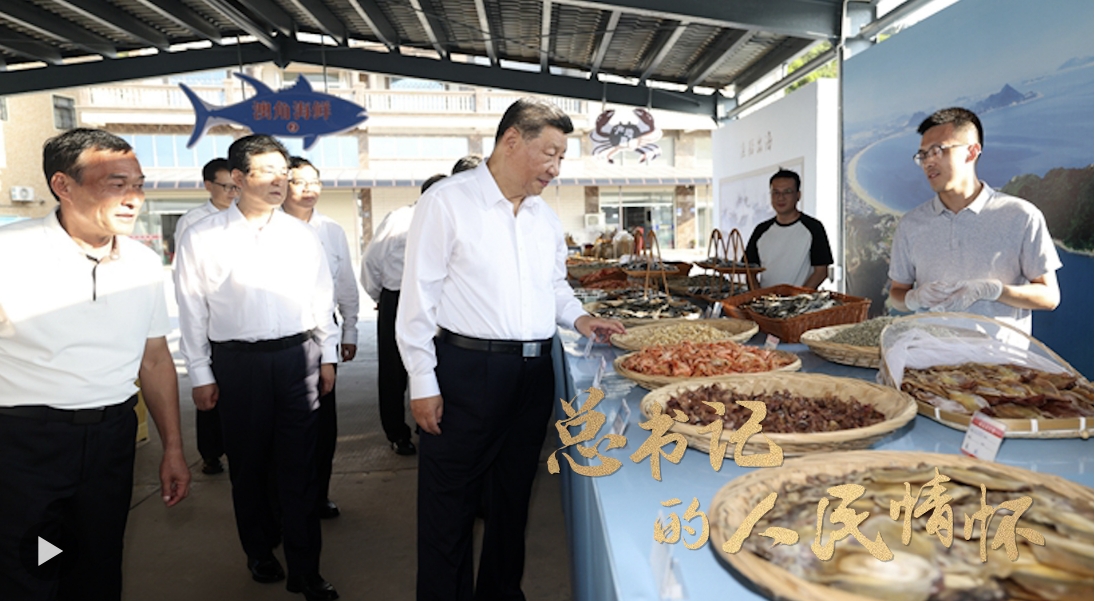
总书记的人民情怀|“中国式现代化是全体人民共同富裕的现代化”
Ren Min Ri Bao· 2025-08-05 13:32
Core Viewpoint - The article emphasizes that "Chinese-style modernization is modernization for the common prosperity of all people," highlighting the importance of achieving common prosperity as a fundamental goal of the Communist Party of China [3][4][5]. Group 1: Common Prosperity - The concept of common prosperity has been a consistent focus for Xi Jinping, with repeated mentions in various political reports and speeches, indicating its significance in the party's agenda [3][4]. - Achieving common prosperity is seen as an essential requirement of socialism with Chinese characteristics and a necessary choice for over 1.4 billion Chinese people moving towards modernization [3][4]. Group 2: Rural Development - The most challenging tasks for promoting common prosperity lie in rural areas, necessitating comprehensive rural revitalization and addressing urban-rural and regional development imbalances [4][5]. - The strategy includes promoting agricultural modernization and ensuring integrated development between urban and rural areas, as outlined in the decisions from the 20th Central Committee [4]. Group 3: Regional Coordination - Reducing regional disparities and achieving coordinated regional development are viewed as essential pathways to common prosperity, with various strategies implemented since the 18th National Congress to enhance economic integration across regions [4][5]. - Xi Jinping has emphasized the importance of ensuring that marginalized areas, particularly border and ethnic regions, are not left behind in the development process [5]. Group 4: Social Welfare and Employment - The government is focused on improving social welfare and employment opportunities for key groups, including college graduates, veterans, and migrant workers, to ensure that the benefits of development are widely shared [5][6]. - Specific measures include enhancing social security systems and preventing large-scale poverty, which are critical to achieving common prosperity [5][6]. Group 5: Practical Implementation - The article highlights tangible initiatives that have improved the lives of citizens, such as cross-province medical insurance settlements benefiting 238 million people and the construction of 1.8 million affordable housing units [6]. - Xi Jinping stresses that achieving common prosperity is not only an economic issue but also a significant political matter related to the party's governance foundation, requiring a gradual and systematic approach to address disparities [6].
【王牌决策情报;2025年8月5日 星期二】
Sou Hu Cai Jing· 2025-08-04 09:51
Group 1 - The coordination and balance of regional development in China have significantly improved, with a clear regional economic layout and high-quality development being established [2][3] - The new goal of equalization of basic public services and balanced infrastructure access has enriched the connotation of regional coordinated development [3] Group 2 - Shanghai has issued the "Explorer Plan" management measures, requiring joint funding of at least 3 million yuan per year, with tax incentives available [5] - The "Guidelines for Compliance of Charging Behavior on Online Trading Platforms" have been released to regulate various fees charged by platforms, emphasizing compliance and transparency [7] Group 3 - The number of small loan companies in China has decreased by nearly 4,000 over the past decade, with the total number now at 4,974 and a loan balance of 736.1 billion yuan [9] - The implementation of the interim measures for the supervision of small loan companies has accelerated the industry cleanup process [9] Group 4 - A successful test flight of a 2-ton eVTOL for offshore logistics has marked a significant advancement in low-altitude logistics applications in China [11] - Guangzhou Port has transformed into a more comprehensive foreign trade hub, with foreign trade container throughput surpassing domestic trade for the first time [13] Group 5 - Shanghai aims to attract more companies in integrated circuits, biomedicine, and other industries to join the "Explorer Plan" to enhance high-quality development [16]

总书记的人民情怀 | “中国式现代化是全体人民共同富裕的现代化”
Ren Min Ri Bao· 2025-08-04 00:17
Core Points - The article emphasizes the importance of "common prosperity" as a fundamental goal of the Chinese Communist Party, highlighting its significance in the context of modernization and the well-being of all citizens [2][3][4] - It outlines the strategic focus on reducing urban-rural disparities, regional differences, and income gaps as essential steps towards achieving common prosperity [3][4][5] Group 1: Common Prosperity - "Common prosperity" is described as a core value and essential requirement of socialism with Chinese characteristics, representing the inevitable choice for over 1.4 billion Chinese people towards modernization [3] - The article cites various instances where President Xi Jinping has reiterated the commitment to common prosperity, emphasizing that it is a test of the nature of the party and its governance [2][3] Group 2: Urban-Rural Disparities - The article stresses that the most challenging tasks in promoting common prosperity lie in rural areas, with a strategic focus on rural revitalization and addressing urban-rural development imbalances [3][4] - It mentions the necessity of integrated development between urban and rural areas as a requirement for Chinese-style modernization, as highlighted in the decisions made during the 20th Central Committee's third plenary session [3][4] Group 3: Regional Coordination - The article discusses the implementation of various regional coordination strategies since the 18th National Congress, aimed at achieving economic integration across different regions [4] - It highlights the importance of ensuring that marginalized areas, particularly border and ethnic regions, share in the benefits of reform and development as a bottom-line task for common prosperity [4] Group 4: Income and Welfare - The article outlines the need to narrow income gaps and enhance the welfare of citizens as critical components of achieving comprehensive development and common prosperity [4][5] - It emphasizes the government's commitment to improving employment opportunities and social safety nets for key groups, including college graduates, veterans, and migrant workers [5]
“中国式现代化是全体人民共同富裕的现代化”(总书记的人民情怀)
Ren Min Ri Bao· 2025-08-03 22:04
Group 1 - The core message emphasizes the importance of achieving common prosperity for all people as a fundamental goal of the Communist Party of China, which is essential for modernization and the well-being of over 1.4 billion Chinese citizens [1][2][3] - The strategy to achieve common prosperity includes narrowing urban-rural gaps, regional disparities, and income differences as primary objectives [1][2] - The focus on rural modernization is highlighted as a critical and challenging task, with a strategic push for rural revitalization and balanced regional development [2][3] Group 2 - The implementation of policies aimed at reducing income inequality and enhancing the welfare of citizens is crucial for achieving comprehensive development and common prosperity [3][4] - Specific measures include promoting employment for key groups such as college graduates, veterans, and migrant workers, as well as establishing a layered social assistance system [4] - The government is committed to ensuring that no region is left behind in the modernization process, particularly in border and ethnic minority areas [2][3]
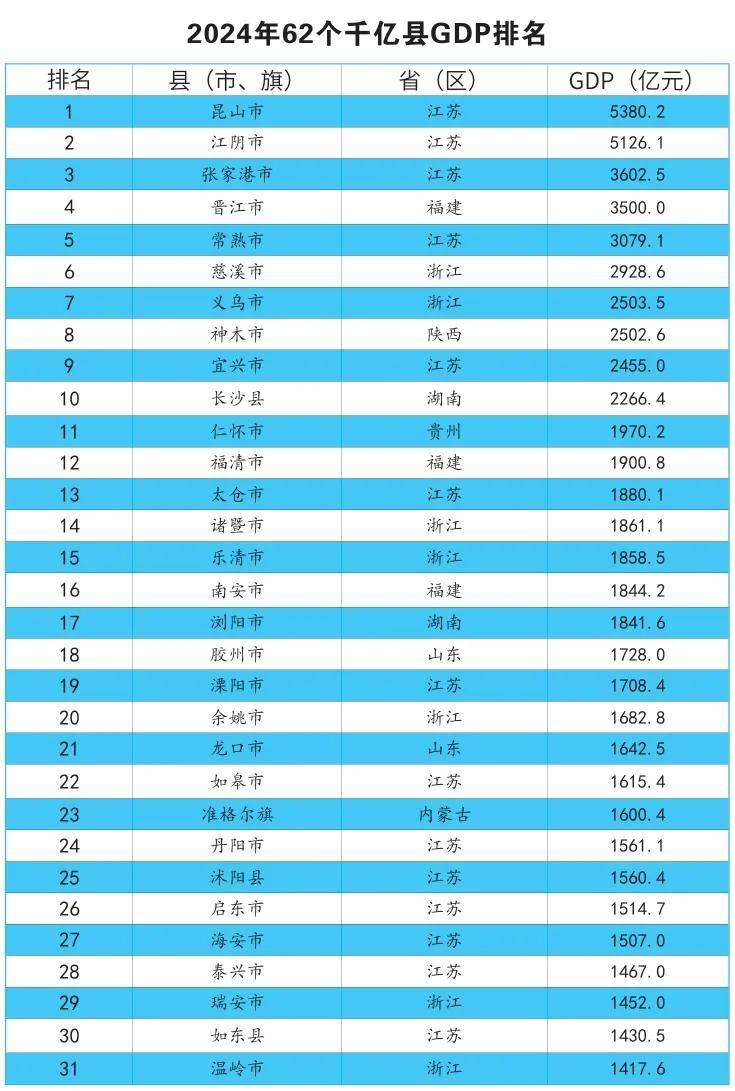
全国“千亿县”GDP排名来了!谁在领跑?谁新进榜单?
Sou Hu Cai Jing· 2025-08-02 05:18
Core Insights - The "billion-county" phenomenon plays a significant role in China's economy, contributing 7.8% of the national GDP while occupying only 1.3% of the land area [1][8]. Group 1: Growth and Distribution of Billion-Counties - The number of billion-counties in China has increased from the first three in 2007 to 62 by 2024, indicating a steady growth trend [2][4]. - The distribution of these counties shows a pyramid structure, with two counties (Kunshan and Jiangyin) exceeding 500 billion yuan in GDP, five counties surpassing 300 billion yuan, and 52 counties reaching 100 billion yuan [4][6]. - The eastern region is highly concentrated with 46 billion-counties, while the central and western regions are seeing a rise in their numbers, reflecting a shift in economic vitality [3][6]. Group 2: Economic Contributions and Characteristics - The 62 billion-counties collectively contributed over 10 trillion yuan to the national economy in 2024, showcasing their economic strength [8]. - These counties are characterized by a transformation in industrial structure, with traditional industries upgrading and new industries emerging rapidly [8][10]. - The counties are increasingly focusing on digital transformation and green development, enhancing their competitiveness [8][14]. Group 3: Industrial Development and Innovation - Many billion-counties are actively upgrading traditional industries while simultaneously developing new sectors, such as digital economy and clean energy [10][12]. - For instance, Jiangsu's Changshu is undergoing a digital revolution in its garment industry, while Shandong's Jiaozhou is promoting digital transformation in the steel industry [8][9]. - The counties are also forming industrial clusters to enhance competitiveness, with examples like Fujian's Fuzhou focusing on electronic information and chemical materials [13][22]. Group 4: Regional Integration and Collaboration - Billion-counties are integrating into urban agglomerations, leveraging the economic strength of surrounding cities to accelerate their growth [17][18]. - For example, Kunshan benefits from its proximity to Shanghai, becoming a hub for high-end industries [18]. - Collaborative efforts between neighboring counties, such as Cixi and Yuyao, are fostering regional economic synergy through complementary industries [19][25]. Group 5: Strategic Insights for Development - The success of billion-counties highlights the importance of leveraging local resources for industrial transformation and capturing emerging market opportunities [21][22]. - Building strong industrial clusters around leading enterprises is crucial for enhancing competitiveness and driving economic growth [22][23]. - The role of local governance, entrepreneurial spirit, and skilled labor is essential in fostering a conducive environment for economic development [24][25].