数字孪生

Search documents
【中国制造新观察】6G发展不是一步到位
Jing Ji Ri Bao· 2025-11-21 00:30
Core Viewpoint - The consensus in the industry is that the development of 6G is a gradual process rather than an immediate leap, correcting some overly ambitious perspectives on the technology race [2][3] Group 1: Development Process - The industry recognizes that 6G will not simply be an enhancement of 5G but will achieve data transmission speeds 10 to 100 times faster than 5G, with latency reduced to one-tenth of 5G [3] - The development of 6G is structured in three phases: the first phase identifies key technical directions, the second focuses on typical scenarios and performance indicators, and the third involves the development of pre-commercial devices [3] - The current stage of 6G development is the second phase, emphasizing the importance of leveraging existing 5G capabilities as a foundation for future advancements [3] Group 2: Standardization and Innovation - The first version of 6G standards should not aim for perfection but should significantly improve upon existing 5G/5G-A standards, allowing for future iterations [4] - The integration of artificial intelligence with 6G is expected to transform mobile terminals, but the evolution from traditional devices to intelligent, multi-form wearable technology will require time and adaptation [4][5] - Over 300 key technologies related to 6G are being developed in China, focusing on terminal innovation through iterative technological advancements [5] Group 3: Industry Implications - 6G is anticipated to drive the development of upstream and downstream industries, including chips, devices, application development, and system integration, creating a new trillion-dollar industry ecosystem [3] - The gradual evolution of communication technology is essential to avoid resource misallocation and to ensure that both 5G and 6G can progress in a complementary manner [2][3] - Maintaining a realistic perspective on the timeline for 6G development is crucial, as significant innovations typically result from continuous optimization rather than sudden breakthroughs [5]


千亿参数开源大模型加速“算力普惠”
Xin Hua She· 2025-11-21 00:23
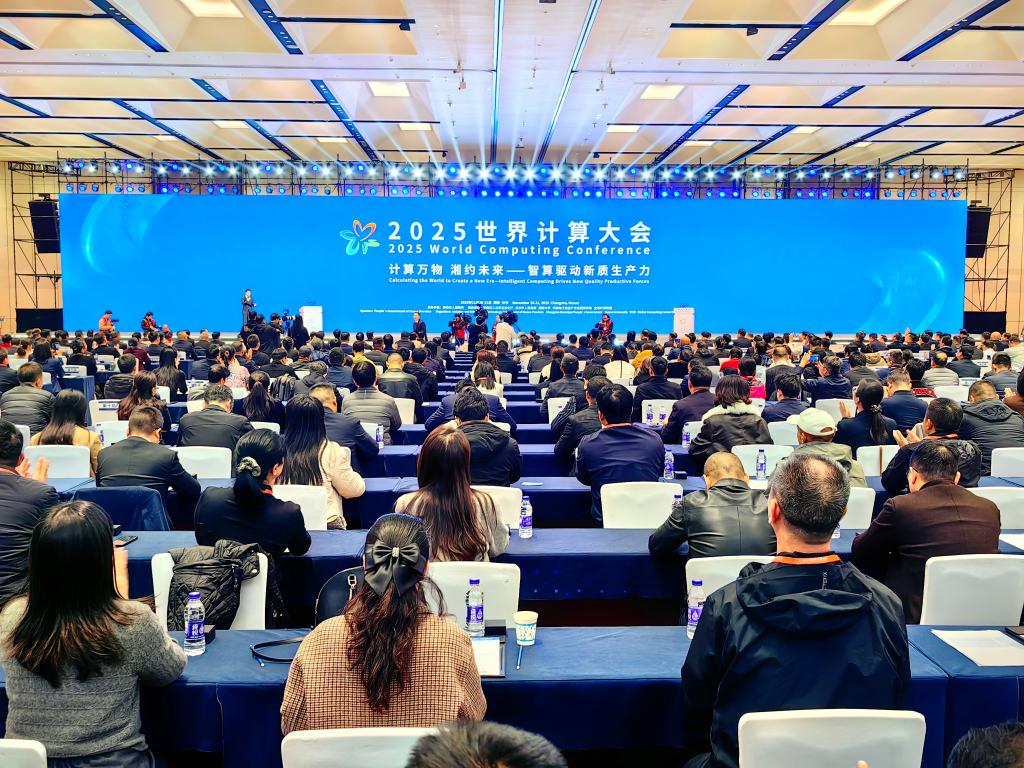
Group 1 - The 2025 World Computing Conference was held in Changsha on November 20-21, showcasing the rapid increase in global computing power and the widespread application of large models in consumer products such as smartphones, cars, and smart home devices, leading to significant changes in production and lifestyle [1][2] - The conference highlighted ten global computing innovations, including the exponential growth of global computing capabilities, the acceleration of generative AI applications, and the commercial deployment of neuromorphic processors, marking a new era in brain-like computing [2][3] - Advanced computing-driven intelligent factories reported an average reduction of product development cycles by 28.4%, an increase in production efficiency by 22.3%, a decrease in defect rates by 50.2%, and an average reduction in carbon emissions by 20.4% [4] Group 2 - The strategic importance of advanced computing in reshaping the global industrial landscape is increasingly recognized, with the computing technology evolution driving significant changes in the information technology industry and the digital economy [4] - The World Computing Conference has evolved into an international and professional platform for communication in the computing field since its establishment in Changsha in 2019, now hosting its seventh edition [4]
中经评论:6G发展不是一步到位
Jing Ji Ri Bao· 2025-11-21 00:04
Core Viewpoint - The consensus in the industry is that the development of 6G is a gradual process rather than an immediate leap, correcting some overly ambitious perspectives on the technology race for the future [1][4] Group 1: Development Process - There are views that suggest skipping the 5G-A phase to achieve 6G directly, which could disrupt the technological evolution chain and weaken the foundation for 6G [1] - The development of 6G is structured in three phases: the first phase identifies key technical directions, the second focuses on typical scenarios and performance indicators, and the third involves the development of pre-commercial devices and testing of key products [2] - The current stage of 6G development is the second phase, emphasizing the importance of leveraging the existing capabilities of 5G as a foundational element for 6G [2] Group 2: Technical and Industrial Implications - 6G is expected to achieve data transmission speeds 10 to 100 times faster than 5G, with latency reduced to one-tenth of that of 5G, significantly enhancing performance metrics [2] - The integration of communication, perception, computation, and intelligence in 6G will support applications like digital twins and large-scale connectivity, driving the development of upstream and downstream industries such as chips, devices, and system integration [2] - The establishment of the first version of 6G standards does not need to be perfect but should show significant improvements over existing 5G standards, allowing for future iterations and refinements [3] Group 3: Innovation and Collaboration - The innovation of terminals in 6G will not happen overnight; it will require deep integration between the automotive and communication industries, as well as a lengthy process of technological adaptation and cost optimization [3] - Over 300 key technologies related to 6G are being developed in China, focusing on terminal innovation through iterative technological advancements [3] - The industry must maintain a clear understanding that significant innovations are the result of continuous optimization rather than sudden breakthroughs, emphasizing the importance of standard-setting and technology integration [4]
6G发展不是一步到位
Jing Ji Ri Bao· 2025-11-20 22:14
Core Viewpoint - The consensus in the industry is that the development of 6G is a gradual process rather than an immediate leap, correcting some overly ambitious perspectives on the technology race for the future [1][4] Group 1: Development Process - 6G is expected to achieve data transmission speeds 10 to 100 times faster than 5G, with latency reduced to one-tenth of that of 5G, indicating significant advancements in peak speed and latency [2] - The development of 6G will involve three phases: identifying key technical directions, developing prototype models for typical scenarios and performance indicators, and testing key products for pre-commercialization [2][3] - The current phase of 6G development has entered the second stage, emphasizing the importance of leveraging the existing capabilities of 5G as a foundation for future advancements [2] Group 2: Standardization and Innovation - The first version of the 6G standard should not aim for perfection but should achieve significant improvements over existing 5G standards, allowing for future iterations and enhancements [3] - The integration of artificial intelligence with 6G is expected to transform mobile terminals, leading to a shift from traditional smartphones to intelligent and multi-form wearable devices [3] - Over 300 key technologies related to 6G are being developed in China, focusing on terminal innovation through iterative technological advancements [3]
AI 哨兵:守护南水北调千里水脉的智能防线
Xin Lang Cai Jing· 2025-11-20 18:21
转自:科普中国 南水北调中线一期工程全长 1432 公里,穿越田野、城市、村庄,承载着沿线近 1.18 亿人民群众的饮水安全。渠道采用明渠输水、封闭式管理,如何守护 这条绵延千里的水脉不受污染与破坏呢?一场从"人眼盯防"到"AI 感知"的安防革命悄然推进…… (来源:科普中国) 正定段渠道实拍陶竹/摄 过去:"人防时代"的局限与挑战 在南水北调中线工程建设初期,主要依赖人工值守,桥头岗亭是最常见的守护点。安保人员日夜轮班,用双眼守护渠道安全。然而,人防为主的安防体系 面临诸多现实困境: · 千里渠道所需人力多、成本高、安防压力大; 正如一位老安保队长所言:"靠人盯防千里长渠,如同用渔网防沙。" 进化:技术赋能,构建"感知神经网" 2010 年前后,伴随着传感技术与视频监控技术迎来突破,南水北调建设者们创造性地将振动光缆与高清摄像机结合,构建起一道"电子围栏",标志着周界 安防进入 2.0 时代。其核心突破在于三大技术的创建与融合: 1 振动感知墙 南水北调渠道周界布设了新型振动光缆,通过光信号变化实时定位入侵点,敏锐捕捉触碰、挖掘、攀爬等行为引发的地面振动,构成一道无形的"感知 墙"。 2 视频联动系统 为了 ...

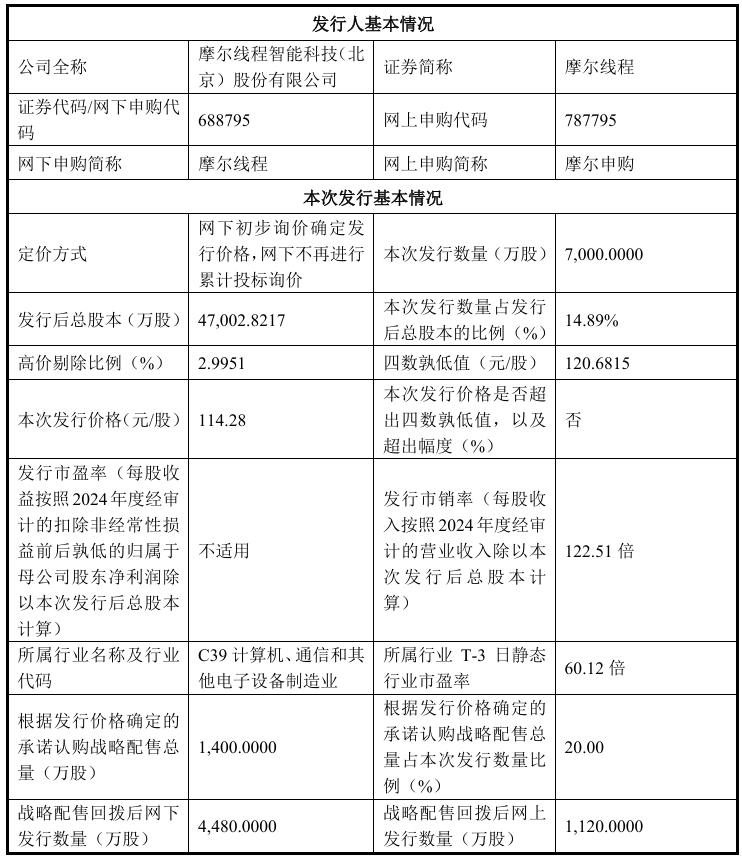
摩尔线程IPO发行价确定为114.28元/股 上市时市值约为537.15亿元
Zheng Quan Shi Bao Wang· 2025-11-20 13:50
Core Viewpoint - The company, Moer Technology, has set its IPO price at 114.28 yuan per share, based on preliminary inquiries and market evaluations, with a total expected fundraising of approximately 80 billion yuan [1][3]. Group 1: IPO Pricing and Valuation - The IPO price corresponds to a price-to-sales (P/S) ratio of 104.26 times based on projected 2024 revenue before the issuance and 122.51 times after the issuance [2]. - The company's market capitalization at the time of listing is estimated to be around 53.715 billion yuan, with projected revenue for 2024 set at 4.38 billion yuan [2]. - The average P/S ratio of comparable companies in the same industry is 111.23, indicating that Moer Technology's IPO price is above the industry average [3]. Group 2: Fundraising and Use of Proceeds - The company aims to raise approximately 79.996 billion yuan through the IPO, with a net amount expected to be around 75.76 billion yuan after deducting issuance costs [3]. - The raised funds will be allocated to the development of new AI training and inference chips, graphics chips, and AI SoC chips, as well as to supplement working capital [4]. Group 3: Research and Development Investment - From 2022 to 2024, the company plans to invest a total of 38.10 billion yuan in research and development, which represents about 626.03% of its cumulative revenue over the last three years [2]. - The company has successfully launched four generations of GPU architectures and aims to provide computing acceleration platforms for high-performance computing fields such as AI and digital twins [3].
“中国版英伟达”,新股申购价出炉
Zheng Quan Shi Bao· 2025-11-20 12:41
Core Points - The company, Moer Technology, has set the issuance price for its shares at 114.28 yuan per share, with a total fundraising target of approximately 80 billion yuan [1][2] - The company plans to use the raised funds for various projects, including the development of new AI chips and graphics chips, as well as to supplement working capital [6] - Moer Technology has reported significant revenue growth projections, with expected revenue increasing from 0.46 billion yuan in 2022 to 4.38 billion yuan in 2024, reflecting a compound annual growth rate of 208.44% [7] Company Overview - Moer Technology is a leading domestic GPU manufacturer, focusing on high-performance computing areas such as AI, digital twins, and scientific computing [5] - The company has successfully launched four generations of GPU architectures and has developed a comprehensive product matrix covering AI computing, cloud computing, and personal computing [5][6] - The company has not yet achieved profitability, with net losses reported for the years 2022 to 2025 [7] Issuance Details - The total number of new shares to be issued is 7 million, representing 14.89% of the total share capital post-issuance [2] - The strategic placement of shares includes participation from various investment entities, with a total of 14 million shares allocated to strategic investors [4] Financial Performance - The company has maintained high R&D expenditures to ensure technological advancement, with R&D expenses reported at 11.16 billion yuan in 2022 and projected to be 5.57 billion yuan in the first half of 2025 [7] - Despite rapid revenue growth, the absolute revenue figures remain relatively small, and the company continues to incur significant net losses [7]

“中国版英伟达”,新股申购价出炉→
Zheng Quan Shi Bao· 2025-11-20 12:40
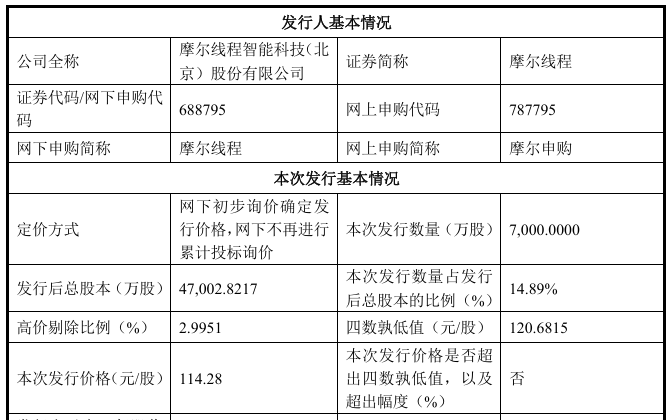
Core Viewpoint - The company, Moer Technology, has set the issuance price for its IPO at 114.28 yuan per share, aiming to raise approximately 80 billion yuan for various projects, with a net amount expected to be around 75.76 billion yuan after deducting issuance costs [1][2]. Company Overview - Company Name: Moer Technology (Beijing) Co., Ltd. [2] - Stock Code: 688795 [2] - Total Shares After Issuance: 47,002,821.7 shares [2] - Issuance Quantity: 7 million shares, accounting for 14.89% of the total shares post-issuance [2]. Issuance Details - Issuance Price: 114.28 yuan per share [2] - Total Expected Fundraising: Approximately 79.996 billion yuan [1] - Net Expected Fundraising: Approximately 75.76 billion yuan after costs [1]. - Important Dates: Offline subscription on November 24, 2025, and payment deadline on November 26, 2025 [2]. Strategic Placement - The company has announced the results of its strategic placement, with notable investors including Zhongzheng Investment and CITIC Securities Asset Management [3][4]. Financial Performance - Revenue Growth: Expected revenue growth from 0.46 billion yuan in 2022 to 4.38 billion yuan in 2024, with a compound annual growth rate of 208.44% [7]. - R&D Investment: High R&D expenses, with amounts of 11.16 billion yuan, 13.34 billion yuan, 13.59 billion yuan, and 5.57 billion yuan for the years 2022, 2023, 2024, and the first half of 2025, respectively [7]. - Profitability: The company has not yet achieved profitability, with net losses of -18.94 billion yuan in 2022 and -2.71 billion yuan in the first half of 2025 [7]. Product Development - The company focuses on developing a range of AI and graphics processing units (GPUs), having launched four generations of GPU architectures and a complete product matrix covering AI computing, high-performance computing, and graphics rendering [5][6]. - Moer Technology is one of the few domestic GPU manufacturers capable of supporting full computational precision from FP8 to FP64 [5]. Future Plans - The raised funds will be allocated to the development of next-generation AI chips, graphics chips, and AI SoC chips, as well as to supplement working capital [6]. - The company aims to enhance its technological capabilities and accelerate the commercialization of new products, thereby improving its core competitiveness in the GPU market [6].
摩尔线程:首次公开发行股份数量为7000万股 发行价格114.28元/股
Ju Chao Zi Xun· 2025-11-20 12:14
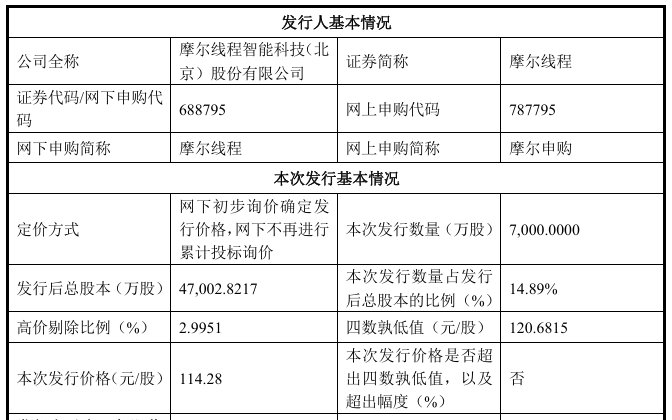
Core Viewpoint - Moer Technology announced its initial public offering (IPO) and listing on the Sci-Tech Innovation Board, aiming to raise a total of 8 billion yuan through the issuance of 70 million shares at a price of 114.28 yuan per share [1][4]. Company Overview - The full name of the company is Moer Technology Intelligent Technology (Beijing) Co., Ltd., with the stock code 688795 and the abbreviation "Moer Technology" [2]. - The company focuses on the research, design, and sales of GPUs and related products, having launched four generations of GPU architectures since its establishment in 2020 [3][4]. IPO Details - The IPO will consist of 70 million shares, representing 14.89% of the total share capital post-issuance [2]. - The expected total fundraising amount is 8 billion yuan, with a net amount of approximately 7.576 billion yuan after deducting issuance costs [1][2]. - The pricing method for the issuance is based on preliminary inquiries, with no further bidding for the offline portion [2]. Product Line and Market Focus - Moer Technology's product line includes AI training and inference cards, graphic acceleration products for high-end applications, and consumer-grade graphic acceleration products for AI PCs and gaming PCs [4]. - The company aims to provide integrated solutions across cloud, edge, and terminal markets, enhancing its capabilities in high-performance computing [4]. Use of Proceeds - The funds raised from the IPO will be allocated to the development of next-generation AI training and inference chips, graphic chips, and AISoC chips, as well as to supplement working capital [4].
AI及数字孪生技术公司「诺比侃」三闯香港上市,博将资本参与多轮融资
Xin Lang Cai Jing· 2025-11-20 11:52
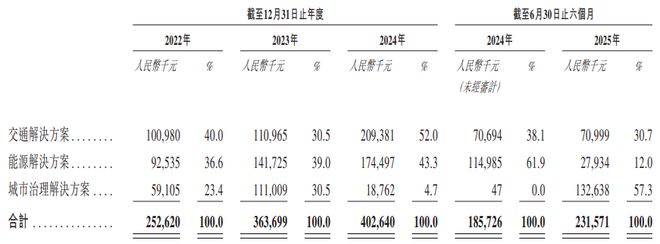
Core Viewpoint - Nobikang has submitted its prospectus for the third time to the Hong Kong Stock Exchange, aiming for a mainboard listing, with CICC as the sole sponsor. The company specializes in monitoring and testing services for rail transit and power supply systems, with projected revenue of RMB 403 million in 2024, reflecting a compound annual growth rate (CAGR) of 26.25%, and a net profit of RMB 115 million, with a CAGR of 35.15% [1]. Business Lines - The company operates three main business lines: - **Transportation Solutions**: This includes rail transit, urban traffic, and an intelligent identification system for contact network defects. The company has provided solutions to over 80% of railway bureaus in China, covering approximately 460,000 kilometers of railway and detecting over 235,000 defects since 2019 [2]. - **Energy Solutions**: This segment focuses on IT operations for power grid integration and power line inspection, as well as developing robotic inspection systems for large petrochemical enterprises [3]. - **Urban Governance Solutions**: This includes applications for park, campus, emergency, and community management [4]. Financial Performance - The company's revenue for the years ending December 31 is projected at approximately RMB 253 million, RMB 364 million, and RMB 403 million, with a year-on-year increase of 24.68% for the first half of 2025. Gross profit figures are RMB 140 million, RMB 211 million, and RMB 237 million, with a gross margin of 58.92% for the last fiscal year [5][6]. Market Position - Nobikang is the second-largest provider of AI-powered power supply monitoring systems in China, holding a market share of approximately 5.9%. In the rail transit sector, it ranks third among companies offering AI-based monitoring solutions, with a market share of about 1.8% [1]. Comparable Companies - In comparison to peers, Nobikang's recent fiscal year revenue is RMB 403 million, with a net profit of RMB 115 million and a net profit margin of 28.65%. This contrasts with comparable companies like Dinghan Technology and Yunda Technology, which have different revenue and profit metrics [8]. Major Shareholders - The pre-IPO shareholder structure includes Mr. Liao with a direct stake of 32.8%, and a total of 51.2% when combined with concerted actions. Other significant shareholders include Bojiang Holdings and various investors from different funding rounds [9]. Underwriting Team - Nobikang's underwriting team consists of nine firms, with CICC as the sole sponsor. The historical performance of the underwriting team is described as average, with a first-day increase probability of 70% for CICC [12][13].