
制度型开放

Search documents
“十四五”发展亮点丨实力“圈粉”!自贸试验区育出近200项“创新果”
Xin Hua She· 2025-12-08 05:44
"十五五"规划建议明确提出"实施自由贸易试验区提升战略"。作为党中央在新时代推进改革开放的重要 战略举措,"十四五"期间,覆盖东西南北中的22个自贸试验区形成了近200项制度创新成果。在大胆 试、大胆闯、自主改中,自贸试验区这片"试验田"茁壮成长、实力"圈粉"。 以高标准拓展新空间。五年来,在上海等有条件的自贸试验区以及海南自由贸易港,主动对接CPTPP和 DEPA等国际高标准经贸规则,累计推出了两批共110余项试点措施,涉及贸易、投资、知识产权、政府 采购、环境保护等重点领域,形成一批先进经验和典型案例,并通过向更大范围复制推广这些先行先试 措施,加快释放制度型开放的辐射带动作用,为经济增长开辟更为广阔的空间。 这是11月28日拍摄的洋浦港,是海南自贸港10个"二线口岸"之一(无人机照片)。新华社记者 郭程 摄 当前,全球经济治理体系正经历深刻变革,多边贸易框架遭遇单边主义和保护主义冲击。面向未来,实 施自贸试验区提升战略释放出加大制度型开放力度、提升创新引领发展能级、推动自贸试验区提质增效 的重要信号。 以差异化探索新路径。22个自贸试验区资源禀赋、区位特点各不相同。遵循由点到面、由个别到一般、 由特殊到 ...

王文涛:扩大高水平对外开放
Ren Min Ri Bao· 2025-12-08 00:43
商务部党组书记、部长王文涛在人民日报发表署名文章《扩大高水平对外开放(学习贯彻党的二十届四 中全会精神)》。 以下为原文: 扩大高水平对外开放(学习贯彻党的二十届四中全会精神) 王文涛 《建议》强调,"坚持开放合作、互利共赢是中国式现代化的必然要求"。"十五五"时期,扩大高水平对 外开放,必须坚持以习近平新时代中国特色社会主义思想为指导,坚持好运用好贯穿其中的立场观点方 法,重点把握好以下原则要求。 (一)坚持扩大开放与深化改革相结合,推进标准更高的开放。改革越深入,对开放的水平要求就越 高;开放水平越高,对改革的促进作用就越大。党的十八大以来,我国开放水平持续提升,但开放空间 仍然不小。要在改革中扩大开放,减少制约要素流动的"边境上"和"边境后"壁垒,把握数字化、绿色化 发展机遇,既持续深化要素流动型开放,又稳步扩大制度型开放。要在开放中深化改革,主动对接、积 极吸纳国际高标准经贸规则,深化外贸、外商投资和对外投资管理体制改革,完善高水平对外开放体制 机制。 (二)坚持自主开放与协定开放相协同,推进引领更强的开放。自主开放水平越高,协定开放能力就越 强,两者相辅相成。党的十八大以来,我国自主开放与协定开放协 ...
扩大外商投资需下绣花功夫
Sou Hu Cai Jing· 2025-12-07 22:57
商务部新闻发言人在不久前举行的新闻发布会上表示,在扩大外商投资市场准入方面,商务部将以服务 业为重点扩大市场准入和开放领域,进一步扩大电信、医疗等开放试点。这一部署不仅印证了"中国开 放的大门只会越开越大"的坚定决心,更标志着我国吸引外资政策正从规模扩张向质量提升转变,从要 素开放向制度开放深化。 服务业开放是重要突破口,也是最考验"绣花功夫"的领域。当前,服务业规模已占据国民经济的半壁江 山,其发展质量直接关系到经济转型升级的成效。近年来,从搭建进博会、服贸会、广交会、消博会等 互利共赢的平台,到22个自贸试验区主动对接国际高标准经贸规则,再到外资准入负面清单持续缩 减……我国推进高水平对外开放的力度越来越大。当然,更高水平的开放,不仅仅是清单上"禁止项"的 减少,更是"机遇项"的增多。通过局部试点积累经验,为更大范围、更深层次的开放铺平道路。 从"准入"到"准营",要做好服务衔接的"绣花功夫"。"准入"只是第一步,"准营"才是真正的关键。商务 部明确提出落实好对外资已开放领域的"准入又准营"要求,这意味着工作重心要从"降低门槛"向"优化 服务"深化,从事前审批向事中事后监管转变。只有通过深化制度改革、完善 ...
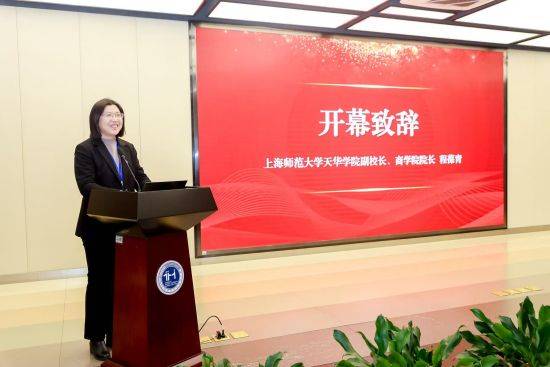
第二届共建“一带一路”倡议下中国高质量发展论坛成功举办
Sou Hu Cai Jing· 2025-12-07 14:10
Core Viewpoint - The forum focused on the theme of "economic resilience and the coordinated development of bilateral investment and trade," aiming to promote dialogue between academia and industry to support China's Belt and Road Initiative and high-quality development [2][4]. Group 1: Forum Overview - The second Belt and Road Initiative forum was successfully held at Shanghai Normal University Tianhua College, gathering over a hundred representatives from government, academia, research institutions, and enterprises [2]. - The forum included discussions on the "14th Five-Year Plan," regional economic and trade cooperation, digital rule reconstruction, and enterprises' overseas practices [2]. Group 2: Key Presentations - A keynote speech by economist Zuo Xuejin highlighted the structural changes in China's economy due to long-term population decline, indicating that demand insufficiency may constrain future economic growth [9]. - Professor Tian Suhua presented a systematic analysis of foreign investment policies, showing that neutral policies have a stronger marginal effect on attracting quality foreign investment compared to encouraging policies [10]. - Discussions included the importance of host country governance in mitigating the impact of natural disasters on Chinese foreign investments and the role of cultural ethics in international business practices [11]. Group 3: Practical Insights - The forum featured practical insights on how the tourism and cultural industry can achieve internationalization through global resource integration [12]. - The concept of "ecological circle going abroad" was introduced, showcasing how China's mature solutions can be systematically exported to Belt and Road economies [12]. - A dialogue with entrepreneurs emphasized the need for deep integration of bilateral investment and trade across various dimensions, including scale, rules, technology, and culture [14].
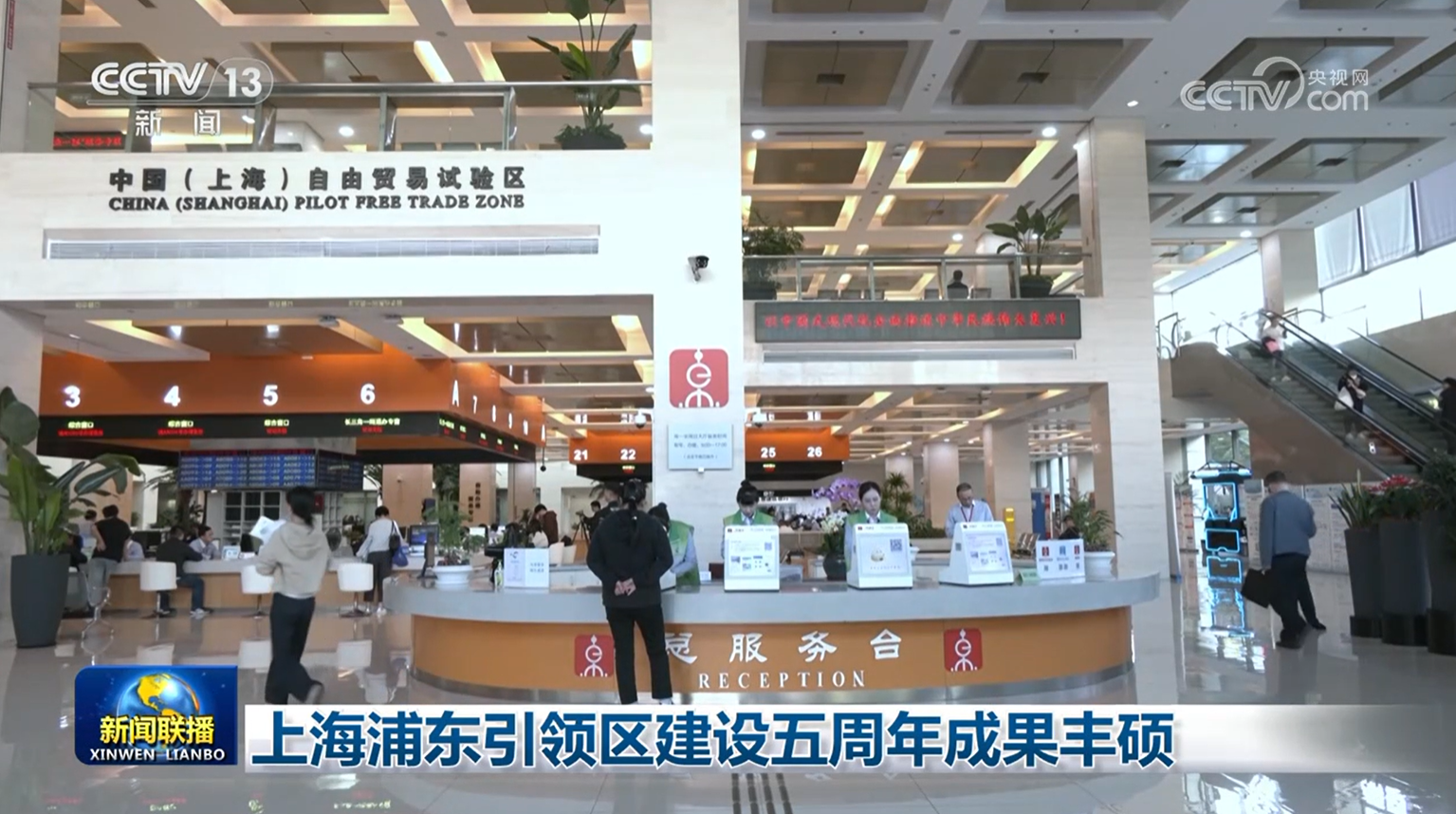
上海浦东引领区建设五周年成果丰硕
Yang Shi Wang· 2025-12-07 12:45
Group 1 - The core viewpoint is that the Pudong New Area has made significant progress in high-level reform and opening up over the past five years, leading to innovative achievements that drive high-quality economic development [1][3]. Group 2 - The overall plan for institutional opening has been largely implemented, with 77 pilot experiences being replicated and promoted to a broader scope [3]. - The implementation of data exit management measures and a negative list has been initiated, along with the first national pilot for expanding value-added telecommunications business [3]. - Functional platforms such as the Shanghai International Reinsurance Registration Trading Center and the Comprehensive Service Center for Enterprises Going Global are being accelerated in construction [3]. Group 3 - The capabilities for technological innovation and high-end industry leadership have significantly strengthened, with 14 large scientific facilities built, under construction, or planned in Pudong [5]. - Breakthroughs have been achieved in core technological equipment, including the first domestically produced large cruise ship [5]. - The number of high-tech enterprises, specialized and innovative enterprises, and "little giant" enterprises in the region has increased by 1.4 times, 5.2 times, and 19.3 times, respectively, since 2020 [5].
与世界各国共享机遇共同发展——扩大高水平对外开放,开创合作共赢新局面
Ren Min Ri Bao· 2025-12-07 07:33
Group 1: Core Perspectives - The necessity of open cooperation and mutual benefit is a fundamental requirement for Chinese-style modernization, as emphasized by the current global economic challenges and the need for strategic direction [1] - China is committed to expanding its openness, with the "15th Five-Year Plan" advocating for steady institutional opening and international cooperation to promote reform and development [1][2] Group 2: Self-Initiated Opening - The concept of self-initiated opening is highlighted as a key feature of China's high-level openness, reflecting a strategic choice that aligns with the country's realities and global trends [2][3] - Initiatives such as the China International Import Expo and zero-tariff policies for least developed countries demonstrate China's proactive approach to international trade [2] Group 3: Trade Innovation and Development - Foreign trade is identified as a crucial engine for economic growth and a key lever for expanding openness, with China's goods trade remaining the largest globally and service trade second [6] - The "15th Five-Year Plan" outlines new requirements for enhancing trade quality and efficiency, focusing on goods, services, and digital trade [6][8] Group 4: Investment Cooperation - China aims to combine "bringing in" and "going out" strategies for investment, leveraging its vast market to create favorable conditions for foreign investment while guiding global supply chain layouts [10][12] - The establishment of a comprehensive overseas service system is essential for enhancing companies' global capabilities and supporting their international operations [13]
自贸账户功能升级,上海跨境金融再突破
Huan Qiu Wang· 2025-12-07 02:57
Core Viewpoint - The implementation of the upgraded Free Trade Account system in Shanghai marks a significant advancement in cross-border financial innovation, enhancing the city's role as an international financial center and facilitating cross-border capital flow management [1][2][6] Group 1: Policy Implementation - The upgraded Free Trade Account functionality is a result of ongoing efforts and is part of a broader strategy outlined in the "Action Plan for Further Enhancing Cross-Border Financial Services" set for April 2025 [2] - The People's Bank of China has established a framework to support the pilot program, ensuring that financial institutions develop robust internal controls and systems to provide high-quality cross-border financial services [2] Group 2: Financial Institutions' Response - Major Chinese banks like Bank of Communications and Agricultural Bank of China, along with foreign banks such as HSBC China and Citibank China, have quickly engaged in the pilot program, successfully facilitating the upgraded Free Trade Account services for various enterprises [1][2] Group 3: Operational Enhancements - The new regulations significantly enhance the convenience of fund transfers, allowing pilot enterprises to directly manage cross-border fund transfers without the need for prior approvals or registrations, thus streamlining processes for foreign debt and outbound payments [4] - The upgraded accounts will allow unrestricted fund transfers within the operational scope of enterprises, promoting a higher level of institutional openness and facilitating cross-border trade and investment [4][6] Group 4: Historical Context and Growth - Shanghai has been a pioneer in financial openness since 2014, with the Free Trade Account pilot evolving over 11 years, resulting in a mature system that has been replicated in other regions [5] - As of April 2025, Shanghai has opened 177,400 various Free Trade Accounts, with an annual growth rate of over 30% in cross-border transactions, indicating robust demand and usage [5] Group 5: Future Implications - Analysts view the upgrade as a critical step in China's transition from factor-driven to rule-based financial openness, enhancing the attractiveness of the Chinese market for multinational companies [6] - The pilot program's success may lead to a nationwide model for capital account convertibility and financial openness, contributing to high-quality economic development in China [6]
与世界各国共享机遇共同发展
Ren Min Ri Bao· 2025-12-07 02:26
Core Viewpoint - The article emphasizes that China's modernization requires an open and cooperative approach, advocating for mutual benefits and shared development in the context of a rapidly changing global landscape [1]. Group 1: Open Cooperation and Development - China maintains its commitment to an open economy, with President Xi Jinping stating that the country will continue to expand its openness [1]. - The "14th Five-Year Plan" suggests a steady expansion of institutional openness and a focus on international circulation to promote reform and development [1]. - The current international environment presents opportunities for China to strategically enhance its global presence through proactive openness [1]. Group 2: Self-Initiated Opening - The concept of self-initiated opening is highlighted as a key feature of China's high-level openness, reflecting a strategic choice that aligns with both global trends and domestic realities [2]. - Initiatives such as the China International Import Expo and zero-tariff policies for products from least developed countries demonstrate China's commitment to expanding trade with the Global South [2][5]. - The approach to openness is characterized by a structured and phased strategy that balances domestic needs with international engagement [2]. Group 3: Trade Innovation and Development - Foreign trade is identified as a crucial driver of economic growth and a key mechanism for expanding openness [6]. - China's foreign trade has shown resilience, maintaining its position as the world's largest goods trader and second-largest service trader, with expectations to exceed $1 trillion in service trade by 2024 [6]. - The "14th Five-Year Plan" outlines goals for enhancing trade quality and efficiency, emphasizing the importance of becoming a trade powerhouse [6]. Group 4: Investment and Economic Environment - The dual approach of "bringing in" and "going out" is essential for China's high-level opening, leveraging its vast market to attract foreign investment while promoting Chinese investments abroad [10]. - The competitive landscape for attracting foreign investment is intensifying, necessitating a focus on creating a transparent and stable investment environment [12]. - Measures to encourage foreign reinvestment in China are being implemented, aiming to foster a cycle of investment, profit retention, and growth [12]. Group 5: Service Trade and Digital Trade - The service trade is increasingly recognized as a vital component of global trade growth, with China focusing on expanding service exports and optimizing policies to enhance inbound tourism [8]. - Digital trade is seen as a significant area for growth, with cross-border e-commerce demonstrating remarkable activity and efficiency [9]. - The "14th Five-Year Plan" emphasizes the need for innovation in digital trade, supporting new business models and enhancing international competitiveness [9].
与世界各国共享机遇共同发展 ——扩大高水平对外开放,开创合作共赢新局面
Ren Min Ri Bao· 2025-12-07 02:19
Group 1 - The core viewpoint emphasizes that China's modernization requires open cooperation and mutual benefit, with a commitment to expanding its openness to the world [1][2] - The "15th Five-Year Plan" suggests a steady expansion of institutional openness and maintaining a multilateral trade system to promote international circulation and shared development [1][2] - China aims to proactively shape its international environment and seize opportunities for reform and development during the "15th Five-Year" period [1][2] Group 2 - The concept of "autonomous openness" is highlighted as a key feature of China's high-level opening strategy, focusing on independent and confident development [2] - The China International Import Expo showcased products from developing countries, indicating China's commitment to engaging with the global south [2] - The approach to openness is characterized by a strategic alignment with domestic needs while fostering positive interactions with the world [2] Group 3 - The deepening of reforms necessitates higher levels of openness, and vice versa, indicating a reciprocal relationship between reform and openness [3] - The Hainan Free Trade Port is set to launch full island closure operations, aiming to align with international high-standard economic and trade rules [3] - The focus will be on trade and investment liberalization, expanding market access, and creating a favorable business environment [3] Group 4 - China's openness is framed as a collaborative effort rather than a unilateral action, emphasizing mutual benefits in international projects [4] - Significant projects in countries like Serbia and Kenya demonstrate China's commitment to infrastructure and social development through the Belt and Road Initiative [4][5] Group 5 - The foreign trade sector is identified as a crucial driver of economic growth and a key mechanism for expanding openness [6] - China's foreign trade maintained its global leadership, with goods trade ranking first and service trade second globally, with expectations to exceed $1 trillion in 2024 [6] - The "15th Five-Year Plan" outlines new requirements for enhancing trade quality and efficiency, focusing on goods, services, and digital trade [6] Group 6 - The optimization of goods trade involves diversifying markets and integrating domestic and foreign trade [7] - The introduction of initiatives to promote green trade reflects a commitment to sustainable development [7] Group 7 - The service trade sector is increasingly recognized as a vital component of global trade growth, with efforts to enhance service exports [8] - The expansion of service trade is seen as both a priority and a challenge, requiring effective management reforms [8] Group 8 - Digital trade is positioned as a significant area for growth, with cross-border e-commerce showing remarkable vitality [9] - Statistics indicate a substantial increase in international cargo volume at key ports, reflecting the growth of digital trade [9] Group 9 - The dual approach of "bringing in" and "going out" is emphasized as a necessary strategy for high-level openness [10] - The focus is on creating a favorable investment environment to attract foreign investment while guiding global supply chain layouts [10][11] Group 10 - The promotion of reinvestment by foreign enterprises in China is highlighted as a strategy to enhance the investment environment [11] - Measures are being implemented to encourage foreign companies to reinvest, fostering a cycle of investment and growth [11][12] Group 11 - The need for a comprehensive overseas service system is underscored to support enterprises in navigating international markets [12] - Initiatives like the "Shenzhen Outbound E-Station" aim to provide extensive support for companies venturing abroad [12]
与世界各国共享机遇共同发展——扩大高水平对外开放 开创合作共赢新局面
Ren Min Ri Bao· 2025-12-06 22:04
Group 1 - The core viewpoint emphasizes that open cooperation and mutual benefit are essential requirements for China's modernization, especially in the context of a rapidly changing global landscape and economic challenges [1] - The "14th Five-Year Plan" suggests steadily expanding institutional openness, maintaining a multilateral trade system, and promoting international circulation to share opportunities and develop together with other countries [1][2] - China aims to proactively shape its international environment and leverage favorable conditions to enhance strategic initiatives during the "14th Five-Year" period [1] Group 2 - The concept of "autonomous openness" is highlighted as a key feature of China's high-level opening-up strategy, which includes building the Hainan Free Trade Port and high-quality cooperation in the Belt and Road Initiative [2][3] - The recent China International Import Expo showcased active trade growth from the Global South, indicating China's commitment to engaging with developing countries through favorable trade terms [2] Group 3 - The relationship between deepening reforms and increasing openness is emphasized, with a call for expanding institutional openness to promote development [4] - The Hainan Free Trade Port is set to launch full island closure operations, focusing on aligning with international high-standard economic and trade rules [4] Group 4 - China's foreign trade remains a crucial engine for economic growth, with the country maintaining the largest goods trade scale globally and the second-largest service trade scale [6] - The "14th Five-Year Plan" aims to enhance the quality and efficiency of foreign trade, establishing China as a trade powerhouse [6][7] Group 5 - The development of service trade is identified as a key area for future autonomous openness, with a focus on encouraging service exports and optimizing policies for inbound tourism [8] - The rise of digital trade and cross-border e-commerce is noted, with significant growth in international cargo volumes at key ports [9] Group 6 - The strategy of dual-direction investment cooperation is emphasized, combining "bringing in" and "going out" approaches to enhance China's open development [10] - The need to create a favorable investment environment and promote reinvestment by foreign enterprises in China is highlighted [12] Group 7 - The establishment of a comprehensive overseas service system is crucial for enhancing the global capabilities of enterprises, providing support throughout the investment process [13] - The "Shenzhen Outbound E-Station" platform aims to support enterprises in various aspects of international operations, enhancing their risk management capabilities [13]