
贸易强国

Search documents
事关服务贸易发展,商务部透露下一步工作重点
Sou Hu Cai Jing· 2026-01-26 08:30
Core Insights - The Chinese government is focusing on the development of service trade, aiming to enhance the management of cross-border service trade and promote market openness [1][3] - Despite being the second-largest service trade country globally, China faces a significant service trade deficit, with a total service import and export value of 72,023.7 billion yuan in 2025, showing a year-on-year growth of 7.1% [2] Group 1: Service Trade Development Initiatives - The Ministry of Commerce plans to improve the negative list management system for cross-border service trade and gradually relax market access in service sectors [1][3] - There will be a focus on building national service trade innovation development demonstration zones and expanding the export of advantageous production services [1][3] - Encouragement will be given to professional service institutions in design, consulting, finance, accounting, and legal services to enhance their international service capabilities [1][3] Group 2: Regional Policies and Implementation - Recent policy documents from various provinces, including Shanghai and Guangdong, emphasize the promotion of service trade development [3] - Shanghai's "14th Five-Year Plan" highlights the need to strengthen service trade advantages and promote knowledge-intensive service trade [3] - Guangdong's implementation opinions propose 18 measures to develop digital trade and service trade, focusing on international market expansion and support systems [3][4] Group 3: Focus Areas for Service Trade - The government aims to promote high-quality imports in sectors such as healthcare and cultural entertainment, including hosting international film exhibitions and cultural exchange activities [4] - Support will be provided for the establishment of digital trade empowerment centers and comprehensive service platforms in regions like Guangzhou and Nansha [4]


黄奇帆:今后十年人民币将逐步升值至6.0左右
Bei Jing Shang Bao· 2025-12-21 14:43
Group 1 - China's foreign trade achievements are a natural result of deep transformation and high-quality development in the manufacturing sector over the past decade [2] - China's industrial added value accounts for 32% of the global total, establishing a "one-third" structure where Chinese manufacturing represents one-third, developed countries one-third, and other developing countries one-third [2] - China has formed global competitive advantages in five key sectors: automotive, shipbuilding, high-speed rail, power equipment, and renewable energy (photovoltaics) [2] Group 2 - The structure of foreign investment in China continues to optimize, with actual foreign investment doubling over the past decade to an average of approximately $120 billion annually [3] - Foreign-funded enterprises contribute about 30% of national exports, 50% of high-value-added equipment and electronic product exports, and 15% of industrial and commercial tax revenue [3] - Exports have shifted from a focus on processing trade to a cluster-based export model with embedded domestic value [3] Group 3 - China should promote a balanced approach to imports and exports, enhance trade quality, and increase the internationalization of the Renminbi [4] - An appropriate appreciation of the Renminbi is suggested to enhance purchasing power and promote import growth, aiming for a doubling of per capita GDP in USD terms over the medium to long term [4] Group 4 - It is recommended to moderately reduce export tax rebates based on industry differences and overall needs, reallocating fiscal resources to domestic welfare and innovation [5] - There is an emphasis on improving minimum wage standards and implementing paid leave to promote common prosperity and consumption upgrades [5] Group 5 - The need to prevent "involution" domestically from affecting international trade is highlighted, with a focus on enhancing the brand value and overall profit levels of Chinese manufacturing [6] - China aims to improve service trade, targeting that by 2040, service trade will account for 20% of the total volume of goods and service trade, aligning with the global average [6]

11月芯片、汽车出口持续快速增长
21世纪经济报道· 2025-12-08 14:05
Core Viewpoint - China's goods trade showed resilience in November, with a total import and export value of 3.9 trillion yuan, reflecting a growth of 4.1% year-on-year, driven by strong exports to the EU and Belt and Road Initiative countries [1][3]. Group 1: Trade Data Overview - In the first eleven months of 2025, China's total goods trade value reached 41.21 trillion yuan, up 3.6% year-on-year, with exports at 24.46 trillion yuan (6.2% growth) and imports at 16.75 trillion yuan (0.2% growth) [1]. - In November alone, exports were 2.35 trillion yuan (5.7% growth) and imports were 1.55 trillion yuan (1.7% growth) [1]. Group 2: Trade Partners - ASEAN remains China's largest trading partner, with trade totaling 6.82 trillion yuan (8.5% growth), accounting for 16.6% of China's total foreign trade [3][5]. - Trade with the EU reached 5.37 trillion yuan (5.4% growth), making up 13% of total foreign trade, while trade with the US fell to 3.69 trillion yuan (16.9% decline), representing 8.9% of total foreign trade [3]. Group 3: Trade Structure and Product Categories - The trade structure is optimizing, with mechanical and electrical products dominating exports, totaling 14.89 trillion yuan (8.8% growth), making up 60.9% of total exports [7]. - Exports of labor-intensive products decreased to 3.7 trillion yuan (3.5% decline), now accounting for 15.1% of total exports [7]. Group 4: Future Outlook and Policy Measures - The outlook for foreign trade in 2026 indicates both opportunities and challenges, with expectations of controlled downward pressure on exports and stable employment in the foreign trade sector [10]. - Proposed measures to support foreign trade include enhancing domestic consumption, providing targeted financial support to export enterprises, and diversifying markets through new trade agreements [10][11].
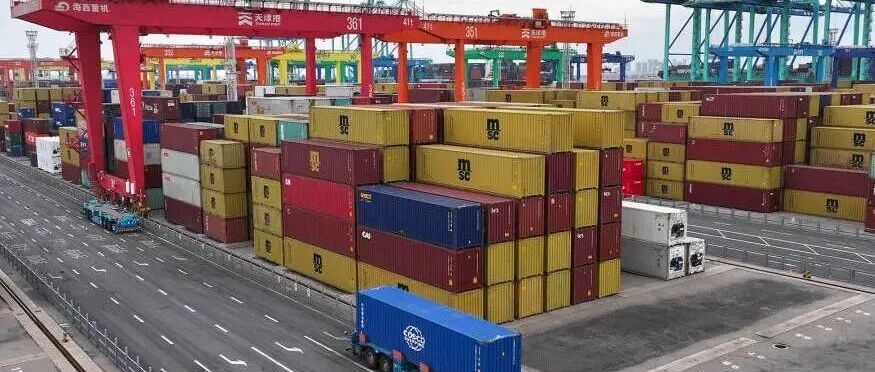
与世界各国共享机遇共同发展——扩大高水平对外开放,开创合作共赢新局面
Ren Min Ri Bao· 2025-12-07 07:33
Group 1: Core Perspectives - The necessity of open cooperation and mutual benefit is a fundamental requirement for Chinese-style modernization, as emphasized by the current global economic challenges and the need for strategic direction [1] - China is committed to expanding its openness, with the "15th Five-Year Plan" advocating for steady institutional opening and international cooperation to promote reform and development [1][2] Group 2: Self-Initiated Opening - The concept of self-initiated opening is highlighted as a key feature of China's high-level openness, reflecting a strategic choice that aligns with the country's realities and global trends [2][3] - Initiatives such as the China International Import Expo and zero-tariff policies for least developed countries demonstrate China's proactive approach to international trade [2] Group 3: Trade Innovation and Development - Foreign trade is identified as a crucial engine for economic growth and a key lever for expanding openness, with China's goods trade remaining the largest globally and service trade second [6] - The "15th Five-Year Plan" outlines new requirements for enhancing trade quality and efficiency, focusing on goods, services, and digital trade [6][8] Group 4: Investment Cooperation - China aims to combine "bringing in" and "going out" strategies for investment, leveraging its vast market to create favorable conditions for foreign investment while guiding global supply chain layouts [10][12] - The establishment of a comprehensive overseas service system is essential for enhancing companies' global capabilities and supporting their international operations [13]
与世界各国共享机遇共同发展
Ren Min Ri Bao· 2025-12-07 02:26
Core Viewpoint - The article emphasizes that China's modernization requires an open and cooperative approach, advocating for mutual benefits and shared development in the context of a rapidly changing global landscape [1]. Group 1: Open Cooperation and Development - China maintains its commitment to an open economy, with President Xi Jinping stating that the country will continue to expand its openness [1]. - The "14th Five-Year Plan" suggests a steady expansion of institutional openness and a focus on international circulation to promote reform and development [1]. - The current international environment presents opportunities for China to strategically enhance its global presence through proactive openness [1]. Group 2: Self-Initiated Opening - The concept of self-initiated opening is highlighted as a key feature of China's high-level openness, reflecting a strategic choice that aligns with both global trends and domestic realities [2]. - Initiatives such as the China International Import Expo and zero-tariff policies for products from least developed countries demonstrate China's commitment to expanding trade with the Global South [2][5]. - The approach to openness is characterized by a structured and phased strategy that balances domestic needs with international engagement [2]. Group 3: Trade Innovation and Development - Foreign trade is identified as a crucial driver of economic growth and a key mechanism for expanding openness [6]. - China's foreign trade has shown resilience, maintaining its position as the world's largest goods trader and second-largest service trader, with expectations to exceed $1 trillion in service trade by 2024 [6]. - The "14th Five-Year Plan" outlines goals for enhancing trade quality and efficiency, emphasizing the importance of becoming a trade powerhouse [6]. Group 4: Investment and Economic Environment - The dual approach of "bringing in" and "going out" is essential for China's high-level opening, leveraging its vast market to attract foreign investment while promoting Chinese investments abroad [10]. - The competitive landscape for attracting foreign investment is intensifying, necessitating a focus on creating a transparent and stable investment environment [12]. - Measures to encourage foreign reinvestment in China are being implemented, aiming to foster a cycle of investment, profit retention, and growth [12]. Group 5: Service Trade and Digital Trade - The service trade is increasingly recognized as a vital component of global trade growth, with China focusing on expanding service exports and optimizing policies to enhance inbound tourism [8]. - Digital trade is seen as a significant area for growth, with cross-border e-commerce demonstrating remarkable activity and efficiency [9]. - The "14th Five-Year Plan" emphasizes the need for innovation in digital trade, supporting new business models and enhancing international competitiveness [9].
贯彻落实党的二十届四中全会精神权威访谈|扩大高水平对外开放 加快建设强大国内市场——访商务部党组书记、部长王文涛
Xin Hua She· 2025-12-05 11:09
Core Viewpoint - The article discusses the key strategies outlined in the "Suggestions for Formulating the 15th Five-Year Plan for National Economic and Social Development," emphasizing the importance of expanding high-level opening-up and boosting domestic consumption as essential components for achieving modernization in China [1]. Group 1: Importance of High-Level Opening-Up - Expanding high-level opening-up is a strong driving force for promoting high-quality development during the 15th Five-Year period, as it helps leverage both domestic and international markets and resources [2]. - High-level opening-up is an inherent requirement to meet the people's needs for a better life, with nearly 700,000 foreign trade enterprises and around 500,000 foreign-funded enterprises contributing to employment and consumption upgrades [3]. - It is a proactive measure to promote economic globalization, countering unilateralism and protectionism while enhancing international cooperation in supply chains [4]. Group 2: Key Tasks for High-Level Opening-Up - The plan outlines four main tasks for expanding high-level opening-up, including actively expanding autonomous opening, enhancing trade innovation, expanding bilateral investment cooperation, and high-quality co-building of the Belt and Road Initiative [5][6][7][8]. - Emphasis is placed on aligning with international high-standard trade rules, particularly in the service sector, and expanding market access [5]. - The strategy includes optimizing trade structures, promoting digital trade, and enhancing the balance of imports and exports to meet both industrial and consumer needs [7]. Group 3: Boosting Domestic Consumption - The plan highlights the need to strengthen the domestic market as a strategic foundation for modernization, with a focus on boosting consumption to leverage the large population and growing middle-income group [9]. - Specific actions include expanding service consumption, promoting goods consumption upgrades, and innovating consumption scenarios to adapt to new consumer behaviors [10][11]. - The government aims to implement policies that enhance consumer experiences and stimulate demand across various sectors, including durable goods and services [10].
商务部部长王文涛:扩大高水平对外开放 加快建设强大国内市场
Xin Lang Cai Jing· 2025-12-05 10:08
Core Viewpoint - The article emphasizes the importance of expanding high-level opening-up and accelerating the construction of a strong domestic market as outlined in the 15th Five-Year Plan, highlighting specific measures such as actively expanding autonomous opening and significantly boosting consumption [1][12]. Group 1: Importance of High-Level Opening-Up - Expanding high-level opening-up is a strong driving force for promoting high-quality development, especially during the critical period of the 15th Five-Year Plan, which faces both strategic opportunities and risks [2][13]. - It is an inherent requirement to meet the people's needs for a better life, with nearly 700,000 foreign trade enterprises and around 500,000 foreign-funded enterprises projected for 2024, directly and indirectly supporting over 200 million jobs [3][14]. - It serves as proactive engagement in economic globalization, countering unilateralism and protectionism while promoting multilateralism and free trade [3][15]. Group 2: Key Tasks for High-Level Opening-Up - The 15th Five-Year Plan outlines four key tasks for expanding high-level opening-up, including strengthening the Party's leadership in open work and enhancing the level of opening-up [5][16]. - Actively expanding autonomous opening by aligning with international high-standard trade rules, focusing on service sectors, and increasing market access [5][16]. - Promoting trade innovation development by solidifying the three pillars of goods trade, service trade, and digital trade, while enhancing import and export balance [7][17]. Group 3: Boosting Domestic Consumption - The plan emphasizes the strategic basis of expanding domestic demand, with China's market advantages including a population of over 1.4 billion and a growing middle-income group [9][19]. - Significant efforts will be made to enhance service consumption through policy measures and the development of new growth points in sectors like tourism and sports [10][20]. - The initiative aims to innovate consumption scenarios and establish a management framework that adapts to new consumption models, supporting the development of international consumption center cities [11][21].
从宁波舟山港实现第四个“千万箱级”跨越看外贸韧性
Zheng Quan Ri Bao· 2025-12-03 16:10
Core Insights - Ningbo-Zhoushan Port has achieved a historic milestone by surpassing 40 million TEUs in annual container throughput, marking the fourth "ten million box" leap, which supports China's manufacturing exports and reflects the resilience of China's foreign trade [1] - China's total import and export value of goods reached 37.31 trillion yuan in the first ten months of this year, showing a year-on-year growth of 3.6% [1] Group 1: Policy and Government Support - The achievements in foreign trade are attributed to a threefold synergy of policy empowerment, expanded openness, and supply-demand collaboration [2] - Government departments have implemented multiple rounds of foreign trade policies and actively expanded high-level open cooperation, facilitating enterprises' integration into the global trade network [2] - The China International Import Expo has played a significant role in promoting trade, investment, and consumption, enhancing its platform effect [2] Group 2: Supply-Side Dynamics - New driving forces such as innovation, intelligence, and sustainability are emerging, enhancing the growth potential of foreign trade [2] - In the first ten months, China's export of electromechanical products reached 13.43 trillion yuan, a year-on-year increase of 8.7%, accounting for 60.7% of total exports [2] - Labor-intensive product exports totaled 3.38 trillion yuan, showing a decline of 3% year-on-year, indicating a shift towards higher value-added exports [2] Group 3: Demand-Side Market Expansion - There is a strong global demand for quality products, particularly due to the deepening cooperation under the Belt and Road Initiative, which has created favorable conditions for China's exports [3] - In the first ten months, trade with ASEAN reached 6.18 trillion yuan, growing by 9.1%, while trade with the EU totaled 4.88 trillion yuan, increasing by 4.9% [3] - The total import and export value with Belt and Road countries was 19.28 trillion yuan, reflecting a year-on-year growth of 5.9% [3] Group 4: Future Outlook - The strategy to enhance foreign trade quality and efficiency is emphasized in the 15th Five-Year Plan, showcasing China's commitment to improving foreign trade resilience amid a complex international environment [3] - Future foreign trade development should focus on technological innovation, policy support, and high-quality growth, with recommendations to optimize market layout and reduce reliance on single markets [3] - Increased R&D investment is suggested to enhance product value and technology, promoting a shift towards high-end, intelligent, and green products, thereby elevating the global presence of "Made in China" [3]
【图解】谋篇布局“十五五”| 抵御单边主义逆流,中国对外开放更加主动积极
Zhong Guo Jing Ji Wang· 2025-11-06 09:35
Core Viewpoint - The article emphasizes China's proactive approach to expanding high-level openness and enhancing international cooperation, particularly in the context of the "15th Five-Year Plan" [3][4]. Group 1: Expansion of Openness - The "15th Five-Year Plan" suggests expanding high-level openness while balancing domestic needs and global expectations [5][6]. - Key strategies include optimizing the layout of regional openness and creating diverse open platforms [7]. Group 2: Trade Innovation and Development - The plan aims to optimize and upgrade goods trade, expand intermediate goods trade, and promote balanced import and export development [8]. - There is a strong focus on developing service trade, encouraging service exports, and enhancing the management of cross-border service trade [8]. Group 3: Investment Cooperation - The strategy includes creating new advantages for attracting foreign investment, reducing the negative list for foreign investment access, and promoting reinvestment by foreign entities [10]. - It emphasizes the importance of a transparent and stable institutional environment to facilitate foreign investment [10]. Group 4: Belt and Road Initiative - The article highlights the need for strengthening strategic alignment with countries involved in the Belt and Road Initiative and enhancing cooperation in various sectors such as green development and digital economy [11]. - It stresses that the Belt and Road Initiative is a collaborative effort rather than a unilateral endeavor [11].

以推动高质量发展为主题奋力开创中国式现代化建设新局面——多部门负责人在《〈中共中央关于制定国民经济和社会发展第十五个五年规划的建议〉辅导读本》发表署名文章
Shang Hai Zheng Quan Bao· 2025-10-31 18:21
Group 1: Economic and Financial Strategy - The 20th Central Committee's Fourth Plenary Session approved the "Suggestions on Formulating the 15th Five-Year Plan for National Economic and Social Development," outlining systematic planning and strategic deployment for economic and social development during the 15th Five-Year period [1] - The article emphasizes the integration of technological and industrial innovation, enhancing the inclusiveness and adaptability of capital market systems, and expanding high-level opening-up [1][2] Group 2: Financial System Improvement - The article by Wang Jiang highlights seven key tasks for building a strong financial nation, including improving the central bank system and promoting healthy capital market development [2][3] - It stresses the need for financial institutions to focus on their main businesses and enhance governance, while also supporting state-owned financial institutions in serving the real economy [3][4] Group 3: Monetary Policy and Macro-Prudential Management - The People's Bank of China aims to construct a scientific and robust monetary policy system and a comprehensive macro-prudential management framework to support high-quality financial development [6][7] - The article outlines the importance of adjusting monetary policy to match economic growth and price stability, emphasizing the need for a balanced approach to short-term and long-term economic goals [7][8] Group 4: International Financial Center Development - The article discusses the continuous development of various financial markets in Shanghai to enhance its global competitiveness and influence [4][5] - It calls for strengthening the cross-border payment and clearing system for the Renminbi and expanding institutional openness in the financial sector [4] Group 5: Trade and Investment Expansion - The article by Wang Wentao emphasizes the significance of expanding high-level opening-up, including promoting trade innovation and enhancing the quality of foreign trade [10][11] - It outlines tasks such as increasing market access in service sectors and optimizing the free trade zone strategy to boost innovation and development [11][12] Group 6: Real Estate Market Development - The article by Ni Hong focuses on promoting sustainable and healthy development in the real estate market through reforms in development, financing, and sales systems [14][15] - It highlights the need for a multi-level housing security system and emphasizes the importance of local governments in adjusting real estate policies based on specific city conditions [15][16]