通用人工智能

Search documents
观察者网WAIC直播实录:AI大潮下的具身和人形,中国在跟跑还是并跑?
Guan Cha Zhe Wang· 2025-08-03 05:36
Group 1 - The global focus is on "embodied intelligence" and "humanoid robots," with discussions on whether China is catching up to or surpassing the U.S. in AI advancements [1][3] - The dialogue at WAIC highlighted the importance of supply chains, reinforcement learning algorithms, and capital pathways in the development of humanoid robots [1][3] - Companies like Midea have diversified into humanoid robotics, leveraging their existing technology and product lines to enter this new market [4][5] Group 2 - Midea's acquisition of KUKA in 2016 marked its entry into the robotics sector, with a focus on various industries including automotive and logistics [5] - The development of humanoid robots has seen significant advancements due to breakthroughs in reinforcement learning and embodied intelligence, allowing for more complex robotic movements [9][10] - The current humanoid robots average around 40 joints, with traditional methods of control being replaced by reinforcement learning techniques [9][11] Group 3 - The discussion emphasized the differences between traditional hydraulic-driven robots and modern electric-driven robots, highlighting the advantages of the latter in incorporating intelligent algorithms [12][13] - The potential for humanoid robots to evolve into "super humanoid robots" tailored for specific industrial applications was explored, aiming to exceed human efficiency in tasks [15][16] - The conversation also touched on the necessity of dexterous hands for humanoid robots, with a focus on the trade-offs between complexity and reliability in real-world applications [24][27] Group 4 - The concept of embodied intelligence was defined as the ability of robots to interact effectively with the physical world, moving beyond traditional control methods [31][36] - The importance of world models and video models in enhancing the capabilities of humanoid robots was discussed, emphasizing their role in understanding complex environments [37][42] - Reinforcement learning was identified as a crucial component in the development of intelligent robots, with companies like Dyna Robotics focusing on real-world applications [46][47]



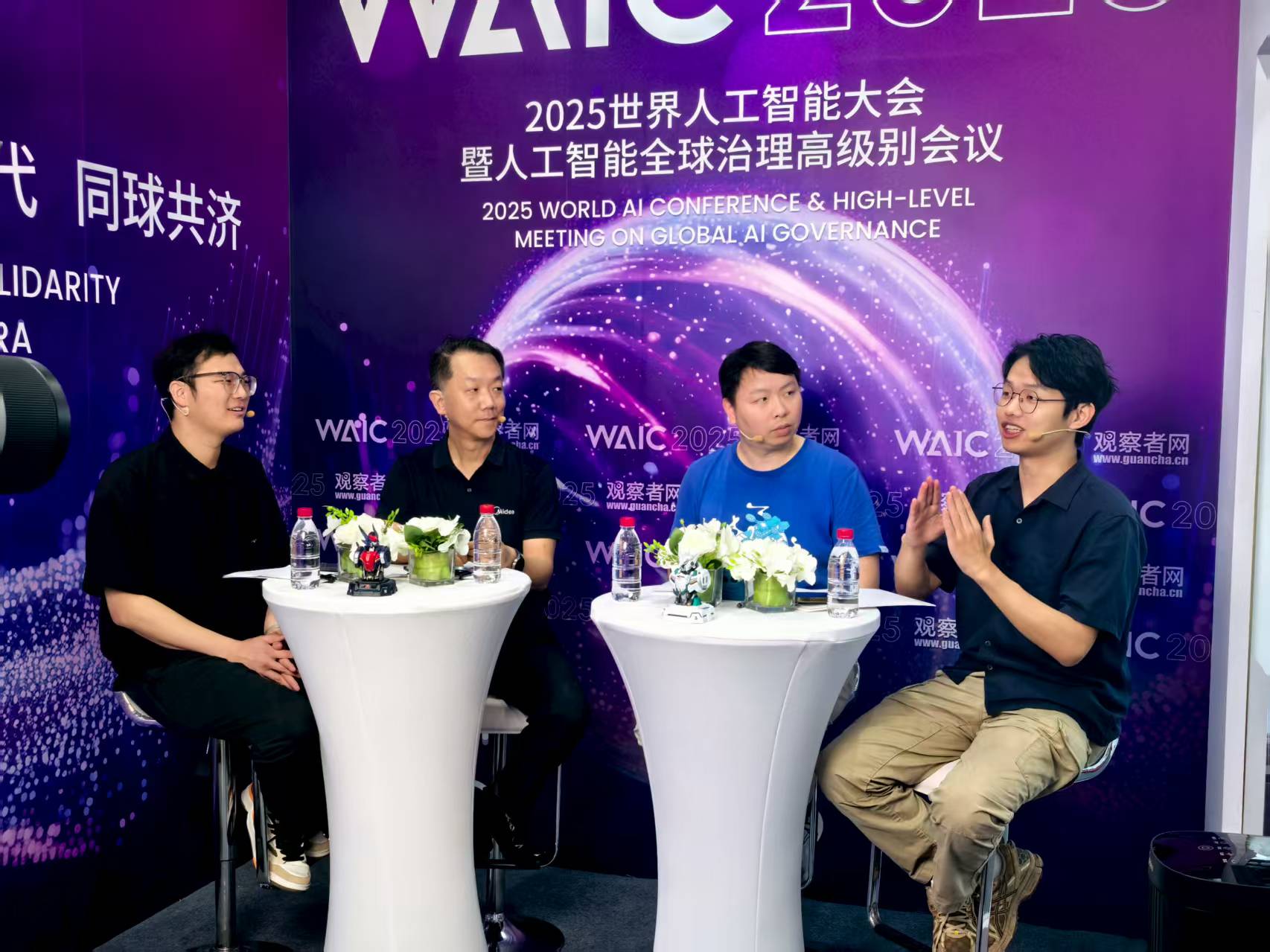
AI大潮下的具身和人形,中国在跟跑还是并跑?
Guan Cha Zhe Wang· 2025-08-03 05:35
Group 1 - The core theme of the discussion revolves around "embodied intelligence" and its significance in the development of humanoid robots and AGI (Artificial General Intelligence) [1][2] - The conversation highlights the advancements in humanoid robots, particularly focusing on companies like Tesla and Boston Dynamics, and their impact on the global robotics landscape [1][2][3] - The panelists discuss China's position in the AI race, questioning whether it is merely following the US or is on the verge of overtaking it [1][2] Group 2 - Midea's entry into humanoid robotics is driven by its existing technological advantages in components and a complete product line, marking a strategic shift from its traditional home appliance business [4][5] - The acquisition of KUKA Robotics in 2016 has allowed Midea to expand its capabilities in industrial technology and automation, serving various sectors including automotive and logistics [4][5] - The discussion emphasizes the importance of application-driven development in humanoid robotics, with Midea exploring both full humanoid and wheeled robots for different use cases [13][15] Group 3 - The panelists from various companies, including Grasping Deep Vision and Zhenge Fund, share insights on the evolution of AI and robotics, focusing on the integration of computer vision and machine learning in their products [5][6][8] - Grasping Deep Vision, as a pioneer in AI computer vision, has developed applications across finance, security, and education, showcasing the versatility of AI technologies [5][6] - Zhenge Fund's investment strategy emphasizes early-stage funding in cutting-edge technology sectors, including AI and robotics, aiming to support innovative startups [6][8] Group 4 - The discussion on humanoid robots highlights the historical context, mentioning significant milestones like Honda's ASIMO and Boston Dynamics' Atlas, and contrasting them with recent advancements in China and the US [8][10] - The panelists note that the complexity of humanoid robots, with an average of 40 joints, poses significant engineering challenges, but advancements in reinforcement learning are simplifying the development process [9][10] - The future of humanoid robots is seen as promising, with expectations of rapid advancements in the next 5 to 10 years driven by technological breakthroughs and application-driven demands [9][10] Group 5 - The conversation touches on the debate between wheeled versus bipedal humanoid robots, with arguments for the practicality of wheeled robots in industrial settings and the necessity of bipedal robots for complex environments [13][16] - The panelists discuss the potential of "super humanoid robots" designed for specific industrial applications, aiming to exceed human efficiency in tasks like assembly and logistics [15][16] - The importance of dexterous hands in humanoid robots is emphasized, with a focus on the trade-offs between complexity, cost, and functionality in various applications [21][25] Group 6 - The concept of "embodied intelligence" is defined as the ability of robots to interact with the physical world, moving beyond traditional control methods to achieve more autonomous decision-making [28][30] - The panelists explore the role of world models and video models in enhancing the capabilities of humanoid robots, suggesting that these models can improve the robots' understanding of dynamic environments [35][39] - Reinforcement learning is highlighted as a crucial component in the development of humanoid robots, with discussions on optimizing reward systems to enhance learning outcomes [41][42]
AI教父Hinton,重新能坐下了
Hu Xiu· 2025-08-03 04:53
Group 1 - Geoffrey Hinton, the AI pioneer, recently sat down comfortably in Shanghai, marking a significant moment in his life after nearly 18 years of discomfort that prevented him from sitting for extended periods [1][6][30] - Hinton's journey in AI began in 1972 when he chose to pursue neural networks, a path that was largely dismissed by his peers at the time [12][20] - His persistence in the field led to breakthroughs in deep learning, particularly during the ImageNet competition in 2012, where his team achieved a remarkable error rate of 15.3% [30][31][32] Group 2 - Hinton's contributions to AI were recognized with the Turing Award in 2019, which he received while standing, reflecting his long-standing discomfort with sitting [59][63] - Following his resignation from Google in May 2023, Hinton expressed concerns about the risks associated with AI, stating that he regretted his role in its development [67][68] - In recent interviews, Hinton has been able to sit for longer periods, indicating a potential improvement in his health, and he has been vocal about the dangers of AI, suggesting a 10%-20% chance of human extinction due to AI in the next 30 years [70][76]




全网苦等GPT-5,超级对齐团队遗作成重要线索,奥特曼发话「惊喜很多」
机器之心· 2025-08-03 04:21
Core Viewpoint - The article discusses the anticipation surrounding GPT-5, particularly focusing on a key technology called the "universal verifier," which is expected to enhance the model's reasoning and output clarity [1][3][4]. Group 1: Universal Verifier - OpenAI is developing a "universal verifier" that may play a crucial role in GPT-5, aimed at improving the interpretability of outputs from large language models (LLMs) [1][4]. - The concept originates from a paper published by OpenAI, which addresses the challenge of understanding LLM reasoning processes when only optimizing for answer correctness [1][3]. - The proposed system involves a smaller "verifier" model that scores the reasoning chain of a larger "prover" model, providing feedback for strategy updates [1][3][4]. Group 2: Prover-Verifier Dynamics - The interaction between the "prover" and "verifier" can be likened to a game, where the prover generates detailed reasoning to convince the verifier of its correctness, while the verifier attempts to identify flaws [5][6]. - This dual-persona approach enhances the model's ability to produce logically sound and less easily falsified solutions, thereby maintaining human control and trust even as AI capabilities advance [5][6]. Group 3: Training Methodology - The training method proposed in the paper allows models to learn to generate clear and well-structured answers over time [9]. - The system is designed to be integrated into future mainstream models' reinforcement learning processes based on human feedback (RLHF) [11]. Group 4: Future Implications - The "prover-verifier" training method signifies a potential shift in AI development from a data-scaling era to an architecture breakthrough era, focusing on smarter internal learning mechanisms [11]. - This evolution may be key to overcoming current data limitations and achieving higher levels of general artificial intelligence [11]. Group 5: Recent Developments - Recent leaks suggest the existence of two versions of GPT-5, indicating ongoing advancements and heightened public interest in the model [15][20].

北京出新政推动未来产业发展
Zhong Guo Xin Wen Wang· 2025-08-01 16:56
Group 1 - Beijing will leverage its advantages in education, technology, and talent resources to establish a mechanism for coordinated input, integration, and reasonable growth, enhancing overall productivity and promoting the development of future industries from R&D innovation to large-scale development [1] - The measures encourage investment from municipal and district government funds, state-owned enterprise funds, and long-term capital such as social security and insurance funds into future industries, as well as utilizing policy bank loans for strategic sectors [1] - The city aims to utilize its large urban market as an incubator, focusing on sectors like urban transportation, healthcare, green energy, and public services, while exploring the establishment of influential application demonstration scenarios [1] Group 2 - The measures propose improving the engineering transformation system, encouraging collaboration between universities, research institutions, and enterprises for technology validation and process optimization, and establishing a gradient development mechanism covering prototype design to pilot samples [2] - Support is provided for large enterprises to engage in "new investments" and "new mergers and acquisitions," promoting entrepreneurial activities along the industrial chain and enhancing supply chain strength [2] - The measures also support enterprises in expanding overseas markets and gathering high-quality international resources [2]
GLM-4.5大模型杀出重围,“领跑者”智谱走上台前
Bei Jing Shang Bao· 2025-07-31 13:45
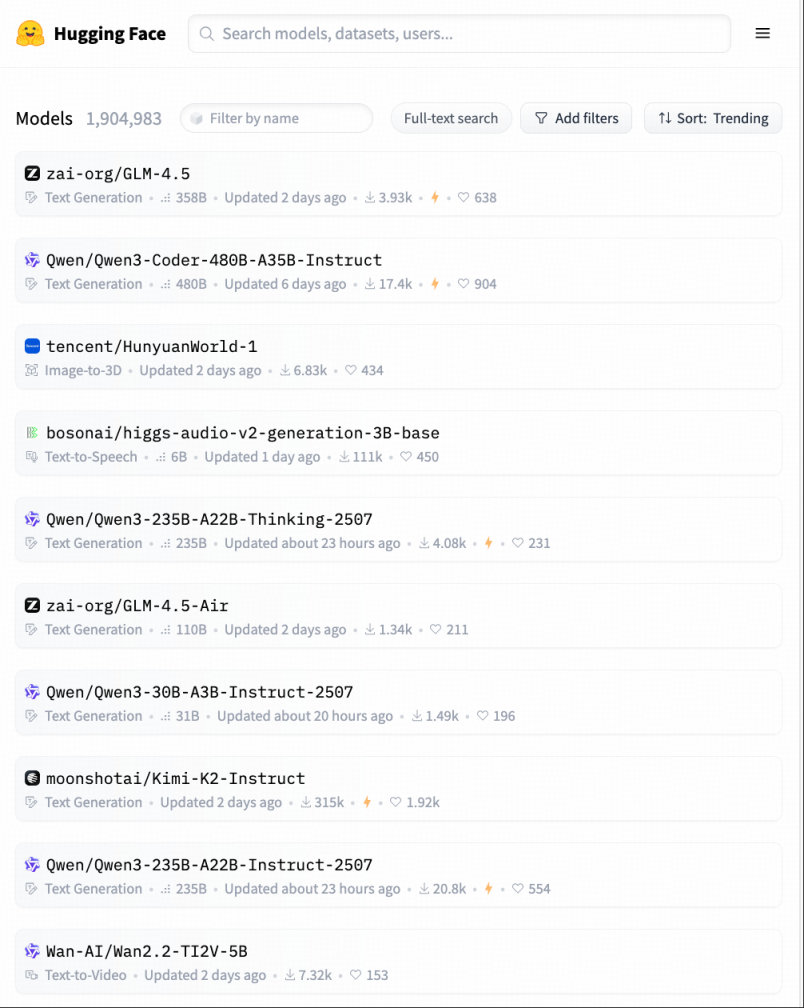
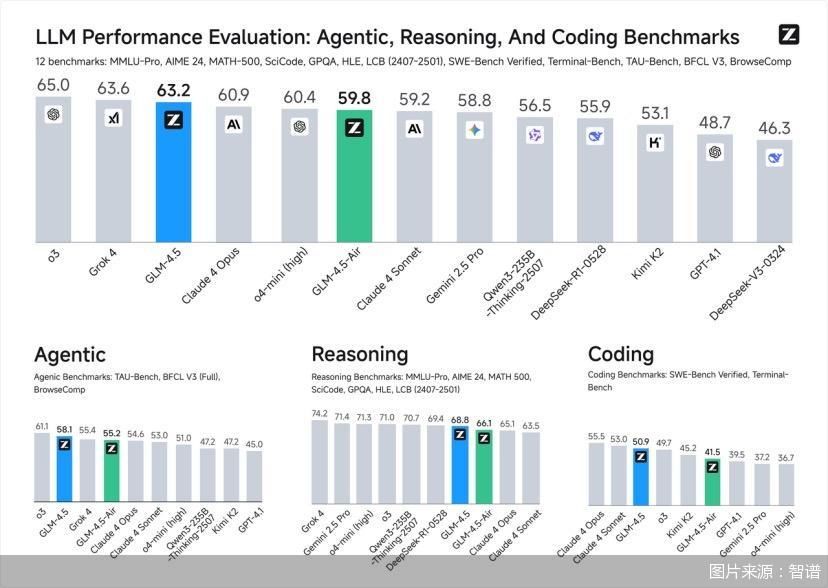
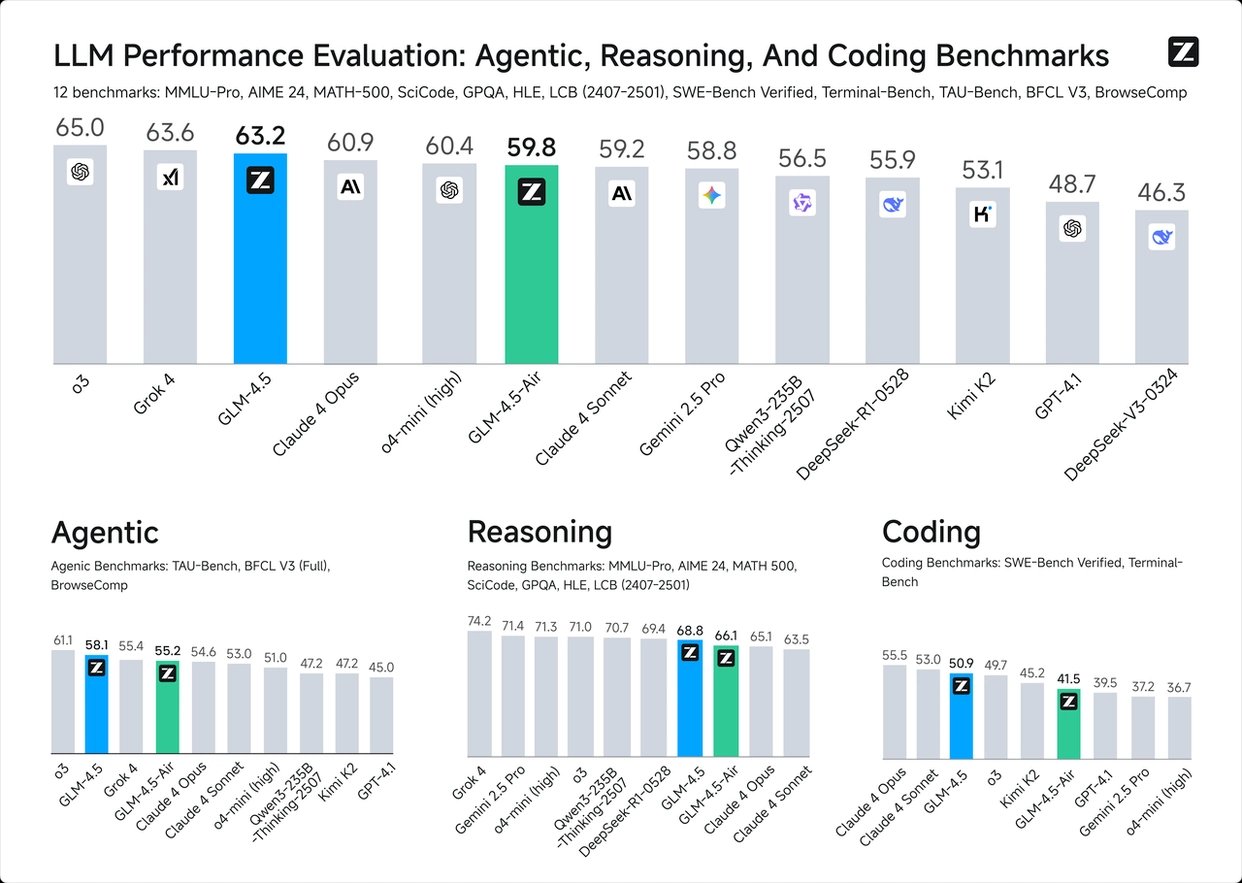
当业界探讨智能体功能、开发环境时,近日北京智谱华章科技股份有限公司(以下简称"智谱")低调发布新一代旗舰 大模型GLM-4.5,这是一款专为智能体应用打造的基础模型,在复杂推理、代码生成及智能体交互等通用能力上实现 能力融合与技术突破。OpenAI"跳票"多次的GPT-5也强调融合,并在6月底将智谱列入全球竞争对手,没想到智谱率先 登场,GLM-4.5的综合得分位列全球第三、国产第一。 在资本市场,智谱也是"沉默的领跑者",4月已在北京证监局办理上市辅导备案,由中金公司担任辅导机构,成为第 一家启动IPO上市的"大模型六小虎"。根据辅导备案报告,8月智谱将进入正式辅导期第二阶段,在这期间,这家脱胎 于清华的大模型公司还密集收获多地国资的战略投资。从实验室到产业,智谱走出了中国通向AGI(通用人工智能) 的另一条路径。 全球第三,国产第一 最近的开源浪潮中,智谱的GLM-4.5发布仅2小时,就被X平台推荐上了首页,发布12小时后,它已经位列国际开源社 区Hugging-Face榜单全球第二,创增速纪录。 在涵盖研究生水平推理和复杂软件工程解题等12项全球公认的硬核测试中,GLM-4.5的综合得分位列全球第三,在 ...
21书评︱“深度学习之父”辛顿:信仰之跃
2 1 Shi Ji Jing Ji Bao Dao· 2025-07-31 09:32
Group 1 - Geoffrey Hinton, known as the "father of deep learning," received the Nobel Prize in Physics in 2024 for his foundational discoveries in machine learning using artificial neural networks [1] - Hinton's journey in artificial intelligence faced significant challenges, including skepticism from academia during the AI winter, yet he persisted and contributed to the emergence of large models in AI [1][10] - The narrative highlights the importance of belief and perseverance in the face of adversity, as Hinton's commitment to neural networks ultimately led to breakthroughs in AI [10][11] Group 2 - Liu Jia, a professor at Tsinghua University, published a book titled "General Artificial Intelligence: Reconstruction of Cognition, Education, and Ways of Living," which discusses Hinton's story and the underlying logic of persistence in AI research [2][9] - The book aims to explore the connections between brain science and artificial intelligence, suggesting that this integration may aid in achieving true general artificial intelligence [2] - Hinton's early academic struggles and eventual return to AI research serve as a backdrop for understanding the evolution of AI and the significance of his contributions [6][7]

“北京造”大模型GLM-4.5开源,综合性能世界领先
Xin Jing Bao· 2025-07-30 15:59
7月28日晚,北京智谱华章科技股份有限公司(以下简称"智谱AI")发布其新一代旗舰大模型GLM-4.5,这是一款专为智能体应用打造的基础模型,在复杂 推理、代码生成及智能体交互等通用能力上实现能力融合与技术突破,综合测试性能已跻身全球领先行列。 这款新模型的发布,代表了AI迈向通用人工智能的一次重要转变。它不再满足于扮演一个被动回答问题的"聊天机器人",而是要成为能够理解复杂目标、自 主规划并执行多步骤任务的"全优生"。例如,模型能够胜任全栈开发任务,一键生成较为复杂的应用、游戏、交互网页。在实际例子中,用户通过z.ai使用 该模型时,仅用一句简单的指令,就可让GLM-4.5独立开发出具备搜索功能的"谷歌"网站、可以发弹幕的"B站",甚至直接上线一个完整的"Flappy Bird"小游 戏。 在性能评估中,GLM-4.5的表现展示了其架构优势。在涵盖研究生水平推理和复杂软件工程解题等12项全球公认的硬核测试中,其综合得分位列全球第三, 在所有国产模型和开源模型中均排名第一。 大型语言模型性能评估表,包含智能体、推理与编码基准测试数据(图源:智谱) 市场有风险,投资需谨慎。本文不构成个人投资建议,也未考虑到个别 ...
Jinqiu Select | OpenAI夺IMO金牌背后的技术路线揭秘
锦秋集· 2025-07-30 15:51
两周前,OpenAI 神秘模型首次斩获 IMO 金牌,引发全球高度关注,被广泛视为迈向通用人工智能(AGI)的重要一步。 最近,该研究团队首次接受了美国红杉的访谈,系统地披露了他们在技术路线上的选择,以及对于未来通用人工智能发展方向的一些重要展望。 https://www.youtube.com/watch?v=EEIPtofVe2Q 访谈中的核心亮点包括: 锦秋基金(公众号:锦秋集;ID:jqcapital)认为,作为当前全球大模型领域的头部公司和技术前沿探索者,OpenAI的观点和思路能够在一定程度上代表未来一段 时间大语言模型乃至通用人工智能的发展趋势,因此,也做了编译。 01 技术路线的关键亮点 从数秒到百分钟:大规模推理时间的扩展 OpenAI的模型在此次竞赛中表现出的最显著进步,就是其持续推理的能力大幅延长。过去的AI模型通常只能进行数秒到十几秒的集中推理,而此次获得IMO金牌的 AI模型,却已能稳定地连续推理超过100分钟(1.5小时)。 推理时间的延长,意味着模型可以更深入、更全面地探索复杂问题的解决方案。这种能力的提升,并不仅仅局限于数学领域,而可能广泛应用于现实世界中的各类 高复杂性任务, ...

全球开源模型榜单前十中国霸榜九席,第一来自北京!
Bei Jing Ri Bao Ke Hu Duan· 2025-07-30 15:34
Core Insights - The article highlights the rapid rise of GLM-4.5, a new flagship AI model from Beijing-based company Zhipu, which achieved the second position on the Hugging Face trending list within just ten hours of its release, indicating significant international interest [1][3]. Group 1: Model Performance and Features - GLM-4.5 represents a significant advancement in AI capabilities, moving beyond simple question-answering to becoming an "AI employee" capable of understanding complex goals and executing multi-step tasks [3][4]. - The model can independently develop complex applications, games, and interactive websites with simple user instructions, showcasing its full-stack development capabilities [3][4]. - Zhipu's CEO stated that while existing models excel in specific areas, GLM-4.5 aims to integrate various capabilities into a single model, striving to become a "full-student" in AI [4]. Group 2: Market Position and Cost Efficiency - The model's parameters are reported to be only half or even one-third of those of mainstream models with similar performance, making it a cost-effective option [4]. - The API call pricing for GLM-4.5 is significantly lower than market averages, with input costs at 0.8 yuan per million tokens and output costs at 2 yuan per million tokens [4]. - Other Chinese models, such as those from Moonlight, Alibaba Tongyi, and Tencent Hunyuan, also performed well in the international open-source community rankings [5].