工业4.0

Search documents
破局大负载协作!行业最快30kg大负载协作机器人,来了!
机器人圈· 2025-06-27 10:05
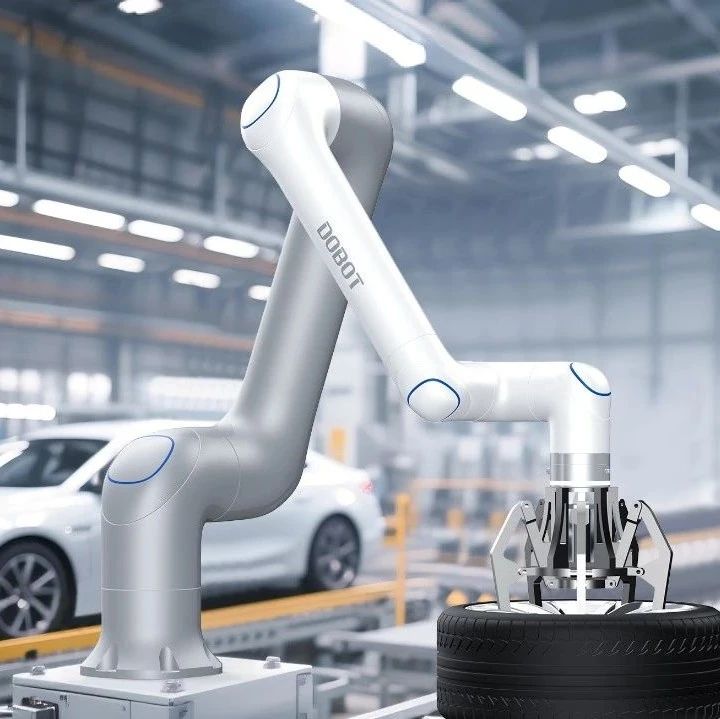
Core Viewpoint - The article highlights the launch of the CR 30H collaborative robot by the domestic manufacturer Yuejiang, which successfully combines high load capacity and speed, addressing long-standing challenges in the industrial robotics sector [4][5][11]. Group 1: Product Features - The CR 30H can handle a load of 30kg while achieving a joint speed of 300°/s, making it the fastest in its category [3][5]. - It offers three versions: standard, touch version (CR 30HT), and a clean version (CR 30H-Food), catering to various industrial needs [5][12]. - The robot features a HyperMove motion control algorithm that enhances efficiency by 20% compared to similar models, with a packing rate of 10 boxes per minute in food and beverage applications [5][11]. Group 2: Technical Advancements - The CR 30H has a maximum load-induced vibration of less than 0.3mm, thanks to advanced vibration suppression algorithms [5][6]. - It employs a 96V mid-voltage servo drive technology, increasing power by 50% and reducing heat generation by 20% [6][14]. - The design reduces the number of components by 30%, enhancing joint stability and reliability [6][14]. Group 3: Market Trends - The collaborative robot market is projected to exceed 30,000 units sold in 2024, marking a year-on-year growth of over 28% [5]. - The introduction of high-load models like the CR 30H is expected to drive rapid industry development, overcoming the technical bottleneck of balancing load and speed [5][11]. Group 4: Industry Applications - The CR 30H is positioned as an ideal solution for various applications, including food packaging, automotive assembly, and heavy metal part handling, significantly improving production efficiency [11][12]. - The CR 30H-Food version meets stringent hygiene standards for the food and pharmaceutical industries, ensuring safety and compliance [12][14]. Group 5: Quality Assurance - Yuejiang's commitment to quality is demonstrated through rigorous testing, with each CR 30H undergoing over 160 assembly processes and 200 performance tests [13][14]. - The company has deployed over 80,000 robots globally, serving a diverse customer base, including Fortune 500 companies, which validates the reliability of its products [13][14].

工业4.0中的人工智能应用及案例
3 6 Ke· 2025-06-27 02:54
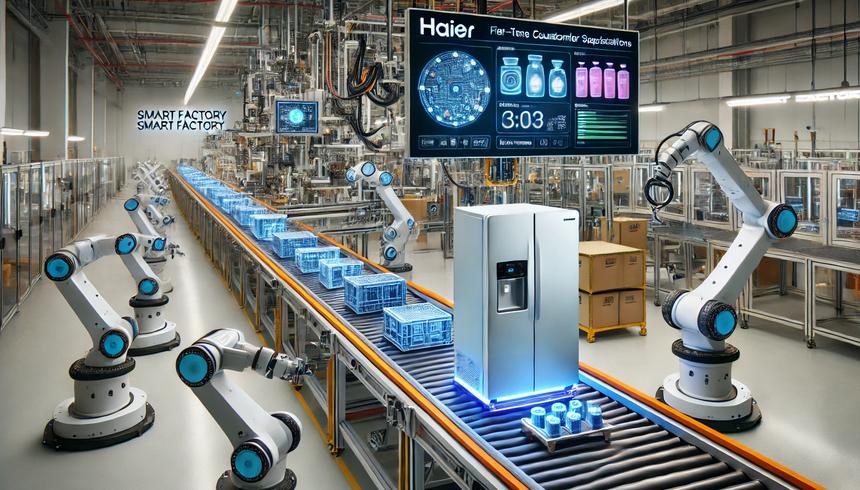
Core Insights - The article discusses the transformative impact of Industry 4.0, particularly through the integration of artificial intelligence (AI) and automation in manufacturing processes [1][2][3] - It highlights the operational capabilities of smart factories, including real-time adjustments, predictive maintenance, collaborative robots, customized operations, and self-adjustment [2][3] Group 1: Industry 4.0 Overview - Industry 4.0 connects physical machines with digital tools, enabling seamless collaboration and disrupting traditional manufacturing practices [2] - AI plays a crucial role in monitoring production processes, ensuring continuous operation, and maintaining optimal efficiency [2][3] Group 2: Practical Applications - Siemens' Amberg factory utilizes AI to predict issues before they occur, reducing quality inspection time by 95% [4] - Tesla's smart factory has reduced unexpected machine failures by over 30% through predictive maintenance and employs AI-driven quality checks to ensure superior vehicle quality [5] - Haier's Hefei factory exemplifies AI's role in transforming factories into intelligent systems, achieving a 58% reduction in defect rates and a 49% increase in efficiency [8] Group 3: Future Prospects - The article suggests that the advancements in AI and automation will continue to evolve, with companies like Toyota experimenting with AI in product design [12] - There are significant investments planned, such as South Korea's $2.2 billion investment in automated factories by 2028, indicating the potential for further innovation in the industry [12]



研判2025!中国热工装备行业产业链图谱、市场规模、竞争梯队及未来前景展望:高端应用需求日益增长,国产热工装备发展迅速[图]
Chan Ye Xin Xi Wang· 2025-06-27 01:18
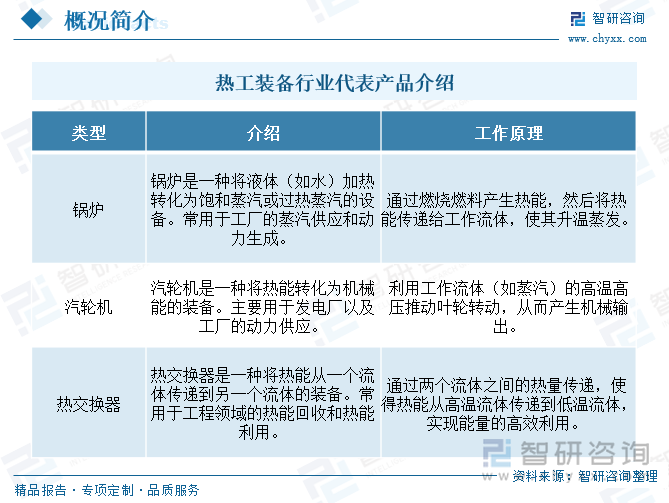
Industry Overview - Thermal equipment utilizes thermal processing technology to heat, maintain, and cool materials in a specific medium, altering their structure to achieve desired properties [1][5] - The industry has expanded from metal materials to non-metal materials, driven by the rapid development of sectors like new energy vehicles, aerospace, and rail transportation [1][7] - The market size for major thermal equipment products in China is projected to grow from CNY 119.33 billion in 2020 to CNY 127.51 billion in 2024, with expectations to exceed CNY 130 billion by 2025 [1][7] Market Participants - Key listed companies in the thermal equipment sector include Chuangjiang New Material, Lijun Thermal Energy, Dingli Technology, and Beifang Huachuang [2] - The industry consists of approximately 1,000 manufacturers, with over 100 large-scale enterprises generating annual revenues exceeding CNY 20 million [11][13] - High-end thermal equipment is primarily dominated by foreign and joint-venture companies, with only a few domestic firms like Beifang Huachuang and Jingsheng Technology capable of high-end R&D and production [13][14] Current Industry Status - The thermal equipment industry in China began in the 1950s and has made significant progress through technology introduction and independent research [5][6] - Despite advancements, there remains a considerable gap in equipment manufacturing levels compared to developed countries, particularly in high-end technology [5][6] - Domestic companies have begun to overcome foreign technology blockades, achieving over 50% localization in certain high-end thermal equipment [6][7] Development Trends - The industry is accelerating towards smart and digital integration, with AI algorithms and IoT technologies enhancing automation and energy efficiency [18] - Green manufacturing practices are becoming central to industry upgrades, focusing on reducing carbon emissions and improving energy utilization [19] - There is a growing demand for high-end and customized thermal equipment, driven by advancements in new materials and aerospace sectors [20]
向“智”升级 中德加强智能制造领域合作
Xin Hua She· 2025-06-26 12:24
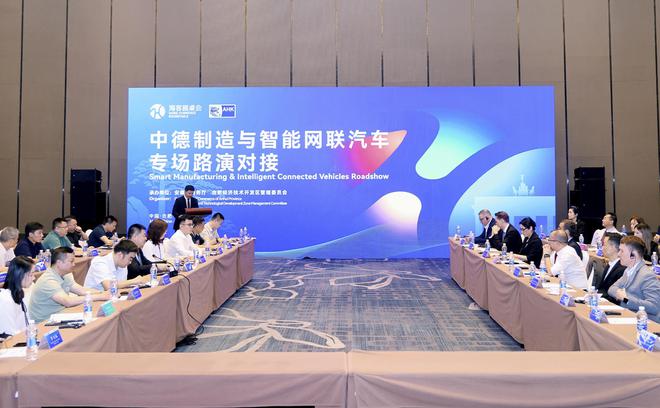
Group 1 - The core event was the Sino-German Intelligent Manufacturing Industry Matchmaking Conference held in Hefei, Anhui, where nearly 100 German companies and institutions participated, resulting in 28 trade investment projects worth over 6.8 billion yuan [2][5] - The conference highlighted the shift in Sino-German cooperation from "technology introduction" to "joint innovation" and "mutual empowerment," providing a collaborative model for global intelligent manufacturing [2][5] - German companies, such as Würth and Trumpf, are increasingly engaging in R&D in China, recognizing the strong innovation potential of Chinese enterprises and talent [3][4] Group 2 - The 2024/2025 Business Confidence Survey by the China-Germany Chamber of Commerce indicated that 55% of German companies in China expect their Chinese competitors to become industry innovation leaders in the next five years [3] - The cooperation between Chinese and German firms is expanding from individual projects to a systematic ecosystem, with a focus on technology sharing, standard recognition, and capacity collaboration [5] - Local governments in China, such as Anhui and Hunan, are actively supporting Sino-German cooperation through the establishment of international cooperation parks and financial incentives for German investment projects [5]
研判2025!中国电磁制动器行业发展历程、市场规模及进出口分析:行业市场规模持续扩大,技术进步推动产业升级[图]
Chan Ye Xin Xi Wang· 2025-06-26 01:32
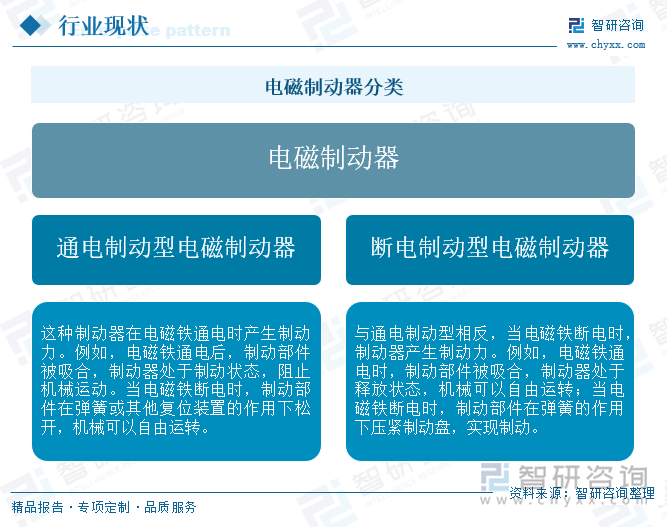
Core Viewpoint - The electromagnetic brake industry in China is experiencing significant growth driven by advancements in industrial automation, smart manufacturing, and the electric vehicle sector, with a projected market size of 21.695 billion yuan in 2024, reflecting a year-on-year increase of 9.08% [1][10]. Industry Overview - Electromagnetic brakes utilize electromagnetic force for stopping or holding motion, characterized by their compact structure, simple operation, and quick response time of 0.3 seconds [2][4]. - The industry has evolved through four main stages: initial development (1960s-1980s), scale-up (1990s-early 2000s), domestic replacement (early 2000s-2010), and the current phase of smart and green technology [4][5]. Market Size - The market for electromagnetic brakes is expanding due to the rapid development of industrial automation and electric vehicles, with a forecasted market size of 21.695 billion yuan in 2024, marking a 9.08% increase from the previous year [1][10]. Industry Development Trends 1. **Technological Innovation and Product Upgrading** - The industry is transitioning towards a technology-intensive model, with a focus on high precision, reliability, and smart features, driven by the demands of Industry 4.0 and smart manufacturing [19]. 2. **Diversification of Application Scenarios and Market Expansion** - The application of electromagnetic brakes is broadening, particularly in electric vehicles and rail transportation, which is driving market growth [20][21]. 3. **Industry Chain Integration and International Competition** - The industry is enhancing competitiveness through vertical integration of upstream materials and downstream applications, while also expanding internationally to capture emerging markets [22]. Key Companies - **Reidi Intelligent Drive**: A leading brand in the elevator sector, focusing on electromagnetic brakes and robotics, with plans for an IPO to fund expansion projects [15]. - **Asia Pacific Electromechanical Co., Ltd.**: A dominant player in the automotive brake system industry, achieving significant revenue growth [15]. - **Jiangxi Huawai Brake Co., Ltd.**: A key player in industrial braking systems, with a diverse product range and a strong export presence [17].


意大利-印度商业论坛在意布雷西亚举行
Shang Wu Bu Wang Zhan· 2025-06-25 15:47
(原标题:意大利-印度商业论坛在意布雷西亚举行) Decode39网6月5日报道,4日,意大利副总理兼外长塔亚尼与印度商业和工业部长戈亚尔在意大利布雷西亚共同 主持了高级别经济对话及意大利-印度商业论坛。这是意印两国首次在非首都城市举行此类高级别双边峰会,选址意大 利制造业和创新重镇布雷西亚,具有象征意义。活动汇聚了100多位印度CEO、众多意大利企业领袖以及两国政府官 员和贸易机构代表,旨在深化双边经济联系。 意印领导人强调了贸易、创新和共同全球雄心的强烈一致性。塔亚尼称印度是"关键伙伴",希望吸引更多印度投 资意大利并扩大意企在印存在。戈亚尔则强调了将两国联系得更紧密的"共同文化、遗产和价值观",对共同建设更强 的经济未来充满信心。 在重大战略基础设施方面,双方确认将加倍努力推进印度-中东-欧洲经济走廊(IMEC,意方称"棉花之路")。塔 亚尼宣布将在印度和意大利东北部的里雅斯特举办两场活动以彰显其重要性,该走廊将连接印度、海湾、以色列和南 欧,的里雅斯特是欧洲关键门户,毗邻布雷西亚等北部工业中心。 此外,罗马明确支持更广泛的欧盟-印度自由贸易协定谈判。塔亚尼承诺加速谈判进程,目标是年底前达成"平衡 的协 ...
智研咨询发布:2025版压力传感器行业发展历程、市场概况及未来前景研究报告
Sou Hu Cai Jing· 2025-06-24 03:59
Core Viewpoint - The report titled "2025-2031 China Pressure Sensor Industry Market Competition Situation and Investment Prospects" aims to provide high-quality, professional industry analysis to guide strategic planning, market expansion, and investment decisions in the context of the rapidly evolving pressure sensor market in China [1][2]. Industry Overview - Pressure sensors are devices that detect pressure signals and convert them into usable electrical signals, categorized into gauge pressure sensors, differential pressure sensors, and absolute pressure sensors, each playing a crucial role in various industries [4]. - The pressure sensor industry in China is experiencing significant growth, driven by the rapid development of the IoT industry and increasing demand for high-precision sensors across sectors such as automotive, aerospace, medical devices, and smart home applications [5]. Market Data and Trends - The market size of China's pressure sensor industry is projected to grow from 39.83 billion yuan in 2019 to 71.42 billion yuan by 2024, reflecting a compound annual growth rate (CAGR) of 12.39% [5]. - The report emphasizes the importance of advanced data analysis and industry research in understanding market dynamics, including market capacity, growth rates, competitive landscape, and profit models [1]. Research Methodology - The report employs a combination of quantitative analysis and qualitative interviews to ensure data accuracy while capturing subtle market changes [1]. - Data sources include authoritative statistics from government agencies, industry associations, and interviews with key industry stakeholders, ensuring a comprehensive understanding of the market [15]. Competitive Landscape - The pressure sensor industry in China is concentrated in provinces such as Hebei, Jiangsu, Zhejiang, Shaanxi, Hunan, and Guangdong, with notable companies including Shuangqiao, Xingan Zhi, Longwei Technology, and others [11]. - The report provides insights into the operational strategies, market positioning, and innovation capabilities of leading global companies in the pressure sensor sector [1]. Future Outlook - The report forecasts that advancements in technology and the expansion of application scenarios will further broaden the scope of pressure sensor applications in the future [5]. - The industry is expected to continue evolving with trends such as miniaturization, scenario-based applications, and energy efficiency [24].
2025年中国干冰清洗机行业发展历程、产业链、发展现状、重点企业经营情况及未来趋势研判:工业清洁技术升级和环保要求趋严,干冰清洗机需求日益增长[图]
Chan Ye Xin Xi Wang· 2025-06-24 01:26
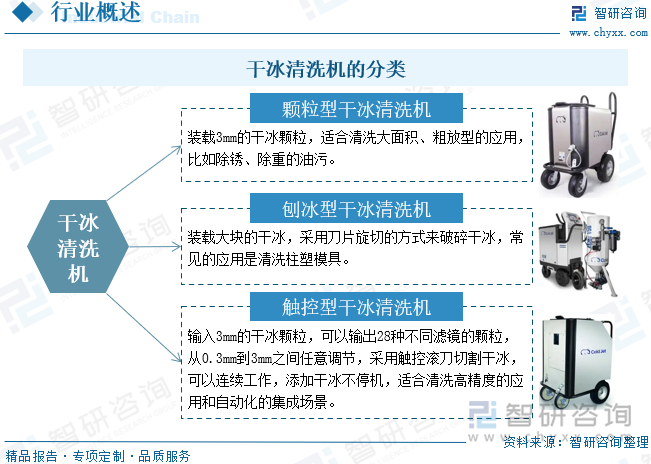
Industry Overview - The dry ice cleaning machine industry is experiencing a significant transformation driven by the rise of Industry 4.0 and smart manufacturing, moving away from labor-intensive traditional cleaning methods towards more efficient and cost-effective solutions [1][15] - The dry ice cleaning machine utilizes solid carbon dioxide (dry ice) that sublimates rapidly at room temperature, propelled by high-pressure air or nitrogen to clean surfaces effectively [1][15] - The market size for dry ice cleaning machines in China is projected to reach approximately 725 million yuan by 2024, indicating substantial growth potential [1][15] Working Principle - The core principle of dry ice cleaning machines involves the high-speed jetting of dry ice particles onto surfaces, where they rapidly sublimate upon contact with dirt, effectively removing contaminants without damaging the underlying material [5][11] Industry Development History - The development of dry ice technology dates back to the 1930s, with significant advancements occurring in the 1980s that transitioned the technology from military applications to civilian and industrial uses [6][7] - By 2010, domestic manufacturers began to achieve localization of dry ice cleaning machines, significantly reducing costs and expanding applications across various industries, including electronics and food processing [7] Industry Chain - The dry ice cleaning machine industry chain consists of upstream raw materials (solid and liquid carbon dioxide, compressors, cooling units, etc.), midstream production, and downstream applications across various sectors such as petrochemicals, food, electronics, and aerospace [9] Market Demand - The industrial cleaning market in China is expected to reach 118.7 billion yuan by 2024, with a year-on-year growth of 6.3%, highlighting the increasing demand for efficient cleaning solutions [12] Competitive Landscape - The dry ice cleaning machine industry in China features a diverse competitive landscape, with both international brands like Cold Jet and local companies rapidly innovating and capturing market share through technology and localized services [17][19] Future Trends - The industry is moving towards increased information technology integration, enabling real-time data collection and cloud management to optimize cleaning processes and reduce operational costs [24] - Smart technologies are reshaping the functionality of dry ice cleaning machines, with AI algorithms and machine learning enhancing cleaning efficiency and reducing waste [25][26] - Automation is driving the development of unmanned cleaning solutions, integrating robotic systems for high-risk cleaning tasks and streamlining manufacturing processes [26]
全球索具五金件市场生产商排名及市场占有率
QYResearch· 2025-06-23 09:21
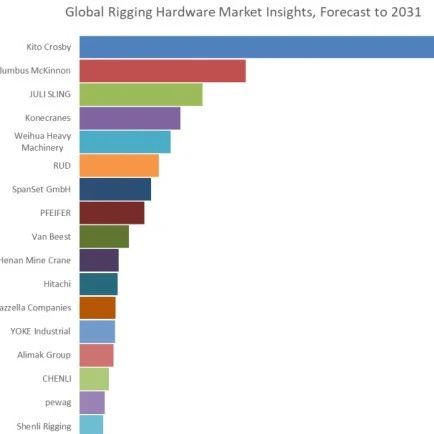
Core Viewpoint - The global rigging hardware market is projected to reach a size of $565.84 million by 2031, with a compound annual growth rate (CAGR) of 3.08% in the coming years [1]. Market Overview - Rigging hardware refers to tools and components used for lifting, securing, and moving heavy objects, playing a crucial role in construction, shipping, transportation, and entertainment industries [1]. - Common rigging hardware includes shackles, hooks, basket screws, eye bolts, and turnbuckles, designed to withstand significant loads and ensure safety during lifting operations [1]. Market Size and Growth - According to QYResearch, the global rigging hardware market is expected to grow steadily, with a projected market size of $565.84 million by 2031 and a CAGR of 3.08% [1]. Major Manufacturers - Key global manufacturers of rigging hardware include Kito Crosby, Columbus McKinnon, Giant Rigging, Konecranes, and Henan Weihu Heavy Machinery, with the top five companies holding approximately 37.64% of the market share [7]. Driving Factors - The demand for high-performance rigging hardware is driven by global industrial modernization and the expansion of large infrastructure projects, particularly in mining, energy, shipping, and construction sectors [8]. - Continuous upgrades in global safety standards further accelerate the demand for high-quality rigging products [8]. Restraining Factors - Fluctuations in steel and high-performance alloy prices significantly impact manufacturing costs and product price stability [9]. - Intense price competition among numerous industry participants limits profit margins [9]. - Issues such as fatigue damage, corrosion, and wear during long-term use necessitate regular maintenance and replacement of products [9]. Industry Development Opportunities - The rigging hardware market is increasingly adopting high-strength alloys and composite materials to meet higher safety standards and improve operational efficiency [10]. - Advances in Industry 4.0 and smart manufacturing are driving the integration of smart sensors and remote monitoring systems for real-time status tracking and fault warning [10]. - Automation and mechanization are becoming more prevalent through the use of automated lifting and handling equipment, reducing manual labor while enhancing efficiency and safety [10]. - There is a growing demand for customized rigging solutions tailored to specific industries and applications, promoting the rise of small-batch and diversified production [10].
2025年十大高薪行业
Sou Hu Cai Jing· 2025-06-21 12:38
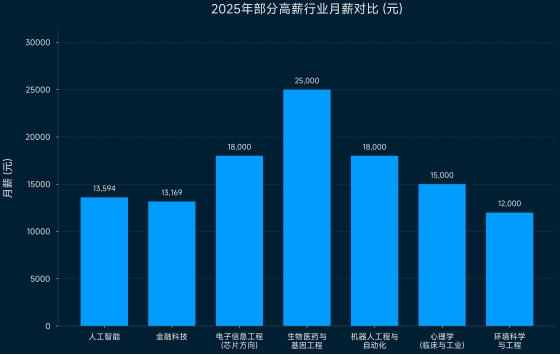
Core Insights - The article highlights the increasing salary disparities among industries in China as the economy transitions and optimizes its industrial structure, emphasizing the importance of understanding the distribution and trends of high-paying industries by 2025 for job seekers and human resource planning [1] Group 1: High-Paying Industries - The Artificial Intelligence industry ranks first with an average monthly salary of 13,594 CNY and a median salary of 10,501 CNY, driven by the growing demand for high-end talent due to the widespread application of AI technologies [3] - The FinTech industry follows closely with an average monthly salary of 13,169 CNY and a median salary of 10,001 CNY, as the integration of finance and technology continues to rise [6] - The Biopharmaceutical and Genetic Engineering industry offers an average annual salary ranging from 250,000 to 1,000,000 CNY, fueled by the aging population and breakthroughs in biomedicine [7] - The Electronic Information Engineering industry, particularly in the chip sector, has an average annual salary between 180,000 and 800,000 CNY, with a significant talent shortage in the semiconductor field [8] - The Robotics Engineering and Automation industry provides an average annual salary between 180,000 and 600,000 CNY, reflecting the increased demand for engineers amid the push for smart manufacturing [10] - The Psychology field, especially in clinical and industrial directions, offers an average annual salary between 250,000 and 500,000 CNY, driven by rising social pressures and awareness of mental health [11] - The Environmental Science and Engineering industry has an average annual salary between 120,000 and 250,000 CNY, supported by stricter environmental policies and the growth of carbon trading and ESG consulting [12] - The New Energy industry is projected to be one of the fastest-growing high-paying sectors by 2025, with increasing demand for talent in sustainable energy fields [13] - The High-End Manufacturing industry offers lucrative salaries for skilled engineers and technical experts, benefiting from the ongoing transformation and upgrading of the manufacturing sector [15] - The Internet and Software Development industry maintains a high salary trend, particularly in cloud computing and big data, with senior software engineers in major cities earning annual salaries of up to 500,000 CNY or more [17]