中国经济发展

Search documents
详讯:习近平同美国总统特朗普在釜山举行会晤
证券时报· 2025-10-30 06:40
Core Views - The meeting between Chinese President Xi Jinping and U.S. President Donald Trump emphasizes the importance of maintaining stable U.S.-China relations, highlighting the need for cooperation despite differences [2][3]. Economic Performance - China's economic growth rate for the first three quarters of the year reached 5.2%, with a 4% increase in global goods trade imports and exports, showcasing resilience in overcoming internal and external challenges [3]. - The Chinese government plans to deepen reforms and expand openness, aiming for qualitative improvements and reasonable quantitative growth in the economy [3]. Trade Relations - Both countries' economic teams have reached a consensus on important trade issues, with a focus on maintaining and implementing this consensus to provide tangible results for both nations and the global economy [3][4]. - Economic cooperation should be viewed as a stabilizing force rather than a source of conflict, encouraging both sides to focus on long-term benefits rather than retaliatory actions [4]. Cooperation Areas - There are promising prospects for cooperation in areas such as combating illegal immigration, telecommunications fraud, anti-money laundering, artificial intelligence, and infectious disease response [4]. - Both leaders agreed to enhance cooperation in trade, energy, and cultural exchanges, indicating a commitment to ongoing dialogue and collaboration [7]. Future Engagements - The two leaders agreed to maintain regular interactions, with Trump expressing interest in visiting China and inviting Xi to visit the U.S. [8].


详讯 | 习近平同美国总统特朗普在釜山举行会晤
第一财经· 2025-10-30 06:32
Group 1 - The core viewpoint emphasizes the importance of maintaining stable Sino-U.S. relations, highlighting the need for cooperation despite differences and challenges faced by the two largest economies in the world [1][2]. - China's economic growth rate for the first three quarters of the year is reported at 5.2%, with a 4% increase in global trade imports and exports, showcasing resilience in overcoming internal and external difficulties [2]. - The Chinese government plans to deepen reforms and expand openness over the next five years, focusing on qualitative improvements and reasonable quantitative growth, which is expected to create broader opportunities for Sino-U.S. cooperation [2]. Group 2 - Both countries' economic teams have reached a consensus on important trade issues, emphasizing the need for practical outcomes to stabilize the economic relationship and avoid a cycle of retaliation [3]. - Dialogue is preferred over confrontation, with a call for enhanced communication across various channels to foster mutual understanding and cooperation in areas such as combating illegal immigration and addressing public health challenges [3]. - The two leaders agreed to strengthen cooperation in trade, energy, and cultural exchanges, with plans for regular interactions and upcoming meetings, including the APEC summit hosted by China and the G20 summit hosted by the U.S. [4].

习近平同美国总统特朗普在釜山举行会晤
券商中国· 2025-10-30 06:31
Core Viewpoint - The meeting between Chinese President Xi Jinping and U.S. President Donald Trump emphasizes the importance of maintaining stable U.S.-China relations, highlighting the need for cooperation despite differences and challenges faced by both nations [1][4]. Economic Performance - China's economy showed a growth rate of 5.2% in the first three quarters of the year, with a 4% increase in global goods trade imports and exports, indicating resilience in overcoming internal and external difficulties [2]. - The Chinese government plans to deepen reforms and expand openness, aiming for qualitative improvements and reasonable quantitative growth in the economy, which is expected to create broader opportunities for U.S.-China cooperation [2]. Trade Relations - Both countries' economic teams have reached a consensus on important trade issues, emphasizing the need to maintain and implement this consensus to provide stability for both nations and the global economy [3]. - The economic relationship should serve as a stabilizing force rather than a source of conflict, with a focus on long-term benefits of cooperation rather than retaliatory measures [3]. Cooperation Areas - There are promising prospects for cooperation in areas such as combating illegal immigration, telecommunications fraud, anti-money laundering, artificial intelligence, and responding to infectious diseases [3]. - Both leaders agreed to enhance cooperation in trade, energy, and cultural exchanges, which could lead to significant achievements in the future [5]. Future Engagements - The two leaders agreed to maintain regular communication, with Trump expressing interest in visiting China and inviting Xi to visit the U.S. [6].

详讯:习近平同美国总统特朗普在釜山举行会晤
Xin Hua She· 2025-10-30 06:27
Group 1: Core Views - The meeting between Chinese President Xi Jinping and U.S. President Donald Trump emphasizes the importance of maintaining stable U.S.-China relations, recognizing that while differences exist, cooperation is essential for both nations' development [1][4]. - Xi highlighted China's economic growth, with a GDP growth rate of 5.2% in the first three quarters of the year, and a 4% increase in global trade imports and exports, showcasing China's resilience and potential [2]. - Both leaders agreed to enhance cooperation in trade, energy, and cultural exchanges, indicating a commitment to fostering a positive bilateral relationship [5]. Group 2: Economic Cooperation - Xi stated that the economic and trade teams from both countries have reached a consensus on key issues, aiming to solidify this understanding into actionable results to benefit both nations and the global economy [3]. - The emphasis was placed on viewing economic relations as a stabilizing force rather than a source of conflict, advocating for a long-term perspective on cooperation [3]. - Both leaders expressed optimism about future collaborations, with Trump acknowledging China's role as a significant partner for the U.S. and the potential for achieving great things together [4]. Group 3: Future Engagements - The two leaders agreed to maintain regular communication, with Trump expressing interest in visiting China and inviting Xi to the U.S. [6]. - The upcoming APEC and G20 summits were highlighted as opportunities for both nations to support each other and achieve positive outcomes for global economic governance [3].
40年40人|专访兴业银行首席经济学家鲁政委:从制造大国迈向创新高地 中国经济稳中向好
Zhong Guo Jing Ying Bao· 2025-10-27 11:55
Core Viewpoint - The interview with Lu Zhengwei, Chief Economist of Industrial Bank, highlights the resilience and vast development potential of the Chinese economy, emphasizing the importance of seizing opportunities from the new technological revolution and accelerating reform and opening up to maintain a long-term positive trend in economic growth [1][3]. Economic Opportunities - China possesses a complete industrial system and a large pool of high-quality labor and entrepreneurial talent, which positions it well for a strategic opportunity period in economic advancement [2]. - The country has a super-large market demand advantage, providing ample application scenarios for new technologies and products, facilitating practical learning and development [2]. - As of 2023, the revenue from TMT (Technology, Media, and Telecommunications) sectors has surpassed that of real estate, indicating a successful structural transformation in the economy [2]. Economic Challenges - The global landscape is experiencing unprecedented changes, with increased external uncertainties, rising protectionism, and trade barriers impacting global trade growth [3]. - Domestically, China is undergoing a critical phase of economic structural transformation, with some key industries facing structural contradictions and supply-demand imbalances [3]. Role of Banking Sector - The banking sector is crucial in supporting high-quality economic development by providing financial services to the real economy, promoting consumption, and stabilizing employment [3][4]. - Banks are encouraged to enhance financing support for manufacturing enterprises and adapt to the new characteristics of economic structural changes [4][5]. Consumer Market Insights - The government has introduced measures to promote consumption, focusing on increasing residents' income and stabilizing the real estate market to boost consumer spending [6][8]. - Service consumption, particularly in areas like healthcare, elderly care, and childcare, shows significant potential for growth due to existing supply-demand gaps [7][8]. Policy Recommendations - Expanding consumption subsidies to service sectors can guide residents towards upgrading their consumption structure and creating more jobs [8][9]. - Increasing government spending on public services and stabilizing asset prices can enhance consumer confidence and spending capacity [9][10].

从“十五五”规划看中国经济
2025-10-27 00:30
Summary of Key Points from Conference Call Records Industry Overview - The records focus on the **Chinese economy** and its development strategies as outlined in the "14th Five-Year Plan" and the upcoming "15th Five-Year Plan" [1][2][3]. Core Insights and Arguments 1. **Economic Development Principles**: The Chinese economy emphasizes a stable yet progressive approach, focusing on high-quality development, technological innovation, and the importance of expanding domestic demand [1][2][6]. 2. **Manufacturing Sector Strength**: China's manufacturing industry holds a significant global position, accounting for **30%** of global manufacturing and **15.9%** of exports, which enhances its resilience against external challenges [4]. 3. **GDP Growth Targets**: To achieve the goal of doubling the economic output by **2035**, China needs to maintain a growth rate of **4.4%** or higher, with a target of **4.7-4.8%** for the next five years [2][5]. 4. **Challenges in Economic Transition**: The transition to a high-income economy faces challenges such as increasing targets and the need for faster growth compared to developed nations, alongside maintaining a trend of currency appreciation [5]. 5. **Investment in Human Capital**: Emphasis is placed on investing in people to enhance consumption capacity and confidence, particularly through improvements in healthcare, education, and social services [11][13]. 6. **Service Sector Development**: The service sector, currently at **56.7%** of GDP, is seen as an area for growth, with a focus on improving the quality of both life services and production services [14]. 7. **Role of Technology**: The integration of technology into industries is crucial, with a focus on practical applications of artificial intelligence to enhance efficiency and productivity [9][10]. 8. **Debt Management**: Addressing local government debt and ensuring social stability are critical for maintaining economic growth during the transition phase [22]. Additional Important Insights 1. **Consumer Confidence**: Enhancing consumer confidence through improved income levels and social security is vital for boosting domestic consumption [13][18]. 2. **Real Estate as a Livelihood Issue**: The real estate sector is linked to living conditions and quality of life, necessitating high-quality housing development to stabilize the market [19][20]. 3. **Globalization and Openness**: China aims to deepen international cooperation through high-level openness, including equal treatment for foreign and domestic enterprises [16]. 4. **Reform for Demand Expansion**: Reforms are essential for breaking down barriers to competition and enhancing domestic demand through a unified market [17]. This summary encapsulates the key points from the conference call records, highlighting the strategic direction and challenges faced by the Chinese economy as it navigates its development goals.
兴业证券王涵 | 从资本市场视角看四中全会公报——提振信心,后市可期
王涵论宏观· 2025-10-23 15:41
Group 1 - The core viewpoint of the article emphasizes the significant enhancement of China's economic strength during the 14th Five-Year Plan, which serves as a fundamental support for the capital market's strong performance. However, there are two main concerns regarding the medium to long-term economic outlook: how to address the negative impacts of the external environment on China and how to better promote globalization to open up growth space for the Chinese economy [1] - The 20th Central Committee's Fourth Plenary Session report provides positive and clear responses to the aforementioned concerns, which will help further consolidate and enhance market confidence [1][2] - The meeting highlights the need for "strategic determination and historical initiative" to actively respond to complex environments, indicating a more proactive attitude from the central government in facing external challenges [1][2] Group 2 - The article outlines a dual approach to policy implementation, focusing on enhancing internal capabilities to address external uncertainties, particularly in technology self-reliance and national security [2] - The emphasis on expanding high-level openness is a key strategy to break external constraints, with a notable improvement in the priority of this goal compared to previous sessions [2] - The meeting is expected to further boost market confidence, reinforcing the foundation for a positive capital market outlook, as it addresses concerns about medium to long-term development [3]

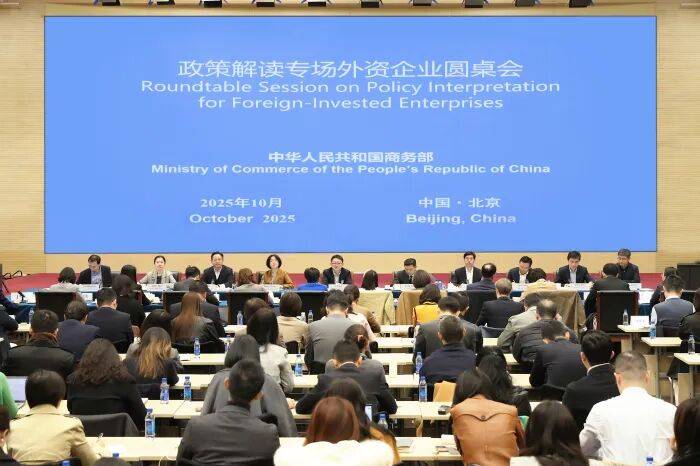
商务部召开政策解读专场外资企业圆桌会,170余家外资企业及在华外国商协会代表参会
Sou Hu Cai Jing· 2025-10-21 12:14
Core Insights - The meeting hosted by Vice Minister Ling Ji focused on policy interpretation for foreign enterprises, with over 170 foreign companies and representatives from foreign business associations in attendance [1][3] - Ling Ji highlighted the resilience and potential of the Chinese economy, with an average GDP growth rate of 5.5% during the first four years of the 14th Five-Year Plan, despite a complex external environment [3] - The Chinese government has introduced policies to ensure equal support for all business entities in government procurement, enhancing the legal rights of foreign enterprises [3] Group 1 - The 20th Central Committee's Fourth Plenary Session is expected to outline a blueprint for China's development over the next five years [3] - The Chinese government is committed to expanding openness and has shown determination and practical measures to stabilize foreign investment and promote development [3] - Foreign enterprises expressed optimism about the "15th Five-Year Plan" providing greater development opportunities and indicated a willingness to increase investments in China [3] Group 2 - The new procurement policy allows all types of business entities to enjoy equal support, ensuring foreign enterprises can participate in government procurement [3] - Ling Ji emphasized that export controls are a responsible action to maintain world peace and regional stability, while also ensuring compliance with international obligations [3] - The meeting served as a platform for foreign enterprises to voice their concerns and expectations regarding the Chinese market and government policies [3]
权威解读丨从前三季度成绩单看中国经济发力点
Xin Hua Wang· 2025-10-21 09:50
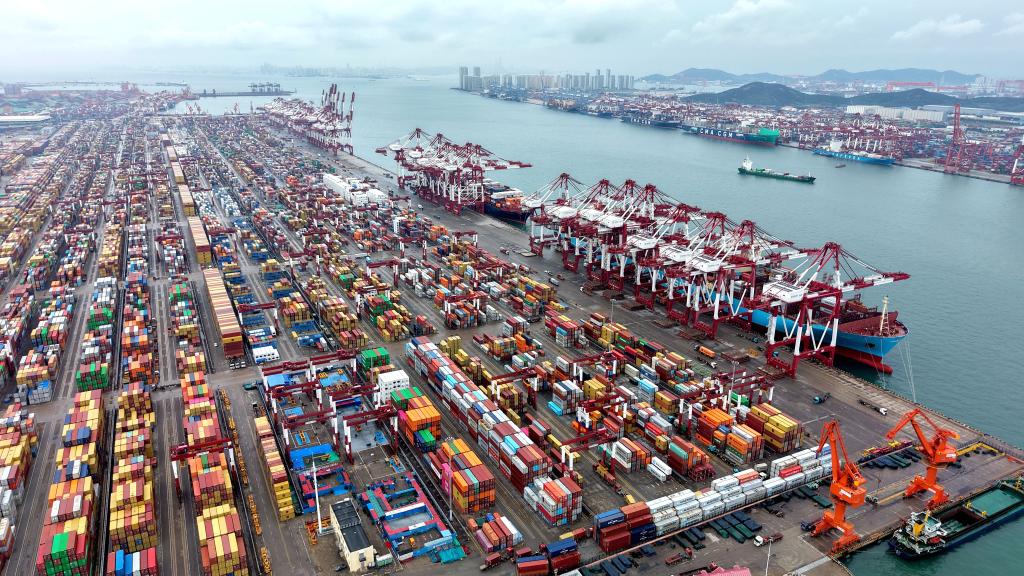
Core Viewpoint - China's GDP for the first three quarters reached 10,150.36 billion yuan, with a year-on-year growth of 5.2% at constant prices, indicating steady economic performance and positive outcomes in high-quality development [1] Economic Performance - In the first quarter, GDP grew by 5.4%, in the second quarter by 5.2%, and in the third quarter by 4.8%. Despite a 0.4 percentage point decline in the third quarter compared to the second, this growth rate remains significantly higher than that of most major economies [2] - The fundamentals of the Chinese economy are strong, with stable operational support remaining unchanged [2] Sectoral Contributions - Agricultural value added increased by 3.6%, industrial value added grew by 6.2%, and service sector value added rose by 5.4% in the first three quarters [5] - Retail sales of consumer goods totaled 36,587.7 billion yuan, with a year-on-year growth of 4.5%, while manufacturing investment increased by 4.0% [5] - The total value of goods imports and exports reached 33,607.8 billion yuan, also reflecting a year-on-year growth of 4.0% [5] Investment and Consumption - The contribution rate of final consumption expenditure to economic growth reached 53.5%, indicating a significant impact on overall economic performance [5] - Manufacturing innovation is evident, and policies aimed at expanding domestic demand and promoting consumption are showing positive results [5] Future Outlook - Analysts suggest that infrastructure investment and manufacturing investment will remain resilient in the fourth quarter, with consumer demand expected to recover steadily [7] - New policy financial tools and fiscal measures are anticipated to support local governments in achieving economic and social development goals [7] - The government aims to implement more proactive macro policies to stabilize employment, businesses, markets, and expectations, promoting sustained and healthy economic development [7]
主播说联播丨超百万亿!“新”速度,新突破
Yang Shi Xin Wen Ke Hu Duan· 2025-10-21 07:58
今天还看到一条消息,"全球最快高铁"CR450动车组目前正在开展运用考核。所谓"运用考核"就是"刷里 程",进行各种达标考试。考核通过之后,离投入运营也就越来越近。试验期间,CR450动车组还跑出了单 列时速453公里的新纪录。CR450动车组之所以跑得又稳又快,一方面是因为动力强劲、科技含量高,比如 列车采用了新型复合材料,让车身整体上更轻;另一方面动车组的设计更潮更酷,比如车头更尖更细,如离 弦之箭,阻力更小。新动能不断累积的中国经济和"全球最快高铁"在不断创造新纪录、取得新突破,两者 都是以持续的创新跑出了发展的加速度。这也是一路向前的中国速度。 总监制丨闫帅南监制丨李浙主编丨王兴栋视频编辑丨田思雨 今天,国家统计局发布前三季度经济数据。初步核算,前三季度国内生产总值1015036亿元,按不变价格计 算,同比增长5.2%。数字背后,有哪些重要信息?点击视频↓↓↓ 三个季度的经济总量就已突破百万亿,而我国年度GDP首次超百万亿是在五年前的2020年。五年来我国 经济连上新台阶,今年全年有望达到140万亿元。块头在变大,步伐则更稳更有劲,其中特别亮眼的是关键 核心技术不断取得突破、创新力大幅跃升,大国重器捷 ...