
以人为本

Search documents
中国代表在人权理事会呼吁完善全球人权治理
Xin Hua Wang· 2025-09-26 01:30
Core Viewpoint - The Chinese representative at the UN Human Rights Council calls for improvements in global human rights governance, emphasizing the need for multilateralism and equal participation of all nations in decision-making processes [1] Group 1: Key Proposals - The Chinese representative, on behalf of nearly 80 countries, proposes five key initiatives to enhance global governance: 1. Upholding sovereign equality, allowing all countries, regardless of size or wealth, to participate equally in global governance [1] 2. Adhering to the rule of international law, ensuring equal application without double standards [1] 3. Promoting multilateralism, advocating for collaborative efforts against unilateralism [1] 4. Emphasizing a people-centered approach, balancing the advancement of various human rights [1] 5. Focusing on action-oriented results to effectively improve global human rights governance [1] Group 2: Context and Challenges - The representative highlights the severe impact on multilateralism and the necessity for reforms in the UN to enhance efficiency, simplify procedures, eliminate redundancy, and strengthen transparency [1]
为破解全球治理赤字贡献中国方案(国际论坛)
Ren Min Ri Bao· 2025-09-23 22:00
Core Ideas - The global governance initiative focuses on the question of what kind of global governance system to build and how to reform and improve it, addressing the common aspirations of most countries and the needs of people worldwide [1][2] - The initiative emphasizes five core principles: sovereign equality, adherence to international law, multilateralism, a people-centered approach, and action-oriented strategies, which align with the purposes and principles of the UN Charter [1][2][3] Sovereign Equality - Sovereign equality is the primary premise and important foundation of global governance, yet it is not fully realized in international relations, with some countries engaging in bullying behavior [2][3] - China advocates for a global governance perspective that emphasizes shared destiny, collective rule-making, and equal sharing of development outcomes among nations [2][3] International Rule of Law - International law is the fundamental guarantee and important guideline for global governance, with the UN Charter serving as the recognized basic principle of international relations [2][3] - China supports the authority of international law and the multilateral system based on rules, ensuring equal and unified application of international law and rules [2][3] Multilateralism - Multilateralism is the basic path and realistic choice for global governance, with China actively participating in multilateral cooperation and advocating for a multipolar world and inclusive economic globalization [3] - The initiative aims to address the underrepresentation of the Global South and promote lasting peace, universal security, and common prosperity [3] People-Centered Approach - The value orientation of global governance is people-centered, aiming to turn the aspirations of people for a better life into reality [3] - China's development is linked to the aspirations of people worldwide, exemplified by the high-quality co-construction of the Belt and Road Initiative [3] Action-Oriented Strategies - The vitality of global governance comes from practice, with a focus on action and tangible results [3] - China plays a responsible role in international organizations and proposes practical actions and measures at international meetings to deepen consensus and achieve positive outcomes in global governance [3]
瞄准“高质价比”,联发要为年轻人建“好房子”
Xin Jing Bao· 2025-09-22 10:48
Core Viewpoint - The company, Lianfa Group, is focusing on building "good houses" specifically for the new youth demographic, differentiating itself from other real estate firms that are targeting improvement-type housing solutions [1][3][9] Group 1: Product Strategy - Lianfa Group's new youth product strategy emphasizes "affordable price, high quality, strong operation, and intelligence," with "affordable price" being the top priority [3][5] - The company aims to create 60-80 square meter main unit types in core urban areas, combining functional design and public space to enhance living quality [3][5] - The new youth housing initiative is designed to address the housing challenges faced by young people in major cities, positioning them as homeowners rather than just renters or buyers of older properties [3][4] Group 2: Market Opportunity - The real estate industry is experiencing new opportunities with the introduction of "good house" policies, which focus on quality rather than size or price [2] - Lianfa Group is targeting areas with concentrated industries, which are likely to attract young professionals, rather than high-priced core urban districts [3][4] Group 3: Community Development - The new youth housing concept includes the creation of vibrant, interconnected communities that cater to the entire lifecycle of residents [7][8] - Lianfa Group has partnered with Huawei to develop a smart community system that integrates advanced technology for enhanced living experiences [7][8] - The company is implementing a customizable community approach, allowing residents to tailor their living environments to their preferences and needs [8] Group 4: Innovation in Design - Lianfa Group is introducing innovative design features such as "1.5 bathrooms" and "1.9 bathrooms" to optimize small living spaces for young residents [5][6] - The design philosophy incorporates flexibility, allowing units to adapt as residents' life stages change, from single living to family life [6][8]

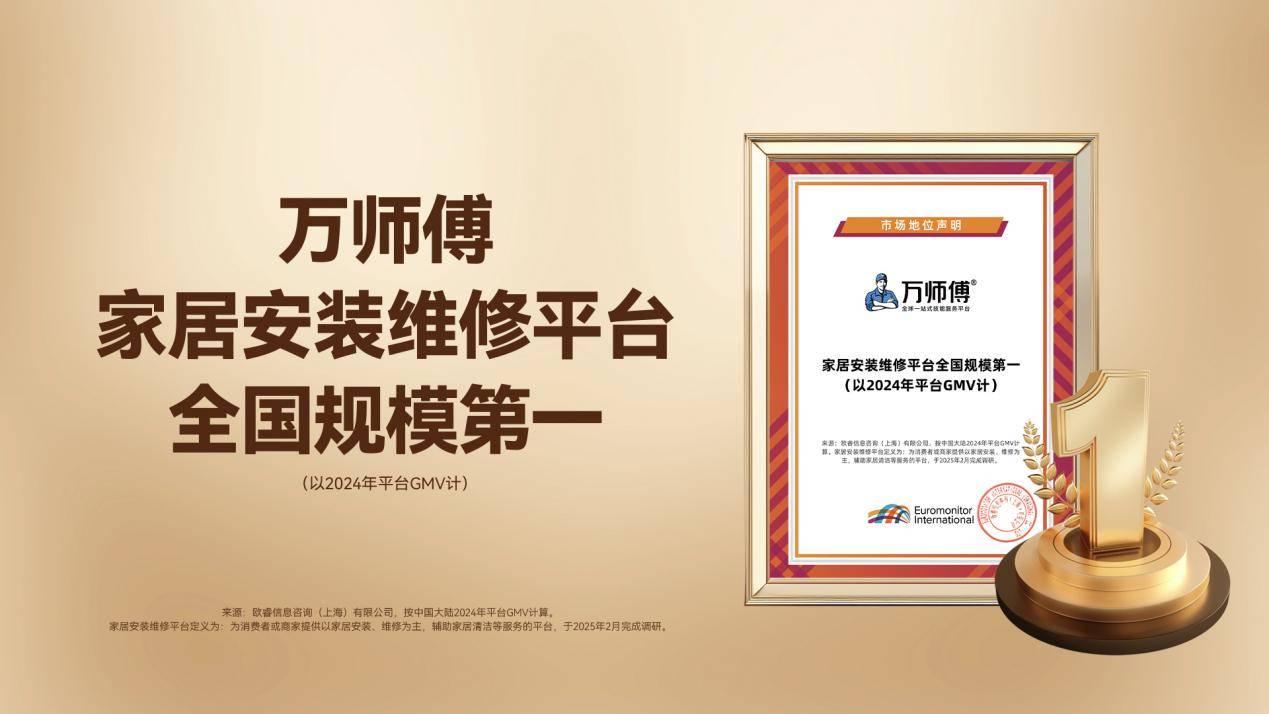
万师傅创始人CEO田晓正谈“全国第一”:最重要的并非规模
Sou Hu Cai Jing· 2025-09-18 02:23
Core Insights - Wan Shifu has achieved 180 million recognitions, establishing itself as the leader in the home service industry without extensive marketing efforts [2][4] - The company emphasizes user trust and satisfaction as the foundation of its success, rather than just market size [6][10] Group 1: Company Overview - Founded in 2013, Wan Shifu was among the first to leverage the industrial internet wave in China, utilizing a crowdsourcing model to match quality service resources nationwide [4][8] - As of June 2025, the platform has over 4 million registered service providers, reaching 99.8% of urban and rural areas in China, making it the industry leader in both user and transaction scale [4][8] Group 2: Service Philosophy - Wan Shifu's approach focuses on user autonomy and service provider independence, enhancing user experience and satisfaction [6][10] - The company aims to address the low overall satisfaction in the home service industry by improving service quality and eliminating consumer fears through standardized services [8][10] Group 3: Brand Positioning - The brand's philosophy is to exceed customer expectations by providing reliable and emotionally positive service experiences [10][12] - Wan Shifu is recognized for its professionalism, convenience, and customer-centric approach, which has contributed to its reputation and user loyalty [12][13] Group 4: Industry Challenges - The home service industry faces significant trust issues, with consumers often feeling apprehensive about service quality [8][10] - Wan Shifu aims to bridge the gap between consumer expectations and service supply through training and digital tools [8][10]

坚持以人为本是价值取向——构建更加公正合理的全球治理体系⑤
Xin Hua She· 2025-09-16 13:12
Group 1 - The core idea of the news is the emphasis on a people-centered approach in global governance, as proposed by President Xi Jinping during the "Shanghai Cooperation Organization+" meeting, highlighting the importance of addressing common challenges through reforms that enhance people's sense of gain, security, and happiness [1][2][3] - China practices the "people-centered" philosophy in both domestic governance and international cooperation, focusing on enhancing the well-being and dignity of its citizens while promoting global development that benefits all [2][3] - The commitment to a people-centered approach is reflected in China's active role in global cooperation on public health, climate change, and food security, aiming to build a community with a shared future for humanity [3] Group 2 - The principle of respecting diversity and promoting equality in international relations is fundamental to China's "people-centered" approach, opposing hegemony and advocating for the representation of developing countries in global affairs [2] - China's initiatives, such as the Belt and Road Initiative, demonstrate a commitment to improving livelihoods and creating jobs for people along the route, showcasing the practical application of the "people-centered" philosophy in global development cooperation [2][3] - The ultimate goal of global governance is to transform people's aspirations for a better life into reality, emphasizing the need for a fair and inclusive world where everyone can enjoy prosperity and well-being [3]
新华时评丨坚持以人为本是价值取向——构建更加公正合理的全球治理体系⑤
Xin Hua She· 2025-09-16 11:34
Core Viewpoint - The article emphasizes the importance of a people-centered approach in global governance, as proposed by Chinese President Xi Jinping during the "Shanghai Cooperation Organization+" meeting, highlighting that the well-being of people should be the primary goal of governance efforts [2][3]. Group 1: Global Governance Initiatives - The global governance initiative advocates for a people-centered philosophy, aiming to enhance the sense of gain, security, and happiness among people worldwide [2][3]. - The initiative seeks to reform and improve global governance to better address common challenges faced by humanity, promoting shared development and security [2][4]. Group 2: China's Commitment to People-Centered Governance - China is portrayed as a steadfast practitioner of the "people-centered" concept, integrating it into domestic governance and international cooperation [3]. - Domestically, China focuses on enhancing the sense of gain, happiness, and security for its citizens, while internationally, it emphasizes the importance of development within the global macro policy framework [3]. Group 3: Respect for Diversity and Equality - The article highlights China's respect for cultural diversity and the autonomy of nations, opposing any form of hegemony or coercive politics [3]. - It advocates for a democratic approach to international relations, where global affairs are governed collectively by all nations, ensuring that development outcomes are shared equitably [3]. Group 4: Focus on Global Cooperation in Key Areas - China's commitment to global cooperation is evident in its proactive stance on public health, climate change, and food security, positioning itself as a responsible major power [4]. - The article underscores the need for global governance to transform people's aspirations for a better life into reality, advocating for a fair and inclusive world [4].
聚焦“以人为本”设计转型,业界共议“好房子”全龄友好新范式
Bei Jing Shang Bao· 2025-09-11 14:37
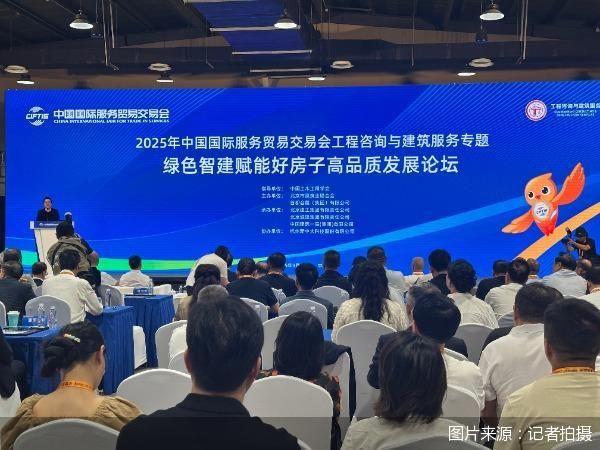
Core Insights - The forum on "Green Intelligent Construction Empowering Quality Development of Good Houses" emphasizes the need for the construction industry to shift from large-scale narratives to a human-centered approach, focusing on all-age friendliness, emotional connections, and life scene creation [1] Group 1: Human-Centric Design - The design paradigm has shifted from a binary "environment-equipment" model to a ternary "human-environment-equipment" model, addressing spatial needs and functional requirements [2] - The renovation of the Longfu Temple commercial street highlights the importance of restoring cultural memory and creating emotionally resonant living spaces [2][3] - The project incorporates open and interactive designs, enhancing community engagement and ensuring safety for children while preserving historical elements [3] Group 2: Quality Housing Construction - The construction of "good houses" is essential for meeting residents' needs and serves as a core market driver for the transformation of the construction industry [4] - The focus on high-quality housing will compel the construction industry to innovate and reform comprehensively [4] - The integration of green, intelligent, and industrialized construction methods is crucial for building a safe, comfortable, and environmentally friendly construction system [4] Group 3: Material and Technological Innovation - High-quality materials are fundamental for constructing "good houses," addressing common housing issues while supporting green, low-carbon, and intelligent residential construction [4] - Accelerating construction innovation is vital for transforming production methods in the construction industry, merging modern industrial information systems with traditional practices [5] - Developing advanced intelligent and highly integrated production methods can meet diverse construction service needs and promote high-quality industry development [5]
2025服贸会 丨 聚焦“以人为本”设计转型,业界共议“好房子”全龄友好新范式
Bei Jing Shang Bao· 2025-09-11 11:34
Core Viewpoint - The forum on "Green Intelligent Construction Empowering Quality Development of Good Houses" emphasizes the need for the construction industry to transition towards a human-centered approach, focusing on safety, comfort, sustainability, and intelligence in building design [1] Group 1: Human-Centered Design - The design paradigm has shifted from a binary "environment-equipment" model to a ternary "human-environment-equipment" model, addressing the spatial needs and performance configurations based on human behavior [3] - The renovation of the Longfu Temple commercial street serves as an example of integrating cultural memory and emotional resonance into urban design, enhancing community interaction and experience [4] Group 2: Construction Technology Upgrade - The construction of "good houses" is essential for meeting residents' quality of life needs and serves as a core market driver for the transformation of the construction industry [6] - The construction industry is urged to transition from scale-driven growth to value creation, with a focus on high-quality housing that necessitates comprehensive reform and innovation [6] Group 3: Material and Manufacturing Innovation - High-quality materials are fundamental for building "good houses," requiring a comprehensive application of practical, economical, aesthetic, and green building materials to address common housing issues [6] - Accelerating construction innovation is identified as a key driver for transforming production methods in the construction industry, promoting the integration of modern industrial information systems with traditional construction practices [7]
破解治理赤字 彰显大国担当
Ren Min Ri Bao· 2025-09-03 07:19
Core Concepts - The global governance initiative emphasizes five core principles that align with the purposes and principles of the United Nations Charter, aiming to address governance deficits and build a more just and equitable global governance system [1][2] Group 1: Key Principles of Global Governance - Sovereign equality is the primary premise of global governance, advocating that all countries, regardless of size or wealth, have equal rights to participate in decision-making and share governance outcomes [2] - International rule of law is fundamental to global governance, with a call to uphold the principles of the United Nations Charter and ensure equal application of international laws and rules [2] - Multilateralism is the basic path for global governance, with a focus on cooperation and the importance of a multilateral system centered around the United Nations [3] Group 2: Value Orientation and Action - A people-centered approach is the value orientation of global governance, aiming to turn the aspirations of people for a better life into reality and promote common development [3] - Action-oriented principles are crucial for global governance, emphasizing the need for practical cooperation to address urgent issues and long-term challenges, with a focus on tangible outcomes [4] - The global governance initiative is part of a broader set of initiatives, including global development, security, and civilization initiatives, contributing to global stability and certainty [4]
破解治理赤字 彰显大国担当(和音)
Ren Min Ri Bao· 2025-09-02 23:05
Core Ideas - The global governance initiative proposed by President Xi Jinping emphasizes the need for reforming and improving global governance to address governance deficits and build a more just and reasonable global governance system [1][4] Group 1: Principles of Global Governance - Sovereign equality is the primary premise of global governance, advocating that all countries, regardless of size or wealth, have equal rights to participate in decision-making and share governance outcomes [2] - International rule of law is fundamental to global governance, with a call to uphold the principles of the UN Charter and ensure equal application of international laws and rules [2] - Multilateralism is the basic path for global governance, with a focus on cooperation and the importance of a multilateral system centered around the UN [3] Group 2: Value Orientation and Action - People-centered development is the value orientation of global governance, aiming to turn the aspirations of people for a better life into reality and promote common development [3] - Action-oriented principles are crucial for global governance, emphasizing the importance of practical cooperation to address urgent issues and long-term challenges [4] - The global governance initiative is part of a broader set of initiatives, including global development, security, and civilization initiatives, aimed at providing stability and certainty to the world [4]