
复利效应

Search documents
上海中广云智投:为什么说“不懂不投”是新手最重要的护城河?
Sou Hu Cai Jing· 2025-05-24 22:51
Group 1 - The principle of "do not invest if you do not understand" serves as a protective measure for novice investors, emphasizing risk control, knowledge accumulation, long-term perspective, and psychological resilience [1][2][7] - New investors often fall into traps due to information asymmetry or blind following, leading to significant losses, as seen in the 2021 cryptocurrency market [2][6] - The principle encourages investors to ask critical questions about asset attributes and risk characteristics before making investment decisions [2][8] Group 2 - Knowledge accumulation is essential for building a cognitive framework, enabling investors to understand industry dynamics and identify companies with core technologies [3][5] - Understanding market signals, such as the inverted yield curve, allows investors to adjust their asset allocations proactively rather than reactively [5][6] - The principle fosters a long-term investment mindset, where understanding the correlation between stock market returns and corporate earnings growth helps investors remain committed during market downturns [6][7] Group 3 - Psychological resilience is crucial in investment, as behavioral biases like overconfidence and loss aversion can lead to poor decision-making [7][8] - The principle helps investors establish decision-making discipline by setting cognitive thresholds, allowing them to filter out market noise [7][8] - By understanding valuation logic, investors can make rational decisions based on fundamentals rather than historical price points [8] Group 4 - The principle of "do not invest if you do not understand" is not conservative but reflects respect for the market and honesty with oneself, promoting a learning-practice-reflection cycle [9] - Investors should be able to answer key questions about a company's revenue generation, industry potential, and risk factors to internalize this principle [9] - Maintaining capital is prioritized over seeking returns, with the principle serving as the first line of defense in wealth preservation [9]


18年年化33%!《滚雪球》作者详解巴菲特一笔鲜为人知的个人投资,完整还原他的真实决策逻辑︱重阳荐文
重阳投资· 2025-05-12 06:59
Core Viewpoint - The article emphasizes Warren Buffett's unique investment philosophy, focusing on risk assessment and the importance of maintaining a margin of safety rather than relying on complex financial models or predictions [2][3]. Group 1: Investment Philosophy - Buffett prioritizes evaluating potential disaster risks in investments, rejecting opportunities with significant risks immediately [3][10]. - He sets a baseline initial return rate of 15%, aiming for reasonable odds rather than excessive greed [3][9]. - Continuous learning and knowledge accumulation are crucial to Buffett's decision-making process, allowing for quick and accurate judgments [3][8]. Group 2: Key Investment Concepts - The article outlines four core concepts in value investing: intrinsic value, ignoring market volatility, the drawbacks of excessive trading and diversification, and the importance of a margin of safety [7]. - Buffett's investment decisions are characterized by a focus on a few critical factors rather than complex financial models, emphasizing sales growth and cost advantages [9][10]. Group 3: Case Study - Midcontinent Tab Card Company - The case study illustrates Buffett's investment in Midcontinent Tab Card Company, highlighting his initial rejection due to perceived disaster risks when the company was a startup challenging IBM [9]. - After the company demonstrated success in the market, Buffett reconsidered and invested, applying his principles of risk assessment and expected returns [9][10]. - The investment yielded an annualized return of 33% over 18 years, showcasing Buffett's effective application of his investment philosophy [9]. Group 4: Learning and Habits - Buffett's success is attributed to his diligent work habits and a deep-rooted understanding of investment principles acquired from a young age [7][8]. - He emphasizes the importance of avoiding bad habits and cultivating good ones, as they shape long-term success [7][8]. - The article suggests that Buffett's unique traits and disciplined approach to investing are key factors in his sustained success over decades [12][13].



解析巴菲特商业成功的秘籍:理性、长期主义与价值创造的底层逻辑
Sou Hu Cai Jing· 2025-05-09 04:39
Core Insights - The essence of Warren Buffett's business philosophy is a belief in "value creation" [1] - Buffett's investment success is attributed to a combination of investment wisdom, business philosophy, human insight, and rational decision-making [1] Value Investment Philosophy - The core principles of Buffett's investment philosophy include the margin of safety and the circle of competence [2][3] - The margin of safety principle emphasizes buying assets at prices significantly below their intrinsic value, focusing on high-quality companies at reasonable prices [2] - Buffett avoids high-volatility sectors and invests only in areas he understands, such as insurance and consumer goods [3] Market Behavior - Buffett views market fluctuations as emotional expressions of "Mr. Market," advising investors to focus on intrinsic value rather than short-term noise [4] Business Model Focus - The business model is the primary consideration in investment decisions, with a preference for companies with strong economic moats [6] - Economic moats include brand effects, cost advantages, network effects, and economic franchises, which allow companies to maintain pricing power [6] - Buffett favors companies that generate stable cash flows, such as insurance and utilities, which provide a foundation for investment expansion [7] Long-Term Strategy - Buffett's long-term holding strategy is a key driver of wealth accumulation, emphasizing the power of compounding [10] - He has held stocks like Coca-Cola and American Express for over 30 years, demonstrating confidence in their long-term value [11] - Buffett capitalizes on economic cycles, making strategic investments during downturns for significant returns [12] Financial Leverage and Capital Allocation - Buffett utilizes float from insurance operations as a source of low-cost long-term capital, with over $140 billion in float as of 2024 [14] - Efficient capital allocation focuses on maximizing returns, investing in high-return sectors [15] - Maintaining cash reserves allows Buffett to seize opportunities during market downturns, with $189 billion in cash reserves in Q1 2024 [16] Rationality and Emotional Management - Buffett's success is rooted in extreme restraint against greed and fear, emphasizing independent thinking and emotional isolation [18][19] - He acknowledges mistakes and demonstrates rational correction, as seen in his decision to exit airline stocks [20] Diversified Structure - Berkshire Hathaway's success is attributed to its diversified business structure, which includes insurance, energy, and manufacturing [22] - The combination of full acquisitions and minority stakes balances control and liquidity [23] - Recent investments in Japanese trading companies and Canadian firms reflect a global perspective to mitigate U.S. market risks [24] Conclusion - Buffett's success is not based on complex models but on a value-driven philosophy that integrates rationality, patience, and long-term thinking [26]


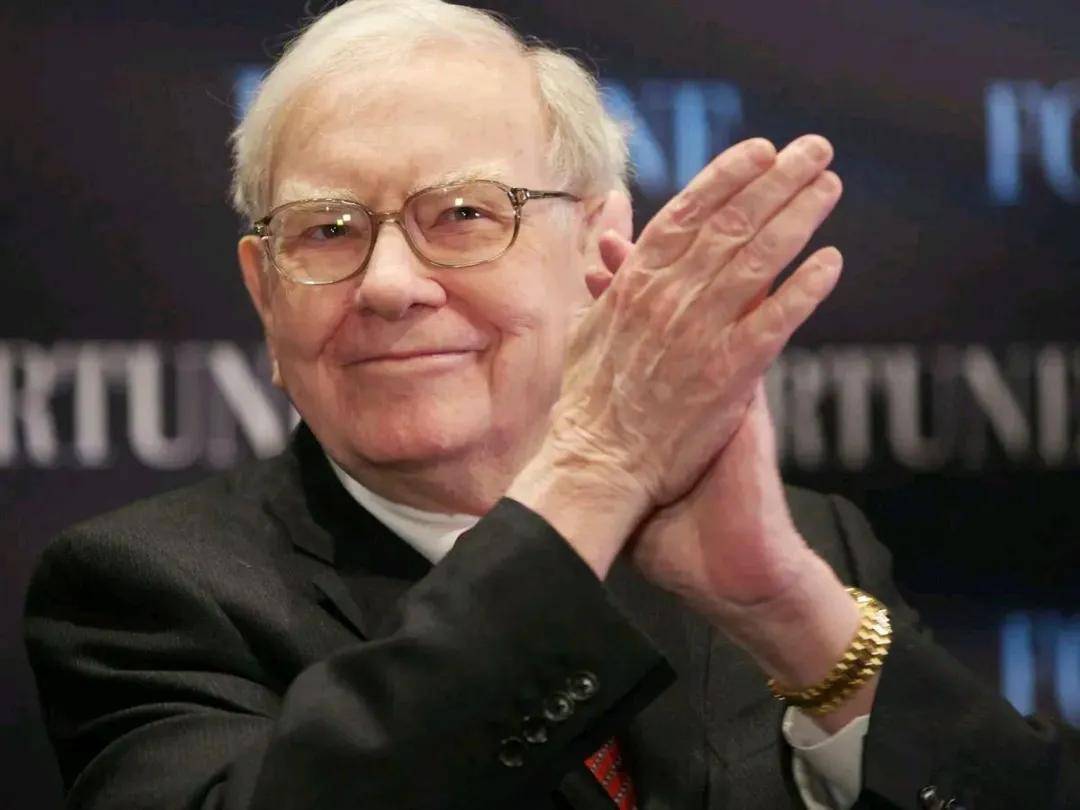
60年55000倍!巴菲特的封神之路
天天基金网· 2025-05-06 11:05
Core Viewpoint - Warren Buffett has achieved an impressive return of over 55,000 times since taking over Berkshire Hathaway in 1965, with an annualized compound return rate of 19.9%, highlighting the power of long-term investing and the compounding effect [1]. Group 1 - Buffett emphasizes buying excellent companies with a "moat" at a "good price." The "good price" is determined by a method of calculating intrinsic value, which reflects the present value of future cash flows. On average, the price-to-earnings (P/E) ratio of 44 frequently mentioned investment targets was 14, with 68% of stocks having a P/E ratio below 15 [1]. - The "moat" includes unique barriers such as brand, product characteristics, business models, and special rights. Examples include brand-based moats for companies like Coca-Cola and Gillette, a unique business model for Apple, and special rights for Wells Fargo [1]. Group 2 - Buffett is known for concentrating his holdings in a few key companies, which has led to significant profit effects. Since 1976, Berkshire's annual reports have disclosed fewer than 100 major holdings. The top 10 stocks with the highest investment returns, including Apple, American Express, and Coca-Cola, have generated a total return of $255.8 billion, accounting for approximately 80% of the total investment gains [2].



可持续的超额收益是绝对收益的时间积分形态
中泰证券资管· 2025-04-18 05:16
超额(相对)收益与绝对收益真的是不可兼得的鱼和熊掌吗?长期主义者会给出不一样的答案——可持续 的超额(相对)收益本质上是绝对收益的时间积分形态。 物理学家费曼说:"量子力学之所以难以理解,是因为我们总用经典世界的语言描述它。"资本市场同样如 此——当投资者用线性思维理解非线性的收益获得机制,必然陷入认知困境,如粒子位置与动量不可同时 精确测定一样。 在投资领域同样存在"风险、收益、可持续性"的不确定性三角 : ★ 宣称高绝对收益者,往往承受隐性尾部风险(长期资本管理公司的陨落); ★ 标榜可持续性者,常以牺牲收益锐度为代价(固定收益类产品的平庸回报); ★ 追求超额收益者,难逃时间维度的均值回归(连续跑赢市场的主动管理基金数量了了)。 对投资者而言,就像一场在迷雾中前行的冒险,收益的测不准性让投资领域充满了悬念与变数,许多投资 者陷入"超额(相对)收益与绝对收益对立"的思维困境。 这并非文字游戏,而是数学规律的必然。当某组合每年以2%的幅度持续跑赢标普500指数,30年后的累计 超额收益将高达81.1%,相当于在美股百年长牛的贝塔地基上,用阿尔法的复利魔法建造出一座收益金字 塔。 历史反复验证:当管理人以长期 ...
【干货】筹备养老生活,攻略请查收
中国建设银行· 2025-01-02 06:46
0.99元起购36元支何立流量 A 有问必答 交 了社保,为什么还要 投资个人养老金: 享顧优 个人养老金是政府政策支持、个人自愿参加、市场 化运营、实现养老保险补充功能的制度,助力提升 个人养老品质。 一笔投资,多重优惠 最高省税5400元 1 缴存对应金额税前抵扣 投资收益暂不征税 领取时仅按金额的3%纳税 费率更优惠 相比于A份额 基本养老保险 Y份额享管理费、托管费5折 政府主导建立 目不收取销售服务费 从税、费两端降低投资成本,提高实际收益水平! 美衫结遇| 普通人 普通人可以通过第三支柱"个人养老金"账户,为 自己早做准备! ▼ 个人账户累计,个人专享! ¥ | 享税收优惠,最高省税5400元/年1 通过账户投资力争抵御通胀,实现长期增值! ● 去开户!拥有专属个人养老金账户。 个人养老金专属产品 扫描下方二维码立即开户,并有机会享以下权益。 缴存有礼 最高享88元奖励 进阶有礼 最高享568元奖励 ◇ A 推荐有礼 每月最高可享600元奖励 t 客群专属礼 缴存达标还可享20元奖励 ✪ ┣ 积极策略 建信优享进取五年FOF Y 去试试 [020188] [中风险] [建行代销] 兴全安泰积极养老 ...