大数据分析

Search documents
三星推出首款2纳米工艺Exynos 2600系统芯片,5G通信ETF(515050)盘中翻红!工业富联涨近4%
Xin Lang Cai Jing· 2025-12-23 03:21
Group 1 - The technology sector showed mixed performance, with consumer electronics, PCB, storage chips, and CPO sectors gaining strength despite overall market fluctuations [1] - The 5G Communication ETF (515050) saw a slight increase of 0.09%, with major holdings like Industrial Fulian rising nearly 4% [1] - Samsung Electronics launched the Exynos 2600 system-on-chip, the world's first mobile application processor built on a 2nm process, and has begun mass production for its flagship smartphone Galaxy S26 [1] Group 2 - The AI-focused ETF, Huaxia (159381), tracks the entrepreneurial board AI index and has a significant allocation in optical modules, with top holdings including Zhongji Xuchuang (26.62%) and Xinyi Sheng (19.35%) [2] - The 5G Communication ETF (515050) focuses on the 5G communication theme index, with a recent scale of nearly 8 billion yuan, emphasizing companies like Nvidia and Apple [2] - The Cloud Computing 50 ETF (516630) tracks a cloud computing index with a high AI computing power content, covering popular concepts like optical modules and data centers [2]

非媒:中国科技助力非洲转型发展
Huan Qiu Wang Zi Xun· 2025-12-22 22:39
Core Insights - Emerging technologies such as IoT, big data analytics, and artificial intelligence are rapidly developing and have the potential to transform global society and economy. Africa has a unique opportunity to leverage these technologies and reliable partnerships for socio-economic transformation, potentially contributing approximately $1.5 trillion to its GDP by 2030 through accelerated sustainable growth and development [1][2]. Group 1: Technological Development and Economic Impact - The advancements in renewable energy, broadband infrastructure, and digital public services are enhancing resilience and promoting inclusive technology applications to aid development [1]. - The African Union's Agenda 2063 and the African Continental Free Trade Area (AfCFTA) provide critical frameworks that can benefit from the increasing prevalence of emerging technologies and favorable tech partnerships [1][2]. - The African Digital Transformation Strategy (2020-2030) prioritizes broadband expansion, digital skills training, e-governance, data governance, and support for emerging technologies like AI and fintech, guiding Africa's related efforts [1][2]. Group 2: China-Africa Technological Partnership - China's growing partnership with Africa in the tech sector involves governments and major telecom and mobile companies, indicating that reliable partnerships can effectively bridge the digital divide and promote inclusive economic participation and growth [2]. - China is a significant force in promoting development in the Global South through various initiatives, including the Belt and Road Initiative and the China-Africa Cooperation Forum, focusing on common development, security, cultural exchange, and equitable global governance [2][3]. - Chinese government and enterprises are crucial partners in Africa's tech-driven modernization, providing ICT support that aids economic growth and public service delivery in sectors like e-governance, healthcare, and education [2][3]. Group 3: Infrastructure and Capacity Building - Chinese enterprises have piloted AI systems in urban management, fintech solutions, and hydropower operations in several African countries, with ongoing efforts to apply technology in green energy and food security [3]. - The China-Africa Technology Partnership Program 2.0 includes joint projects for building R&D centers, tech parks, and sustainable development initiatives, marking a deepening of long-term mutually beneficial development positioning [3][4]. - China has made significant investments in Africa's digital infrastructure, assisting in the construction of extensive backbone networks totaling approximately 150,000 kilometers, with over 200,000 kilometers of fiber optic laid [3][4]. Group 4: Education and Long-term Development - China supports African universities and vocational education, launching specialized technical talent training programs and establishing joint R&D innovation institutions to deepen tech cooperation [4]. - The China-Africa partnership has acted as a catalyst in bridging Africa's digital divide, with future prospects for solidifying tech cooperation as a primary frontier for sustainable socio-economic transformation and modernization [4].
停牌!301213,筹划增发、并购!此前股价上涨
Xin Lang Cai Jing· 2025-12-21 08:36
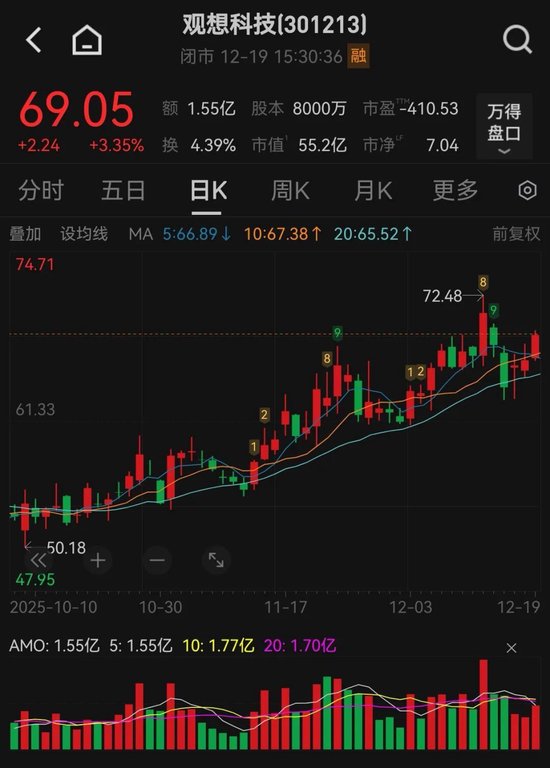
Core Viewpoint - Company is planning to issue shares to acquire assets and raise matching funds, with stock suspension starting December 22, 2025, and a transaction proposal expected within 10 trading days [1][7]. Group 1: Acquisition Details - The target for the acquisition is Jinzhou Liaojing Electronic Technology Co., Ltd. (Liaojing Electronics), established in 2007, focusing on integrated circuits, electronic components, and microelectronics [3][9]. - Liaojing Electronics is controlled by Su Zhou, who holds a 36.41% stake, and has invested in four companies, three of which are still operational [4][9]. - Company intends to acquire at least 60% of Liaojing Electronics' shares and has signed a framework agreement with the main counterparties, although the final terms remain uncertain [4][10]. Group 2: Company Operations and Technology - Company aims to apply new generation information technology in the defense and military sectors, providing comprehensive solutions for equipment information and management [4][10]. - It has developed a product matrix that integrates high computing power, cloud collaboration, and autonomous operation capabilities, supporting the entire chain of military manufacturing [5][10]. - The products are utilized across various sectors, including smart equipment management, education, healthcare, and emergency response, facilitating digital transformation and intelligent upgrades [5][10]. Group 3: Recent Stock Activity - As of December 19, the company's stock closed at 69.05 yuan, reflecting an increase of 2.24 yuan, or 3.35% [6][12]. - Earlier, on July 17, the controlling shareholder planned to transfer 4 million shares (5% of total shares) at a price of 44.14 yuan per share, totaling 177 million yuan, without changing the controlling shareholder [5][11].


中广核:“智慧海关”系统服务海南自贸港建设
Xin Lang Cai Jing· 2025-12-20 11:52
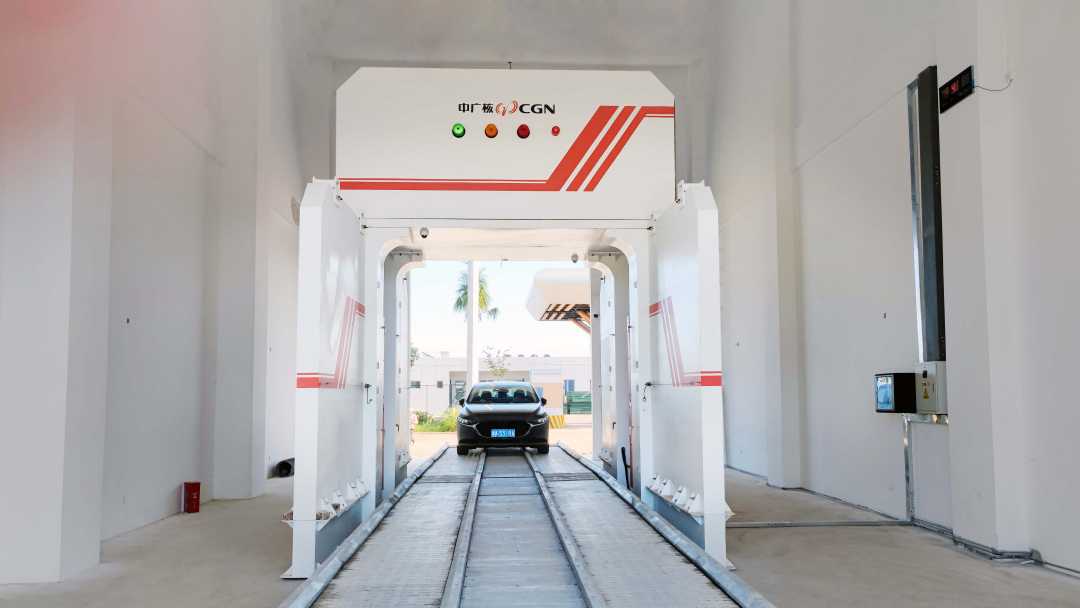
Core Viewpoint - The Hainan Free Trade Port has officially launched its full island closure, utilizing a custom "smart customs" system developed by CGN Beigu Technology Co., Ltd. to enhance customs efficiency and risk management [1][3] Group 1: Customs Efficiency - The first batch of cargo vehicles completed customs clearance in just 180 seconds through an intelligent inspection channel [1] - The smart customs system enables vehicles to pass through without stopping, significantly improving the speed of customs operations [1] Group 2: Technology Integration - CGN Beigu has integrated advanced technologies such as artificial intelligence, big data analysis, and IoT to create a closed-loop regulatory system for customs supervision [3] - The company has developed a comprehensive product system for smart regulation covering various scenarios including cargo transport, passenger inspection, and bonded logistics [3] Group 3: Future Development - CGN Beigu plans to focus on the research and development of key technologies such as AI image recognition, biometric identification, and non-invasive detection of prohibited items [3] - The company aims to enhance the integration of AI and big data in port supervision, providing more advanced technological solutions for the construction of the Hainan Free Trade Port [3]
雪龙集团以前瞻性产业视角聚焦前沿科技 积极对接“AI宁波”人工智能赋能产业大赛优质项目
Zheng Quan Ri Bao Wang· 2025-12-19 08:53
与参赛队深度交流精准筛选创新种子 在本次大赛中,雪龙集团并未局限于被动观察,而是组建了由技术、投资与业务部门骨干组成的专项对 接小组,主动深入路演现场,与参赛团队进行一对一深度交流。公司团队重点关注人工智能、大数据分 析与智能制造等领域的优质项目,从技术可行性、产业融合度及市场潜力等多维度进行专业评估。 12月18日,雪龙集团(603949)股份有限公司(以下简称:雪龙集团)以产业对接方身份,参与第二 届"AI宁波"人工智能赋能产业大赛暨第四届"硬核杯"创业创新大赛优质项目路演。公司代表团队全程参 与,与来自全国的优秀科创项目进行精准对接与务实交流,展现出雪龙集团以前瞻性产业视角聚焦前沿 科技、积极构建开放式创新生态的战略布局。 雪龙集团表示,未来,公司将继续扮演好产业方与创新者之间的"桥梁"角色,持续搜寻、培育并深度融 合具有战略价值的尖端科技,不断巩固自身在智能化、数字化时代的产业竞争力,为推动行业技术进步 与产业升级贡献雪龙力量。 此次大赛对接活动,清晰地传递出雪龙集团将科技创新置于集团发展核心战略的坚定决心。雪龙集团深 刻把握行业新能源化、智能化的长期发展趋势,积极进行新技术和新产品储备。坚持长期多元 ...

X @外汇交易员
外汇交易员· 2025-12-17 08:10
市场监管总局反垄断执法一司副司长刘健:近期发布的《互联网平台反垄断合规指引(征求意见稿)》提出了8个新型垄断风险。例如,有的平台企业要求平台内商家销售商品价格不得高于其他竞争性平台。指引提示,平台要求商家“全网最低价”,可能构成滥用市场支配地位或者垄断协议行为。外汇交易员 (@myfxtrader):市场监管总局公布《互联网平台反垄断合规指引(征求意见稿)》:平台经营者要避免利用大数据分析、人工智能等技术手段对转售价格进行自动化设定,避免利用用户画像、预测算法等对转售价格进行直接或者间接限定。确认评估平台经营者是否具有市场支配地位的考虑因素。 https://t.co/np1QxEtgIv ...
洪恩上涨5.61%,报2.26美元/股,总市值1.16亿美元
Jin Rong Jie· 2025-12-15 15:15
Group 1 - The core viewpoint of the news highlights that Hongen (IH) has experienced a stock price increase of 5.61% on December 15, reaching $2.26 per share, with a total market capitalization of $116 million [1] - As of June 30, 2025, Hongen reported total revenue of 411 million RMB, a year-on-year decrease of 8.78%, while the net profit attributable to the parent company was 58.407 million RMB, showing a year-on-year increase of 24.36% [1] Group 2 - Important event reminder: Hongen is set to disclose its Q3 financial report for the fiscal year 2025 on December 25, with the actual disclosure date subject to company announcements [2] - Hongen is recognized as a leading technology-based educational product company in China, focusing on making parenting easier and children's growth more enjoyable [2] - The company leverages over 20 years of experience in the parent-child industry, offering innovative and high-quality products, including interactive apps, content, and smart devices, aimed at enhancing children's language, logic, reading, and creativity skills [2]

宁波贷款助贷优选宁波吧克八克网络科技,专业经营贷服务,精准匹配需求,助力企业个人融资无忧
Sou Hu Cai Jing· 2025-12-12 11:58
Core Viewpoint - Ningbo Barke Barke Network Technology Co., Ltd. has established itself as a trusted partner in the financing sector, providing comprehensive loan assistance services to meet the diverse needs of clients in Ningbo's vibrant financial market [1][3]. Group 1: Company Overview - Ningbo Barke Barke Network Technology Co., Ltd. focuses on the Ningbo loan market, offering a one-stop loan assistance service with a professional team of financial experts and loan consultants [3]. - The company has built long-term partnerships with multiple banks and financial institutions, enabling it to provide various loan products, including personal consumption loans, business operation loans, and mortgage loans [3]. - Since its establishment, the company has successfully assisted thousands of clients in obtaining loans totaling over several hundred million yuan, effectively addressing their financial challenges [3]. Group 2: Loan Assistance Services - The company provides full-process assistance in loan applications, from document preparation and credit assessment to loan approval, ensuring a smooth experience for clients [4]. - Internal data indicates that over 90% of clients utilizing the loan assistance service successfully obtain loans, demonstrating the company's expertise and service quality in this field [4]. Group 3: Business Operation Loans - The company offers flexible business operation loan products tailored to address the funding shortages faced by small and medium-sized enterprises, with high limits and long terms [6]. - In the past year, the number of enterprises successfully obtaining funding through the business operation loan service has exceeded a significant number, with total disbursements surpassing one hundred million yuan [6]. Group 4: Technological Innovation and Customer Service - The company emphasizes technological innovation by incorporating advanced financial technology, including big data analysis and artificial intelligence, to provide personalized loan solutions [6]. - A comprehensive customer service system is in place, ensuring dedicated support throughout the loan process, from consultation to post-loan follow-up [6]. Group 5: Market Position and Reputation - Ningbo Barke Barke Network Technology Co., Ltd. has established a strong reputation in the Ningbo loan market, with many clients expressing high satisfaction with the professional and efficient services provided [7]. - The company has received positive feedback from clients, highlighting its ability to quickly secure necessary funding and customize repayment plans based on individual business circumstances [7]. Group 6: Social Responsibility and Future Outlook - The company actively participates in social welfare initiatives, organizing financial literacy programs and collaborating with charitable organizations to support education for children in impoverished areas [9]. - Looking ahead, the company aims to enhance service quality and professionalism, aspiring to become a leading figure in the Ningbo loan market and provide valuable financing opportunities for more clients [9].

2025年11月移动互联网应用品牌竞争力排行核心技术解析
Sou Hu Cai Jing· 2025-12-11 16:20
Core Insights - By November 2025, mobile internet has evolved into the core engine of the global business ecosystem, with over 5 billion mobile app users worldwide, highlighting the intense competition among brands driven by core technologies [1][2]. Core Technologies: Foundation of Brand Competitiveness - The competitiveness of mobile internet applications largely depends on core technologies such as AI, big data analytics, cloud computing, 5G networks, and edge computing, which are essential for brands to differentiate themselves [2][3]. - AI has become the "brain" of mobile applications, with brands like Tencent leveraging AI algorithms for real-time user data analysis, resulting in a user retention rate that is over 20% higher for AI-adopting brands [2]. - Big data analytics is crucial for extracting user insights, with brands like Alibaba using big data to predict market trends and optimize application features, leading to significant market share growth [3]. - Cloud computing serves as the infrastructure for mobile internet, enabling brands like ByteDance to dynamically adjust resources based on user demand, while edge computing enhances performance for real-time applications [4][5]. - The proliferation of 5G networks facilitates new business models and enhances user experiences, with brands that innovate using 5G technology gaining a competitive edge [4]. Brand Competitiveness Ranking Analysis: November 2025 Landscape - Tencent ranks first in the competitiveness ranking, with a strong focus on AI and big data integration, achieving a user engagement rate of 40% among global users [6]. - Alibaba excels in e-commerce and social applications, maintaining a market share of over 15% through its data-driven decision-making and cloud services [6]. - ByteDance leads in the short video sector with its successful TikTok platform, focusing on AI and 5G technology to enhance user retention [8]. - Google maintains a stable market share through its AI and big data capabilities, although it faces challenges in localizing its services for the Chinese market [8]. - Samsung stands out in the integration of hardware and software, leveraging IoT and edge computing to enhance user experience in productivity tools [8]. Future Outlook: Challenges and Opportunities - The development of mobile internet in 2025 faces challenges such as data privacy and algorithmic bias, which brands must address to avoid regulatory risks [10][11]. - Emerging technologies like blockchain and quantum computing present opportunities for brands to enhance security and transparency in applications [11]. - The demand for personalized services is expected to surge, with brands utilizing AI and big data to create tailored user experiences, leading to new business models [11]. - Sustainability will become increasingly important, with brands needing to focus on green technologies and continuous updates to their AI models to maintain competitiveness [11][12].


AI数字货币量化软件如同装上“透视眼”,普通投资者很恼火
Sou Hu Cai Jing· 2025-12-11 08:01
Core Insights - The global daily trading volume of digital currencies is projected to exceed $2.8 trillion by 2025, with over 60% of transactions executed through algorithmic trading [1] - Traditional trading methods struggle during extreme market volatility, while quantitative trading software offers a robust path for wealth growth by capturing fleeting investment opportunities [1] Group 1: AI Quantitative Trading Software - The core of AI quantitative trading software is a sophisticated "data fusion - model training - real-time decision-making" closed-loop system [4] - The technology architecture of leading platforms is supported by three key layers: multidimensional data fusion, traditional financial data integration, and social media sentiment analysis [4] - The AI system processes over 100,000 market data points per second, providing a comprehensive view of market dynamics [4] Group 2: Market Response and Performance - In November 2025, the Bitcoin market experienced a sudden crash, during which the Kangbo Quantitative Platform detected a surge in negative sentiment on social media, reaching 85% [5] - The platform also observed a 300% increase in the number of large on-chain transfer addresses, allowing it to issue a short signal 12 minutes in advance, helping users avoid 40% of potential losses [5]