太空探索

Search documents
机器人、火箭、Robotaxi....马斯克在达沃斯“又画了很多饼”
华尔街见闻· 2026-01-23 01:15
Core Viewpoint - Elon Musk outlined an ambitious vision for Tesla, focusing on humanoid robots, autonomous driving, space exploration, and artificial intelligence (AI), predicting that AI could surpass human intelligence by the end of this year [2][9]. Group 1: Humanoid Robots and AI - Tesla's humanoid robot, Optimus, is expected to be publicly available for sale by the end of next year, contingent on the robot's reliability, safety, and functionality [3][6]. - Musk believes that billions of AI-driven robots will eventually outnumber humans and will be deployed in various settings, including homes, to assist with tasks ranging from dishwashing to childcare [6][9]. - By the end of 2026, Optimus robots are anticipated to handle more complex tasks, with some already performing basic functions in Tesla's factories [7]. Group 2: Autonomous Driving - Tesla's Robotaxi service is projected to be widely deployed across the U.S. by the end of this year, with current operations in Austin, Texas, lacking in-car safety supervisors [3][8]. - Musk claims that Tesla's full self-driving software is essentially a solved problem, with updates occurring weekly and some insurance companies offering discounts for users of the technology [8]. Group 3: Space Exploration - SpaceX aims to achieve full reusability of its Starship rocket this year, which Musk claims could reduce space travel costs by a factor of 100, bringing costs below $100 per pound [8]. - Musk discussed plans to deploy solar-powered AI satellites in space, predicting that solar panel efficiency in space is five times greater than on Earth [8][9]. Group 4: Energy Production - A solar panel area measuring 100 square miles could potentially power the entire United States, with Tesla and SpaceX teams working to establish an annual solar manufacturing capacity of 100 gigawatts in about three years [9].


贝佐斯发大招了,马斯克星链霸主不保?|硅谷观察
Xin Lang Cai Jing· 2026-01-22 23:42
Core Viewpoint - The competition between Elon Musk's SpaceX and Jeff Bezos's Blue Origin has intensified with the announcement of Blue Origin's TeraWave satellite network, which aims to deploy 5,408 satellites capable of providing up to 6 Tbps data transmission speed, surpassing SpaceX's Starlink [4][34]. Group 1: Company Strategies - Blue Origin's TeraWave will focus on serving up to 100,000 enterprise, data center, and government clients, explicitly excluding ordinary consumers, while SpaceX's Starlink targets the mass market with over 9 million active users [7][37]. - TeraWave's technology utilizes a dual-orbit design with laser optical links, providing high bandwidth and symmetrical upload/download speeds, suitable for global data center interconnectivity and secure communications for government and financial institutions [5][37]. - SpaceX's Starlink, with over 9,400 satellites currently in orbit, aims to expand its service to millions of ordinary users, offering broadband speeds of 100-200 Mbps, which is expected to increase to 1 Tbps in the future [5][35]. Group 2: Market Positioning - Blue Origin's strategy avoids direct competition with SpaceX in the mass market by targeting a high-end market segment, reflecting a strategic choice to focus on quality and patience rather than scale and speed [8][38]. - Amazon's satellite project, Amazon Leo, is positioned as a direct competitor to Starlink, targeting consumers and underserved areas with broadband services, while TeraWave focuses on high-end B2B services [10][40]. - The dual-track strategy of Blue Origin, with TeraWave for high-end clients and Amazon Leo for the mass market, aims to avoid internal competition while challenging Starlink in different segments [10][40]. Group 3: Historical Context - The rivalry between Musk and Bezos dates back to 2004, marked by a tense dinner where Musk offered unsolicited advice to Bezos, which was not well received [11][41][44]. - Public conflicts escalated over the years, including disputes over NASA contracts and accusations of imitation, culminating in legal battles and public criticisms [19][49]. - Despite their competitive history, recent developments indicate a thawing of relations, with both companies recognizing the complementary nature of their goals in space exploration [25][55]. Group 4: Industry Challenges - The satellite internet sector is becoming a geopolitical tool, with various countries accelerating their satellite projects, leading to increased competition and potential risks [26][56]. - Concerns about space debris and collision risks are growing, as evidenced by incidents involving Starlink satellites, highlighting the challenges of managing large satellite constellations [28][58]. - The lack of effective regulation in the satellite internet field poses significant challenges, with potential consequences for astronomical observations and orbital resource competition [29][59].

马斯克:特斯拉计划明年公开发售Optimus机器人,到今年底AI可能超越人类智能
Hua Er Jie Jian Wen· 2026-01-22 19:57
Core Insights - Tesla CEO Elon Musk outlined an ambitious vision at the Davos World Economic Forum, focusing on humanoid robots, autonomous driving, space exploration, and artificial intelligence (AI), predicting that AI could surpass human intelligence by the end of this year [1][6] - Tesla's core automotive business has faced declining delivery volumes for two consecutive years due to an outdated product line and the cancellation of U.S. electric vehicle subsidies, leading Musk to emphasize the importance of autonomous driving, AI, and robotics as key priorities for the company [3] Humanoid Robot Development - Musk provided a clearer timeline for the commercialization of the Optimus humanoid robot, stating that public sales will begin once Tesla is confident in the robot's high reliability, safety, and functionality, with predictions that by the end of 2026, these robots will be able to perform more complex tasks [4] - Currently, some Optimus robots are deployed in Tesla factories for basic tasks, and Musk previously indicated that initial production of Optimus and the latest Cybercab models would be "extremely slow" [4] Autonomous Driving and Space Exploration - In the autonomous driving sector, Musk claimed that the issue is "essentially solved," with Tesla's full self-driving software receiving updates weekly, and some insurance companies offering half-price insurance to customers using this technology [5] - SpaceX aims to achieve full reusability of its Starship rocket this year, which Musk described as the "largest spacecraft ever," potentially reducing space travel costs by 100 times to below $100 per pound [5] AI and Energy Infrastructure Predictions - Musk made bold predictions regarding AI, stating it could become "smarter than any human" by the end of this year or early next year, highlighting his belief in the rapid advancement of AI technology [6] - In energy production, Musk mentioned that a solar panel area of 100 square miles could power the entire United States, with plans to establish an annual solar manufacturing capacity of 100 gigawatts in the U.S. within three years [6]

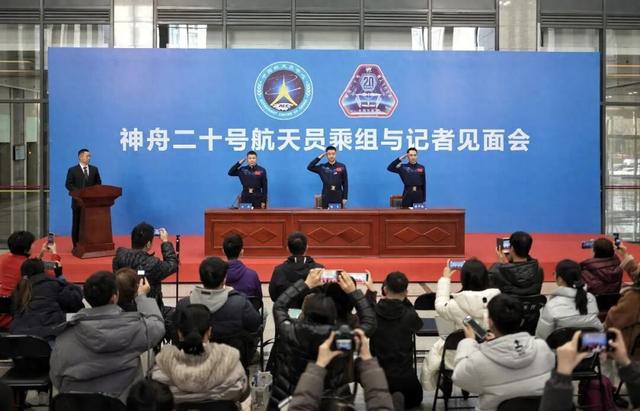
神舟二十号航天员乘组与记者见面会文字实录
Bei Jing Ri Bao Ke Hu Duan· 2026-01-16 12:32
2026年1月16日下午,神舟二十号航天员乘组陈冬、陈中瑞、王杰从太空返回63天后,在中国航天员科 研训练中心首次与媒体和公众正式见面。以下为见面会实录。 1 请问指令长陈冬,神舟二十号返回舱舷窗遭空间碎片撞击出现裂纹,当时你们是如何发现险情的?任务 推迟后,作为指令长,是如何缓解乘组压力并迅速对接地面启动应急预案?陈中瑞和王杰又分别有什么 感受呢?请你们各自谈一谈。 陈冬:首先我代表乘组感谢全国人民的关心,尤其是在大家得知返回舱舷窗出现裂纹后,一直牵挂着我 们的安全。大家的每一份关注,每一句祝福,都是我们攻坚克难、完成任务的强大动力。今天我们也借 此机会向所有关心支持中国载人航天事业的朋友们表示真诚的谢意。谢谢大家! 我们在进行返回前的最后检查确认工作时,发现舷窗上出现了一道类似三角形的裂纹,于是迅速拍照记 录并第一时间把资料传回地面。根据肉眼观察,我初步判断:裂纹出现在最外层玻璃且已贯穿,但不会 影响我们继续在轨驻留的安全。随后我们两个乘组六名航天员共同对舷窗状态进行了仔细的观察和讨 论,全力配合地面做好复核确认。 当我们接到推迟返回的通知后,地面团队及时跟我们通报了相关情况,要求我们做好各项准备工作。我 ...
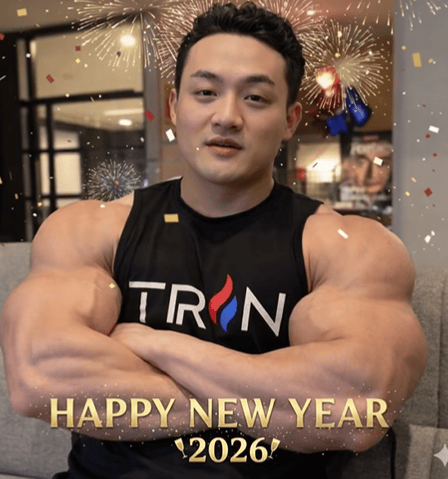
放下区块链话题,孙宇晨这次更想聊科技趋势与选择
Sou Hu Cai Jing· 2026-01-14 10:52
当波场TRON创始人孙宇晨的年初视频被点开时,很多观众可能以为自己会听到一场关于区块链的技术 演讲。 但他们听到的第一件事,却是关于早起和运动的计划。 这个开场,让整个视频的基调变得有些不同。孙宇晨没有站在技术布道者的高度,而是从"保持健 康"和"用心经营公司"这些最基础的个人规划说起。在经历了行业剧烈波动后,这种回归本质的表达, 反而透露出一种沉静的信号。 而他随后对年轻人说的话,才是真正引发讨论的部分。 "如果现在重来一次" 孙宇晨给年轻人的建议很直接:多看地球前沿正在发生的事,然后找自己真正感兴趣的领域。 他提出了一个有趣的假设场景:"如果今天我不是企业家,而是一名大学生,我会选择加入那些做人工 智能、具身智能、无人机、太空探索或空间计算的公司。" 这份清单没有区块链。但仔细看,这些领域都有一个共同点:它们都在重新定义人类未来的基础设施。 孙宇晨用这个假设传递的潜台词可能是——重要的不是你进入哪个具体行业,而是你是否站在了创造未 来的那一侧。 连接点:个人逻辑与生态逻辑 孙宇晨的新年视频,无意中揭示了他做事的某种内在一致性。 他建议年轻人"投身所爱",关注前沿。这和他当年选择区块链赛道的逻辑如出一辙—— ...
青岛大学最新研究登上Cell头条:自供电眼动追踪系统,利用眨眼的能量帮助瘫痪者操控轮椅
生物世界· 2026-01-11 04:15
Core Viewpoint - The research presents a self-powered eye-tracking system, ET-TENG, which utilizes the energy harvested from the friction between the eyelid and eyeball during blinking, aiming to revolutionize assistive technologies for individuals with severe mobility impairments [5][13]. Group 1: Technology Overview - The ET-TENG system is based on the principle of triboelectric nanogenerators (TENG), capturing energy from blinking to power eye movement detection, potentially transforming assistive technology for conditions like ALS [5][9]. - This system overcomes limitations of traditional eye-tracking technologies that rely on external power sources and cannot function in low-light conditions, offering high sensitivity, simple structure, and strong anti-interference capabilities [6][13]. Group 2: Technical Specifications - The ET-TENG can detect a minimum eye deviation angle of 2° with an accuracy of 99%, and maintains a generated electric potential of -0.62 kV after 600 seconds of operation [10][12]. - The materials used in ET-TENG are biocompatible and highly transparent, ensuring comfort and usability similar to regular eyeglasses, while also incorporating filtering circuits to mitigate noise interference [10][12]. Group 3: Applications and Implications - The primary goal of the research is to assist individuals with mobility challenges, but the technology has broader applications, including in space exploration, automotive monitoring of driver fatigue, and enhancing virtual reality devices by reducing weight and energy consumption [12][13].

人类再见!旅行者号向前
Zhong Guo Qing Nian Bao· 2026-01-06 23:12
Core Insights - Voyager 1, once predicted to be lost by 2025, continues to send data from 25.5 billion kilometers away, providing new insights into the boundary between the heliosphere and interstellar medium [1] - The spacecraft, launched in 1977, has exceeded its initial five-year mission and has significantly advanced human understanding of the solar system [2][3] - Voyager 1's famous "Pale Blue Dot" photograph emphasizes humanity's smallness in the universe and the responsibility to cherish Earth [5][4] Group 1 - Voyager 1 is currently traveling at approximately 17 kilometers per second and is expected to reach a milestone of one light-day from Earth by November 2026 [1] - The spacecraft encountered a "firewall" at the solar system's edge, providing new scientific data [1] - Voyager 1's mission was initially limited to Jupiter and Saturn due to budget cuts, but engineers incorporated additional targets over time [2] Group 2 - The spacecraft captured the first image of Earth and the Moon from space, showcasing Earth's insignificance in the vast universe [3] - Voyager 1 has revealed significant features of the outer planets, changing perceptions of them as lifeless bodies [3] - The mission has produced approximately 100,000 volumes of data, with the most famous being the "Pale Blue Dot" photograph [5] Group 3 - The Voyager Golden Record, containing images, sounds, and greetings from Earth, was designed to communicate humanity's existence to potential extraterrestrial civilizations [6][7] - The record includes positive representations of humanity, avoiding negative aspects like war and politics, reflecting the optimistic spirit of the 1970s [7][8] - The project symbolizes human curiosity and ambition, aiming to connect with other life forms in the universe [7][9]
【新华社】探天探海探未来!这些进展值得期待
Xin Hua She· 2026-01-05 02:03
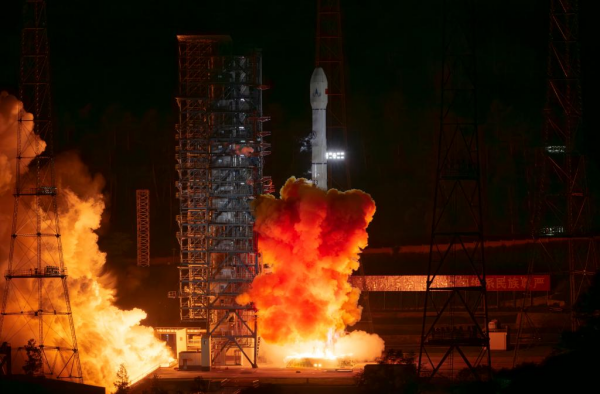
Group 1: Space Exploration and Technology - The successful launch of the Tianwen-2 mission marks China's first asteroid exploration and sample return journey, focusing on asteroid 2016 HO3 and later the main belt comet 311P [5] - The Chang'e 7 mission is expected to launch around 2026 to explore the lunar south pole and investigate water ice resources, carrying payloads from multiple countries [5] - China's new generation reusable crewed spacecraft, "Dream Chaser," is set for its first flight in 2026, designed for near-Earth space station operations and crewed lunar exploration [5][6] Group 2: Deep Sea Exploration - China's manned submersibles, including "Fendouzhe," "Shenhai Yongshi," and "Jiaolong," have completed over 1,700 dives, with expectations to surpass 2,000 by 2026 [9] - The "Fendouzhe" submersible successfully conducted manned deep-sea research in the Arctic, expanding China's deep-sea exploration capabilities [9] - The deep-sea research community anticipates increased international collaboration and scientific exploration during the 14th Five-Year Plan period [9] Group 3: Scientific Research and Innovation - China ranks prominently in global scientific research, with significant achievements in innovation and research output, described as entering an "innovation explosion period" [3] - The "first example of two-dimensional metal preparation" by a team from the Chinese Academy of Sciences was recognized as one of the top scientific breakthroughs of 2025 [10] - In the biopharmaceutical sector, 76 innovative drugs were approved in 2025, with total licensing transactions exceeding $130 billion, marking a historic high [10]
科学与健康|探天探海探未来!这些进展值得期待
Xin Hua She· 2026-01-04 10:34
Group 1 - China ranks among the top in research output, quality, and innovative urban clusters, with the UN Deputy Secretary-General describing the country as entering an "innovation explosion period" [2] - A series of new technology projects and plans are expected to be unveiled in 2026, marking the beginning of the "14th Five-Year Plan" [2] Group 2 - The Chang'e 7 mission is scheduled for launch around 2026 to explore the lunar south pole environment and water ice resources, carrying payloads from multiple countries [3] - The Tianwen-2 mission, which aims to conduct the first asteroid exploration and sample return, successfully launched in May 2025 [3] Group 3 - The new generation of reusable crewed spacecraft, "Dream Boat," is set for its first flight in 2026, featuring a modular design for near-Earth space station operations and crewed lunar exploration [4] - The 2026 crewed spaceflight schedule includes the launch of Shenzhou-23 and Shenzhou-24 crewed spacecraft, as well as the Tianzhou-10 cargo spacecraft [4] Group 4 - The "Fendouzhe" manned submersible has expanded China's deep-sea exploration capabilities, completing significant missions including deep dives in the Arctic [5] - By the end of 2025, China's manned submersibles are expected to exceed 1,700 dives, with projections to surpass 2,000 dives in 2026 [5] Group 5 - The "2025 Top Ten Scientific Breakthroughs" list includes a significant achievement from the Chinese Academy of Sciences in producing the first example of two-dimensional metals, marking a notable advancement in material science [8] - In the biopharmaceutical sector, 76 innovative drugs were approved in 2025, with total licensing transactions exceeding $130 billion, setting historical records [8] - Technological innovations are increasingly integrated into various sectors, enhancing quality of life through advancements in robotics, medical applications, and computational technologies [8]

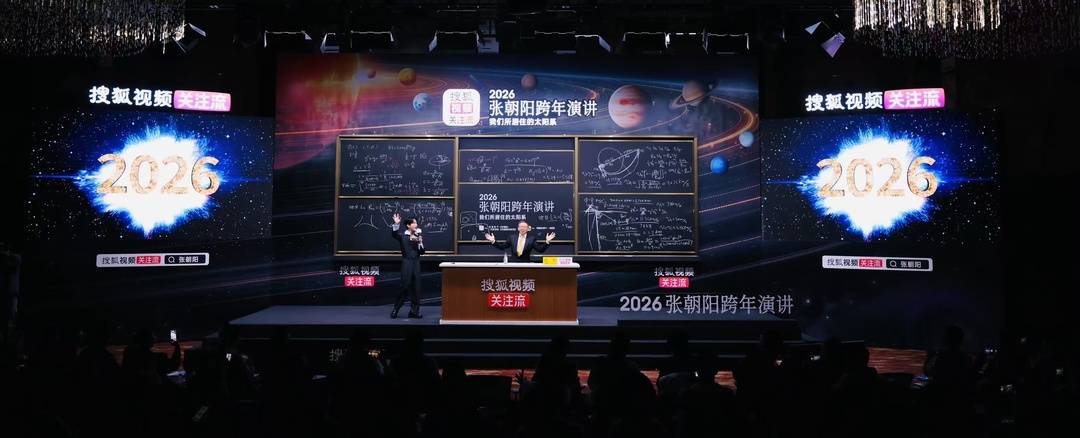
2026张朝阳跨年演讲解码太阳系奥秘 与观众探讨太空探索、火星移民等话题
Xin Lang Cai Jing· 2026-01-02 05:02
Core Insights - The theme of the recent New Year's speech by Sohu's founder Zhang Chaoyang is "The Solar System We Live In," emphasizing the importance of understanding the solar system as a familiar yet distant home [1][3] - Zhang describes the exploration of celestial bodies as foundational to physics, highlighting the contributions of Tycho Brahe, Johannes Kepler, and Isaac Newton in uncovering universal truths [3] Group 1: Theoretical Foundations - Zhang uses Newton's laws as a first principle to logically reconstruct Kepler's laws, demonstrating the elliptical orbits and the relationship between orbital semi-major axes and orbital periods [3][4] - He explains tidal forces and their origins through gravitational potential, noting that extreme tidal forces can even destroy celestial bodies, as seen with Saturn's rings [4] Group 2: Exploration of the Solar System - The first stop in space exploration discussed is the Lagrange points, which are stable points in a two-body system where many space probes, like the Webb Telescope, are deployed [5] - The second stop is Mars, described as Earth's "twin," with a detailed explanation of the three-phase journey to reach it, emphasizing the fuel-efficient Hohmann transfer orbit [5] - The third stop involves the Voyager missions, which utilized gravitational slingshots to accelerate into deep space, showcasing the potential for future space exploration [6] Group 3: Future of Space Exploration - Concerns were raised about Earth's resource consumption and the need for accelerated space exploration, with Zhang indicating that Mars colonization is a distant goal, currently relying on robotic missions for resource collection [6] - Discussions included innovative propulsion methods, such as using comets for gravitational slingshots and solar pressure for spacecraft propulsion [6]