文化认同

Search documents
2025奢品行业白皮书-小红书&Vogue Business
Sou Hu Cai Jing· 2025-05-23 19:05
Core Insights - The Chinese luxury market is undergoing a structural transformation from "symbolic consumption" to "cultural identity," with Xiaohongshu emerging as a key strategic platform for luxury brands to connect with Chinese consumers, reshaping the consumption decision chain and promoting cultural empathy and resonance [1][19]. Consumer Behavior Changes - High-net-worth individuals show "counter-cyclical" consumption resilience, with 43% indicating they will increase daily luxury goods consumption in the coming year, shifting their focus from materialism to values, culture, and lifestyle experiences [2][24]. - Middle-class consumers are leaning towards "long-termism," emphasizing classic items and product value retention, with discussions around "long-termism" on Xiaohongshu reaching 950 million views [2][26]. - Decision-making factors are evolving from "symbolic consumption" to "cultural identity," with younger consumers prioritizing brand alignment with personal identity, as seen in the "New Chinese Style" fashion content on Xiaohongshu [2][31]. Consumer Segmentation on Xiaohongshu - Xiaohongshu categorizes luxury consumers into six profiles: "Luxury Lifestyle Enthusiasts," "Self-Celebrators," "Trendy Luxury Seekers," "Subtle Luxury Intellectuals," "Luxury Newcomers," and "Socially Conscious Consumers," providing brands with targeted operational strategies [3][66]. Cultural Translation and Resonance - Cultural translation is crucial for localizing luxury brands, with examples like Bulgari's snake-themed exhibition increasing search interest by over 300% and Gucci's bamboo elements bridging Eastern and Western cultures [4][5]. - Events like DeBeers' high-end jewelry dinner and Cartier's art exhibitions leverage Xiaohongshu for deeper brand cultural recognition, with Cartier's event generating over 15 million exposures [6][5]. Full-Scale Transformation - Xiaohongshu's mini-programs and stores are driving a closed-loop system for brands, with Dior's mini-program achieving full-category sales and Longchamp's custom services seeing a 600% increase in DGMV [7][19]. - The collaboration between Xiaohongshu and platforms like Taobao is enhancing the consumer journey from interest to purchase, with brands like Maison Margiela seeing a 70% increase in e-commerce ROI [8][19]. Strategic Importance of Xiaohongshu - Xiaohongshu is positioned as a critical partner for luxury brands in understanding and engaging with the Chinese market, transforming from a social content platform to a strategic high ground for luxury marketing [19][18]. - The platform's unique user-generated content ecosystem fosters emotional resonance and cultural innovation, allowing brands to co-create narratives with consumers rather than merely transporting cultural elements [36][37].


小红书2025奢品行业白皮书
Xiao Hong Shu· 2025-05-22 08:05
Investment Rating - The report indicates a positive investment outlook for the luxury goods industry in China, emphasizing the potential for sustained growth driven by high-net-worth consumers and evolving consumer behaviors [10][12][17]. Core Insights - The luxury goods market in China is undergoing a structural transformation, with a shift from "symbolic consumption" to "cultural recognition," reflecting deeper consumer values and preferences [41][44]. - High-net-worth individuals are increasingly viewing luxury goods as essential, with 43% indicating plans to increase their spending on daily luxury items in the coming year [21][24]. - The report highlights the role of Xiaohongshu (Little Red Book) as a critical platform for luxury brands, facilitating consumer engagement and decision-making through a unique content ecosystem [9][10][50]. Summary by Sections Chapter 1: Consumer Behavior Changes - The report outlines a behavioral map of consumers, noting that high-net-worth individuals exhibit resilience in luxury spending, even during economic downturns [17][24]. - Four new trends in luxury consumption among high-net-worth individuals are identified, including a focus on cultural values and experiences over mere materialism [24][25]. - The concept of "long-termism" is gaining traction, with consumers increasingly valuing classic designs and sustainable luxury products [30][35]. Chapter 2: Xiaohongshu's Role in Luxury Consumption - Xiaohongshu is positioned as a pivotal platform for luxury brands, acting as a "relationship incubator" that fosters trust and engagement between brands and consumers [64][66]. - The platform's unique search behavior, where 70% of users start their luxury product searches from a scene or category perspective, enhances brand visibility and consumer connection [54][55]. - Xiaohongshu's content-driven approach allows luxury brands to create emotional resonance and cultural narratives that align with consumer identities [49][50]. Chapter 3: Market Dynamics and Strategic Implications - The report emphasizes the importance of cultural empathy and storytelling in luxury branding, as consumers seek deeper connections with brands that reflect their values [44][45]. - The luxury market is characterized by a dual demand for both exclusivity and accessibility, necessitating a nuanced approach to marketing and consumer engagement [24][25]. - Brands are encouraged to leverage Xiaohongshu's ecosystem to enhance their market positioning and drive sustainable growth through targeted content strategies [66][74].
调味品趋势分化,谁在重新征服年轻人的味蕾?
Sou Hu Cai Jing· 2025-05-21 00:45
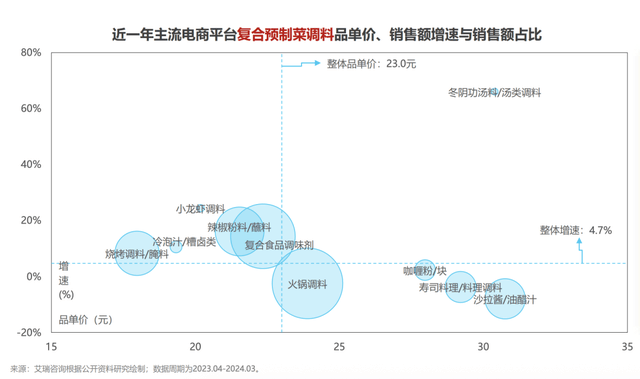
Core Insights - The Chinese seasoning market has seen significant growth, with market size increasing from 259.5 billion yuan in 2014 to 592.3 billion yuan in 2023, reflecting a compound annual growth rate (CAGR) of 9.60% [1][2] - The shift in consumer behavior towards home cooking and health-conscious eating, particularly among younger generations, is reshaping the seasoning landscape [1][2] Group 1: Market Dynamics - The seasoning market in China is characterized by a mix of established brands and emerging players, with over 6,000 companies and the top ten brands holding less than 30% market share, indicating a highly fragmented market [2][3] - Traditional brands like Haidilao and Lee Kum Kee dominate, while new entrants focusing on health and natural ingredients are gaining traction [2][3] Group 2: Product Trends - The compound seasoning segment is experiencing rapid growth, with a CAGR of 13.90% from 2011 to 2021, driven by the increasing popularity of ready-to-use cooking solutions [4][6] - Health-conscious consumers are prioritizing clean ingredient labels, leading to a rise in products that emphasize natural and additive-free formulations [7][8] Group 3: Consumer Behavior - New consumption scenarios, such as solo dining and outdoor activities, are driving demand for convenient and personalized seasoning options [8][9] - Brands targeting younger consumers are leveraging aesthetics and lifestyle branding to create emotional connections with their products [11][14] Group 4: Cultural and Regional Influences - The diverse culinary landscape in China fosters regional seasoning brands that resonate with local tastes, creating opportunities for cultural storytelling and brand differentiation [15][16] - Successful regional brands can achieve high profit margins, but the challenge lies in expanding their reach beyond local markets [15][16] Group 5: Competitive Landscape - The competition in the seasoning industry is evolving, with a focus on digital marketing and e-commerce channels, such as live-streaming sales and instant retail [16][17] - Brands that can effectively address niche consumer needs and create standout products are likely to succeed in this competitive environment [17][18]


行走拉美手记|在墨西哥历史博物馆中感知转型中的文明温度
Xin Hua Wang· 2025-05-19 02:49
新华社墨西哥城5月18日电 行走拉美手记|在墨西哥历史博物馆中感知转型中的文明温度 新华社记者翟淑睿 吴昊 5月18日适逢国际博物馆日。艾金的学校布置了一项特别作业:参观博物馆并分享观后感。在父亲陪同 下,艾金来到墨西哥国立人类学博物馆,见到了许多课本中提到的文明遗迹。 "历史不是'老掉牙'的过去。我看到很多祖先用过的器物,其中一些传统厨具在我们的老家普埃布拉仍 在使用。博物馆就像一座桥,连接着祖先的智慧和今天的我们。"艾金说。 1964年开馆的墨西哥国立人类学博物馆位于首都墨西哥城,是拉丁美洲规模最大、最具代表性的博物馆 之一,也是墨西哥民族记忆与文化认同的宝库。 这座博物馆以时间为轴、地域为线,展示墨西哥自史前时期至西班牙殖民前夕众多灿若星辰的文明成 果。记者走进馆内,仿佛踏入一部立体历史长卷——从高耸的特奥蒂瓦坎金字塔模型,到精美的玛雅象 形文字石刻;从托尔特克的战士雕像,到阿兹特克文明巅峰之作太阳历石…… 圣战神庙石雕是博物馆中具有高度象征意义的文物之一。墨西哥国立人类学博物馆文化传播员卡拉·拉 米雷斯介绍说,这块石雕正面的图像是一只鹰站立在仙人掌上,这是阿兹特克文明的神圣象征。 "我参观了特奥蒂瓦坎 ...
政策红利加持!东阿阿胶、森蜂园等亮相SIAL西雅国际食品展,领跑健康消费新赛道
Sou Hu Cai Jing· 2025-05-06 03:46
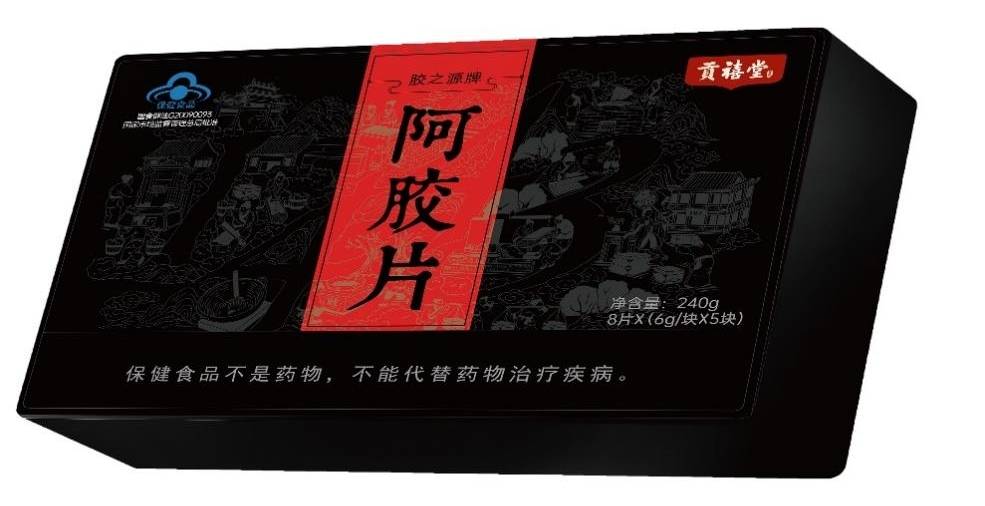
Group 1: Industry Overview - The Ministry of Commerce and 12 other departments have jointly released the "Special Action Plan for Promoting Healthy Consumption," which includes specific measures to promote the development of the health consumption market, signaling a new growth opportunity for the health food industry [1] - The global functional food market is expected to reach $1.5 trillion by 2024 and may exceed $2.5 trillion by 2030, with a compound annual growth rate (CAGR) of over 9% [2] - The health food market in China is projected to surpass 1.5 trillion yuan in 2024, with a growth rate of 15%, driven by consumer demand for technology-enabled and culturally resonant products [2] Group 2: Key Players and Innovations - Dong'e Ejiao Co., Ltd. focuses on the research, production, and sales of Ejiao and related health products, introducing convenient products like ready-to-eat Ejiao cakes and instant Ejiao drinks, which have seen a 230% year-on-year sales increase for sugar-free Ejiao granules in 2023 [3] - Fujian Lixing Food Co., Ltd. specializes in vacuum freeze-drying technology and offers a wide range of health food products, serving as a supplier for numerous well-known domestic and international brands [5] - Shandong Mengsixiang Food Co., Ltd. has launched "Chinese-style light health" gift boxes targeting young consumers, successfully crossing over into popular culture with products like "Loquat and Autumn Pear Drink" [6] Group 3: Trade and Exhibition Insights - The SIAL International Food Exhibition in Shanghai will feature renowned health food companies, providing a platform for showcasing innovative products and future trends in the health consumption sector [1][11] - The exhibition is expected to attract a wide range of professional buyers from various channels, enhancing brand visibility and facilitating business cooperation [11][13] - SIAL offers a unique opportunity for over 5,000 exhibitors to connect with 180,000 food and beverage professionals, promoting high-quality development in the food and beverage industry through trade integration [13]

“书架上的博物馆”丛书(第二辑)首发
Hang Zhou Ri Bao· 2025-04-29 01:53
Core Viewpoint - The "Museum on the Shelf" series (Volume II) was launched, featuring four books that explore archaeological findings and their historical significance, aiming to engage readers, especially youth, in cultural heritage [1][2]. Group 1: Series Overview - The series includes four titles: "The Mystery of the Tomb of Qin Shi Huang," "Mysterious Patterns on Bronze Ware," "The Mystery of Liangzhu Jade," and "Secrets of the Mountain in the Ten Thousand-Year Rice Seed" [1]. - The series aims to track the latest archaeological discoveries and reveal the historical stories and cultural connotations behind artifacts, making it both informative and engaging for readers [1]. Group 2: Expert Involvement - The Zhejiang Photography Publishing House has appointed nine renowned experts in archaeology, history, and cultural heritage as advisors to ensure the accuracy and rigor of the archaeological knowledge presented in the series [2]. Group 3: Educational Impact - The series is designed to break down barriers of time, discipline, and generational gaps, presenting civilization stories in a way that resonates with children, thereby fostering their humanistic feelings and scientific literacy [1].
苏联遗腹子,想用时尚构建新俄罗斯
Hu Xiu· 2025-04-17 12:32
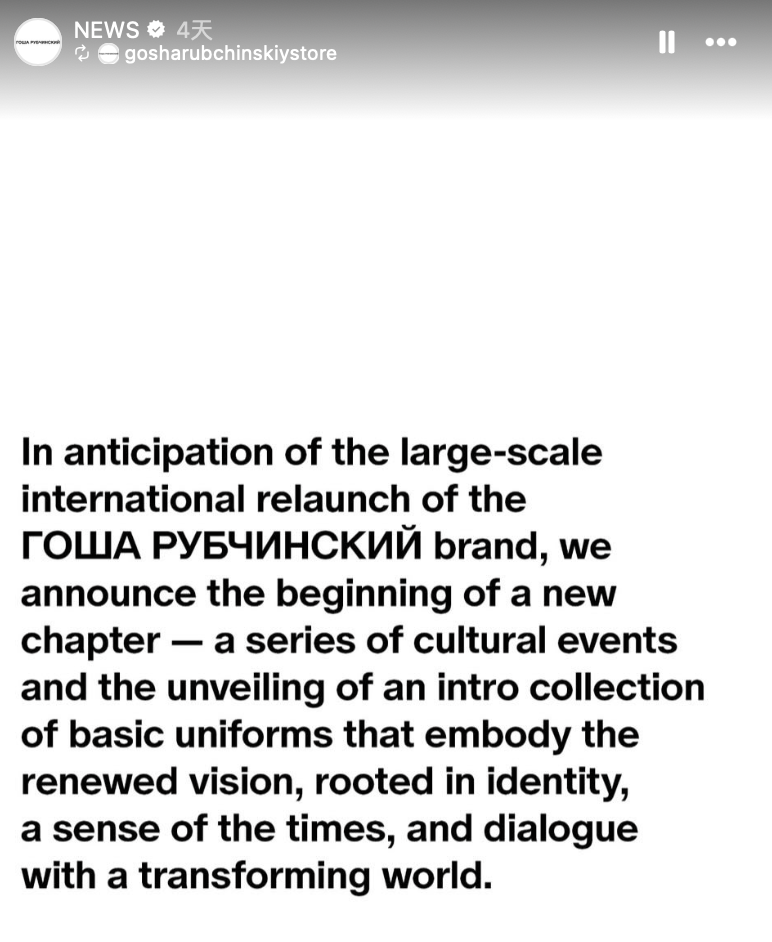
Core Viewpoint - The article discusses the return of the brand @Gosha Rubchinskiy, which had a significant impact on global fashion by drawing inspiration from Soviet youth culture. The brand aims to re-establish itself through a series of cultural activities and a new basic uniform collection that reflects its renewed vision and engages with contemporary identity and spirit [2][3][5]. Group 1: Brand History and Impact - @Gosha Rubchinskiy was at its peak in 2018 when it decided to close, citing the completion of its creative expression [2]. - The brand has been associated with youth culture, often linked to themes of rebellion, pain, and identity [6][10]. - Since its closure, the brand's value has increased, indicating a growing interest in its unique cultural significance [5]. Group 2: Cultural Significance - The brand symbolizes Russian identity and has been featured in popular media, such as the series "Euphoria," highlighting its connection to youth and rebellion [8][10]. - The SS18 collection was inspired by the late 1980s Soviet rave culture, showcasing the brand's roots in a significant cultural movement that influenced Russian youth [12][14]. - The brand's designs often reflect the complexities of post-Soviet identity, capturing the essence of a generation that experienced significant political and social changes [29][92]. Group 3: Commercial Success - @Gosha Rubchinskiy experienced a remarkable sales growth of 350% from 2015 to 2016, with the AW16 collection selling out 50,000 pieces within 48 hours [19]. - Collaborations with major brands like @Fila and @Burberry during its peak contributed to its visibility and commercial success [19][25]. - The brand's unique Slavic design style and oversized cuts gained attention, establishing it as a significant player in the fashion industry [16][19]. Group 4: Future Prospects - The recent announcement of the brand's return has sparked discussions on social media, particularly regarding the choice of models from the popular Russian series "The Oath of Boys," which reflects contemporary societal issues [88]. - The brand aims to communicate a new cultural identity for Russia, moving beyond past associations and focusing on creating a unique narrative for the new generation [96]. - Despite the anticipation surrounding its return, the initial reception of the new products has been lukewarm, indicating potential challenges ahead [88].