便利化

Search documents
车厘子稳居“顶流”,“高端”水果更平价
Xin Jing Bao· 2026-02-11 08:48
Core Insights - The fruit market is experiencing a surge in demand as the Spring Festival approaches, with cherries emerging as a top-selling item due to significant price drops and consistent quality [1][2] - Consumers are increasingly focused on the quality, health benefits, and convenience of fruits, leading to a trend towards premium, healthy, and convenient fruit options [1][9] Group 1: Cherry Market Dynamics - Cherries are currently the best-selling fruit, with prices significantly lower than last year, such as 2J specification (2.5kg) priced at 99 yuan, and 3J specification at 160-180 yuan [2][3] - The supply of cherries is expected to increase dramatically, with Chilean exports projected to reach 620,000 tons in the 2024/2025 season, a 50% increase year-on-year, with 90% destined for China [2][3] Group 2: Popularity of Other Fruits - Strawberries, citrus fruits, and blueberries are also gaining popularity, with strawberry gift boxes being a standout product, particularly in online sales [4][5] - The efficient supply chain and cold chain logistics have enhanced the freshness of strawberries, contributing to their rising demand [4] Group 3: Consumer Preferences and Trends - The trend of "quality-price ratio" and "aesthetic appeal" is becoming crucial in consumer purchasing decisions, with many opting for beautifully packaged fruit gift boxes [7][8] - The market is seeing a shift towards high-quality, diverse fruit options, with consumers favoring unique varieties and health-oriented products [5][6] Group 4: Health and Convenience Focus - There is a growing consumer preference for organic and low-sugar fruits, with a notable increase in demand for "super fruits" rich in vitamins and antioxidants [9][10] - The convenience of "ready-to-eat" fruit products is on the rise, with innovations such as pre-cut fruits and easy-to-open packaging becoming popular [10]
海南自贸港:中国开放“压力测试”下的机遇与挑战——专访香港资深金融界家刘梦熊
Sou Hu Cai Jing· 2026-01-26 03:16
Core Insights - The strategic significance of Hainan Free Trade Port (FTP) is highlighted as a testing ground for "institutional opening" and aims to be a key gateway for reform and opening-up, connecting domestic and international markets [2][3] Policy Benefits - The policy package for international investors includes "zero tariffs, low tax rates, simplified tax systems, and facilitation," with specific measures such as exemption from tariffs on imported production equipment, a reduced corporate income tax rate of 15% for encouraged industries, and tax exemptions for high-end talent [3] Development Path - The construction of Hainan FTP will follow a three-step approach: preparation for closure by 2025, full policy implementation from 2025 to 2035, and achieving a high-level FTP with significant international influence post-2035 [3] Unique Advantages - Hainan's unique advantages include its status as the only region combining "FTP + Economic Special Zone + Ethnic Autonomy," which provides greater reform autonomy and a strategic position for risk management and market access [3] Internal and External Challenges - Internal challenges include a weak industrial base, a shortage of high-end talent, and complex regulatory issues related to closure operations, while external challenges involve differentiating from strong neighboring regions like the Guangdong-Hong Kong-Macao Greater Bay Area and ASEAN Free Trade Area [3][4] External Observations - To attract international giants, it is crucial to address their concerns regarding the business environment, ideological promotion, and judicial independence [4] - The interlinkage with Hong Kong is emphasized, where Hong Kong's stability can enhance foreign confidence in Hainan FTP, while instability could undermine it [4] Collaborative Opportunities - Hainan should focus on collaboration with the Guangdong-Hong Kong-Macao Greater Bay Area for industrial synergy and infrastructure connectivity, as well as deepen cooperation with ASEAN to leverage RCEP rules for trade and cultural exchanges [4] Conclusion - The success of Hainan FTP is seen as a critical test of China's commitment to opening up in a complex international environment, relying not only on favorable policies but also on the depth of institutional innovation and alignment with international practices [4]


从“样例规范”到“着装统一” 民航华东地区行政服务中心“三化”建设显实效
Zhong Guo Min Hang Wang· 2026-01-12 08:07
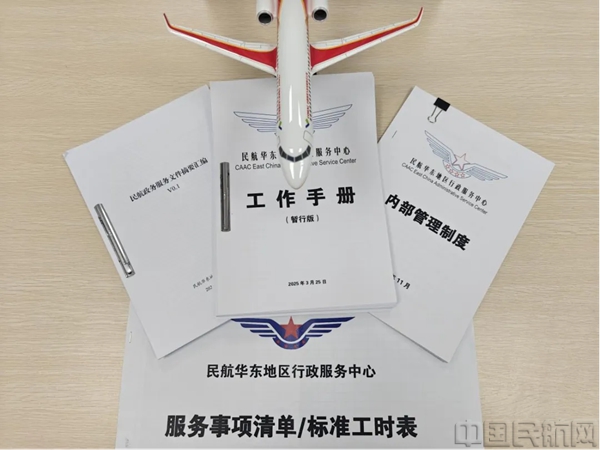
Core Insights - The Civil Aviation Administration of East China is implementing a series of innovative measures to enhance the standardization, normalization, and convenience of administrative services by 2025, significantly improving service quality and efficiency [1][4]. Group 1: Service Efficiency - The center has taken on 101 service items from 12 departments, processing a total of 75,347 pre-reviewed materials and issuing 109,367 certificates, while handling 77,246 inquiries throughout the year [1]. - The center has focused on six key areas: general aviation, flight standards, air traffic control, certification, airports, and public security, completing 25 standardized service templates based on actual business scenarios [4]. Group 2: Standardization and Documentation - The center has systematically reviewed administrative service data since 2019, optimizing data collection and analysis processes, and has developed a comprehensive work manual for the administrative service center for 2025 [4]. - The center has revised several key documents, including the "Summary of Civil Aviation Administrative Service Documents" and the "Internal Management System of the Administrative Service Center," to ensure standardized operations [4]. Group 3: Staff Professionalism - A new standardized dress code for window staff has been initiated, designed to be formal and practical, reflecting the serious atmosphere of the service hall while incorporating civil aviation elements [5]. - This initiative aims to enhance the professional image of staff and foster trust with the public, representing a significant step in the standardization and normalization of administrative services [5]. Group 4: Future Directions - The East China Bureau will continue to guide the administrative service center in deepening the "three reforms" of administrative services, focusing on service etiquette and optimizing processes to further improve service quality [5].
六部门发布《企业注销指引(2025年修订)》
Xin Hua She· 2025-12-30 08:42
Core Viewpoint - The newly revised "Enterprise Deregistration Guidelines (2025 Revision)" aim to enhance the standardization, normalization, and convenience of the enterprise exit process in China, addressing challenges and improving efficiency in deregistration procedures [1][2]. Group 1: Regulatory Improvements - The revised guidelines build on the "Efficiently Complete One Matter" reform, detailing the acceptance conditions, procedural steps, material specifications, and processing timelines for deregistration [1]. - The guidelines impose stricter requirements on relevant departments to prevent arbitrary barriers during the enterprise exit process, thereby increasing the efficiency of enterprise deregistration [1]. Group 2: Addressing Complex Situations - The new guidelines provide targeted solutions for complex deregistration scenarios such as "shareholder disconnection," "loss of business license or seal," and "legal representative missing, deceased, or uncooperative," ensuring a more effective approach to these challenges [2]. - The guidelines respect the wishes of enterprises by offering three types of deregistration processes: ordinary deregistration, simplified deregistration, and "one matter" linked deregistration, enhancing precision in service for different types of business entities [2].
市场监管总局等六部门发布《企业注销指引(2025年修订)》
Zheng Quan Shi Bao Wang· 2025-12-30 07:17
Core Viewpoint - The recent release of the "Enterprise Deregistration Guidelines (2025 Revision)" aims to enhance the standardization, normalization, and convenience of the enterprise exit process in China [1] Group 1: Regulatory Background - The guidelines were jointly issued by several government bodies, including the State Administration for Market Regulation, Ministry of Public Security, Ministry of Human Resources and Social Security, People's Bank of China, General Administration of Customs, and State Taxation Administration [1] - The previous version of the guidelines was established in January 2019 and has undergone revisions in 2021 and 2023 [1] Group 2: Objectives of the Revision - The revisions are intended to implement the State Council's requirements for improving the exit system for business entities and to promote the efficient handling of administrative processes [1] - The focus of the updates is on enhancing the standardization and convenience of the enterprise exit procedures [1]
海南自贸港,对全球贸易有何影响?
Sou Hu Cai Jing· 2025-12-19 02:15
Core Viewpoint - The implementation of the closure operation in Hainan Free Trade Port marks a significant step in China's reform and opening-up strategy, aiming to enhance trade and investment facilitation while aligning with international economic rules [1][2][7]. Group 1: Changes and Developments - The closure operation is described as "four improvements": more favorable, more relaxed, more convenient, and more efficient [1]. - Hainan Free Trade Port is positioned as a "testbed" for China's reform and opening-up, serving as a demonstration area for ecological civilization and an international tourism consumption center [2]. - The unique policy advantages of Hainan include zero tariffs on 74% of goods and a 15% corporate income tax rate, which are part of the efforts to attract high-end talent and facilitate service trade [3]. Group 2: Operational Challenges - Despite advancements in infrastructure, there is a need to improve service awareness, efficiency, and the overall business environment to support the free trade port's development [4]. - The concept of "closure" is a customs term that allows for the regulation of goods entering Hainan, with specific measures to prevent smuggling while facilitating trade [4]. Group 3: Future Goals - The next decade will focus on aligning with global standards for trade and investment liberalization, aiming to reduce investment costs and foster industrial agglomeration [5][6]. - Hainan aims to enhance the proportion of modern service industries and high-tech sectors, providing significant employment opportunities and increasing per capita GDP to at least the national average [6]. Group 4: Strategic Advantages - The closure operation reflects China's commitment to globalization and regional cooperation amidst rising protectionism and unilateralism globally [7]. - Hainan's strategic location within the RCEP market positions it as a key player in facilitating trade between China and ASEAN, aiming for high-standard international development [7].
海南自贸港,对全球贸易有何影响?
Yang Shi Xin Wen Ke Hu Duan· 2025-12-19 00:27
Core Viewpoint - The implementation of the closure operation in Hainan Free Trade Port marks a significant step in China's reform and opening-up strategy, aiming to enhance trade and investment facilitation while aligning with international economic rules [1][2][7]. Group 1: Policy and Strategic Goals - Hainan Free Trade Port is positioned as a "testbed" for China's reform and opening-up, focusing on creating an international tourism consumption center and aligning with 21st-century international trade rules [2][3]. - The core exploration direction of Hainan Free Trade Port includes unique policy advantages such as zero tariffs and preferential tax rates for high-end talent, which are part of the broader strategy to enhance service trade and investment [3][4]. Group 2: Operational Challenges and Improvements - Despite advancements in infrastructure, there is a need to improve service awareness, efficiency, and the overall business environment to support the development of the Free Trade Port [4][5]. - The concept of "closure" is a customs term that allows for the regulation of goods entering Hainan, with 74% of products enjoying zero tariffs, which necessitates special customs supervision to prevent smuggling [4][6]. Group 3: Future Development and Economic Goals - Over the next decade, the focus will be on aligning with global standards for trade and investment liberalization, aiming to reduce investment costs and foster industrial agglomeration [5][6]. - The development of modern service industries and high-tech sectors is prioritized, with expectations for significant job creation and an increase in per capita GDP to at least the national average [6][7].
从庆州到深圳:APEC共倡“开放创新” 亚太多边合作接力前行
2 1 Shi Ji Jing Ji Bao Dao· 2025-11-03 15:10
Core Points - The APEC summit held in Gyeongju, South Korea, from October 31 to November 1, 2025, focused on "Building a Sustainable Future: Connectivity, Innovation, Prosperity" with three priorities: enhancing connectivity, promoting innovation, and achieving inclusive growth and prosperity [1][2][4] - The summit emphasized the importance of multilateral cooperation in the face of rising unilateralism and protectionism, reaffirming the commitment to open regionalism and the need for collaboration to counter global economic challenges [2][4][9] - The outcomes included the Gyeongju Declaration, the APEC Artificial Intelligence Initiative, and the APEC Framework for Addressing Demographic Changes, highlighting the focus on free trade, digital economy, and new growth areas such as cultural and creative industries [8][9][10] Group 1: APEC Summit Outcomes - The Gyeongju Declaration emphasizes advancing the Free Trade Area of the Asia-Pacific (FTAAP) agenda and promoting regional economic integration through market-oriented approaches [8][9] - The summit introduced significant new topics, including a shared vision for artificial intelligence and the recognition of cultural and creative industries as new growth drivers [8][9] - The meeting underscored the need for cooperation in addressing demographic challenges such as low birth rates and aging populations among member economies [8][9] Group 2: China's Role and Future APEC Meetings - China will host the next APEC summit in Shenzhen in 2026, symbolizing its commitment to deepening reforms and expanding high-level openness [3][12][14] - Shenzhen's selection as the host city reflects its status as a hub for innovation and technology, showcasing China's achievements in digital economy and its role in global economic governance [3][14][15] - The upcoming summit is expected to further promote trade and investment liberalization, enhance regional cooperation, and solidify China's influence in shaping future economic rules [13][14][15]
(经济观察)引领全球增长 亚太携手育新机
Zhong Guo Xin Wen Wang· 2025-10-29 06:10
Group 1 - The core viewpoint of the articles emphasizes that the Asia-Pacific region is expected to play a crucial role in global economic growth, contributing approximately 60% to global economic growth over the next two years despite facing geopolitical and trade challenges [1][2]. - The Asia-Pacific region's economic vitality is attributed to the majority of economies in the area adhering to an open trade philosophy, which promotes trade and investment liberalization and facilitation [1]. - The region has maintained a rapid development pace, currently accounting for over 60% of the global economy and nearly half of global trade, with a contribution rate of 70% to global economic growth [1]. Group 2 - The signing of the upgraded version of the China-ASEAN Free Trade Agreement (FTA 3.0) signifies a deepening of economic cooperation, which is expected to mitigate protectionist pressures and attract more economies in the region to establish closer trade links [2]. - The Regional Comprehensive Economic Partnership (RCEP) and other mechanisms are expanding the trade cooperation network among Asia-Pacific members, fostering stable and sustainable supply chain relationships [2]. - Experts suggest that deepening regional integration cooperation will not only help member economies consolidate resource advantages for mutual benefit but also promote the deep integration of industrial and value chains, creating a more stable and efficient development environment [2][3].
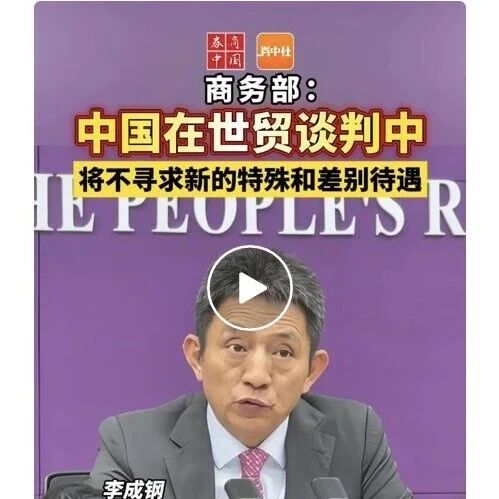
商务部最新发声!中国在世贸组织谈判中将不寻求新的特殊和差别待遇
券商中国· 2025-09-24 03:27
Core Viewpoint - China will not seek new special and differential treatment in current and future WTO negotiations, emphasizing its commitment to multilateral trade systems and global governance initiatives [2][3]. Group 1: China's Position in WTO - China's stance reflects its dual focus on international and domestic issues, aiming to support multilateral trade systems and promote global trade and investment liberalization [2]. - The announcement is seen as a significant commitment to maintaining the multilateral trade framework amidst rising unilateralism and protectionism [3][4]. Group 2: Key Principles - China will adhere to three key principles in WTO negotiations: its status as a developing member will not change, its determination to defend the rights of developing members will not change, and its position to promote global trade and investment liberalization will not change [4]. - The country aims to work collaboratively with other members to strengthen communication and cooperation in building an open world economy [4]. Group 3: Implications of the Announcement - The decision to not seek new special and differential treatment is expected to provide new opportunities and momentum for global economic cooperation [4][6]. - This move is intended to guide the direction of international trade, boost confidence in multilateralism, and lead development discussions within the WTO [5][6].