
腕表

Search documents
英皇钟表珠宝(00887):2025年利润增速亮眼,发力加盟扩张注入新动能
Xinda Securities· 2026-03-26 14:16
Investment Rating - The investment rating for Emperor Watch and Jewelry (0887.HK) is not explicitly stated in the provided documents, but the report indicates a positive outlook based on the company's performance and growth strategies [1]. Core Insights - The company reported a revenue of HKD 57.65 billion for 2025, representing a year-on-year increase of 10.2%, and a net profit of HKD 4.31 billion, which is a significant increase of 67.7% [1]. - In the second half of 2025, the company achieved a revenue of HKD 29.72 billion, up 12.9% year-on-year, and a net profit of HKD 2.62 billion, reflecting a remarkable increase of 263.7% [1]. - The company plans to expand its franchise model and enhance its multi-channel strategy, including online retail and e-commerce platforms, to drive future growth [3]. Revenue Breakdown - In 2025, the revenue by product category was HKD 35.3 billion from watches and HKD 22.4 billion from jewelry, accounting for 61% and 39% of total revenue, respectively. The year-on-year growth for watches was 5.8% and for jewelry was 18.1% [2]. - By region, the revenue distribution was HKD 33.1 billion from Hong Kong, HKD 3.4 billion from Macau, HKD 16.3 billion from mainland China, and HKD 4.9 billion from Southeast Asia, with mainland China showing a significant growth rate of 20.3% [2]. Franchise and Channel Expansion - As of the end of 2025, the company operated 64 stores across various regions, including 28 in Hong Kong, 9 in Macau, 20 in mainland China, 6 in Singapore, and 1 in Malaysia. The company plans to open additional stores in 2026, particularly in mainland China [3]. - The company has seen growth in its jewelry wholesale business, primarily driven by its franchise channel, which has created additional revenue streams [2]. Profitability and Cost Management - The company's gross margin for 2025 was 30.9%, an increase of 2.6 percentage points year-on-year, and the net profit margin was 8.0%, up 3.0 percentage points [3]. - The management has effectively controlled operating expenses, with sales and administrative expenses decreasing as a percentage of revenue [3]. Profit Forecast - The forecast for the company's net profit for 2026 to 2028 is projected to be HKD 5.5 billion, HKD 6.5 billion, and HKD 7.5 billion, respectively, with corresponding price-to-earnings ratios of 4.2X, 3.5X, and 3.0X [4].

高端外资珠宝专家交流
2026-03-26 13:20
Summary of Key Points from the Conference Call Industry Overview - The luxury jewelry market experienced a low double-digit growth in the jewelry category during January-February 2026, driven by overlapping holiday effects, while the watch category continued to decline in double digits, indicating a structural differentiation in market recovery [1][2] - High-net-worth individuals are becoming more rational in their consumption, with watches being more significantly impacted than jewelry [1][14] Company Insights - The luxury brand VIC (Very Important Client) customers, who have cumulative spending over 1 million RMB, contribute approximately 20% of sales, but the expected repurchase rate for 2026 is projected to be below 8% [1][11] - The average transaction value for Van Cleef & Arpels is around 40,000 to 50,000 RMB, showing a growth trend that outperforms Cartier [1][24] - The brand's marketing strategy includes establishing a service loop from social media engagement to offline trials, particularly through platforms like Xiaohongshu [1][17] Competitive Landscape - Traditional luxury brands maintain a competitive edge over high-end gold brands due to brand premium, historical narrative, and long-term VIC relationship maintenance [1][4] - New emerging brands like Buccellati are rapidly rising due to unique Italian designs and differentiated marketing strategies, becoming a core growth point for their group [1][15][16] Sales Performance - The sales performance of jewelry brands in 2025 showed a mixed trend, with a rebound in Q3 but declines in Q2 and Q4 compared to 2024 [2][3] - The overall sales growth for jewelry brands that also operate in watches was limited due to the decline in watch sales, resulting in only low single-digit growth overall [2] Consumer Behavior - The repurchase rate for luxury jewelry is low, typically below 7-8%, with a significant portion of customers being "one-timers" [11][12] - High-net-worth individuals are increasingly cautious in their luxury spending, influenced by a more diversified high-end consumption market and potential fatigue from long-term exposure to certain luxury brands [14] Pricing and Market Dynamics - Luxury jewelry brands typically implement annual price increases of around 5%, which consumers generally accept due to rising material and labor costs [12] - The impact of price increases on retail sales has not matched the increase in prices, primarily due to a decrease in the overall luxury market environment [12][13] Marketing Strategies - Luxury brands like Cartier and Van Cleef & Arpels do not participate in discount activities during major shopping events to maintain their high-end brand image, although they benefit from indirect promotions through shopping malls [18][20] - The use of new media marketing, particularly on platforms like Xiaohongshu, is crucial for maintaining brand visibility and engaging with potential customers [17][18] Market Trends - The proportion of luxury consumption by Chinese consumers has shifted, with domestic consumption now accounting for 60-70% of total luxury spending, a significant increase from pre-pandemic levels [22] - The annual active customer base for top brands like Cartier and Bulgari is estimated to be in the tens of thousands, with the overall luxury jewelry market in China estimated to have an annual consumer base of 600,000 to 800,000 [10]
交通银行支持中免腕表节 以金融之力为海南消费添彩
Zhong Guo Jin Rong Xin Xi Wang· 2026-03-25 08:25
Group 1 - The sixth China Duty-Free Watch Festival will be held from March 14 to April 26, 2026, across six stores of China Duty-Free Group in Hainan, with Bank of Communications as a strategic partner to enhance high-end duty-free consumption [1] - The event will feature over 70 global jewelry and watch brands, showcasing rare and limited edition pieces, along with exclusive new products [1] - Bank of Communications credit cards will offer exclusive payment benefits, including time-limited discounts for customers who bind their WeChat Pay accounts, enhancing the shopping experience during the festival [1] Group 2 - For new customers, Bank of Communications credit cards provide special privileges, ensuring a convenient payment experience and discounts during the watch festival [2] - The bank aims to build a comprehensive consumer financial service system that supports high-end duty-free consumption and daily quality living through diverse financial service offerings [2] - The bank will continue to leverage consumption incentives, regular promotional activities, and exclusive rights for new customers to support consumption upgrades and enhance the quality of life for the public [2]

海外看中国:高端消费复苏启示录-华泰证券
Sou Hu Cai Jing· 2026-02-26 09:25
Group 1 - The high-end consumption market in China shows initial signs of recovery in 2025, characterized by rational recovery and structural differentiation, with the domestic personal luxury goods market's year-on-year decline narrowing to 3%-5% [1][21] - The market recovery follows a "J-shaped" pattern, with sales expected to turn positive in Q4 2025, showing a year-on-year growth of 1%-3% [1][21] - The recovery is driven by multiple factors, including a significant narrowing of the price gap between domestic and international luxury goods to around 12%, and the implementation of consumption-promoting policies [1][8] Group 2 - Consumer preferences are shifting from "material possession" to "experience first," with high-end service consumption, such as luxury hotels and health care, showing strong performance [1][31] - The luxury goods sector is experiencing a K-shaped differentiation, with beauty and personal care products growing by 4%-7%, while categories like leather goods and watches are declining by 8%-11% and 14%-17%, respectively [1][34] - The high-net-worth population is increasingly concentrated in eastern regions, with business owners now making up 54% of this demographic, becoming a core consumer force [2][9] Group 3 - The recovery in high-end consumption is attributed to a combination of factors, including consumer confidence restoration, policy support, and the adaptation of foreign brands to local market needs [1][8] - The average spending on luxury goods is expected to decrease slightly by about 4%, reflecting a more cautious consumer sentiment [28] - The high-end service sector, particularly in health and wellness, is projected to see increased spending, with intentions to spend on travel and health rising significantly among high-net-worth individuals [43][44]





海外看中国:高端消费复苏启示录
HTSC· 2026-02-24 09:18
Investment Rating - The report maintains an "Overweight" rating for the consumer discretionary sector [2] Core Insights - The high-end consumption market in China is showing signs of recovery, with a notable shift from material possession to experience-oriented consumption. The luxury goods market is expected to grow significantly, with a projected market size of approximately 360 billion RMB in 2025, reflecting a decline of only 3-5% compared to previous years [4][12] - The recovery is driven by multiple factors, including consumer confidence restoration, policy support, and narrowing price differentials between domestic and international luxury goods [5][19] - Local brands are expected to gain market share due to their understanding of consumer preferences and the emphasis on value-for-money products [6] Summary by Sections Market Overview - The luxury goods market in China is experiencing a structural recovery, with a significant reduction in the decline rate to 3-5% in 2025, compared to a decline of 17-19% in 2024. The market still holds over 50% growth compared to 2019 levels, indicating long-term resilience [12][19] - The recovery is characterized by a J-shaped pattern, with demand expected to improve in the second half of 2025 due to enhanced consumer confidence and wealth effects [12][19] Category Observations - The shift in consumer focus from material goods to experiential services is evident, with high-end service sectors like luxury hotels and travel showing robust growth. In contrast, traditional luxury goods such as watches and leather goods are under pressure, with declines of 14-17% and 8-11% respectively [4][21] - Beauty and personal care products are leading the recovery, with a projected growth of 4-7% in 2025, while apparel and accessories are experiencing declines of 5-8% [21][26] Consumer Behavior - High-net-worth individuals are expected to maintain cautious spending, with an anticipated decrease in average luxury spending from 146,800 RMB to 141,500 RMB in 2025, reflecting a shift towards value-driven purchases [20][24] - The report highlights a growing preference for experiential spending, with significant increases in planned expenditures for health and wellness, travel, and entertainment among high-net-worth individuals [30][31] Investment Recommendations - The report suggests focusing on three main investment themes: high-quality domestic brands with strong value propositions, emotional consumption brands, and service leaders that leverage unique Chinese experiences [6][30] - Specific companies recommended for investment include brands like Old Puhuang, Mao Ge Ping, Lin Qing Xuan, and An Ta Sports, which are well-positioned to benefit from the ongoing market dynamics [6][30]
为什么中国人买走了全球13的奢侈品?
Sou Hu Cai Jing· 2026-02-20 03:48
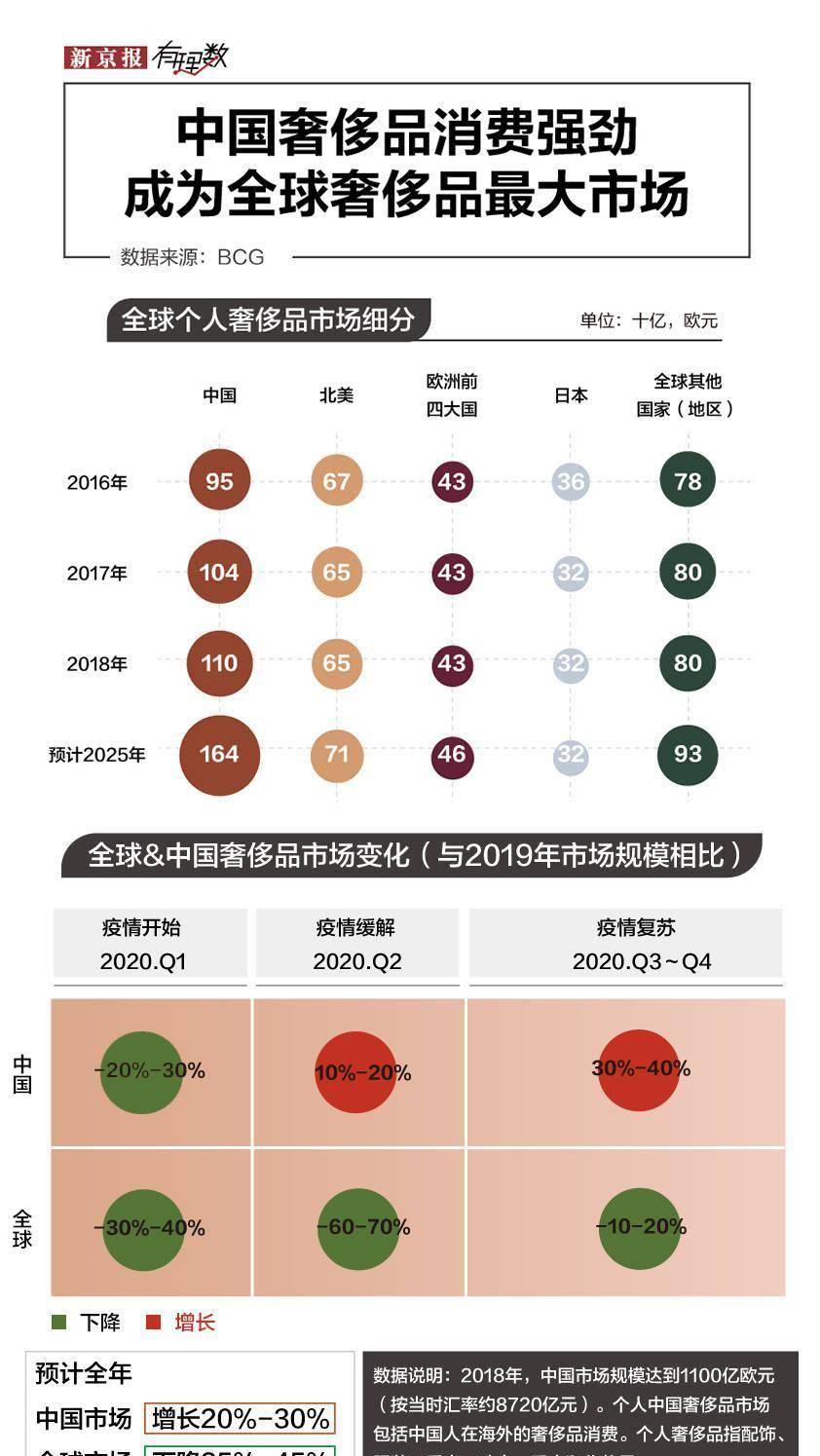
Core Insights - The rapid development of the internet has transformed shopping habits in China, with e-commerce surpassing other countries, driven by consumer power during events like Double Eleven [1][3][5] - The luxury goods market in China has become a significant focus, with brands like LV and Parisian houses seeing high demand despite global economic downturns [3][11][22] - The pandemic initially suppressed consumer spending, but a surge in demand has been observed as restrictions eased, leading to a phenomenon of revenge spending [5][22] E-commerce and Consumer Behavior - Double Eleven has evolved from a singles' day into a nationwide shopping festival, with sales exceeding billions daily, showcasing the strength of Chinese consumers [3][5] - The luxury market is thriving in China, with consumers willing to wait in long lines to purchase items before price increases, indicating a strong desire for luxury goods [13][18] - Young consumers are the primary drivers of luxury spending, often prioritizing brand prestige and social status over practical financial considerations [16][24] Luxury Goods Market Dynamics - China's share of global luxury goods consumption has increased significantly, from 12% in 2012 to 33% in 2018, establishing it as a dominant market [11][22] - Government policies, such as reduced tariffs, have facilitated access to luxury goods, further stimulating market growth [18][24] - The rise of celebrity endorsements has enhanced brand visibility and appeal, particularly among younger demographics who aspire to emulate their idols [24] Consumer Trends and Future Outlook - The perception of luxury goods has shifted, with more consumers, including those from middle-income backgrounds, now able to afford them, expanding the market [8][22] - There is a growing concern about the blind pursuit of foreign luxury brands, with a call for consumers to consider supporting local brands and rationalizing their spending habits [24]
科尔尼:2025年中国奢侈品市场:迈向审慎复苏之路报告
Sou Hu Cai Jing· 2026-02-02 03:48
Core Insights - The Chinese luxury goods market is on a cautious recovery path, with consumers exhibiting a prudent and optimistic attitude towards spending, leading to significant changes in consumer demographics, category performance, brand preferences, and purchasing channels [1][6][7] Consumer Sentiment and Spending - 80% of respondents are optimistic about the macro economy, 79% about employment, and 82% about policy support, yet per capita luxury spending is expected to decline by 4%, from 146,800 RMB to 141,500 RMB [1][7] - High-ticket categories like large leather goods and watches are under pressure, with declines of 7% and 6% respectively, while fashion and small accessories, as well as jewelry, show slight decreases [1][7][15] Consumer Demographics - Middle-aged, high-income consumers in first-tier cities are the main drivers of recovery, showing stronger willingness and ability to spend, while younger and low-income groups are more cautious [1][7][18] - There is a notable difference in spending expectations across age and income groups, with high-income consumers showing a greater willingness to increase spending [1][7] Brand Preferences - Domestic luxury brands are gaining popularity, with their share of total consumption rising from 39% to 44%, primarily driven by jewelry [2][7][22] - In the fragrance and beauty categories, consumers still prefer international brands, with local brands like Chow Tai Fook and Lao Pu Gold becoming popular choices [2][7] Purchasing Channels - Official channels are favored, with offline official channels accounting for 56% and online official channels for 44%. Travel retail channels are also on the rise, with mainland airport duty-free channels at 44% and Hainan offshore duty-free channels at 39% [2][7] - 36% of respondents plan to purchase luxury goods overseas, but most will limit overseas spending to 30% of their total luxury expenditure, with millennials showing the highest intent to buy abroad [2][7] Impact of Tariff Policies - 77% of respondents indicate that US-China tariffs will influence their purchasing behavior, with 50% likely to shift towards domestic brands and 59%-61% avoiding American products or preferring non-US produced American brands [2][7][25] - Some consumers are reducing luxury spending primarily due to increased savings (48%) and a shift towards experiential consumption (38%) [2][7] Future Strategies for Brands - Luxury brands need to enhance brand appeal and trust, improve quality and durability, optimize store services and after-sales, innovate designs based on Chinese consumer preferences, and create exclusive products and experiences to convert consumers' cautious attitudes into actual spending [2][7]

2025年中国个人奢侈品市场:在“价值回归、认知升级”的时代重塑方向、稳步复苏
BAIN· 2026-02-01 06:28
Investment Rating - The report indicates a cautious recovery in the Chinese personal luxury goods market, with an overall decline expected to narrow to 3%-5% in 2025 [9][11]. Core Insights - The Chinese luxury goods market is gradually recovering, but consumers remain cautious, leading to a decline in non-essential spending. There is a growing preference for high-value luxury items that combine quality, uniqueness, and practicality [8][10]. - The market is witnessing a shift towards experiential luxury consumption, particularly in travel and health, as consumers favor emotional and sensory satisfaction over physical goods [8]. - Brands focusing on affordable luxury and ultra-high-end segments are gaining market share by providing "real value" to affluent young consumers and ultra-high-net-worth individuals [8][10]. - The share of overseas luxury consumption has decreased compared to 2024, driven by a weaker RMB and ongoing domestic promotions, which encourage luxury spending to return to mainland China [8][10]. Summary by Sections Market Overview - The Chinese personal luxury goods market is projected to shrink by 3%-5% in 2025, with signs of recovery in the third quarter. Different categories show varied performance, with beauty and personal care recovering, while watches continue to face pressure [10][11]. - The second-hand luxury market is growing robustly, with an expected increase of 15%-20%, although it still represents a small portion of the overall market [10][36]. Consumer Behavior - Consumers are becoming more discerning, leading to a cautious approach in luxury purchases. The market is transitioning into a slow growth phase, with expectations for continued recovery into 2026 [10][49]. - The report identifies three main consumer segments driving market dynamics: high-end consumers, middle-aged middle-income consumers, and a new generation of luxury seekers [28]. Category Performance - Beauty and personal care categories are showing strong recovery, with growth rates of 4%-7%. In contrast, the leather goods category is expected to decline by 8%-11% due to insufficient innovation and rising prices [18][20]. - Jewelry is expected to see a reduced decline of 0%-5%, while the watch category is under significant pressure, with an anticipated decline of 14%-17% [20]. Second-Hand Market - The second-hand luxury market is expected to grow significantly, driven by increased supply and changing consumer behavior towards value and sustainability [35][36]. - The second-hand market is primarily concentrated in leather goods and watches, with leather goods accounting for 50%-55% of the market [40]. Local Brand Competitiveness - Chinese local luxury brands are emerging as significant competitors by integrating innovative designs with local culture, thus attracting consumer attention [45]. - These brands are leveraging a deeper understanding of local consumer preferences to create unique product aesthetics and marketing strategies [45][48]. Future Outlook - The luxury market is expected to continue facing volatility and uncertainty in 2026, but there are signs of sustained recovery, supported by domestic policy and geopolitical factors [49][50]. - The second-hand luxury market's low penetration rate compared to global averages indicates substantial growth potential [49].
首发经济燃动上海消费
Guo Ji Jin Rong Bao· 2026-01-30 12:23
Core Viewpoint - Shanghai is experiencing a vibrant consumer atmosphere as the 2026 Lunar New Year approaches, with various brands launching festive activities and new store openings, highlighting the city's economic recovery and consumer engagement [1][3]. Group 1: Consumer Market Dynamics - Shanghai's total retail sales of consumer goods reached 16,600.93 billion yuan in 2025, marking a year-on-year growth of 4.6%, surpassing the national average [3]. - The Huangpu District has led the city in attracting high-profile flagship and experience stores, with 919 new stores introduced since the 14th Five-Year Plan began [3][5]. - The integration of new store openings with historical space renovations has revitalized areas like Dongtai Road, which has transformed into a vibrant commercial street with a 30% share of new stores [5]. Group 2: Brand Engagement and Innovations - High-end brands such as Darphin Paris and LA MER have opened flagship stores in Shanghai, showcasing their commitment to the Chinese market [5]. - The Swatch flagship store has undergone a significant upgrade, merging art and retail by displaying over 500 watch models, including exclusive and vintage pieces [6]. - The global fashion retail platform MUSINSA has seen rapid growth in China, achieving over 50.59 million yuan in transactions within 100 days of entering the market [6]. Group 3: Policy Support and Economic Environment - The Shanghai government has implemented policies to enhance the business environment, including a "white list" for new consumer goods to facilitate imports and streamline customs processes [7][8]. - Since the pilot program began in May 2025, 34 multinational headquarters and 54 international brands have been included in the "white list," significantly reducing the time for new products to enter the market [7]. - The Shanghai Customs has established a dedicated bonded warehouse to support high-end consumer goods, enhancing the shopping experience for consumers [8]. Group 4: Future Outlook and Strategic Initiatives - The Shanghai Municipal Commission of Commerce plans to focus on building an international consumer center city by enhancing both goods and service consumption, promoting new consumption models, and creating immersive shopping experiences [9][10]. - The city aims to attract more domestic and international consumers by innovating consumption scenarios and launching new initiatives like the "Global Food Festival" [9][10]. - The ongoing development of the first-store economy is expected to drive high-quality economic growth in Shanghai [10].
贝恩:2026年中国个人奢侈品市场将适度增长
Guo Ji Jin Rong Bao· 2026-01-29 15:16
Core Insights - The 2025 China Personal Luxury Goods Report by Bain & Company indicates a contraction of 3% to 5% in the mainland personal luxury goods market, showing a significant easing compared to the sharp decline in 2024 [1] - The report highlights a shift in consumer behavior towards high-cost performance products that balance quality, uniqueness, and practicality, with a preference for experiential consumption such as travel and health [1] - The report notes that the high-value customer (VIC) group remains the core driver of the luxury goods market, while younger potential consumers are entering the luxury market with a more cautious and delayed approach [1] Market Performance - Different luxury categories show varied performance: beauty and personal care products are recovering with a growth of 4% to 7%, while apparel is declining by 5% to 8%, leather goods by 8% to 11%, watches by 14% to 17%, and jewelry is expected to decline by 0% to 5% compared to 2024 [1] Consumption Trends - The share of overseas luxury goods consumption has significantly decreased in 2025, with 65% of luxury consumption occurring in mainland China and 35% abroad, indicating an increase in consumption return [2] - Mainland consumers' enthusiasm for outbound travel has not diminished their willingness to purchase luxury goods domestically, aided by reduced price gaps between mainland and major overseas markets [2] - The rise of local Chinese luxury brands, particularly in beauty and personal luxury categories, is emphasized, with these brands leveraging culturally relevant product designs and competitive pricing strategies [2] Competitive Advantages - Local brands are building differentiated advantages through a deeper understanding of local consumer preferences, implementing a "China-first" customer outreach strategy, and enhancing access to local quality resources and materials to establish price advantages [3] - Despite ongoing market volatility and uncertainty, Bain forecasts moderate growth for the Chinese personal luxury goods market in 2026, supported by the expanding middle-income group and improving consumer confidence [3]