
新能源产业

Search documents
易拉罐、气凝胶、高端装备...河南首个“千亿县”藏了多少高科技?
Sou Hu Cai Jing· 2026-01-12 14:22
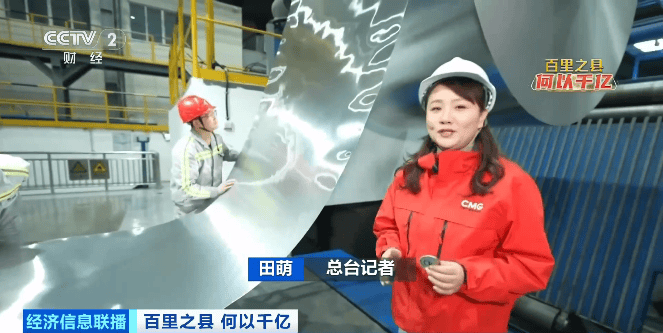
Group 1 - The core viewpoint is that Gongyi, a city in Henan Province, has transitioned from traditional agriculture to an industrial economy, achieving a GDP exceeding 100 billion yuan, making it the first "billion county" in Henan [1] - Gongyi's aluminum processing industry has become significant, producing over 1.4 billion yuan in annual output value and capturing more than 30% of the domestic market share for aluminum products [3] - The city is also advancing in the hydrogen energy sector, with the development of domestic hydrogen liquefaction equipment, which has applications in aerospace, marking a new energy industry formation in Gongyi [7] Group 2 - The aluminum products manufactured in Gongyi are crucial, with one in ten global aluminum cans and one in three domestic can lids produced there, showcasing the city's manufacturing capabilities [3] - The innovative material, aerogel, known for its exceptional insulation and waterproof properties, is being utilized in various applications, highlighting Gongyi's focus on advanced materials [5] - The hydrogen liquefaction equipment being developed in Gongyi is set to enhance the transportation and storage of hydrogen, indicating a strategic move towards sustainable energy solutions [7]

第六篇钟才平,来了
财联社· 2026-01-12 00:14
Core Viewpoint - The article emphasizes the importance of China's continuous opening up to provide new opportunities for the world, highlighting the confidence and responsibility of a major power in promoting high-quality development and international cooperation [3]. Group 1: Market Expansion - China's large market is set to expand, offering new opportunities for global market development, with a projected retail sales total exceeding 50 trillion yuan by 2025 [3]. - The middle-income group in China is expected to surpass 800 million people in the next decade, driving diverse demands for high-quality living [3]. - China imports over 20 trillion yuan annually and is a key export destination for nearly 80 countries, with a cumulative intended transaction amount of over 580 billion USD from the China International Import Expo [3]. Group 2: Industrial Cooperation - China remains the world's largest manufacturing country, providing high-quality and reliable products, thus becoming a critical part of the global supply chain [4]. - The renewable energy sector has seen significant advancements, with the cost of solar power generation decreasing by over 80% in the past decade [4]. - Future efforts will focus on cross-border industrial cooperation in areas like new energy and green minerals, contributing to economic growth and improved livelihoods in partner countries [4]. Group 3: Investment Environment - China is optimizing its investment environment by easing foreign investment market access and aligning with international trade rules [5]. - The country is becoming a global innovation hub, attracting multinational companies to establish R&D centers [5]. - Future plans include expanding market access in the service sector and enhancing the local production capabilities of foreign enterprises [5]. Group 4: Belt and Road Initiative - The Belt and Road Initiative has evolved into a significant international cooperation platform, with over 12,000 freight trains operating and numerous projects in various sectors [6]. - The initiative aims to enhance connectivity and cooperation in areas such as green development and digital economy [6]. - Future strategies will focus on aligning development strategies with partner countries and expanding cooperation in high-quality projects [6].

回收率提升成本大降,盐湖提锂关键技术重大突破
Xuan Gu Bao· 2026-01-11 15:07
Group 1 - The research team from the Qinghai Salt Lake Research Institute has achieved a significant technological breakthrough in the efficient separation of lithium, sodium, and potassium ions from lithium brine, which is expected to enhance the lithium extraction industry in China [1] - A new industrial demonstration line for extracting battery-grade lithium carbonate from lithium brine has been established in Qinghai, generating an additional output value of over 600 million yuan [1] - The innovative green extraction technology developed by the research team can increase the overall lithium ion recovery rate by 15% to 20% and reduce costs by 30%, with water and energy consumption below industry standards by over 30% [1] Group 2 - The Chinese lithium extraction industry is experiencing a triple benefit from technological breakthroughs, policy support, and growing demand, transitioning from technical exploration to large-scale application [1] - The demand for lithium is expected to be driven by the growth in the domestic and global electric vehicle markets, with projected sales of 19.42 million units in China and 24.18 million units globally by 2026 [2] - The lithium extraction industry in China is shifting from a "cost advantage" to "technology leadership," aiming for a full industrial chain upgrade to provide stable supply for the new energy sector [2] Group 3 - Relevant A-share concept stocks include Jiuwu Gaoke and Weisaibo, which are associated with the lithium extraction industry [3]
佛塑科技“顺利联姻”金力股份!
起点锂电· 2026-01-11 09:58
Group 1 - The core viewpoint of the article is that Foshan Plastics Technology has received approval from the CSRC for its acquisition of Jinli Co., marking its entry into the battery film sector with a deal valued at nearly 5.1 billion yuan [2][3] - The acquisition is seen as a strategic move to capture market opportunities amid a price war and overcapacity in the separator industry, positioning Foshan Plastics for future technological upgrades and high-end product competition [2] - Foshan Plastics has experienced a significant stock price increase, with a nearly 120% rise in 2025, reflecting strong market interest in the new energy sector [2] Group 2 - The total transaction price for the acquisition is 5.08 billion yuan, with 400 million yuan paid in cash and 4.68 billion yuan through share issuance [3] - Foshan Plastics, under the Guangxin Group, has established a diverse industrial layout in the new materials sector, while Jinli Co. specializes in the R&D, production, and sales of lithium battery wet separators, enhancing Foshan Plastics' product offerings in the new energy field [3] - Jinli Co. has rapidly risen to become a leading player in the wet separator market, achieving significant revenue of approximately 2.63 billion yuan and holding 313 domestic patents, showcasing its strong market competitiveness [4]

2026 年牛市展望系列1:入市增量资金有望超两万亿
Guoxin Securities· 2026-01-08 09:55
Group 1 - The core conclusion indicates that in 2025, the A-share market will see significant inflows from active funds such as leveraged and private equity funds, while insurance capital will also play a substantial role, contrasting with the overall net redemption of actively managed public funds [1][2][4] - The primary source of incoming funds is expected to shift towards high-net-worth individuals, with ordinary residents likely becoming the main contributors by 2026 as their risk appetite recovers from low levels [1][3] - The macroeconomic and microeconomic context of 2025 shows similarities to 2020, but the structure of incremental funds differs, leading to an estimated total inflow of 2 trillion yuan for 2026 [1][4] Group 2 - In 2025, the A-share market's performance is supported by a robust funding environment, with inflows categorized into two phases: the first half of the year saw a recovery in the market, while the third quarter experienced significant inflows from private equity and leveraged trading [2][19] - The first half of 2025 saw a total inflow of approximately 4.2 billion yuan from insurance funds, 2.4 billion yuan from retail investors, and 1 billion yuan from foreign capital, with a notable focus on technology and dividend sectors [2][14] - The third quarter marked a substantial increase in leveraged funds, with around 7 billion yuan entering the market, and private equity funds also significantly increased their market presence, contributing approximately 4 billion yuan [19][20] Group 3 - The process of resident funds entering the market is still in its early stages, primarily driven by high-net-worth individuals, as evidenced by a survey indicating an increase in investment willingness among 18.5% of urban depositors [3][32] - Despite signs of recovery in risk appetite among residents, the majority of funds entering the market are still from high-risk tolerant individuals, with broader participation from the general public remaining limited [3][36] - The overall risk appetite of residents remains low, with many still favoring low-risk investment products, which may hinder a more significant influx of resident funds into the market [36][41] Group 4 - The expected net inflow of funds for 2026 is projected to reach 2 trillion yuan, with contributions anticipated from retail investors, insurance capital, and improved public and foreign fund participation [4][55] - The inflow sources for 2026 include an estimated 10 billion yuan from retail active funds, 7 billion yuan from insurance capital, and 9.5 billion yuan from corporate dividends, indicating a diverse funding landscape [57][58] - The outflow of funds is expected to increase alongside market sentiment recovery, with projections for IPOs and refinancing activities to rise significantly, reflecting a more active capital market environment [58][59]
20cm速递丨多部门联合召开动力和储能电池行业座谈会!创业板新能源ETF华夏(159368)规模同类第一
Mei Ri Jing Ji Xin Wen· 2026-01-07 05:43
Core Viewpoint - The meeting held on January 7 focused on regulating competition in the power and energy storage battery industry, aiming to establish a more rational market environment and ensure sustainable development in the sector [1]. Group 1: Industry Developments - A joint meeting was convened by multiple departments to discuss the regulation of competition in the power and energy storage battery industry, with participation from over ten leading companies in the sector [1]. - The meeting emphasized a policy direction for comprehensive rectification of irrational competition, which is expected to help market prices return to a reasonable range and protect corporate profit margins [1]. - The policy will provide scientific guidance on capacity expansion, preventing supply-demand imbalances similar to those experienced in the photovoltaic industry, thereby promoting sustainable development and healthy competition in the energy storage sector [1]. Group 2: ETF Performance - The Huaxia New Energy ETF (159368) on the ChiNext board experienced a slight decline of 0.26%, while some of its holdings, such as Weikang Co., saw an increase of over 11% [1]. - The Huaxia New Energy ETF is the largest ETF tracking the ChiNext New Energy Index, which includes various segments of the new energy and electric vehicle industries, such as batteries and photovoltaics [1]. - The ETF has high elasticity with a potential increase of up to 20%, the lowest fee structure with a total management and custody fee of only 0.2%, and a total scale projected to reach 676 million yuan by December 30, 2025 [1].

又一家万亿市值巨头诞生!
Ge Long Hui· 2026-01-06 11:45
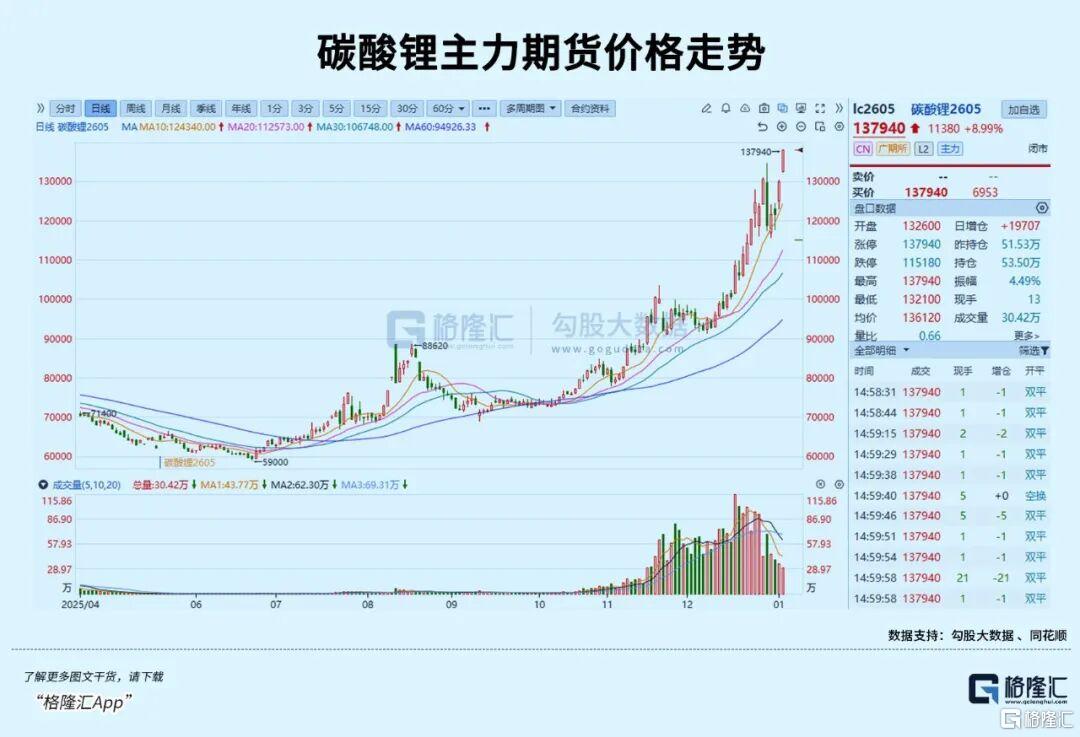
Core Viewpoint - The non-ferrous metals sector has shown remarkable performance, dominating the annual growth rankings in 2025 and continuing its strong upward trend into 2026, driven by various macroeconomic and industry-specific factors [1][2][7]. Group 1: Market Performance - As of January 6, 2026, multiple futures contracts in the non-ferrous metals market have surged, with lithium carbonate futures hitting a limit-up of 8.99%, closing at 137,940 yuan/ton, more than doubling since mid-2025 [2]. - Major contracts for silver, platinum, and palladium have also seen significant increases, with silver rising by 7.06%, platinum by 6.02%, and palladium by 5.16%, while industrial metals like copper, tin, and nickel have risen over 4% [4]. - Zijin Mining, a leading player in the sector, saw its stock price increase by 6.5%, pushing its market capitalization past 1 trillion yuan, making it the only non-ferrous company in A-shares to reach this milestone [4]. Group 2: Catalysts for Price Increases - The strong price increases in non-ferrous metals are characterized by an enhanced trend of interlinked price movements, particularly driven by the surge in lithium-related sectors, especially lithium carbonate [8][10]. - A key factor supporting the rise in lithium prices is the delayed resumption of production at the Jiangxi Jianxiawo lithium mine due to compliance and regulatory issues, which has tightened the supply in the market [10]. - The recent spike in silver prices was catalyzed by geopolitical events, specifically a U.S. military operation in Venezuela, which triggered a surge in safe-haven buying [13]. Group 3: Supply and Demand Dynamics - The copper market is experiencing a tight supply situation, exacerbated by production halts at major mines due to accidents and declining ore grades, which have led to increased extraction costs [13]. - Aluminum prices are nearing historical highs, supported by a combination of steady demand growth and rigid supply constraints, with new capacity growth projected at only 1.8% in 2025 [15]. - Nickel prices are expected to rebound as Indonesia reduces its mining quotas, while recent policy changes in Vietnam regarding rare earths are also expected to support price increases in that sector [15][16]. Group 4: Investment Trends - The current market environment is characterized by a strong resonance between capital and industry cycles, with historical data indicating that periods of monetary easing often correlate with significant price increases in non-ferrous metals [20]. - The demand for non-ferrous metals is being driven by the growth of new technologies, including AI and renewable energy, which are expected to further enhance the sector's attractiveness as a core asset class [21][22]. - Analysts predict that the non-ferrous metals sector will continue to experience a bullish trend in 2026, with copper and lithium being highlighted as key investment areas due to their supply-demand dynamics [22][24].

常州夫妻把充电桩卖到70国,干到全球第一,年入40亿,即将IPO
创业邦· 2026-01-06 04:28
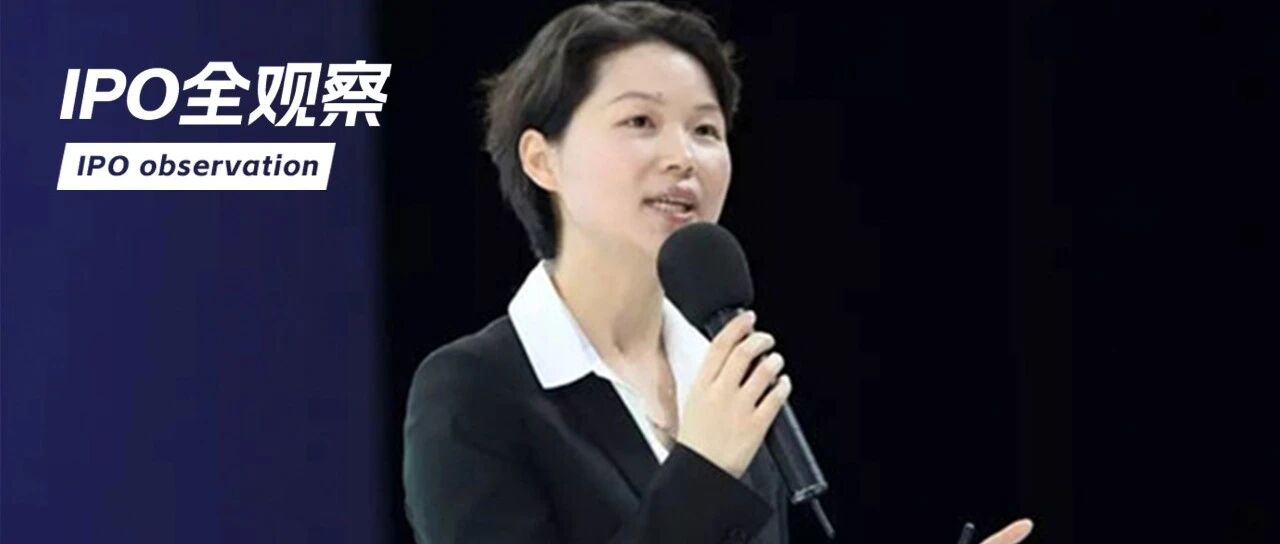
Core Viewpoint - The article highlights the transformation of Wanbang Group into Wanbang Digital Energy Co., Ltd., which has become the world's largest supplier of smart charging equipment, with annual sales exceeding 470,000 units and operations in approximately 70 countries and regions [2][24]. Company Overview - Wanbang Energy has submitted its prospectus to the Hong Kong Stock Exchange, aiming for an IPO after previous attempts in 2020 and plans for A-share listing in 2024 [2]. - The company reported revenues of 3.474 billion yuan in 2023, projected to rise to 4.182 billion yuan in 2024, with a 23% year-on-year growth in the first three quarters of 2025 [2][33]. Financial Performance - Despite revenue growth, net profit declined from 493 million yuan in 2023 to 336 million yuan in 2024, a drop of 31.7% [34]. - In the first three quarters of 2025, net profit rebounded to 301 million yuan, but included a one-time gain of 196 million yuan from asset transfer, accounting for nearly 60% of pre-tax profit [3][34]. - The company's gross margin has been decreasing, from 33.4% in 2023 to 24.6% in the first three quarters of 2025, with the core charging equipment business margin dropping from 34% to 26.6% [35]. Market Position - Wanbang Energy operates 726,000 public charging piles, ranking second in China with a market share of 15.7%, following Teld [38]. - The company has established a significant presence in the overseas market, generating 573 million yuan in revenue from international operations in the first three quarters of 2025, accounting for 18.6% of total revenue [4][40]. Business Model and Strategy - The company focuses on the charging pile market, utilizing a "crowdfunding" model to integrate social resources for charging station construction [14]. - Wanbang Energy has developed a "cloud-platform-device" business model, leveraging IoT technology for real-time monitoring and management of charging stations [17][39]. - The company has received investments from notable firms such as CICC Capital and Schneider Electric, with CICC being the largest external shareholder [4][23]. Leadership and Background - The company is controlled by a husband-and-wife team, Shao Danwei and Ding Feng, who have a strong background in the automotive industry and have led the company to significant growth [5][10]. - Shao Danwei has been recognized on the Hurun Rich List for two consecutive years, reflecting the company's financial success [25]. Industry Context - The charging infrastructure market in China is rapidly expanding, with a reported 4.625 million public charging facilities as of November 2025, a 36% year-on-year increase [38]. - The overall growth of the new energy sector and the increasing adoption of electric vehicles are driving demand for charging solutions [33].
新疆钢企实现风电钢全规格生产
Zhong Guo Jing Ji Wang· 2026-01-05 00:32
Core Viewpoint - The Xinjiang Bayi Iron and Steel Group Co., Ltd. has successfully produced and shipped its first batch of wind power steel products, achieving full specification production of wind power steel [1] Group 1: Product Development - The new product, a 100mm thick wide plate, will be used for manufacturing wind turbine towers, meeting local and high-end steel demands [1] - Previously, the company could only produce wide plates with a maximum thickness of 60mm, but after a year of technical research and production line development, it has overcome the challenge of producing 100mm thick plates [1] Group 2: Product Specifications - Wind turbine towers require steel that can withstand harsh conditions, including high temperatures, extreme cold, and sandstorms, necessitating strict quality requirements for welding performance, mechanical properties, and low-temperature impact toughness [1] - The company has established rigorous control indicators for all production stages, ensuring that products maintain good impact toughness and performance even at extreme conditions of -40°C [1] Group 3: Industry Collaboration - The company aims to deepen collaboration with partners in the wind power industry in the areas of product high-end and green development, contributing to the efficient advancement of wind power projects in Xinjiang and promoting high-quality development of the region's new energy industry [2]

中韩经贸合作在变局中拓展共赢新空间——访韩中经济社会研究所所长姜昊求
Xin Hua Wang· 2026-01-04 12:36
Core Insights - The core viewpoint emphasizes the need for China and South Korea to explore new cooperation spaces and leverage their respective advantages for mutual benefit amid structural adjustments in their economic relationship and rapid developments in future industries [1][2]. Group 1: Bilateral Trade and Economic Cooperation - In 2024, the bilateral trade volume between China and South Korea is projected to reach $328.08 billion, reflecting a growth of over 60 times since the establishment of diplomatic relations in 1992 [1]. - China has been South Korea's largest trading partner for 21 consecutive years, while South Korea ranks as China's second-largest trading partner [1]. - The economic cooperation relationship is undergoing structural adjustments, transitioning from a vertical to a horizontal cooperation model, promoting equal collaboration [1]. Group 2: Emerging Industries and Strategic Collaboration - Competition between the two countries does not imply a reduction in cooperation space; rather, it presents opportunities for complementary advantages through technological collaboration [2]. - Key emerging industries such as artificial intelligence and renewable energy are identified as core areas for a new industrial revolution, where strategic communication and leveraging respective strengths can lead to the establishment of a new production network in East Asia [2]. - Companies like Samsung SDI and China's Haosheng Technology Group are already engaging in deep collaboration in emerging industries, exemplified by the acquisition of Samsung SDI's polarizer business by Haosheng Technology [2]. Group 3: Future Directions and Government Role - Future cooperation areas of high importance include artificial intelligence, digital economy, service trade, green transformation, and third-party market collaboration [2]. - The enhancement of understanding and trust between the two governments is crucial for fostering mutual benefits based on horizontal competition and cooperation [3].