林下经济

Search documents
国家林草局:推广“林业标准地”模式发展林下经济
Di Yi Cai Jing· 2025-12-08 12:06
Core Insights - The article discusses the promotion of "forestry standard land" to attract social capital for developing the under-forest economy, as encouraged by the National Forestry and Grassland Administration [1][2] Group 1: Policy Measures - The National Forestry and Grassland Administration released measures to promote the under-forest economy, highlighting the current utilization of over 6 million acres of under-forest land with a production value exceeding 1 trillion yuan [1][4] - The measures encourage local governments to adopt the "forestry standard land" model from Zhejiang Province to create storage platforms for land management while respecting the rights of forest farmers [1][5] Group 2: Development Strategies - The "forestry standard land" concept, initiated in Anji County, Zhejiang, aims to support small and medium enterprises and complete the industrial chain by allocating approximately 30 acres of construction land annually for forestry projects [2][3] - The Zhejiang Provincial Forestry Bureau has issued guidelines for constructing "forestry standard land," which includes building necessary infrastructure to facilitate the integration of various forestry-related industries [2][3] Group 3: Economic and Ecological Integration - The measures aim to transform the relationship between people, forests, and land, turning ecological constraints into economic drivers while ensuring a balance between industrial development and ecological preservation [4][5] - The guidelines promote the use of public welfare forests for developing the under-forest economy, provided it does not compromise the overall functionality of the forest [4][5] Group 4: Financial Support and Collaboration - The measures encourage collaboration between state-owned forest farms and local communities to develop high-standard under-forest economic bases, enhancing employment and income for surrounding forest farmers [5] - Financial institutions are urged to innovate support models for the under-forest economy, including loans, insurance, and other financial tools tailored to the production, processing, and sale of under-forest products [5]

以历史主动精神打开陕西高质量发展现代化建设新天地
Shan Xi Ri Bao· 2025-12-04 22:46
Group 1 - The core viewpoint of the article emphasizes the importance of continuous effort and the need for a strategic approach to achieve high-quality development in Shaanxi during the 14th Five-Year Plan period [1] - The Shaanxi Provincial Committee has approved the suggestions for the 14th Five-Year Plan, outlining key goals for economic and social development [1] - Local leaders express commitment to implementing the spirit of the conference through practical measures, focusing on enhancing local governance and economic development [2][3] Group 2 - The conference highlights the need to improve agricultural policies to benefit farmers, which has motivated local officials to translate these directives into actionable plans [3] - Specific initiatives include promoting high-yield crop varieties, expanding livestock farming, and developing traditional Chinese medicine cultivation [3] - Emphasis is placed on enhancing public services in healthcare, education, and infrastructure to address community needs and improve living standards [4][5] Group 3 - The article discusses the ecological initiatives aimed at protecting the Yellow River basin and combating desertification, with local leaders committed to implementing these strategies [5] - There is a focus on integrating various environmental protection efforts, including research on local ecological characteristics and the development of sustainable economic models [5]
探索“点绿成金”新路径
Zhong Guo Zi Ran Zi Yuan Bao· 2025-11-28 06:06
Core Insights - Jiangsu Dongtai City has a forest coverage area of 895,000 mu and a forest land retention of 246,300 mu, facing challenges in forest rights and market operations after the 2008 reform [1] - The city has developed a reform path focusing on "confirmation - transfer - appreciation - sharing" to enhance the quality of forestry development [1] Group 1: Establishing a Standardized Transfer System - Dongtai City has established a registration management system to address ownership issues and has issued 45 property rights certificates during the pilot phase [3] - A transaction method has been developed to standardize forest rights transfer, ensuring transparency and preventing asset encroachment [3] - The promotion of standardized contract templates has reduced disputes and protected the legal rights of forest farmers [3] Group 2: Activating Assets - Dongtai City has transformed forest rights from "paper rights" to "financing assets," facilitating access to bank loans for farmers [5] - The introduction of financial products like "Su Nong Dan · Dongtai Seedling Loan" has provided 130 million yuan in loans to support forestry operations [5] - An online platform for rural property transactions has been established, completing 64 projects with a total transaction amount of 2.54 million yuan [5] Group 3: Monetizing Ecological Value - The city has initiated mechanisms to realize the value of ecological products, estimating the total value of forest ecological products at 8.05 billion yuan [8] - A compensation mechanism for ecological damage has been established, allowing offenders to fulfill restoration responsibilities through purchasing ecological product value vouchers [8] Group 4: Promoting Under-Forest Economy - Dongtai City is exploring new paths for under-forest economic development, with a projected direct forestry output value of over 130 million yuan in 2024 [9] - The city encourages the development of forest eco-tourism, achieving a total forestry output value of 5.156 billion yuan by the end of October this year [9]
做大做强绿色发展引擎(评论员观察)
Ren Min Ri Bao· 2025-11-17 22:20
Core Insights - The article emphasizes the importance of establishing a robust mechanism for realizing the value of ecological products and ecological compensation, which will stimulate societal participation in green development [1][2][3] Group 1: Economic Development - The "14th Five-Year Plan" suggests the development of the under-forest economy and the expansion of the forestry and grass industry, with a projected total output value of 10.496 trillion yuan for the national forestry and grass industry by 2024 [1] - The under-forest economy and forestry industry are identified as key drivers for promoting rural revitalization and transforming the "Two Mountains" concept into practical outcomes [1] Group 2: Mechanisms and Policies - There are challenges in the realization of ecological product value, including difficulties in measurement, collateralization, trading, and monetization [1] - Various regions are implementing measures to enhance the realization of ecological product value, such as Beijing's technical standards for quantifying ecological service value and Xiamen's exploration of carbon trading through waste classification [2] - Continuous optimization of economic policy tools supporting green low-carbon development is crucial for providing strong backing for green development methods and lifestyles [3] Group 3: Challenges and Opportunities - Current green development faces deep-seated contradictions in systems, standards, and interest structures, with room for improvement in carbon market trading scale and activity [3] - The process of addressing these challenges is seen as a pathway for development, with a call for ongoing reforms to consolidate advantages and eliminate bottlenecks during the "14th Five-Year" period [3]
“云药之乡”玉龙县探索中药材产业绿色发展模式
Zhong Guo Jin Rong Xin Xi Wang· 2025-11-17 11:47
Core Viewpoint - Yulong County is leveraging its rich ecological resources to develop a unique traditional Chinese medicine (TCM) industry, focusing on sustainable practices and innovative models to enhance both economic and ecological benefits [1][3]. Group 1: Ecological and Economic Synergy - Yulong County is transforming its limited arable land into new opportunities for TCM by utilizing its abundant forest resources, with a forest coverage rate exceeding 68.24% [1][3]. - The county is implementing a "forest + organization + cooperative + company + farmer" model to promote the cultivation of high-quality TCM, effectively utilizing idle forest land while minimizing chemical fertilizer and pesticide use [3]. - The introduction of the "National Reserve Forest + N" project aims to innovate the development model of national reserve forests, enhancing TCM quality and establishing Yulong as a comprehensive industrial demonstration zone [3]. Group 2: Initial Processing and Economic Stability - Yulong County is addressing land use constraints by establishing "field-side" initial processing sites, which allow for local processing of TCM while protecting the ecological environment [4][7]. - Currently, Yulong County has built 10 initial processing sites, processing 52,100 tons of TCM annually, generating a processing output value of 2.16 billion yuan [7]. Group 3: Digital Transformation in the TCM Industry - The "Smart Cloud Medicine" industrial park was inaugurated to create a digital platform that integrates various stages of the TCM supply chain, from seedling breeding to market sales [10]. - The platform provides precise services across the supply chain, attracting investments from external enterprises and enhancing the local TCM industry [10]. - Yunnan Baiyao Group is advancing its digital transformation by establishing comprehensive management systems for various TCM plants, supporting breeding improvements and precise raw material matching for different medicinal needs [10][11].
国家发改委等部门:鼓励国有林场通过自主开发、合作开发、特许经营等多种方式,发展生态旅游、森林康养、自然教育、户外运动等业态
Mei Ri Jing Ji Xin Wen· 2025-11-17 07:03
Core Viewpoint - The document outlines the Chinese government's initiative to accelerate the development of modern state-owned forest farms, emphasizing the potential for developing specialized industries and enhancing ecological sustainability [1] Group 1: Development of Specialized Industries - The government encourages state-owned forest farms to explore the potential of developing specialized industries tailored to local conditions [1] - Support is provided for the establishment of economic bases for economic forest fruits and woody grains, as well as the deep processing of wood products, forest foods, and forest medicinal materials [1] - The initiative aims to extend industrial chains and create distinctive regional brands [1] Group 2: Ecological Tourism and Other Business Models - State-owned forest farms are encouraged to develop ecological tourism, forest health care, nature education, and outdoor sports through various methods such as independent development, cooperative development, and franchising [1] - This diversification aims to enhance the economic viability of forest farms while promoting sustainable practices [1] Group 3: Wood Production and Resource Utilization - The document emphasizes the strengthening of wood production in state-owned forest farms [1] - Support is provided for the recycling of wood processing residues to produce biomass energy or composite materials, thereby increasing the added value of the industry [1] Group 4: Carbon Market Participation - The initiative supports the development of ecosystem carbon sink projects in conjunction with afforestation projects [1] - State-owned forest farms are encouraged to participate in carbon market trading, contributing to the exploration of mechanisms for carbon sink trading [1]
光阴的故事丨行走的天平 “森林法官”多跑“一公里”守护绿水青山
Yang Shi Wang· 2025-11-15 23:15
Core Viewpoint - The article highlights the efforts of the Lütian Court in Guangzhou's Conghua District to bring justice closer to rural communities through mobile court sessions and legal education initiatives, emphasizing the importance of grassroots legal services and ecological protection. Group 1: Mobile Court Sessions - The Lütian Court conducts mobile court sessions in remote areas, such as bamboo forests, to resolve disputes directly in the community [1][3] - The court members, including Chief Judge Li Changzhi, travel extensively to facilitate mediation, often handling multiple cases in a single day [1][2] - A recent mediation involved land use rights for a project adjacent to forest land, showcasing the court's approach to resolving local disputes effectively [1] Group 2: Legal Education and Ecological Protection - The court not only addresses legal disputes but also engages in public legal education and ecological conservation efforts [3][4] - The establishment of the "Forest Judge" workspace in the Chenhe Cave Nature Reserve aims to raise awareness about ecological protection among villagers [4][5] - The court has successfully mediated over 40 forest-related disputes, helping villagers develop sustainable forest economy practices [5][6] Group 3: Community Engagement - The court's team actively participates in community education, including teaching legal principles to school children, emphasizing the importance of instilling legal knowledge from a young age [7] - The integration of legal services with ecological initiatives aims to create a sustainable environment while providing economic opportunities for local residents [6][7] - The court's efforts have led to increased biodiversity in the area, as seen by the rise in bird populations due to community awareness and protection measures [4][6]
国家林草局:推动林草产业迭代升级,培育新产业新模式
第一财经网· 2025-11-13 00:53
Core Insights - The Chinese government aims to optimize and enhance traditional industries such as bamboo and wood cultivation and processing during the 14th Five-Year Plan period, promoting the iteration and upgrading of the forestry and grassland industry [1] - The total output value of the national forestry and grassland industry is projected to reach 10.17 trillion yuan in 2024, with a year-on-year growth of 9.6%, and the trade value of forest products is expected to reach 181.7 billion USD [1] - The forestry industry is becoming a significant pillar of the economy, with key sectors like bamboo processing, economic forests, eco-tourism, and under-forest economy each generating over 1 trillion yuan annually [1] Industry Development - The forestry and grassland industry is recognized as a green and prosperous industry with substantial economic development potential, contributing to ecological protection, industrial growth, and rural revitalization [4][6] - The implementation of comprehensive reform pilot projects in various provinces, such as Guangxi and Fujian, is aimed at enhancing the efficiency and productivity of forestry resources [5][2] - The integration of various sectors, including "forest + tourism," "forest + health," and "forest + finance," is being promoted to leverage unique resource advantages and stimulate economic growth [2][5] Regional Highlights - Fujian province, with the highest forest coverage rate in China, is expected to achieve a forestry industry output value of 812.1 billion yuan in 2024, leading the nation [2] - Guangxi province is set to become the first province in China with a forestry and grassland industry output value exceeding 1 trillion yuan, with significant contributions to local farmers' income [5] - Jiangxi province is focusing on comprehensive development and utilization of forest resources, with a projected forestry industry output value of 4.3 billion yuan in 2024 [5] Future Initiatives - The National Forestry and Grassland Administration plans to accelerate the growth of the forestry industry by enhancing traditional sectors and fostering new industries and models [6] - Emphasis will be placed on technological innovation and the integration of industry and technology to improve the quality of forestry products and services [6] - The government aims to optimize the utilization of forest resources and improve infrastructure in forest areas to support sustainable development [6]

(乡村行·看振兴)贵州江口“林药共生” 织就绿色富民图
Zhong Guo Xin Wen Wang· 2025-11-12 07:48
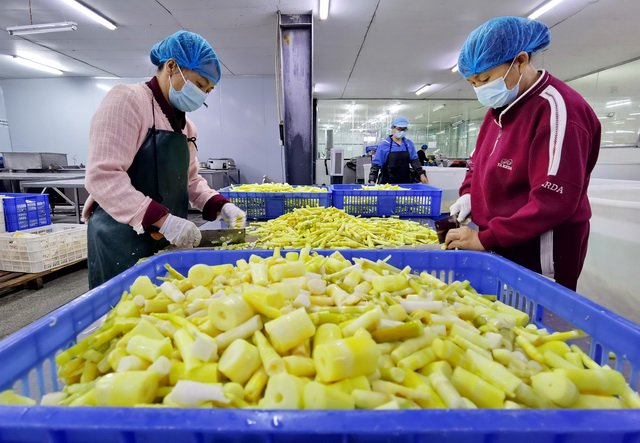
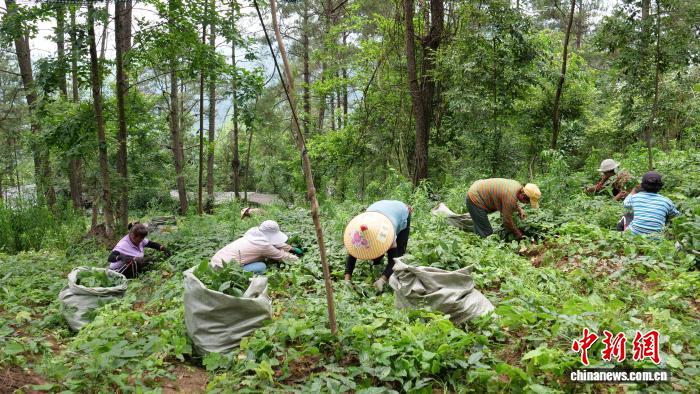
中新网贵州江口11月12日电 (周燕玲 黎福慧 兰军)时下,正是淫羊藿移栽时节,在贵州省铜仁市江口县 德旺乡交界村的种植基地,只见山上树木郁郁葱葱,村民们分散在林间各处,娴熟地移栽淫羊藿幼苗。 "淫羊藿具有喜阴的生长特性,非常适合在林下种植,今年计划种植200亩,目前已完成了120余亩。"交 界村淫羊藿基地负责人张珈菱说:"淫羊藿发展前景好,加上乡里技术专家经常上门免费指导,我们对 发展这个产业充满信心。" 淫羊藿,又名"仙灵脾",是我国传统中药材,《神农本草经》和《本草纲目》中均有记载,具有补肾壮 阳、祛风湿、强筋骨等功效。 地处世界自然遗产地梵净山下的江口县,森林覆盖率高达77%,得天独厚的林地资源为林下种植淫羊藿 提供了绝佳的自然条件。近年来,江口县将淫羊藿产业作为林下经济的突破口着力培育,并按照"林下 仿野生"原则,不砍树、不毁草,仅清理杂灌并翻松表层土壤,实现"林药共生"。 截至目前,江口县林下淫羊藿种植面积2.5万亩,产业覆盖全县9个乡镇、71个行政村。同时,通过招商 引资,江口县民和镇建成了全国最大的淫羊藿育苗育种生态基地,总面积940亩。 (乡村行·看振兴)贵州江口"林药共生" 织就绿色富民图 ...
山水有灵,林下生金——广西桂林的绿色富民“生态实践”
Zhong Guo Jin Rong Xin Xi Wang· 2025-11-10 08:17
Core Insights - The development of the under-forest economy in Guilin has been successful, with significant harvests and favorable prices for medicinal herbs like Tian Dong [1] - The local government has prioritized the under-forest economy as a key component of rural revitalization, providing comprehensive policy support and funding [2] Government Support - Guilin's government has integrated the under-forest economy into its work reports for several years, ensuring policy formulation and financial backing [2] - Resource County has established dedicated offices for medicinal herbs and under-forest economy, implementing a three-year action plan for high-quality development [3] Financial Innovations - Guilin has introduced innovative financial products such as "Herb Loan," "Forest Easy Loan," and "Agricultural Benefit Loan" to address funding challenges for under-forest economy operators [3] - As of October 2025, over 1 billion yuan in loans have been issued to under-forest economy operators in Guilin [3] Industry Development - Resource County has seen the establishment of a cooperative focused on high-value medicinal herbs, aiming to expand its planting area significantly over the next few years [4] - Guilin Ouyun Pharmaceutical Co., Ltd. has developed a complete industrial chain for medicinal herbs, processing 50,000 tons annually and enhancing product value [6] Technological Advancements - Companies in Guilin are collaborating with research institutions to drive technological innovation in the under-forest economy, addressing various industry challenges [7] - Guilin Yiyuan Modern Biotechnology Co., Ltd. has achieved significant advancements in the breeding of scarce medicinal herbs, with a production capacity of 30 million seedlings annually [7] Diverse Product Development - Guilin is exploring multiple revenue streams from under-forest products, including the development of health-oriented processed goods [9] - Resource County has reported a significant increase in the area dedicated to under-forest medicinal herbs, with an annual output value nearing 5 billion yuan [12] Economic Impact - By September 2025, the under-forest economy in Guilin has generated a total output value of 141 billion yuan, covering an area of 8.97 million acres and employing nearly 1.15 million people [12]