
生物科技

Search documents
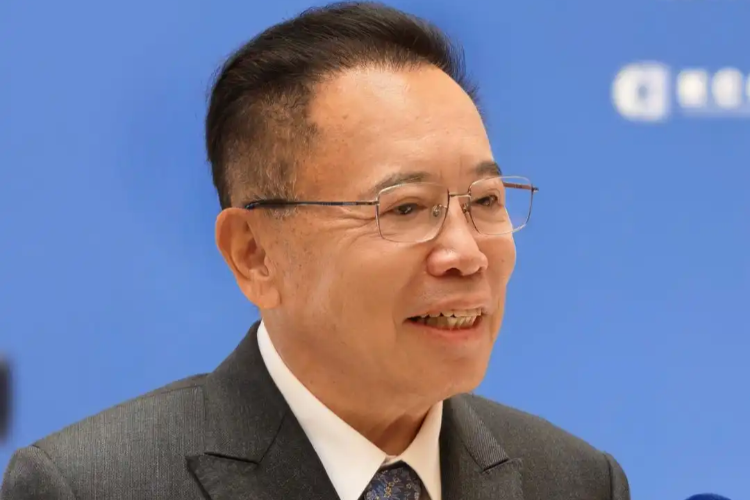
TCL李东生:中韩两国在人工智能等新兴领域合作潜力巨大
Nan Fang Du Shi Bao· 2026-01-08 09:57
Group 1 - The core viewpoint of the article emphasizes the significant potential for cooperation between China and South Korea in emerging fields such as artificial intelligence, semiconductor displays, new energy vehicles, and biotechnology, as highlighted by TCL's founder and chairman, Li Dongsheng [2] - Li Dongsheng proposed three suggestions for deepening cooperation: 1) fully utilize the China-South Korea Free Trade Agreement to enhance bilateral economic cooperation; 2) leverage each country's industrial advantages to promote collaboration in technological innovation; 3) build industrial resilience and optimize regional supply chain layouts [2] - TCL Huaxing has become a core supply chain partner for major companies like Samsung, LG, and Hyundai, with plans to increase its share in Samsung's mobile supply chain to 15% and expand its role as a core supplier for Hyundai's in-vehicle displays [2] Group 2 - The China-South Korea Business Forum was co-hosted by the China Council for the Promotion of International Trade and the Korea Chamber of Commerce and Industry, with over 400 attendees from both countries, including key economic representatives from South Korea such as President Yoon Suk-yeol and leaders from major corporations [3]


科技成果加速“变现” 2020年至2024年全国技术合同成交额增幅达141.7%
Jing Ji Ri Bao· 2026-01-08 04:03
Core Viewpoint - The report presented by Chen Jiachang, Vice Minister of the Ministry of Science and Technology, highlights the significant growth in technology contract transaction amounts in China, indicating a robust acceleration in the transformation of scientific and technological achievements into productive forces, with a focus on enhancing the synergy between the innovation chain and the industrial chain [1][2]. Policy Guidance - The primary challenge in accelerating the transformation of scientific achievements is the insufficient collaboration between the innovation chain and the industrial chain, leading to a disconnect between research and industry needs [2]. - China is progressively establishing a comprehensive institutional framework for the transformation of scientific achievements, including the decentralization of rights related to the use, disposal, and benefits of achievements [2]. - During the 14th Five-Year Plan period, China has made significant strides in fields such as quantum technology and artificial intelligence, transitioning from a "follower" to a "leader" in innovation [2]. Mechanism Innovation - The "island effect" among innovation entities is a major bottleneck hindering systematic advancement in the transformation of scientific achievements [3]. - Universities and research institutions are taking the lead in breaking through these challenges by integrating resources and establishing comprehensive platforms for technology transfer [3]. - By the end of 2024, the number of technology transfer institutions in universities and research institutes is expected to reach 2,364, marking a 21% increase since 2020 [3]. Financial Support - Funding is identified as a critical factor for the transformation of scientific achievements, with many technology-based enterprises facing challenges related to financing [5]. - The establishment of a technology finance service system is underway, with significant investments from national funds and local governments to support technology transformation [6]. - By the end of Q3 2025, loans to technology-based small and medium-sized enterprises are projected to reach 35.6 trillion yuan, reflecting a year-on-year growth of 22.3% [6].
国际长线资金回流 后备上市资源丰富——今年港股IPO募资有望超3000亿港元
Cai Jing Wang· 2026-01-08 01:35
Group 1 - The core viewpoint of the articles highlights that Hong Kong's IPO market is expected to maintain its leading position globally, with a projected fundraising amount exceeding 300 billion HKD in 2026, driven by technology and A to H listings [1][6][7] - The number of companies waiting to go public on the Hong Kong Stock Exchange has reached over 300, indicating a robust pipeline for future IPOs, with significant participation from leading firms across various sectors [2][4] - The successful listing of companies like Wallen Technology and AI firms such as Zhipu AI and MiniMax marks a strong start for the 2026 IPO market, emphasizing the technology sector's prominence [2][3] Group 2 - Major drivers for the 2026 IPO market include the high demand for biotech companies, leading technology firms in AI, new energy, and semiconductor sectors, as well as traditional industries undergoing transformation [3][5] - The influx of international long-term capital into the Hong Kong market is expected to favor leading Chinese companies with strong growth, profitability, and cash flow [4][5] - Predictions from various institutions suggest that around 150 to 160 companies will successfully list in 2026, with total fundraising estimates ranging from 320 billion to 350 billion HKD, indicating a significant increase from 2025 [6][7] Group 3 - The trend for 2026 is anticipated to show a "two ends large, middle differentiation" characteristic, where large projects and industry leaders are likely to attract stable long-term funding, while smaller projects may face more volatility [6][7] - A to H listings are expected to remain a significant component of the IPO landscape, as these companies typically have established business records and provide more certainty for international investors [7]
留学选专业,注意新动态
Ren Min Ri Bao Hai Wai Ban· 2026-01-07 23:00
Core Insights - The report by Qide Education highlights the trends in popular study fields and emerging professional directions for international students, driven by advancements in AI, biotechnology, and sustainable energy [1] Group 1: Trends in Study Fields - There is a noticeable shift in application trends from business disciplines to STEM (Science, Technology, Engineering, Mathematics) fields, with STEM applications increasing while business and social sciences are declining [2] - From 2022 to 2025, business and economics remain the most applied fields, but the proportion of applications for science and engineering is steadily rising [2] - The increasing preference for STEM fields is attributed to their higher technical barriers and long-term career prospects, aligning with global technological advancements [2] Group 2: Differences in Undergraduate and Master's Applications - Undergraduate applications tend to be broader, focusing on foundational subjects like mathematics and economics, while master's applications are more career-oriented, concentrating on specific fields such as law, education, and emerging interdisciplinary studies [3] - Students often choose foundational subjects at the undergraduate level for their versatility, allowing them to pivot to more specialized fields in their master's studies [3] - Interdisciplinary programs like business analytics are gaining popularity, combining business, statistics, and computer knowledge, appealing to students from diverse academic backgrounds [3] Group 3: Emerging Professional Advantages by Institutions - Global higher education institutions are deepening their focus on emerging professional fields, with varying strengths based on regional characteristics [4] - U.S. universities emphasize cutting-edge technology and industry collaboration, with institutions like Stanford and MIT leading in AI and robotics research [4][5] - Different countries exhibit unique educational strategies in AI, with the U.S. focusing on technical exploration, Germany integrating courses with industry needs, and Canada offering flexible educational paths in AI and sustainability [5]

科技成果加速“变现”
Xin Lang Cai Jing· 2026-01-07 21:21
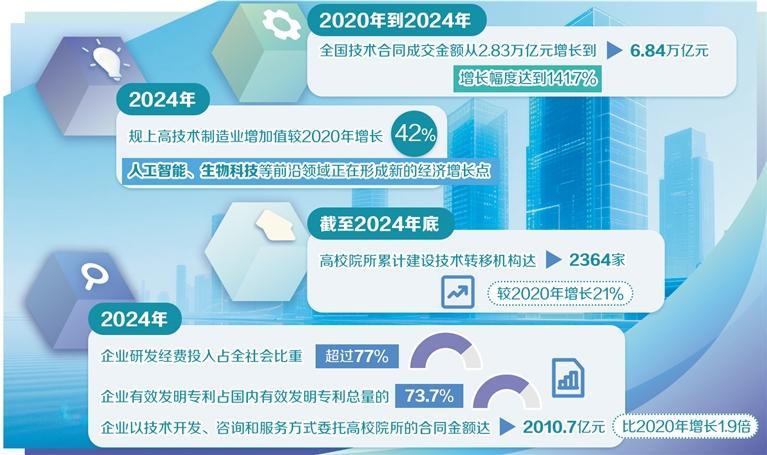
Core Insights - The report presented by Chen Jiachang, Vice Minister of the Ministry of Science and Technology, highlights a significant increase in the national technology contract transaction amount from 2.83 trillion yuan in 2020 to 6.84 trillion yuan in 2024, marking a growth of 141.7% [2] - The report emphasizes the importance of transforming technological innovation into high-quality development, with a focus on streamlining the path for technology transfer [2] Policy Guidance - The primary challenge in accelerating the transformation of scientific and technological achievements is the lack of coordination between the innovation chain and the industrial chain [3] - A comprehensive institutional framework for technology transfer has been established, with over 200 supporting policy documents created at local levels [3] - During the 14th Five-Year Plan period, China has made significant advancements in fields such as quantum technology and artificial intelligence, transitioning from a "follower" to a "leader" in these areas [3] Mechanism Innovation - The "island effect" among innovation entities hinders the systematic advancement of technology transfer [4] - Universities and research institutions are taking the lead in breaking through these barriers by integrating resources and establishing comprehensive platforms for technology transfer [4] - By the end of 2024, the number of technology transfer institutions in universities and research institutes reached 2,364, a 21% increase from 2020 [4] Funding Support - Funding is identified as a critical factor for the transformation of technological achievements, with many technology-based enterprises facing challenges in financing [6] - The National Technology Transfer Guidance Fund has invested in over 700 technology enterprises, leading to a total scale of local technology transfer funds exceeding 1.4 trillion yuan [6] - By the end of Q3 2025, loans to technology-based small and medium-sized enterprises reached 3.56 trillion yuan, a year-on-year increase of 22.3% [6] Capital Market and Insurance Support - The bond market for technology has progressed steadily, with around 100 institutions issuing technology innovation bonds exceeding 250 billion yuan [7] - Insurance for technology research and transfer provided risk coverage of approximately 9 trillion yuan in 2024 [7] - Continuous support for venture capital institutions and the establishment of a comprehensive evaluation mechanism for state-owned venture capital funds are essential for sustaining the momentum of technology transfer [7]
富达国际:看好中美股市2026年表现 对欧洲股市保持观望态度
Zhi Tong Cai Jing· 2026-01-07 08:43
亚洲股票2025年表现强劲,大中华股票表现最理想,全年平均回报达33.71%。其次为香港股票及亚太 区日本除外股票,回报分别为31.69%及29.26%。整体区内通胀温和,美联储减息有助缓解利差压力, 部分亚洲央行更具备进一步宽松空间。 富达持续看好中国内地股市,中美贸易关系已趋于稳定,整体增长势头向好,降低了立即采取政策行动 的迫切性。中国市场的估值依然具吸引力,内地在创新、人工智能及生物科技等领域的全球竞争力亦持 续提升。此外,中国内地政府推动"反内卷"政策,旨在改善竞争环境、促进产业升级,亦为市场带来额 外催化剂。 从资产配置角度,固定收益上,富达仍高度看好高评级企业债券。同时,美国国债的传统避险优势略显 减弱,市场承压期间,德国政府债及黄金的避险需求更突出。 地域配置方面,对美国股票维持超配。美联储持续宽松及贸易政策不确定性下降,支撑市场情绪与风险 偏好。虽然市场集中度偏高,但科技板块盈利仍具动能,AI投资趋势愈加明显。对欧洲股市则保持观 望,尽管政策乐观推动市场反弹,但企业盈利增长逊于预期,欧洲央行利率已接近中性,进一步宽松可 能性有限。 富达国际表示,2025年全球市场表现理想,展望2026年资产 ...
竞合韩国,锚定全球:李东生阐释TCL全球化3.0
2 1 Shi Ji Jing Ji Bao Dao· 2026-01-07 02:00
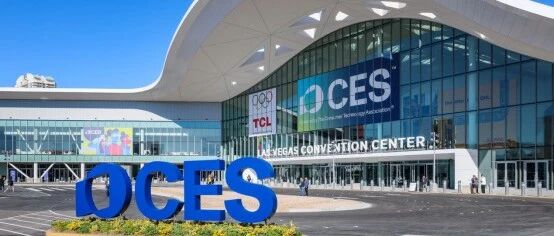
Core Viewpoint - The article emphasizes the significant cooperation potential between China and South Korea in emerging fields such as artificial intelligence, semiconductor displays, new energy vehicles, and biotechnology, as highlighted by TCL's chairman, Li Dongsheng [1][2]. Group 1: Cooperation and Strategic Initiatives - The China-South Korea Business Forum invited over 200 entrepreneurs from South Korea, including leaders from major companies like Samsung and SK Group, to discuss collaboration amidst new industrial competition challenges [2]. - Li Dongsheng outlined three key areas for deepening cooperation: utilizing the China-South Korea Free Trade Agreement, leveraging each country's industrial advantages for technological innovation, and optimizing regional supply chain layouts [2][5]. - TCL aims to enhance its market presence in South Korea by deepening partnerships with local channel customers and service providers, focusing on product market share and brand influence [5]. Group 2: Technological Advancements and Market Position - TCL has established a strong foothold in the South Korean market through its technological capabilities and strategic partnerships, including collaborations with major local companies like Samsung and LG [4]. - The company has successfully penetrated various product categories in South Korea, including televisions, air conditioners, refrigerators, and washing machines, and has achieved increasing product penetration rates [4]. - TCL is recognized as a leader in Mini LED technology and has pioneered mass production of printed OLED technology, marking significant advancements in display technology [4]. Group 3: Globalization Strategy - TCL's globalization strategy includes the establishment of five overseas operational entities, aiming to create localized supply chains and enhance industrial capabilities in foreign markets [8]. - The company has set up 47 R&D centers and 39 manufacturing bases globally, employing 160,000 people and serving over 1.3 billion users [9]. - TCL's participation in CES 2026 will showcase its global competitiveness, with a focus on advanced display technologies and a comprehensive range of smart terminal products [10][12].
竞合韩国,锚定全球:李东生阐释TCL全球化3.0
21世纪经济报道· 2026-01-07 01:50
Core Viewpoint - The article emphasizes the significant cooperation potential between China and South Korea in emerging fields such as artificial intelligence, semiconductor displays, new energy vehicles, and biotechnology, as highlighted by TCL's founder and chairman, Li Dongsheng, during the China-South Korea Business Forum [1][6]. Group 1: Cooperation and Market Strategy - Li Dongsheng advocates for a long-term perspective and global orientation in industry collaboration, suggesting three specific areas for deepening cooperation: utilizing the China-South Korea Free Trade Agreement, leveraging industrial advantages for technological innovation, and optimizing regional supply chain layouts [1][8]. - TCL has successfully established a presence in the South Korean market by forming deep cooperative relationships with local leading companies, enhancing its product penetration across various categories such as TVs, air conditioners, refrigerators, and washing machines [4][5]. Group 2: Technological Advancements - TCL is recognized for its technological strengths, being the first globally to achieve mass production of Mini LED TVs and leading in printed OLED technology, which has facilitated its entry into the South Korean market [5][9]. - The company has formed multi-layered strategic partnerships with major South Korean firms like Samsung and LG in the semiconductor display sector, covering core electronic categories [4][9]. Group 3: Future Plans and Global Strategy - Looking ahead, TCL aims to enhance its market share and brand influence in South Korea by deepening collaborations with leading local channel partners and service providers, particularly in mobile devices and automotive displays [9][12]. - The company has set a strategic goal of "recreating five TCLs overseas," focusing on establishing localized supply chains and industrial capabilities in various regions, which is expected to contribute to both the company's growth and China's national income [12][16]. - TCL's global strategy has led to the establishment of 47 R&D centers and 39 manufacturing bases worldwide, with a workforce of 160,000 and over 130 million users served globally [13][15].
TCL李东生:中韩两国在人工智能、半导体显示等新兴领域合作潜力巨大
Xin Lang Cai Jing· 2026-01-06 07:40
Core Viewpoint - The founder and chairman of TCL, Li Dongsheng, highlighted the significant cooperation potential between China and South Korea in emerging fields such as artificial intelligence, semiconductor displays, new energy vehicles, and biotechnology during the China-South Korea Business Forum [1] Group 1: Business Collaborations - TCL has established business partnerships with several South Korean companies in the semiconductor display sector, including Samsung, LG, and Hyundai, covering products like televisions, commercial displays, laptops, smartphones, and tablets [1] - TCL Huaxing has completed the acquisition of certain panel production lines from Suzhou Samsung and Guangzhou LG [1] Group 2: Renewable Energy Initiatives - TCL Zhonghuan has signed a memorandum of cooperation with South Korea's I-Solar Energy to collaborate in the commercial photovoltaic market in South Korea [1]
TCL李东生:中韩两国在AI、半导体显示等新兴领域合作潜力巨大
Bei Ke Cai Jing· 2026-01-05 11:09
Group 1 - The core viewpoint emphasizes the significant potential for cooperation between China and South Korea in emerging fields such as artificial intelligence, semiconductor displays, new energy vehicles, and biotechnology, driven by technological research and innovation collaboration [1] - The China-South Korea Business Forum, co-hosted by the China Council for the Promotion of International Trade and the Korea Chamber of Commerce and Industry, featured over 200 business leaders, including prominent figures from major companies like Samsung, SK Group, Hyundai, and LG [1] - TCL has established deep competitive and cooperative relationships with South Korean companies across its three core industries, including multi-category layouts in the smart terminal sector and strategic collaborations in semiconductor displays and photovoltaic energy [1] Group 2 - In the context of a rapidly changing global economic landscape, the cooperation logic of "mutual benefits" remains clear and steadfast, with a call for deeper industrial collaboration between the two countries [2] - The proposed areas for continued cooperation include leveraging the China-South Korea Free Trade Agreement, enhancing bilateral economic and trade cooperation, promoting technological innovation, and optimizing regional supply chain layouts [2] - The expectation is to deepen mutually beneficial cooperation with South Korean enterprises through mechanism innovation, technological collaboration, and industrial integration, contributing to regional prosperity and stability [3]