
硬科技投资

Search documents
“中国企业的天花板应该是全世界的市场”
投中网· 2025-12-05 02:18
Core Viewpoint - The article discusses the current state of technology investment in China, highlighting both opportunities and challenges in the context of global competition and domestic innovation policies [2][3]. Group 1: Technology Investment Landscape - China's technology investment is at a critical juncture, with significant advancements in fields like artificial intelligence, quantum technology, and biomanufacturing, providing new momentum for economic growth [2]. - The government is optimizing the technology finance ecosystem through various policies, including the establishment of innovation funds and encouragement of early-stage investments [2][3]. - The investment community is exploring new paths for deep integration of technology and finance, creating a multi-layered and comprehensive investment landscape [2]. Group 2: Investment Strategies and Focus Areas - Investors are focusing on balancing technological foresight with commercialization efficiency, particularly in hard technology sectors like integrated circuits, renewable energy, and healthcare [3][4]. - High-potential investment areas include AI, quantum technology, and synthetic biology, with firms like Zhongke Chuangxing actively investing in these fields [4]. - The medical sector is also highlighted, with a focus on early-stage technologies and the importance of clinical validation for commercialization [5][6]. Group 3: AI and Its Impact - AI is identified as a major investment theme, with opportunities in AI models, infrastructure, and applications across various sectors [7][8]. - Companies are advised to integrate AI into their business models to remain competitive, as AI is expected to drive significant innovation [7][8]. Group 4: Renewable Energy Investment - The renewable energy sector is seeing substantial interest, particularly in battery technology, electric vehicle electrification, and smart energy solutions [17][18]. - Companies are focusing on next-generation battery materials and the electrification of commercial vehicles, anticipating a significant increase in electric vehicle adoption [17][18]. Group 5: Globalization and Market Expansion - The article emphasizes the importance of global market integration for Chinese companies, with a focus on leveraging local advantages to compete internationally [32][36]. - Investment strategies are evolving to support Chinese teams in global entrepreneurship, particularly in AI and biotech sectors [32][36]. - The need for companies to adapt to local regulations and market conditions when expanding internationally is highlighted as a critical factor for success [36].

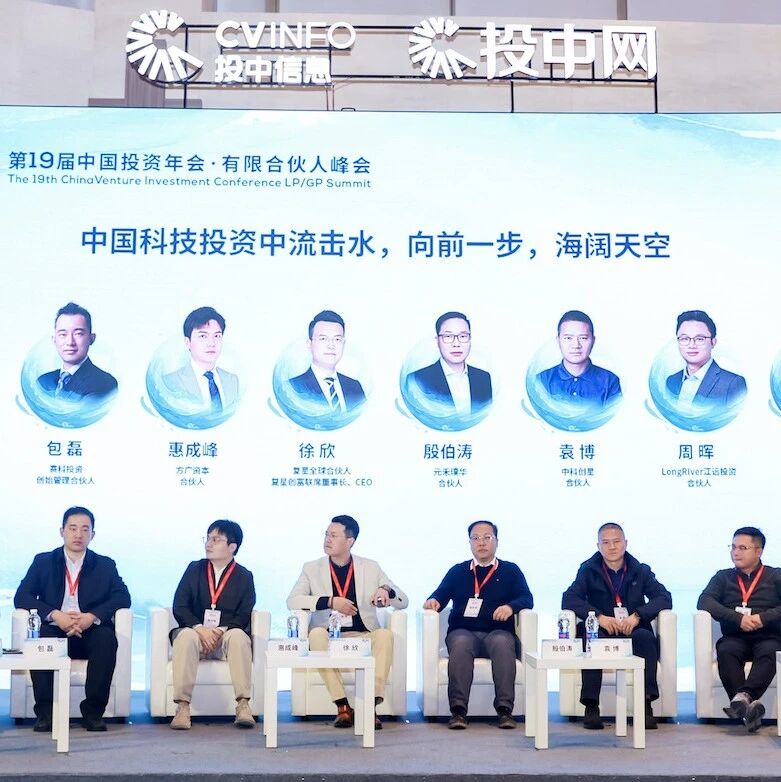
4家股权投资机构,完成科创债发行!
Sou Hu Cai Jing· 2025-11-30 13:37
Core Insights - The issuance of the second batch of private equity venture capital bonds (科创债) took place from November 26 to 28, following the successful issuance of the first batch in June [1] - The total issuance scale for the four private equity institutions involved is approximately 930 million yuan, with individual issuances of 400 million yuan and 300 million yuan from two of the institutions [1] - The funds raised will primarily support technology enterprises in strategic sectors such as semiconductors, artificial intelligence, robotics, synthetic biology, and brain science [1][2] Group 1 - The lack of long-term and patient capital has been a key bottleneck for venture capital institutions in supporting hard technology enterprises [2] - The new 科创债 effectively addresses issues of small scale, short duration, and difficulty in credit enhancement, injecting long-term and stable capital into the venture capital industry [2] - The 科创债 is becoming an important tool for private venture capital institutions to support national technological innovation, opening new financing channels for long-term and sustainable funding arrangements [2][3] Group 2 - As of November 21, the "Technology Board" in the bond market has supported 276 enterprises in issuing a total of 534.6 billion yuan in 科创债, with the issuance scale exceeding 10% of the total debt financing tools in the interbank market for the first time [3] - The participation of private enterprises in the bond market has significantly increased, with 55 private enterprises successfully issuing 107.4 billion yuan in 科创债, accounting for 20% of the total issuance [3] - The next steps involve further utilizing risk-sharing tools to develop the "Technology Board" in the bond market, guiding more financial resources towards early, small, long-term, and hard technology investments [3]
一级市场的“上证50”来了丨投中嘉川
投中网· 2025-11-30 07:21
Group 1 - The core viewpoint of the article is that the Chinese venture capital market is experiencing a significant recovery, transitioning from a fundraising-driven phase to an exit-driven phase [5][6][10] - The "China Venture Capital 100 Comprehensive Index" was developed to quantify the industry's temperature and assess its current stage and future direction [7][9] - The index shows that the market has gone through various phases over the past decade, influenced by policy, industry development, geopolitical factors, and unexpected events [9][10] Group 2 - The comprehensive index has rebounded to 194.06, indicating the emergence of a new cycle and a recovery in market confidence [10][12] - The investment index reached a low of 81.86 in the first half of 2024 but improved to 109.12 by the first half of 2025, reflecting a recovery in investment activity [20][24] - The exit index saw a strong rebound to 195.40 in the first half of 2025, driven by improved IPO channels and increased merger and acquisition activities [27][28] Group 3 - The fundraising index remains in a bottoming phase, having peaked at 326.35 in 2018 before entering a downward trend [29][32] - By the first half of 2025, the number of funds raised was 1,966, with a total fundraising amount of 10,665 billion, continuing the downward trend [33]

2026年股权投资市场怎么走?最新研判来了
Shang Hai Zheng Quan Bao· 2025-11-28 13:29
Core Insights - The 19th China Investment Annual Conference highlighted trends in the private equity market, emphasizing the importance of economic, political, and technological drivers in asset allocation, with expectations for stability until 2026 [1] - The report indicated a significant increase in newly established venture capital funds, reaching 1.78 trillion yuan in the first three quarters of 2025, a year-on-year increase of 10.25%, and investment events totaling 912 billion yuan, up 19.98% [1] Group 1: Investment Trends - The report predicts three major trends in asset allocation: industry concentration, regional decoupling, and stable allocation [1] - The participation of state-owned capital in venture capital has reached a stable phase, with state-owned platforms and guiding funds accounting for 59% of the funding structure by Q3 2025 [2] - The willingness of listed companies to invest in private equity funds has decreased, with average annual contributions dropping from 288 million yuan to 192 million yuan from 2022-2023 to 2024 [3] Group 2: M&A and Fund Dynamics - The Chinese M&A fund market is expected to grow significantly, with a focus on cash flow and operational management, presenting numerous opportunities due to a favorable financing environment and increasing demand for corporate restructuring [4] - S funds are becoming a critical component of the market, with a peak in global S transactions in the first half of 2025, indicating a growing demand for secondary fund transactions [5][6] - The report suggests that the Chinese hard technology sector will undergo a competitive phase, with a shift from scale to technological innovation and a focus on building systematic capabilities [7][8]
北京泰康投资黄升轩:创新适变,行稳致远,“高胜率”策略布局险资股权投资
投中网· 2025-11-28 06:54
Core Viewpoint - The article discusses the strategic shift of insurance funds towards alternative asset allocation in response to the low interest rate environment, emphasizing the importance of adapting investment strategies to capture opportunities in the evolving market landscape [3][4]. Group 1: Insurance Fund Allocation Trends - Over the past decade, the available balance of insurance funds has shown steady growth, with a compound annual growth rate (CAGR) exceeding 10%. By the first three quarters of 2024, the available balance approached 38 trillion, marking a 12% year-on-year increase [5]. - The allocation of insurance funds to equity investments has increased from approximately 4% in 2012 to around 7% in 2024, with equity investment scale reaching nearly 2 trillion, a historical high, reflecting a 13% increase [5][6]. - A significant 67% of insurance funds are directed towards equity investments outside the insurance system, indicating a clear trend of increasing equity allocation [5]. Group 2: Challenges and Strategic Responses - The insurance industry faces challenges due to a mismatch between asset and liability durations, with an average duration gap of about 7 years, which could lead to interest rate risk and difficulty in covering liability costs [6]. - To enhance long-term returns, there is a need to increase equity allocations, including both secondary market equities and alternative investments, as a response to the declining long-term interest rates [6]. - The article highlights successful practices from the U.S. pension funds, which have achieved significant returns in the PE/VC space, with an internal rate of return (IRR) close to 11%, surpassing market averages [6][7]. Group 3: Evolving Investment Landscape - The VC/PE industry is transitioning from a dollar fund-dominated model to a new paradigm characterized by hard technology focus, primarily funded by RMB, and a shift from IPO exits to mergers and acquisitions [7][8]. - The article notes that the reliance on IPOs for exits is changing, with industry mergers becoming the primary exit strategy, reflecting a broader trend in the investment landscape [8]. - The insurance funds are adapting to these changes by focusing on acquiring industry resources, project discovery, and enhancing service capabilities, which are now critical competitive advantages [8][9]. Group 4: Strategic Framework for Investment - The company has developed three core strategies: the PSD strategy for enhancing current returns and certainty, an industry chain investment strategy focusing on leading companies, and a stable cash flow strategy through mature asset integration [9][10]. - The investment approach includes early-stage VC funds to diversify risks and late-stage opportunities such as mergers and stock integrations, particularly in sectors like healthcare, which are transitioning towards stable growth [11]. - The company emphasizes the importance of selecting high-quality fund managers capable of navigating the evolving market dynamics and maintaining long-term partnerships for sustained investment success [10][11].

西部风投“黑马”,为何总能押中“硬科技”赛道?
Mei Ri Jing Ji Xin Wen· 2025-11-27 08:58
Core Insights - Chengdu Industrial Investment has achieved remarkable returns on its investments, with the drone project yielding 30-40 times returns and the Haiguang Information project exceeding 100 times returns [1][2][3] - The company has developed a unique investment methodology over nearly a decade, focusing on long-term patience and professional judgment in the hard technology sector [1][21] - The firm positions itself as an "industrial partner," emphasizing a "patient capital" approach that allows for a complete investment cycle of "dare to invest, able to succeed, and willing to exit" [1][24] Investment Performance - Chengdu Industrial Investment's investment in Zhongwu Drone began in 2014 with an initial investment of 60 million yuan, which has now grown significantly, with a current market value of approximately 3.132 billion yuan [3][9][17] - The company has successfully navigated the challenges of the hard technology sector, where most investments typically result in losses, making its achievements noteworthy [2][3] Strategic Initiatives - The launch of the "Chengdu Investment 28 Plan" aims to systematize and platformize investment logic, seeking to cultivate the next successful projects similar to Zhongwu Drone and Haiguang Information [1][19] - The plan is part of a broader strategy to establish a 100 billion yuan future industry fund by 2025, focusing on a comprehensive investment lifecycle from seed stage to IPO [19][20] Market Context - The drone industry in Chengdu has seen significant growth, with over 500 companies involved across the entire supply chain, generating revenues exceeding 6 billion yuan [16][17] - Chengdu aims to become the "first city of industrial drones" and a center for low-altitude economy in Western China, reflecting the region's commitment to developing its aerospace industry [16][17] Investment Philosophy - Chengdu Industrial Investment's approach is characterized by a long-term commitment to supporting local industries, with a focus on risk-sharing and benefit-sharing through equity ties with companies [24][25] - The firm emphasizes a "lead enterprise + supporting" investment model, which allows for rapid local industry support and stable market space for complementary businesses [25][26]



看好硬科技投资机遇,四季度外资加速重返中国一级市场
Sou Hu Cai Jing· 2025-11-24 22:29
四季度以来,美元LP对中国一级市场的投资热情全面回暖,与2023年至2024年的相对沉寂形成鲜明对 比,募资、人才、机构布局等多维度均释放积极信号。四季度以来,多家机构密集宣布完成大额美元基 金募集:砺思资本美元VC二期及人民币VC一期双币基金总规模达4.88亿美元;源码资本新一期成长基 金规模达6亿美元;康桥资本旗下瑞桥信贷二期美元基金完成5亿美元募集,专项聚焦医疗健康领域。 ...
今天,摩尔线程打新火了
投资界· 2025-11-24 09:09
今年最贵新股 。 作者/冯雨晨 报道/投资界PEdaily 箭在弦上了。 今天,摩尔线程科创板I PO正式启动申购——11 4 . 2 8元/股的发行价成为年内最贵新股。乘上国产半导体产业东风,场面火爆。 这并不难理解。成立5年,摩尔线程身后集结了豪华投资人阵容,从I PO受理至注册仅用时4个月。另一边,今年"寒王"股价 强劲 冲 上1 5 0 0元,还有中际旭创、海光信息等均走出翻倍行情,可谓天时地利。 如此一幕幕,顺势唤醒中国硬科技投资的想象力和估值空间。"国产GPU第一股"背后,谁都不想再错过下一个寒武纪。 火爆一幕 摩尔线程公告,这次科创板上市发行价格定为11 4 . 2 8元/股,发行股份数量为7 0 0 0万股,预计募集资金总额为8 0亿元,发行后总股本 为4 . 7亿股。 推算下来,摩尔线程上市市值约5 3 7亿元,比I PO前估值翻了快一倍。 此前询价反响热烈——2 6 7家网下投资者管理的7 5 5 5个配售对象提交了有效报价,有效拟申购数量总和达7 0 4 . 0 6亿股,对应战略配售 回拨前网下初始发行规模的有效申购倍数为1 5 7 1 . 5 6倍。最终,共1 0家机构参与战略配售,获 ...

力合科创:目前已投资包括中科第五纪、生境科技、乐谱兰斯等企业
Zheng Quan Ri Bao· 2025-11-20 10:12
Core Insights - The company, Lihua Science and Technology, has focused on investing in "hard technology" sectors such as next-generation information technology, advanced manufacturing, new energy materials, and biomedicine since the beginning of the year [2] Investment Focus - The company has made investments in various enterprises, including Zhongke Fifth Epoch, Habitat Technology, and Lepulan, which cover areas such as embodied physical base general brain, intelligent technology-driven home design, and intelligent technology-driven industrial component design [2]

和顺石油跨界芯片 三处不寻常需要解答
Mei Ri Jing Ji Xin Wen· 2025-11-17 13:31
Core Viewpoint - The company, Heshun Petroleum, announced plans to acquire at least 34% of Shanghai Kuixin Integrated Circuit Design Co., Ltd. for a cash transaction not exceeding 540 million yuan, aiming to control 51% of the voting rights through a voting rights entrustment [1] Group 1: Acquisition Details - The acquisition is seen as a significant move for Heshun Petroleum, which primarily operates in the oil retail sector, marking its entry into the semiconductor industry [1] - Kuixin Technology, established in 2021, focuses on high-speed interface IP and Chiplet solutions, filling a gap in the domestic market and breaking foreign monopolies [1] - The transaction is structured with a share transfer agreement involving the actual controllers of Heshun Petroleum and Kuixin Technology, with a lock-up period tied to performance commitments [2][3] Group 2: Financial Projections and Risks - Kuixin Technology has set ambitious revenue targets from 2025 to 2028, with annual audited revenues projected to be no less than 3 billion yuan, 4.5 billion yuan, 6 billion yuan, and 7.5 billion yuan respectively [4] - The revenue from IP and high-speed interconnect products is expected to be 35% of the total revenue, raising questions about the reliability of these projections given the company's current revenue of only 1.1 billion yuan for the first half of the year [4][5] - The stock price of Heshun Petroleum has surged significantly, with a 59% increase since October 28, raising concerns about the effectiveness of insider information management [5]
