韧性城市

Search documents
时隔十年,最高规格会议定调新一轮城市发展
Mei Ri Jing Ji Xin Wen· 2025-07-15 14:50
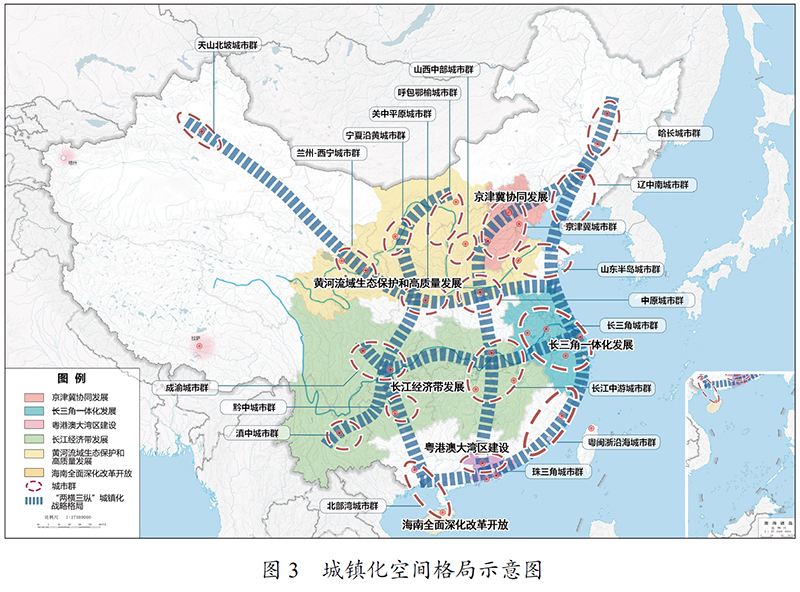
Group 1 - The central urban work conference held on July 14-15 in Beijing emphasizes the need for urban structure optimization, energy transformation, quality improvement, green transition, cultural continuity, and governance efficiency, while ensuring urban safety [1] - The upcoming "15th Five-Year Plan" is seen as a critical period for advancing Chinese-style modernization, with urban policies impacting over 1.4 billion people [1] - The conference reflects on the previous urban development reforms initiated in 2015, which have gradually been realized in daily life, raising expectations for achieving "human modernization" [1] Group 2 - The "19+2" urban cluster distribution pattern was established to facilitate coordinated regional development, recognizing that not all land is suitable for large-scale human habitation and development [2][3] - The emergence of "urban agglomerations" aims to address the challenges faced by over 690 cities with varying development conditions, promoting collaborative growth rather than isolated expansion [3] Group 3 - The concept of "multi-regulation integration" has gained traction, aiming to unify various spatial planning types to avoid overlapping and chaotic development, thus enhancing urban planning efficiency [8][13] - The shift from extensive urban expansion to quality improvement and structural adjustment is highlighted as a necessary transition in the current "stock era" [27] Group 4 - The focus on innovation as a primary driver for urban development is reiterated, with an emphasis on cultivating a vibrant innovation ecosystem to enhance new productive forces [20] - The need for cities to adapt to demographic changes, such as aging populations and declining birth rates, is underscored, with many cities competing to attract talent [21][26] Group 5 - The importance of urban resilience in the face of climate change and natural disasters is emphasized, with the goal of creating cities that can quickly recover from ecological disruptions [32] - The necessity for sustainable fiscal sources is highlighted, as reliance on land finance is deemed unsustainable in the long term, prompting a need for structural transformation in revenue generation [33]


城市发展从增量到存量 中央城市工作会议传递六大信号
2 1 Shi Ji Jing Ji Bao Dao· 2025-07-15 09:27
Core Insights - The central urban work conference held on July 14-15 emphasizes the transition of urbanization in China from rapid growth to stable development, focusing on quality improvement and efficiency in existing urban areas [1][4][5] Group 1: Urban Development Transition - The meeting marks a significant shift in urban development philosophy, moving from large-scale expansion to enhancing existing urban quality and efficiency [1][4] - The urbanization rate of China's permanent population increased from 53.1% in 2012 to an expected 67% in 2024, indicating a substantial shift towards urban living [3] - The conference outlines the need for a modern urban system that supports coordinated development among large, medium, and small cities, promoting urban-rural integration [6] Group 2: Key Urban Development Tasks - Seven key tasks were identified, including optimizing the modern urban system, building innovative cities, and enhancing livability [1][6] - The focus on high-quality urban renewal is highlighted, with policies aimed at improving urban appearance and livability while generating new industrial demand [8][10] - The importance of constructing green, low-carbon cities aligns with the growing emphasis on sustainable urban development [11] Group 3: Housing and Real Estate Policies - The meeting reiterates the continuation of real estate regulation policies, emphasizing the need for a new development model in the housing sector [9][10] - Urban renewal initiatives, particularly in transforming urban villages and dilapidated housing, are expected to stimulate significant investment, estimated in the tens of trillions [10] - The real estate sector's role as a pillar industry remains crucial, with increased focus on second-hand housing transactions and urban renewal driving consumption in related industries [10] Group 4: Governance and Citizen Engagement - The conference stresses the need for innovative urban governance models, enhancing citizen participation in urban management [12] - Emphasis is placed on building resilient cities through improved infrastructure safety and cultural heritage preservation [11][12] - The call for smart city development indicates a shift towards integrating technology in urban management to address citizen needs effectively [11]
城市更新,让发展更具韧性
Hai Nan Ri Bao· 2025-07-02 01:18
Core Viewpoint - The article emphasizes the significance of urban renewal in Hainan as a transformative approach to enhance urban living conditions, optimize city structures, and support the development of the Hainan Free Trade Port [1][2][3]. Group 1: Importance of Urban Renewal - Urban renewal is a necessary requirement for the transformation of urban development models, especially as Hainan's urbanization rate reaches 63.08% by the end of 2024, with Haikou and Sanya at 83.52% and 73.29% respectively [2]. - The initiative aligns with the "People's City" concept, focusing on improving living conditions and public services for residents, particularly the elderly and children [3]. - Urban renewal serves as an effective means to stimulate economic growth and domestic demand, especially in the context of slowing economic growth and rising global protectionism [3]. Group 2: Unique Features and Advantages of Hainan's Urban Renewal - Hainan benefits from the policy advantages of the Free Trade Port, with specific support measures introduced to facilitate urban renewal, including 20 targeted policies for planning, land supply, project supervision, and funding [5]. - The region's excellent ecological environment, highlighted by successful ecological restoration projects in Sanya, enhances the appeal of urban renewal efforts [6]. - Hainan's diverse cultural landscape, including various cultural influences, enriches the urban renewal process, fostering a sense of cultural identity and community among residents [6]. Group 3: Strategies for Advancing Urban Renewal - The focus should be on creating livable spaces that enhance residents' quality of life through the renovation of old neighborhoods and the development of public amenities [7]. - Building resilient cities is crucial, particularly in enhancing infrastructure to withstand natural disasters, as demonstrated by Sanya's upgraded drainage systems [7]. - Incorporating advanced technology into urban renewal initiatives can lead to smarter, more efficient urban living environments, as seen in the intelligent management systems in Haikou and Boao [8]. - Preserving historical and cultural resources is essential, with a proposed mechanism for protecting and utilizing these assets to maintain the city's heritage while promoting modern development [8]. Group 4: Overall Vision - The ongoing urban renewal efforts aim to create a vibrant, attractive, and sustainable Free Trade Port, ensuring that residents experience improved living conditions and a renewed sense of community [9].
辰安科技与清华大学等成功中标北京市应急安全领域技术支撑项目
news flash· 2025-06-12 02:51
Core Viewpoint - Recently, Changan Technology (300523) has successfully won the bid for the Beijing Emergency Safety Technology Support Project as the leading party of a consortium, collaborating with Tsinghua University and others [1] Group 1: Project Overview - The project focuses on two core tasks: the construction of a resilient city knowledge base and the development of a decision-making model for enhancing resilience against rainstorm and flood disasters [1] - The initiative aims to organically integrate academic research resources with the engineering capabilities of enterprises, striving to create an integrated innovation chain that encompasses theoretical research, technology development, and practical application [1]

加大应急投资 夯实现代化治理能力基础
Shang Hai Zheng Quan Bao· 2025-06-10 18:08
Group 1 - Emergency investment is a crucial component in building China's modern governance system, enhancing urban resilience, and ensuring public safety and social stability [1][2][6] - The demand for emergency safety will continue to grow due to global climate change, urbanization, and increased public awareness, creating vast market potential for emergency investment [1][12] - The emergency industry is characterized by its wide coverage, long industrial chain, and strong social demand, with significant growth potential driven by government investment and technological upgrades [5][9] Group 2 - The institutional framework for promoting emergency investment is becoming increasingly robust, with policies and planning systems being established to enhance emergency management capabilities [7][8] - The emergency industry has rapidly developed, with the market size expected to reach 2.4 trillion yuan in 2024 and over 2.8 trillion yuan by 2025, driven by key regions and leading enterprises [9] - Technological innovations in emergency rescue, such as AI integration and new rescue equipment, are enhancing the effectiveness of emergency responses [10][11] Group 3 - Future emergency investment will focus on resilient cities, emergency equipment technology innovation, and expanding emergency material reserves, with significant investment opportunities anticipated [13][14][15] - The emergency training and public awareness market is projected to grow at a compound annual growth rate of 10.3%, reaching a market size of over 65 billion yuan by 2030 [16][17] - Catastrophe insurance is expected to become a key area for future emergency investment, with significant growth potential compared to developed countries [18] Group 4 - A comprehensive approach is needed to enhance emergency safety systems, improve institutional frameworks, and advance major project engineering to strengthen emergency capabilities [19][20][21]
全面践行人民城市理念 打造宜居韧性智慧城市
Xi An Ri Bao· 2025-06-03 03:17
Core Viewpoint - Xi'an is undergoing a significant transformation as it shifts from a model of "scale expansion" to "quality enhancement," aiming to improve urban governance and core competitiveness while promoting modernization in line with national strategies [3][5][20]. Group 1: Urban Development and Transformation - Xi'an has become the "first city in northern China for population growth," with a net increase of 89,400 residents expected in 2024, highlighting the challenges of urban carrying capacity [4][5]. - The city is focusing on transitioning its development model to address urban challenges, emphasizing integrated governance and resource optimization [5][6]. - The 2025 plan includes "deepening the reform of the development model for megacities," prioritizing functional quality enhancement and efficient resource allocation [5][10]. Group 2: Smart Governance and Infrastructure - Xi'an is leveraging digital technology for urban governance, with a big data platform enhancing traffic management and emergency response times [8][9]. - The city has implemented significant transportation projects, including the opening of the 8th metro line, which has expanded the metro network to over 400 kilometers [10]. - A comprehensive underground utility system has been developed, with 23,000 kilometers of various pipelines inspected and 20 substations built, increasing the city's power supply capacity to 16 million kilowatts [10][11]. Group 3: Spatial Planning and Resource Optimization - The approval of the "Overall Land and Space Planning (2021-2035)" marks a strategic blueprint for Xi'an's future development, focusing on ecological sustainability and efficient resource use [12][13]. - The city is implementing a "vertical growth" model to overcome horizontal expansion limitations, with over 370 large commercial buildings completed [14]. - Xi'an is actively revitalizing underutilized spaces, transforming old sites into community hubs and parks, thereby enhancing urban livability [15][17]. Group 4: Public Services and Community Well-being - The city is enhancing public services, with initiatives like community service centers and improved educational facilities, contributing to a higher quality of life for residents [18][19]. - Employment services have been expanded, with 180,800 new urban jobs created, and significant investments in healthcare and elderly care facilities [19]. - Xi'an's commitment to high-quality public services reflects its dedication to the "people-centered" urban development philosophy [19][20].
提升城市安全韧性是一项系统工程
Jing Ji Guan Cha Bao· 2025-05-23 10:18
Core Viewpoint - The article emphasizes the urgent need to enhance urban safety resilience in the face of increasing extreme weather events and urban expansion challenges, as outlined in the recent government policy document aimed at creating "livable, resilient, and smart cities" [1][2]. Infrastructure Challenges - Many cities in China face significant infrastructure shortcomings, with public pipeline networks averaging over 30 years of use, and some exceeding 40 years, leading to frequent urban flooding during heavy rains [1][2]. - The drainage systems are under severe strain, posing risks to public safety during extreme weather events [1]. Planning and Layout Issues - Urban development has often prioritized economic growth over scientific and forward-looking urban planning, resulting in high-density old districts that hinder ventilation and increase disaster risks [2]. - Poor zoning practices, such as the proximity of chemical plants to residential areas, exacerbate safety hazards [2]. Emergency Management System - Current emergency management systems in some cities are inadequate, lacking targeted and practical emergency plans, and often failing to engage citizens in safety awareness and management [2][3]. - There is a need for a comprehensive emergency management framework that integrates various departments and resources [4]. Systematic Approach to Resilience - Enhancing urban safety resilience requires a systematic approach involving infrastructure optimization, planning reconstruction, mechanism innovation, resource integration, and social mobilization [2][3]. - The recent policy document outlines eight key tasks and six supporting measures to create a comprehensive governance framework for urban resilience [3]. Technological Integration - A dual approach of "hardware upgrades + digital empowerment" is necessary, including the construction of smart infrastructure and the implementation of digital twin systems for real-time risk assessment [3][4]. - Examples include Shenzhen's smart pipeline system, which significantly reduces response times to infrastructure failures [3]. Community Engagement and Public Participation - Increasing public participation in urban safety management is crucial, with innovative methods such as experiential learning and incentive-based participation mechanisms being proposed [5]. - Initiatives like community emergency response training and public awareness campaigns can enhance community resilience [5]. Conclusion - The construction of resilient cities requires a balance between institutional design, practical innovation, technological empowerment, and community involvement, aiming to create urban environments that can withstand various challenges [5].
2025防灾减灾大会在杭举行
Hang Zhou Ri Bao· 2025-04-30 03:08
Core Insights - The 2025 Disaster Prevention and Mitigation Conference was held in Hangzhou, focusing on innovative solutions and collaborative efforts in disaster management and emergency response [5][6][9] Group 1: Conference Overview - The conference aimed to create a high-end platform for collaboration among government, industry, academia, and research in disaster prevention and mitigation [5] - Experts and scholars discussed the latest technological developments and innovative solutions in the safety and emergency industry [5] Group 2: Urban Resilience and Smart Governance - The "Urban Safety Monitoring and Early Warning" sub-forum highlighted the importance of smart cities in disaster prevention [6] - Hangzhou's Shangcheng District has implemented a smart governance model for urban waterlogging management, enhancing drainage capacity by 30% through sponge city renovations [7] - The district has established a four-level prevention system and created 206 disaster relief sites, ensuring the safe relocation of over 27,000 people during the 2024 flood season [7][8] Group 3: Community Engagement and Smart Emergency Response - The Xihu District's Jiangcun Street has developed a community-based smart emergency response model, focusing on collaboration among various stakeholders [9][10] - The area has a diverse population and complex urban structure, making emergency management challenging [10] - Since 2022, Jiangcun Street has organized over 500 events with volunteer teams, significantly improving risk management capabilities [11] Group 4: Risk Assessment and Data Empowerment - The Qiantang District shared its experience in establishing a "Constantly Updated" risk assessment system to enhance disaster management [12][13] - The district has focused on creating a foundational data system to support emergency management and improve response capabilities [12][14] Group 5: Natural Disaster Monitoring and Risk Prevention - The Fuyang District discussed its strategies for monitoring and preventing major natural disasters, emphasizing the importance of timely personnel relocation [15][16] - The district successfully relocated over 12,000 people during the 2024 flood season, ensuring no casualties [17][18]