数字孪生

Search documents
诺比侃等3家企业完成境外上市备案
Sou Hu Cai Jing· 2025-11-13 06:14
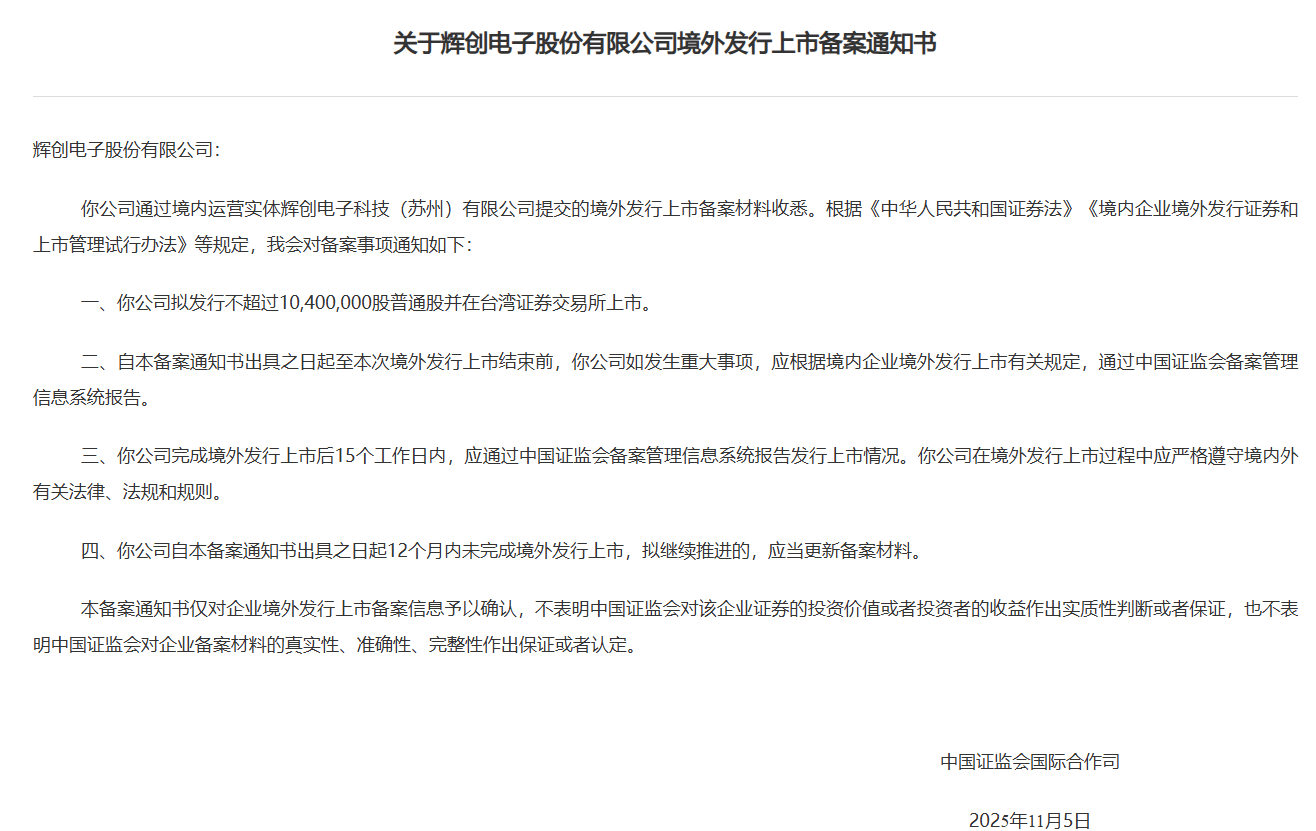
Core Insights - The China Securities Regulatory Commission has confirmed the overseas listing of three companies: Huichuang Electronics, Nobikang, and Meilian Co., with Huichuang planning to list in Taiwan and the other two in Hong Kong [1][5]. Group 1: Huichuang Electronics - Huichuang Electronics plans to issue no more than 10,400,000 ordinary shares and list on the Taiwan Stock Exchange [1]. - The company specializes in the research, design, and manufacturing of automotive electronic products, including automatic door lock systems, electric window lifters, and smart anti-theft devices [3]. Group 2: Nobikang - Nobikang intends to issue no more than 4,354,550 ordinary shares for its listing on the Hong Kong Stock Exchange [5]. - The company focuses on the industrial application of artificial intelligence technologies and digital twins in sectors such as AI + transportation, AI + energy, and AI + urban governance, providing intelligent monitoring, testing, and operation solutions [6]. - Financial performance shows revenues of 101 million, 253 million, 364 million, and 186 million yuan for the years 2021 to 2023 and the first half of 2024, with corresponding net profits of 25.74 million, 63.16 million, 88.57 million, and 50.74 million yuan [6]. Group 3: Meilian Co. - Meilian Co. plans to issue no more than 36,780,300 ordinary shares for its listing on the Hong Kong Stock Exchange [9]. - The company is a comprehensive service provider in the prefabricated steel structure construction market, offering services that include project design and optimization, procurement, manufacturing, and installation [9]. - Financial data indicates revenues of 1.903 billion, 1.453 billion, 1.523 billion, and 1.424 billion yuan for the years 2022 to 2024 and the first half of 2025, with net profits of 87.71 million, 62.13 million, 70.78 million, and 62.63 million yuan [9].

100%国产化!核电站“大脑”新一代数字化仪控系统发布
Yang Shi Xin Wen· 2025-11-13 06:04
Core Insights - China General Nuclear Power Group (CGN) has launched an upgraded generation of digital instrumentation and control systems for nuclear power plants, referred to as the "brain" of the plants, at the 2025 Shenzhen International Nuclear Industry Innovation Expo [1] Group 1: Product Development - The new digital instrumentation and control system is 100% domestically produced, featuring fully self-developed hardware and software, including chips, operating systems, embedded software, and communication software [1] - The upgraded system integrates technologies such as digital twins, virtual simulation, and artificial intelligence, providing operators with intelligent functions like fault diagnosis, early warning, and decision support [1] Group 2: Safety and Efficiency - The new system aims to enhance the safety and intelligence of nuclear power plant operations, ensuring more stable and secure functioning [1]

Datavault AI Inc.(NASDAQ:DVLT)宣布董事会批准向所有符合资格的 Scilex Holding Company 及 Datavault AI 股东派发 Dream Bowl Draft 迷因币,记录日期定为 2025 年 11 月 25 日
Globenewswire· 2025-11-12 15:32
Core Points - Datavault AI Inc. has announced a special distribution of Dream Bowl Draft meme coins to eligible shareholders of Scilex Holding Company and Datavault AI, with a record date set for November 25, 2025 [1][3] - Each shareholder will receive one exclusive commemorative digital collectible for every share held, which includes features such as proof of ownership and embedded ticket information [3] - The ex-dividend date for DVLT and SCLX common stock is November 24, 2025, and short sellers must return borrowed shares by this date to avoid a "naked short" status [2] Company Overview - Datavault AI leads the development of AI-driven data experiences, asset valuation, and monetization in the Web 3.0 environment, integrating acoustic science and data science into a comprehensive cloud platform [4] - The company offers solutions across various industries, including sports entertainment, biotech, education, fintech, real estate, healthcare, and energy, utilizing patented technologies for high-performance computing [4] - Datavault AI's technology suite supports customizable features, including AI and machine learning automation, third-party integration, and marketing automation services [4]


诺比侃港股IPO及境内未上市股份“全流通”获中国证监会备案
Zhi Tong Cai Jing· 2025-11-12 11:24
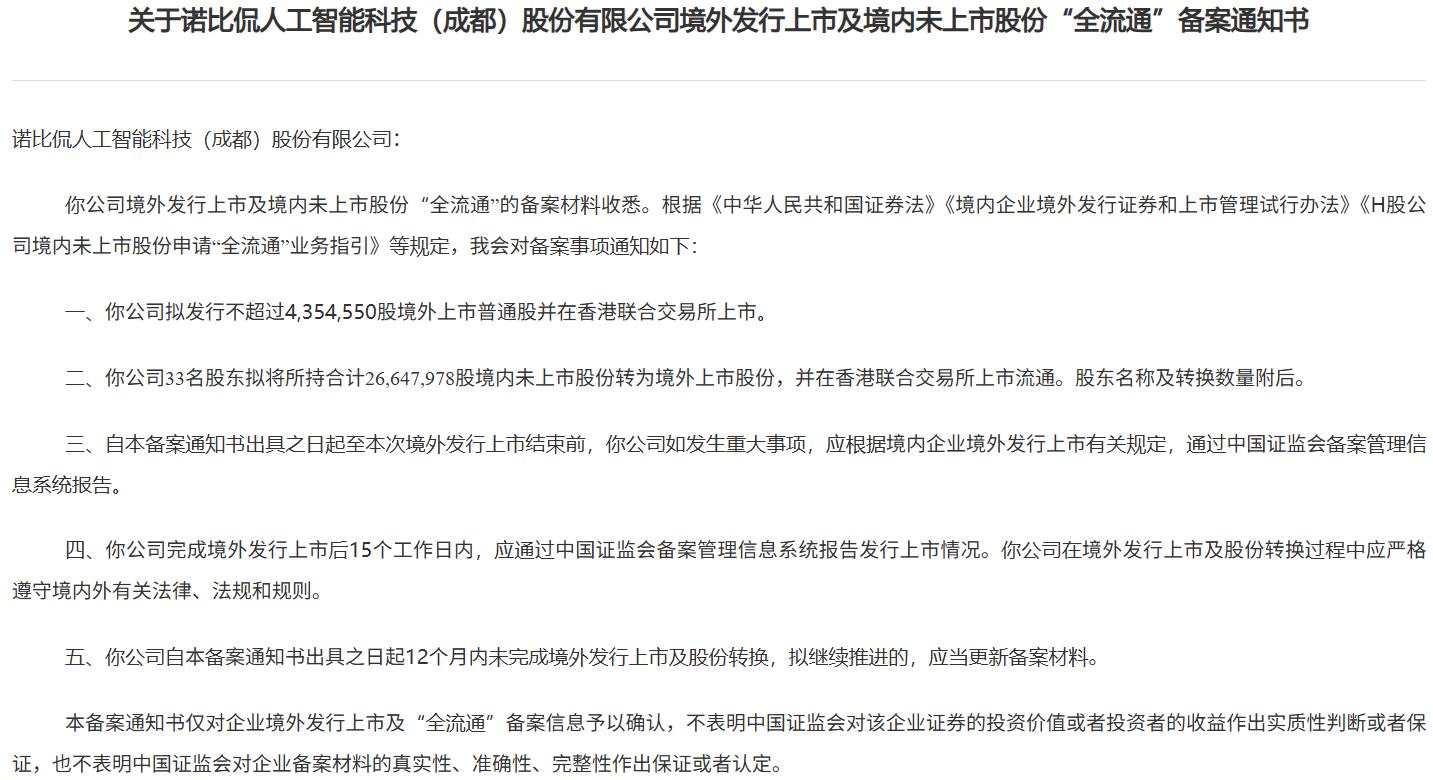
Group 1 - The China Securities Regulatory Commission has issued a notice regarding the overseas issuance and domestic unlisted shares "full circulation" registration for Nobikang Artificial Intelligence Technology (Chengdu) Co., Ltd, which plans to issue no more than 4,354,550 overseas listed common shares and list them on the Hong Kong Stock Exchange [1] - A total of 33 shareholders of the company intend to convert their combined 26,647,978 domestic unlisted shares into overseas listed shares for trading on the Hong Kong Stock Exchange [1] Group 2 - Nobikang focuses on advanced technologies such as artificial intelligence and digital twins, with applications in AI + transportation, AI + energy, and AI + urban governance [3] - The company provides integrated hardware and software solutions based on comprehensive AI industry models, with its self-developed NBK-INTARI artificial intelligence platform enabling intelligent monitoring, detection, and operation and maintenance for clients in transportation, energy, and urban governance [3] - According to Zhaoshang Consulting, Nobikang is the seventh largest AI + detection and monitoring solution provider in China's rail transit industry in terms of revenue for 2023 [3]
中科星图再揽近3亿元低空大单 汉中项目引领区域经济新引擎
Zheng Quan Shi Bao Wang· 2025-11-12 07:29
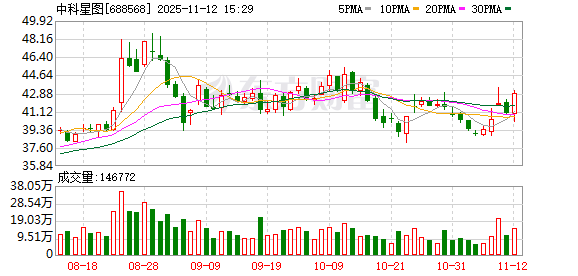
Core Viewpoint - Zhongke Xingtu has successfully won a bid for the "Hanzhong Low-altitude Economic Digital Infrastructure and Supporting Scenario Construction Project" with a bid amount of approximately 295 million yuan, marking a significant expansion in the low-altitude economy sector and reflecting a shift from policy-driven to technology-driven development in China's low-altitude economy industry [2][3][4]. Group 1: Project Overview - The project has a total investment of 299.95 million yuan and a planned construction period of 1,095 days (three years), with funding sourced from various channels including special bonds, long-term special treasury bonds, central budget investments, policy financial tools, bank loans, and corporate self-raised funds [3]. - The project includes the construction of low-altitude flight infrastructure, route development, flight service operations, and the establishment of a digital twin platform, aiming to create a comprehensive "air-ground" integrated network covering nine counties and two districts in Hanzhong [3][4]. Group 2: Company Strategy and Financial Performance - Zhongke Xingtu's low-altitude strategy is encapsulated in its "1+2+N+M" framework, which emphasizes the use of digital twin technology and aims to empower multiple industry scenarios through demonstration projects in various cities [4]. - The company's financial results indicate a positive impact from its low-altitude projects, with a reported revenue of 2.208 billion yuan for the first three quarters of 2025, a year-on-year increase of 10.02%, and a net profit of 146 million yuan, reflecting a growth of 0.54% [4]. Group 3: National Expansion and Market Position - Since 2025, Zhongke Xingtu has expanded its low-altitude economic initiatives across nearly twenty cities, establishing a market presence that includes offline contracts in almost twenty cities and online services in over sixty cities [6]. - The company's differentiated approach to regional needs has allowed it to effectively integrate low-altitude infrastructure with urban governance, enhancing safety and generating economic benefits [6]. Group 4: Industry Transformation - The low-altitude economy is transitioning from being policy-driven to technology-driven, with Zhongke Xingtu's comprehensive product system and collaborative ecosystem providing pathways for systematic implementation [7]. - The establishment of integrated infrastructure in the Hanzhong project requires the integration of advanced technologies such as satellite communication and AI, positioning Zhongke Xingtu as a key player in the evolving low-altitude economy market, which is projected to exceed one trillion yuan [7].

新时达跌2.04%,成交额5946.35万元,主力资金净流出509.71万元
Xin Lang Zheng Quan· 2025-11-12 02:39
Core Viewpoint - The stock of Shanghai Xinda Electric Co., Ltd. has experienced fluctuations, with a year-to-date increase of 96.58% but a recent decline in the last five and twenty trading days [1][2]. Company Overview - Shanghai Xinda Electric Co., Ltd. was established on March 10, 1995, and listed on December 24, 2010. The company specializes in the research, manufacturing, and sales of industrial automation control products, including elevator control and drive products, IoT for elevators, energy-saving and industrial transmission products, and robotics [2]. - The revenue composition of the company includes: General control and drive products and systems (53.91%), Robotics products and systems (19.35%), Elevator control products and systems (18.30%), and Other products (8.44%) [2]. - The company is classified under the machinery equipment industry, specifically in specialized equipment for building systems, and is associated with concepts such as reducers, digital twins, machine vision, humanoid robots, and servo systems [2]. Financial Performance - For the period from January to September 2025, the company achieved a revenue of 2.654 billion yuan, representing a year-on-year growth of 17.20%. The net profit attributable to shareholders was 4.3462 million yuan, showing a significant increase of 110.26% [2]. - Since its A-share listing, the company has distributed a total of 479 million yuan in dividends, with no dividends paid in the last three years [3]. Shareholder Information - As of September 30, 2025, the number of shareholders was 47,900, a decrease of 2.48% from the previous period. The average circulating shares per person increased by 2.54% to 11,040 shares [2]. - The top ten circulating shareholders include notable funds such as Penghua Carbon Neutral Theme Mixed A and Huaxia CSI Robotics ETF, with significant increases in their holdings [3].

打破显存墙:谢赛宁团队提出CLM,单卡RTX 4090「撬动」1亿高斯点
机器之心· 2025-11-11 08:40
Core Insights - 3D Gaussian Splatting (3DGS) is an emerging method for novel view synthesis that utilizes a set of images with poses to iteratively train a scene representation composed of numerous anisotropic 3D Gaussian bodies, capturing the appearance and geometry of the scene [2][4] - The CLM system proposed by the team allows 3DGS to render large scenes using a single consumer-grade GPU, such as the RTX 4090, by addressing GPU memory limitations [6][8] Group 1: 3DGS Overview - 3DGS has shown revolutionary application potential in fields such as 3D modeling, digital twins, visual effects (VFX), VR/AR, and robot vision reconstruction (SLAM) [5] - The quality of images rendered using 3DGS depends on the fidelity of the trained scene representation, with larger and more complex scenes requiring more Gaussian bodies, leading to increased memory usage [5] Group 2: CLM System Design - CLM is designed based on the insight that the computation of 3DGS is inherently sparse, allowing only a small subset of Gaussian bodies to be accessed during each training iteration [8][20] - The system employs a novel unloading strategy that minimizes performance overhead and scales to large scenes by dynamically loading only the necessary Gaussian bodies into GPU memory while offloading the rest to CPU memory [8][11] Group 3: Performance and Efficiency - The implementation of CLM can render a large scene requiring 102 million Gaussian bodies on a single RTX 4090 while achieving top-tier reconstruction quality [8] - Each view typically accesses only 0.39% of the Gaussian points, with a maximum of 1.06% for any single view, highlighting the sparse nature of the data [23] Group 4: Optimization Techniques - The team utilized several unique characteristics of 3DGS to significantly reduce communication overhead associated with unloading, including pre-computing the accessed Gaussian sets for each view and leveraging spatial locality to optimize data transfer between CPU and GPU [12][17] - The microbatch scheduling optimization allows for overlapping access patterns between consecutive batches, enhancing cache hit rates and reducing redundant data transfers [24][25] Group 5: Results and Impact - CLM enhances the training capacity of 3DGS models by up to 6.1 times compared to pure GPU training baselines, enabling the training of larger models that improve scene reconstruction accuracy while lowering communication and unloading overhead [27]

德马科技涨2.01%,成交额3298.07万元,主力资金净流入30.36万元
Xin Lang Cai Jing· 2025-11-11 02:36
Core Viewpoint - Demar Technology's stock has shown significant volatility, with a year-to-date increase of 65.60% but a recent decline over the past five trading days [1][2]. Group 1: Stock Performance - On November 11, Demar Technology's stock rose by 2.01%, reaching a price of 21.80 CNY per share, with a trading volume of 32.98 million CNY and a turnover rate of 0.61% [1]. - The company's total market capitalization is 5.75 billion CNY [1]. - Year-to-date, the stock has increased by 65.60%, but it has experienced a decline of 7.00% over the last five trading days, 1.58% over the last 20 days, and 7.63% over the last 60 days [1]. Group 2: Financial Performance - For the period from January to September 2025, Demar Technology reported a revenue of 1.216 billion CNY, reflecting a year-on-year growth of 8.72% [2]. - The net profit attributable to the parent company for the same period was 110 million CNY, which represents a year-on-year decrease of 5.98% [2]. Group 3: Shareholder Information - As of September 30, the number of shareholders for Demar Technology reached 13,900, an increase of 28.86% compared to the previous period [2]. - The average number of circulating shares per shareholder is 18,186, which is a decrease of 19.66% from the previous period [2]. Group 4: Business Overview - Demar Technology, established on April 29, 2001, and listed on June 2, 2020, is located in Huzhou, Zhejiang Province [1]. - The company's main business includes the research, design, manufacturing, sales, and service of intelligent logistics systems and key equipment [1]. - The revenue composition of the main business is as follows: 67.85% from core components for logistics sorting and conveying, 30.86% from intelligent automated logistics systems and key equipment, 0.89% from after-sales and other services, and 0.40% from other businesses [1].

亚威股份涨2.05%,成交额1.45亿元,主力资金净流入1045.98万元
Xin Lang Cai Jing· 2025-11-11 02:27
Core Insights - The stock price of Yawen Co., Ltd. increased by 2.05% on November 11, reaching 11.46 CNY per share, with a total market capitalization of 6.3 billion CNY [1] - The company has seen a year-to-date stock price increase of 28.82%, with notable gains of 7.10% over the last five trading days and 9.46% over the last 20 days [1] - Yawen Co., Ltd. operates primarily in the metal forming machine tool sector, with 76.62% of its revenue coming from this segment [1][2] Financial Performance - For the period from January to September 2025, Yawen Co., Ltd. reported a revenue of 1.585 billion CNY, reflecting a year-on-year growth of 6.33%, and a net profit attributable to shareholders of 102 million CNY, which is a slight increase of 0.21% [2] - The company has distributed a total of 840 million CNY in dividends since its A-share listing, with 179 million CNY distributed over the last three years [3] Shareholder Information - As of September 30, 2025, the number of shareholders increased to 71,000, with an average of 7,044 shares held per shareholder, a decrease of 1.88% from the previous period [2] - Major institutional shareholders include the Huaxia CSI Robotics ETF and Tianhong CSI Robotics ETF, which have increased their holdings compared to the previous period [3]

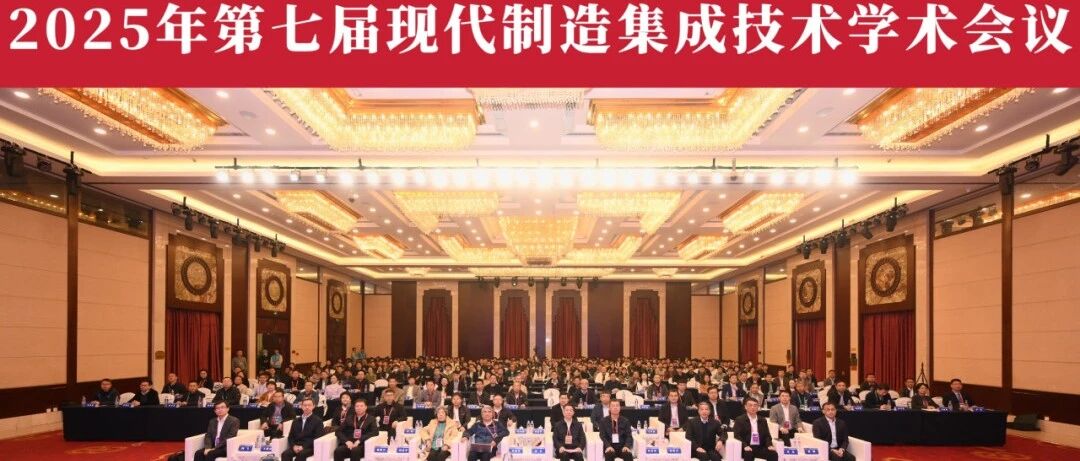
要闻速递|“第七届现代制造集成技术学术会议”顺利召开
机器人圈· 2025-11-10 11:30
Core Insights - The conference focused on the theme of "Intelligent Transformation of Manufacturing Driven by a New Generation of Artificial Intelligence," gathering over 400 experts and scholars from top universities and research institutions across China to discuss advancements in the field of advanced manufacturing [1][36]. Group 1: Conference Overview - The 7th Modern Manufacturing Integration Technology Academic Conference was held from November 7 to November 9, 2023, in Zhengzhou, Henan, organized by the National Key R&D Program and other institutions [1]. - The conference included a main forum and six sub-forums, addressing key topics such as new generation artificial intelligence and digital transformation [1]. Group 2: Keynote Speakers and Presentations - Notable speakers included Wang Jianmin, Dean of Tsinghua University Software Institute, and Jiang Hong, Party Secretary of China Weapon Industry Group [3]. - Presentations covered various topics, such as the development path of manufacturing informationization and the challenges of industrial big models [8][10][12]. Group 3: Thematic Forums and Discussions - The conference featured six thematic forums focusing on AI-driven product design, manufacturing process optimization, and industrial digital twins, fostering in-depth discussions among experts [34]. - The discussions highlighted the vibrant research activity and practical experience in the intersection of artificial intelligence and manufacturing [34]. Group 4: Future Directions and Consensus - The conference reached several key agreements, including the deep integration of industrial big models with domain knowledge, the engineering application of digital twins, and the independent innovation of domestic industrial software [36]. - The successful hosting of the conference is expected to positively impact the innovation and application of modern manufacturing integration technology in China [37].