新型能源体系

Search documents
云南能源绿色低碳转型成效显著,国家清洁能源基地基本建成
Zhong Guo Xin Wen Wang· 2025-10-13 00:54
Core Insights - Yunnan Province has achieved significant growth in its power generation capacity, with total installed capacity exceeding 167 million kilowatts, a 61.8% increase compared to the end of the 13th Five-Year Plan [1] - The province leads the nation in green power generation, with over 150 million kilowatts of installed green power capacity, and has established a national clean energy base [1] - Yunnan's energy transition has shown remarkable progress, with renewable energy installations surpassing 68 million kilowatts, making it the second-largest power source after hydropower [1][2] Group 1: Green Energy Development - Yunnan has a strong complementary relationship among hydropower, wind, and solar energy, with over 200 million kilowatts of clean energy resources available for development [1] - The province has six of the top ten hydropower stations in the country, contributing to the world's largest clean energy corridor alongside the Three Gorges and Gezhouba hydropower stations [1] - By 2025, Yunnan's total power generation is expected to reach 490 billion kilowatt-hours, with green power accounting for over 85% of the total [1] Group 2: Traditional Energy Supply - From 2021 to 2024, Yunnan's raw coal production is projected to increase from 57.96 million tons to 66.12 million tons, and crude oil processing capacity is expected to rise from 9.76 million tons to 11.56 million tons [2] - The construction of a second cross-province natural gas pipeline is underway, which will diversify the natural gas supply in Yunnan [2] - The establishment of emergency gas supply centers in Yuxi and Qujing marks a significant step in achieving large-scale reserves of natural gas and oil [2] Group 3: Energy Infrastructure and Future Plans - Yunnan has transmitted a cumulative 650 billion kilowatt-hours of electricity to eastern regions, supporting their economic development and energy conservation efforts [2] - The province aims to accelerate the construction of a national clean energy base and a regional green energy hub during the 15th Five-Year Plan period [2] - By 2030, Yunnan plans to establish a new type of power system and achieve significant progress in green energy development [2]
五年之内,算力会对电力造成冲击?| 21新能说
2 1 Shi Ji Jing Ji Bao Dao· 2025-10-12 05:57
今年7、8月,我国月度全社会用电量连续突破万亿千瓦时大关。其中,在移动互联网、大数据、云计算 等带动下,互联网和相关服务业用电量同比增加。此外,由于新能源汽车的渗透率不断提升,充换电服 务业用电量也同比显著增长。 无论是算力还是新能源汽车,都展现出对电力的巨大需求。那么,在这一趋势下,我国的电力系统能否 扛住冲击? 一、制造业驱动电力需求增长 在接受21世纪经济报道能源策工作室采访时,厦门大学教授、中国能源政策研究院院长林伯强认为,中 国月度社会用电量突破一万亿千瓦时是必然事件。 "它(社会用电量)本来跟经济发展,跟我们制造业是息息相关的。与此同时,居民生活水平不断提 高,用电量也会提高。"林伯强表示,当前我国电力需求结构中,来自工业、制造业的用电需求特别 大。"目前数据中心肯定是带来用电影响,但目前也没有那么大。" (原标题:五年之内,算力会对电力造成冲击?| 21新能说) 21世纪经济报道记者曹恩惠 全球算力正以指数级速度增长。 根据行业数据,当前全球数据中心的年耗电量已占全球总用电量的3%以上。而随着AI大模型的快速发 展,这一比例还将继续上升。 当全球算力需求快速增长之时,电力供应的稳定性与经济性,成 ...
戈壁亮起“能源双塔” 我国光热发电向“支撑性电源”迈进
Yang Shi Xin Wen· 2025-10-02 13:45
Core Viewpoint - The successful simultaneous operation of two heat-collecting towers at the world's first "dual-tower one machine" solar thermal energy storage power station in Gansu, China, marks a significant breakthrough in solar thermal power technology, transitioning from the traditional "single tower single machine" model [1] Industry Summary - The construction of a new energy system in China is accelerating, leading to an increasing share of renewable energy sources [1] - Solar thermal power is gaining importance due to its inherent long-duration energy storage capabilities, evolving from a "supplementary power source" to a "supporting power source" [1]
“能源答卷”展现发展底气
Jing Ji Ri Bao· 2025-10-01 22:13
Core Insights - China's energy sector has achieved significant breakthroughs and historical accomplishments during the "14th Five-Year Plan" period, ensuring energy security for over 1.4 billion people and showcasing resilience and confidence in development [1][2] Group 1: Energy Security and Supply - Energy security is a strategic issue related to national economic and social development, with China maintaining an energy self-sufficiency rate of over 80% during the "14th Five-Year Plan" [1] - The country has established a comprehensive energy production, supply, storage, and sales system, enhancing emergency support capabilities for coal, oil, and gas [1] - Measures taken have ensured stable energy supply and prices, demonstrating a high level of energy supply assurance and resilience [1] Group 2: Renewable Energy Development - China has built the world's largest and fastest-growing renewable energy system, with the share of renewable energy generation capacity increasing from 40% to approximately 60% [2] - The optimization of the energy supply structure has led to a greener energy consumption trend, with one-third of the total electricity consumption now coming from green energy [2] - Non-fossil energy's share in national energy consumption increases by 1 percentage point annually, while coal's share decreases by the same amount, enhancing the "green content" of economic development [2] Group 3: Market Reforms and Energy Transition - The energy sector reform has deepened, promoting market-oriented reforms that stimulate market development [2] - The energy pricing mechanism is being improved, allowing coal and renewable energy to enter the market fully [2] - A unified national electricity market system is being established, with comprehensive coverage of medium- and long-term trading and ancillary services, while the spot market is expanding nationwide [2]
聊城加速构建新型能源体系
Qi Lu Wan Bao· 2025-09-30 16:18
Core Viewpoint - The city of Liaocheng is accelerating the construction of a multi-energy complementary energy structure, focusing on the development of the high-end bearing industry and establishing a modern industrial system with distinctive features and advantages [1] Group 1: New Energy Industry Development - Liaocheng adheres to the "project-oriented" philosophy to drive the growth of the new energy industry, with 7 new energy equipment manufacturing enterprises, led by Luwest New Energy Equipment Group [2] - The city has 62 "wind-solar-storage" projects, including 2 operational wind power projects, 34 operational photovoltaic projects, and 4 operational energy storage projects [2] - In 2024, the six large-scale enterprises are expected to achieve a revenue of 9.97 billion yuan, representing a 15% year-on-year growth [2] Group 2: Renewable Energy Capacity and Generation - As of the end of August, the total installed capacity of renewable energy in the city reached 5.5333 million kilowatts, a year-on-year increase of 17.03%, accounting for 29.95% of the total installed capacity [3] - The cumulative power generation from renewable energy reached 5.337 billion kilowatt-hours, reflecting a year-on-year growth of 15.1% [3] - The city is actively pursuing wind power indicators totaling 420,000 kilowatts, with specific projects in Guancheng and Linqing [3] Group 3: Future Development Plans - The city plans to accelerate the construction of a new energy system, focusing on the integration of wind power, photovoltaic, and hydrogen energy [4] - There is an emphasis on enhancing the industrial chain by attracting more photovoltaic projects and supporting local enterprises in expanding production capacity and improving product quality [4] - The city aims to reserve high-quality energy storage projects and attract energy storage component manufacturers to support sustainable industrial development [5]
政策解读丨落实《能源规划管理办法》助推能源高质量发展
国家能源局· 2025-09-30 13:15
Core Viewpoint - The article emphasizes the importance of the newly issued "Energy Planning Management Measures" in enhancing the systematic, authoritative, scientific, and adaptive nature of energy planning, thereby promoting high-quality energy development in China [2][10]. Group 1: Systematic Enhancement of Energy Planning - The "Management Measures" clarify the scope of energy planning, which includes national comprehensive energy planning, sector-specific energy planning, regional energy planning, and provincial energy planning [4][5]. - It establishes a unified energy planning system by defining the relationships among various levels of energy planning, ensuring that they complement each other and adhere to national economic and social development plans [5][6]. Group 2: Authoritative Enhancement of Energy Planning - The "Management Measures" specify the entities responsible for energy planning and the approval processes, reinforcing the authority and seriousness of energy planning [6][7]. - It mandates that only approved provincial comprehensive energy plans can serve as the basis for energy development, ensuring consistency and coordination across different levels of planning [7][8]. Group 3: Scientific Enhancement of Energy Planning - The article highlights the need for scientific research in energy planning, advocating for a comprehensive approach that considers energy security and green transition [9]. - It stresses the importance of aligning energy planning with ecological and carbon emission policies, ensuring that projects meet legal and regulatory requirements [9][10]. Group 4: Adaptive Enhancement of Energy Planning - The "Management Measures" outline the need for dynamic monitoring and evaluation of energy planning implementation, allowing for timely adjustments based on changing external conditions [10][11]. - It emphasizes that any adjustments to energy plans must follow a formal approval process, maintaining the authority and integrity of the planning system [11].


政策解读︱国家能源局等部门《关于推进能源装备高质量发展的指导意见》解读
国家能源局· 2025-09-30 10:35
Core Viewpoint - The article emphasizes the significance of the "Guiding Opinions" issued by the National Energy Administration and other governmental bodies, which aims to promote high-quality development in the energy equipment sector, addressing both opportunities and challenges in the evolving international energy landscape [2][3]. Group 1: Blueprint for Energy Equipment Innovation System - The "Guiding Opinions" adopts a high-quality development approach to encompass the entire energy strategy, focusing on energy transition and security as central tasks [3]. - It aims to enhance the resilience and security of the supply chain while promoting technological breakthroughs and the development of key equipment [3]. - The principles of "innovation-driven, self-controllable, classified policies, and integrated empowerment" are outlined to guide the development of energy exploration, conversion, storage, and transportation [3]. Group 2: Comprehensive Breakthrough with Six Major Tasks - The "Guiding Opinions" outlines six strategic tasks for the entire energy industry chain, including upgrading exploration and development equipment, enhancing conversion equipment efficiency, and promoting large-scale application of energy storage equipment [4]. - It emphasizes the need for technological advancements in energy transportation equipment and the digitalization and intelligent upgrading of energy equipment [4]. - The document also highlights the importance of green and high-end development in energy equipment, including breakthroughs in carbon capture and recycling systems [4]. Group 3: Ecological Empowerment and Innovation Activation - The "Guiding Opinions" proposes four measures to optimize the innovation ecosystem in the energy equipment industry, including strengthening the role of enterprises in innovation and enhancing quality and standards [5][6]. - It advocates for the establishment of platforms that integrate production, education, and research, and encourages international cooperation and policy support for energy projects [6]. - The overall aim is to enhance the independent innovation capability and international competitiveness of the energy equipment sector, supporting the construction of a new energy system and ensuring national energy security [6].

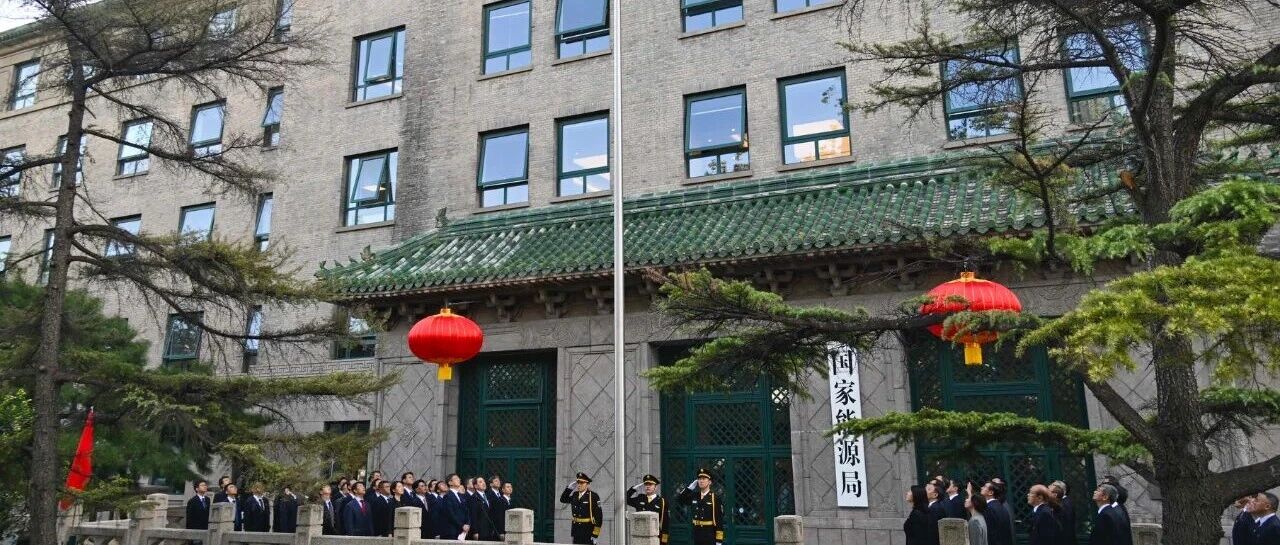
国家能源局举行升国旗仪式庆祝中华人民共和国成立76周年
国家能源局· 2025-09-30 07:41
Core Viewpoint - The National Energy Administration (NEA) is committed to implementing the energy security strategy and enhancing energy supply capabilities to support China's modernization and national rejuvenation efforts [3][4]. Group 1 - The NEA held a flag-raising ceremony on September 30 to celebrate the 76th anniversary of the People's Republic of China, attended by over 80 representatives from various departments [1][4]. - In 2023, the NEA has focused on implementing the directives of the Central Committee, promoting major energy projects, and introducing policies to ensure supply and facilitate transformation, effectively responding to the electricity demand exceeding 1 trillion kilowatt-hours in July and August [3][4]. - The NEA aims to deepen the understanding of the significance of the "Two Establishments," enhance the "Four Consciousnesses," and maintain the "Two Safeguards" to achieve higher standards in energy security [3]. Group 2 - The NEA's official WeChat account serves as an important platform for news dissemination, information transparency, and public service related to the energy sector [5].
风拂沙海绿电来!我国最大“沙戈荒”风电光伏基地首个千万千瓦级基地项目全面开工
Zhong Guo Neng Yuan Wang· 2025-09-29 11:55
Core Insights - The construction of the first 10 million kilowatt-level ultra-high voltage external delivery base in the Kubuqi Desert has officially commenced, marking a significant step in China's "14th Five-Year Plan" for the largest "sand-gobi-desert" wind and solar power base [1][4] - The project aims to integrate ecological and energy development, serving as a model for national "sand-gobi-desert" development [1][5] Project Overview - The Kubuqi Desert renewable energy base is a comprehensive energy system that includes wind, solar, thermal, and storage, with a total investment of 98.8 billion yuan [4] - The base will have a planned capacity of 8 million kilowatts of solar power and 4 million kilowatts of wind power, along with 4 million kilowatts of coal power and 500 megawatt-hours of new energy storage [4] - An ±800 kV ultra-high voltage external delivery channel will connect the base to the North China power grid, with a total length of 699 kilometers and a transmission capacity of 8 million kilowatts [4] Environmental Impact - Once operational by the end of 2027, the base is expected to deliver approximately 36 billion kilowatt-hours of electricity annually to the North China power grid, with 60% coming from renewable sources [4] - The project will reduce coal consumption by about 6.4 million tons and cut carbon dioxide emissions by approximately 16 million tons each year, promoting green energy transition in North China [4] Strategic Importance - The construction of the "sand-gobi-desert" wind and solar power base aligns with Inner Mongolia's energy security strategy and supports the national "dual carbon" goals [5] - The project represents a significant step in transforming resource-based regions and enhancing ecological protection while optimizing energy structure [5][7]

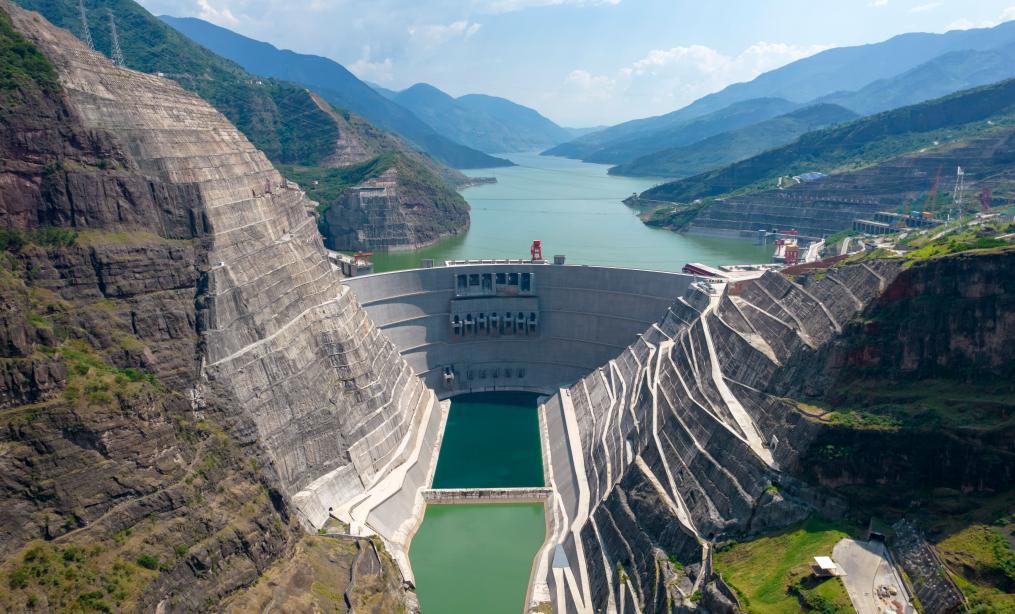
决胜“十四五” 打好收官战|云岭大地绿能澎湃——云南持续推进新型能源体系建设
Xin Hua She· 2025-09-29 08:19
Core Viewpoint - Yunnan is accelerating the construction of a new energy system, focusing on the development of green energy sources such as hydropower, wind, and solar energy, to support high-quality economic growth [1][2][3]. Hydropower Development - The newly approved Jinsha River Benzi Hydropower Station will have an installed capacity of 2.6 million kilowatts and is expected to generate approximately 10 billion kilowatt-hours annually, saving about 3.1 million tons of standard coal each year [2][4]. - Yunnan has a total hydropower installed capacity exceeding 83 million kilowatts, ranking second in the country, with six of the top ten hydropower stations located in the province [4][5]. Wind and Solar Energy Expansion - Yunnan has significant potential for wind and solar energy, with wind energy resources estimated at 123 million kilowatts and a feasible solar power installation capacity exceeding 60 million kilowatts [6][7]. - The province has initiated multiple solar and wind projects, including two solar power stations in Dali with a total capacity of 95,000 kilowatts, utilizing a tea-solar complementary model [6]. New Energy Storage Development - The new energy storage market is emerging as a stabilizer for the power grid, with projects like the lithium iron phosphate battery storage system in Chuxiong City, which has an annual charge and discharge capacity of 221 million kilowatt-hours [9][11]. - Yunnan's new energy penetration in the power system has reached approximately 70%, necessitating robust energy storage solutions to address fluctuations in renewable energy generation [11].