能源转型

Search documents
59%机构看空原油!10年最悲观背后的投资逻辑与机遇
Sou Hu Cai Jing· 2026-01-09 12:28
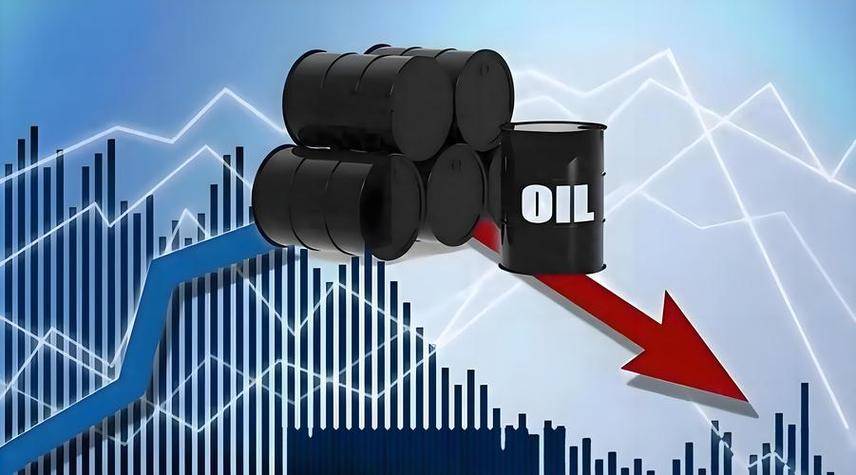
南美市场更是异军突起,欧洲研究公司开普勒数据显示,2025年1-9月南美10国石油产量同比增长6%至726万桶/日,相当 于沙特产量的70%。巴西7月产量突破400万桶/日,圭亚那从几乎无产量跃升至2025年的60万桶/日,且两国海底油田43美 元/桶的盈亏平衡点,低于北美页岩油的45美元/桶,成本优势赋予其持续扩产的动力。即便OPEC+在2026年1-3月暂停增 产,但其2025年已累计增产220万桶/日,完全回补了此前的减产规模,供应过剩的惯性已然形成。 高盛1月5日至7日的调查数据如同惊雷炸响市场:在1100多名全球机构投资者中,59%对原油持看空或略偏空观点,创 2016年以来近10年次高纪录,仅低于2025年4月特朗普关税威胁时期的悲观程度。更值得警惕的是,创纪录数量的机构将 原油列为首选做空标的,而布伦特原油当前61美元/桶的价格,较一年前已大幅跳水,2025年更是录得2020年以来最差年 度表现。这场史诗级看空潮绝非偶然,而是供需失衡、地缘博弈与能源转型三重力量的必然结果,背后藏着投资者必须看 懂的核心逻辑与布局机会。 一、供需铁律:过剩格局下的价格崩塌逻辑 古典经济学的供需均衡理论早已揭示,商 ...

两大矿业巨头,重启合并谈判
中国能源报· 2026-01-09 12:05
矿业巨头力拓与嘉能可近期重启了合并谈判。 在全球能源转型和人工智能推动下,铜正成为关键资源。据《金融时报》报道,矿业巨头力拓与嘉能可近期重启了合并谈判。分析认 为,这笔潜在交易,折射出全球铜需求长期上行的背景下,矿业公司对规模和资源的重新考量。不过,市场对这一消息反应谨慎,力拓 股价在澳大利亚证券交易所一度下跌超5%。 当地时间周四,据《金融时报》报道,全球两大矿业巨头嘉能可和力拓近期重启了合并谈判。双方此前曾就合并进行磋商,但相关谈判 在大约一年前破裂。 如果这笔潜在的交易最终落地,这将会产生一家企业价值超过2 600亿美元的矿业巨头,而这也体现出当下全球的矿业巨头对铜资源的 争夺。 此前英美资源集团和加拿大特克资源公司达成了一笔"零溢价"合并,这对包括必和必拓、力拓等竞争对手构成了压力,促使这些矿业公 司通过扩张规模来争夺更多铜资源。 而嘉能可近期已将自身战略重新聚焦于铜业务的增长。嘉能可的首席执行官去年曾表示,嘉能可的目标是成为"全球最大的铜生产商"。 目前,嘉能可是全球第六大铜生产商。根据公司的扩张规划,预计到2035年,嘉能可的年铜产量有望达到160万吨,是当前水平的大约 两倍。 过去六个月,受益于 ...


中企承建的阿塞拜疆风电项目竣工仪式在巴库举行
Xin Hua She· 2026-01-09 09:45
Core Viewpoint - The completion of the Hizi-Apsheron wind power project, constructed by a Chinese company, is significant for Azerbaijan's national development and energy transition [1] Group 1: Project Overview - The Hizi-Apsheron wind power project is located in eastern Azerbaijan and has a total installed capacity of 240 megawatts, making it the largest single wind power project in the country [1] - The project consists of 37 wind turbines and is expected to generate an annual electricity output of 1 billion kilowatt-hours, sufficient to meet the daily electricity needs of over 300,000 households [1] Group 2: Government and Diplomatic Support - Azerbaijani President Aliyev praised the project's completion and the professional capabilities of Chinese companies, expressing a welcome for more Chinese investments in Azerbaijan [1] - The Chinese Ambassador to Azerbaijan emphasized the importance of cooperation in green development and the shared opportunities for development between China and Azerbaijan [1] Group 3: Future Prospects - The Azerbaijani government is prioritizing the modernization and development of its energy sector, focusing on both traditional and renewable energy sources [1] - The project is expected to enhance Azerbaijan's energy potential and contribute to the country's overall development [1]
国网白银供电公司:银线织就绿色电网 “十四五”能源转型迈上新台阶
Zhong Guo Neng Yuan Wang· 2026-01-09 09:00
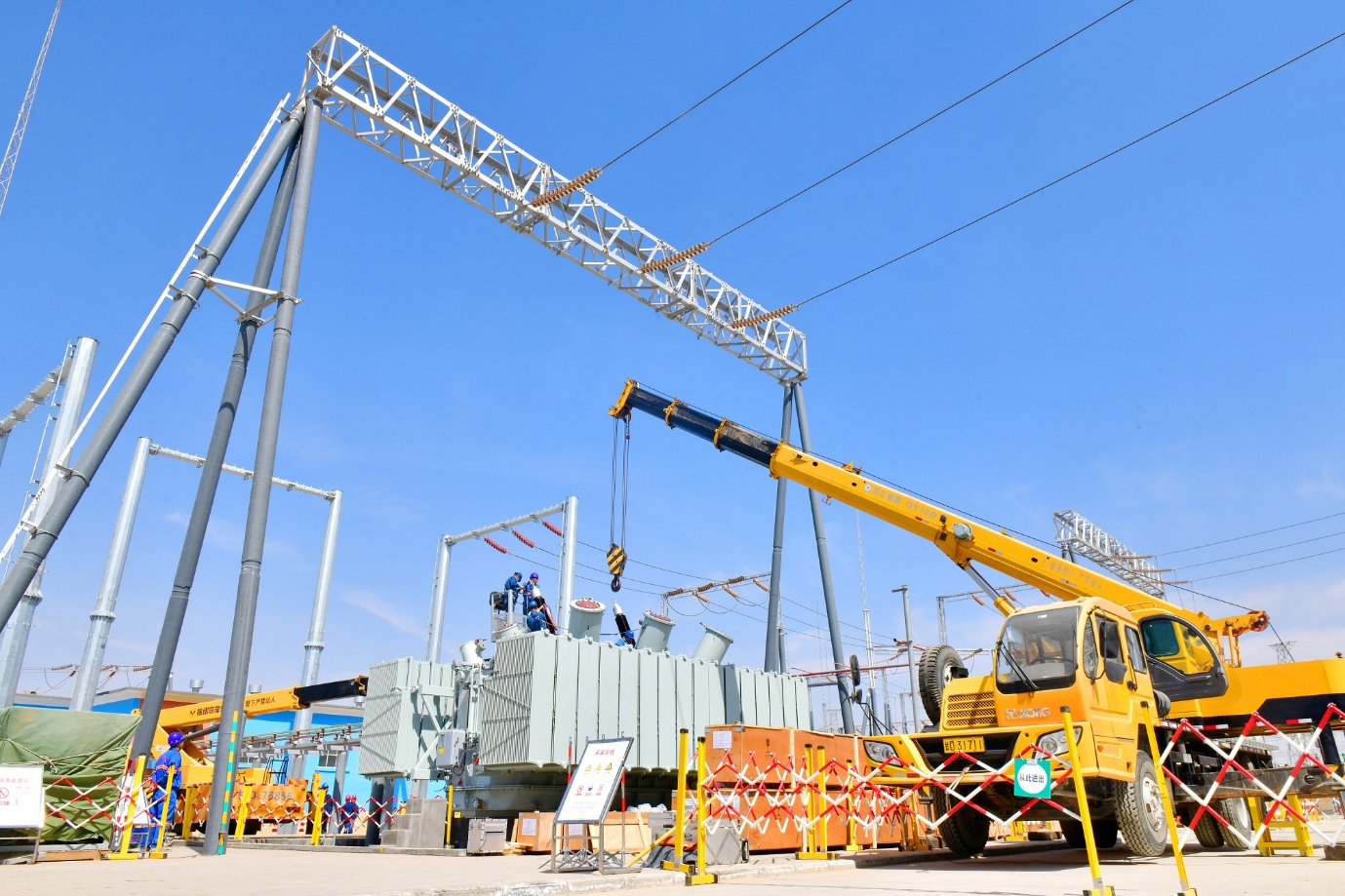
Core Viewpoint - The company is committed to ensuring energy security, supporting economic development, and promoting green transformation in Baiyin City during the 14th Five-Year Plan period, while enhancing the resilience of the power grid and optimizing power supply services [1][6]. Group 1: Energy Infrastructure Development - The Baiyin power grid structure has been continuously optimized, with a 96.43% increase in investment compared to the 13th Five-Year Plan, reaching the highest level in history [3]. - The maximum load of the Baiyin power grid increased from 1.447 million kilowatts to 2.42 million kilowatts, significantly enhancing resource allocation capabilities [3]. - Major projects, such as the 330 kV external power supply project for the Gansu traction station, have been completed, providing reliable power for the operation of the passenger dedicated line [4]. Group 2: Renewable Energy Integration - By the end of the 14th Five-Year Plan, the total installed capacity of renewable energy in Baiyin reached 7.29 million kilowatts, a 539% increase compared to the end of the 13th Five-Year Plan [6]. - The proportion of renewable energy in the total installed capacity of the grid rose from 20% to 66%, marking a shift from supplementary to primary energy [6]. - The Baiyin power grid has formed a strong grid pattern centered on the 750 kV Baiyin substation, enhancing the capacity for renewable energy delivery [5]. Group 3: Service and Efficiency Improvements - The company has focused on customer needs, improving electricity access and satisfaction through innovative service models and simplified processes [10]. - A new type of power system demonstration project has been established, significantly improving voltage compliance rates from 91.28% to 99.88% and reducing line loss rates from 7.85% to 4.31% [10]. - The company has built a comprehensive charging network across the city, adding 1,038 public charging piles to support the adoption of electric vehicles [11]. Group 4: Research and Development Initiatives - The establishment of the first municipal energy development research center in the province aims to integrate resources for research in carbon reduction and energy planning [7]. - The company has produced over 40 high-quality research outcomes to support clean energy integration and policy analysis [7]. - The focus on low-carbon transformation strategies has led to the development of a model for energy consumption and carbon emissions reduction in key industries [10].
两大矿业巨头重启合并谈判 标普警告:全球铜短缺风险上升
Jing Ji Guan Cha Wang· 2026-01-09 08:33
经济观察网据央视财经消息,在全球能源转型和人工智能推动下,铜正成为关键资源。据《金融时报》 报道,矿业巨头力拓与嘉能可近期重启了合并谈判。如果这笔潜在的交易最终落地,将会产生一家企业 价值超过2600亿美元的矿业巨头。这也体现出当下全球的矿业巨头对铜资源的争夺。LME三个月滚动 铜期货价格本周突破了每吨13000美元,目前价格稍有回落但仍处于高位,隔夜的收盘价为每吨12720.5 美元。当地时间周四,标普全球发布的最新研究报告还指出,未来全球铜需求将出现"结构性跃升",能 源转型、人工智能产业以及核心经济需求是背后的重要推手。目前铜供应仍然有限,标普警告全球铜短 缺的风险正在上升。 ...
我省首个220千伏构网型储能电站在佛山动工 计划9月投入运营
Nan Fang Ri Bao Wang Luo Ban· 2026-01-09 07:44
狮山镇作为粤港澳大湾区重要制造业基地,用电需求旺盛。2024年以来,该镇已立项新型储能项目109 个,总投资约26.51亿元,储能产业集群效应逐步显现。该项目由民企控股、狮山镇国资参股的粤明电 力发展(广州)有限公司主导建设运营,兼顾了国资的稳健与民企的活力。 作为广东首个220千伏电压等级接入主干电网的构网型独立储能电站,该项目承载着电网侧规模化储能 示范与能源转型探索的双重使命。投产后,这座"超级充电宝"将充分发挥调峰调频核心功能,每日提供 400MWh电力调节能力,成为佛山电网的"能源调节器"与"安全稳定器",为狮山乃至南海制造业高端 化、智能化、绿色化发展提供稳定能源保障,同时也为全省构网型储能技术应用探索先行路径,为实 现"双碳"目标注入强劲动能。 1月8日,粤明狮山200兆瓦/400兆瓦时独立储能项目在佛山市南海区狮山镇松夏工业园正式动工。项目 总投资额6亿元,占地约35亩,配套建设220千伏升压站,计划于2026年9月投入商业化运营。 接下来,狮山将以该储能项目为契机,持续推动储能产业发展,为南海打造电力设备智造千亿产业集 群、实现绿色转型与高质量发展贡献力量。 ...
需求面变化推动银价“跳跃” 沪银长期格局未变
Jin Tou Wang· 2026-01-09 07:03
Group 1 - The core viewpoint of the article highlights the increasing demand for silver driven by its essential role in modern industrial applications, particularly in energy transition and AI technologies [2][3] - Silver is no longer just a precious metal or investment asset; it has become a critical material in the industrial system, especially as a key conductor in solar panels [2] - The explosive growth in global solar installations has led to silver demand outpacing supply growth, despite a decrease in silver usage per panel [2] Group 2 - The rise of AI has intensified demand for silver, as AI data centers rely heavily on physical materials, making silver and gold indispensable for high-performance servers and accelerators [2][3] - The simultaneous expansion of AI servers, electric vehicles, solar energy, grid upgrades, and high-end consumer electronics has created a comprehensive material bottleneck in the silver market [3] - For industrial users, silver is not a discretionary cost but a critical input necessary for production, resulting in high price inelasticity of demand for silver [3] Group 3 - Current market sentiment shows a cooling trend, with silver prices experiencing downward pressure, although the long-term outlook remains bullish [4] - The target price for silver in the long term is set at 19,500 yuan per kilogram, with a reference trading range for the main silver contract between 16,940 and 18,800 yuan [4]
FORVIA AND SINOPEC CAPITAL PARTNER TO ACCELERATE HYDROGEN GROWTH IN CHINA
Globenewswire· 2026-01-09 07:00
Core Insights - FORVIA has announced a minority investment in its hydrogen-focused subsidiary in China, FORVIA Hydrogen Solutions China, through a capital increase of RMB 300 million (approximately €40 million) with Sinopec Capital as a strategic partner [1][2] - The partnership aims to enhance FORVIA's position in the rapidly growing hydrogen market in China, which is supported by strong government policies [2][4] - China's hydrogen production reached 36.5 million tons in 2024, marking a 3.5% increase from 2023, with significant applications in chemicals, transport, and steel [4] Investment and Partnership - Sinopec Capital, a leader in China's hydrogen value chain, will provide industrial synergies and access to key government contracts for FORVIA Hydrogen Solutions China [2][6] - The collaboration is expected to accelerate growth and value creation through an optimized supply chain, including materials like carbon fiber and resins [5][6] Market Dynamics - The hydrogen energy sector is a national priority in China, integrated into the national energy management system alongside gasoline and natural gas [3] - China is the largest market for hydrogen fuel cell vehicles, with over 30,000 units sold and 559 refueling stations established [4] Strategic Goals - FORVIA aims to become a leader in hydrogen solutions globally and strengthen its position in China's energy transition through this partnership [6][7] - Sinopec Capital is committed to becoming 'China's No. 1 hydrogen company' and will pursue equity investment partnerships with leading hydrogen enterprises [7] FORVIA's Presence in China - As of December 2024, China accounted for 21% of FORVIA's global sales, totaling approximately €5.9 billion, making it a strategic market for the company [8] - FORVIA operates 67 plants and 27 R&D centers in China, employing over 30,700 people, including 3,000 in R&D [8]


山西部署能源转型攻关任务
Zhong Guo Hua Gong Bao· 2026-01-09 02:51
Core Viewpoint - Shanxi Province has issued the "Implementation Opinions on Accelerating Energy Technology Innovation to Support Energy Transition Development," aiming to enhance energy technology innovation and support the province's energy transition through strategic initiatives and key tasks [1][2]. Group 1: Energy Technology Innovation - The "Implementation Opinions" identifies nine new paths for energy transition, including coal chemical industry, coalbed methane exploration, new energy, smart grid, solid waste disposal and utilization, carbon capture, utilization, and storage, and "Artificial Intelligence + Energy Innovation" [1][2]. - A total of 33 key tasks have been outlined to drive breakthroughs in critical core technologies, providing robust technological support for Shanxi's energy transition [1]. Group 2: Coal Chemical Industry Development - The document emphasizes the development of high-end, diversified, and low-carbon technologies in the coal chemical sector, including the utilization of coal in various grades and types, new coal coking technologies, and downstream material development [1]. - It promotes the integration of coal and renewable energy, focusing on key technology research and engineering demonstrations for low-carbon gasification, green hydrogen substitution, and biomass utilization [1]. Group 3: Renewable Energy and Hydrogen Technologies - The "Implementation Opinions" calls for accelerated development of wind and solar technologies, including high-efficiency low-cost crystalline silicon batteries and new perovskite solar cells [2]. - It also highlights the importance of hydrogen energy technologies, including the development of key technologies for hydrogen production, storage, and transportation, as well as promoting multi-scenario application demonstrations [2]. Group 4: Carbon Dioxide Utilization and Storage - The document outlines initiatives to advance CO₂ conversion technologies for producing high-value oxygen-containing compounds and to develop a safe and controllable CO₂ storage technology system [2]. - It includes research on the potential for CO₂ storage in geological formations such as saline aquifers and abandoned mines, as well as demonstrations of CO₂ injection for enhanced coalbed methane recovery [2]. Group 5: Artificial Intelligence in Energy - The "Implementation Opinions" proposes the implementation of an "Artificial Intelligence + Energy Innovation" strategy, focusing on integrating AI into coal chemical processes to enhance catalyst research, process simulation, and reactor design [2].
“淘铜热”升温!力拓(RIO.US)洽谈收购嘉能可:欲成超级矿业巨头以争夺铜资源
智通财经网· 2026-01-09 02:23
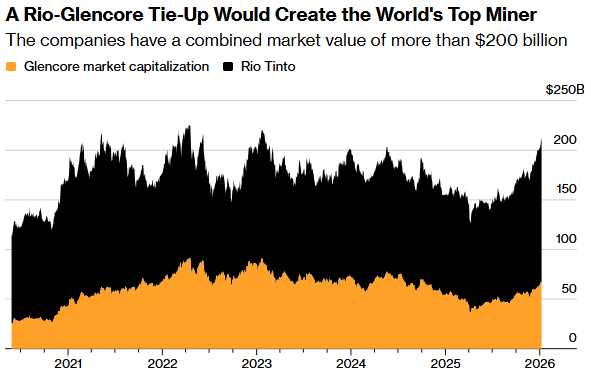
Core Viewpoint - Rio Tinto (RIO.US) is in talks to acquire Glencore, aiming to create the world's largest mining company with a combined market value exceeding $200 billion, marking a potential record deal in the industry [1] Group 1: Merger Discussions - The discussions between Rio Tinto and Glencore include the possibility of a full stock acquisition and the merger of part or all of their businesses [1] - Previous negotiations between the two companies broke down over valuation disagreements, and the gap in their valuations has since widened [1][6] - Glencore's CEO has indicated that a merger with Rio Tinto is the most obvious deal in the industry [1][6] Group 2: Industry Context - The mining sector is experiencing a wave of mergers and acquisitions, driven by the rising demand for copper, a key metal in energy transition, with prices recently hitting historical highs of over $13,000 per ton [2] - The industry is facing concerns about future copper supply due to insufficient new mining projects to meet the anticipated demand from sectors like artificial intelligence and defense [2] Group 3: Strategic Implications for Rio Tinto - Acquiring Glencore would significantly boost Rio Tinto's copper production and provide access to the coveted Collahuasi copper mine in Chile [6] - Rio Tinto's new CEO is focused on cost-cutting and simplifying operations, with plans to divest smaller business units [6] - The company has learned from past failed transactions and is now more open to acquisitions [6] Group 4: Glencore's Position - Glencore is the world's largest coal producer and has faced pressure from investors due to its poor stock performance last year, prompting a focus on its copper business [7] - The company has plans to nearly double its copper production over the next decade [7] - There is uncertainty regarding whether Rio Tinto is willing to acquire Glencore's coal and other non-copper assets, despite potential divestitures [7] Group 5: Regulatory Considerations - According to UK takeover rules, Rio Tinto must confirm whether it will make a formal offer by February 5, or it will exit the acquisition process for six months [8]