AGI

Search documents
谁来挑战OpenAI?
虎嗅APP· 2025-11-14 12:04
Core Viewpoint - The article discusses the evolving dynamics in the AI sector, particularly focusing on the recent actions of SoftBank in relation to Nvidia and OpenAI, highlighting a shift in investment strategies and the valuation challenges faced by American AI companies compared to their Chinese counterparts [2][10][11]. Group 1: SoftBank's Actions and Market Impact - SoftBank sold its Nvidia shares for $5.8 billion shortly after Nvidia's market cap reached $5 trillion, indicating a strategic move to cash out at a high point [2][10]. - The sale is interpreted as SoftBank repositioning itself within the AI value chain, suggesting a lack of confidence in Nvidia's future growth potential [10][11]. - This transaction coincided with significant market fluctuations, with the Nasdaq Composite and S&P 500 experiencing their largest single-day declines in nearly a month, reflecting investor concerns about AI valuations [6]. Group 2: Challenges in American AI Valuations - American AI companies face a high valuation dilemma, characterized by rapid technological advancement and revenue growth but slow profit realization [8][9]. - The cost structure in the U.S. AI sector is becoming increasingly unsustainable, with high salaries for AI talent and exorbitant training costs for models like GPT-4, which is estimated to cost between $700 million and $1.4 billion to train [9][12]. - Companies like OpenAI and Anthropic are under pressure to continuously leverage capital to maintain their technological edge, raising concerns about long-term viability [9][10]. Group 3: Comparison with Chinese AI Companies - Chinese AI companies are reportedly operating under a different valuation structure, with significantly lower capital expenditures compared to their American counterparts, estimated to be 82% lower [12]. - The return on investment (ROI) for Chinese AI firms is perceived to be superior, with some domestic teams achieving faster commercialization of their products [13][15]. - Chinese AI firms, such as MiniMax, focus on practical applications and cost efficiency, contrasting with the high-risk, high-reward strategies of American firms [15][16]. Group 4: MiniMax's Competitive Edge - MiniMax has emerged as a strong competitor to OpenAI, leveraging a dual revenue model of subscription and API calls, with an annual recurring revenue (ARR) reaching $100 million [24]. - The company emphasizes a pragmatic approach, prioritizing immediate market needs and user feedback over long-term speculative models [20][26]. - MiniMax's innovative architecture allows it to achieve competitive performance at a lower cost, positioning it favorably in the global AI landscape [28][34].


解析科大讯飞:把AI做成懂你的那一个
第一财经· 2025-11-14 11:07
Core Viewpoint - The article emphasizes that China needs "problem-solving AI" rather than pursuing AGI (Artificial General Intelligence), focusing on practical applications that address real-world issues in education, healthcare, and industry [4][5][6]. Group 1: AI Development and Strategy - By 2025, the global AI industry will enter a "dividend period," but the development paths of China and the U.S. are diverging significantly [5]. - Keda Xunfei's chairman, Liu Qingfeng, outlined four key strategies: self-controllable, integrated hardware and software, industry depth, and personalization [5][12]. - Keda Xunfei's Starfire X1.5 model achieved a training efficiency of 93% compared to NVIDIA A800, showcasing advancements in domestic computing power [10][11]. Group 2: Market Performance and Financials - In 2024, Keda Xunfei led the bidding market with 91 projects and a total bid amount of 936 million yuan, further expanding its lead in 2025 with 108 projects [10][11]. - Despite a 10% revenue growth in Q3 2025, Keda Xunfei's net profit increased by 202%, indicating improved business quality [16][17]. Group 3: Industry Applications - In education, Keda Xunfei developed a comprehensive error analysis system that has been validated by experts, enhancing teaching efficiency [17][18]. - In healthcare, the AI assistant has provided over 11 billion diagnostic aids, significantly improving diagnostic accuracy in grassroots medical settings [19][22]. Group 4: Competitive Advantages - Keda Xunfei's strategy emphasizes deep integration of technology and industry, focusing on long-term relationships with state-owned enterprises and government sectors [23][24]. - The company’s approach to AI is characterized by a focus on personalized services, leveraging user data to enhance AI interactions [25][26]. Group 5: Global Strategy and Positioning - Keda Xunfei's international strategy aligns with the "Belt and Road" initiative, offering sovereign AI models to countries seeking alternatives to U.S. technology [40][42]. - The company aims to provide localized solutions that meet the specific needs of Chinese users, contrasting with the broader AGI ambitions of Silicon Valley [43][44]. Group 6: Future Outlook - The article concludes that Keda Xunfei represents a stabilizing force in China's AI landscape, focusing on practical applications that serve national interests rather than speculative technological pursuits [45][49].


解析科大讯飞:把AI做成懂你的那一个
Di Yi Cai Jing· 2025-11-14 10:35
Core Viewpoint - The article emphasizes that China needs "problem-solving AI" rather than pursuing AGI (Artificial General Intelligence), focusing on practical applications that address national and social needs [2][3][43]. Group 1: AI Development Paths - By 2025, the global AI industry will enter a "dividend period," but the development paths of China and the US are diverging significantly [3]. - While US tech giants are losing billions annually in pursuit of AGI, Chinese companies like iFlytek are focusing on commercializing AI to solve real-world problems [3][43]. Group 2: iFlytek's Strategic Approach - iFlytek's chairman, Liu Qingfeng, outlined a four-dimensional strategy: self-controllable, integrated software and hardware, industry depth, and personalization [3][48]. - iFlytek's "Xinghuo X1.5" model is the first general model trained on fully domestic computing power, achieving training efficiency improvements over NVIDIA's A800 [4][6][8]. Group 3: Market Performance and Financials - iFlytek led the bidding market in 2024 with 91 projects and a total bid amount of 936 million yuan, further increasing to 108 projects in the first three quarters of 2025 [8][9][30]. - Despite a 10% revenue growth year-on-year in Q3 2025, iFlytek's net profit increased by 202%, indicating improved business quality [15][16]. Group 4: Industry Applications - iFlytek's AI solutions are deeply integrated into education and healthcare, with tools like the "Intelligent Medical Assistant" significantly improving diagnostic accuracy in rural healthcare settings [17][23]. - The company has developed a comprehensive error analysis system for education, enhancing teaching effectiveness through AI-driven insights [16][17]. Group 5: Competitive Landscape - iFlytek's competitive advantage lies in its long-term data accumulation and deep partnerships with hospitals, making it difficult for competitors to replicate its success [23][24]. - The shift from hardware to software services in AI projects is evident, with clients increasingly valuing ongoing AI capabilities over one-time hardware purchases [35][36]. Group 6: Global Strategy and Positioning - iFlytek's international strategy aligns with China's Belt and Road Initiative, offering "sovereign models" to countries seeking alternatives to US technology [38][40]. - The company aims to leverage its capabilities to serve not just the Chinese market but also to establish a presence in Southeast Asia and Africa [38][40]. Group 7: Conclusion on AI's Role in China - The article concludes that iFlytek represents a pragmatic approach to AI in China, focusing on real-world applications rather than abstract technological ideals [43][48]. - The company's strategy is seen as a response to the unique needs of the Chinese market, emphasizing practical solutions that enhance everyday life [48][49].
AI为腾讯贡献了一份炸裂业绩
Xin Lang Cai Jing· 2025-11-14 02:55
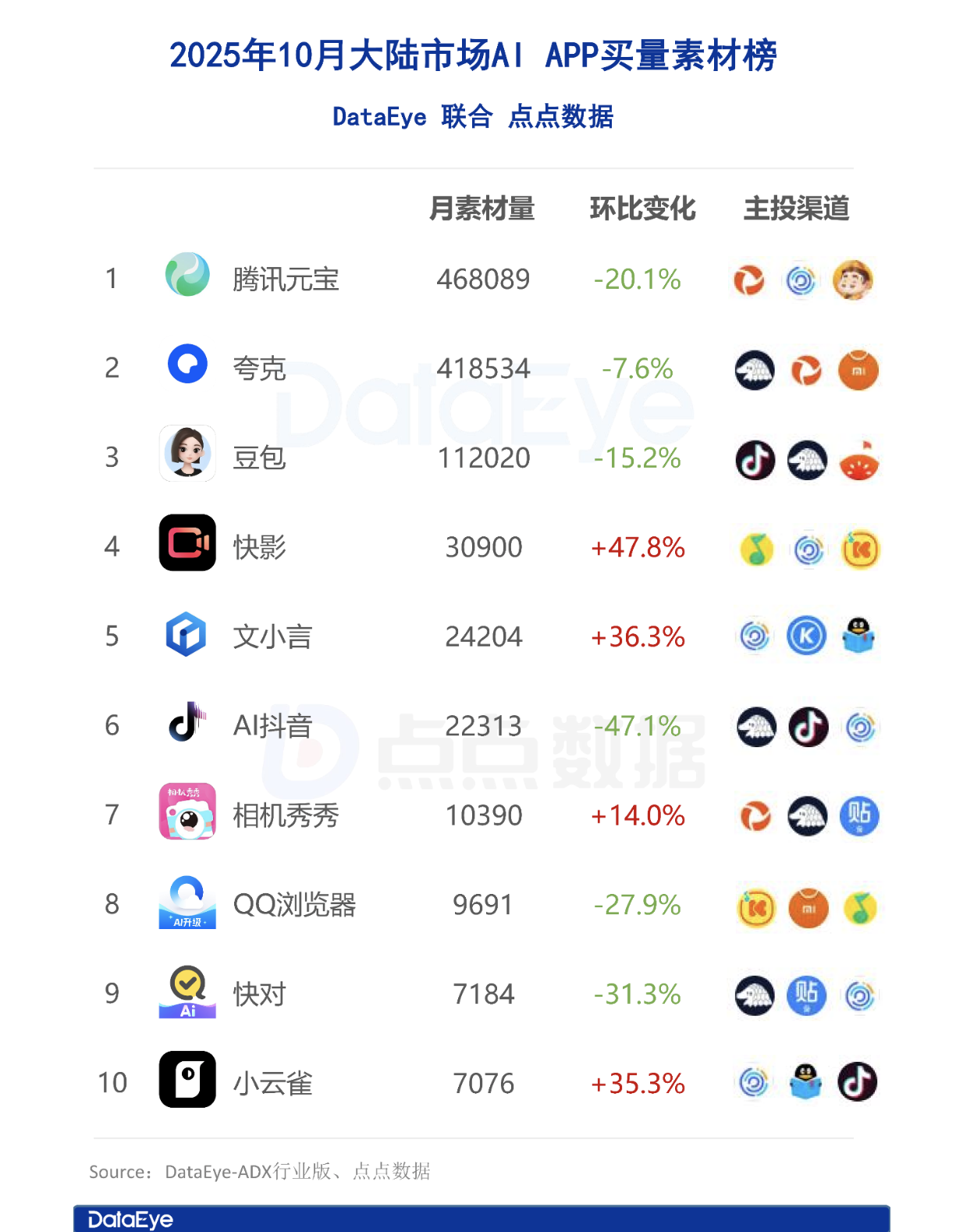
Core Insights - Tencent reported strong Q3 earnings with revenue of 192.87 billion RMB, a 15% year-on-year increase, and net profit of 63.13 billion RMB, up 19% [2][3] - All major performance indicators showed double-digit growth, which is rare among leading Chinese internet companies [3] Revenue Breakdown - Value-added services revenue grew 16% to 95.86 billion RMB, with gaming revenue increasing by 22.8% [3] - Marketing services revenue rose 21% to 36.24 billion RMB [3] - Financial technology and enterprise services revenue increased by 10% to 58.17 billion RMB [3] AI Contribution - AI significantly contributed to Tencent's revenue and gross profit, with about half of the advertising revenue growth driven by AI-enhanced advertising technology [3] - The company is focusing on promoting its AI product "Yuanbao," which ranked first in material investment in the Chinese AI application market [3][5] Capital Expenditure - Tencent's capital expenditure for Q3 was 12.983 billion RMB, down approximately 32.05% quarter-on-quarter and 24.06% year-on-year [8] - The CFO indicated that future capital expenditures would be lower than previously expected but still higher than in 2024, citing supply chain constraints for AI chips [8] Competitive Landscape - Tencent is aware of the competitive landscape in AI, with Alibaba launching a significant project to enhance its AI capabilities [9] - Tencent plans to introduce an AI agent within WeChat to assist users with various tasks, leveraging its strong communication and social ecosystem [9][11] User Engagement - Tencent's AI applications have seen significant user growth, with the AI workbench's monthly active users increasing over 80 times since January [9] - The QQ browser's AI features also experienced an 18-fold increase in monthly active users since April [9]

AI贡献业绩狂飙,腾讯总裁再谈大模型竞争和微信智能体
Xin Lang Cai Jing· 2025-11-14 02:13
Core Insights - Tencent reported strong Q3 earnings with revenue of 192.87 billion yuan, a 15% year-on-year increase, and net profit of 63.13 billion yuan, up 19% [1] - All major business segments showed double-digit growth, with value-added services revenue increasing by 16% to 95.86 billion yuan, and gaming revenue growing by 22.8% [1] - AI significantly contributed to revenue and gross profit, with about half of the advertising revenue growth driven by AI-enhanced advertising technology [1] Business Performance - Value-added services revenue: 95.86 billion yuan, +16% YoY [1] - Marketing services revenue: 36.24 billion yuan, +21% YoY [1] - Financial technology and enterprise services revenue: 58.17 billion yuan, +10% YoY [1] AI Development - Tencent is focusing on promoting its AI product "Yuanbao," which leads in material volume in the Chinese AI application market [2] - Despite a decrease in capital expenditure for GPU and infrastructure, Tencent maintains sufficient GPU reserves for internal use [6] - Tencent plans to develop an AI agent within WeChat to enhance user experience, although this initiative is still in early stages [7] Competitive Landscape - Competitors like Alibaba are also enhancing their AI capabilities, with projects aimed at creating comprehensive AI agents [6] - Tencent's AI initiatives are integrated across multiple platforms, including WeChat, QQ, and Tencent Meeting, covering various user scenarios [7]
X @Decrypt
Decrypt· 2025-11-14 01:25
AI Development - Google DeepMind 推出了 SIMA 2,这是一种为 3D 世界构建的推理 AI 代理 [1] - 该公司表示,SIMA 2 是更接近 AGI(通用人工智能)的一步 [1]
X @Demis Hassabis
Demis Hassabis· 2025-11-13 22:23
Super excited to announce SIMA 2! It’s a general agent that can understand & reason about complex instructions and complete tasks in simulated game worlds, even ones it has never seen before. Incredible to see how it can learn just from self-play… a crucial step towards AGI https://t.co/hOWPpqbCKY ...
当年传闻雷军要挖的人才,现已入职小米
Sou Hu Cai Jing· 2025-11-13 14:16
Core Insights - The news highlights the official announcement of Luo Fuli joining Xiaomi's MiMo large model team, which focuses on AI model research [2][4] - Xiaomi's MiMo is the company's first inference model, indicating a strategic move into AI development [4][6] - The establishment of the AI laboratory's large model team in April 2023 signifies Xiaomi's commitment to advancing AI technologies [6] Company Developments - Luo Fuli's announcement in her social media indicates her role in building a future towards Artificial General Intelligence (AGI) at Xiaomi [2][4] - Xiaomi's MiMo team aims to enhance inference capabilities through a newly established core team, marking a significant step in their AI initiatives [6] - Recent changes in the business registration of Shanghai Luobopai Technology Co., which is focused on humanoid robotics, suggest Xiaomi's expansion into various tech fields [8] Product Innovations - Xiaomi is expected to launch its first NAS (Network Attached Storage) product, targeting home users with compatibility across multiple operating systems [11][13] - The NAS aims to integrate with Xiaomi's ecosystem, enhancing user experience through features like AI photo albums and a home cinema center [13]

搜狐不做AI基础设施,“沉迷物理”的张朝阳很清醒
3 6 Ke· 2025-11-13 11:53
Core Viewpoint - Zhang Chaoyang, founder of Sohu, emphasizes a cautious approach to AI, viewing it as an efficiency tool rather than a strategic core, while the industry rushes into AI investments [1][3][5] Group 1: AI Strategy - Sohu has not fully engaged in AI infrastructure and prefers to observe rather than invest heavily in AI models [1][3] - Zhang believes that the essence of social interaction should be prioritized over the pursuit of AI, advocating for rational cash flow management [3][5] - The company has historically avoided the hype surrounding AI, opting instead to consider purchasing applications from successful developers [3][5] Group 2: Company Performance - Sohu's revenue for Q4 2023 was $135 million, with total annual revenue reaching $598 million, and a net loss of $100 million [5][8] - The company has struggled to maintain relevance in the internet space, with its peak occurring during the 2008 Beijing Olympics [5][8] - Sohu's gaming business, primarily reliant on the aging title "Tianlong Babu Online," is declining, raising concerns about its sustainability [8][10] Group 3: Market Position and Future Outlook - Sohu's attempts to innovate through knowledge live streaming have not gained traction in a competitive market dominated by platforms like Douyin and Kuaishou [6][10] - The company lacks the resources to develop AI models from scratch, with a cash reserve of $1.32 billion insufficient for significant AI investments [8][10] - Sohu may benefit from integrating existing AI models rather than competing directly in the AI space, which could be a risky endeavor [10]


太狠了!某巨头大裁员:连通知员工的人力也收到被裁邮件;安克创新拟赴港上市!年内因火灾隐患三度召回;「AI才女」罗福莉官宣加入小米
雷峰网· 2025-11-13 00:26
Group 1 - Amazon announced a global layoff of approximately 14,000 corporate positions, with a higher percentage of layoffs in China compared to the global average [4][5] - The layoffs are primarily affecting middle management, especially those managing fewer than seven employees, with some departments facing complete team dissolutions [5] - Amazon's official explanation for the layoffs is that artificial intelligence is reshaping the company's talent structure, and affected employees will receive severance packages and transition support [5] Group 2 - ByteDance terminated a researcher for multiple leaks, highlighting ongoing issues with data security within major tech companies [7] - Former DeepSeek researcher Luo Fuli joined Xiaomi, reportedly with a salary in the millions, to work on AI model development [9][10] - Anker Innovations plans to list on the Hong Kong Stock Exchange, with a current market value of approximately 58.6 billion RMB and a revenue increase of 27.79% year-on-year [12][13] Group 3 - Midea Group underwent significant personnel changes, promoting younger executives to key positions, indicating a trend towards management rejuvenation [14] - Former Xiaomi executive Cui Baoqiu is entering the home service robot market, attracting interest from top venture capital firms [15] - Gree Electric's chairman acknowledged the company's struggles with marketing despite strong R&D capabilities, emphasizing the need for better promotion of their innovations [22] Group 4 - Tesla finalized a new compensation plan for CEO Elon Musk, potentially worth over $1 trillion, contingent on achieving twelve performance targets [36] - Volkswagen reported a 61% drop in net profit due to tariffs and challenges in its luxury brand Porsche's electric strategy, prompting significant management changes [37] - Google faces a lawsuit for allegedly tracking user communications without consent through its Gemini AI assistant, raising privacy concerns [39] Group 5 - Anthropic, an AI company backed by Amazon, is projected to achieve profitability by 2028, two years ahead of its competitor OpenAI [40] - Nvidia's CEO Huang Renxun warned against underestimating Huawei's capabilities in AI, indicating a competitive landscape in the sector [42] - Tesla plans to launch its Full Self-Driving (FSD) supervision version in South Korea soon, aiming for higher levels of autonomous driving capabilities [44]